Mēhamehame (Flueggea neowawraea)
Flueggea neowawraea, the mēhamehame, is one of Hawai’i’s largest native trees and also one of its rarest — a species now teetering on the edge of extinction in the wild. Historically it ranked among the giants of Hawaiian dry and mesic forests, with old trees reported to reach nearly 100 feet tall and trunks over 6 feet across. Today, fewer than roughly 250 individuals are believed to survive across the main Hawaiian Islands, and almost none of them are reproducing naturally.
Mēhamehame is federally listed as Endangered under the U.S. Endangered Species Act and assessed as Critically Endangered by the IUCN. The collapse began in the 1970s, when the accidental introduction of the black twig borer beetle (Xylosandrus compactus) started killing mature trees on a large scale; habitat loss, invasive plants, and browsing by feral ungulates have compounded the decline ever since. Most of the trees that remain are damaged, dying, or reduced to root-crown sprouts from older trunks.
This is not a plant to seek out in the wild. Every known wild mēhamehame is part of an actively monitored, critically small population, and removing any part of a wild plant is both illegal and ecologically damaging. The material shown here and available through legitimate sources comes entirely from conservation seed banks and rare-plant propagation programs such as the Olinda Rare Plant Nursery on Maui — the only responsible way to grow this species is from nursery stock propagated for conservation, through an organization authorized to do so.
Identification
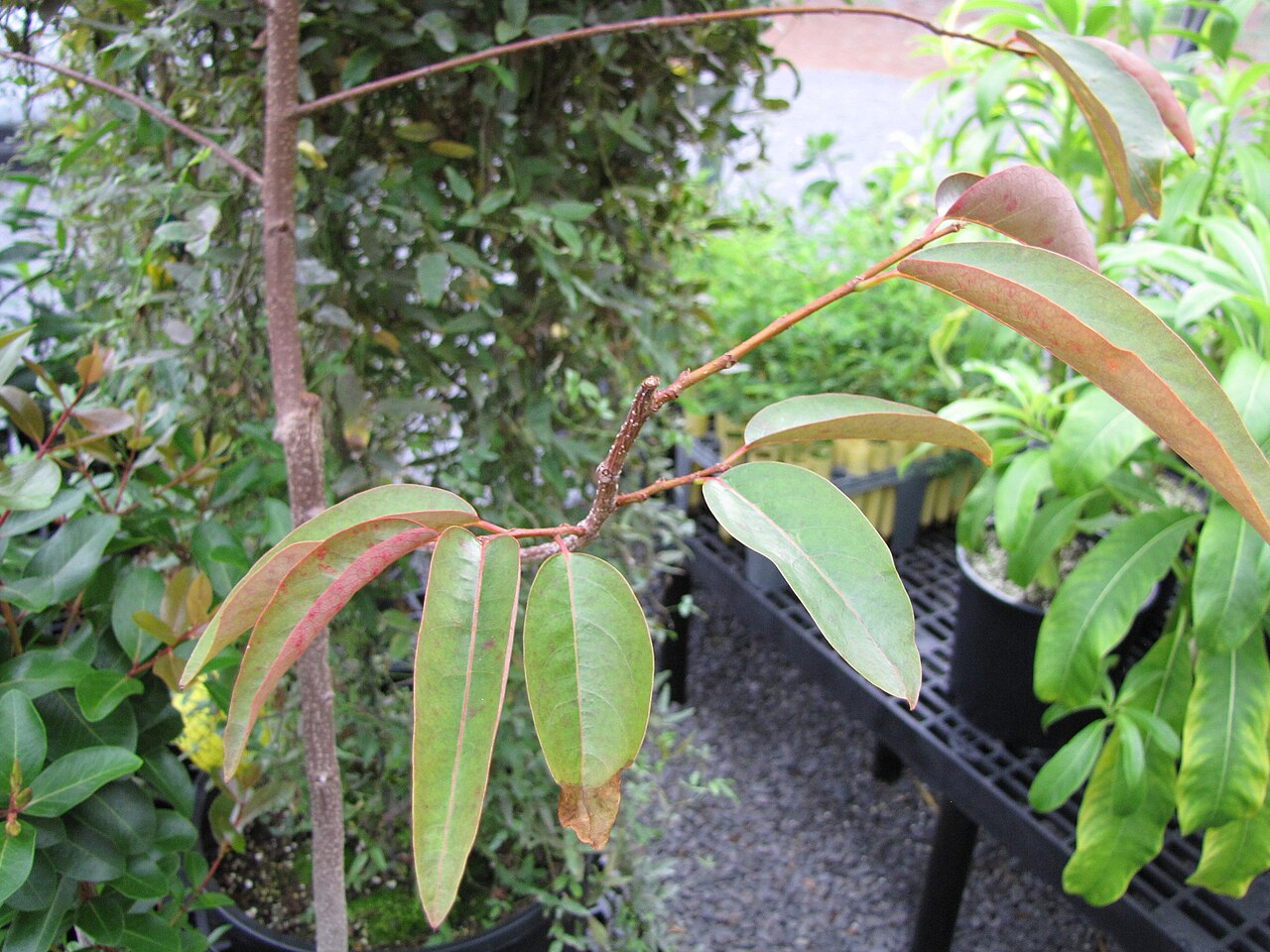
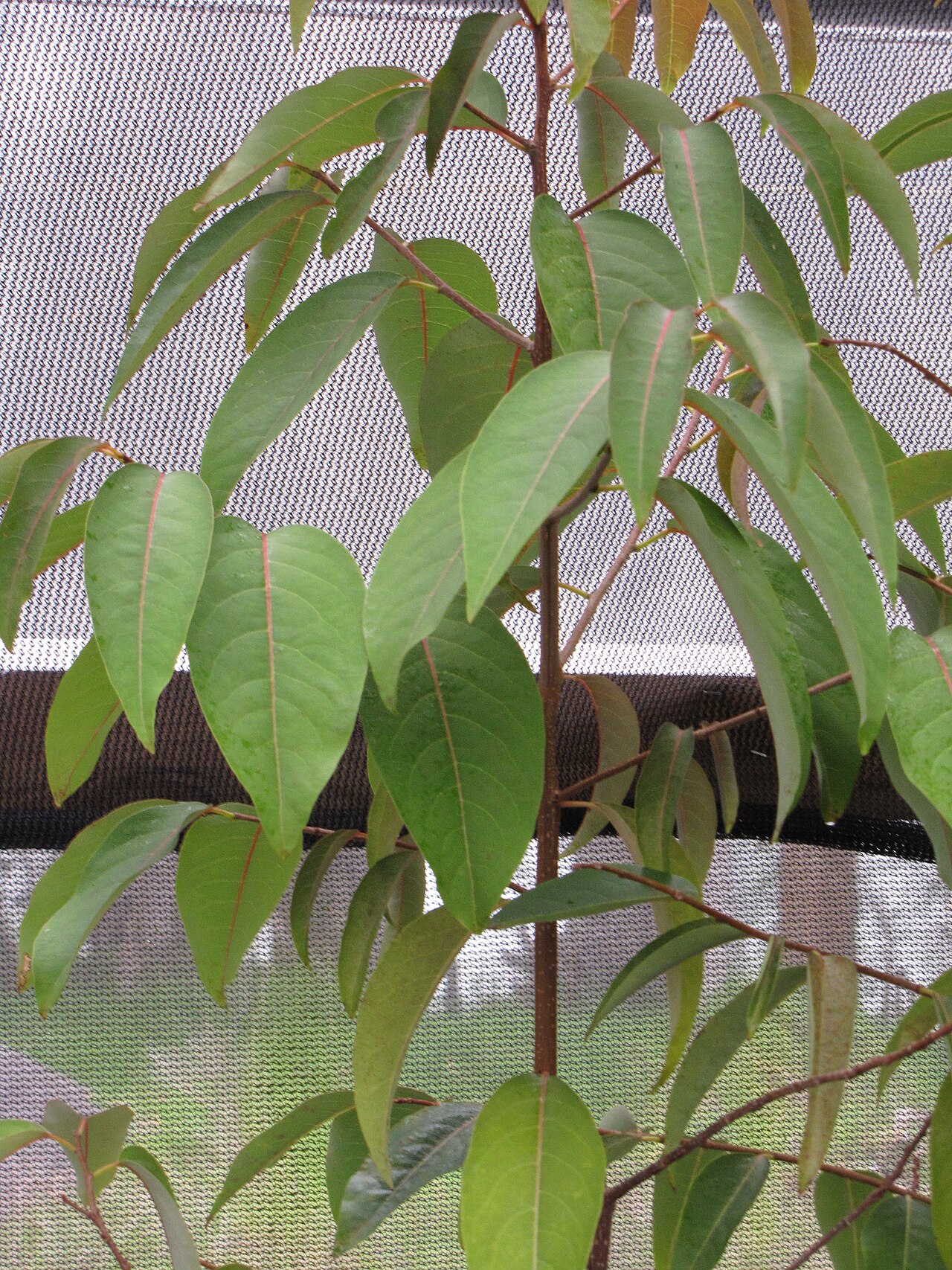
Mēhamehame is usually dioecious (individual trees are either male or female) and, where it survives in forest settings, forms a tall, straight-trunked tree with substantial buttressing at the base in older individuals. In cultivation, young trees show slender, upright growth with reddish new stems and foliage that matures to green.
Bark & Stems
Bark on older wood is brown and conspicuously dotted with pale, oblong lenticels (small raised pores), giving the trunk and larger branches a distinctive stippled texture visible even on fallen or dead wood — a feature still used to identify old mēhamehame logs decades after a tree has died, thanks to the exceptional hardness and durability of the timber.
Leaves
Leaves are simple, alternate, thin and papery, oval with a pointed tip, and typically a glossy green with a prominent pale midrib; new growth often emerges flushed reddish-bronze before greening up. Foliage near the top of a mature tree tends to be a brighter green than the paler leaves lower on the trunk.
Flowers & Fruit
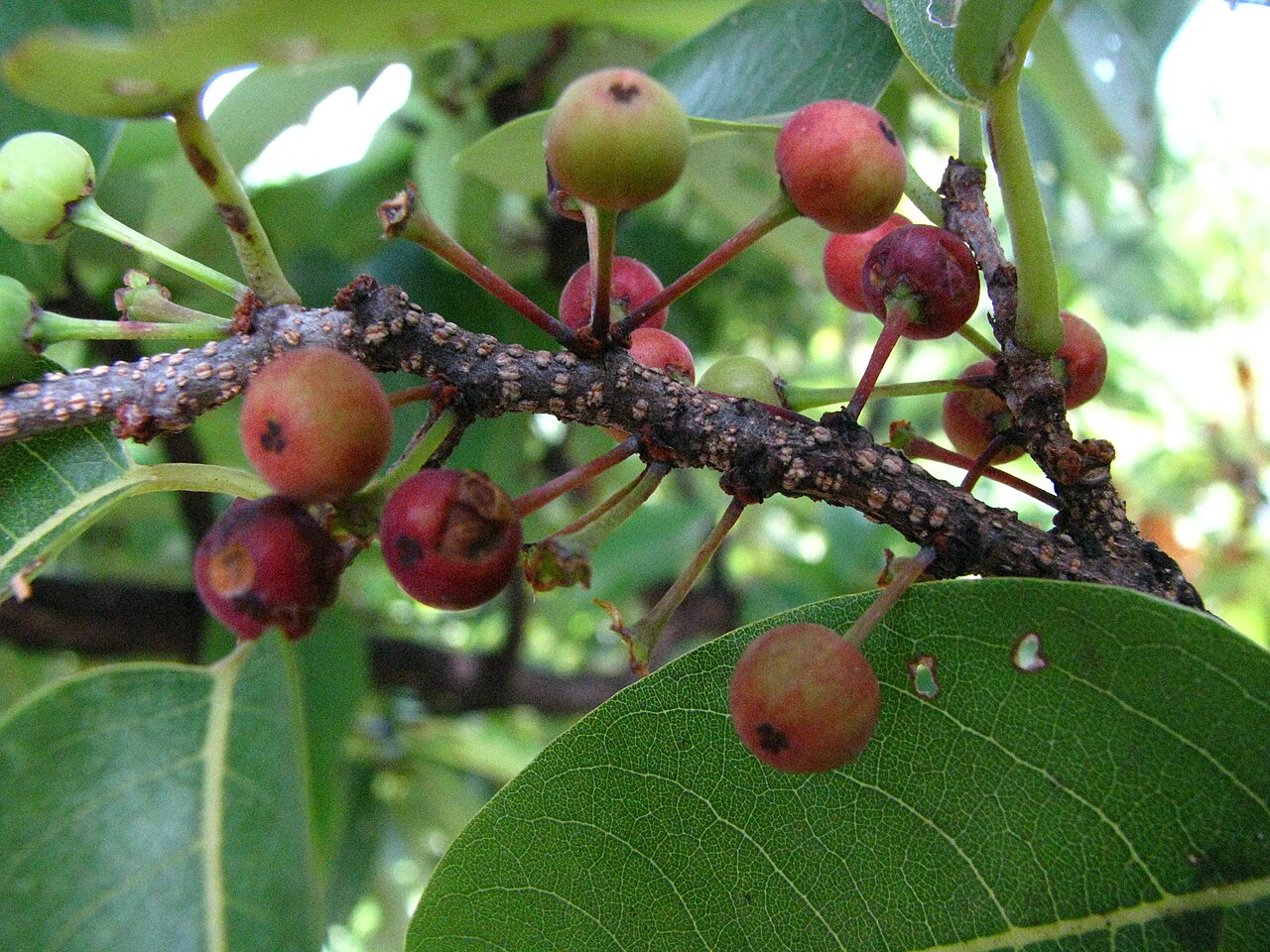
Flowers are small, unisexual, and inconspicuous, with greenish sepals tipped in brown; because the species is dioecious, both a male and a female tree (or a tree grafted/cross-pollinated appropriately) are needed to set viable seed, which has become a major obstacle to natural recovery given how few and how scattered the surviving trees are. The fruit is a small, round, fleshy drupe, roughly pea-sized, ripening from green through red to a dark reddish-brown, each containing a pair of slightly curved, triangular seeds.
Quick Facts
| Scientific Name | Flueggea neowawraea |
| Family | Phyllanthaceae |
| Plant Type | Deciduous to semi-deciduous tree |
| Mature Height | Historically to ~100 ft; cultivated trees far smaller and still establishing |
| Growth Rate | Slow to moderate |
| Sun Exposure | Full Sun to Part Shade |
| Water Needs | Average; adapted to dry and mesic forest rainfall |
| Soil Type | Well-drained volcanic soils; tolerates old lava substrates |
| Soil pH | Neutral to slightly alkaline, typical of Hawaiian volcanic soils |
| Bloom Time | Inconspicuous; recorded flowering varies by site and season |
| Flower Color | Green with brownish sepal tips |
| Fall Color | None notable |
| Fruit | Pea-sized reddish-brown drupes |
| Deer Resistant | Not applicable in Hawai’i; vulnerable to feral ungulate browsing |
| USDA Hardiness Zones | 10b–11 (Hawai’i dry-to-mesic forest elevations) |
Native Range
Mēhamehame is endemic to Hawai’i and was historically known from Kaua’i, O’ahu, Moloka’i, Maui, and Hawai’i Island, growing in dry forest, coastal mesic forest, and mixed mesic forest between roughly 800 and 3,300 feet elevation. It is the only native representative of its genus in the Hawaiian Islands.
Surviving wild trees are now known only from scattered, very small populations: the Wai’anae Mountains of O’ahu, the southwestern slopes of Haleakalā on Maui, the northwestern part of Kaua’i, and the Kona coast of Hawai’i Island. On Maui and Hawai’i Island it has also been found growing on old, forested lava flows, while elsewhere it favors gulch bottoms and slopes within dry and mesic forest. Associated native species historically included kukui, hame, ‘ahake’e, ʻalaheʻe, olopua, hao, and a’ia’i.
Because the remaining population is so small, scattered, and largely non-reproducing in the wild, mēhamehame’s future depends almost entirely on ex-situ conservation: seed banking, hand-pollination between isolated male and female trees, and outplanting of nursery-grown seedlings into protected, fenced forest reserves on O’ahu and Maui.
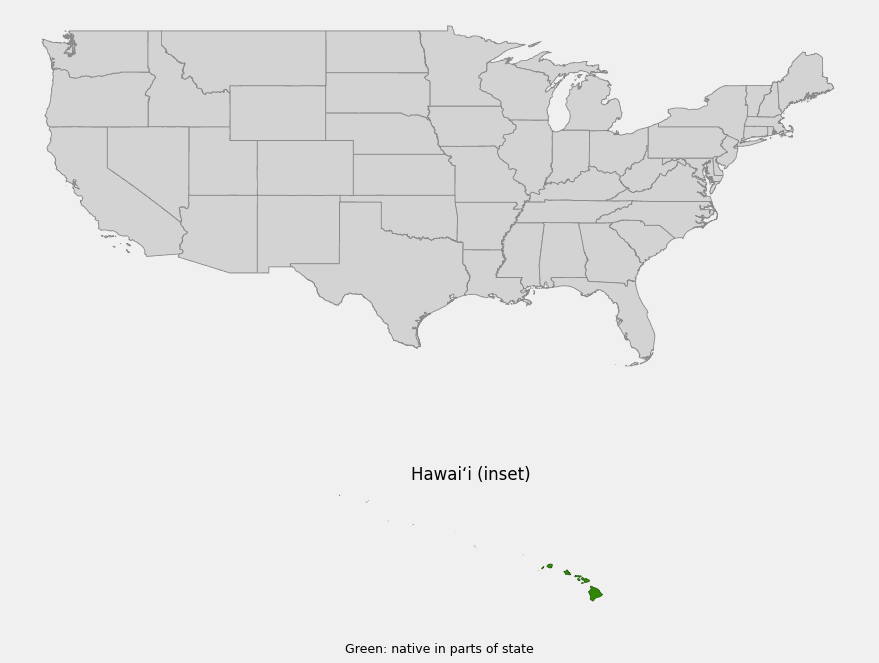
📋 Regional plant lists featuring Mēhamehame: Hawai’i
Growing & Care Guide
Mēhamehame is not a mainstream landscape plant, and it should never be approached casually: this guide is written for conservation plantings, botanical gardens, and gardeners working directly with a native Hawaiian plant program using ethically sourced, nursery-propagated material — never wild-collected seed, cuttings, or plants.
Light
In cultivation, young mēhamehame are typically grown under partial shade or filtered light before hardening off to the fuller sun exposure found in their native dry and mesic forest habitat.
Soil & Water
The species is adapted to the well-drained volcanic soils of Hawai’i’s dry and mesic forest zones, including rocky, old lava-flow substrates. It needs good drainage and does not tolerate waterlogged soil; once established, it is suited to the moderate, seasonal rainfall typical of its elevation band rather than constant moisture.
Planting Tips
Because male and female flowers occur on separate trees, successful seed production requires more than one tree, with both sexes present and close enough for pollination — a significant challenge given how few trees remain. Conservation plantings are typically carried out inside fenced exclosures that keep out feral pigs, goats, and deer, since browsing pressure is a major threat to seedlings and young trees.
Pruning & Maintenance
Because the black twig borer beetle was the primary driver of the species’ collapse, monitoring for boring damage in stems and branches is essential wherever mēhamehame is grown. Infested or dying wood should be reported to the managing conservation program rather than handled informally, since protecting remaining genetic diversity is a conservation priority.
Propagation
Propagation is by seed collected and managed through authorized conservation programs, which track the genetic origin of every seedling to maintain diversity in an already narrow gene pool. Reproductive success in the wild is very low, so nearly all new plants originate from controlled propagation at facilities such as the Olinda Rare Plant Nursery.
Landscape Uses
Appropriate uses are limited and conservation-focused:
- Species recovery outplanting within fenced native forest reserves
- Botanical garden and arboretum collections holding documented conservation stock
- Educational plantings at native plant nurseries and cultural sites, using nursery-propagated material only
- Not appropriate for general home landscaping or casual native-plant gardens at this time
Wildlife & Ecological Value
As one of the largest trees in Hawaiian dry and mesic forests, mēhamehame historically played an outsized structural role, and its ongoing loss is part of the broader collapse of these threatened ecosystems.
For Birds
Fruiting native trees of this type provide food for native and introduced forest birds in the areas where they still survive, though direct, species-specific observations are limited given how few mature, fruiting mēhamehame remain today.
For Mammals
In Hawai’i, introduced feral pigs, goats, and deer are a direct threat to mēhamehame rather than a benign browsing presence, consuming seedlings and damaging regeneration; fencing and ungulate control are core parts of its conservation management.
For Pollinators
Mēhamehame requires cross-pollination between separate male and female trees, which likely depended historically on a broader community of native insects; today, with so few scattered individuals left, conservationists often resort to hand-pollination to ensure seed set.
Ecosystem Role
Mature mēhamehame were among the largest canopy trees in Hawaiian dry and mesic forest, contributing structure, shade, and habitat complexity found in few other native species. Its near-disappearance is both a symptom and a driver of the broader degradation of Hawai’i’s dry forest ecosystems, among the most endangered forest types in the world.
Cultural & Historical Uses
Mēhamehame holds deep significance in Hawaiian culture. Early Hawaiians prized its extremely hard, dense wood for making weapons, taking advantage of a durability that is still evident today — dead trunks and fallen wood, recognizable by their fluted, lenticel-dotted bark pattern, can persist on the forest floor for decades after a tree has died.
The tree’s rarity today gives it added cultural weight as a symbol of Hawai’i’s broader native forest conservation crisis. Community and agency recovery programs on O’ahu and Maui treat mēhamehame as a flagship species for dry-forest restoration, and some cultural practitioners view its survival as tied to the broader health and continuity of Hawaiian forest knowledge and practice.
There is no documented edible or medicinal use of mēhamehame; its historical importance lies specifically in its timber, not in food or medicine.
Frequently Asked Questions
Can I buy or collect a mēhamehame for my yard?
No wild collecting is appropriate or legal — this is a federally Endangered species with only a few hundred individuals left. If you want to grow one, you must go through an authorized Hawaiian native plant conservation program using nursery-propagated, documented stock, and understand that general home landscaping is not the goal of these programs.
Why did mēhamehame become so rare?
The main driver was the accidental introduction of the black twig borer beetle in the 1970s, which killed large numbers of mature trees. Habitat loss, competition from invasive plants, and browsing by feral pigs, goats, and deer have compounded the decline and prevented natural regeneration.
Is mēhamehame edible?
No edible or medicinal use is documented for this species. Its historical value was its exceptionally hard wood, used by early Hawaiians for weapons, not as a food or medicine plant.
How tall does mēhamehame grow?
Historically it was one of the largest Hawaiian forest trees, with old individuals reported to reach nearly 100 feet tall and trunks over 6 feet in diameter. Surviving and cultivated trees today are far smaller, since very few have had the time or conditions to reach that scale.
What is being done to save it?
Hawai’i conservation agencies and partners collect seed from remaining wild trees, propagate seedlings at facilities like the Olinda Rare Plant Nursery, and outplant them into fenced, ungulate-free forest reserves, while also hand-pollinating isolated trees to help overcome the species’ very low natural reproduction.

Looking for a nursery supporting Hawaiian native plant conservation?
Browse our native plant nursery directory: Hawai’i