Swamp Privet (Forestiera acuminata)
Forestiera acuminata, known by its USDA-preferred common name Swamp Privet (also called eastern swamp privet), is a deciduous, multi-stemmed shrub or small tree built for life at the water’s edge. It is one of the most flood-tolerant native woody plants of the southeastern and south-central United States, thriving in standing water for weeks at a time along sloughs, oxbow lakes, and the margins of slow rivers throughout the Mississippi Valley and Gulf Coastal Plain.
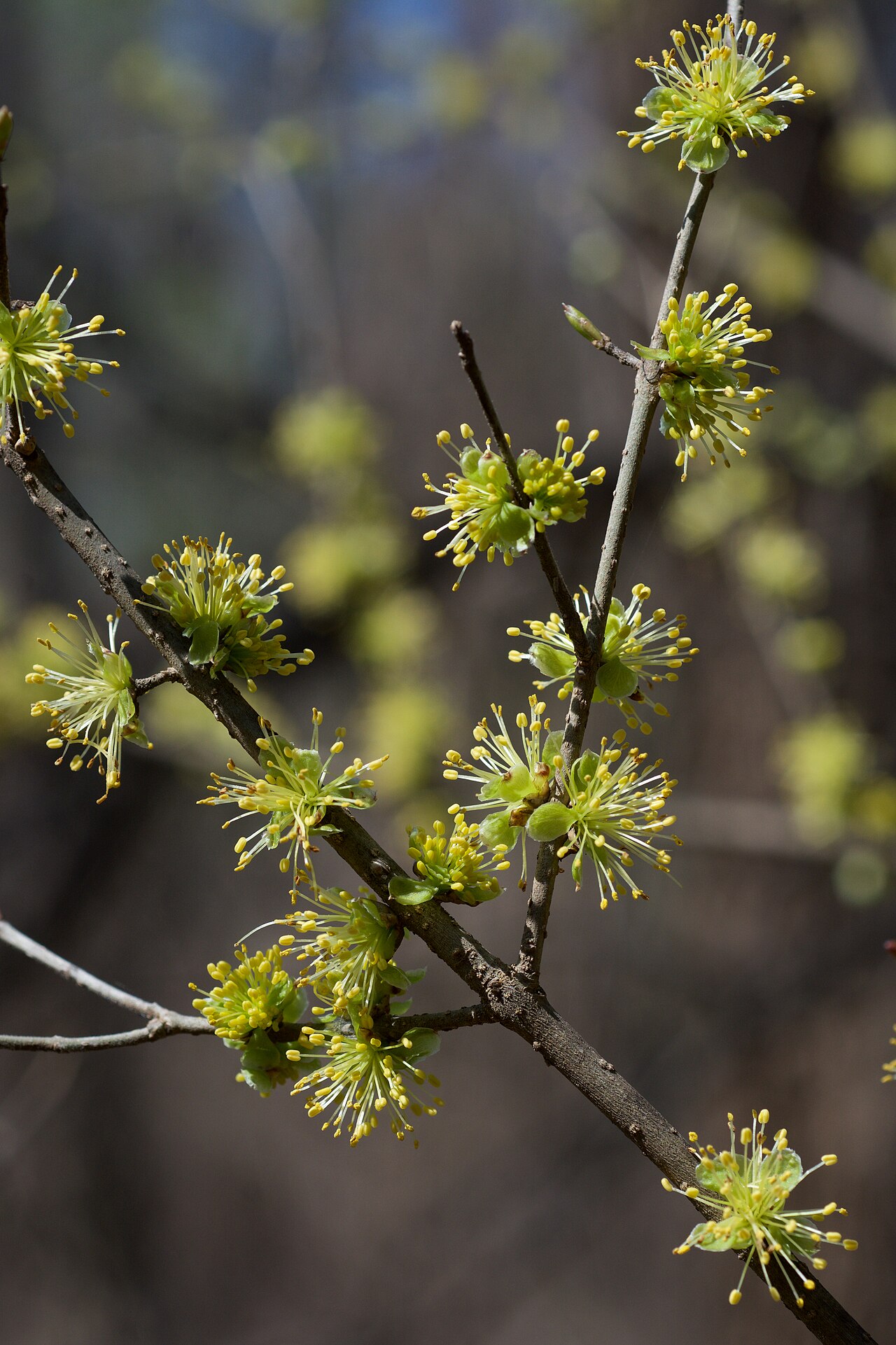
Despite the common name, swamp privet is not related to the invasive Asian privets (Ligustrum spp.) that plague so many eastern landscapes — it belongs to the olive family (Oleaceae) along with ash and fringetree, and it is a well-behaved, slow-spreading native. In late winter or very early spring, bare branches burst into small, tufted, yellow-green flower clusters well before the narrow, pointed leaves emerge, making swamp privet one of the earliest woody plants to bloom in bottomland forests.
For a rain garden, pond edge, or seasonally flooded low spot, swamp privet is an excellent, under-used native choice. It tolerates both standing water and, once established, considerable dry-season variability, and its early blooms provide a valuable nectar source when little else is flowering.
Identification
Swamp privet typically grows as a many-stemmed, thicket-forming shrub 10 to 20 feet tall, occasionally developing into a small single-trunked tree up to about 30 feet in favorable conditions. Its form is often irregular and leaning, reflecting the soft, periodically flooded ground it grows in.
Bark & Stems
Young twigs are slender, gray to grayish-brown, and somewhat flexible; older bark is smooth to slightly fissured, gray-brown, without the corky ridges found on some wetland shrubs. Multiple trunks commonly arise from the base, giving mature plants a clumping, thicket-like structure.
Leaves
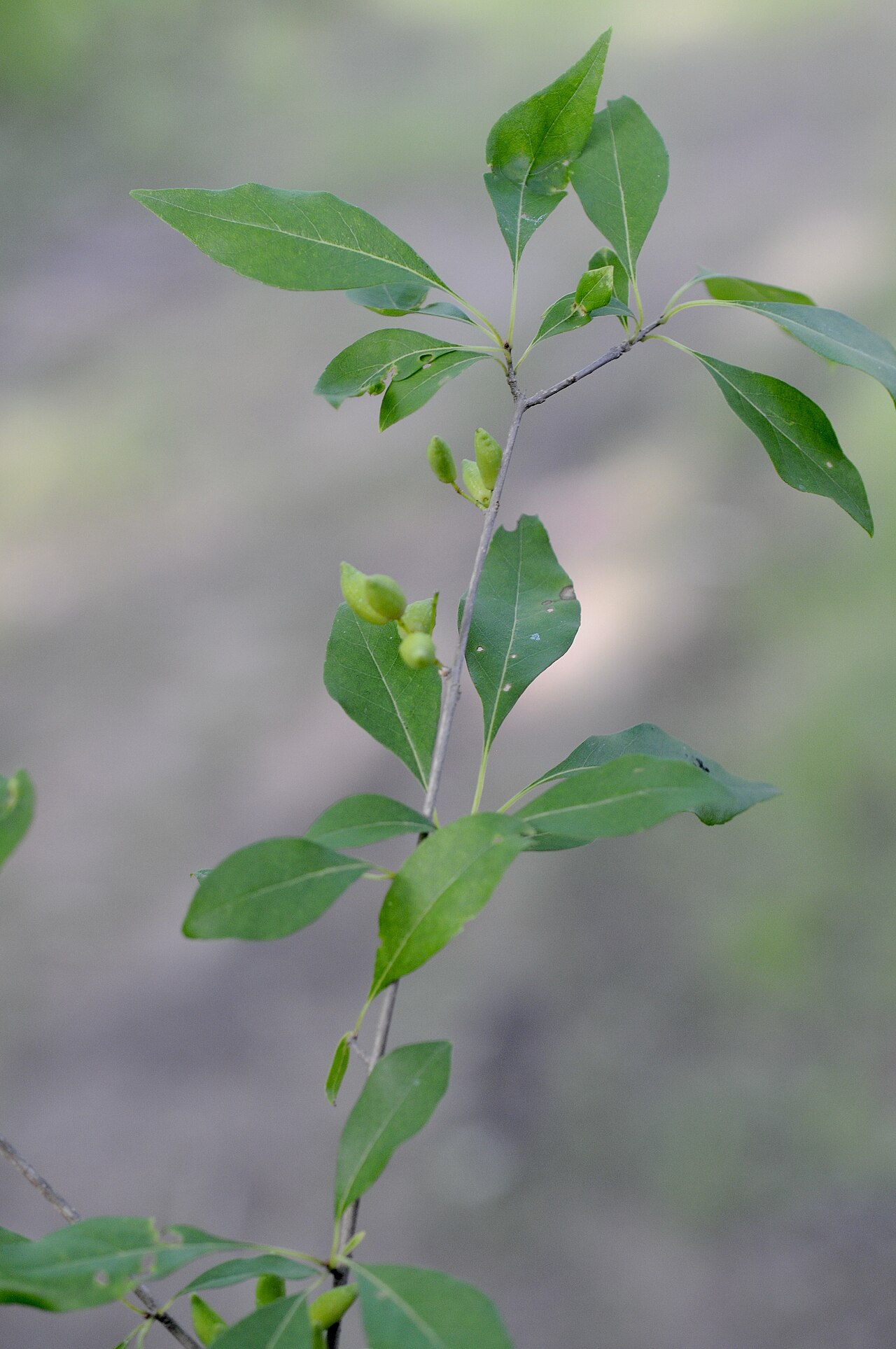
Leaves are simple, opposite, 2 to 5 inches long, narrowly elliptic to lance-shaped with a distinctly pointed (acuminate) tip — the feature behind the species name. Margins are usually smooth, though the upper half of the leaf is sometimes finely toothed. Foliage is medium green and turns a modest yellow in fall before dropping.
Flowers & Fruit
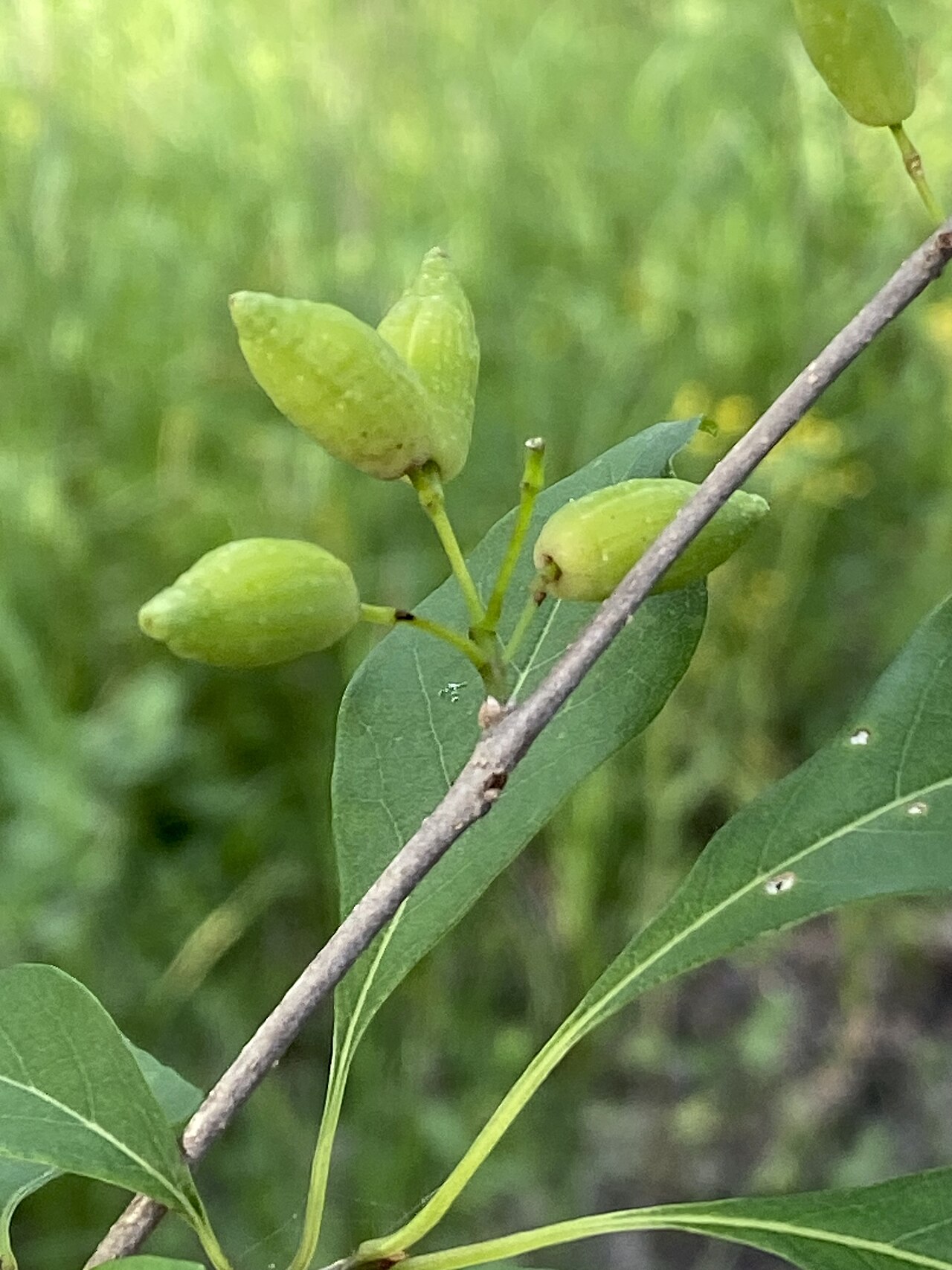
Flowers appear in dense, short clusters directly on the bare twigs in late winter to early spring, ahead of the foliage. They are small, lack petals, and are yellow-green, with male and female flowers often on separate plants (dioecious), though some individuals bear both. Pollinated female flowers develop into oblong, somewhat curved, olive-like drupes about ½ to ¾ inch long, ripening from green to purplish-brown by late summer.
Quick Facts
| Scientific Name | Forestiera acuminata |
| Family | Oleaceae (Olive) |
| Plant Type | Deciduous shrub / small tree |
| Mature Height | 10–20 ft, occasionally to 30 ft |
| Mature Spread | 8–15 ft, thicket-forming |
| Growth Rate | Moderate |
| Sun Exposure | Full Sun to Part Shade |
| Water Needs | High; tolerates standing water and seasonal flooding |
| Soil Type | Wet clay, silt, or alluvial soils; swamp and bottomland |
| Soil pH | Slightly acidic to neutral |
| Bloom Time | Late winter–early spring, before leaves |
| Flower Color | Yellow-green |
| Fall Color | Modest yellow |
| Fruit | Oblong purplish-brown drupes, ½–¾ in |
| Deer Resistant | Moderate |
| USDA Hardiness Zones | 6–9 |
Native Range
Swamp privet is native to the southeastern and south-central United States, centered on the Mississippi River Valley and the broader Gulf Coastal Plain. Its range runs from South Carolina, Georgia, and Florida west through Alabama, Mississippi and Louisiana to eastern Texas and eastern Oklahoma, and north through Arkansas, Tennessee, Kentucky, Missouri, and into southern Illinois and southern Indiana.
It is a classic bottomland species, found in swamp forests, sloughs, oxbow lake margins, and the low, periodically inundated ground along slow-moving rivers and streams — habitat it shares with species like bald cypress, water hickory, and overcup oak. Swamp privet is notably tolerant of prolonged flooding, often growing in standing water for weeks during high-water periods, then persisting through drier months as water levels drop.
Because this species depends on wet bottomland habitat, it is most useful in native plantings as a specialist for consistently moist or seasonally flooded ground rather than a general-purpose landscape shrub — ordinary upland garden soil that dries out in summer is not a good match for it.
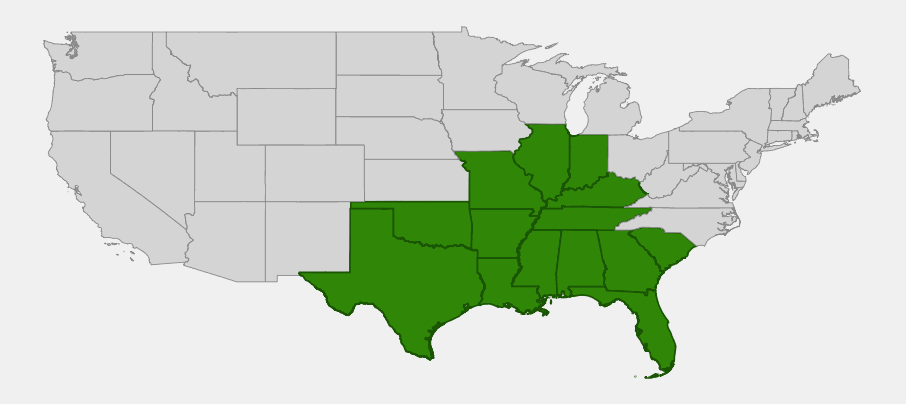
📋 Regional plant lists featuring Swamp Privet: Georgia, Alabama & Mississippi · Arkansas, Louisiana, Eastern Oklahoma & Eastern Texas · Illinois, Iowa & Missouri · Ohio & Indiana · Kentucky & Tennessee · North Carolina & South Carolina
Growing & Care Guide
Swamp privet is easy to grow if you have the wet, low ground it needs — the biggest mistake gardeners make with bottomland natives like this one is planting them in ordinary, well-drained garden beds where they never get enough water.
Light
Full sun to part shade both work well. In the wild it often grows in fairly open conditions along water margins, flowering and fruiting most heavily with good light exposure.
Soil & Water
This is a wetland specialist: give it heavy, moisture-retentive clay or silty soil and a site that floods or stays saturated for at least part of the year. It tolerates standing water for extended periods during the dormant season and wet spring months, then handles typical summer soil moisture without trouble. It is a poor fit for sites that dry out completely in summer.
Planting Tips
Plant along pond edges, rain garden basins, low swales, and stream or ditch margins that see regular standing water. Because the species is often dioecious, a cluster of several plants improves the odds of good fruit set if berries for wildlife are a goal. Space multiple plants 8 to 10 feet apart to allow for its thicket-forming habit.
Pruning & Maintenance
Little pruning is needed. Remove dead or storm-damaged wood as needed, and thin crowded stems from the base if a more open, tree-like form is preferred over the natural thicket habit. Swamp privet resprouts readily from the base if damaged by ice, flooding debris, or deer browsing.
Propagation
Propagate from seed (best after cold stratification) or from semi-hardwood cuttings taken in summer. Because fruiting requires both male and female plants nearby in many populations, propagating from multiple known individuals improves reproductive success in a planting.
Landscape Uses
Swamp privet fills a specific, valuable niche:
- Rain garden and bioswale plantings that see periodic standing water
- Pond, lake, and slow-stream margins
- Wetland and bottomland forest restoration
- Early-season pollinator support — among the first woody plants to flower each year
- Erosion control on wet, low-lying banks prone to seasonal flooding
Wildlife & Ecological Value
As one of the few native shrubs adapted to extended flooding, swamp privet provides structure and food in wetland habitats where fewer woody plants can survive.
For Birds
The ripening purplish-brown drupes are eaten by a range of wetland and woodland birds, including waterfowl and songbirds that forage in flooded bottomland forest during late summer and fall. The dense, multi-stemmed thickets also provide cover and nesting habitat close to water.
For Mammals
Fruit is consumed by various small mammals that forage along wetland edges, and the thicket growth form offers cover for wildlife moving between open water and upland forest.
For Pollinators
Because swamp privet flowers very early, often while surrounding trees are still bare, its blooms are an important early-season nectar and pollen source for bees and other insects active in late winter and early spring, when few other food sources are available.
Ecosystem Role
Swamp privet helps stabilize soil and streambanks in seasonally flooded bottomlands, and its tolerance of standing water lets it occupy a niche that few other native shrubs can fill, adding structural diversity to swamp forest understories dominated by much larger canopy trees.
Cultural & Historical Uses
Swamp privet has a modest documented history compared to many native trees, in large part because its wet, often inaccessible bottomland habitat limited everyday human use. It has not traditionally been used as a food or medicinal plant, and there is no established record of edible fruit for people — the small, bitter drupes are a wildlife food, not a human one.
Historically, the shrub’s dense, flood-tolerant thickets along sloughs and riverbanks were valued less for direct use and more as a reliable, recognizable indicator of swamp forest and bottomland habitat for hunters and trappers working the Mississippi Valley wetlands. In modern restoration work, swamp privet has become increasingly appreciated as a practical, low-maintenance native for wetland mitigation and stormwater projects precisely because of this long-standing tolerance for flooded ground.
Frequently Asked Questions
Will swamp privet survive in a yard that isn’t actually a swamp?
Not reliably. It needs consistently moist to periodically flooded soil — a rain garden basin, pond edge, or low spot that collects water works well, but an average dry garden bed does not.
Is swamp privet related to the invasive privets sold at garden centers?
No. Despite the shared common name, swamp privet is a North American native in the olive family, unrelated to the invasive Asian Ligustrum privets that cause problems in eastern forests. It does not spread aggressively the way those species do.
Can you eat the fruit?
There’s no record of swamp privet fruit being used as human food; it’s a small, bitter drupe valued mainly by wildlife, not people.
Why do the flowers appear before the leaves?
Like many early-blooming trees and shrubs, flowering before leaf-out lets wind and early-season insects access the flowers without interference from foliage, and lets the plant take advantage of pollinators active before most other blooms appear.
Does swamp privet need both male and female plants to produce fruit?
Often yes — populations are commonly dioecious, with separate male and female plants, so if you want fruit for wildlife, plant more than one individual where possible to improve the chances of successful pollination.

Looking for a nursery that carries Swamp Privet?
Browse our native plant nursery directory: Alabama & Arkansas · Florida & Georgia · Illinois & Indiana · Kentucky, Louisiana, Missouri & Mississippi · Oklahoma · South Carolina, Tennessee & Texas