
Wild Garlic (Allium canadense)
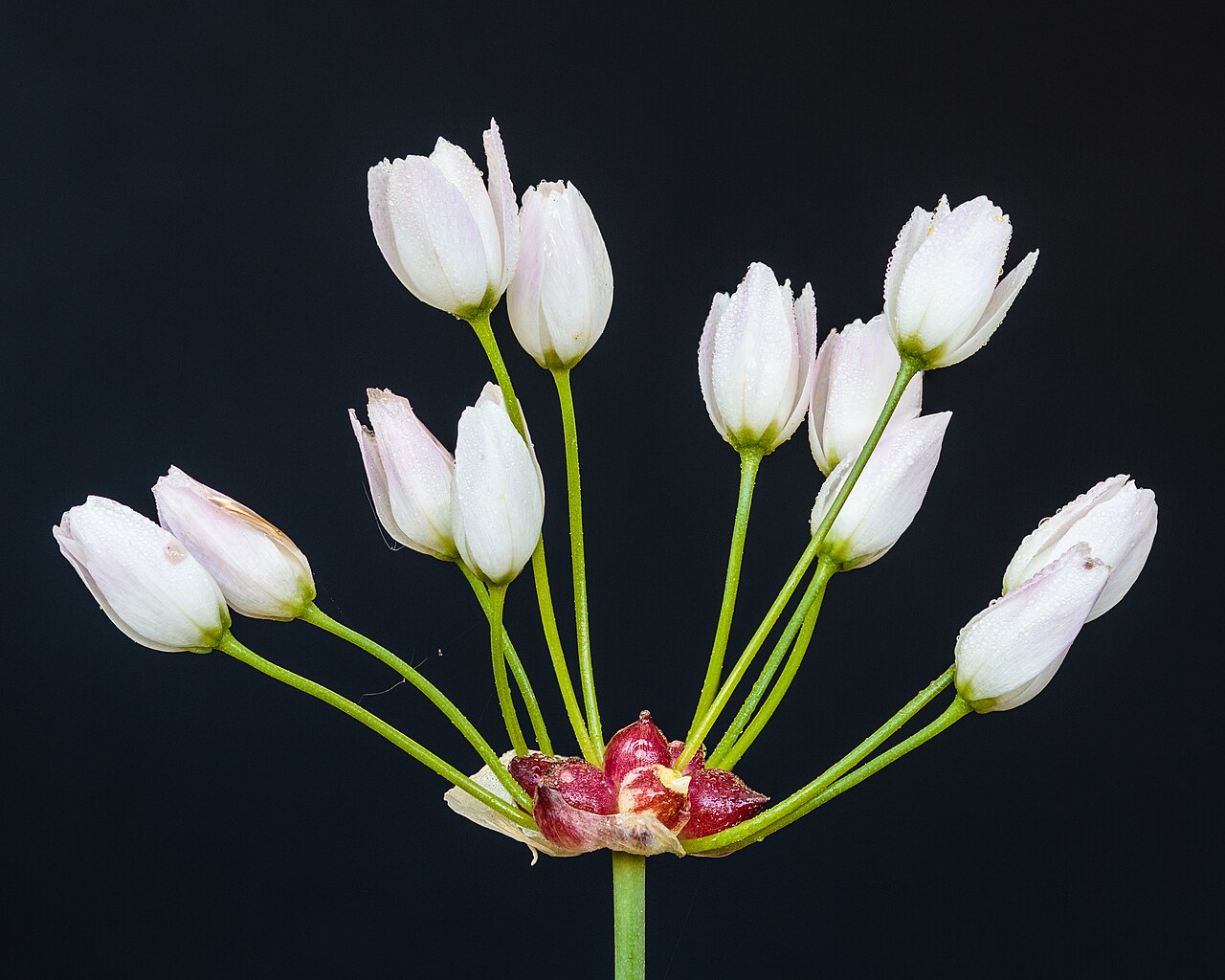
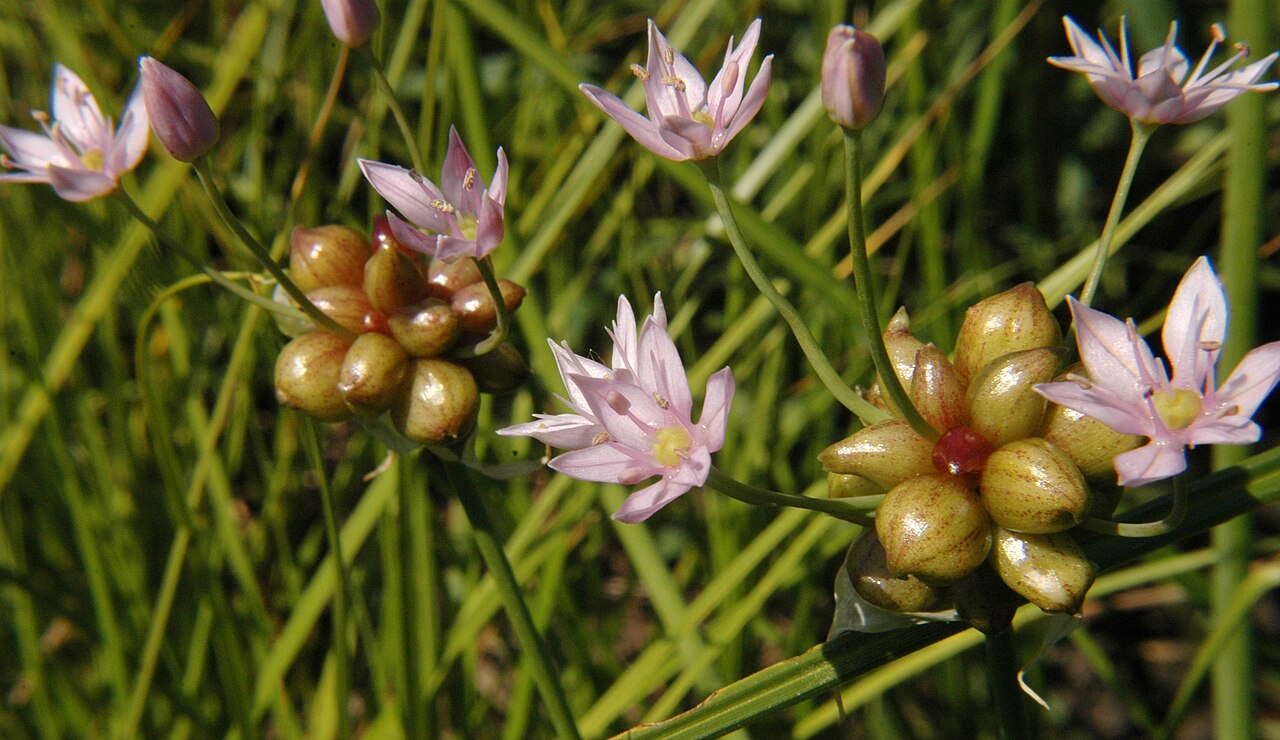
Wild garlic (Allium canadense), also known as meadow garlic or wild onion, is a small native bulbous perennial with narrow leaves and a surprisingly variable flower head. Some plants carry clusters of white or pink stars; others show conspicuous little aerial bulbs mixed with only a few flowers. Those bulbils are part of the plant’s reproductive strategy, not necessarily a disease or a failed bloom.
In a meadow garden it can contribute early-season foliage and delicate flowers among grasses and other herbs. In a closely managed lawn or a small vegetable bed, the same ability to produce offsets and bulbils can be unwelcome. Native status does not mean a plant is suitable for every gardening goal. Decide whether a spreading patch belongs in your design before bringing it home.
The common names wild garlic and wild onion are shared by many plants. This page concerns Allium canadense, not every grasslike leaf with an onion smell. It is an identification and gardening guide, not a foraging clearance. Toxic lookalikes and the effects of Allium on animals make an identification based only on an online photograph inadequate for eating or feeding.
Identification
Bulbs and Clumps
The perennial bulb produces a small clump of slender leaves and one or more upright flowering stalks. Offsets can enlarge the group over time. Do not dig a wild population simply to check its underground parts; observe aboveground features and use responsibly propagated plants for a garden. Size varies with site and form, and eight-to-twelve-inch table entries do not represent every mature flowering plant.
Leaves
The green basal leaves are narrow and relatively flat, sometimes with a weak keel. They can be mistaken for ordinary grass before the flowering stalk appears. Crushing known Allium foliage releases the characteristic onion-like odor, but smell should be treated as one observation among several, not as a stand-alone food-safety test. Adjacent plants can contaminate fingers with odor during handling.
Flowering Stalk
A round, upright stalk rises from the bulb, usually reaching roughly the height of the leaves or somewhat higher. The head is initially enclosed in a papery covering that opens as it develops. The stalk is not the same structure as a leafy stem of a broadleaf perennial; noticing where leaves and the head originate helps distinguish the plant from unrelated meadow herbs.
Flowers
The small flowers are white to pink or lavender, with six petal-like tepals arranged in a star when open. They sit in a rounded cluster at the stalk tip. Flower abundance varies strongly among forms and individual heads, so a plant with many bulbils and few flowers is not automatically a different species. Flower color by itself is also insufficient for a firm identification.
Aerial Bulbils and Seeds
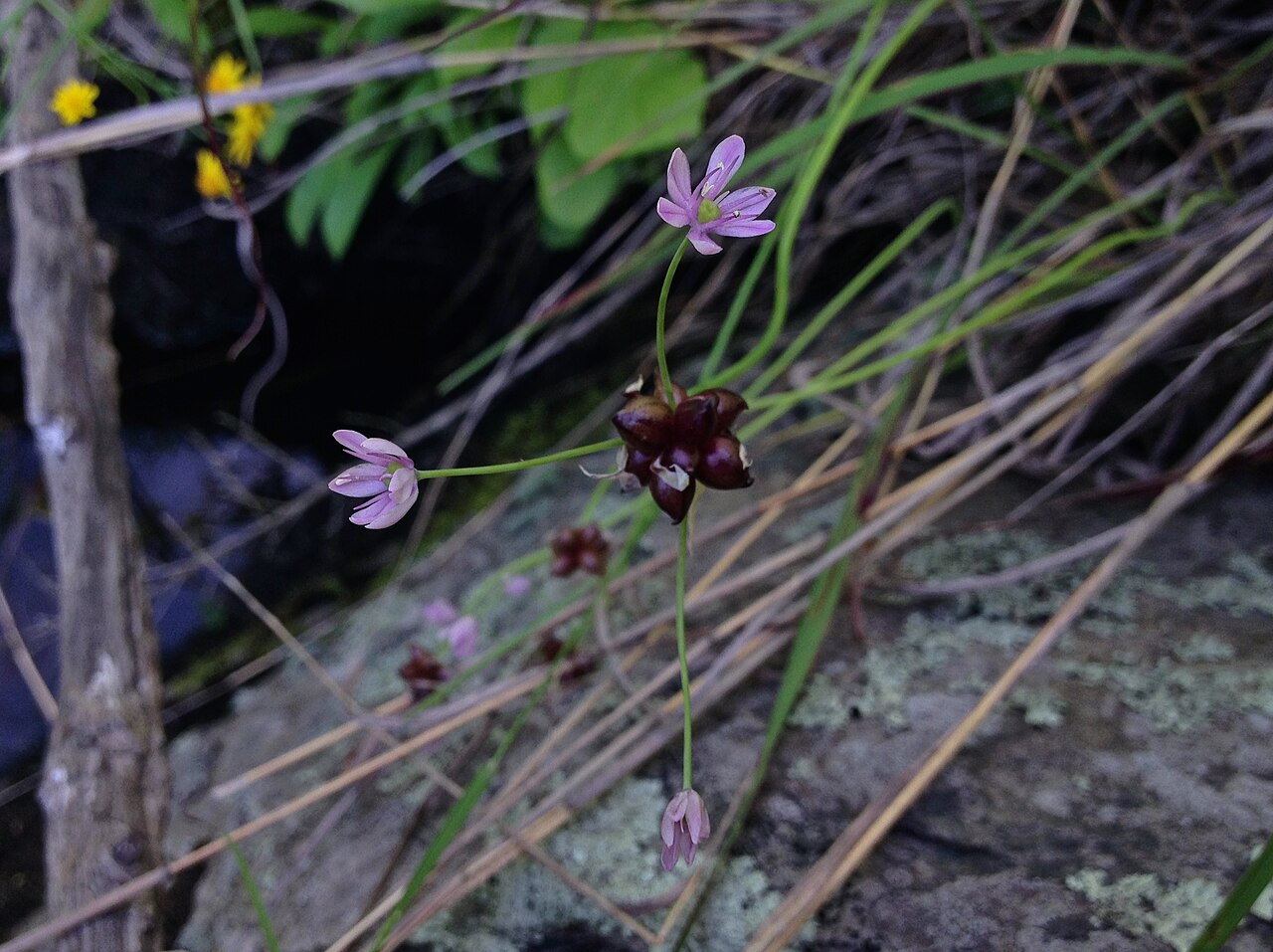
Small green to reddish bulbils may occupy much of the head, sometimes accompanied by a few flowers. They can develop into new plants after dispersal. Where fertile flowers develop, capsules contain dark seed. The balance between bulbils and flowers is taxonomically useful, but interpreting varieties requires a regional key rather than counting flowers from a single head.
Other Wild Alliums
The introduced Allium vineale and several native onions can occur in overlapping regions. Leaf shape, bulb characters, floral structures, and the regional flora are important in separating them. Do not rename every bulbil-bearing onion as an invasive species or every flat-leaved plant as this native. Keep a complete set of observations and seek expert confirmation when the distinction has consequences.
Quick Facts
| Scientific Name | Allium canadense |
| Family | Amaryllidaceae — amaryllis family |
| Plant Type | Bulbous herbaceous perennial |
| Mature Height | Commonly 8–18 in; local forms and conditions vary |
| Mature Spread | Initial clump about 6–12 in; colonies spread farther |
| Growth Rate | Can spread readily by offsets and aerial bulbils |
| Sun Exposure | Full sun to partial shade |
| Water Needs | Average moisture; tolerates some drying in drained soil |
| Soil Type | Loam, sandy or clay soil with adequate drainage |
| Soil pH | Use local soil suitability; no single narrow target required |
| Bloom Time | Late spring to early summer, locally variable |
| Flower Color | White, pink or pale lavender |
| Fall Color | Seasonal foliage decline; not grown for autumn color |
| Fruit | Small capsules and/or aerial bulbils |
| Deer Resistant | Often less browsed, but not immune |
| USDA Hardiness Zones | Commonly listed for zones 4–8 |
| Safety | Not a foraging guide; Allium can be harmful to pets and livestock |
Native Range
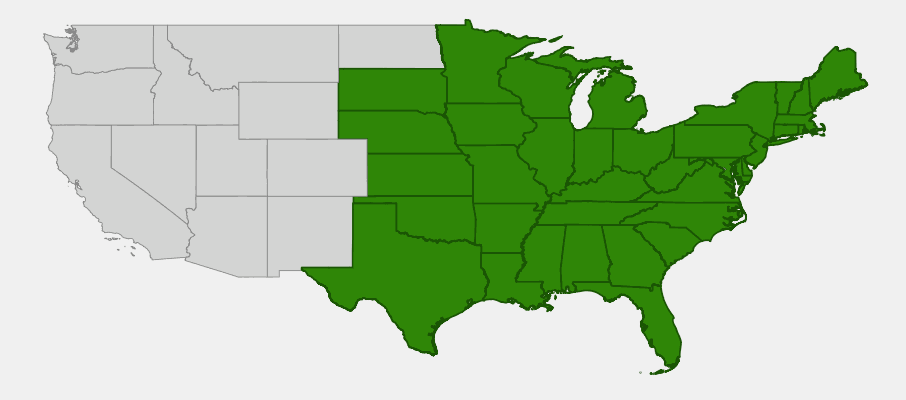
Allium canadense is native across much of central and eastern North America. Its range includes a wide variety of open and partly wooded habitats, from meadows and fields to thickets and forest openings. The species includes forms or varieties that differ in flowers, bulbils, and geography; local botanical identification is therefore more informative than a generic “wild onion” label.
Nebraska, Kansas, South Dakota, and Minnesota are included in Kew’s native distribution. NC State also lists North Dakota and Montana in a broader distribution account, but Kew does not; this map follows Kew conservatively and leaves those two states unshaded. The combined regional tables do not establish local nativity throughout North Dakota or eastern Colorado. Verify local records for those areas before restoration.
The state map summarizes Kew’s native distribution, not every county occurrence. Canadian sources recognize native populations in New Brunswick, Ontario, and Quebec. Where a project depends on a particular variety or a local native population, verify the accepted name and provenance before planting.
📋 Regional plant list: Nebraska, Kansas and Eastern Colorado
Growing & Care Guide
Sun and the Flower Display
Choose full sun or a lightly shaded opening. In a dense dark planting, a small bulbous plant can be hidden and outcompeted before its flower head is noticed. Sun also makes the flowers and reddish bulbils easier to see. If the plant is included for a naturalistic meadow effect, arrange nearby vegetation so the small heads are not immediately buried beneath taller foliage.
Soil and Moisture
Average garden moisture with drainage is a sensible starting point. The plant occurs in varied soils and can tolerate some drying, but a bulb in a persistently stagnant planting hole is at risk. The A code in the regional table means average moisture, not an instruction to irrigate daily. Judge actual soil moisture and seasonal growth rather than using a rigid watering schedule.
Choosing Stock
Buy plants or seed under the full scientific name and, where possible, with regional provenance. A packet labeled only “wild garlic” may refer to a different species. Ask whether stock is bulbiferous if a particular floral display or spread pattern matters to the design. Nursery propagation is preferable to removing bulbs from a wild meadow.
Planting
Follow the depth appropriate to the nursery stock, keeping actively growing foliage above ground and avoiding an exposed drying bulb. Water after planting to settle the root zone. Mark the clump, because young leaves resemble grass and seasonal foliage can later become inconspicuous. Do not place it where routine cultivation will repeatedly chop and distribute bulbs around a vegetable bed.
Allowing Seasonal Growth
Let healthy foliage finish its growth cycle rather than removing it immediately after flowering. The bulb depends on leaves to replenish stored energy. If the foliage later yellows naturally, a nearby compatible perennial can soften the visual gap. Distinguish ordinary seasonal decline from sudden rot or a persistently wet crown before changing the care regime.
Controlling Bulbils
Remove developing heads before mature bulbils fall if you want to limit spread. Collect the material rather than tossing it into an adjacent bed where it may establish. This also removes flowers and potential seed, so leave selected heads where reproduction is welcome. A small deliberate patch is easier to manage than a lawn scattered with unmarked colonies.
Offsets and Division
Cultivated clumps can be divided by separating sound bulbs or offsets at an appropriate dormant or low-stress time. Replant promptly and avoid leaving small bulbs to dry in the sun. Division is a useful propagation method when the identity of the parent is known. It also gives a gardener a way to reduce an oversized patch without distributing bulbils across the garden.
Seed Propagation
Where plants produce viable seed, use a reputable source and follow its treatment and sowing instructions. Bulbil-heavy forms do not necessarily provide an abundant seed crop. Label seed trays clearly and protect emerging plants from weed competition. Do not assume every seedling resembling a narrow blade belongs to the intended species.
Managing Unwanted Spread
If the plant becomes inappropriate for a small bed, remove the bulbs carefully rather than only clipping leaves. Repeated disturbance can leave small offsets behind. Monitor the area during subsequent growth periods and remove young colonies before they reproduce. In a meadow where the plant belongs, selective management around paths or delicate neighbors may be enough.
Pets, Livestock and Food Use
Keep the planting out of forage and away from animals likely to ingest it. NC State records toxic effects from Allium and notes risks to cats, dogs, and livestock. This garden page does not establish that an unidentified wild plant is edible. Use a qualified local identification process and authoritative food-safety guidance rather than tasting a specimen to identify it.
Landscape Uses
- A small seasonal accent in a locally appropriate native meadow.
- A sunny-to-partly-shaded naturalized patch where offsets are acceptable.
- An educational planting demonstrating flowers and aerial bulbils.
- A mixed border with marked clumps and planned control of reproduction.
Wildlife & Ecological Value
Flower Visitors
Open flowers can provide resources for visiting insects. The amount of floral display depends on the balance between flowers and bulbils, so a bulbil-dominated head does not offer the same floral surface as a heavily flowering form. Combine it with other native flowering plants rather than depending on a short bloom period to carry a pollinator garden.
Herbivores and Bulbs
Botanical accounts record wildlife use of bulbs, including by wild turkeys, but wildlife use is not evidence of safety for people or domestic animals. Avoid turning a native-plant recommendation into a feeding recommendation. In a garden, the main management question is whether the plant’s reproduction and seasonal size fit the surrounding community.
Meadow Diversity
A small bulbous perennial occupies a different seasonal and physical niche from a tall grass or late-summer composite. Retaining varied growth forms can make a meadow more interesting and resilient. At the same time, an aggressive local patch should not be allowed to replace every slower neighbor merely because its species is native.
Cultural & Historical Uses
The names Canada onion, meadow garlic, wild garlic, and wild onion reflect the familiar scent and bulbous habit of this plant. The epithet canadense is a historical botanical name, not a statement that it occurs only in Canada. Older family treatments may place it differently; modern sources used here place it in Amaryllidaceae.
Historical accounts discuss food and traditional medicinal uses of wild Allium species, but common names and variable identification complicate casual retellings. This page does not convert those accounts into treatment or foraging instructions. Accurate species identification, context, and safety matter more than repeating an attractive anecdote.
For native gardening, the useful lesson is that a familiar-looking plant can have both ecological value and a capacity to become a nuisance in the wrong setting. Preserve the scientific name, use propagated stock, and choose a site where its reproductive habits are acceptable. A well-chosen patch is more valuable than an accidental colony spread through routine mowing or soil movement.
Frequently Asked Questions
Why are there little bulbs instead of many flowers?
Aerial bulbils are a normal reproductive feature in some forms of Allium canadense. Their presence alone does not indicate disease.
Is every wild onion Allium canadense?
No. Several native and introduced Allium species share common names. Use a regional key and multiple characters.
Can I eat a plant after comparing it with these photos?
This page is not a foraging clearance. Photo comparison and odor alone are insufficient to rule out dangerous mistakes.
Will it stay in a small clump?
Offsets and bulbils can expand the patch. Remove heads before dispersal and divide or thin cultivated colonies if necessary.
Why is my plant taller than the table’s eight-to-twelve inches?
The broader usual height range reaches about eighteen inches, and local forms and conditions vary. The shorter entry is not a universal maximum.
📋 Also listed: North Dakota, South Dakota and Western Minnesota
Sources & Further Reading
- NC State Plant Toolbox
- VASCAN Allium canadense
- VASCAN typical variety
- USDA PLANTS
- ITIS taxonomic record
- Kew Plants of the World Online native distribution
Find Native Plants
Ask growers about nursery propagation and regional provenance. Browse our NE native plant nurseries, KS native plant nurseries, ND native plant nurseries, SD native plant nurseries, MN native plant nurseries directory for suppliers. Explore the native nursery finder.