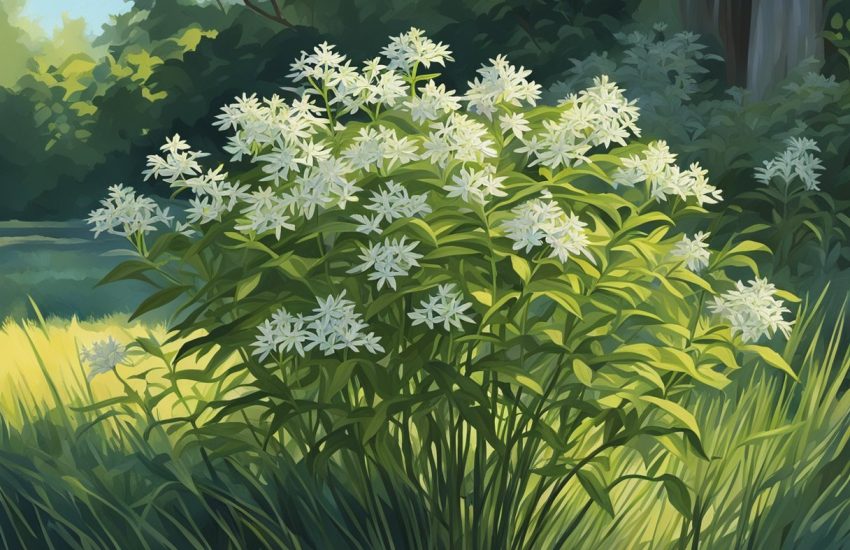
Slope Erosion Control with Natives: Effective Strategies for Sustainable Landscaping
Last updated: September 30, 2026
Slope erosion control matters for keeping soil stable and stopping land from washing away. Using native plants works well because their roots are already tuned in to the local environment, gripping the soil more effectively than most non-natives.
Native plants stabilize slopes by reducing runoff, increasing soil absorption, and minimizing erosion risks over time.
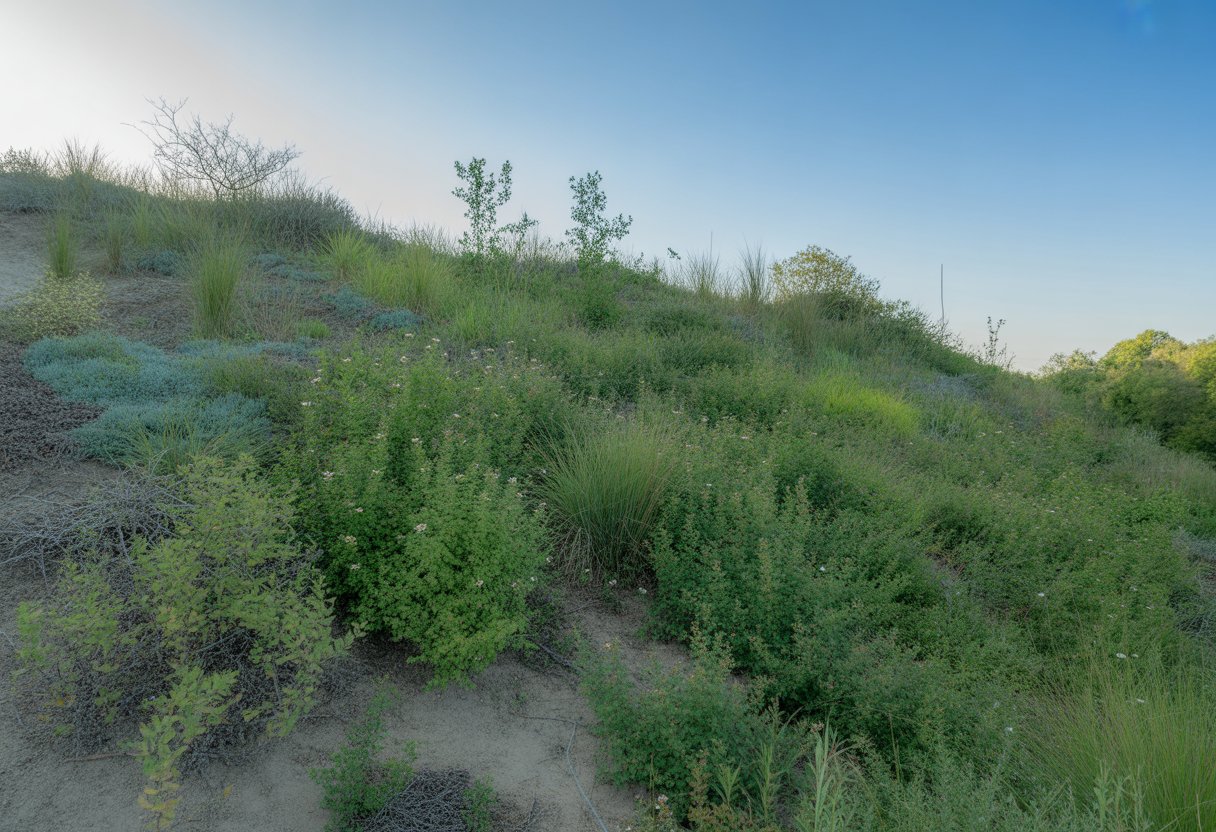
Slopes take a beating from gravity and water flow, which can strip away topsoil fast. Adding native vegetation slows water down and builds a living barrier, cutting back on erosion’s impact.
Their toughness and easy care make them a smart pick for sustainable slope management.
Understanding Slope Erosion and Native Plant Solutions
Slope erosion happens from a mix of natural forces and human activity. Risks like landslides go up, especially on steep slopes or riverbanks after heavy rain or wild weather swings.
Causes and Risks of Slope Erosion
Water runoff from big storms or long wet spells strips away topsoil, which weakens the slope. Losing soil like this makes landslides and sediment buildup in streams more likely.
Steep, loose slopes are especially at risk after major storm events. When there’s not much vegetation or when construction disturbs the area, erosion ramps up.
Riverbanks get hit too, as flowing water eats away at the soil and leaves the area less protected. If you don’t keep this in check, it can threaten both infrastructure and local wildlife.
Why Native Species Are Effective for Erosion Control
Native plants fit right in with local soil and weather, so they’re great for slope stabilization. Their roots dig deep and hold tight, keeping soil in place even when the rain just won’t quit.
They handle all sorts of conditions, from dry spells to soggy weeks, which is handy when the climate keeps changing. This hardiness helps them stick around and keep slopes covered.
Native species also boost biodiversity, giving local wildlife a hand and crowding out invasive plants that don’t do much for erosion. Their natural growth patterns really click with what steep slopes and riverbanks need.
Soil Types, Climate, and Site-Specific Challenges
Soil texture matters—a lot. Sandy soils drain quickly but can blow or wash away, so they need plants with thick root mats. Clay soils hold water but can crack, which leaves slopes exposed after heavy rain.
The local climate shapes what will actually survive. If you’re in a place that’s always wet or swings from drought to flood, you need species that can roll with both extremes.
Slope angle, past disturbances, and nearby water all play a role too. You’ve got to match the right native plant to the right spot, or you’ll be fighting an uphill battle for long-term erosion control. Native plant availability varies a lot by region, so always check which species are native to your specific area before planting.
Selecting and Establishing Native Plants for Slope Stabilization
Getting slopes stable means picking the right plants and setting them up to succeed. Choose native trees and shrubs that fit the site, blend in ground covers and seed mixes, and use planting techniques that work for your landscape—urban or not.
Choosing the Right Native Trees and Shrubs
Shrubs such as fragrant sumac (Rhus aromatica) and ninebark (Physocarpus opulifolius) send out spreading, fibrous root systems that lock in the mid-layer of a slope and add real wildlife value. Coralberry (Symphoricarpos orbiculatus) suckers readily and forms dense colonies that are handy for tying together bare patches.
On wetter slopes, red-osier dogwood (Cornus sericea) and willows (Salix spp.) are workhorses—both root easily from live stakes driven straight into moist soil. On dry western or northern slopes, look to bearberry, also called kinnikinnick (Arctostaphylos uva-ursi), a low, woody groundcover built for rocky, sun-baked ground. Serviceberry (Amelanchier spp.) works as a taller anchor shrub with the bonus of spring flowers and fruit for birds.
You want species that can handle the exact soil and sun your slope gets—even rocky spots. Trees and shrubs need to take full sun if the slope’s exposed, and their roots have to run deep and wide to keep landslides at bay. Since native ranges vary quite a bit across North America, check a regional native plant guide or your state’s native plant society before finalizing a species list.
Native picks help the local ecosystem while also doing the heavy lifting for stabilization.
Role of Ground Cover and Seed Mixes
Ground covers shield the soil from pounding rain and slow down runoff. Native bunchgrasses are especially good at this: switchgrass (Panicum virgatum) and little bluestem (Schizachyrium scoparium) both grow deep, fibrous roots that hold soil together, while Virginia wild rye (Elymus virginicus) establishes quickly and tolerates some shade. On woodland slopes, Pennsylvania sedge (Carex pensylvanica) forms a low, spreading mat that shades out weeds.
Seed mixes often blend these native grasses and sedges with a quick-growing annual nurse crop, like annual rye, to get cover started fast. The nurse crop pops up quickly, holding the soil while the natives get established. Over time, the natives take over, and the nurse crop fades out.
Make sure your seed mix fits the local climate and the steepness of your slope. Pick species that will thrive and add organic matter to keep the soil healthy.
Considerations for Planting Techniques and Site Preparation
Start by clearing weeds, testing the soil, and amending where needed so your plants have a fighting chance. Try terracing or planting along contours to chop the slope into easier-to-manage pieces.
On steeper or bare slopes, erosion-control blankets and coir or straw wattles laid along the contour give seed and young roots time to establish before the next hard rain. Live stakes—cut sections of dormant willow or red-osier dogwood pushed directly into damp soil—can root in place and are a fast, low-cost way to stabilize wet slopes and streambanks.
Pay attention to root ball size and soil moisture to avoid transplant shock. Mulch around new plants to keep moisture in and weeds out.
If you’re dealing with rocky or packed soils, break things up before planting so roots can spread.
Planting and Establishment in Urban Backyards and Infrastructure Projects
Urban backyards need plants that stabilize slopes but don’t eat up all the space or look out of place. Homeowners can use native shrubs and ground covers that fit the area and don’t crowd patios or paths—Virginia creeper (Parthenocissus quinquefolia) is a fast-covering vine that works well on banks too steep to mow.
Near infrastructure, safety and regulations should guide what you plant. State infrastructure projects often go big with native plantings along roads and drainage.
Tough, low-maintenance shrubs like fragrant sumac or ninebark keep upkeep low and boost habitat value along roadsides and drainage corridors. Working with engineers helps make sure roots and branches won’t mess with structures.
Maintenance, Ecosystem Benefits, and Long-Term Success
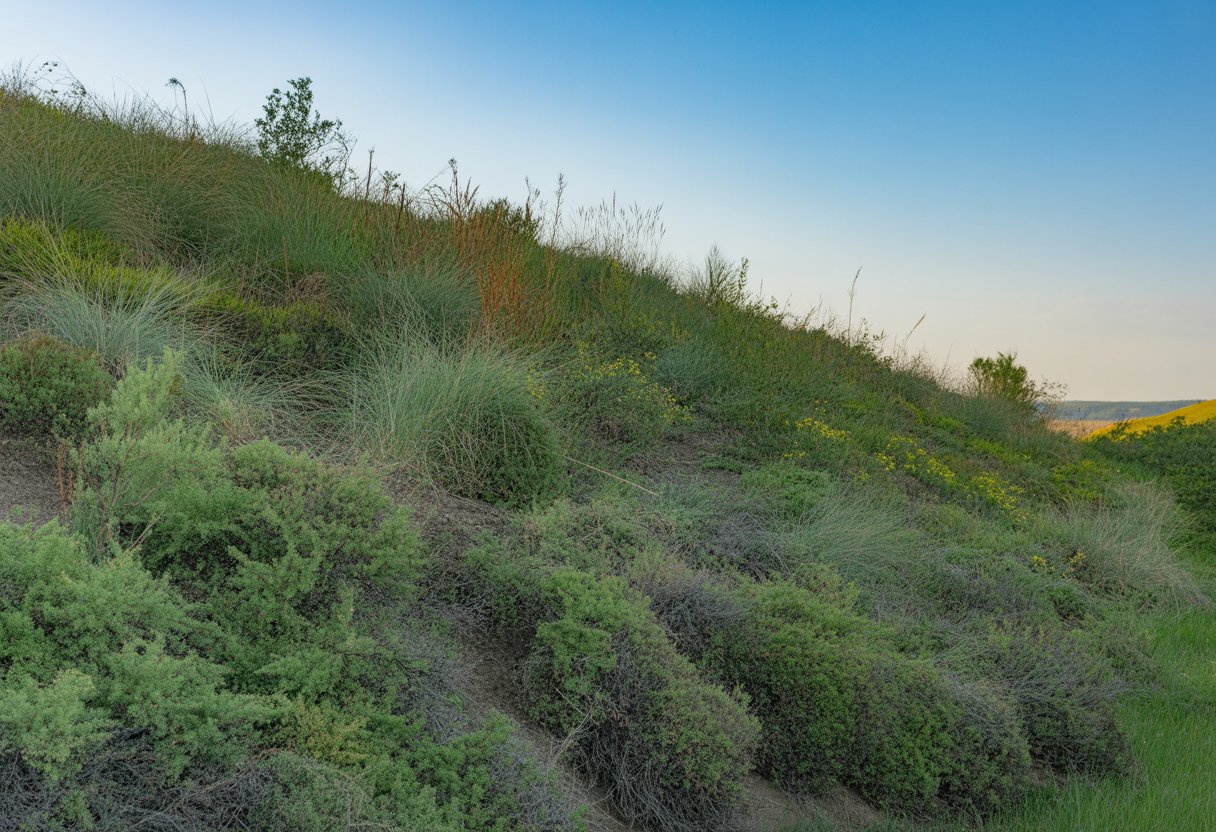
Keeping slopes in good shape with natives really comes down to solid root systems, simple upkeep, and helping out local ecosystems. Good care keeps costs down and supports wildlife, which helps slopes stay green and strong over time.
Root Systems and Slope Stability Over Time
Native plants grow deep, tangled roots that pull soil layers together. These roots boost slope stability by making the soil stickier and letting water soak in, so there’s less runoff.
As plants mature, their roots adjust to changing moisture and soil, which helps slopes stay steady for the long haul. Bunchgrasses like little bluestem and switchgrass, along with woody groundcovers like kinnikinnick, are especially good at this because their root systems keep growing and spreading for years after planting.
Costs, Maintenance, and Community Involvement
Native plants usually cost less to maintain since they don’t need much fertilizer or extra water. Local councils and programs often push for native planting to keep project costs in check.
Getting community groups involved in checking and caring for these plantings really helps. Volunteers can weed, replace dead plants, and keep an eye on slope health, which cuts down on the need for professional maintenance.
Enhancing Biodiversity and Ecosystem Services
Natives bring in songbirds, native bees, and loads of other wildlife—fruiting shrubs like serviceberry and coralberry feed birds through fall and winter, and flowering species support native bees and other pollinators. More plant cover on a slope means better shade, cooler soil, and more carbon stored in roots and organic matter.
This regreening creates better pollination, pest control, and healthier soil. Native plantings build tough habitats that support both wildlife and the natural cycles slopes need.
Integrating Native Plant Erosion Control with Built Environments
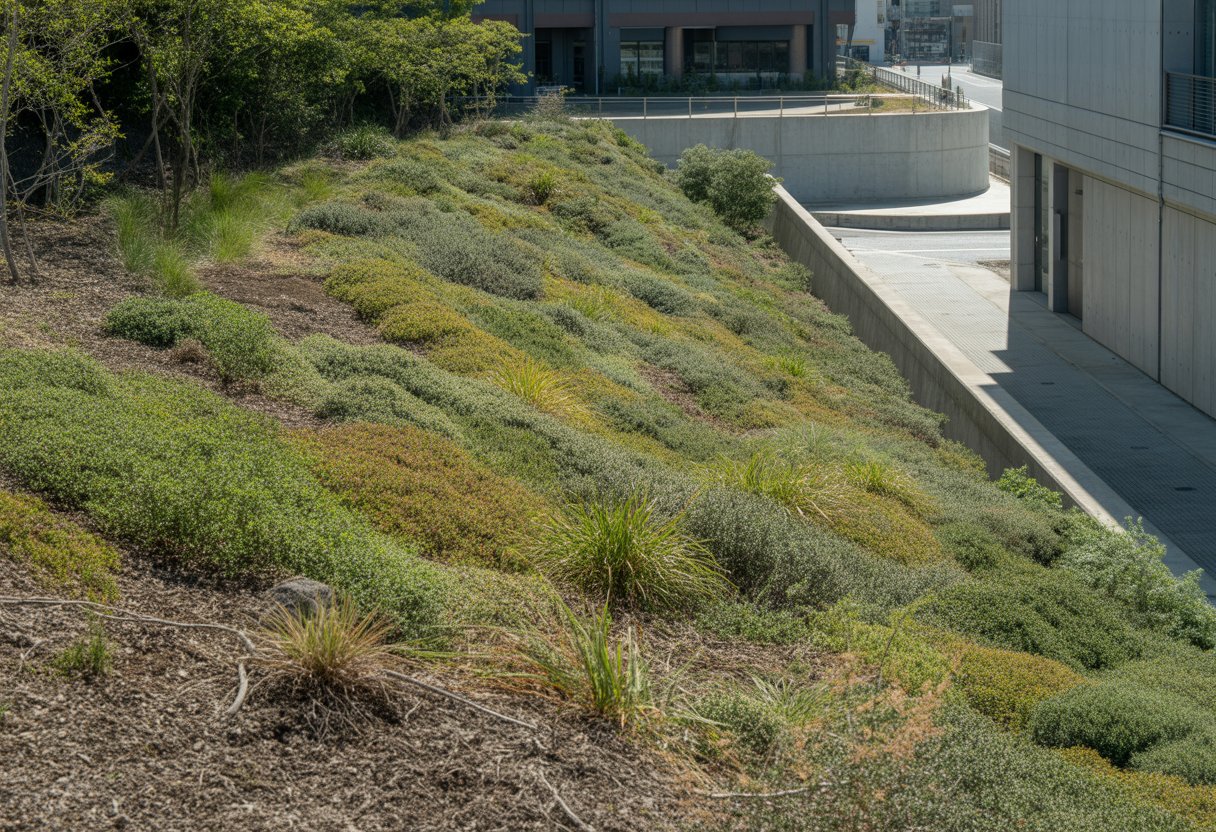
Combining native plants with built structures really gives you the best of both worlds. This hybrid approach boosts stability, manages water, and keeps things resilient—even in tricky spots like cut slopes along highways or steep urban lots.
Retaining Walls, Artificial Reinforcement, and Hybrid Approaches
Retaining walls act as the main shield against soil slipping away. When you add native plants, they cut down on runoff and erosion even more.
Stuff like geotextiles, erosion-control blankets, or soil nails can reinforce slopes alongside these walls. Mixing in deep-rooted natives tightens up the soil and slows water down.
Hybrid approaches use retaining walls that meet civil standards, paired with native plants that fit the local scene. This way, you don’t have to clear as many trees and can still restore the ecosystem.
Managing Water and Groundwater on Slopes
Water movement and groundwater make or break slope stability. You’ve got to plan for drainage so the soil doesn’t get soggy and weak.
Native plants that pull up lots of water help lower groundwater levels. Their roots also create channels that let soil breathe, cutting down on waterlogging.
Engineered drainage systems work with the plants to move surface water away from trouble spots. In regions that get heavy seasonal rain or snowmelt, this combo tackles the challenges of saturated soil and steep ground.
Responding to Extreme Weather and Landslide Events
Slopes in areas that get hit with storms or heavy rain face a higher risk of landslides. Native vegetation really helps by holding soil in place before and after wild weather.
Sometimes, people use artificial reinforcement—like erosion-control blankets or geotextiles—for quick slope protection during extreme weather. This is common on cut slopes near roads or other infrastructure.
But honestly, it’s the return of native plants that matters for the long haul. These plants soak up water and keep the soil anchored better than anything else.
After a landslide, folks usually plant native species that fit the local ecosystem—often starting with fast-rooting live stakes of willow or dogwood, then filling in with grasses, sedges, and shrubs suited to the site. It’s a way to bring back habitat and toughen up slopes for whatever comes next.