
California Coffeeberry (Frangula californica)
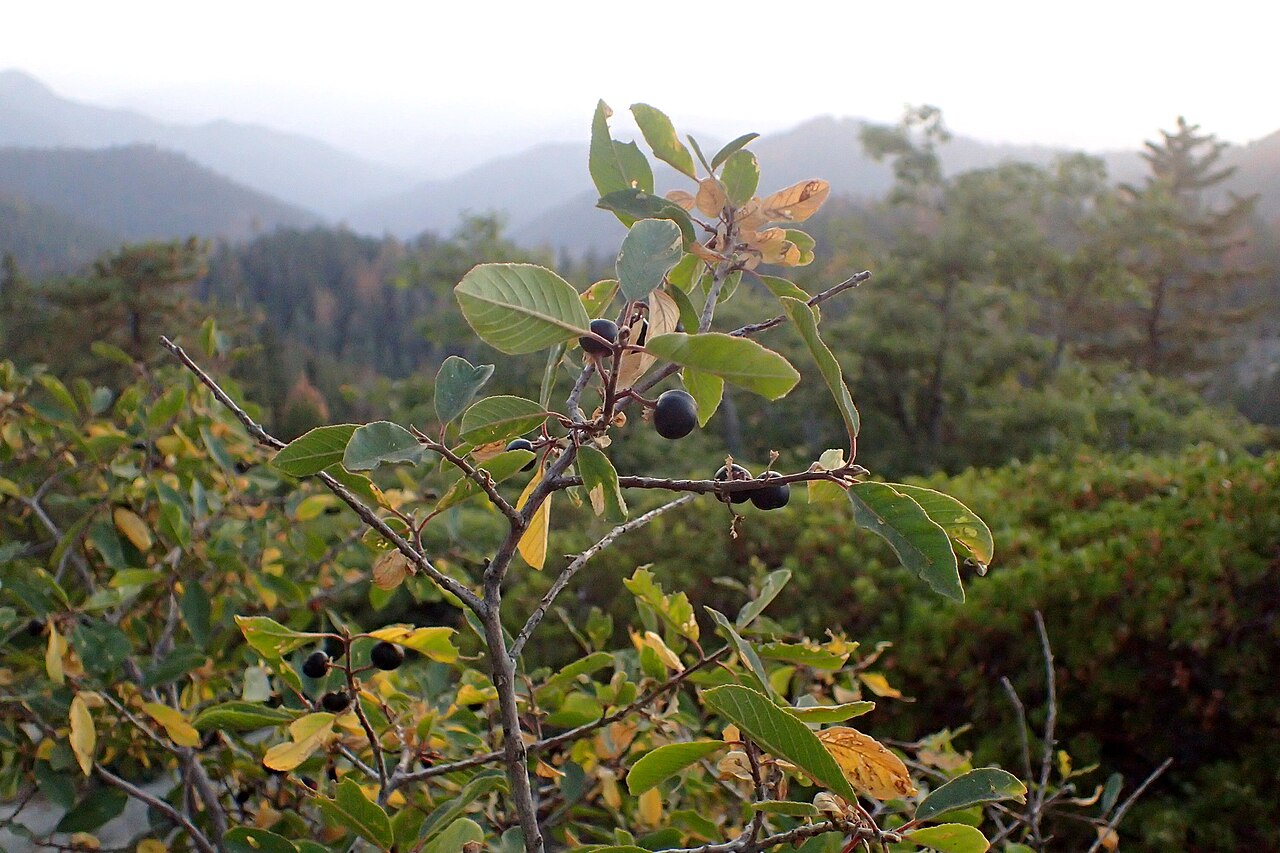
Frangula californica (formerly classified as Rhamnus californica), commonly known as California Coffeeberry, is an adaptable evergreen shrub native to the chaparral, woodlands and forest edges of the western United States. It belongs to the buckthorn family (Rhamnaceae) and takes its common name from its round, berry-like fruit, which contains two to three seeds that resemble small coffee beans. Despite the name and the resemblance, the fruit is not related to true coffee and is not used as a coffee substitute.
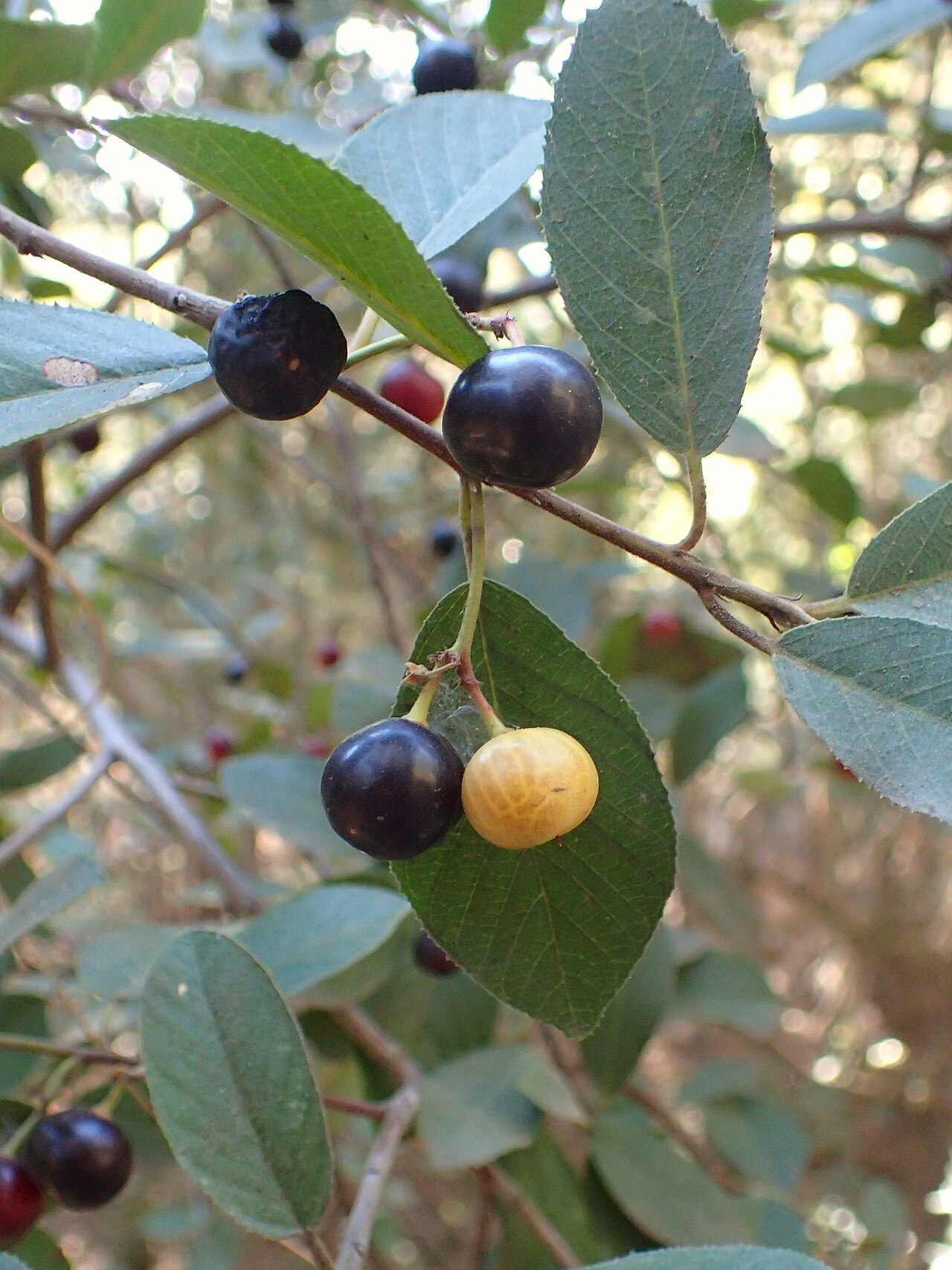
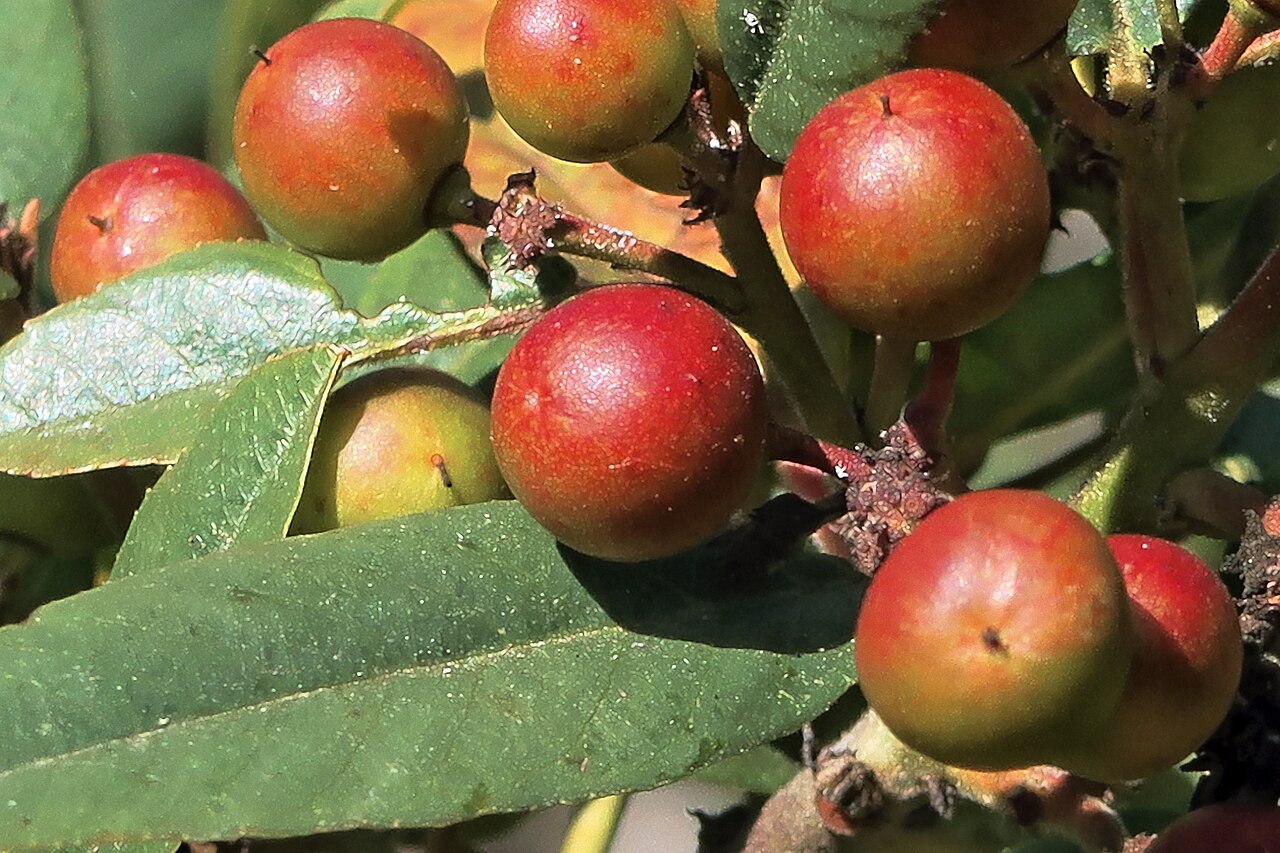
California Coffeeberry is a variable species, ranging from a low, spreading groundcover form in some populations to an upright shrub or small tree 10 to 15 feet tall in others, depending on subspecies and growing conditions. Its leathery, glossy leaves stay green year-round, and its understated greenish flowers give way to a long season of fruit that ripens through a striking color sequence — green, then yellow, then red, and finally black — often with several colors present on the same branch at once. That extended fruiting display makes it an exceptional wildlife shrub as well as a tough, low-maintenance choice for western native gardens.
Gardeners sometimes also hear California Coffeeberry called “alder buckthorn,” a name that causes real confusion: the true Alder Buckthorn (Frangula alnus) is a different, unrelated species from Europe that has become an aggressive invasive shrub in parts of the northern and eastern United States and Canada. California Coffeeberry is not that plant, is not invasive, and is native only to the western states described below — but gardeners should buy it under its correct name and avoid the “alder buckthorn” label to steer clear of mix-ups with its invasive European relative.
Identification
California Coffeeberry grows as a rounded, multi-stemmed evergreen shrub, typically 3 to 12 feet tall depending on subspecies, site and moisture, with some low-growing coastal forms staying under 3 feet and spreading wider than tall. The overall silhouette is dense and leafy, without the thorns that mark many other buckthorn-family shrubs.
Bark & Stems
Young twigs are reddish-brown and finely hairy, aging to smooth gray-brown bark on older stems. Unlike true buckthorns in the genus Rhamnus, California Coffeeberry is unarmed — its branches lack the stiff thorn-tipped twigs common in that related genus.
Leaves
The leaves are evergreen, alternate, elliptical to oblong, 1 to 3 inches long, with a leathery texture and a glossy dark green upper surface. The underside is paler and can be smooth or finely hairy depending on subspecies. Margins are usually smooth to very finely toothed, and the veins run in a neat, slightly sunken herringbone pattern that is a useful field mark.
Flowers & Fruit
Flowers are small, greenish-yellow, five-parted, and clustered in modest umbels in the leaf axils; they are easy to overlook but are a reliable, long-blooming nectar source. The fruit is a round drupe about ⅜ inch across that ripens slowly over summer and fall, passing through green, yellow-green and red stages before turning glossy black at full ripeness. Inside each berry are typically two or three hard, grooved seeds that resemble miniature coffee beans, the source of the plant’s common name.
Quick Facts
| Scientific Name | Frangula californica (syn. Rhamnus californica) |
| Family | Rhamnaceae (Buckthorn) |
| Plant Type | Evergreen shrub |
| Mature Height | 3–12 ft (varies widely by subspecies) |
| Mature Spread | 4–10 ft |
| Growth Rate | Moderate |
| Sun Exposure | Full Sun to Part Shade |
| Water Needs | Low to Moderate; drought tolerant once established |
| Soil Type | Well-drained; tolerates clay, sand and rocky soils |
| Soil pH | 6.0–8.0 (adaptable) |
| Bloom Time | March – June |
| Flower Color | Greenish-yellow |
| Fall Color | None (evergreen) |
| Fruit | Round drupes ripening green to red to black, summer–fall |
| Deer Resistant | Moderately (occasionally browsed) |
| USDA Hardiness Zones | 7–10 |
Native Range
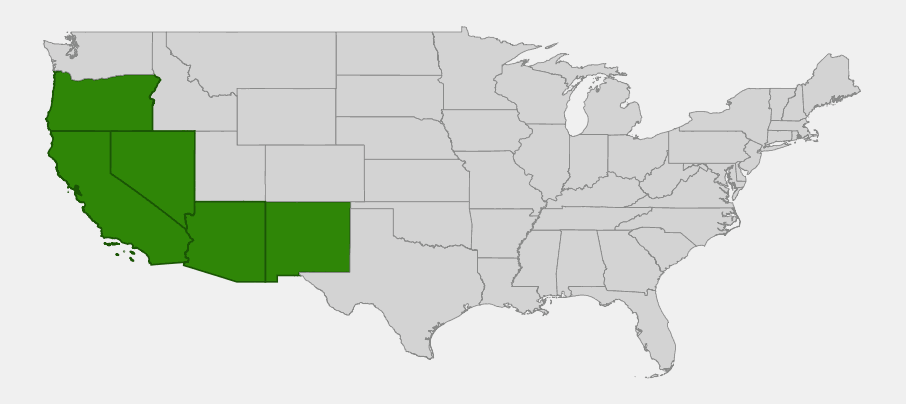
California Coffeeberry is native to the western United States, ranging through Oregon (chiefly the southwestern part of the state), California, Nevada, Arizona and New Mexico. It is most abundant and most variable in California, where it grows from the coastal fog belt through the Coast Ranges and Sierra Nevada foothills, while populations in the Southwest tend to be more localized to canyons and mountain slopes.
It is a classic component of chaparral and mixed-evergreen woodland, growing on dry slopes, in oak woodlands, along the margins of coniferous forest, and in canyon bottoms with slightly more moisture. Elevation and habitat vary enormously across its range, from near sea level on the coast to mid-elevation mountain slopes well inland, which explains why the species has been split into several recognized subspecies adapted to local conditions.
California Coffeeberry is not considered rare or declining; it remains common and widespread across its native range and resprouts readily after fire, making it an important early recovery species in burned chaparral and woodland. It should not be confused with the unrelated, non-native Alder Buckthorn (Frangula alnus) of Europe, which is invasive in parts of the northern and eastern U.S. and Canada but does not occur naturally anywhere in the coffeeberry’s western range.
📋 Regional plant lists featuring California Coffeeberry: Western Oregon & Western Washington · Arizona & New Mexico
Growing & Care Guide
California Coffeeberry is one of the easiest and most forgiving evergreen shrubs for western native gardens, tolerating heat, drought, poor soil and light shade with little complaint once it is established.
Light
It grows well in full sun along the coast and in light to part shade further inland, where some afternoon relief keeps the foliage from scorching during the hottest months. In deeper shade the shrub becomes looser and more open, with fewer flowers and less fruit.
Soil & Water
California Coffeeberry adapts to a wide range of soils, including clay, sand and rocky, shallow ground, as long as drainage is reasonable. It is genuinely drought tolerant once established, needing only occasional deep watering through the dry season, though it also accepts regular garden irrigation if not kept constantly soggy. Avoid heavy, poorly drained soil that stays wet through winter.
Planting Tips
Plant from container stock in fall or early spring so roots can establish before summer heat arrives. Space plants 4 to 8 feet apart depending on the cultivar or subspecies’ mature spread; low, spreading forms can be used as a wide groundcover, while upright forms work well as a background or screening shrub. Established plants need very little supplemental water in most of their range.
Pruning & Maintenance
California Coffeeberry needs minimal pruning. Light shaping after the main fruiting season can control size and encourage denser growth; avoid heavy pruning in late summer, which removes the current season’s fruit before birds have used it. The shrub resprouts vigorously from the base after fire or hard pruning, a trait inherited from its chaparral habitat.
Landscape Uses
- Drought-tolerant hedges and screens in low-water western gardens
- Wildlife gardens, where the long fruiting season feeds birds for months
- Slope and erosion control plantings, especially the spreading low-growing forms
- Fire-wise landscaping, since it resprouts readily after burning and is commonly used in defensible-space plantings when kept well-spaced and maintained
- Woodland and chaparral restoration projects throughout its native range
- Foundation and background plantings that need year-round structure
Wildlife & Ecological Value
Few western shrubs match California Coffeeberry’s extended usefulness to wildlife, thanks to its long bloom season and even longer fruiting display.
For Pollinators
The small, nectar-rich flowers bloom over several months and attract a wide range of native bees, honeybees, wasps and flies. Because flowering is extended rather than a single pulse, the shrub provides a steady, reliable nectar source through spring and into summer when many other chaparral plants have finished blooming.
For Birds
The fruit ripens gradually and unevenly from summer into fall, so a single shrub can offer food for months rather than days. Robins, mockingbirds, towhees, thrushes and many other fruit-eating birds rely on coffeeberry as a dependable late-season food source, especially valuable as other wild fruits are depleted.
For Mammals
Foxes, coyotes and other mammals eat the ripe berries and help disperse the seeds across the landscape. Deer browse the foliage occasionally, particularly on young growth, though the shrub is not a preferred or heavily grazed food source.
Ecosystem Role
As a common, fire-adapted shrub of chaparral and oak woodland, California Coffeeberry helps stabilize slopes, recovers quickly after wildfire by resprouting from its root crown, and provides structural cover in plant communities that are otherwise dominated by fire-prone, resin-rich shrubs. Its long fruiting season makes it one of the more ecologically valuable shrubs in the chaparral community.
Cultural & Historical Uses
Indigenous peoples throughout California used parts of the coffeeberry plant medicinally, most notably the bark, which was historically prepared as a mild laxative in a manner similar to the related Cascara (Frangula purshiana) of the Pacific Northwest. These traditional preparations required careful processing and were part of a broader Indigenous pharmacopeia rather than something to be attempted casually today.
The plant’s common name reflects early settlers’ observations of the seeds, which resemble small coffee beans in shape, though the fruit was never a genuine coffee substitute and is not palatable or safe for that purpose. Historically, coffeeberry’s dense, fire-resprouting growth also made it useful as informal property-line and windbreak planting in rural California.
In the 20th century, California Coffeeberry became a cornerstone of California native-plant horticulture. Selections such as the compact cultivar ‘Eve Case’ and the low-growing ‘Mound San Bruno’ were developed specifically for garden use, and the species remains one of the most widely recommended low-water shrubs for western landscaping, prized as much for its reliability as for its wildlife value.
Frequently Asked Questions
Is California Coffeeberry the same as Alder Buckthorn?
No. California Coffeeberry is sometimes loosely called “alder buckthorn,” but the true Alder Buckthorn (Frangula alnus) is a different, non-native European species that has become invasive in parts of the northern and eastern United States and Canada. California Coffeeberry is a separate, western native species and is not invasive. Ask for it by its correct name, California Coffeeberry, to avoid confusion.
Can you eat California Coffeeberry fruit?
The berries are not a food source for people. While not considered seriously toxic, they can cause digestive upset, consistent with the mild laxative properties traditionally associated with the related bark. Leave the fruit for the birds and other wildlife that rely on it.
Is California Coffeeberry drought tolerant?
Yes, once established it is genuinely drought tolerant and is a staple of low-water California gardens, needing only occasional deep irrigation through the dry season in most of its range.
How big does California Coffeeberry get?
It varies a great deal by subspecies and cultivar, from low, spreading groundcover forms under 3 feet tall to upright shrubs reaching 10 to 15 feet. Check the mature size of a specific cultivar before planting, since the species is sold in several very different garden forms.
Does California Coffeeberry attract wildlife?
Very much so. Its long bloom period feeds pollinators for months, and its slow, uneven fruit ripening provides birds and small mammals with food over an unusually extended season compared to most other native shrubs.

Looking for a nursery that carries California Coffeeberry?
Browse our native plant nursery directory: California · Oregon · Arizona · Nevada & New Mexico