Black Ash (Fraxinus nigra)
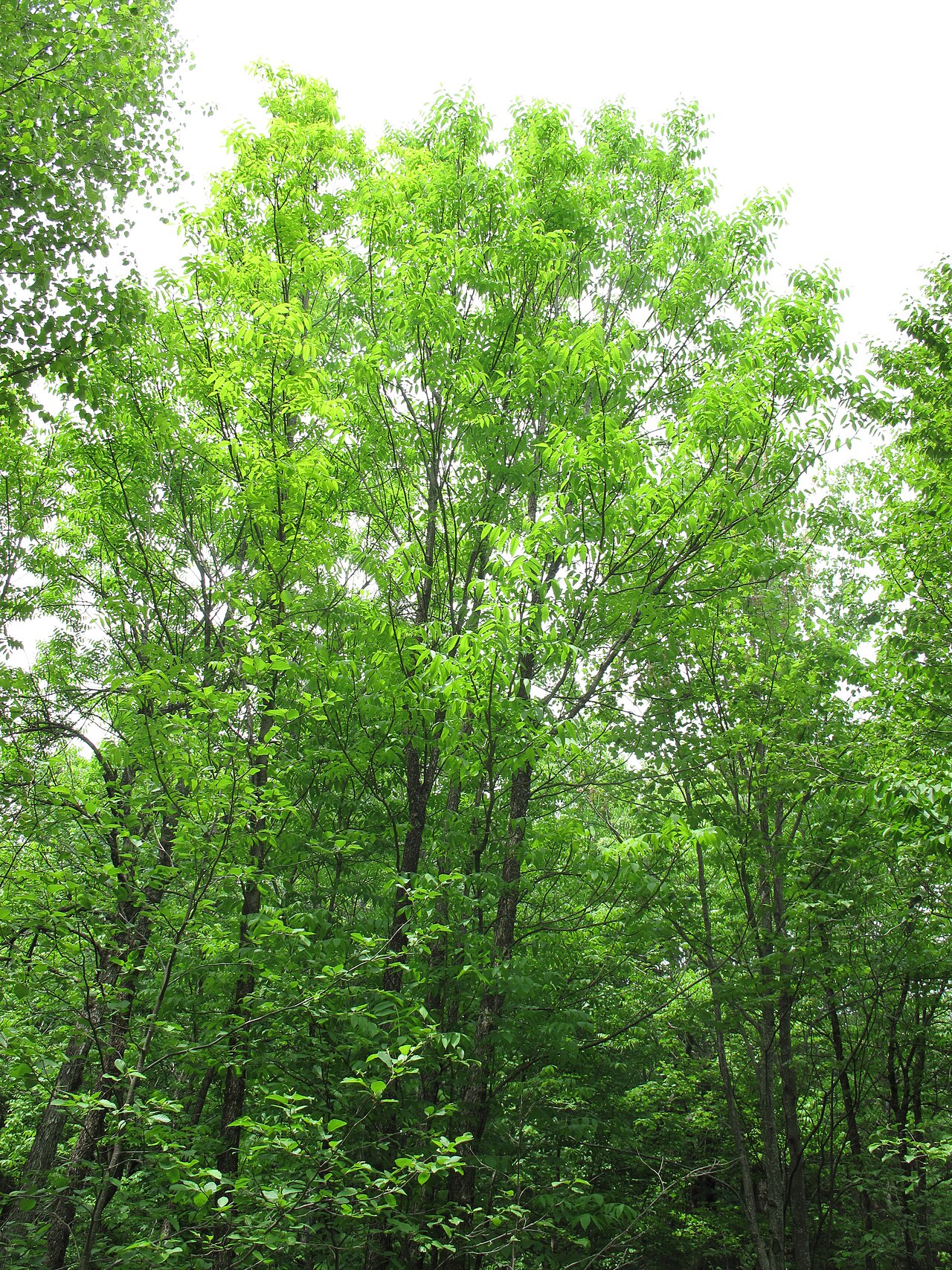
Fraxinus nigra, commonly known as Black Ash, is a slender, slow-growing tree of cold northern swamps, wet woods and streamside forests across the Great Lakes region, the Northeast and eastern Canada. A member of the olive family (Oleaceae), it is the most wetland-dependent of North America’s ash species, typically found standing in saturated, mucky soil that few other trees can tolerate for long. Its tight, upright crown and fine-textured compound leaves give it a graceful, almost willow-like presence in the swamp forests it calls home.
Black Ash is best known for two very different things. Culturally, its wood has an extraordinary property: when pounded, the growth rings separate into thin, flexible strips perfect for weaving, and this “black ash splint” has been used by Indigenous basket makers across its range for centuries, producing some of the most prized traditional baskets in North America. Ecologically, it dominates a wetland forest type — the black ash swamp — found nowhere else, where its deep shade and seasonal flooding create specialized habitat for wetland plants, amphibians and birds.
Unfortunately, Black Ash today is also defined by crisis. The invasive emerald ash borer, an Asian beetle first detected in Michigan in 2002, specifically targets ash trees and kills them within a few years of infestation. Because Black Ash has no evolved resistance to this pest, emerald ash borer has killed the overwhelming majority of mature Black Ash across large parts of its range, and the species is now classified as Critically Endangered by the IUCN. Anyone planting or managing Black Ash today needs to understand this threat before deciding whether and how to grow it.
Identification
Black Ash is a medium-sized tree, usually 40 to 60 feet tall with a slender trunk 12 to 20 inches in diameter, though it rarely reaches the size of other North American ashes because it grows slowly in cold, saturated soil. The crown is narrow and rounded, with relatively few large branches compared to faster-growing ash species.
Bark & Stems
The bark is distinctive: gray and corky, breaking into small, soft, flaky scales that can often be rubbed off by hand, unlike the hard, diamond-furrowed bark of other ashes. Twigs are stout and gray, with a conspicuous gap between the dark, nearly black terminal bud and the first pair of lateral buds below it — a reliable identification mark that also gives the species its common name.
Leaves
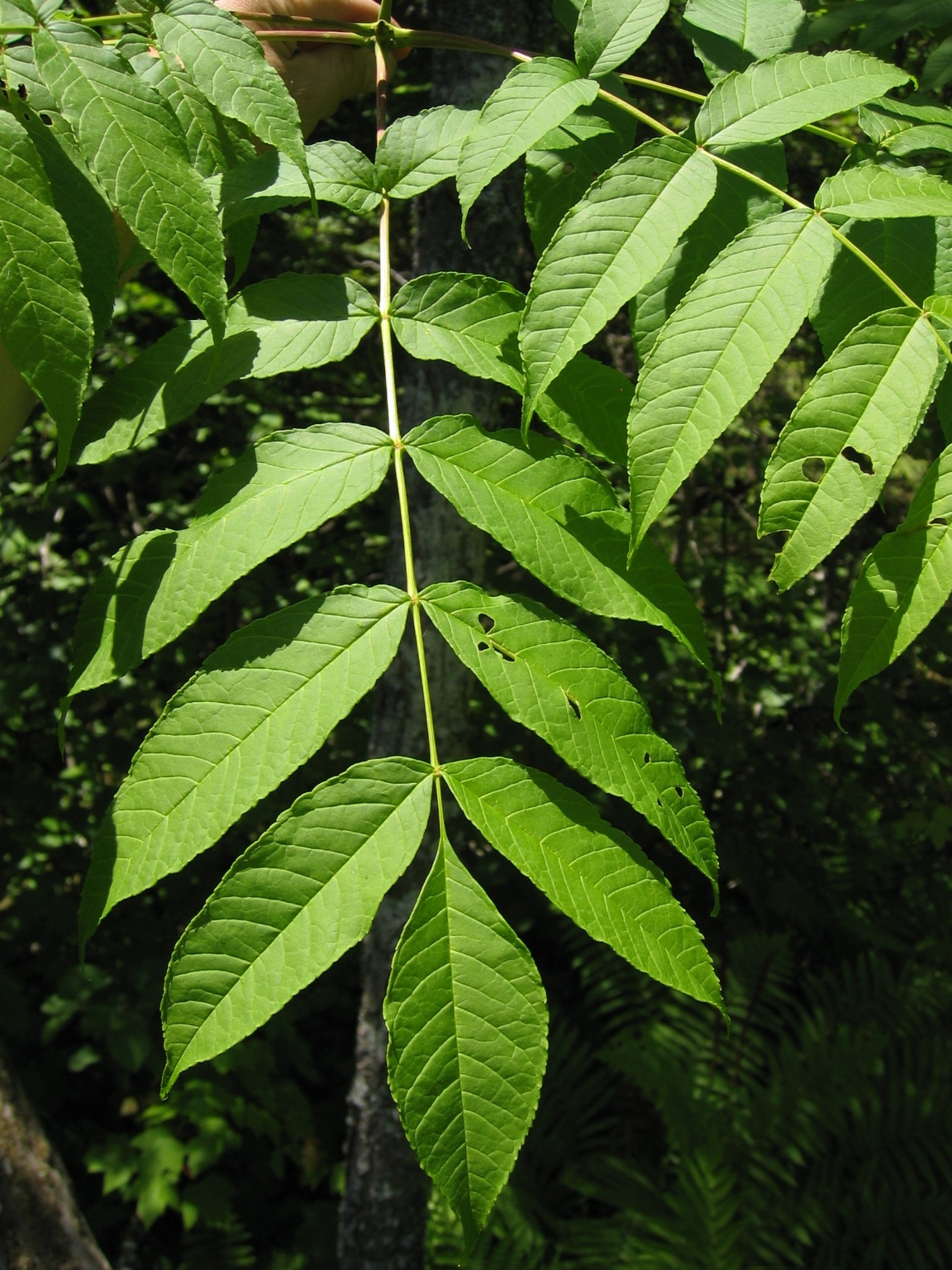
Leaves are opposite, pinnately compound, 12 to 16 inches long, with 7 to 11 (usually 9) leaflets. Unlike most other ashes, the leaflets are sessile — attached directly to the central leaf stalk without their own small stalks — and are narrowly oblong to lance-shaped, finely toothed, dark green above and paler beneath. Fall color is an unremarkable yellow to brown, dropping earlier than many other trees.
Flowers & Fruit
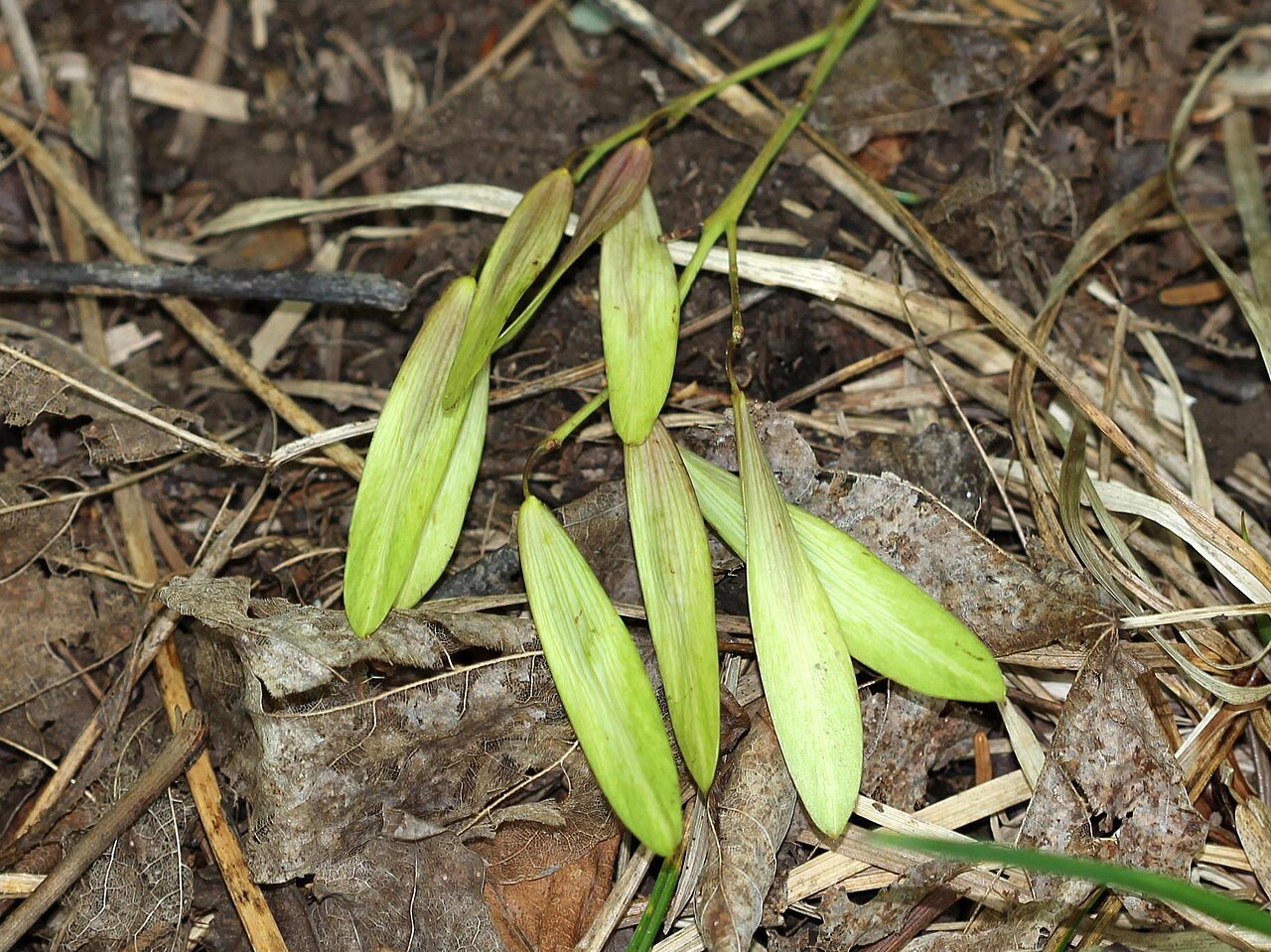
Like other ashes, Black Ash is wind-pollinated, with small, petal-less flowers appearing in spring before the leaves, in loose clusters along the previous year’s twigs; most trees are either male or female (dioecious). The fruit is a flattened, single-winged samara, 1 to 1½ inches long, broadest near the tip rather than evenly tapered, maturing in late summer and often persisting on the tree into winter, where it can be a useful identification feature.
Quick Facts
| Scientific Name | Fraxinus nigra |
| Family | Oleaceae (Olive) |
| Plant Type | Deciduous wetland tree |
| Mature Height | 40–60 ft |
| Trunk Diameter | 12–20 in |
| Growth Rate | Slow |
| Sun Exposure | Full Sun to Part Shade |
| Water Needs | High; needs consistently wet to saturated soil |
| Soil Type | Wet, poorly drained; muck, peat or seasonally flooded mineral soil |
| Soil pH | 6.0–7.5 (neutral to slightly acidic) |
| Bloom Time | April – May, before leaves emerge |
| Flower Color | Inconspicuous (no petals) |
| Fall Color | Pale yellow to brown |
| Fruit | Single-winged samara, broadest near the tip |
| Deer Resistant | Moderate (occasionally browsed when young) |
| USDA Hardiness Zones | 2–6 |
Native Range
Black Ash is native to the northeastern quarter of the United States and much of eastern Canada, reaching from Newfoundland and the Maritimes west to southeastern Manitoba and North Dakota, its westernmost outpost, and south through the Great Lakes states to northern Illinois, Indiana and Ohio, with scattered populations continuing south through the Appalachian fringe into West Virginia and Virginia. It is a northern, cold-climate species throughout, and populations thin out markedly at the southern edge of this range.
Black Ash is almost always found in wetlands: forested swamps, streamside flats, the margins of bogs and fens, and seasonally flooded lowland forest where the soil is saturated for much of the growing season. It is shade-tolerant when young and often grows as scattered individuals or small stands within mixed swamp forest, sometimes forming nearly pure stands on the wettest sites where few other trees can compete.
Across much of its range, Black Ash populations have been devastated by the invasive emerald ash borer (see the Growing & Care Guide below), and in many areas where it was once common it is now largely gone from the canopy, surviving mainly as small resprouts or in isolated pockets the beetle has not yet reached. Because of this ongoing collapse, the IUCN now lists Black Ash as Critically Endangered, even though it remains, for the moment, present across its historical geographic range.
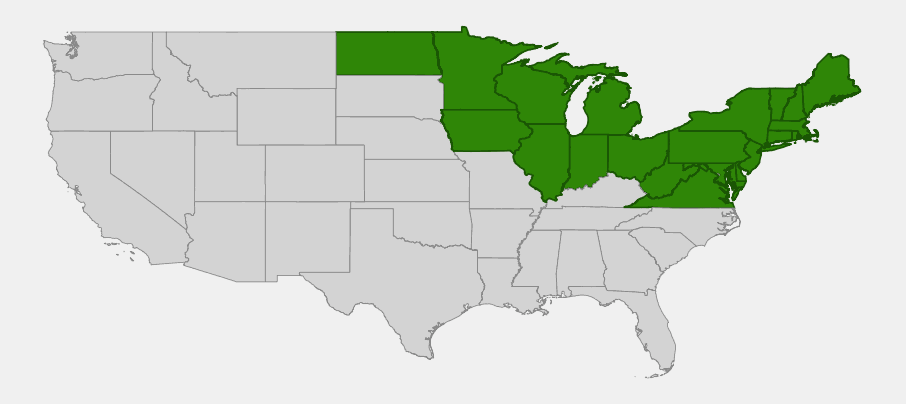
📋 Regional plant lists featuring Black Ash: New Hampshire, Maine & Vermont · Connecticut, Massachusetts & Rhode Island · New York, Pennsylvania & Northern New Jersey · Delaware, Southern New Jersey & Long Island · Maryland, Virginia & West Virginia · Ohio & Indiana · Illinois, Iowa & Missouri · Michigan, Wisconsin & Eastern Minnesota · North Dakota, South Dakota & Western Minnesota
Growing & Care Guide
A note before planting: Black Ash is under severe, ongoing attack from the emerald ash borer (Agrilus planipennis), an invasive Asian beetle whose larvae tunnel beneath the bark and kill the tree by girdling its water- and nutrient-conducting tissue, typically within two to four years of a visible infestation. The beetle has spread through most of the species’ range since its 2002 discovery in Michigan and has killed the great majority of mature wild Black Ash in many affected states and provinces. There is currently no widely available, affordable way to protect a landscape tree indefinitely; systemic insecticide treatments exist but require repeated, ongoing applications and are mainly practical for a small number of high-value specimen trees. Gardeners and land managers in areas where emerald ash borer is established should weigh this risk carefully, consult local extension or forestry services about current infestation status, and treat new Black Ash plantings as a long-term conservation or research commitment rather than a low-maintenance landscape choice.
Light
Black Ash tolerates a range of light conditions, from full sun in open wetlands to significant shade as an understory tree in mixed swamp forest, though growth and seed production are best with at least several hours of direct sun.
Soil & Water
This is the most water-demanding of the native ashes, and it needs consistently wet to saturated soil to thrive — conditions that would stress or kill most other landscape trees. It grows well in muck, peat, or mineral soil that floods seasonally, and it does not perform well in average garden soil that dries out over summer. Soil pH should be neutral to slightly acidic.
Planting Tips
Given the emerald ash borer threat, Black Ash is best suited today to wetland restoration projects, conservation plantings and research trials rather than typical home landscapes, and is best planted only after checking current local guidance on the pest’s status. Where planting is appropriate, choose a site that stays wet or floods seasonally, such as a forested wetland restoration or streamside buffer, and plant balled-and-burlapped or container stock in spring.
Pruning & Maintenance
Established Black Ash needs little routine pruning beyond removing dead or storm-damaged limbs. Because of the emerald ash borer threat, regular monitoring for crown thinning, bark splitting, woodpecker damage (a sign of larvae beneath the bark) and D-shaped exit holes is now a more important maintenance task than traditional pruning for most Black Ash in developed or managed landscapes.
Landscape Uses
- Wetland and swamp restoration projects, where few other canopy trees tolerate the saturated soil
- Streamside and riparian buffer plantings on consistently wet sites
- Conservation seed-banking and breeding programs working to develop emerald ash borer resistance
- Research and demonstration plantings tracking the species’ response to the pest
- Traditional basket-material groves maintained by Indigenous communities and cultural organizations
Wildlife & Ecological Value
As a dominant tree of a distinctive wetland forest type, Black Ash supports an ecological community found in few other habitats, though the emerald ash borer’s spread is now reshaping that community across much of its range.
For Pollinators
Black Ash is wind-pollinated and offers little direct nectar value, but the early, petal-less flowers and the insects they occasionally host contribute to the broader spring food web in swamp forests before most flowering plants are active.
For Birds
Wood ducks and other cavity-nesting birds use mature Black Ash hollows for nesting, and woodpeckers forage on its bark, especially where emerald ash borer larvae are present beneath the surface — in a grim irony, heavy woodpecker activity on ash trees is now one of the most reliable field signs of infestation. Seed-eating birds also take the samaras in modest numbers.
For Mammals
White-tailed deer and moose browse young Black Ash foliage and twigs, particularly in winter when other browse is scarce in wet lowland habitat. Beavers will also cut Black Ash where it grows near water, using both the wood and bark.
Ecosystem Role
Black Ash swamps are a distinct wetland forest community, providing shaded, saturated habitat for wetland wildflowers, amphibians and invertebrates that depend on the specific hydrology and canopy structure these stands create. As emerald ash borer kills the canopy trees across large areas, these swamps are opening to more light and often converting to shrub- or sedge-dominated wetlands, a significant, ongoing change to northern forested wetland ecosystems that foresters and ecologists are actively studying.
Cultural & Historical Uses
Black Ash holds a central place in the material culture of many Indigenous nations across its range, including Wabanaki, Haudenosaunee, Anishinaabe and other northeastern and Great Lakes peoples. When a Black Ash log is pounded rhythmically with the back of an axe or a mallet, the soft spring wood crushes while the harder growth rings separate into long, flexible splints — a preparation technique unique among North American trees. These splints are woven into baskets ranging from everyday utility containers to finely worked ceremonial and fancy baskets, a tradition carried forward by basket makers today as both a living craft and a means of cultural continuity.
Historically, the wood was also used more broadly for tool handles, snowshoe frames, barrel hoops and other purposes requiring a tough but workable timber, though it was never as widely used structurally as White Ash because of its more limited size and swampy growing sites. Black Ash bark and other plant parts also appear in various traditional medicinal preparations among Indigenous communities, used historically rather than as a modern treatment.
Today, the arrival of emerald ash borer has turned Black Ash’s cultural importance into an urgent conservation concern. Basket makers, tribal foresters and conservation organizations across the Northeast and Great Lakes are collecting and banking seed, identifying potentially resistant trees, and working to ensure that both the species and the basketry tradition it supports can survive the pest’s spread.
Frequently Asked Questions
Is Black Ash threatened by emerald ash borer?
Yes, severely. Emerald ash borer has killed the large majority of mature Black Ash across much of its range since the pest’s 2002 discovery in Michigan, and the IUCN now classifies the species as Critically Endangered. Anyone considering planting Black Ash should check the current infestation status in their area first.
Should I plant Black Ash in my yard?
In most areas where emerald ash borer is established, Black Ash is not a practical low-maintenance landscape tree, since protecting it requires ongoing insecticide treatment. It is better suited to wetland restoration, conservation and research plantings unless you are prepared for long-term pest management.
Why is Black Ash wood used for baskets?
When pounded, the soft early-growth wood between Black Ash’s annual rings crushes while the harder latewood rings stay intact, separating into long, flexible splints. This unique property, not shared by other common hardwoods, makes it ideal for traditional woven baskets.
Does Black Ash need wet soil?
Yes. It is the most wetland-dependent native ash, naturally growing in swamps and seasonally flooded forest, and it performs poorly in average, well-drained garden soil.
How can I tell Black Ash apart from other ash trees?
Look for soft, corky, scaly gray bark that can be rubbed off by hand, leaflets attached directly to the leaf stalk without their own small stalks, a dark terminal bud with a visible gap to the lateral buds below it, and a samara that is broadest near its tip rather than evenly tapered.

Looking for a nursery that carries Black Ash?
Browse our native plant nursery directory: Maine, Maryland, Massachusetts, Michigan & Minnesota · New Hampshire, New Jersey, New York, North Dakota & Ohio · Pennsylvania, Rhode Island, Vermont & Virginia · Connecticut & Delaware · West Virginia & Wisconsin · Indiana, Illinois & Iowa