
Pili Grass (Heteropogon contortus)
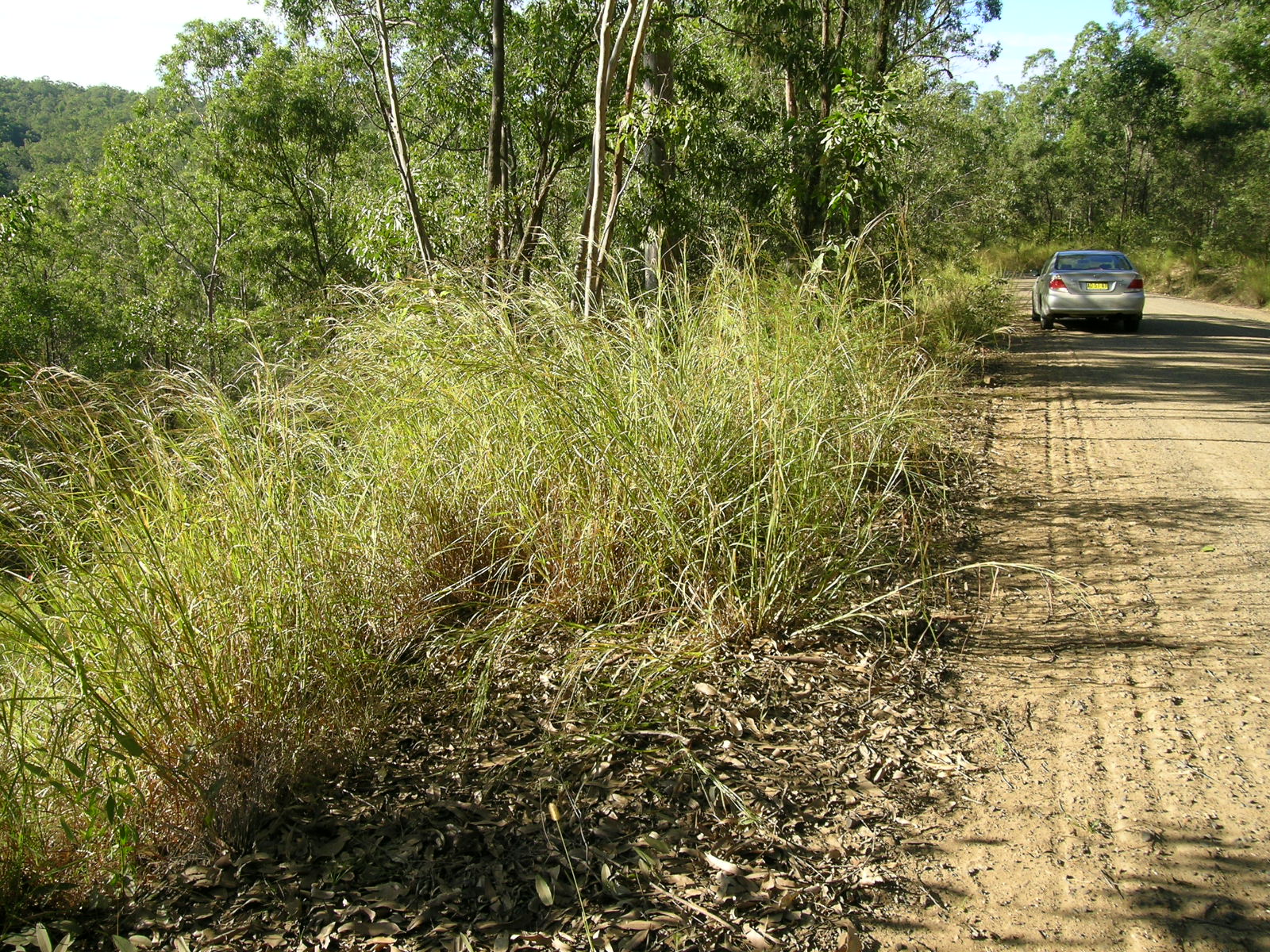
Heteropogon contortus, known across its range as Pili Grass, Tanglehead, Spear Grass, or Twisted Beardgrass, is a wiry, clump-forming perennial bunchgrass native to warm, dry corners of the Americas — including Hawai’i, where it is one of the signature indigenous grasses of the dry leeward landscape, and the desert Southwest, where it grows as a native rangeland grass in Arizona, New Mexico, Texas, and California. The Hawaiian name “pili,” from a Proto-Austronesian root meaning “to stick or adhere,” refers directly to the plant’s sharp, barbed seed awns that cling tenaciously to skin, fur, and clothing.
Despite its reputation as a global pantropical species — it is also naturalized or introduced across parts of the southeastern U.S., Australia, Africa, and Asia — Pili Grass has deep, authentic native status in two very different parts of the United States: the dry lowland slopes of the main Hawaiian Islands, and the desert grasslands and oak savannas of the American Southwest. In Hawai’i it was historically one of the most culturally important native grasses, prized for thatching traditional hale (houses). In the Southwest it remains a valuable, fire-adapted native bunchgrass of open rangeland and desert grassland communities.
Because Pili Grass/Tanglehead has also become naturalized and sometimes weedy well outside its true native range — including parts of the southeastern coastal plain, where botanists classify it as introduced rather than native — gardeners and land managers should confirm local native status before planting. Within its genuine native range in Hawai’i, Arizona, New Mexico, Texas, and California, it is an excellent low-water native grass for habitat restoration and dry gardens.
Identification
Pili Grass is a warm-season, perennial bunchgrass that grows in dense, upright tufts 1 to 3 feet tall, occasionally taller in favorable sites. Individual clumps widen slowly over years without spreading aggressively by rhizomes, giving the grass a tidy, well-behaved clumping habit in the landscape.
Stems & Leaves
The culms (flowering stems) are slender, wiry, and often branch near the base, rising from a dense tuft of narrow, flat to folded leaf blades typically 4 to 12 inches long and only a few millimeters wide. Foliage is blue-green to gray-green through the growing season, often developing attractive reddish-bronze to orange tones as it cures in fall and winter — a trait that gives dry hillsides of tanglehead a warm color wash during the cooler months.
Flowers & Seedheads
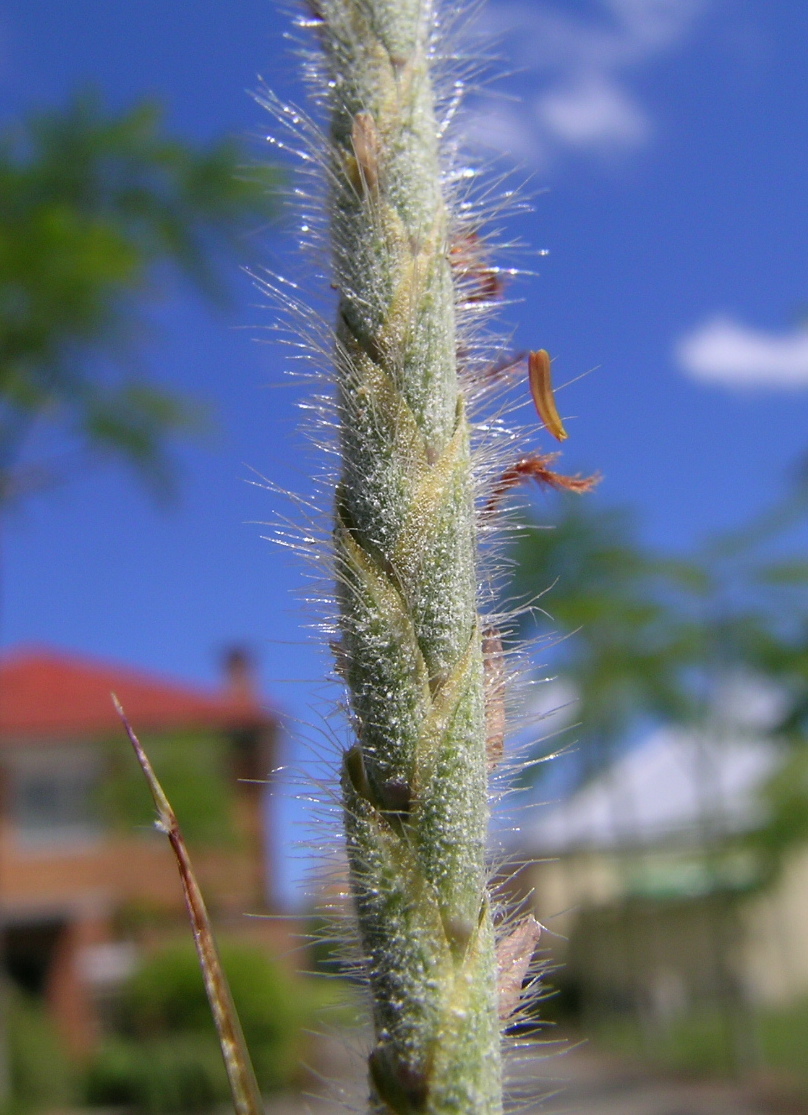
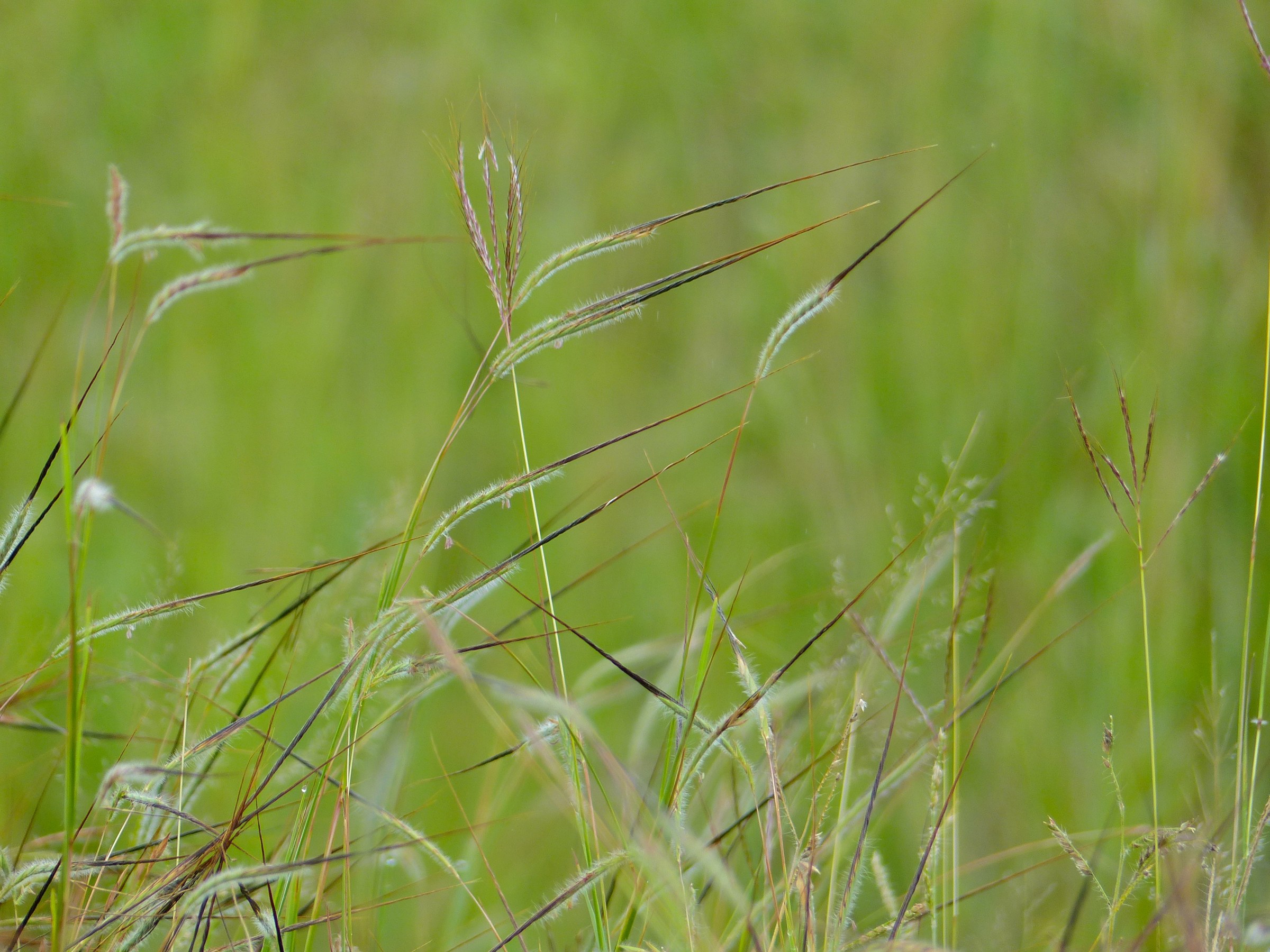
The flowering spikes appear from summer into fall as narrow, one-sided racemes that carry pairs of spikelets: a stalkless, fertile spikelet bearing a long, sharply bent, twisted awn, paired with a stalked, awnless sterile spikelet. The fertile spikelet’s awn is the plant’s most distinctive feature — a stiff, dark, corkscrew-twisted bristle up to 3 inches long that straightens and coils with changes in humidity, literally screwing the sharp-tipped seed into soil, animal fur, or hiking socks. Dense stands of these glinting, backlit awns are what give the grass its “tanglehead” nickname.
Quick Facts
| Scientific Name | Heteropogon contortus |
| Family | Poaceae (Grass) |
| Plant Type | Perennial Bunchgrass |
| Mature Height | 1–3 ft in bloom |
| Mature Spread | 1–2 ft clump |
| Growth Rate | Moderate |
| Sun Exposure | Full Sun |
| Water Needs | Low; drought tolerant once established |
| Soil Type | Rocky, sandy, or clay soils; well-drained |
| Soil pH | 6.0–8.0 (neutral to alkaline) |
| Bloom/Seed Time | Summer – fall |
| Flower Color | Dark reddish-brown spikelets, silvery hairs |
| Fall Color | Bronze to orange as foliage cures |
| Deer Resistant | Yes, generally |
| USDA Hardiness Zones | 8b–11 |
Native Range
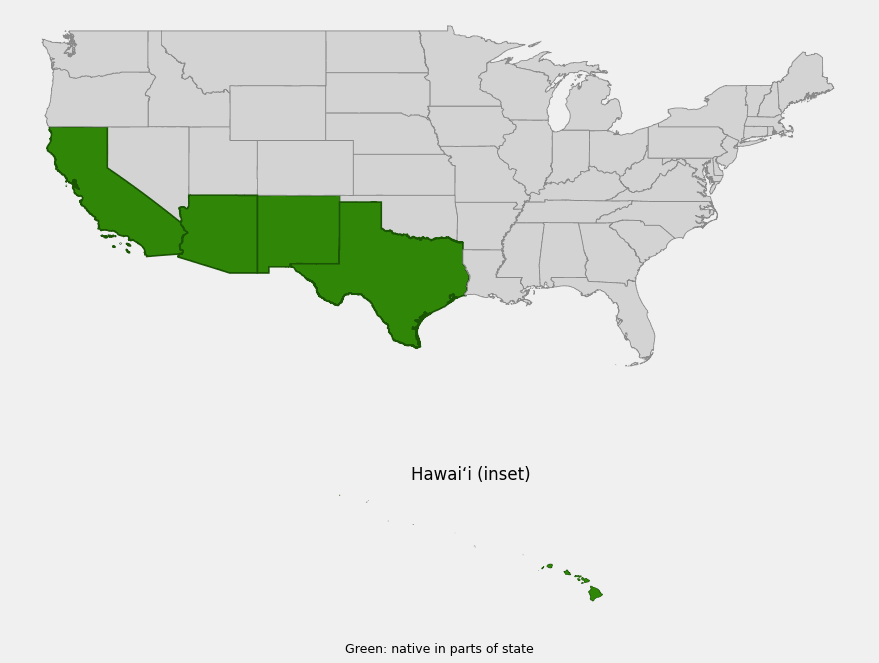
Pili Grass has a genuinely native, if geographically split, presence in the United States. In Hawai’i, it is indigenous on all the main islands, growing wild on dry, rocky cliffs, ledges, and leeward slopes from sea level up to roughly 2,300 feet — a true component of Hawai’i’s native dry grassland and coastal cliff vegetation, not a later introduction. On the mainland, it is native to warm, dry grasslands and oak savannas of the desert Southwest, including California, Arizona, New Mexico, and Texas, where it has long been valued as forage in native rangeland.
It is important to distinguish this true native range from the plant’s much broader global and naturalized distribution. Tanglehead is pantropical, native across much of the Old World tropics and subtropics as well, and it has also become naturalized or introduced in parts of the southeastern United States, including Florida, where regional floras classify it as a non-native, introduced grass of disturbed pinelands rather than a native species. Gardeners in the Southeast should not treat it as a regional native, even though it may be found growing wild there.
Within its genuine native range, Pili Grass thrives in full sun on dry, rocky, or sandy soils from near sea level to moderate elevations, often alongside other drought-adapted bunchgrasses and desert shrubs. In Hawai’i it is strongly associated with dry cliff and coastal habitats that receive little fresh water beyond seasonal rain.
📋 Regional plant lists featuring Pili Grass: Hawaii · Arizona & New Mexico
Growing & Care Guide
Pili Grass is an easygoing, low-input native bunchgrass once it is established, well suited to hot, dry, sunny sites where many ornamental grasses struggle without supplemental water.
Light
Give Pili Grass full sun. It is adapted to open, exposed slopes and does not perform well, nor hold its characteristic upright, tidy clump form, in shaded or heavily sheltered sites.
Soil & Water
This grass is highly adaptable to poor, rocky, sandy, or clay soils as long as drainage is reasonable, and it is notably drought tolerant once its root system is established, typically within the first growing season. Water young plants regularly through their first summer, then taper off; established clumps generally thrive on seasonal rainfall alone in both Hawaiian and Southwestern climates and resent soggy, poorly drained soil.
Planting Tips
Plant from containers in fall through early spring to take advantage of cooler temperatures and seasonal rain for establishment. Space plants 12 to 18 inches apart for a naturalistic meadow or grassland planting, or farther apart if used as individual accent clumps among shrubs and wildflowers. Pili Grass germinates readily from seed in restoration settings but is slower and less reliable from seed in typical garden conditions, so container stock is the more dependable route for home gardeners.
Pruning & Maintenance
Cut back old, cured foliage in late winter or very early spring before new growth resumes, which keeps clumps looking tidy and reduces fuel buildup near structures. Because the mature seed awns are sharp and barbed enough to work into skin, socks, and pet fur, consider trimming spent seedheads in high-traffic areas such as path edges, or simply enjoy the backlit seedheads at a bit of a distance.
Landscape Uses
Pili Grass earns a place in several native and water-wise garden styles:
- Dry meadow and grassland restoration plantings
- Hawaiian native dry-cliff and coastal landscaping
- Southwestern xeriscapes and desert grassland gardens
- Erosion control on dry, sunny slopes
- Accent and texture plant among rocks and low shrubs
- Wildlife and pollinator habitat plantings
Fire Ecology
Pili Grass is strongly fire-adapted and resprouts readily from its base after burning, a trait that helped make it a persistent, fire-resilient component of both Hawaiian dry grasslands and Southwestern grassland-savanna systems that historically experienced regular natural and Indigenous-managed fire. In Hawai’i today, however, large stands of cured, dry tanglehead (including non-native grasses it often grows alongside) can also contribute significant fuel loads in dry leeward landscapes, so plantings near structures should include defensible space and routine cutback of cured growth.
Wildlife & Ecological Value
Within its native range, Pili Grass contributes meaningfully to both Hawaiian dryland ecosystems and Southwestern grassland habitats.
For Birds
Seeds and seedheads provide forage for native and introduced seed-eating birds in open grassland habitats, while the dense basal tufts offer nesting and sheltering cover for ground-nesting birds in both Hawaiian dry-cliff habitat and Southwestern grasslands.
For Mammals
In the Southwest, Pili Grass has long been valued as palatable native forage for grazing wildlife and livestock, particularly when young and green; the foliage becomes coarser and less palatable as the seed awns mature and harden. Small mammals use dense bunchgrass clumps for cover from predators.
For Pollinators
As a wind-pollinated grass, Pili Grass does not rely on insect pollinators directly, but its structure contributes habitat complexity that benefits ground-dwelling insects, and it is often found growing alongside native flowering plants that do depend on pollinators within both Hawaiian dry grassland and Southwestern savanna communities.
Ecosystem Role
As one of Hawai’i’s few native grasses, Pili Grass plays an outsized role in the structure of dry cliff and coastal plant communities that have otherwise been heavily altered by introduced grasses. In the Southwest, it is a long-standing component of fire-adapted desert grassland and savanna systems, where its bunchgrass form helps stabilize soil on dry slopes and supports the broader grassland food web.
Cultural & Historical Uses
In Hawai’i, pili grass holds deep cultural significance as the traditional thatching material of choice for hale (houses) before the introduction of other roofing materials. Early Hawaiian builders selected pili specifically for its long, fine, durable culms, which could be layered tightly to shed rain, and the grass’s historical importance is still reflected in place names and cultural references throughout the islands today. Restoration of native pili grasslands remains an active conservation priority in parts of Hawai’i, both for cultural reasons and because these dry grassland communities have been heavily displaced by introduced fire-prone grasses.
In the American Southwest, Heteropogon contortus has a long history as a valued native range grass, grazed by livestock and wildlife across Arizona, New Mexico, and Texas rangelands for generations. Its drought tolerance and nutritional value when young made it an important forage species in the region’s grassland and savanna ecosystems well before formal rangeland science documented its qualities.
Pili Grass is not used medicinally in documented traditional practice, and this page does not describe any medicinal use — its historical significance lies specifically in its role as a building material and forage grass rather than in food or medicine.
Frequently Asked Questions
Is Pili Grass native to Hawai’i?
Yes. Pili grass is indigenous to all the main Hawaiian Islands, growing wild on dry cliffs, ledges, and leeward slopes. It has deep cultural significance as the traditional Hawaiian thatching grass used for hale (houses).
Is tanglehead native to the mainland United States?
Only in specific areas. Heteropogon contortus is a true native grass in California, Arizona, New Mexico, and Texas, where it grows in desert grasslands and oak savannas. In parts of the Southeast, including Florida, it is naturalized or introduced rather than native, so it should not be planted there as a regional native.
Why is it called “tanglehead”?
The name refers to the plant’s long, sharply twisted seed awns, which coil and straighten with humidity and readily catch and tangle in animal fur, socks, and clothing as a seed-dispersal strategy.
Is Pili Grass invasive anywhere?
Outside its native range, tanglehead can behave aggressively in some disturbed or fire-affected landscapes, including parts of Texas rangeland and areas well outside the Americas. Within its true native range in Hawai’i and the Southwest, it is considered a beneficial, well-behaved native bunchgrass.
How much water does Pili Grass need?
Very little once established. It is adapted to seasonal rainfall in both dry Hawaiian cliff habitat and Southwestern desert grassland, and generally needs regular water only during its first growing season while roots develop.

Looking for a nursery that carries Pili Grass?
Browse our native plant nursery directory: Hawaii · California · Arizona · New Mexico · Texas