
Texas Bluebonnet (Lupinus texensis)
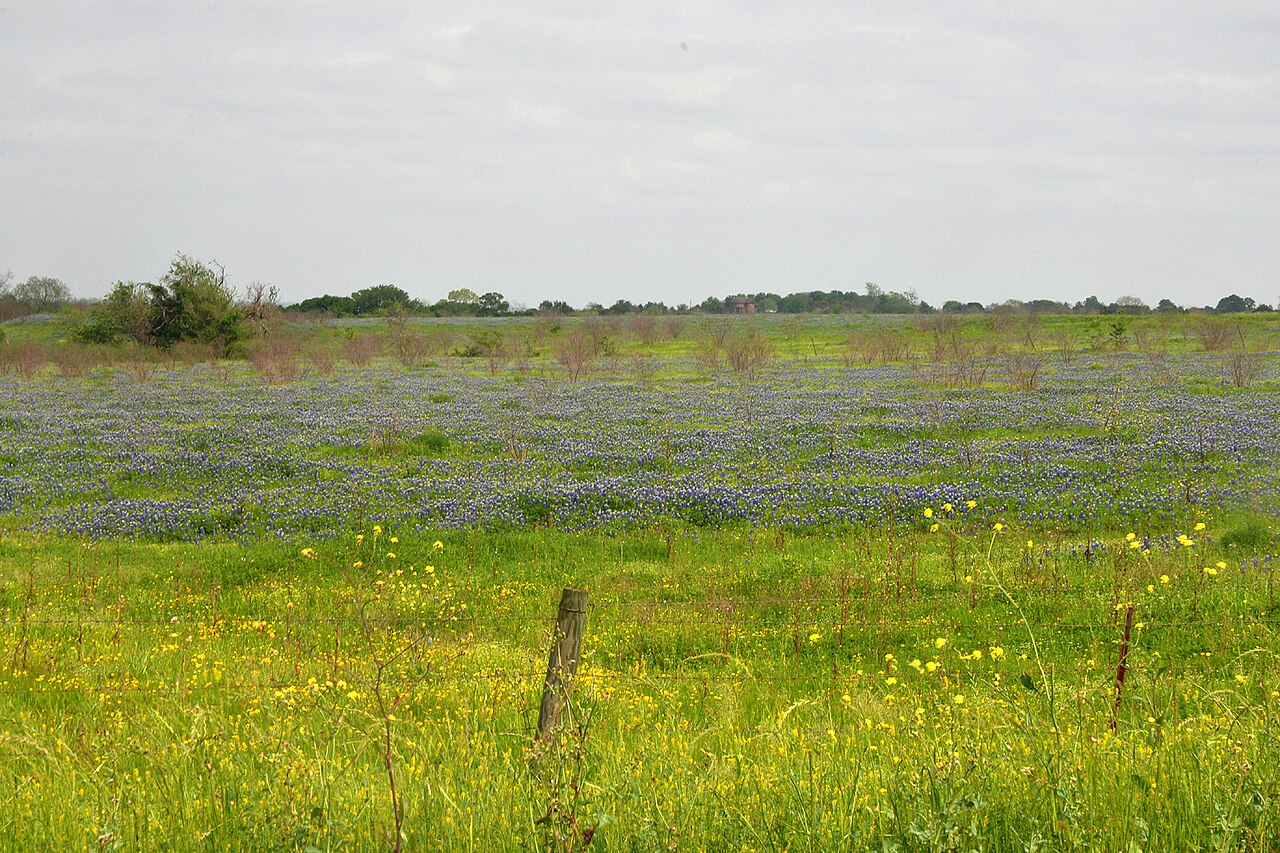
Lupinus texensis, the Texas Bluebonnet, is the annual wildflower most responsible for the blue haze that rolls across Texas roadsides and pastures every spring. It is one of six Lupinus species collectively named the state flower of Texas, and it is by far the most widely recognized, thanks to decades of highway seeding and garden-club plantings. A low rosette of silvery, palmately compound leaves sends up stiff flower spikes tipped in deep blue-violet, each spike capped with a patch of white that fades to maroon as the flower ages and is pollinated.
Bluebonnet is a true winter annual: seed germinates in fall, the plant overwinters as a flattened rosette, and flowering explodes from March into May before the whole plant sets seed and dies back for the summer. It thrives on lean, alkaline, well-drained soils, and it is this preference for limestone-based ground that ties its heaviest natural populations to the Blackland Prairie and Edwards Plateau of central Texas, with another concentration in the coastal prairies further south and east toward Louisiana.
Despite how often it is planted outside its home range, Texas Bluebonnet is native to a comparatively narrow swath of the western Gulf Coastal Plain. Gardeners west, north or east of that range can still grow it successfully as a reseeding annual, but should know that its appearance along roadsides in places like Oklahoma reflects decades of deliberate seeding rather than a naturally occurring population.
Identification
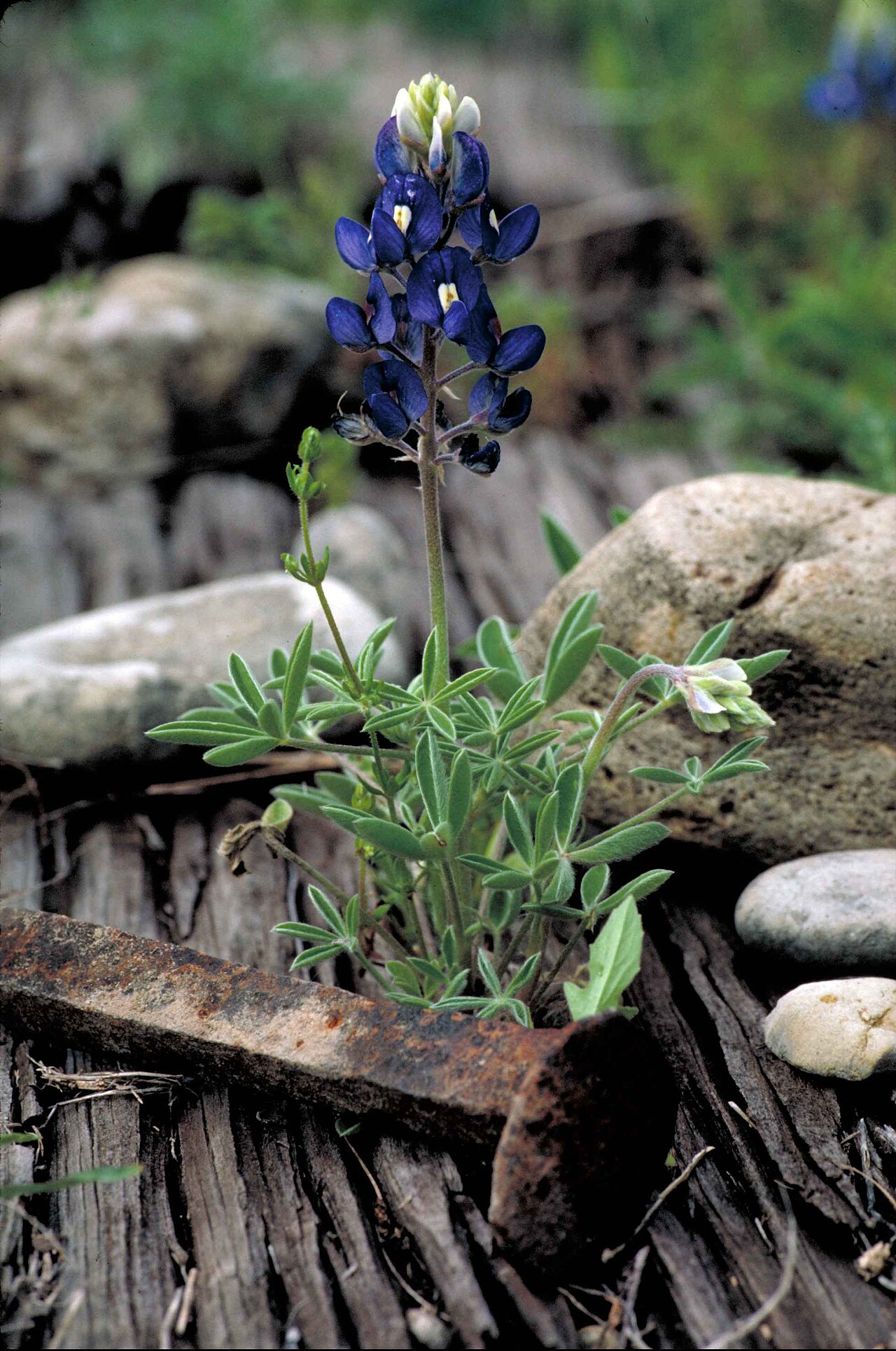
Texas Bluebonnet grows as a low annual, usually 6 to 18 inches tall, forming clumps where conditions suit it. Each plant begins as a basal rosette before sending up one or more upright flowering stems from late winter onward.
Leaves
The leaves are palmately compound, typically with five narrow, pointed leaflets radiating from a central point like fingers on a hand. They are light to medium green and covered in fine, silvery hairs that give the whole plant a soft, velvety texture, especially noticeable on young rosettes and new growth.
Flowers
Flowers are borne in dense, upright spike-like racemes atop leafless stalks, each spike carrying up to 50 individual pea-shaped blossoms. The flowers open a rich blue to blue-violet with a white spot at the top of the banner petal; that white spot turns maroon-red after pollination, a visual signal that helps pollinators focus on flowers still offering nectar. The very tip of each spike stays conspicuously white as new buds continue to open below it through the bloom season.
Fruit & Seeds
After flowering, each pod matures into a flattened, hairy legume about an inch long. Pods split open explosively when fully dry, flinging seeds a short distance from the parent plant. The seeds, like those of other lupines, contain alkaloids that are toxic if eaten, so they should never be treated as a wild edible; they are safe to handle for propagation but should be kept away from small children and grazing animals unfamiliar with the plant.
Quick Facts
| Scientific Name | Lupinus texensis |
| Family | Fabaceae (Pea) |
| Plant Type | Winter annual wildflower |
| Mature Height | 6–18 in |
| Mature Spread | 8–14 in |
| Growth Rate | Fast (single growing season) |
| Sun Exposure | Full Sun |
| Water Needs | Low once established |
| Soil Type | Lean, well-drained; limestone, caliche, sandy or clay loam |
| Soil pH | Neutral to alkaline (about 6.8–8.0) |
| Bloom Time | March – May |
| Flower Color | Blue-violet with a white (aging to maroon) banner spot |
| Fall Color | None (plant has died back by summer) |
| Fruit | Hairy legume pod to 1 in; seeds toxic if ingested |
| Deer Resistant | Moderate |
| USDA Hardiness Zones | 7–9 (grown as a self-seeding annual) |
Native Range
Texas Bluebonnet’s native range is tighter than its fame suggests. It occurs naturally from southwestern Louisiana west across Texas, with its heaviest concentrations in the Blackland Prairie belt running roughly from Dallas–Fort Worth south through Waco and Austin to San Antonio, and across the limestone country of the Edwards Plateau further west. The native range continues south into the Gulf Coastal Plain and, beyond the U.S. border, into northeastern Mexico as far as San Luis Potosí.
Typical habitat is open, sunny ground with thin, calcareous or sandy soil: native prairie remnants, limestone outcrops, pastures, and the mowed, disturbed margins of roadsides that mimic open prairie. It grows alongside other central Texas prairie wildflowers such as Indian paintbrush, Drummond’s phlox and prairie verbena, and it depends on full sun and bare mineral soil for its seed to germinate well.
Because Texas highway departments and garden clubs have seeded bluebonnets heavily for generations, the plant now appears well outside this native range, especially along roadsides in Oklahoma, where it is planted rather than naturally occurring. Bluebonnet is not native to Oklahoma, Florida, or states farther north and east — those populations are the result of intentional seeding, not a natural range extension, and the species should be treated as a garden annual rather than a conservation planting outside Texas and Louisiana.
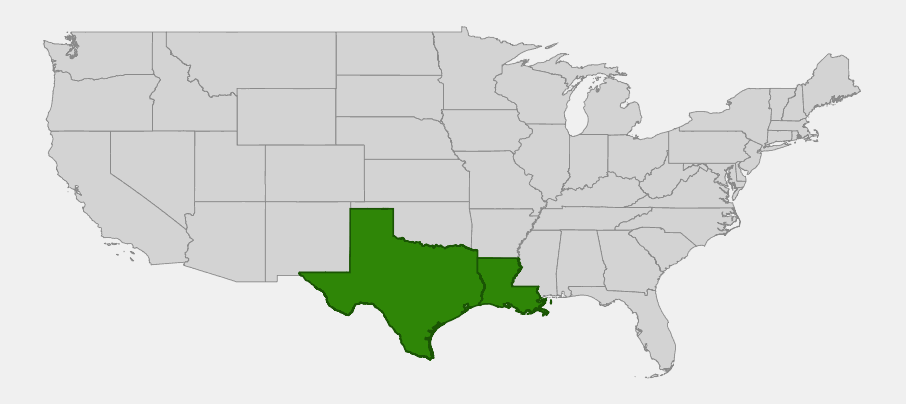
📋 Regional plant lists featuring Texas Bluebonnet: Arkansas, Louisiana, Eastern Oklahoma & Eastern Texas
Growing & Care Guide
Texas Bluebonnet is easy to grow within and near its native range once its two basic requirements are met: full sun and soil that is lean and well-drained rather than rich and moist.
Light
Give bluebonnet full sun for best flowering. In partial shade the rosettes stretch, flowering is sparse, and plants are more prone to flopping. It will not perform in anything approaching full shade.
Soil & Water
Bluebonnet prefers neutral to alkaline soils that drain quickly; heavy, constantly wet clay or rich garden beds amended with compost often produce lush foliage and few flowers, or encourage root rot. Like other legumes, it partners with soil rhizobia to fix nitrogen, so soil that has never grown lupines may benefit from an inoculant at planting. Water only to establish fall-sown seed; mature rosettes are drought tolerant and need no supplemental irrigation through a normal Texas winter and spring.
Planting Tips
Sow seed directly in fall, from September through November, so plants can form a rosette before cold weather and bloom the following spring. Scarify seed coats lightly with sandpaper or a brief soak in hot water to speed germination, and press seed into bare soil rather than burying it deep. Avoid mulching over the seedbed, since bluebonnet germinates best with direct soil contact and some light.
Pruning & Maintenance
Bluebonnet needs no pruning. For a repeat show next year, leave spent flower spikes in place until the pods turn from green to brown and begin to split, which lets the planting reseed itself; mowing too early removes next year’s seed crop.
Landscape Uses
Texas Bluebonnet earns its place in sunny native plantings across its home range:
- Wildflower meadows seeded in fall for a spring bloom
- Roadside and pasture plantings on lean, untilled ground
- Prairie restoration alongside other Blackland Prairie natives
- Mass plantings for the classic Texas spring color display
- Pollinator gardens as an early-season nectar source for bees
Wildlife & Ecological Value
Within its native range, Texas Bluebonnet is a reliable early-spring resource for pollinators and a larval host for several butterflies.
For Pollinators
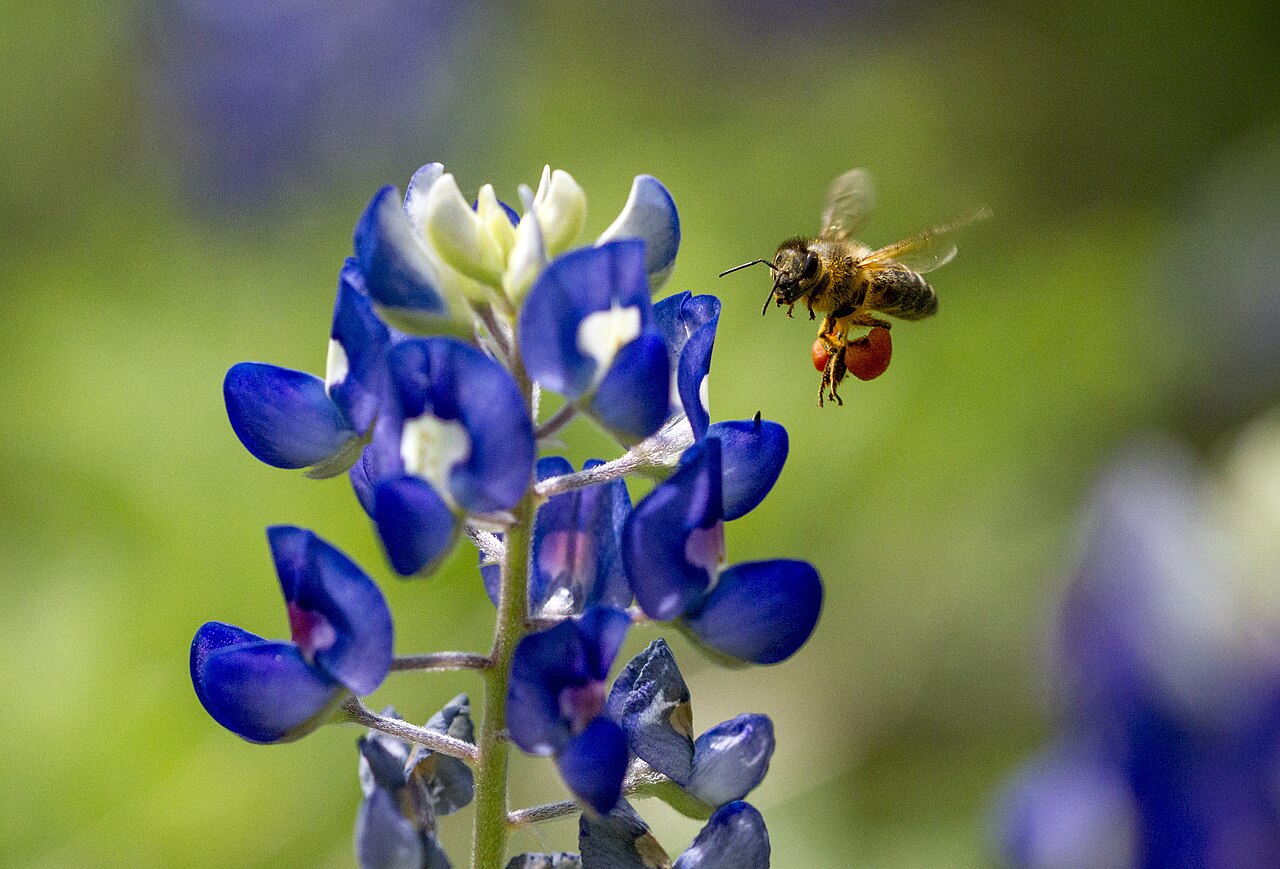
Honey bees and native bees visit bluebonnet heavily for nectar and pollen during its March-to-May bloom window, one of the first major nectar pulses of the Texas spring. The color-changing banner spot — white on fresh, unpollinated flowers, maroon on older ones — helps bees forage efficiently by signaling which blossoms are still rewarding.
For Butterflies
Bluebonnet serves as a larval host plant for several hairstreak and elfin butterflies, whose caterpillars feed on the foliage. The flowers themselves also draw adult butterflies looking for nectar.
Ecosystem Role
As a legume, bluebonnet fixes atmospheric nitrogen through root nodules formed with rhizobium bacteria, enriching lean prairie soils for the grasses and other wildflowers that follow it through the growing season. Its dense spring germination also provides a flush of early-season cover and food on disturbed or lightly grazed ground.
Cultural & Historical Uses
Bluebonnets have been central to Texas identity since before statehood; the Texas Legislature designated Lupinus subcarnosus the state flower in 1901, and in 1971 broadened the designation to include Lupinus texensis and all other Texas lupine species growing within the state, recognizing that L. texensis was in fact the more widespread and beloved of the two.
Texas highway departments began seeding bluebonnets along rights-of-way in the 1930s as part of erosion-control and roadside-beautification programs, and that practice, later reinforced by Lady Bird Johnson’s wildflower advocacy, is responsible for much of the bluebonnet’s presence outside its core native range today. Photographing family and children in a roadside bluebonnet field each spring remains a enduring Texas tradition.
Indigenous peoples of the region did not use bluebonnet as a food plant, and for good reason: the seeds and foliage contain quinolizidine alkaloids typical of the lupine genus, which are toxic to humans and livestock if eaten in quantity. Any historical or folk use of the plant was ornamental or ceremonial rather than culinary or medicinal.
Frequently Asked Questions
Are bluebonnets poisonous?
Yes. The seeds and foliage of Texas Bluebonnet contain alkaloids that are toxic if eaten, as in other Lupinus species. Keep seed away from small children and don’t let livestock unfamiliar with the plant graze it heavily. It is safe to handle for planting and seed collecting.
Is the Texas bluebonnet native to Oklahoma?
No. Despite being a common roadside sight in Oklahoma, Texas Bluebonnet’s natural range is limited to Texas and southwestern Louisiana. The Oklahoma populations exist because of decades of deliberate highway seeding, not a natural range extension.
When do bluebonnets bloom?
Typically from March through May, with peak bloom in central Texas usually falling in late March to mid-April, depending on fall rainfall and winter temperatures.
Can I pick bluebonnets in Texas?
There is no state law against picking bluebonnets, including on public roadsides, though doing so on private property without permission is trespassing. Picking a reasonable number for a photo does little harm, but trampling large areas damages the rosettes and reduces next year’s bloom.
Will bluebonnets come back every year?
As an annual, each individual plant dies after setting seed, but a planting will reseed itself reliably if spent pods are left to mature and the ground isn’t mowed before seed drop. Established bluebonnet patches can persist and even expand for decades through self-seeding.
