
Torrey Pine (Pinus torreyana)
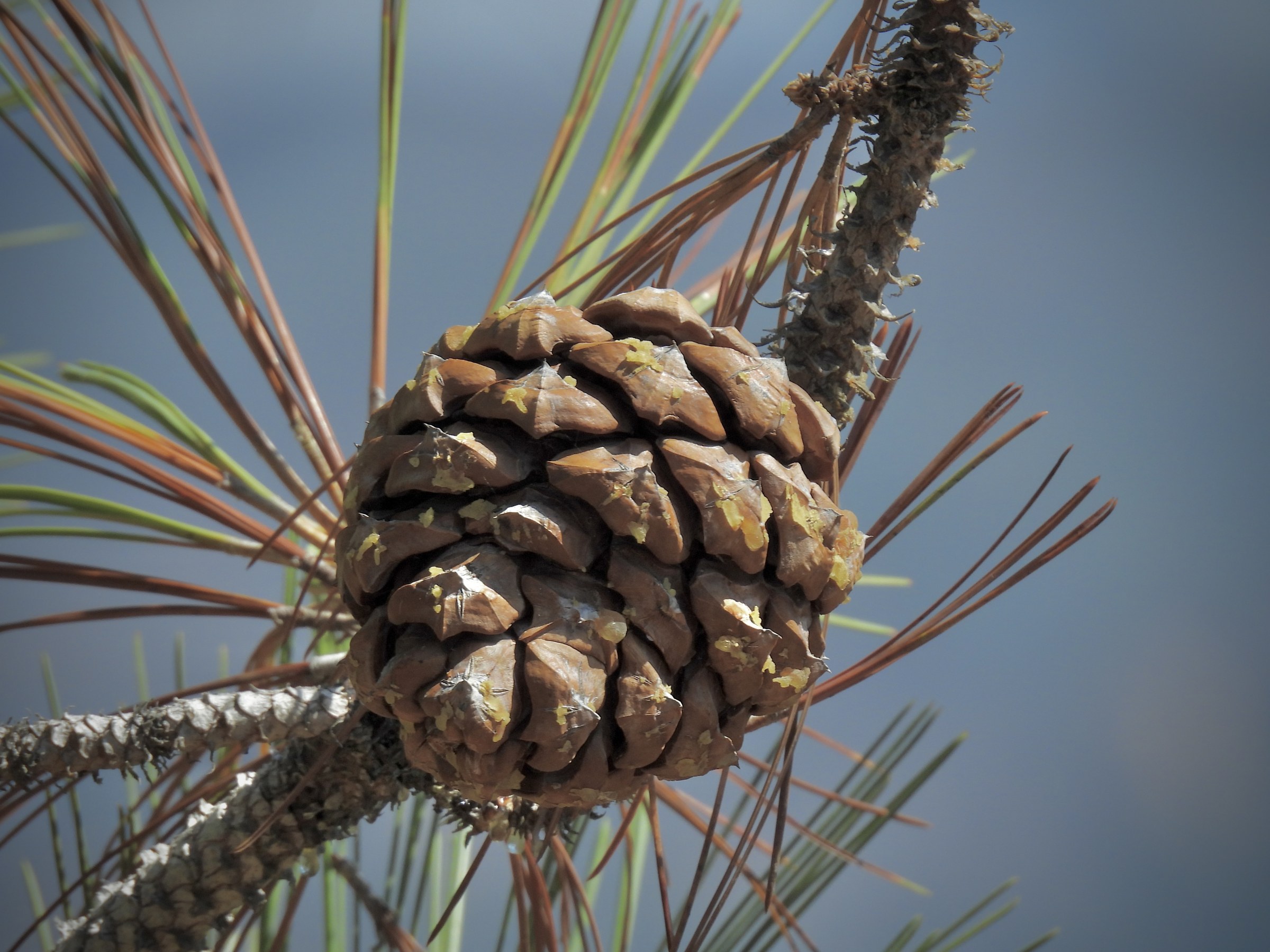
Pinus torreyana, the Torrey Pine, is the rarest native pine in the continental United States, surviving in the wild in just two small, isolated populations in California. One grows on a narrow strip of coastal bluffs in northern San Diego County; the other, a distinct subspecies, is confined to a single grove on Santa Rosa Island in the Channel Islands, more than 170 miles up the coast. Nowhere else on Earth does this species occur naturally.
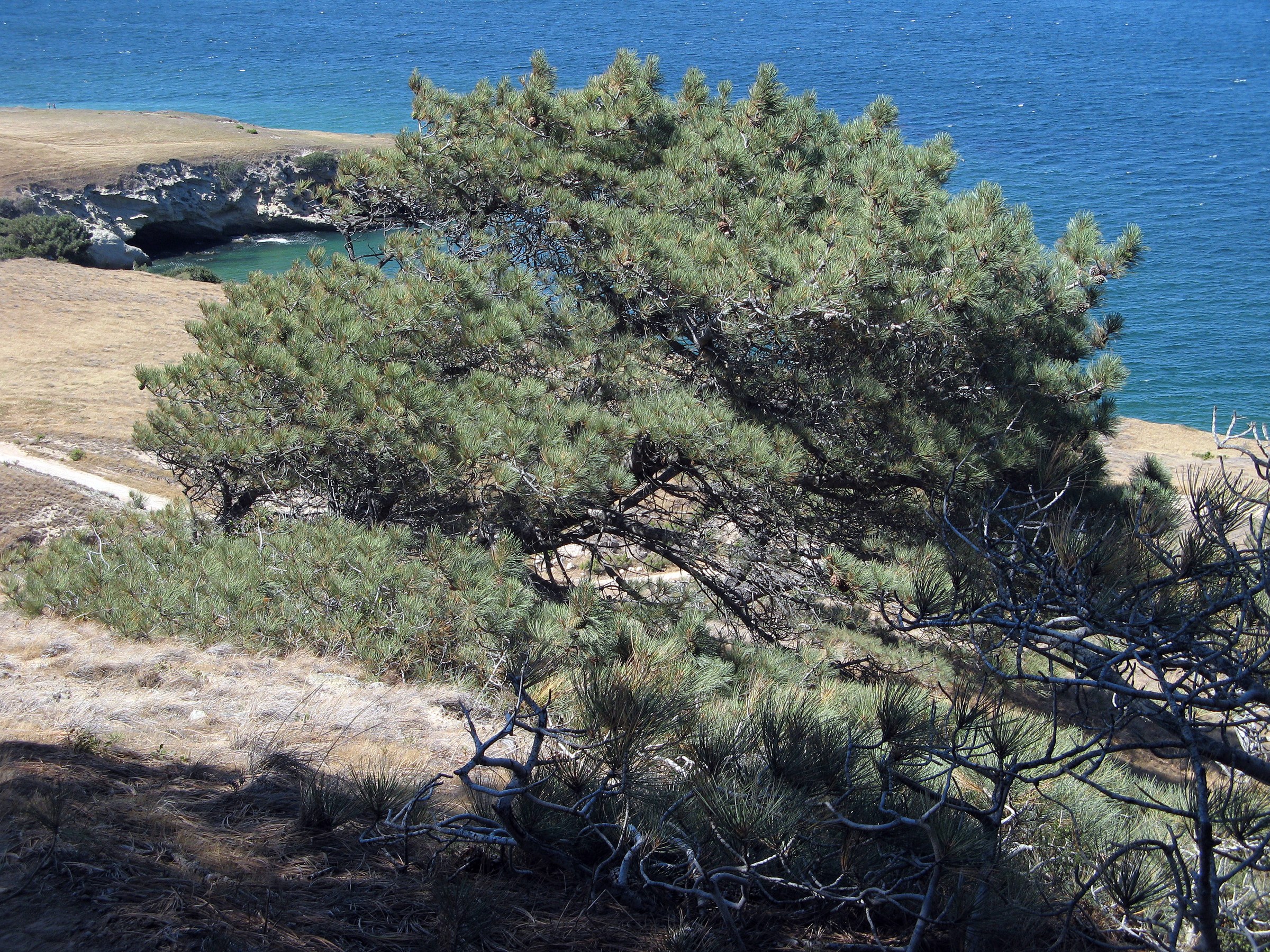
Torrey Pine is a striking, irregular tree, shaped by decades of coastal wind into a broad, wind-sculpted crown with long, stiff needles bundled in fives — the only North American pine with five needles per bundle that also carries very large cones. Its mainland population clings to sandstone bluffs and ravines above the Pacific, a relict of a wetter prehistoric climate that has persisted in this one narrow coastal strip long after retreating everywhere else.
Because of its extreme rarity, Torrey Pine today exists almost entirely under formal protection: the mainland grove is managed within Torrey Pines State Natural Reserve, and the island population lies within Channel Islands National Park. Gardeners within its native coastal San Diego climate can grow nursery-propagated Torrey Pine as a distinctive, drought-tolerant specimen tree, but wild trees, cones, and seeds should never be collected — doing so would directly threaten one of the most restricted tree populations in North America.
Identification
Torrey Pine typically grows 30 to 60 feet tall in the wild, with a broad, irregular, often leaning or multi-trunked crown shaped by onshore winds; cultivated trees in more sheltered sites can grow taller and more upright. The combination of five-needle bundles and very large cones is distinctive among California pines and is the most reliable way to confirm identification.
Bark & Stems
Bark on mature trees is thick, dark gray-brown, and deeply furrowed into irregular ridges. Branches are often twisted and asymmetrical, especially on exposed bluff-top trees, giving older specimens a gnarled, weather-beaten character.
Leaves
Needles are stiff, dark green to gray-green, 8 to 13 inches long, and borne in bundles of five — unusual among California’s native pines, most of which carry needles in bundles of two or three. The needles are clustered toward the branch tips, giving the crown a tufted, somewhat open texture.
Flowers & Fruit
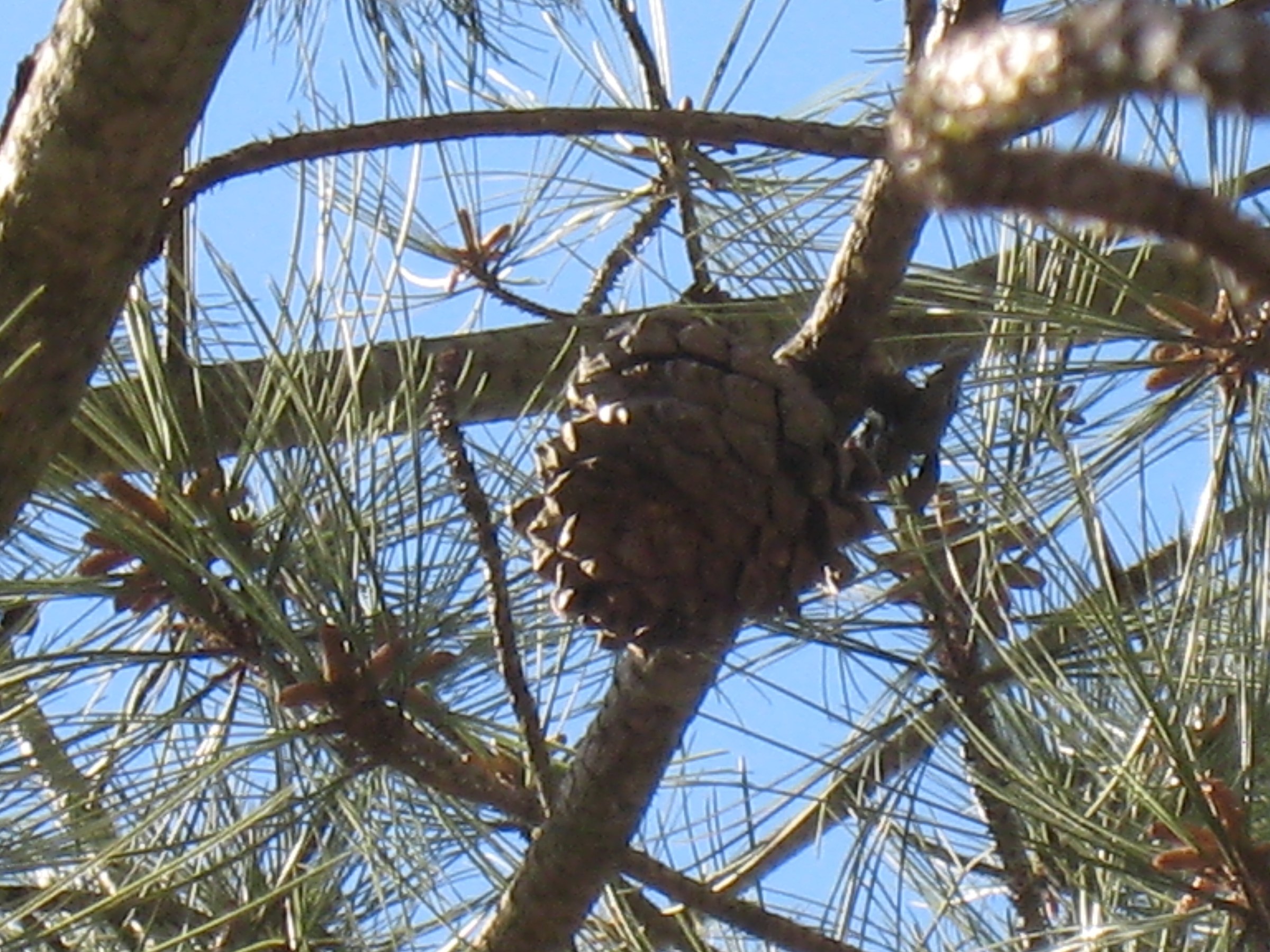
Male pollen cones are small and yellow-brown, appearing in late winter to early spring. The seed cones are among the largest of any California pine: heavy, egg-shaped, 4 to 6 inches long, maturing over two to three years and containing large, hard-shelled seeds historically gathered and eaten by Indigenous peoples of the San Diego coast. Mature cones often persist on the tree for a year or more after opening.
Quick Facts
| Scientific Name | Pinus torreyana |
| Family | Pinaceae (Pine) |
| Plant Type | Evergreen Coniferous Tree |
| Mature Height | 30–60 ft in the wild; taller in cultivation |
| Mature Spread | 20–40 ft, broad and irregular |
| Growth Rate | Moderate to fast with irrigation; slow in exposed wild sites |
| Sun Exposure | Full Sun |
| Water Needs | Low once established |
| Soil Type | Sandy, well-drained; tolerates poor coastal soils |
| Soil pH | 6.0–7.5 (slightly acidic to neutral) |
| Bloom Time | February – March (pollen cones) |
| Flower Color | Yellow-brown (male cones) |
| Fall Color | Evergreen (no fall color change) |
| Fruit | Large seed cones, 4–6 in, maturing over 2–3 years |
| Deer Resistant | Yes |
| USDA Hardiness Zones | 9–10 |
Native Range
Torrey Pine is one of the rarest pines on Earth, native only to a very small area of coastal San Diego County, California, plus a single, genetically distinct population on Santa Rosa Island in the Channel Islands. The mainland population occupies a narrow band of sandstone bluffs and ravines roughly 1,000 to 2,000 acres in total extent, almost entirely within Torrey Pines State Natural Reserve and its extension. The island population, classified as a separate subspecies (Pinus torreyana subsp. insularis), is confined to an even smaller grove within Channel Islands National Park.
In both locations, Torrey Pine grows in a mild, fog-influenced coastal climate on sandy, well-drained soils, often on exposed bluffs shaped by constant onshore wind. This narrow habitat window is a relict of wetter prehistoric conditions along the California coast; as the climate dried, Torrey Pine’s range contracted to these two small refuges while related, more drought-tolerant pines persisted elsewhere.
Because its entire wild population is so geographically restricted, Torrey Pine is both state- and park-protected at its native sites, and collecting cones, seeds, or plant material from wild trees is prohibited. Gardeners in the greater San Diego area can plant nursery-propagated specimens, but outside the mild coastal climate of southern California, Torrey Pine is generally not successfully grown, and it is not native anywhere else in the United States.
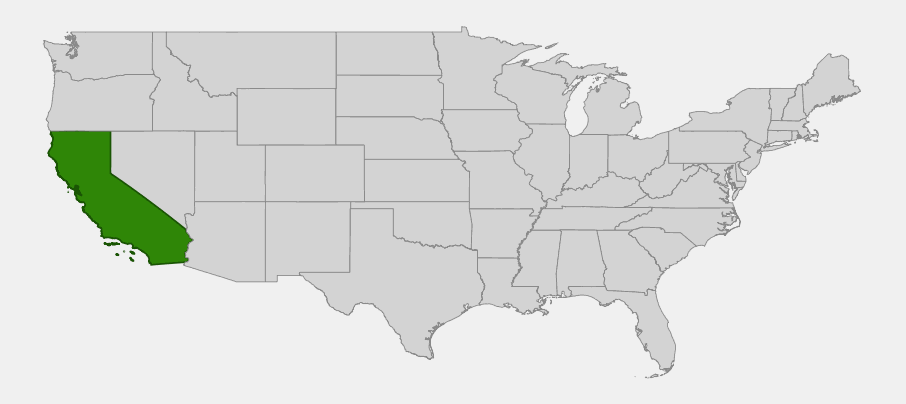
📋 This species is extremely range-restricted and is not currently included in any plantnative.org regional plant list.
Growing & Care Guide
Torrey Pine can be grown as a garden tree within its native coastal southern California climate, where it offers a genuinely rare and distinctive silhouette. It is not well suited to climates with hard winter freezes or to inland heat far from marine influence.
Light
Plant in full sun. Torrey Pine naturally grows in open, wind-exposed bluff-top settings and performs poorly in shade.
Soil & Water
Sandy, fast-draining soil is essential; the species is adapted to lean coastal sand and does not tolerate heavy, poorly drained clay. Water regularly to establish a young tree, then reduce watering substantially — established Torrey Pines are drought tolerant and can develop root problems if kept too moist, especially inland.
Planting Tips
Choose only nursery-propagated stock; never collect cones, seeds, or seedlings from wild populations, which are protected and extremely limited. Plant in fall or early spring, in a site with excellent drainage and room for a broad, eventually irregular crown. Staking may help young trees establish a stable form in windy sites.
Pruning & Maintenance
Minimal pruning is needed; remove only dead or damaged branches. Avoid pruning to force a dense, symmetrical shape, as the open, wind-sculpted form is part of the tree’s natural character and appeal.
Landscape Uses
Within its native coastal climate, Torrey Pine works well as:
- Specimen tree for its rare, sculptural silhouette
- Coastal bluff and slope plantings where wind tolerance is valuable
- Low-water landscaping once established
- Conservation and native habitat gardens highlighting California’s rarest pine
Wildlife & Ecological Value
As the dominant tree across its tiny range, Torrey Pine anchors a habitat type found almost nowhere else in North America.
For Birds
Resident and migratory birds, including raptors, use mature trees for nesting and perching along the coastal bluffs, where tall trees are otherwise scarce in the surrounding scrub habitat.
For Mammals
Small mammals feed on fallen seeds when cones open, and the tree’s structure provides shelter within an otherwise low, scrubby coastal landscape.
For Pollinators
Torrey Pine is wind-pollinated and does not depend on insect pollinators, but its presence adds structural diversity that benefits pollinators using the surrounding coastal sage scrub.
Ecosystem Role
Torrey Pine is effectively a living relict, preserving a plant community type that was once more widespread along the California coast. Its survival in just two small groves makes active protection of its habitat — rather than any broader ecological range — central to its ecological significance.
Cultural & Historical Uses
The large seeds of Torrey Pine were historically gathered and eaten by the Kumeyaay people, who have lived in the San Diego coastal region for thousands of years and continue to hold cultural ties to the Torrey Pines landscape. The tree was formally described by botanists in the mid-19th century and named for American botanist John Torrey.
Recognition of the species’ extreme rarity led to early conservation efforts; the mainland grove was protected as a city park in the early 20th century and later became Torrey Pines State Natural Reserve, one of the earliest examples of a California landscape set aside specifically to protect a single rare tree species. The Santa Rosa Island population remained largely undisturbed due to the island’s isolation and is now protected within Channel Islands National Park.
Today, Torrey Pine is primarily valued as a conservation icon and a symbol of the San Diego coast rather than for any commercial or medicinal use; because of its rarity, collecting any part of a wild tree is prohibited, and all cultivated specimens trace back to nursery propagation rather than wild harvest.
Frequently Asked Questions
Is Torrey Pine really the rarest pine in the United States?
Yes. Its entire wild population is limited to a small area of coastal San Diego County and a single grove on Santa Rosa Island, making it one of the most geographically restricted pine species anywhere in the world.
Can I collect cones or seeds from Torrey Pines State Natural Reserve?
No. Collecting any plant material from wild Torrey Pines is prohibited and would directly threaten an already extremely limited population. Always buy nursery-propagated trees for your garden.
Can Torrey Pine be grown outside San Diego County?
It can be grown in similar mild, fog-influenced coastal climates, but it is poorly suited to areas with hard freezes or intense inland heat, and should not be expected to thrive far from a Mediterranean coastal climate.
What is the difference between the mainland and island Torrey Pines?
The island population on Santa Rosa Island is classified as a separate subspecies, Pinus torreyana subsp. insularis, which is genetically distinct from the mainland San Diego population and found nowhere else.
Is Torrey Pine endangered?
It is not federally listed as endangered, but its extremely restricted range and small total population make it one of the most vulnerable native conifers in the country, and its two wild groves are actively protected and monitored.

Looking for a nursery that carries Torrey Pine?
Browse our native plant nursery directory: California