Screwbean Mesquite (Prosopis pubescens)
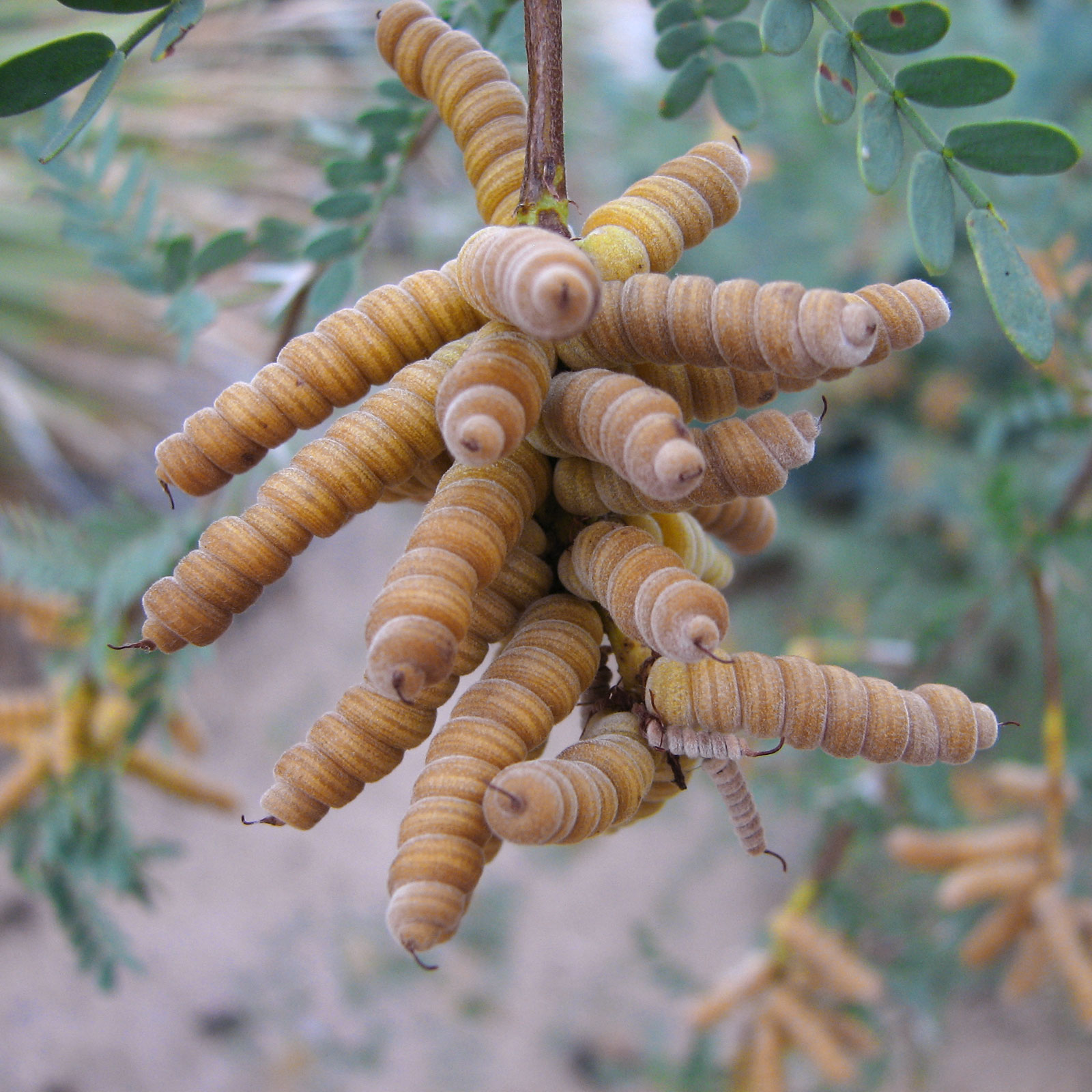
Prosopis pubescens, the Screwbean Mesquite, is a small desert tree or large shrub named for its single most unmistakable feature: seed pods that coil into tight, woody spirals resembling tiny screws or corkscrews. Found along desert washes, floodplains, and riparian corridors of the American Southwest, it is smaller and generally less common in cultivation than its relative Honey Mesquite, but no less valuable as a drought-tough, wildlife-supporting native for low-desert gardens.
Screwbean Mesquite forms an open, often vase-shaped small tree with feathery, fine-textured, blue-green foliage and slender, thorny branches. In the wild it is closely tied to groundwater — growing along washes, near springs, and on floodplains where its deep roots can reach moisture well below the dry desert surface — making it a useful indicator of subsurface water in the landscapes where it occurs naturally.
For gardeners in the low desert valleys of the Southwest, Screwbean Mesquite offers fine, airy shade, fragrant late-spring flowers that draw pollinators, and genuinely distinctive seed pods that make it a conversation piece in any native planting. It asks for very little once established, tolerating heat, drought, and poor soils that would stress most garden trees.
Identification
Screwbean Mesquite typically grows 15 to 30 feet tall, with a slender trunk and an open, somewhat irregular, vase-like crown of fine branches. It is smaller in stature than Honey Mesquite and Velvet Mesquite, and its screw-shaped pods make it unmistakable once they appear.
Bark & Stems
Bark on young stems is smooth and reddish-brown, becoming gray-brown and shaggy or fissured with age. Branches carry straight, slender spines up to an inch long at the nodes, so handle and site the tree with care around paths and play areas.
Leaves
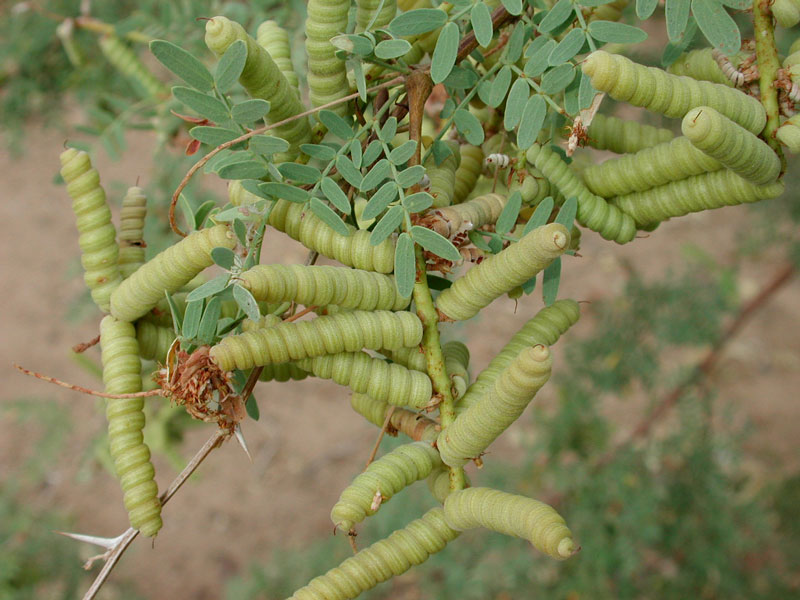
Leaves are small, bipinnately compound, with just one or two pairs of pinnae each bearing small, narrow, grayish-green leaflets, giving the foliage a fine, feathery, almost fern-like texture. The tree is deciduous, dropping its leaves in winter.
Flowers & Fruit
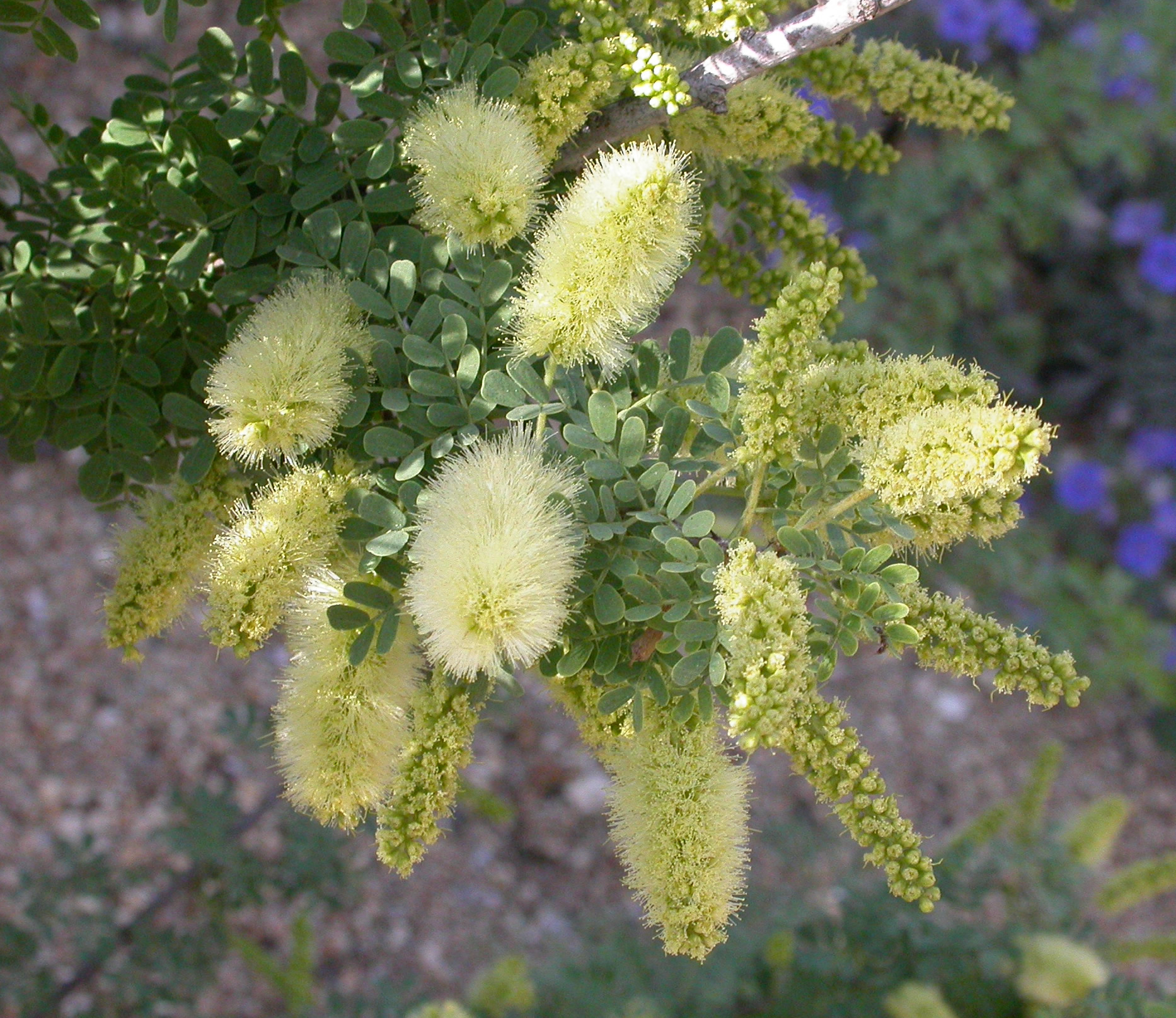
Fragrant, pale yellow to cream flowers bloom in dense, cylindrical spikes 1 to 3 inches long in late spring, usually April to June, attracting bees and other pollinators. The flowers give way to the tree’s signature feature: clusters of tightly coiled, cylindrical, screw-shaped pods, 1 to 2 inches long, that ripen from green to tan. Historically and today, the pods are an important food source for wildlife and were once a staple food for Indigenous peoples of the region.
Quick Facts
| Scientific Name | Prosopis pubescens |
| Family | Fabaceae (Legume/Pea) |
| Plant Type | Deciduous Small Tree / Large Shrub |
| Mature Height | 15–30 ft |
| Mature Spread | 15–20 ft, open and vase-shaped |
| Growth Rate | Moderate |
| Sun Exposure | Full Sun |
| Water Needs | Low once established; best with occasional deep water or access to groundwater |
| Soil Type | Sandy to loamy, including alkaline or saline soils |
| Soil pH | 6.5–8.5 (tolerates alkaline soils) |
| Bloom Time | April – June |
| Flower Color | Pale yellow to cream |
| Fall Color | Yellow-green before leaf drop |
| Fruit | Tightly coiled, screw-shaped pods, 1–2 in |
| Deer Resistant | Yes |
| USDA Hardiness Zones | 8–11 |
Native Range
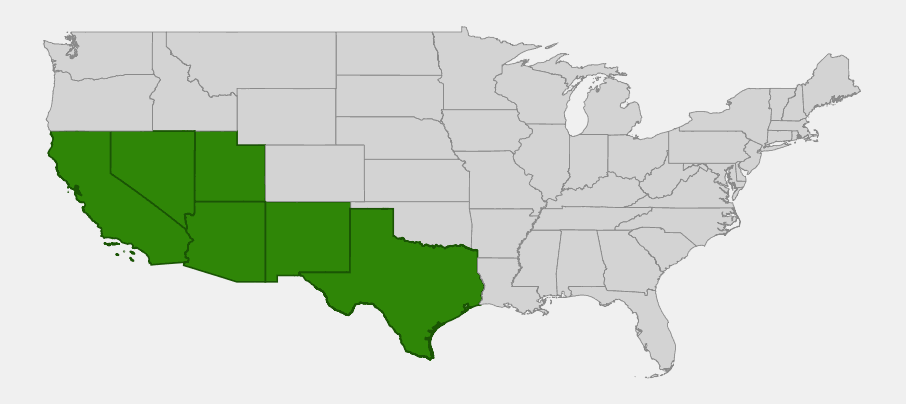
Screwbean Mesquite is native to the low desert regions of the southwestern United States, including southeastern California, southern Nevada, extreme southwestern Utah, southern and western Arizona, southern New Mexico, and the Trans-Pecos region of far western Texas, extending south into northern Mexico. It is not native to central or eastern Texas, where the climate and hydrology do not match its desert-wash habitat.
Across this range, Screwbean Mesquite is closely tied to available groundwater, typically growing along desert washes, floodplains, near springs and seeps, and in other low-lying areas where its roots can reach a reliable water table. It is a defining species of desert riparian woodland in the Mojave and Sonoran Desert regions, often growing alongside Honey Mesquite, willows, and other wash and floodplain species.
Because of its dependence on groundwater, Screwbean Mesquite populations have declined in some areas where groundwater pumping and river regulation have lowered water tables, making its riparian habitat a conservation concern in parts of its range even though the species itself is not rare overall.
📋 Regional plant lists featuring Screwbean Mesquite: Arizona & New Mexico · Utah & Western Colorado
Growing & Care Guide
Screwbean Mesquite is an easy, resilient tree for low desert gardens, as long as you understand its preference for occasional deep water over frequent light watering.
Light
Plant in full sun. Screwbean Mesquite is a desert tree adapted to intense, unfiltered sunlight and performs poorly in shaded sites.
Soil & Water
It tolerates a wide range of soils, including sandy, loamy, and even alkaline or mildly saline ground that stresses many other trees. In its native washes it relies on access to groundwater, so in cultivation it benefits from occasional deep, infrequent irrigation that encourages deep rooting, rather than frequent shallow watering. Established trees are quite drought tolerant.
Planting Tips
Plant young trees in spring after the danger of hard frost has passed, giving the taproot room to grow downward without obstruction. Site away from foot traffic given the sharp thorns on the branches, and allow enough space for its eventual 15- to 20-foot spread.
Pruning & Maintenance
Prune to remove dead, crossing, or low-hanging thorny branches, ideally while the tree is dormant in winter. Light structural pruning when young helps establish strong branch angles; mature trees need little further maintenance.
Landscape Uses
Screwbean Mesquite’s fine texture and desert toughness make it useful for:
- Low-water desert gardens as a light-canopied shade tree
- Wash and floodplain restoration plantings
- Wildlife gardens where its flowers and pods support pollinators and foraging animals
- Xeriscape and native plant collections highlighting Southwest desert flora
Wildlife & Ecological Value
As a defining tree of desert wash and riparian habitat, Screwbean Mesquite supports a wide range of desert wildlife through its flowers, pods, and structure.
For Pollinators
The fragrant spring flower spikes attract native bees, honeybees, and other pollinating insects, offering a valuable nectar source in the sparse desert landscape during bloom season.
For Birds
Songbirds forage among the branches for insects, and the tree’s structure offers nesting and perching sites in open desert wash habitat where taller vegetation is often scarce.
For Mammals
The protein-rich pods are eaten by javelina, coyotes, ground squirrels, and other desert mammals, which help disperse the seeds. Historically, pods were also an important food resource gathered and stored by people throughout the region.
Ecosystem Role
Screwbean Mesquite is also a larval host plant for several butterfly species, and its presence along washes helps stabilize banks and provide shade that moderates the desert microclimate for other riparian plants and animals.
Cultural & Historical Uses
Screwbean Mesquite pods were historically an important food source for Indigenous peoples throughout the Mojave and Sonoran Desert regions, including the Mohave, Cahuilla, and other desert communities. The pods were gathered, dried, and ground into flour used for cakes, porridge, and a sweet beverage, providing a reliable, storable food source in the arid desert environment.
The wood, though smaller in dimension than that of Honey Mesquite, was used for tool handles, fuel, and construction where larger timber was unavailable. The durable, fine-textured wood and dense, slow-burning qualities also made it valued as firewood among desert communities.
Today, Screwbean Mesquite is grown primarily as an ornamental and habitat tree rather than harvested, though its ethnobotanical history remains an important part of the cultural heritage of Southwest desert peoples.
Frequently Asked Questions
What makes Screwbean Mesquite different from Honey Mesquite?
The most obvious difference is the seed pod: Screwbean Mesquite produces tightly coiled, screw-shaped pods, while Honey Mesquite produces long, straight or slightly curved pods. Screwbean Mesquite is also generally smaller and more closely tied to groundwater along washes.
Is Screwbean Mesquite native to Texas?
Only to the far western, Trans-Pecos part of the state near the Rio Grande. It is not native to central or eastern Texas.
Does Screwbean Mesquite need a lot of water?
Not once established, but it does best with occasional deep watering or access to a natural water table, reflecting its native habitat along desert washes and floodplains.
Are the thorns a safety concern?
Yes — the branches carry sharp, inch-long spines, so site the tree away from paths, play areas, and places where people or pets brush against low branches.
Can you eat Screwbean Mesquite pods?
The dried, ground pods have a long history of use as a food source by Indigenous peoples of the Southwest, but anyone foraging today should positively identify the plant and consult current regional guidance before consuming wild plant material.

Looking for a nursery that carries Screwbean Mesquite?
Browse our native plant nursery directory: California · Arizona · Nevada & New Mexico · Utah & Texas