
Hollyleaf Cherry (Prunus ilicifolia)
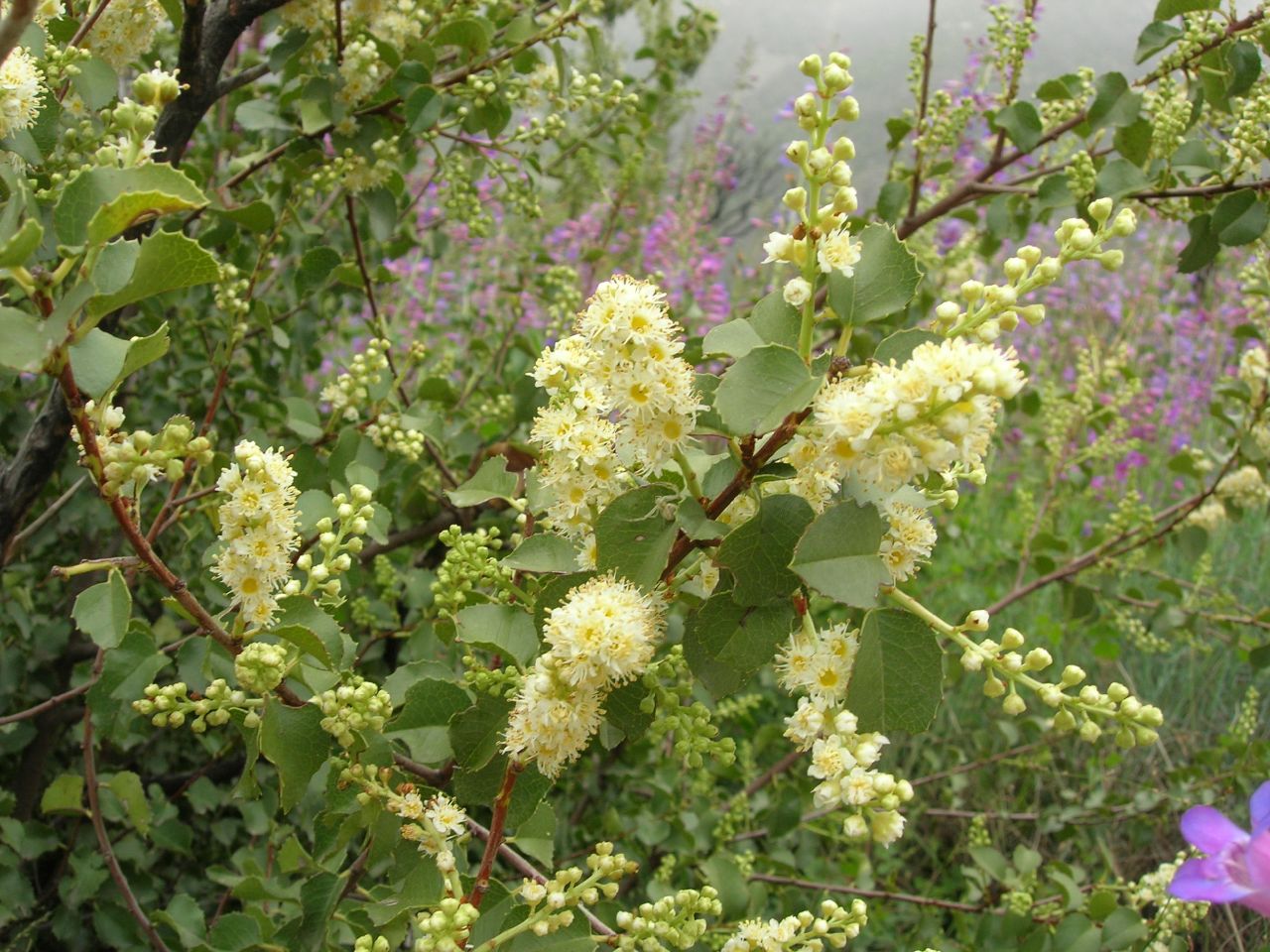
Prunus ilicifolia, the Hollyleaf Cherry (also called Islay or Evergreen Cherry), is an evergreen California native shrub to small tree named for its glossy, spiny-toothed leaves that look remarkably like holly leaves — a resemblance to a completely unrelated plant that often surprises first-time gardeners. In chaparral and coastal sage scrub from the San Francisco Bay Area south through Southern California, it is one of the toughest, longest-lived native shrubs available, capable of growing as a dense screening hedge or being trained into a handsome small evergreen tree.
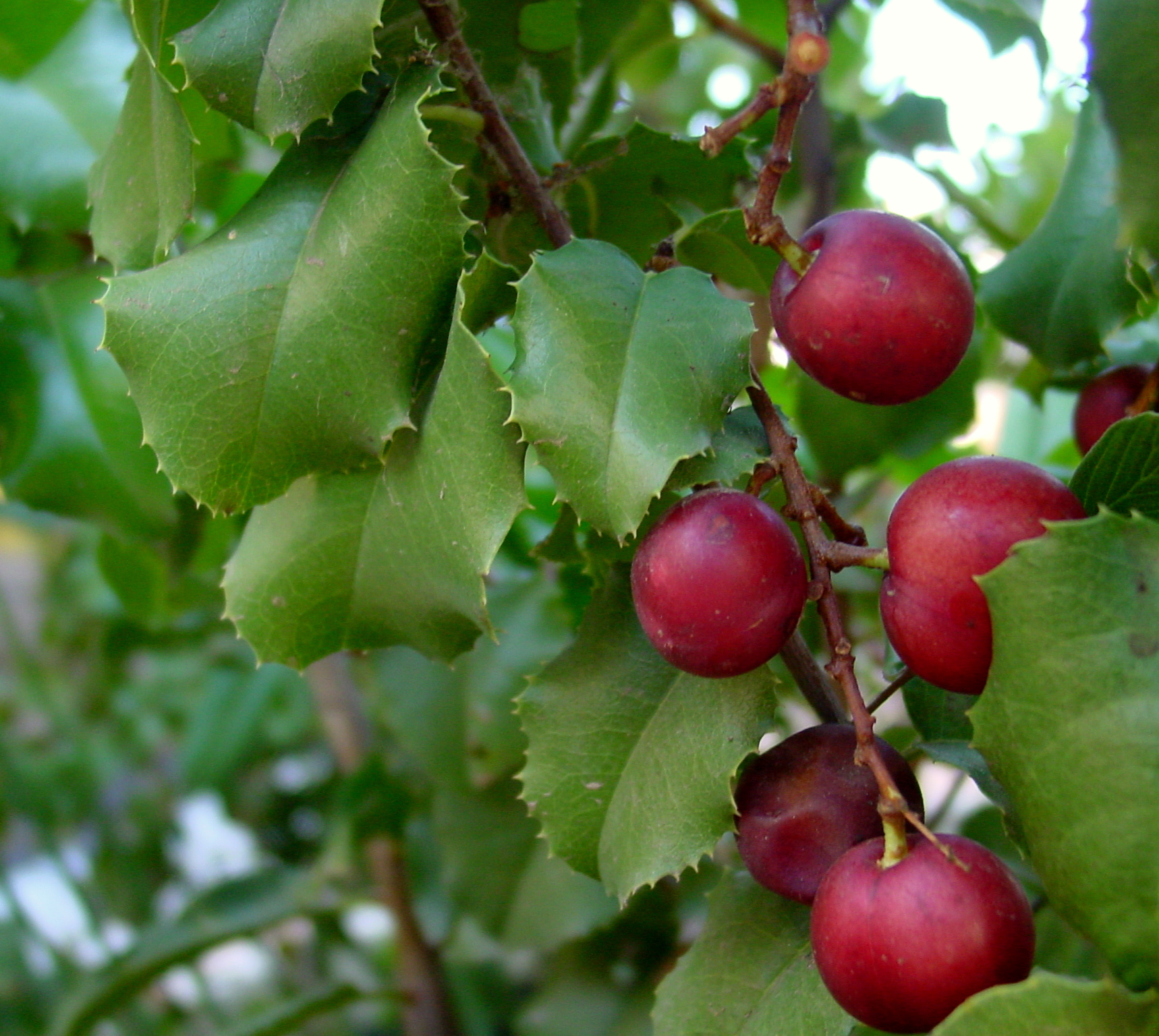
Clusters of small, creamy white flowers appear in spring and are followed by round, cherry-like fruits that ripen from red to dark purple-black by late summer and fall. Birds and mammals eagerly strip the fruit, and the large seed inside each one was historically an important food source for California Indigenous peoples, who processed it much like acorns to remove naturally occurring toxic compounds before eating it.
For gardeners in cismontane California, hollyleaf cherry is prized for its year-round structure, deep green foliage, extreme drought tolerance once established, and wildlife value. It takes shearing well as a hedge but is equally attractive left to its natural rounded form, and it is a mainstay of fire-wise, water-wise native landscaping across its range.
Identification
Hollyleaf cherry grows as a dense, rounded evergreen shrub 10 to 25 feet tall, or, with lower limbs removed, as a small single- or multi-trunked tree up to 30 feet. It typically grows wider than tall when left unpruned, forming an excellent dense screen or hedge.
Bark & Twigs
Young twigs are reddish-brown and smooth; older bark turns gray and develops shallow fissures. Branching is dense and often low to the ground unless the plant is limbed up.
Leaves
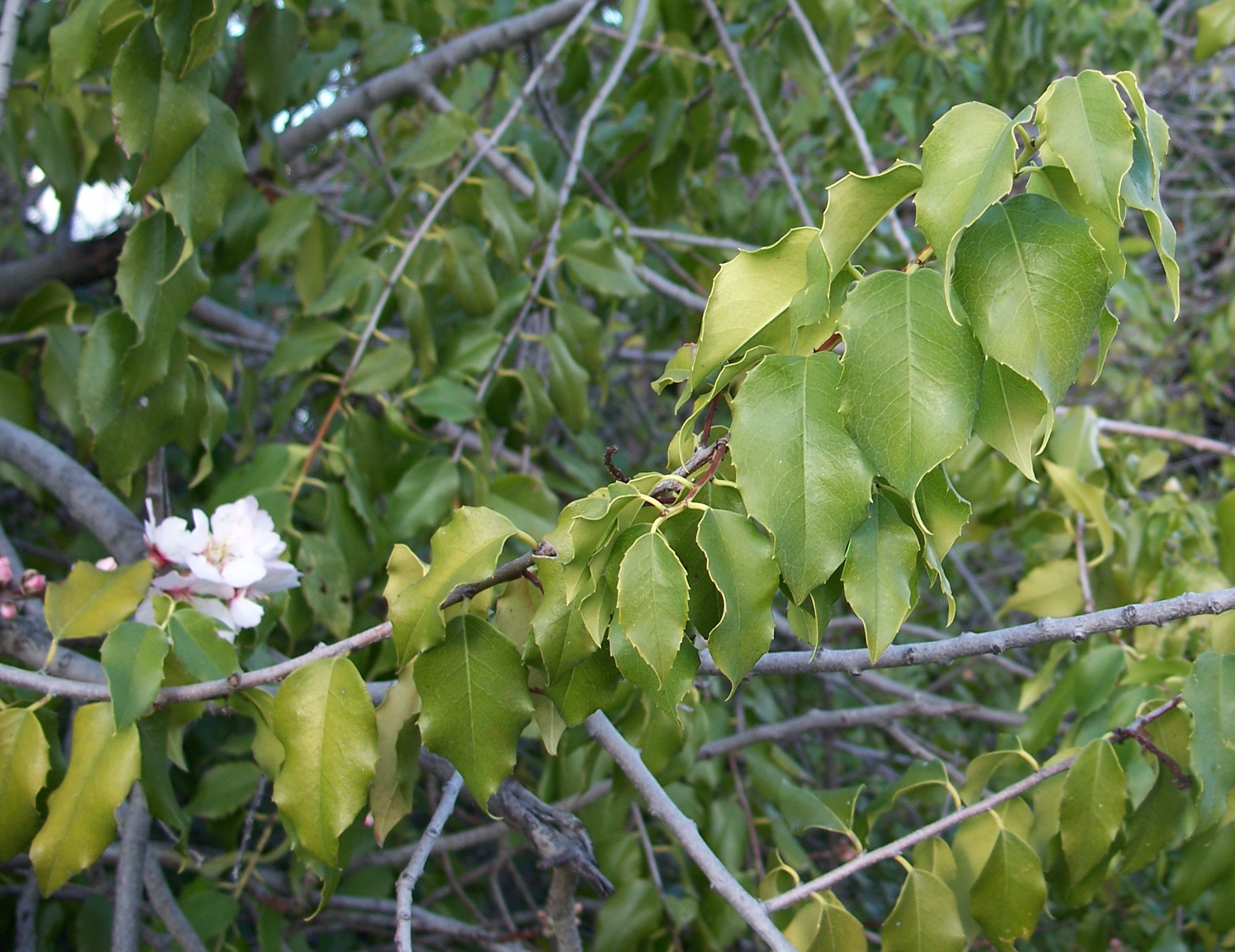
The leaves are evergreen, leathery, glossy dark green above and paler beneath, oval to round, 1 to 2 inches long, with wavy, spiny-toothed margins that closely mimic holly (Ilex) — the source of both the common name and the species epithet ilicifolia, meaning “holly-leaved.” Leaves persist year-round, giving the plant structure and screening value in every season.
Flowers & Fruit
Small, five-petaled, creamy white flowers bloom in dense upright clusters (racemes) 1 to 3 inches long at branch tips in spring, usually March through May. The blossoms have a mild, sweet fragrance and draw numerous bees and other pollinators. Flowers give way to round drupes about half an inch across that ripen from bright red to dark purple or nearly black by late summer into fall. Each fruit holds a single large, hard seed (pit) surrounded by a thin layer of sweet-tart flesh.
Quick Facts
| Scientific Name | Prunus ilicifolia |
| Family | Rosaceae (Rose) |
| Plant Type | Evergreen shrub / small tree |
| Mature Height | 10–25 ft (to 30 ft as a trained tree) |
| Mature Spread | 10–20 ft, often wider than tall |
| Growth Rate | Slow to moderate |
| Sun Exposure | Full Sun to Part Shade |
| Water Needs | Low once established; drought tolerant |
| Soil Type | Well-drained; tolerates clay, sand and rocky soils |
| Soil pH | 6.0–8.0 |
| Bloom Time | March – May |
| Flower Color | Creamy white |
| Fall Color | None (evergreen) |
| Fruit | Red to purple-black cherries, about ½ in, late summer–fall |
| Deer Resistant | Moderate |
| USDA Hardiness Zones | 8–10 |
Native Range
Hollyleaf cherry is native only to California, where it grows through the Coast Ranges and adjacent foothills from the San Francisco Bay Area south through the Central Coast, the Transverse and Peninsular Ranges, and the coastal slopes of Southern California, continuing into northern Baja California, Mexico. It is not native outside California; it does not occur naturally anywhere else in the United States, though it is sometimes planted as an ornamental beyond its range.
It is a signature shrub of chaparral and coastal sage scrub plant communities, typically found on dry slopes, canyons, and foothills below about 5,000 feet elevation. It grows alongside chaparral companions such as toyon, laurel sumac, California sagebrush, and various manzanitas and ceanothus species, and it is notably fire-adapted, often resprouting vigorously from its root crown after chaparral wildfire.
Because hollyleaf cherry is restricted to California, gardeners elsewhere in the Southwest or West sometimes mistake it for a plant suited to their climate; outside its native cismontane California range, it should be treated as an introduced ornamental rather than a native planting.
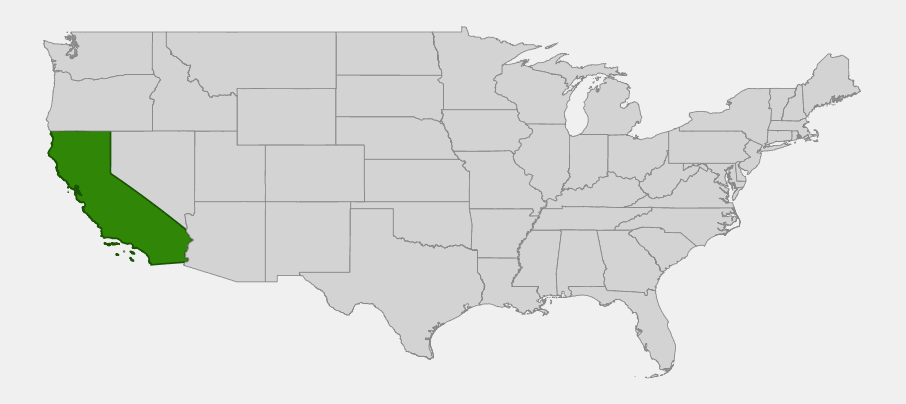
Hollyleaf cherry is native only to California; Plant Native does not yet have a California-specific regional plant list, so no 📋 list is linked here.
Growing & Care Guide
Hollyleaf cherry is an exceptionally tough, low-water evergreen once it is established, and it is one of the most reliable large native shrubs for chaparral-climate gardens.
Light
It grows best in full sun along the coast and in cooler areas, and appreciates light afternoon shade in hot inland valleys. It tolerates a surprising amount of shade as an understory plant but flowers and fruits best with more direct sun.
Soil & Water
Hollyleaf cherry is adapted to the lean, well-drained soils of California’s chaparral and tolerates clay, sand, and rocky ground alike, as long as drainage is reasonable. It needs regular water through its first one to two summers to establish a deep root system; after that, it is highly drought tolerant and, in most of its range, needs little to no supplemental summer water once mature. Overwatering established plants, especially with summer irrigation, increases the risk of root and crown rot.
Planting Tips
Plant in fall or winter so winter rains can help establish the root system before the dry season. Space plants 10 to 15 feet apart for a natural screen, or closer for a clipped hedge. It tolerates heavy pruning and shearing well, making it a popular choice for formal hedges as well as informal screens.
Pruning & Maintenance
Prune after the main flush of spring growth to shape hedges or remove dead wood; the plant resprouts readily from cuts. Established plants need very little routine maintenance. Because it resprouts vigorously from the root crown after fire or heavy pruning, it is well suited to firewise landscaping that calls for periodic cutting back.
Propagation
Hollyleaf cherry is usually propagated from seed. Clean the pulp from ripe fruit, then cold-stratify the pits for two to three months before sowing, mimicking the chilling the seed experiences over a California winter. Semi-hardwood cuttings taken in summer can also root with rooting hormone and bottom heat, though germination from seed is the more common nursery method.
Landscape Uses
- Evergreen hedges and screens, clipped or informal
- Wildlife and bird gardens, since the fruit is heavily used by birds and mammals
- Firewise and water-wise landscaping in chaparral-climate gardens
- Trained as a small evergreen patio or specimen tree by removing lower limbs
- Slope stabilization and erosion control on dry hillsides
- Habitat restoration in coastal sage scrub and chaparral revegetation projects
Wildlife & Ecological Value
Hollyleaf cherry is a major wildlife resource throughout the chaparral and coastal scrub communities where it grows, providing both food and dense evergreen cover.
For Pollinators
The spring flower clusters attract native bees, honeybees, and a range of other pollinating insects at a time when relatively few chaparral shrubs are in bloom, making it an important early-season nectar source.
For Birds
Ripening cherries are eaten by numerous bird species, including American robins, cedar waxwings, mockingbirds, and various thrushes, which help disperse the seeds widely. The dense evergreen branches also provide secure year-round nesting and roosting cover.
For Mammals
Coyotes, foxes, raccoons, and black bears in parts of its range eat the fruit, and mule deer browse the foliage, though the leathery, spiny leaves make it less palatable than many softer-leaved shrubs. Ground squirrels and other rodents cache and eat the large seeds.
Ecosystem Role
As a long-lived, structurally dense evergreen, hollyleaf cherry provides some of the only reliable year-round cover and shade in chaparral plant communities that are otherwise largely drought-deciduous or seasonal. Its ability to resprout from the root crown after fire makes it an important component of chaparral recovery following wildfire.
Cultural & Historical Uses
Hollyleaf cherry, known by its Spanish-derived common name “Islay,” was an important food plant for California Indigenous peoples, including the Chumash, Tongva, and other groups throughout its range. The fleshy fruit was eaten fresh or dried, and the large seed kernels were processed in a manner similar to acorns: shelled, ground, and leached repeatedly with water to remove naturally occurring cyanide-producing compounds before the resulting meal was cooked and eaten. This leaching process took real skill and time, and was passed down as traditional ecological knowledge within communities who relied on the plant.
Spanish missionaries and early California settlers adopted the Chumash name “Islay” for the plant and for several places named after it, including the Santa Barbara County community of Islay. The dense, thorny-leaved shrub was also valued historically as a natural hedge and windbreak on ranches and homesteads across coastal California.
Today, hollyleaf cherry’s historical food use is a matter of documented traditional practice, not a casual foraging recommendation: the raw seed kernels, like those of other cherries, plums, and related Prunus species, contain cyanogenic compounds that are toxic without proper processing, and the leaves, twigs, and unprocessed pits should never be eaten.
Frequently Asked Questions
Is hollyleaf cherry poisonous?
Like other Prunus species, the leaves, twigs, and raw seed pits of hollyleaf cherry contain cyanogenic compounds that are toxic to people and livestock if eaten. The fleshy fruit pulp was historically eaten after the pit was discarded or specially processed; never eat the pits or give recipes assuming the pits are safe without that traditional leaching process.
Is hollyleaf cherry native outside California?
No. Its native range is limited to California (plus adjacent northern Baja California, Mexico). It is sometimes grown as an ornamental elsewhere in the West, but in those areas it should be considered an introduced landscape plant, not a native one.
Does hollyleaf cherry need irrigation in a California garden?
Established plants are very drought tolerant and often need no summer irrigation at all once their roots are developed, typically after the first one to two years. Overwatering mature plants, especially in summer, increases the risk of root rot.
Can hollyleaf cherry be used as a hedge?
Yes. Its dense evergreen growth and tolerance of shearing make it a popular choice for both clipped formal hedges and informal screening plantings in California native gardens.
How is hollyleaf cherry different from holly?
Despite the strikingly similar spiny, glossy leaves, hollyleaf cherry is in the rose family (Rosaceae) and is a close relative of cultivated cherries and plums, while true hollies (Ilex species) belong to an entirely different plant family. The leaf resemblance is a case of convergent evolution, not a close relationship.

Looking for a nursery that carries Hollyleaf Cherry?
Browse our native plant nursery directory: California