
Coast Redwood (Sequoia sempervirens)
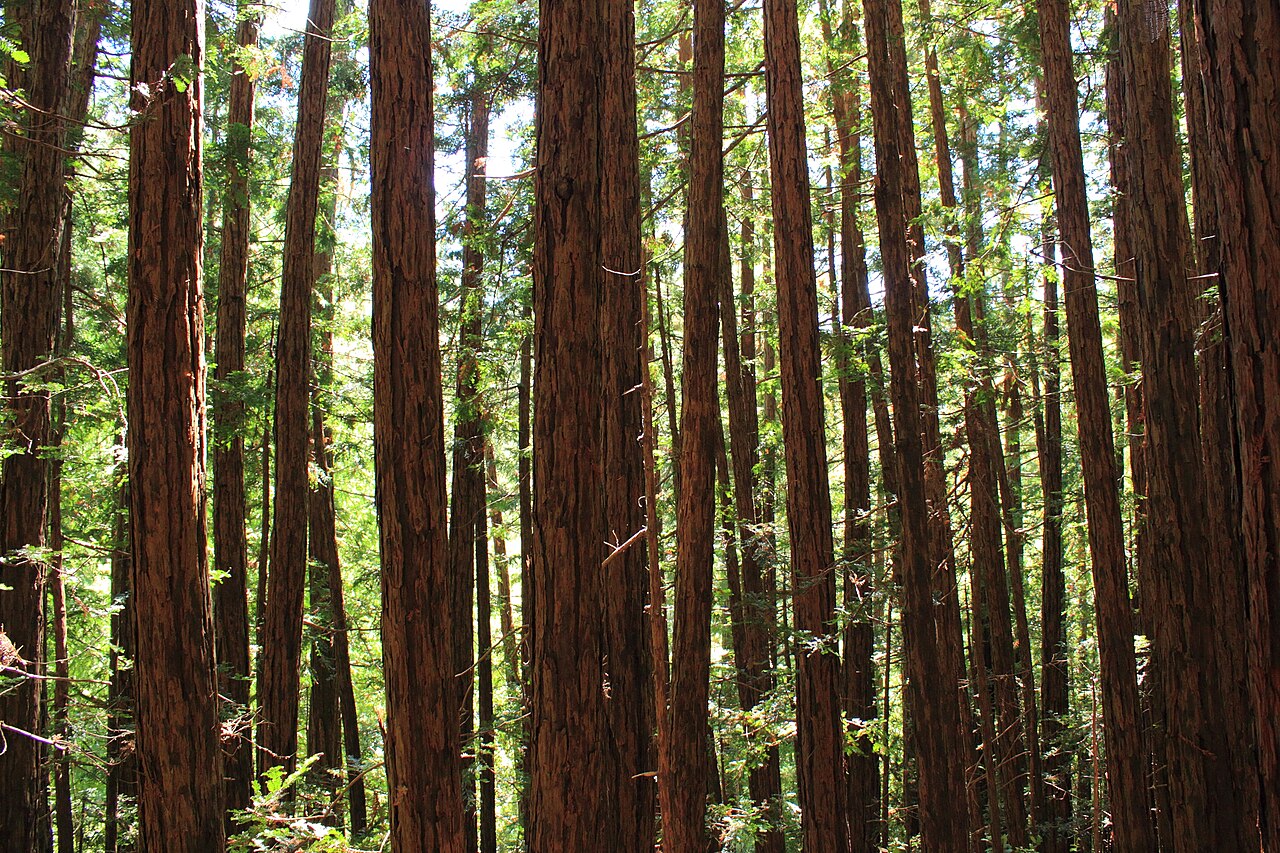
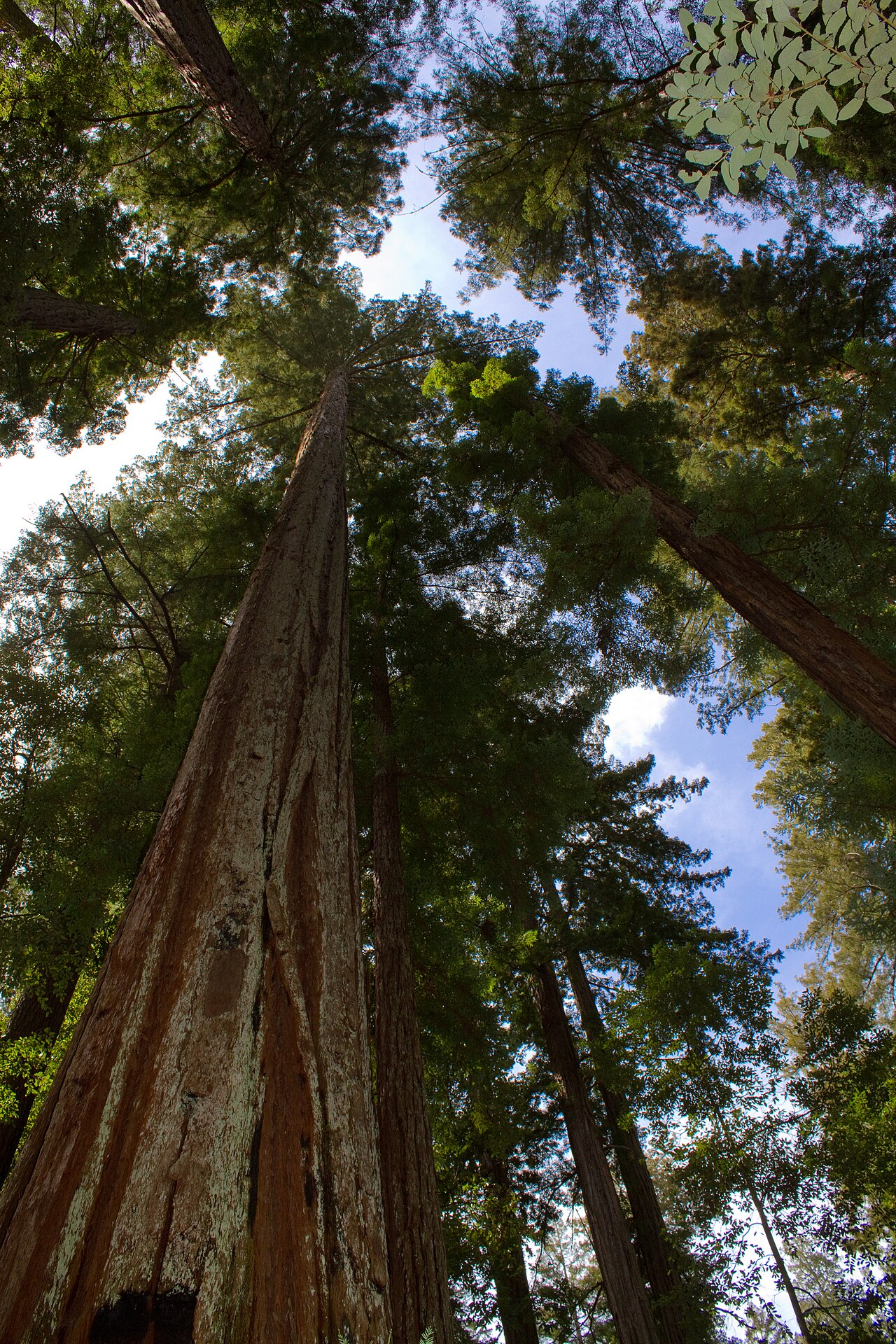
Sequoia sempervirens, the Coast Redwood, is the tallest tree species on Earth and the sole living member of its genus, confined to a narrow, fog-watered strip of the Pacific coast. Mature trees commonly exceed 300 feet, with the very tallest individuals — all growing wild in California — topping 379 feet, taller than a 35-story building. Despite that extraordinary scale, coast redwood is a surprisingly adaptable and long-lived tree, with some individuals exceeding 2,000 years old.
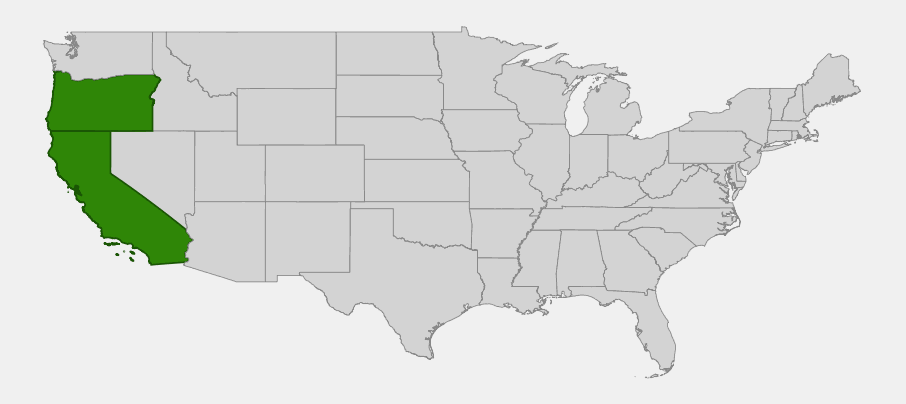
Coast redwood’s native range is far smaller than its fame suggests: a belt rarely more than 30 miles wide, hugging the coastline from the Big Sur area of central California north to just across the Oregon border. It depends on summer fog drip for a large share of its water in the dry California summer, which is why the species essentially disappears once you move more than a few miles inland or beyond reach of the coastal fog.
For gardeners within or near its native fog belt — and with enough room — coast redwood is a magnificent long-term planting. It is not a tree for small urban lots or for climates outside its narrow comfort zone, but where conditions suit it, nothing else matches its combination of height, longevity, and the hushed, cathedral-like character of a mature grove.
Identification
Coast redwood is an evergreen conifer with a tall, straight, often buttressed trunk and a narrow, conical crown when young, becoming more irregular and flat-topped with age and storm damage. Old-growth trunks can exceed 20 feet in diameter at the base.
Bark
The bark is thick — often 6 to 12 inches on mature trees — fibrous, deeply furrowed, and a distinctive reddish-brown to cinnamon color, which gives the tree its common name. This thick, spongy, tannin-rich bark is highly fire-resistant and resists insect damage, two traits central to the species’ longevity.
Foliage
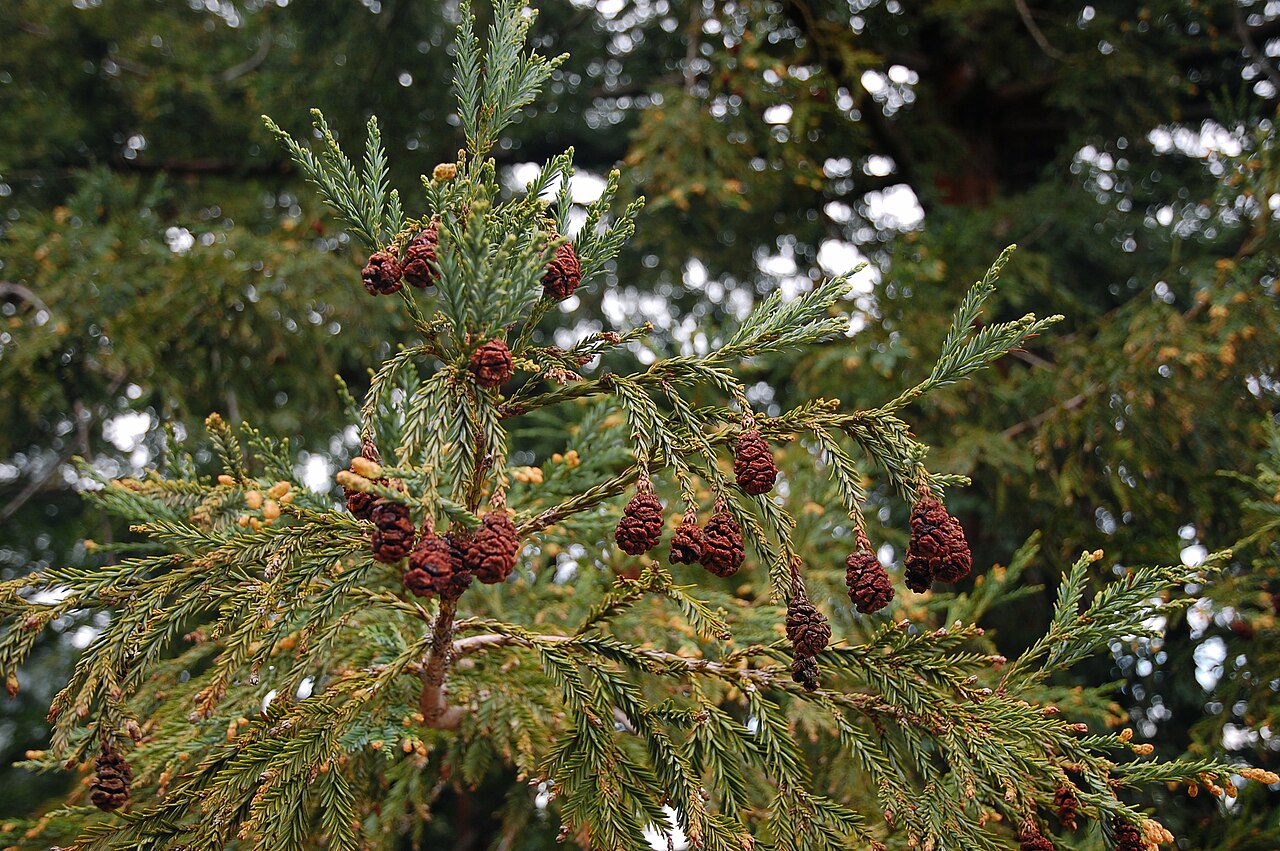
Needles are flat, 0.5 to 1 inch long, arranged in two flattened rows along the side branches (giving a feathery, fern-like spray), dark green above with two whitish stomatal bands beneath. Foliage on upper, sun-exposed branches is often shorter, awl-shaped, and more tightly spiraled than the flat sprays typical of shaded lower branches — a useful identification clue, since few other conifers show this much difference between sun and shade foliage on the same tree.
Cones & Seeds
Cones are small for such an enormous tree — oval, about ¾ to 1 inch long, maturing from green to woody brown in a single season. Each cone holds a few dozen tiny, flat-winged seeds, most of which are not viable; coast redwood relies more heavily on vegetative sprouting from stumps, burls, and roots than on seed for regeneration in the wild.
Quick Facts
| Scientific Name | Sequoia sempervirens |
| Family | Cupressaceae (Cypress) |
| Plant Type | Evergreen conifer tree |
| Mature Height | 200–350 ft (record trees to 379 ft) |
| Mature Spread | 25–40 ft |
| Growth Rate | Fast (2–4 ft per year when young and well-sited) |
| Sun Exposure | Full Sun to Part Shade |
| Water Needs | High; needs consistent moisture or coastal fog |
| Soil Type | Deep, moist, well-drained alluvial or loamy soil |
| Soil pH | Slightly acidic to neutral (5.5–7.0) |
| Bloom Time | Pollen cones shed late winter (not showy) |
| Flower Color | Not applicable (conifer; inconspicuous cones) |
| Fall Color | None (evergreen) |
| Fruit | Small woody cones, about 1 in, maturing in one season |
| Deer Resistant | Yes |
| USDA Hardiness Zones | 7–9 (performs best within its coastal fog-belt climate) |
Native Range
Coast redwood’s wild range is a narrow coastal strip roughly 450 miles long but rarely more than 5 to 30 miles wide, running from the Santa Lucia Mountains near Big Sur in Monterey County, California, north through the redwood coast of Mendocino, Humboldt, and Del Norte counties, and just barely crossing into the extreme southwestern corner of Oregon — a small pocket in Curry County near the Chetco and Winchuck rivers. It is not native, and does not grow wild, through the interior of either state or along most of the Oregon coast farther north.
Within this belt, coast redwood occupies moist alluvial flats, stream terraces, and lower mountain slopes that receive heavy winter rain and, critically, persistent summer fog. The fog condenses on the foliage and drips to the ground, supplying a meaningful share of the tree’s water during California’s rainless summers — without it, the species cannot survive this far south on winter rain alone.
Old-growth coast redwood forest once covered roughly 2 million acres; logging over the past 150 years reduced old growth to a small fraction of that, concentrated today in state and national parks such as Redwood National and State Parks, Muir Woods, and Big Basin Redwoods State Park. Second-growth forest, which regenerates vigorously from stump sprouts, now covers much of the historic range.
📋 Regional plant lists featuring Coast Redwood: Western Oregon & Western Washington (native only in the far southwest corner of this list’s Oregon range)
Growing & Care Guide
Coast redwood is easiest to grow well within or close to its native fog belt. Outside that climate it can still succeed with extra irrigation, but it will never quite match the effortless growth it shows at home on the California and southern Oregon coast.
Light
Young trees tolerate and often prefer light shade, especially where summer heat is intense, but mature trees need full sun to reach their full height and develop a strong, self-supporting crown. In cultivation outside the coastal fog belt, afternoon shade can help reduce moisture stress.
Soil & Water
Coast redwood wants deep, moist, well-drained soil and steady water, especially while young. It does not tolerate drought well away from coastal fog and will decline in hot, dry inland climates without supplemental irrigation. Avoid shallow, compacted, or poorly drained sites; redwoods planted in heavy clay with poor drainage are prone to root problems.
Planting Tips
This is a tree for people with real space and a long view — mature specimens need 25 to 40 feet of spread and a root zone free of pavement and foundations. Plant young, container-grown trees in fall or early spring, water deeply and regularly through the first several years, and mulch well to conserve moisture. Coast redwood is best suited to coastal or near-coastal gardens in zones 7 to 9; inland or colder-winter gardeners should look to more climate-appropriate native conifers instead.
Pruning & Maintenance
Established trees need little pruning beyond removing dead, damaged, or crossing lower limbs. Coast redwood tolerates heavy pruning and even fire damage remarkably well, often resprouting from dormant buds along the trunk (epicormic sprouts) or from burls at the base — a regenerative trait almost unique among conifers.
Landscape Uses
- Specimen or memorial trees on large properties, parks, and campuses with room to grow
- Windbreaks and screens along coastal property lines, within its climate range
- Riparian and streamside restoration plantings in its native coastal watershed
- Shaded woodland gardens underplanted with ferns and redwood sorrel once the canopy matures
- Not recommended for small residential lots, areas near foundations or septic systems, or climates far outside its coastal comfort zone
Wildlife & Ecological Value
Mature redwood forest is a distinct, structurally complex ecosystem that supports species found almost nowhere else.
For Birds
Old-growth redwood canopies provide critical nesting habitat for the threatened marbled murrelet, a seabird that flies far inland to nest on wide, moss-covered redwood limbs. Spotted owls, varied thrushes, and numerous other forest birds use redwood forest for nesting and foraging.
For Mammals
Black bears, Roosevelt elk, black-tailed deer, and a range of smaller mammals use redwood forests and their edges, particularly the dense understory of sword fern, huckleberry, and redwood sorrel that develops beneath mature trees.
Ecosystem Role
Coast redwood forest is exceptional at capturing fog moisture and cycling it through the ecosystem, supporting a lush understory even through California’s dry summers. The trees’ thick bark and capacity to resprout after fire or injury make redwood stands remarkably resilient and long-persisting, with some living root systems and fairy-ring sprout clusters representing organisms many centuries old.
Cultural & Historical Uses
Coast redwood held deep cultural significance for Indigenous peoples of the region, including the Yurok, Tolowa, and Sinkyone, who used fallen and naturally shed redwood for canoes, planks, and structural timber — generally avoiding felling living trees, since the wood could be harvested from windfalls and the tree’s own prolific stump-sprouting regeneration.
Commercial logging transformed the redwood coast beginning in the mid-1800s, driven by the wood’s exceptional qualities: lightweight, straight-grained, and naturally resistant to rot and insects thanks to its tannin content. Redwood lumber built much of San Francisco and other West Coast cities and remains prized for decking, siding, and outdoor furniture today, though old-growth redwood lumber is now scarce and most commercial redwood comes from managed second-growth forest.
Conservation efforts beginning in the early 20th century, led by organizations such as Save the Redwoods League, established the parks that protect most of the remaining old growth today. Coast redwood remains a global symbol of California and of the scale that a single tree species can reach given the right climate and enough time.
Frequently Asked Questions
Is coast redwood the same as giant sequoia?
No. Coast redwood (Sequoia sempervirens) grows along the coastal fog belt and is the tallest tree species; giant sequoia (Sequoiadendron giganteum) grows in isolated Sierra Nevada groves farther inland and is the most massive tree species by volume. The two are related but distinct genera.
Can coast redwood grow outside California and Oregon?
It is widely planted well beyond its native range, including in milder parts of the Pacific Northwest, the British Isles, and similar maritime climates, but it only reaches its full stature and vigor within or close to conditions resembling its native coastal fog belt.
How fast does coast redwood grow?
Very fast for a conifer — 2 to 4 feet per year is typical for young, well-sited trees, with some reports of even faster growth in ideal coastal conditions. Growth slows considerably with age but rarely stops entirely.
Is coast redwood endangered?
The species itself is not endangered — second-growth forest is extensive and regenerates well — but old-growth coast redwood forest is critically reduced from its historic extent, and species dependent on old growth, such as the marbled murrelet, are threatened as a result.
Why does coast redwood only grow in such a narrow strip?
Its dependence on summer fog drip for moisture, combined with a need for mild winters without hard freezes, confines it to the coastal band where both conditions are reliably met. Move too far inland and summers get too dry; move too far north and winters get too cold.

Looking for a nursery that carries Coast Redwood?
Browse our native plant nursery directory: California · Oregon