
Green Buttonwood (Conocarpus erectus)
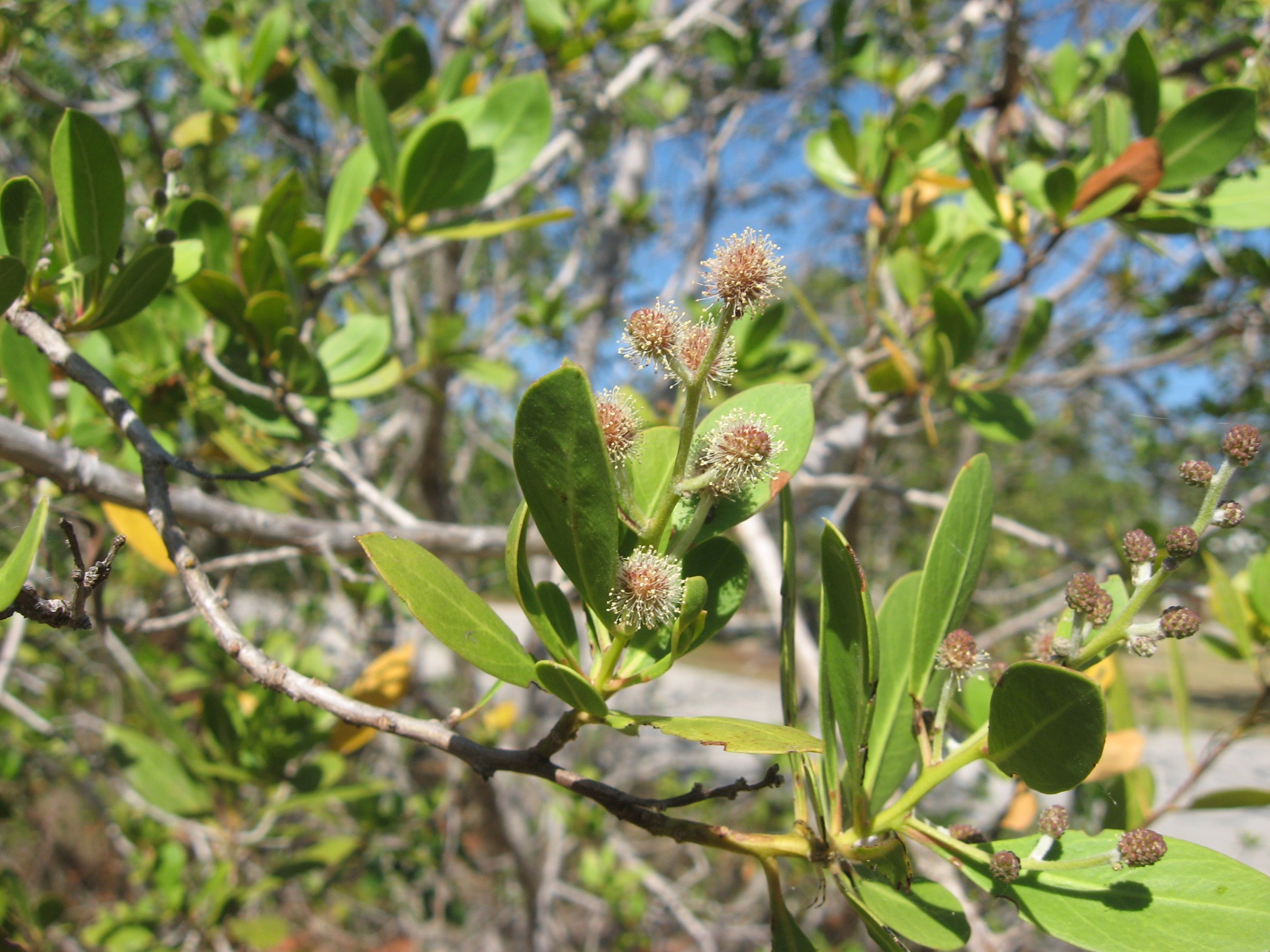
Conocarpus erectus, known as Green Buttonwood or simply Buttonwood, is a tough, salt-tolerant evergreen tree or large shrub native to the coastal fringes of South Florida. It belongs to the Combretaceae (Indian almond) family and is the only member of the “mangrove associate” group that is not a true mangrove, though it typically grows right alongside Red, Black, and White Mangroves in the brackish transition zone between open water and dry land. Its small, cone-like fruiting heads give the species both its common and scientific names — conocarpus is Greek for “cone fruit.”
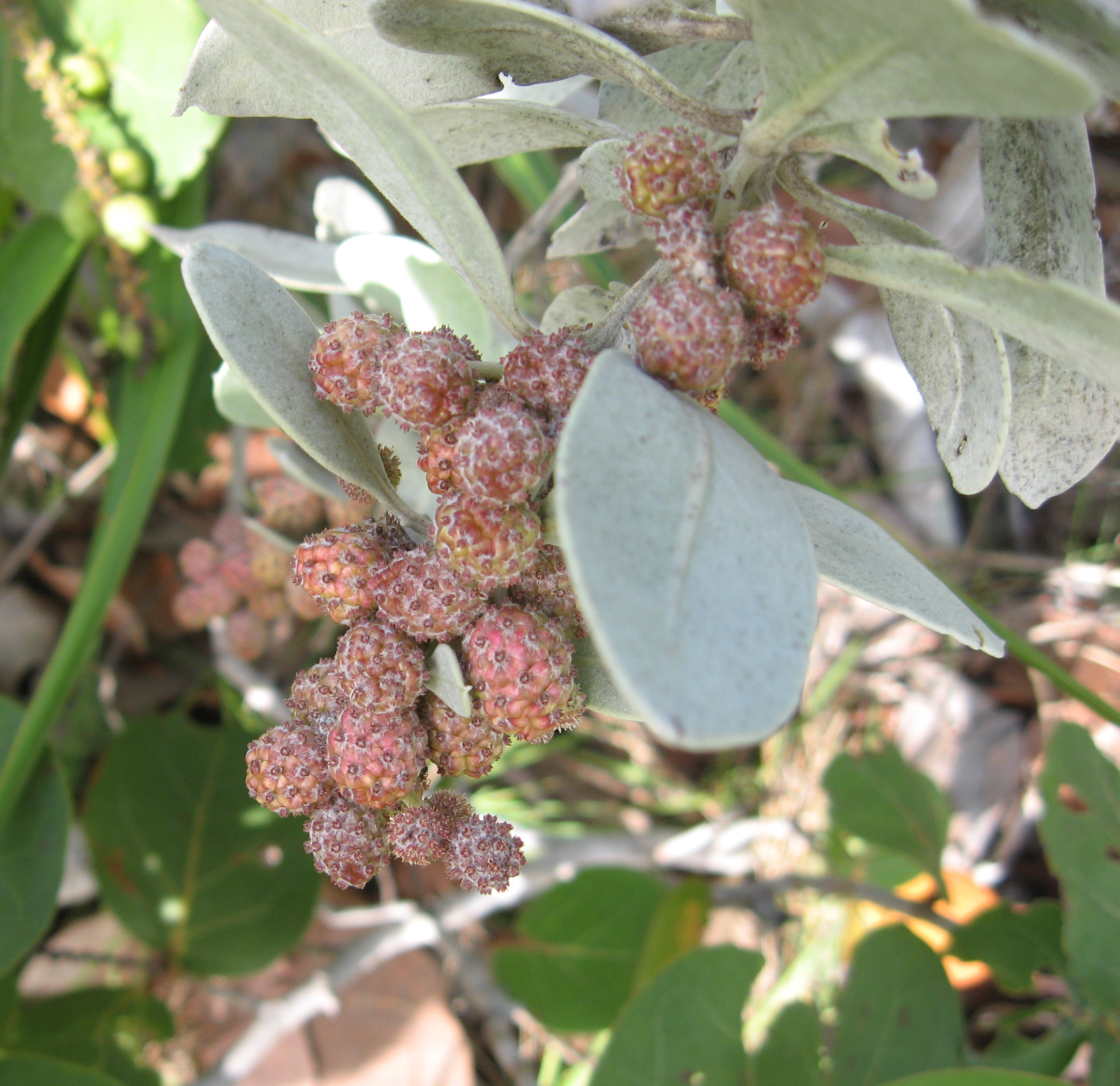
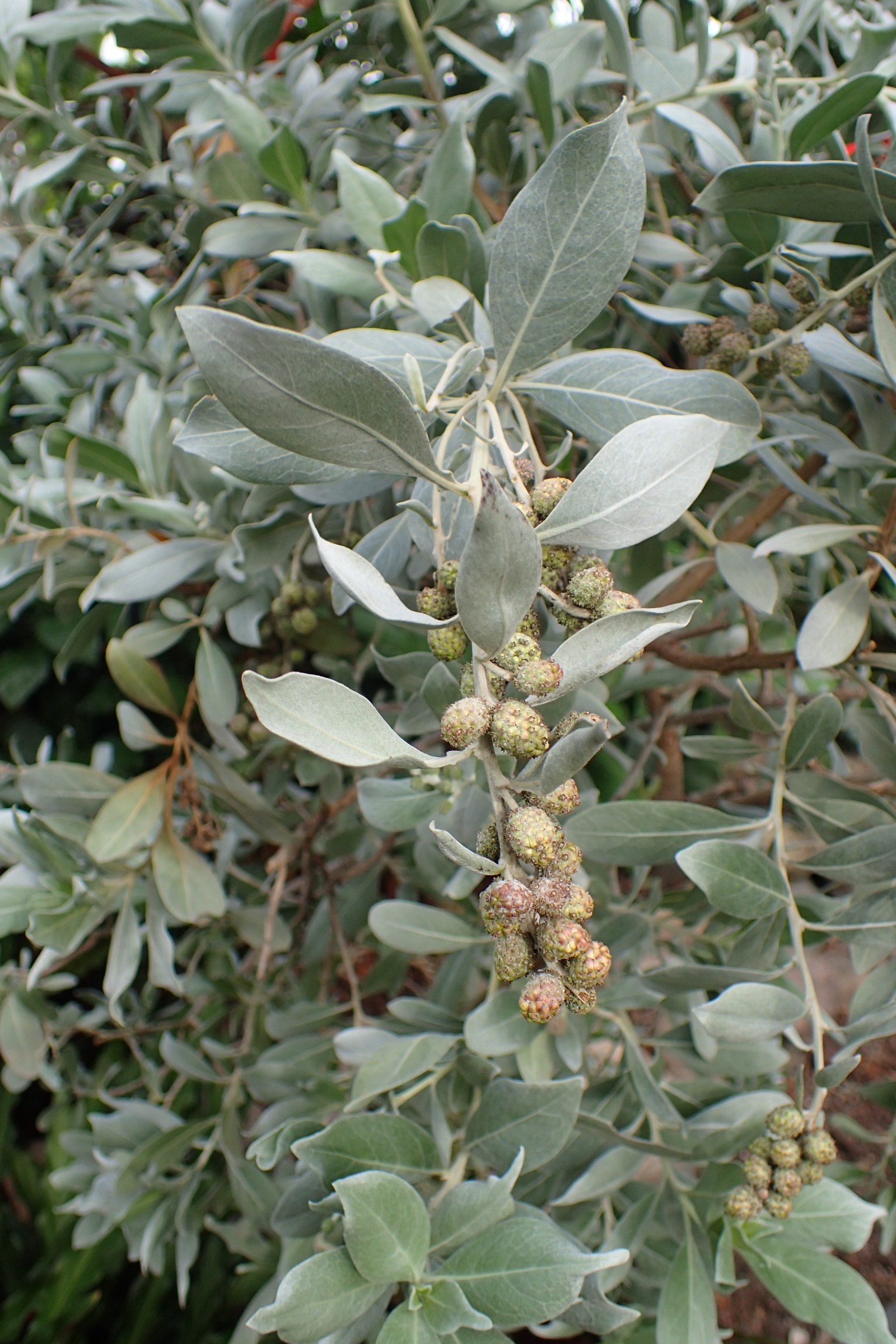
In the wild, Green Buttonwood is a variable species: along open, windswept shorelines it often grows as a low, gnarled, multi-trunked shrub, while in more sheltered hammocks and disturbed coastal sites it can become an upright small tree 20 to 40 feet tall. A silvery-leaved form, Silver Buttonwood (Conocarpus erectus var. sericeus), is especially common on the Florida Keys and is popular in coastal landscaping for its shimmering, fuzzy foliage.
For South Florida gardeners working with poor, sandy, salty soil close to the coast, Green Buttonwood is an exceptionally hardy choice. It shrugs off salt spray, brief tidal inundation, and strong coastal wind, and it needs little supplemental care once established. Because it is native only to the southern tip of the Florida peninsula and the Keys, it should be reserved for landscapes in that same coastal zone rather than planted as a general-purpose shade tree farther north.
Identification
Green Buttonwood is a broadleaf evergreen that ranges from a sprawling, multi-stemmed shrub 6 to 10 feet tall on exposed shorelines to an upright tree 20 to 40 feet tall in more protected sites. Its form is strongly shaped by its growing conditions — the same species can look like a low, windswept thicket in one spot and a rounded shade tree a short distance inland.
Bark & Stems
Young twigs are slender, reddish-brown, and often slightly angled or winged near the leaf nodes. As the tree matures, the bark becomes gray-brown, furrowed, and scaly, developing the rugged, weathered look typical of coastal hardwoods that endure salt wind and occasional storm damage. Trunks are often leaning or multi-stemmed, a response to wind exposure and the sandy, sometimes unstable substrates the species favors.
Leaves
The leaves are simple, alternate, leathery, and elliptic to lance-shaped, 2 to 5 inches long, with smooth margins and a pointed tip. A distinguishing field mark is the pair of small, raised glands near the base of the leaf blade where it meets the leafstalk, used by the plant to excrete excess salt. The typical green form has smooth, dark green leaves, while the Silver Buttonwood variety is covered in fine silvery hairs that give the whole plant a soft, silvery-gray sheen.
Flowers & Fruit
Green Buttonwood flowers in dense, rounded, greenish-white to reddish clusters born on short spikes at branch tips, blooming on and off through the warm months with a peak in spring and summer. The flowers are small and lack petals, relying on their clustered, cone-like form rather than showy color to attract pollinators. After flowering, they develop into small, hard, purplish-brown cone-like fruiting heads about ⅜ to ½ inch across, each packed with tiny winged seeds. These cone-shaped fruits are the origin of both the common name “Buttonwood” and the genus name Conocarpus.
Quick Facts
| Scientific Name | Conocarpus erectus |
| Family | Combretaceae (Indian Almond) |
| Plant Type | Evergreen Tree / Large Shrub |
| Mature Height | 6–40 ft (shrub form to small tree) |
| Mature Spread | 10–25 ft |
| Growth Rate | Moderate to Fast |
| Sun Exposure | Full Sun |
| Water Needs | Low to Moderate |
| Soil Type | Sandy, limestone, or brackish muck; well-drained to seasonally wet |
| Soil pH | 6.5–8.5 (neutral to alkaline, salt-tolerant) |
| Bloom Time | Spring – Summer, intermittent year-round in South Florida |
| Flower Color | Greenish-white to reddish |
| Fall Color | None; evergreen |
| Fruit | Small purplish-brown cone-like fruiting heads |
| Deer Resistant | Yes |
| USDA Hardiness Zones | 10b–11 |
Native Range
In the continental United States, Green Buttonwood is native only to the coastal fringe of South Florida and the Florida Keys, where it grows along tidal shorelines, brackish lagoons, and the upland edges of mangrove swamps. It is also native to Puerto Rico and the U.S. Virgin Islands, and occurs more broadly through the Caribbean, Mexico, Central America, and northern South America. It is not native to the rest of the continental United States; plants sold and grown elsewhere in Florida or the Gulf Coast outside its natural coastal range, or in frost-prone areas, should be understood as introduced landscape plantings rather than a wild native population.
Within its native range, Green Buttonwood typically occupies the transition zone just above the daily reach of the tide — the slightly higher, drier ground behind the true mangroves where salt spray and occasional storm flooding still shape the plant community. It is a defining species of the buttonwood forest and coastal hammock communities of the Florida Keys and the Everglades coast, often sharing this zone with Black Mangrove, Saltbush, and various coastal grasses.
Because it tolerates salt, wind, and periodic flooding so well, Green Buttonwood is also widely planted as a landscape and street tree throughout South Florida and in other subtropical and tropical regions around the world — but gardeners farther north in Florida, or in any climate that sees hard freezes, should not expect this frost-tender, strictly tropical-to-subtropical species to survive or to be ecologically appropriate as a native planting.
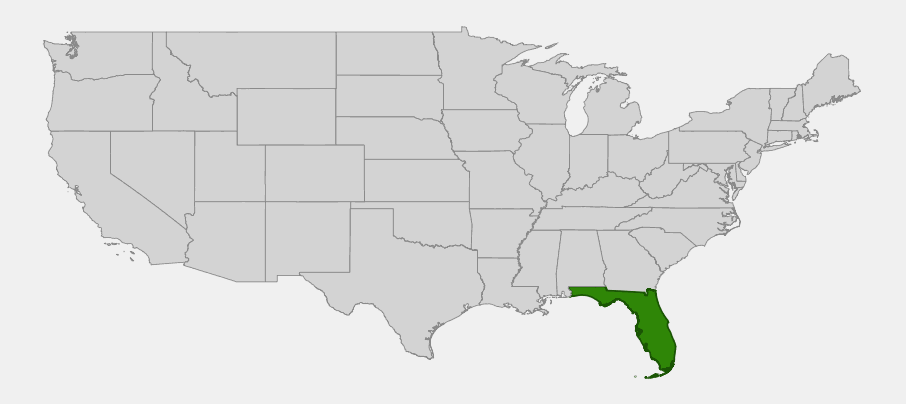
📋 Regional plant lists featuring Green Buttonwood: none — Green Buttonwood is native only to coastal South Florida, a range not currently covered by a regional list in our directory.
Growing & Care Guide
Green Buttonwood is about as forgiving as native coastal trees get, provided it is planted within its climate range. It thrives on neglect once established and is a go-to choice for South Florida landscapes that need to withstand salt, wind, and poor soil.
Light
Give Green Buttonwood full sun. It is naturally a plant of open, exposed shorelines and performs best — denser, more compact, and more floriferous — with as much direct sun as a site can offer. In shadier conditions it grows leggy and sparse.
Soil & Water
This species is remarkably adaptable to poor soils, thriving in sandy, rocky, or limestone-based substrates as well as in the brackish muck at the edge of mangrove wetlands. It tolerates both drought and periodic flooding with brackish or salt water, making it one of the most versatile trees for difficult coastal sites. Once established, it needs little supplemental irrigation except during extended dry spells or in the first year after planting.
Planting Tips
Plant Green Buttonwood in spring or early summer so it has the warm season to establish roots before winter. Give it plenty of room to spread, especially if allowing it to develop its natural multi-stemmed shrub form; space specimens 10 to 20 feet apart for a hedge or screen, or more for a single specimen tree. It transplants well from containers and tolerates the sandy, rocky soils typical of South Florida without amendment.
Pruning & Maintenance
Green Buttonwood tolerates heavy pruning and is commonly trained into a single-trunk tree form, a dense hedge, or even a bonsai specimen, reflecting its popularity in South Florida horticulture. Left unpruned, it will naturally form a rounded, multi-stemmed shrub or small tree. Prune after flowering to shape, and remove storm-damaged or crossing branches as needed; the species recovers quickly from hurricane damage, a useful trait in its hurricane-prone native range.
Landscape Uses
Green Buttonwood is a workhorse plant for South Florida coastal landscapes:
- Coastal and seaside plantings tolerant of salt spray and wind
- Hedges and screens that respond well to shearing
- Shade or specimen tree in a single-trunk form
- Mangrove and wetland-edge restoration plantings
- Bonsai and container specimens, a popular regional horticultural tradition
- Street and parking-lot trees in appropriate coastal South Florida settings
Wildlife & Ecological Value
As a defining tree of the South Florida coastal buttonwood community, this species plays an outsized ecological role relative to its modest stature, supporting wildlife at the critical interface between land and sea.
For Pollinators
The small, nectar-rich flower clusters attract a wide range of bees, including honeybees, and other insects throughout their extended bloom period. Beekeepers in South Florida value Buttonwood as a nectar source, and the flowers contribute to the distinctive flavor of South Florida honey.
For Birds
Buttonwood stands provide nesting and roosting habitat for coastal and wading birds, and the dense branching of older specimens offers shelter from both weather and predators along otherwise exposed shorelines.
For Marine and Coastal Life
Growing at the landward edge of mangrove forests, Buttonwood helps stabilize the transitional zone between upland and wetland, reducing erosion and buffering the mangrove community from storm surge and wind. Its root systems help hold sandy and muck soils in place along shorelines that are otherwise highly vulnerable to erosion.
Ecosystem Role
Green Buttonwood is considered a keystone species of the buttonwood forest community, a distinct and increasingly rare habitat type in South Florida that has been heavily reduced by coastal development. Protecting and replanting Buttonwood helps maintain this transitional ecosystem, which in turn supports the broader health of adjacent mangrove and estuarine habitats that are nursery grounds for many fish and invertebrate species.
Cultural & Historical Uses
Buttonwood has a long history of practical use in South Florida and the Caribbean. The wood is extremely dense, hard, and durable, and it burns hot and slow — qualities that made it a favored fuel for smoking and curing fish and meat among early Florida settlers and Caribbean communities, and it remains a prized wood for barbecue and smoking today in some regional traditions.
The dense, heavy wood was also historically used for boat building components, tool handles, and other applications calling for a hard, rot- and insect-resistant timber. In the Florida Keys, the buttonwood forests that once covered much of the higher ground behind the mangroves gave their name to numerous local place names and were an important part of the pioneer-era landscape before large-scale development reduced this habitat type.
In more recent decades, Green Buttonwood and its silver-leaved variety have become fixtures of South Florida ornamental horticulture, prized for hedging, bonsai, and coastal landscaping — a modern use that has helped keep the species widely planted even as its natural buttonwood-forest habitat has become increasingly rare.
Frequently Asked Questions
Is Green Buttonwood a true mangrove?
No. Although it is classified as a “mangrove associate” and almost always grows alongside Red, Black, and White Mangroves, Green Buttonwood is not a true mangrove and typically grows on slightly higher, drier ground just above the regular reach of the tide.
Can Green Buttonwood grow outside South Florida?
It is native only to the southernmost coastal areas of Florida and the Keys, plus Puerto Rico and the U.S. Virgin Islands. It is frost-sensitive and is not winter-hardy outside USDA zones 10b–11, so it is not a suitable native planting for the rest of Florida or the broader Gulf Coast.
What is Silver Buttonwood?
Silver Buttonwood (Conocarpus erectus var. sericeus) is a naturally occurring variety with fine silvery hairs covering the leaves, giving the whole plant a shimmering gray-green look. It shares the same native range and growing requirements as the green form and is especially popular in Florida Keys landscaping.
Does Green Buttonwood tolerate salt water?
Yes, exceptionally well. It tolerates salt spray, brackish soil, and occasional tidal or storm-surge flooding, which is exactly why it thrives in the narrow coastal zone between open water and dry upland where few other trees can survive.
How fast does Green Buttonwood grow?
It grows at a moderate to fast rate under good conditions, often adding 2 feet or more per year when young and well established in full sun with adequate moisture, slowing as it matures.

Looking for a nursery that carries Green Buttonwood?
Browse our native plant nursery directory: Florida