5 Best Flowering Trees To Grow In Iowa
Last updated: August 22, 2026
What are the best flowering trees to plant in Iowa to make your home more appealing from the outside? I have a solution for you! It is quite easy to grow numerous blossoming trees in Iowa thanks to its landscape and climate. Here are some of the most beautiful flowering trees in Iowa!
The Iowa landscape includes seven major landforms – the Northwest Iowa Plains, the Des Moines Lobe, Loess Hills, Paleozoic Plateau, the Iowa Surface, Southern Iowa Drift Plain, and the Missouri Alluvial Plain. Located in western North America, it is bounded to the east by the Mississippi River and the west by the Missouri River. As the Hawkeye State climbs from the east-southeast to the west-northwest, it encompasses gentle hills and flat plains.
The state of Iowa has a humid, four-season climate, which reflects its position deep inside the continent. Iowa experiences long, hot, humid summers that are usually rainy. In addition, winters in the Southeast are extremely cold, dry, and windy.
Trees can also be found in abundance in Iowa. In Iowa’s upper woodlands, primarily made up of hickories and oaks, walnuts, white ash trees, basswood trees, and other hardwoods also flourish. Trees that grow beneath the saplings of trees with a large canopy, but are not common in upland environments, such as Ironwood and Sugar Maple.
Also native to the state are the stunning Japanese cherry blossom tree and the hybrid European red horse chestnut tree. The flowers that bloom on the branches of these trees and a variety of other trees can be admired during the time when they are blooming in your Iowa garden.
Green spire Linden
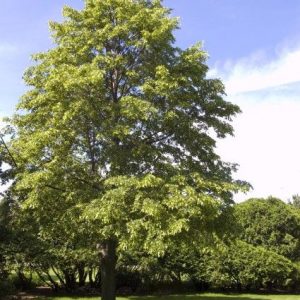
Where would you like to plant a tree that is challenging? Maybe the wind is blowing. Are the conditions too dry or too wet? Should a tree grow in the ‘hell-strip’ between the sidewalk and the street? Wouldn’t it be nice to have a patio yard in the city? Is smog or salt an issue for you?
The strongly pyramidal Green spire Linden (Tilia cordata ‘PNI 6025’) tree is a good choice. The uniformity and neatness of its appearance create a positive impression. The look will make you happy.
Moreover, it is one of the best-adaptable trees you will find. In urban areas, Green spire Linden can even thrive. All it needs is a spot in full sun!
Shade trees made from these trees are excellent. You can use one near a patio or plant one along the street. An anchor plant for a foundation planting can be placed at the corner of your house. You might consider planting three lawn plants together for a visually appealing view from your deck.
During the summer, yellow, fragrant flowers bloom on Green spire and are one of its best features. Most trees that bloom for the year have finished blooming when this tree blooms. In addition to the spicy, delicious scent, the fall colors are terrific Another feature of the fall is the color..
A great feature of fall is the color. Dark, green leaves begin to turn an outstanding gold as the nights become colder. Fall brings out a glowing glow in Green spire Linden leaves!
Sugar Tyme Crabapple
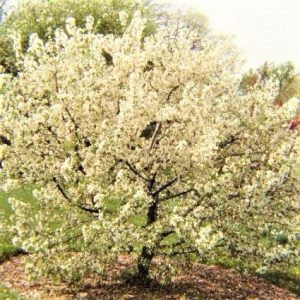
What if you want a beautiful specimen tree to enhance your landscape? Why not choose one of the best-rated varieties? Second guessing yourself is not necessary. One of the favorite varieties of plantsmen is this white-flowering one. This crabapple (Malus Sutyzam’) is beautiful, adaptable, and disease resistant.
It will leave you enchanted. The buds along the bare branches are delightful, pink-hued, and grow in number. If you see them, it’s a good sign that warmer weather is approaching. Blossoms of stunning white appear when these buds open.
Bright yellow stamens stand out in the center of the sweetly fragrant blooms. Branches are smothered in these flowers. A long period of time passes before they are exhausted. These single flowers are loved by butterflies. The flowers serve as a landing pad for nectar for the bees!
You’ll find lush, dark green foliage in the summer. Watch for the new green fruit that begins to develop. In this wonderful Crabapple selection, the fruit provides an important decorative accent.
Before the leaves fall, the leaves turn golden yellow as the summer foliage fades. As the green fruit brightens up into a bold red, it breaks up the midsummer and early autumn football parties brilliantly.
Royalty Crabapple
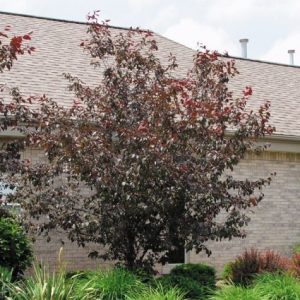
Fruit of the Royalty Crabapple is edible as well as brightly colored. Imagine this imposing specimen in your yard or on the street! A wonderful ornamental flowering tree that offers stunning blooms, great color and year-round enjoyment!
There are few trees that can match the color of the Royal Crabapple Tree (Malus ‘Royalty’). There is nothing else like it in the world. A study in majesty begins with just the leaves! You will see a noise of purple hues as soon as they appear in spring!
The spring foliage will be rivaled by the scent and beauty of the deep pink flowers that attract pollinators. With its purple-red foliage combination, this plant creates a striking effect on your emerging spring garden!
Winter King Hawthorn
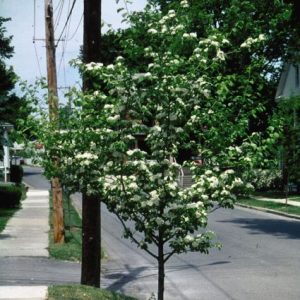
Winter King Hawthorn is a small ornamental tree with a special interest in winter. Anywhere you’d like an ornamental tree but don’t have much room would be ideal.
Its winter features stand out as a noteworthy feature of your Hawthorn.
Peach-copper colorations have been revealed beneath silver-grey bark. After the dark green leaves lose their green hues in the autumn and fall to the ground, then this can be seen best.
Hawthorn branches tend to be lighter green to give your Hawthorn an additional dash of color.
The half-inch red berries appear in autumn. Your wildlife will enjoy the berries throughout the winter if you leave them on the tree.
A canopy of 2 inch glossy green leaves with serrated edges is a great way to fill out your tree’s canopy, which helps your tree to grow densely.
Tinkerbelle Lilac Tree
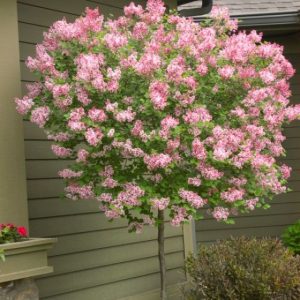
Its compact habit and stunning pink blooms make Tinkerbell Lilacs the most popular form of Lilac shrub. For a dramatic effect, plant one by the front door or next to a patio in spring, when it’s in bloom.
You may have admired a friend’s giant Lilac bush, but feared space restrictions or a less-refined plant, so Tinkerbelle Lilac sounds perfect to you.
With its adorable dwarf size, the Tinkerbelle Lilac is among the Fairytale Series. Despite its small size, it produces abundant blooms, and it does so in a way that will have neighbors asking: “What is that tree?”
The wine-red bloom buds of your Tinkerbelle Lilac start its spring show. You can smell its spicy scent from far away as the buds open into single, bright-pink blossoms.
Tinkerbelle is a delicate tree with a more formal appearance than Lilac. However, it does maintain its elegant, diminutive size.
Imperial Honey locust
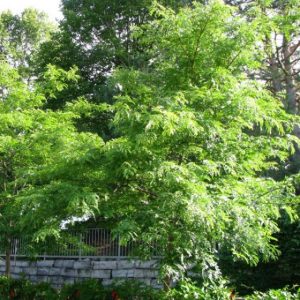
Even if your climate is extreme, it is still possible to create the kind of shaded backyard paradise you want. Honeylocust (Gleditsia triacanthos var. inermis ‘Imperial’) thrives in hard conditions and grows into a rounded, healthy tree that you can enjoy the company of.
The modern cultivar is free of surface roots and prickly thorns. The result is a tiny, fragrant spring bloom and fern-like leaves that completely cover the lawn while still allowing it to thrive.
After a few seasons, it can withstand brief drought periods, resisting both wind and winter damage. It can be planted in compacted soil in new construction sites.
Reduce your cooling expenses by installing one at the southwestern part of your property. Make use of the natural hills and dips in your property to create an informal personal park.
The trees are also good partners for other trees. For a spectacular display that requires very little care, mix Imperial Honeylocusts with smaller flowering trees and evergreens.
Key Takeaways
- Iowa’s humid continental climate (Zones 4b-6a) supports a wide range of flowering trees
- Spring bloomers (redbud, crabapple, cherry) provide stunning color from April through May
- Consider native flowering trees like serviceberry for wildlife value plus beauty
- Choose trees suited to Iowa’s cold winters (Zone 5 average) for reliable long-term performance
- Flowering trees provide year-round interest — bloom, summer foliage, fall color, and winter structure
Frequently Asked Questions
What flowering trees are native to Iowa?
Iowa has several beautiful native flowering trees worth considering for Iowa landscapes. Serviceberry (Amelanchier species) produces delicate white flowers in early spring before the leaves emerge — one of the first flowering trees to bloom each year. Wild Plum (Prunus americana) covers itself in white blooms in early spring. Redbud (Cercis canadensis) is native to southern Iowa and produces brilliant magenta-pink flowers in April. Pagoda Dogwood (Cornus alternifolia) is a native woodland understory tree with flat-topped white flower clusters in spring. Native trees provide the added benefit of supporting Iowa’s native wildlife, including pollinators and birds.
What is the fastest-growing flowering tree for Iowa?
The Northern Catalpa grows extremely fast — up to 4-5 feet per year in good conditions — and produces spectacular large clusters of white orchid-like flowers in June, after most other flowering trees have finished blooming. Crabapples are also relatively fast-growing at 1-2 feet per year. The Tulip Tree (Liriodendron tulipifera) grows 2-3 feet per year and produces yellow-orange tulip-like flowers, though it’s on the edge of its hardy range in northern Iowa.
When do flowering trees bloom in Iowa?
Bloom sequence in Iowa: Wild plum and serviceberry in late March-early April; redbud and dogwood in mid-April; crabapples and ornamental cherries in late April-early May; hawthorns in May; Northern Catalpa in June. The specific timing varies by 2-3 weeks depending on whether you’re in southern Iowa (warmer, earlier) or northern Iowa (cooler, later blooms). Late spring frosts in April can occasionally damage blossoms on early bloomers like redbud.
Looking for more tree ideas? See our guides on best spruce trees for Iowa, best perennial flowers for Iowa, and apple trees for Iowa.

Looking for a nursery that carries native flowering trees in Iowa?
Browse our native plant nursery directory: Iowa