Pagoda Dogwood (Cornus alternifolia)
Cornus alternifolia, commonly known as Pagoda Dogwood or Alternate-leaved Dogwood, is a distinctive native deciduous tree that stands out among North American dogwoods for its unique tiered branching pattern and alternate leaf arrangement. Unlike most dogwoods that have opposite leaves, this species displays its oval leaves in an alternating pattern along reddish-brown twigs, creating a striking horizontal layered appearance that gives the tree its pagoda-like silhouette. This member of the Cornaceae (dogwood) family is found throughout the eastern United States and southeastern Canada, where it thrives as an understory tree in mixed hardwood forests.
Growing naturally in the dappled shade of larger forest trees, Pagoda Dogwood typically reaches 15 to 25 feet tall, developing a distinctive flat-topped crown with horizontally spreading branches arranged in tiers. In spring, the tree produces abundant clusters of small, creamy-white flowers that lack the large showy bracts of flowering dogwood, yet create their own spectacular display against the fresh green foliage. These flowers mature into dark blue-black berries that are eagerly consumed by over 40 species of birds, making this tree a cornerstone species for wildlife habitat.
Beyond its ecological value, Pagoda Dogwood offers exceptional ornamental qualities that make it an outstanding choice for native landscaping. Its layered branching creates dramatic winter interest, while the glossy green summer foliage transforms to rich purples and reds in autumn. The tree’s tolerance for shade and adaptability to various soil conditions make it particularly valuable for challenging sites where many other native trees struggle to establish.
Identification
Pagoda Dogwood is easily distinguished from other dogwoods by its alternate leaf arrangement — a unique characteristic that immediately sets it apart from the opposite-leaved pattern found in all other North American dogwood species. The tree typically grows as a single-trunked specimen reaching 15 to 25 feet tall, though it can occasionally reach 30 feet under ideal conditions. Its most striking feature is the distinctive pagoda-like branching pattern, with horizontal branches arranged in distinct tiers or whorls that create a layered, architectural appearance.
Bark
The bark of mature Pagoda Dogwood is dark grayish-brown and develops shallow furrows and irregular ridges with age. Young twigs are particularly distinctive — they emerge bright green in spring, then mature to a rich reddish-brown or purplish color that provides excellent winter interest. The contrasting colors of the tiered branches create a striking silhouette against snow or bare landscapes.
Leaves
The leaves are simple, alternate, and oval to elliptic, measuring 3 to 5 inches long and 1½ to 3 inches wide. Each leaf has a smooth margin and displays prominent curved veins that arc toward the leaf tip — a characteristic feature of all dogwoods. The upper surface is glossy dark green, while the underside is paler with fine hairs along the veins. Unlike most dogwoods, these leaves cluster toward the ends of branches, creating dense foliage platforms that enhance the tree’s tiered appearance.
Flowers & Fruit
In late spring to early summer, Pagoda Dogwood produces abundant flat-topped clusters (cymes) of small, creamy-white flowers. Each flower is tiny — about ¼ inch across — with four petals and lacks the large white bracts that make flowering dogwood so showy. However, the massed effect of hundreds of flower clusters across the horizontal branches creates a spectacular display. The flowers are highly attractive to pollinators, including native bees, beneficial wasps, and butterflies.
The fruit is a small drupe, about ¼ inch in diameter, that ripens from green to bright red and finally to dark blue-black in late summer. The berries are borne on bright red stalks (pedicels) that remain colorful even after the fruit is consumed, extending the tree’s ornamental season. The high fat content of the berries makes them particularly valuable for migrating birds preparing for long journeys.
Quick Facts
| Scientific Name | Cornus alternifolia |
| Family | Cornaceae (Dogwood) |
| Plant Type | Deciduous Tree |
| Mature Height | 15–25 ft |
| Sun Exposure | Part Shade to Full Shade |
| Water Needs | Moderate |
| Bloom Time | Late May – June |
| Flower Color | Creamy white |
| USDA Hardiness Zones | 3–8 |
Native Range
Pagoda Dogwood has one of the most extensive native ranges of any North American dogwood, stretching from southeastern Canada south through most of the eastern United States. The species is found from Nova Scotia west to southern Ontario and Minnesota, south to northern Georgia, Alabama, and Arkansas. This wide distribution reflects the tree’s adaptability to diverse climatic conditions and forest types across eastern North America.
Throughout its range, Pagoda Dogwood typically occurs as an understory tree in rich, moist deciduous and mixed forests. It is particularly common in sugar maple-beech forests, hemlock-northern hardwood forests, and oak-hickory woodlands. The species shows a preference for north-facing slopes and cool, protected valleys where it can take advantage of consistent moisture and protection from harsh winds. It grows from near sea level in the Maritime provinces to elevations of 3,000 feet in the southern Appalachian Mountains.
Within forest ecosystems, Pagoda Dogwood often forms small groves through root suckering, creating distinctive colonies of tiered trees that contribute significantly to the structural diversity of the understory layer. This clonal growth pattern helps the species persist in established forest communities and provides important habitat complexity for forest wildlife.
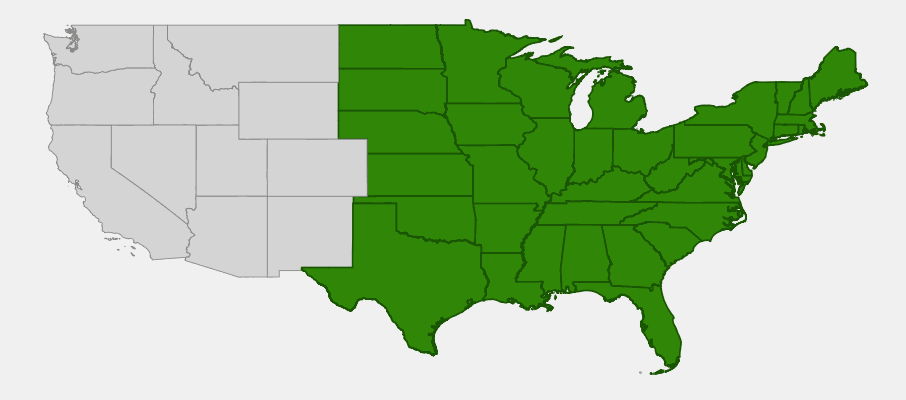
📋 Regional plant lists featuring Pagoda Dogwood: North Carolina & South Carolina
Growing & Care Guide
Pagoda Dogwood is an excellent choice for gardeners seeking a distinctive native tree that provides four-season interest while supporting local wildlife. Its unique architectural form and reliable performance make it particularly valuable for naturalistic landscapes, woodland gardens, and wildlife habitats.
Light
This adaptable tree performs best in partial shade to full shade conditions, making it ideal for planting beneath taller trees or on the north side of buildings. While it can tolerate full sun in cooler climates with adequate moisture, it typically develops the most attractive form and best fall color when grown in dappled shade. In deep shade, the tree may become more open and reaching, but it will still flower and fruit reliably.
Soil & Water
Pagoda Dogwood prefers rich, well-drained, slightly acidic soils with consistent moisture, but it adapts well to a range of soil conditions. The tree performs best in loamy soils with good organic content, but it tolerates clay, sandy, and even rocky soils reasonably well. Once established, it shows good drought tolerance, though prolonged dry periods may cause leaf scorch and early fall color. Mulching around the base helps retain soil moisture and suppress competing weeds.
Planting Tips
Plant Pagoda Dogwood in fall or early spring when the tree is dormant. Choose a location that provides morning sun and afternoon shade for optimal growth. Space trees 15-20 feet apart if planting multiples, or allow adequate room for the horizontal branch spread. The tree transplants well from container stock and typically establishes quickly with regular watering during the first growing season.
Pruning & Maintenance
Pagoda Dogwood requires minimal pruning and is best left to develop its natural tiered form. Remove dead, damaged, or crossing branches in late winter while the tree is dormant. Avoid heavy pruning, as this destroys the characteristic horizontal branching pattern that makes the tree so distinctive. The species is generally pest- and disease-resistant, though it may occasionally be affected by dogwood anthracnose in humid conditions with poor air circulation.
Landscape Uses
The unique form and ecological value of Pagoda Dogwood make it suitable for many landscape applications:
- Understory planting in woodland gardens and natural areas
- Wildlife habitat gardens — berries feed numerous bird species
- Four-season interest as a specimen tree near patios or windows
- Erosion control on slopes and banks through root suckering
- Native shade gardens paired with ferns and wildflowers
- Rain gardens and bioretention areas with good drainage
- Naturalistic screens when planted in groups
Wildlife & Ecological Value
Pagoda Dogwood stands among the most valuable native trees for supporting wildlife, with its berries, flowers, and structure providing resources for dozens of species throughout the growing season.
For Birds
Over 40 species of birds consume Pagoda Dogwood berries, including Wood Thrushes, American Robins, Northern Cardinals, Rose-breasted Grosbeaks, Scarlet Tanagers, and numerous warbler species. The berries ripen in late summer just as many songbirds are preparing for migration, providing critical fat reserves for long-distance flights. The tiered branching structure offers excellent nesting sites for smaller birds, while the dense foliage provides cover from predators and harsh weather.
For Mammals
White-tailed deer browse the twigs and foliage, while squirrels and chipmunks cache the nutritious berries for winter food stores. Bears occasionally consume the fruit in areas where their ranges overlap. The tree’s tendency to form colonies through root suckering creates dense thickets that provide thermal cover and travel corridors for small mammals.
For Pollinators
The abundant small flowers attract a diverse array of beneficial insects, including native sweat bees, mason bees, syrphid flies, and various beetle species. The flowers bloom during early summer when many native pollinators are most active, providing a reliable nectar source during a critical period. Unlike showier flowers that attract mainly butterflies and hummingbirds, Pagoda Dogwood’s small flowers are perfectly sized for smaller native bees and beneficial wasps.
Ecosystem Role
As an understory tree, Pagoda Dogwood contributes significantly to forest structural diversity. Its horizontal branching creates distinct habitat layers that support different wildlife communities. The leaf litter decomposes relatively quickly, enriching soil nutrients and supporting healthy mycorrhizal networks. The tree’s clonal growth habit helps stabilize soil on slopes and creates long-term habitat patches that persist through forest succession cycles.
Cultural & Historical Uses
While less prominent in traditional medicine than some other dogwoods, Pagoda Dogwood has been utilized by various Indigenous peoples throughout its range. Several eastern tribes used the inner bark to create fiber for weaving and cordage, while the hard, dense wood was occasionally used for small tools and implements. The Ojibwe called it ‘ozhaashig-mitig’ and used preparations of the bark medicinally, though to a lesser extent than the related red-osier dogwood.
European settlers recognized the tree’s ornamental value early, with botanical illustrators documenting its distinctive form in 19th-century flora guides. The species became popular in estate gardens and early parks for its unique architectural quality and reliable seasonal interest. Unlike flowering dogwood, which became heavily commercialized, Pagoda Dogwood remained primarily a tree appreciated by botanists and naturalists for its ecological significance.
In modern landscaping, Pagoda Dogwood has gained renewed attention as native plant gardening has grown in popularity. Its tolerance for shade and distinctive form make it particularly valuable for contemporary suburban landscapes where homeowners seek alternatives to common exotic trees. The tree has also become important in restoration ecology, where its ability to establish in disturbed forest understories and provide rapid wildlife habitat makes it a cornerstone species for woodland restoration projects.
Today, many arboretums and botanical gardens feature collections of Pagoda Dogwood to demonstrate native alternatives to exotic ornamental trees. The species has proven particularly valuable in educational settings, where its unique alternate leaf arrangement provides an excellent teaching example of plant identification characteristics.
Frequently Asked Questions
How can I tell Pagoda Dogwood apart from other dogwoods?
Pagoda Dogwood is the only North American dogwood with alternate leaves — all other native dogwoods have opposite leaf arrangements. The distinctive tiered, horizontal branching pattern also makes it immediately recognizable, even in winter.
Will Pagoda Dogwood grow in full sun?
While it can tolerate full sun, especially in cooler climates, Pagoda Dogwood typically performs better with some shade during the hottest part of the day. In full sun locations, ensure consistent soil moisture and consider providing afternoon shade in hotter regions.
Does Pagoda Dogwood spread or form colonies?
Yes, Pagoda Dogwood can spread through root suckers, gradually forming small colonies or groves. This natural tendency makes it excellent for naturalizing and erosion control, though it’s not aggressively invasive in most garden situations.
Is the fruit edible for humans?
The berries are technically edible but quite bitter and not particularly palatable to humans. They are much better left for the birds and wildlife that depend on them as a food source.
How long does it take Pagoda Dogwood to reach mature size?
Pagoda Dogwood has a moderate growth rate, typically adding 12-18 inches per year under good conditions. It usually reaches its mature height of 15-25 feet within 15-20 years, though the distinctive tiered branching pattern becomes apparent much earlier.

Looking for a nursery that carries Pagoda Dogwood?
Browse our native plant nursery directory: North Carolina · South Carolina