
Beach Strawberry (Fragaria chiloensis)
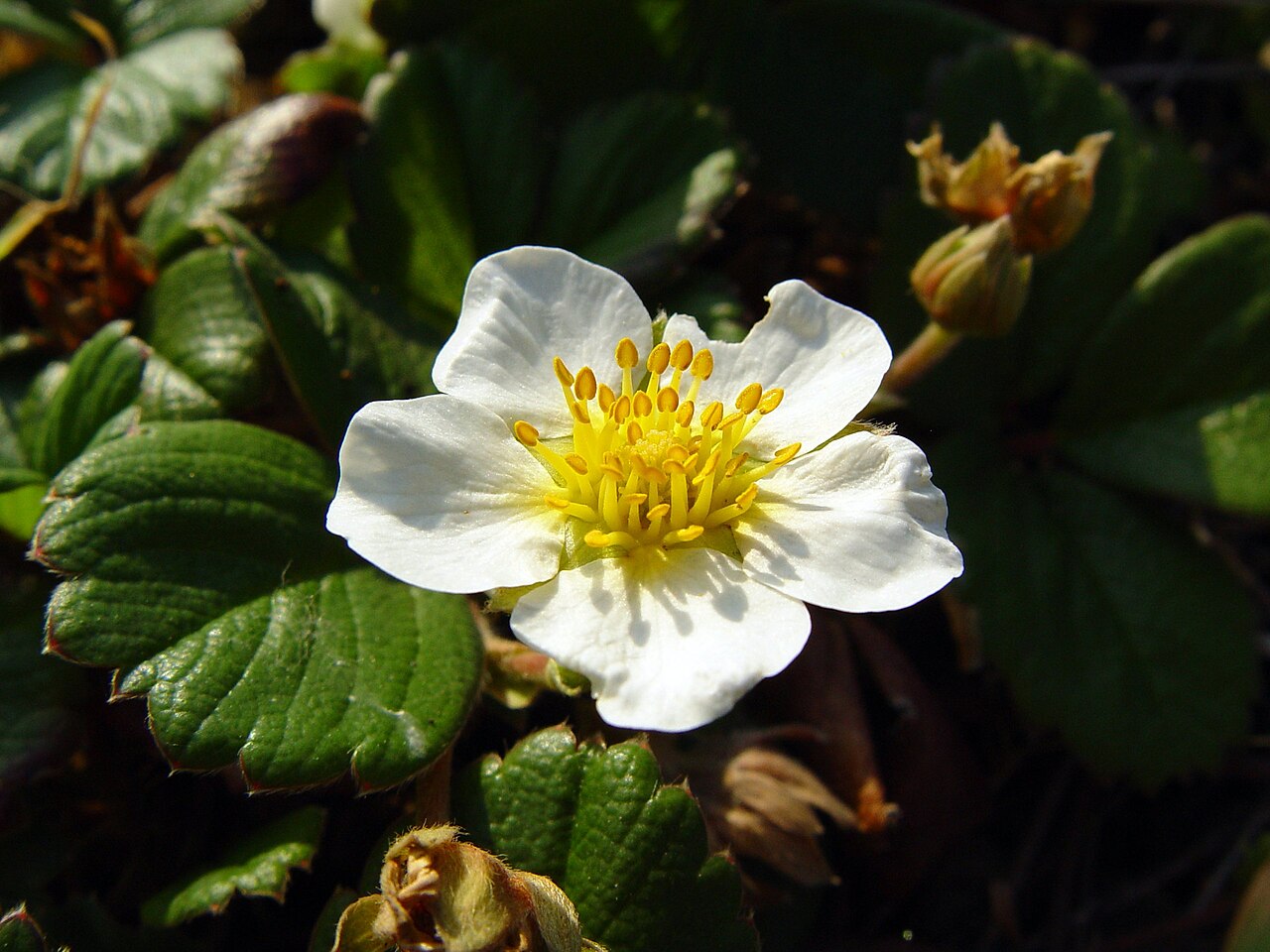
Fragaria chiloensis, the Beach Strawberry (also called coastal strawberry), is a low, mat-forming native groundcover that carpets dunes, bluffs, and coastal grasslands up and down the Pacific coast. Despite its scientific name pointing to Chile, where a separate native population also occurs, this is a true North American native along the coasts of California, Oregon, and Washington, with another native population on the beaches and lava fields of Hawaii. Thick, glossy, three-parted leaves and crisp white flowers make it one of the most attractive and useful groundcovers available to West Coast native-plant gardeners.
Beach strawberry spreads by long, reddish runners that root as they go, quickly knitting together a dense, weed-suppressing mat only a few inches tall. Its leathery, deep-green leaflets are built to handle salt spray, wind, and sandy, nutrient-poor soil, and the plant tolerates foot traffic and occasional dieback from salt or drought far better than most garden groundcovers. Small, tart red fruits follow the white spring flowers, and while they are edible, wild beach strawberry fruit is usually small and seedy compared to garden strawberry cultivars (several of which count this species among their ancestors).
For gardeners along the Pacific coast, beach strawberry is an easy, low-maintenance choice for erosion control, pathway edges, and sunny groundcover beds that don’t want or need regular irrigation once established. It asks for very little and gives back dense, evergreen-to-semi-evergreen coverage, cheerful spring flowers, and a direct link to the dune and bluff plant communities it evolved in.
Identification
Beach strawberry is a low, spreading perennial herb, rarely more than 4 to 8 inches tall, that forms broad mats through surface runners (stolons) rather than growing upright or branching like a shrub.
Leaves
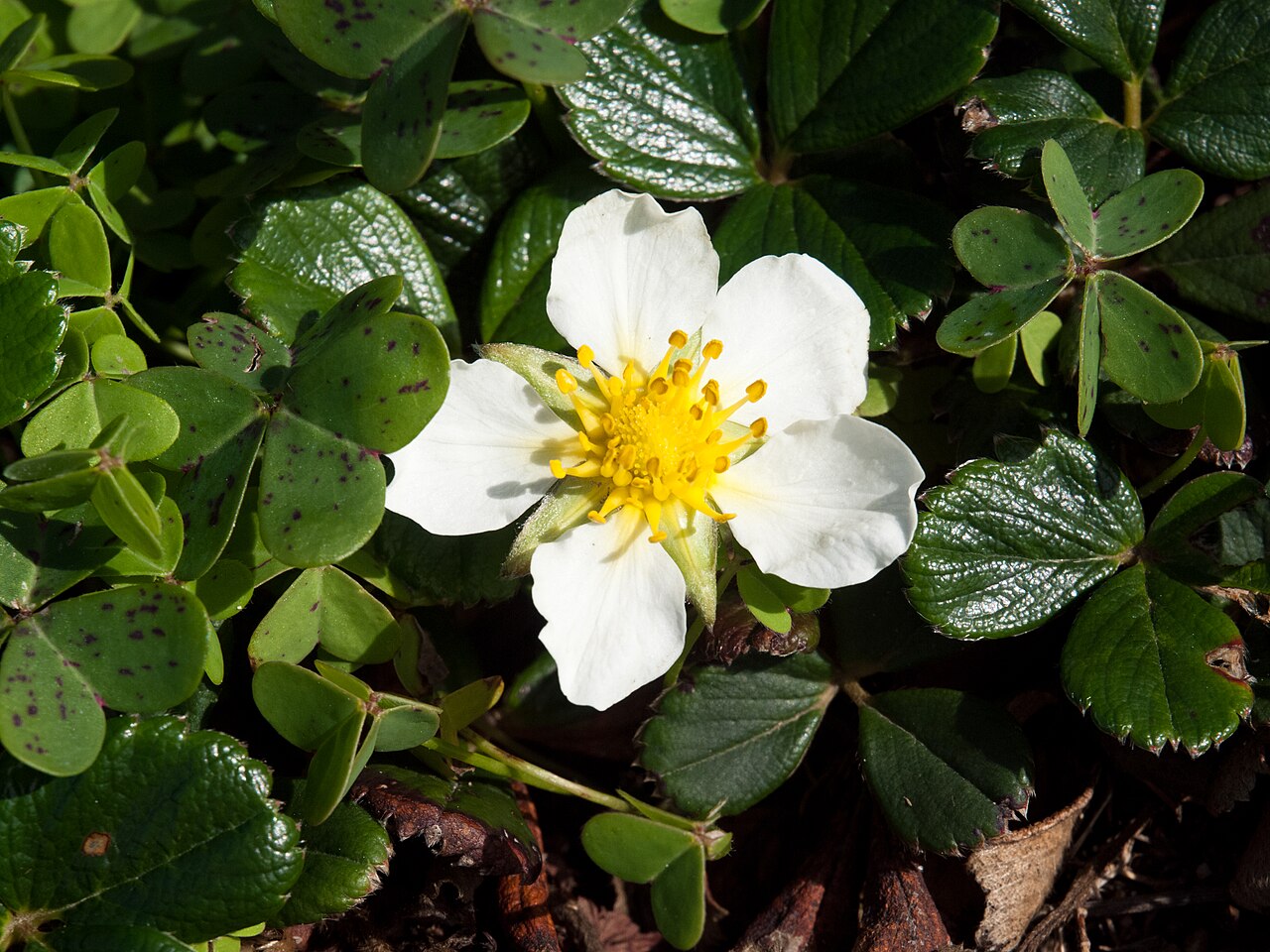
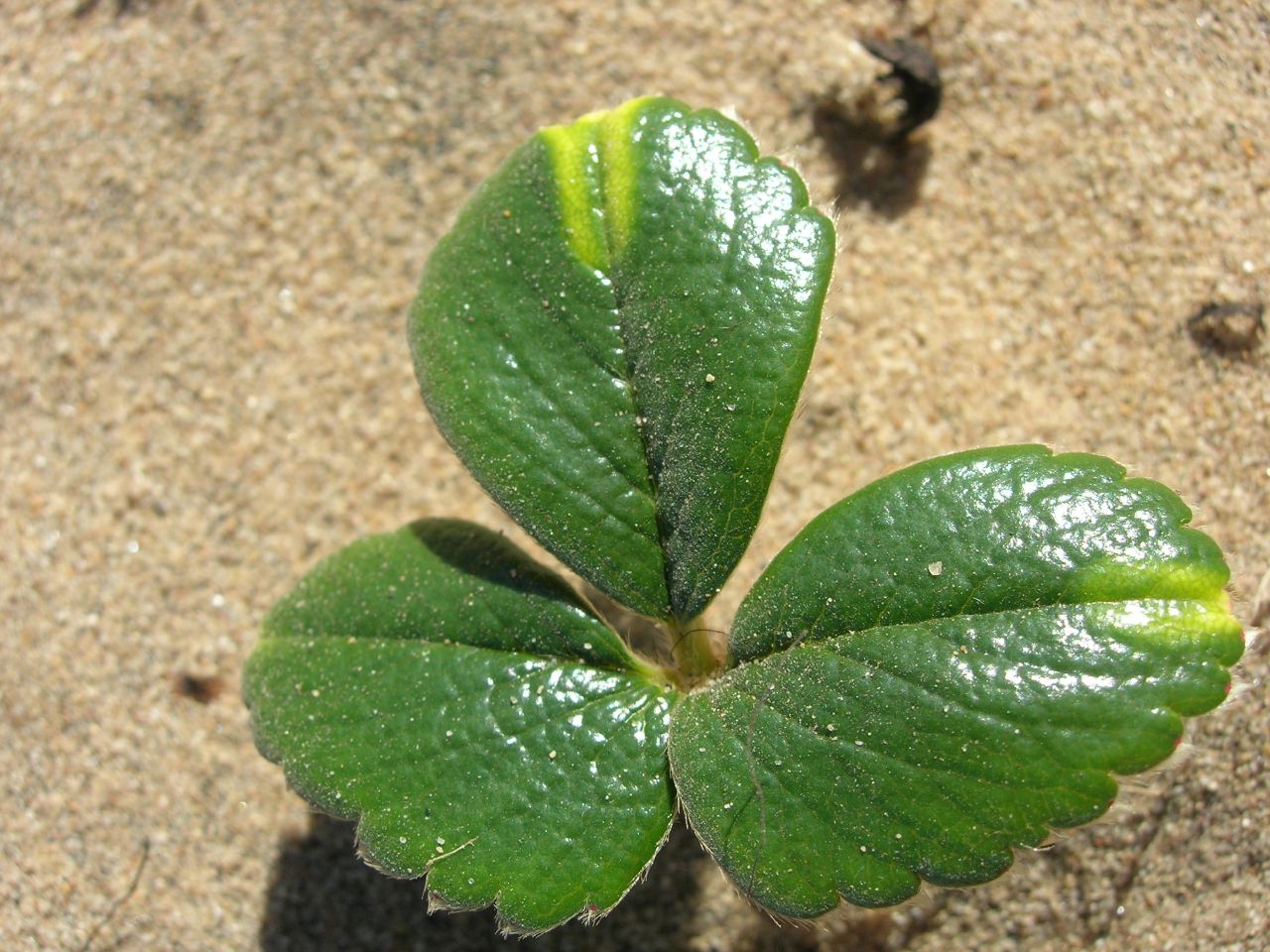
Leaves are divided into three thick, leathery, dark green leaflets, each coarsely toothed and often with a slight bluish or silvery cast on the upper surface, a trait that helps reflect sun and conserve moisture in exposed coastal sites. The leaf surface is notably glossy and tough compared to woodland strawberries, an adaptation to the wind, salt spray, and bright light of beaches and bluffs. Foliage is evergreen to semi-evergreen along the mild coast, though it may thin out or take on reddish tones after hard frost or prolonged drought.
Flowers & Fruit
Flowers appear in spring, usually from March through June depending on latitude, and are white with five rounded petals surrounding a bright yellow center, held just above the foliage on short stalks. Most populations are functionally dioecious, meaning individual plants tend to produce mostly male (pollen-bearing) or mostly female (fruit-bearing) flowers, so a mix of plants in a planting bed produces better fruit set than a single clone. The fruit is a small, bright red strawberry, usually under an inch, with a tart flavor; it is edible and has long been gathered by people along the coast, though cultivated strawberry varieties bred in part from this species produce much larger, sweeter fruit.
Stems & Roots
Beach strawberry spreads primarily through long, reddish, above-ground runners that root at the nodes, allowing a single plant to colonize several square feet within a couple of growing seasons. This stoloniferous habit, combined with a fibrous root system, makes the species effective at stabilizing loose, sandy soil on dunes and slopes.
Quick Facts
| Scientific Name | Fragaria chiloensis |
| Family | Rosaceae (Rose) |
| Plant Type | Evergreen to semi-evergreen perennial groundcover |
| Mature Height | 4–8 in |
| Mature Spread | 2–4 ft or more via runners |
| Growth Rate | Fast (by runners) |
| Sun Exposure | Full sun to part shade |
| Water Needs | Low to moderate; drought tolerant once established |
| Soil Type | Sandy, well-drained; tolerates poor, lean soil |
| Soil pH | Slightly acidic to neutral |
| Bloom Time | March – June |
| Flower Color | White with yellow center |
| Fall Color | Foliage may redden in cold or drought |
| Fruit | Small red strawberries, edible, tart; mainly on female plants |
| Deer Resistant | No (deer and rabbits browse foliage) |
| USDA Hardiness Zones | 4–9 |
Native Range
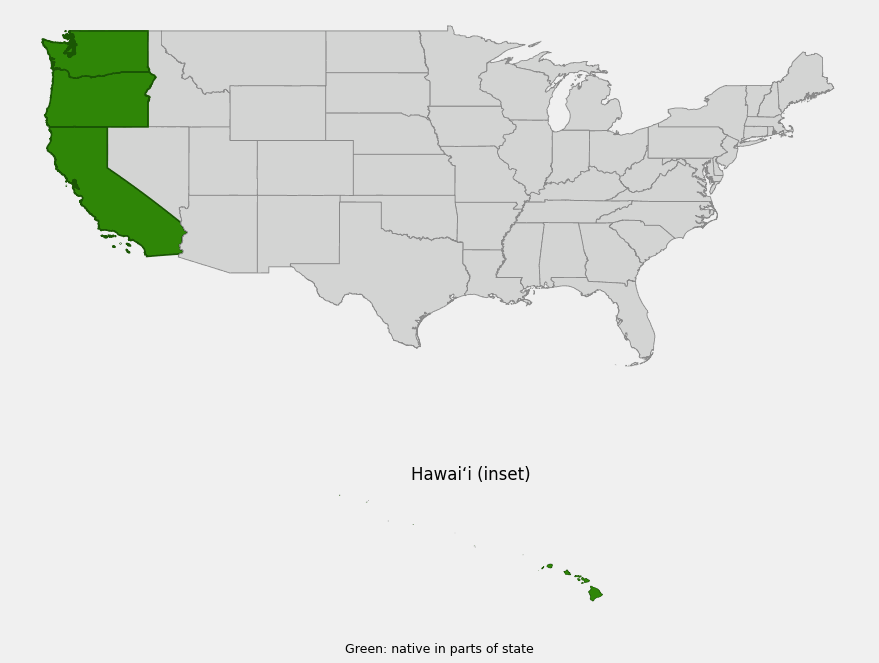
Beach strawberry is native along the Pacific coast of North America, from Washington and Oregon south through California, where it grows on dunes, beaches, coastal bluffs, and grasslands within reach of ocean influence. A separate native subspecies, Fragaria chiloensis subsp. sandwicensis (called ʻōhelo papa), occurs on beaches and lava fields in Hawaii. The species as a whole also has native populations along the coast of Chile, which is reflected in its scientific name, though that South American population is a separate story from the North American coastal plant described here.
Typical West Coast habitat includes stabilized and semi-stabilized dunes, coastal bluffs and headlands, and the sandy, exposed grasslands just inland of the beach itself, almost always within the reach of salt spray and fog. In Hawaii, the Hawaiian subspecies grows in similarly open, sunny, well-drained sites near the coast, including rocky lava substrates.
Beach strawberry is not native away from these coastal zones; gardeners well inland on the West Coast or in other regions of the country are planting it outside its native range, even though it is widely sold and performs well in many garden settings because of its toughness and attractive groundcover habit.
📋 Regional plant lists featuring Beach Strawberry: Western Oregon & Western Washington · Hawaii
Growing & Care Guide
Beach strawberry is one of the easiest native groundcovers to establish along the Pacific coast, and it also performs reasonably well in non-coastal gardens as long as drainage is sharp and summer water is not overdone.
Light
Full sun produces the densest mat and the most flowers and fruit, which mirrors its open, exposed dune and bluff habitat. It also tolerates light to part shade, especially in hotter inland gardens, though growth is less vigorous and flowering is reduced in heavier shade.
Soil & Water
Beach strawberry prefers sandy, fast-draining soil and is naturally adapted to the lean, mineral soils of dunes and bluffs. It accepts regular garden soil as long as drainage is good, and established plantings need only occasional supplemental water during the driest part of summer in most coastal gardens. Avoid heavy clay or soil that stays soggy, which encourages root and crown rot.
Planting Tips
Set out nursery plugs or divisions in fall or early spring, spacing them 12 to 18 inches apart; the running stems will fill gaps within one to two growing seasons. Because the species tends toward separate male and female plants, include several individuals from different sources if fruit production matters to you. A light sand or gravel mulch at planting helps suppress weeds while the mat establishes and echoes its natural dune setting.
Pruning & Maintenance
Established beach strawberry needs very little maintenance. Shear or mow it lightly once a year, in late winter before new growth begins, to tidy the planting and remove old or tattered foliage; this also encourages fresh runners and better flowering. Pull back mulch or debris that accumulates in the crown, and divide and replant sections every few years if the center of an older patch begins to thin out.
Landscape Uses
- Coastal groundcover for dunes, bluffs, and beachfront gardens
- Erosion control on sandy slopes and banks
- Lawn alternative in sunny, well-drained coastal yards
- Pathway and border edging, since it tolerates light foot traffic
- Pollinator and wildlife gardens, where its flowers and fruit add value
- Container and rock garden plantings in coastal climates
Wildlife & Ecological Value
Beach strawberry supports coastal wildlife in a landscape where few groundcovers can establish, making it disproportionately valuable to the animals that rely on dune and bluff habitat.
For Pollinators
The spring flowers attract native bees and other small pollinating insects at a time when coastal bluff and dune plant communities offer relatively few nectar sources, making beach strawberry a useful early-season resource in these habitats.
For Birds
Small songbirds and ground-feeding birds eat the ripe fruit, and the dense, low mat offers cover for ground-nesting species and ground-foraging insects that birds depend on.
For Mammals
Deer, rabbits, and other small mammals browse the foliage and fruit, and the dense mat gives cover to small mammals moving through otherwise open, exposed dune and bluff terrain.
Ecosystem Role
As one of the few plants able to knit together loose, shifting sand, beach strawberry plays an important role in stabilizing dunes and bluffs against wind and water erosion, helping create the stable conditions other coastal plants need to establish nearby.
Cultural & Historical Uses
Beach strawberry has a long history of use by Indigenous peoples along the Pacific coast, including groups in present-day Washington, Oregon, and California, who gathered the small, tart fruit as a seasonal food source and recognized the plant as a reliable part of the coastal landscape. The fruit was also gathered historically by Indigenous people in Alaska and coastal British Columbia, within the broader range of the species.
The plant’s larger historical significance is agricultural: beach strawberry is one of the two wild species, along with Fragaria virginiana from eastern North America, that were crossed in 18th-century France to produce the modern garden strawberry, Fragaria × ananassa. Nearly every strawberry sold in grocery stores today carries genes from this unassuming Pacific coast groundcover, even though the wild plant’s own fruit remains small and tart by comparison.
Today, beach strawberry’s main cultural role is horticultural rather than culinary: it is prized by native-plant gardeners and restoration projects along the West Coast as a hardworking, low-maintenance groundcover rather than as a fruit crop.
Frequently Asked Questions
Can you eat beach strawberry fruit?
Yes, the small red fruits are edible and were historically gathered along the coast, though they are usually smaller, seedier, and more tart than cultivated garden strawberries. Many gardeners grow the plant mainly for its groundcover habit and flowers rather than for fruit.
Is beach strawberry native to Hawaii?
Yes. A separate native subspecies, Fragaria chiloensis subsp. sandwicensis, grows naturally on Hawaiian beaches and lava fields, alongside the better-known populations along the West Coast mainland.
Why don’t my beach strawberry plants produce much fruit?
Beach strawberry tends to have separate male and female plants. If you only have one clone or a single nursery source, you may be missing a pollinator; planting a few plants from different sources usually improves fruiting.
How fast does beach strawberry spread?
Quickly, once established. A single plant can send out multiple runners that root and form new plants within a single growing season, so a modest planting typically fills in within one to two years.
Is beach strawberry drought tolerant?
Yes, once its roots are established, beach strawberry handles the dry summers typical of the California coast well, though it looks best and flowers most with occasional deep watering during extended dry spells.

Looking for a nursery that carries Beach Strawberry?
Browse our native plant nursery directory: California · Oregon · Washington · Hawaii