
Clay’s Hibiscus (Hibiscus clayi)
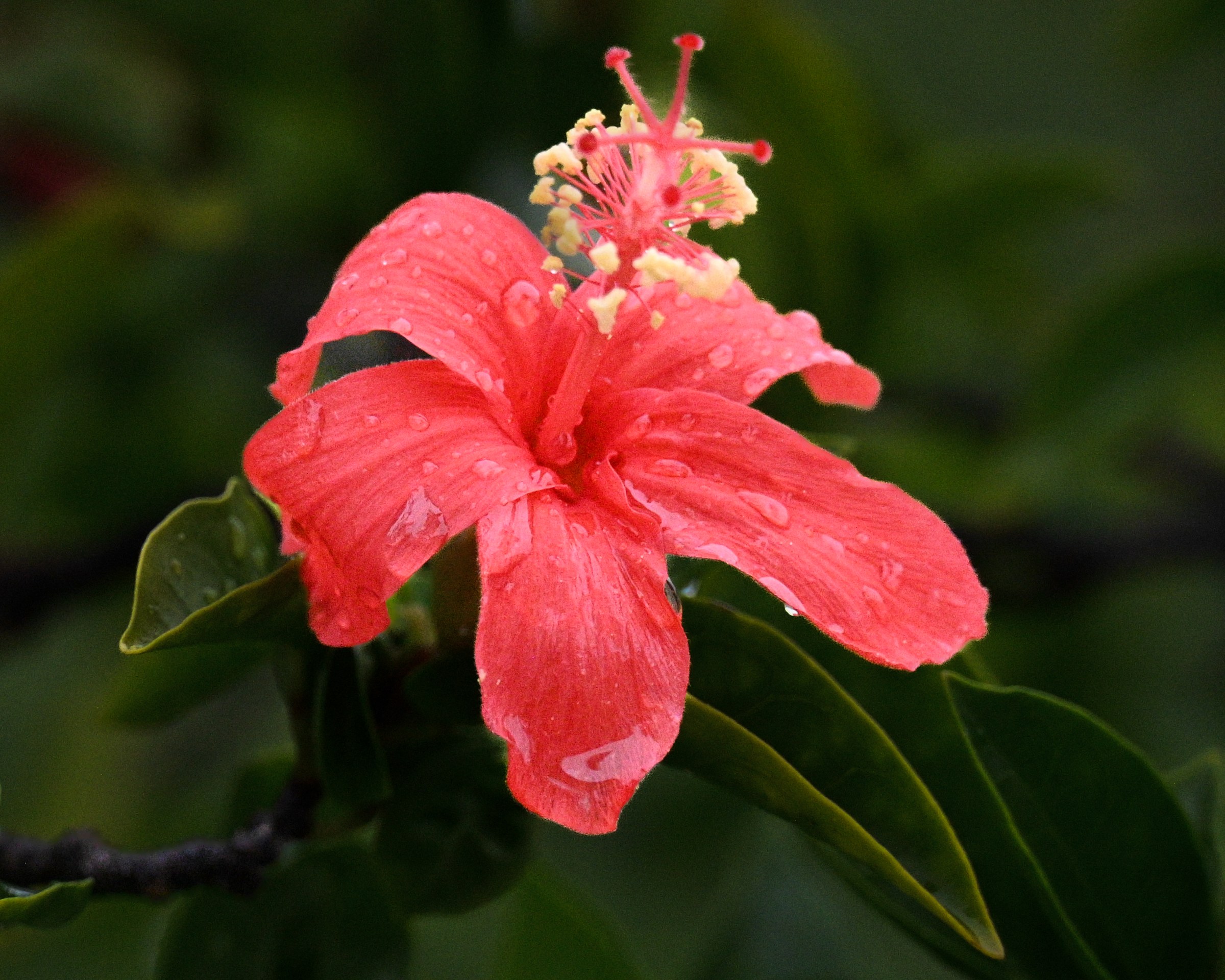
Hibiscus clayi, known as Clay’s Hibiscus, is a rare native Hawaiian shrub or small tree in the mallow family (Malvaceae), found in the wild nowhere on Earth except the dry forests of Kaua’i. Named for Horace F. Clay, a Hawai’i horticulturist, it bears large, showy red flowers almost continuously and is one of the species that gave rise to Hawaii’s beloved cultivated hibiscus varieties. It is also one of the rarest native plants in the islands: federally listed as endangered, with the entire known wild population historically reduced to just four individual trees in the Nounou Mountains above Wailua.
Clay’s Hibiscus is critically endangered in the wild. Threats include competition from invasive plants, trampling near hiking trails, and decades of damage from feral pigs and grazing cattle. A second wild population was discovered in the Moloa’a Forest Reserve in 2017, a hopeful sign, but the species still exists only in a handful of scattered locations on Kaua’i. Because of this rarity, Clay’s Hibiscus should never be collected from the wild — any plants or seeds for gardens or restoration work should come only from licensed native plant nurseries or conservation programs propagating it responsibly.
A note on names: Clay’s Hibiscus shares the Hawaiian common name koki’o ‘ula (“red koki’o”) with a different, more widespread native hibiscus, Hibiscus kokio. The two species are closely related and similar in appearance, but they are botanically distinct, and Plant Native maintains a separate page for Hibiscus kokio. If you are trying to identify a plant and are not certain which species it is, treat the scientific name as the reliable identifier rather than the shared common name.
Identification
Clay’s Hibiscus grows as either a many-branched shrub around 1.5 to 3 feet tall or, more often in cultivation and in mature wild specimens, as a small tree reaching 13 to 26 feet. Its form is more upright and open than many ornamental hibiscus, with branching that showcases the flowers at the branch tips.
Leaves
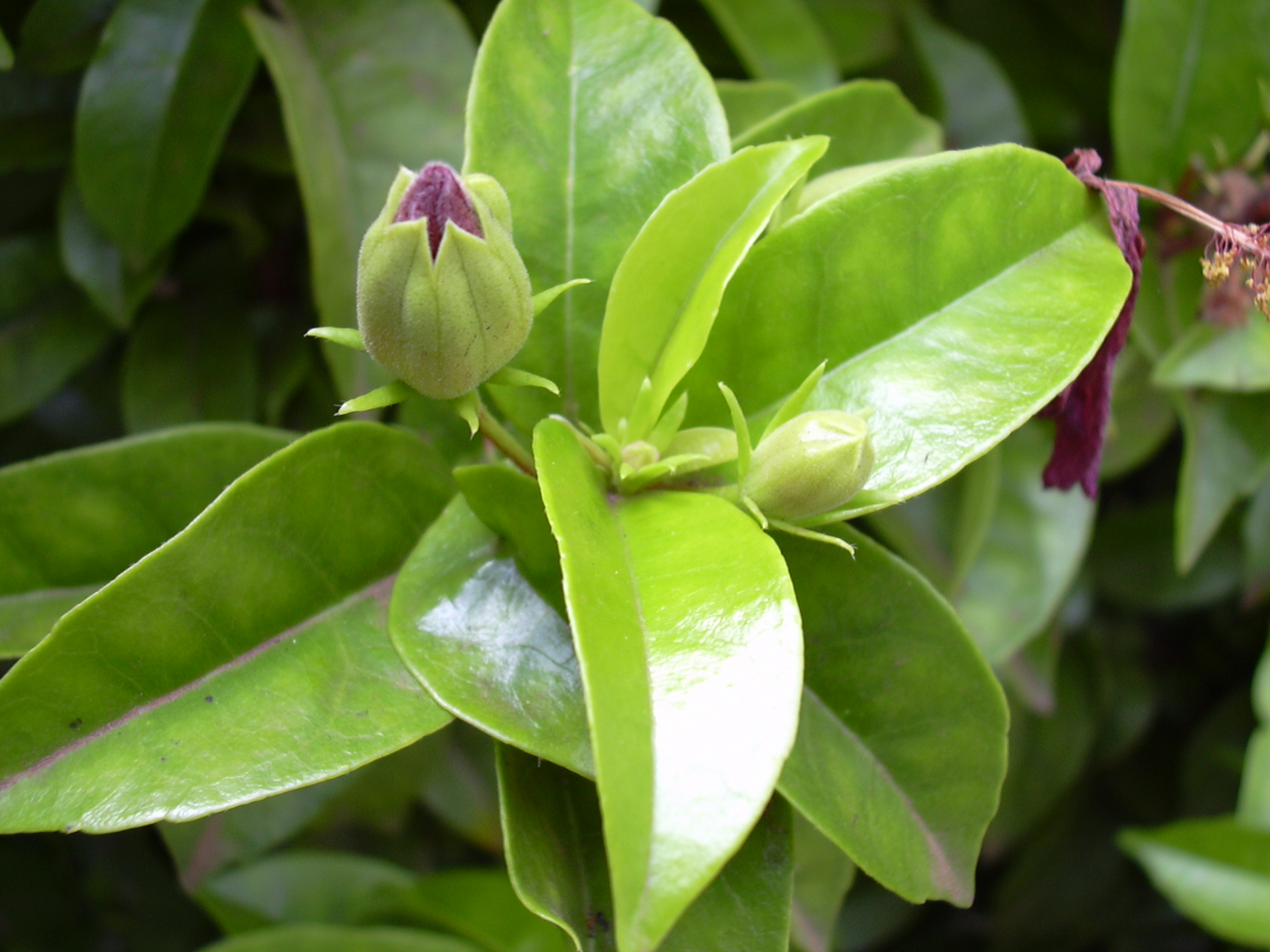
Leaves are medium green, glossy, and smooth to slightly toothed near the tip, arranged in a distinctive decussate pattern — each pair of leaves set at a right angle to the pair below it. This leaf arrangement, combined with the glossy surface, is a useful identification clue distinguishing it from other hibiscus relatives.
Flowers
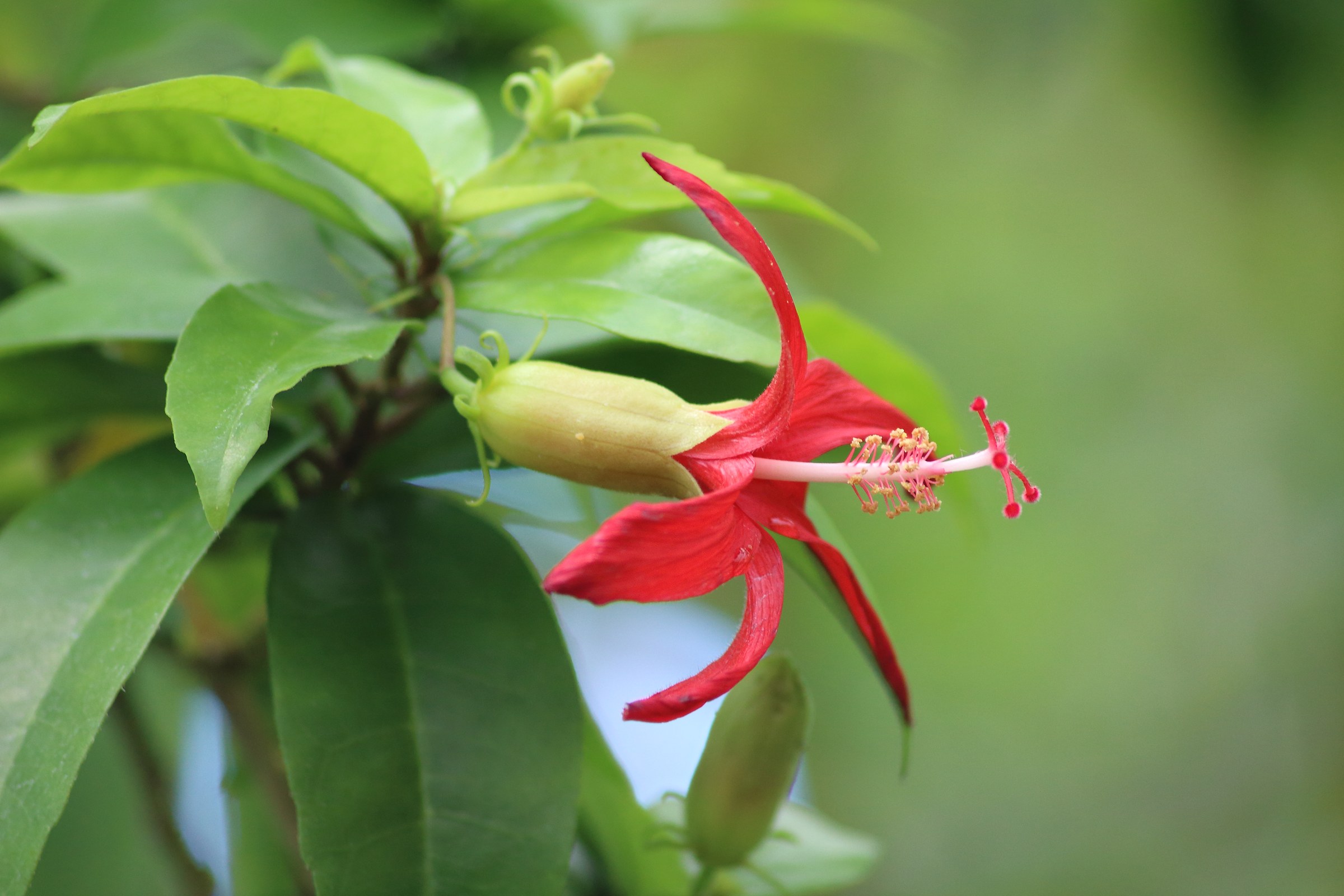
Flowers are borne singly at branch tips and can be large with thin, elegantly curved petals, or more compact with small, rounded petals — both forms occur within the species. They are a bright to dark red, with a prominent central staminal column tipped in yellow pollen, and bloom nearly continuously throughout the year rather than in a single defined season.
Fruit & Seeds
Like other hibiscus, spent flowers give way to small dry seed capsules that split open at maturity to release several seeds. Because the wild population is so small, every capsule on a wild plant represents meaningful genetic material for conservation, and capsules should never be collected from wild trees.
Quick Facts
| Scientific Name | Hibiscus clayi |
| Family | Malvaceae (Mallow) |
| Plant Type | Evergreen Shrub / Small Tree |
| Mature Height | 13–26 ft as a tree (shrub form 1.5–3 ft) |
| Mature Spread | 8–15 ft |
| Growth Rate | Moderate |
| Sun Exposure | Full Sun to Part Shade |
| Water Needs | Low to Moderate once established |
| Soil Type | Well-drained; tolerates rocky, dry-forest soils |
| Soil pH | 6.0–7.5 |
| Bloom Time | Year-round |
| Flower Color | Bright to dark red |
| Fall Color | Evergreen; no fall color change |
| Fruit | Small dry seed capsules |
| Deer Resistant | N/A (no native deer in Hawai’i; browsed by feral pigs and goats) |
| USDA Hardiness Zones | 10–11 |
Native Range
Clay’s Hibiscus is endemic to the island of Kaua’i and is found nowhere else in the world. Historically it has been recorded in scattered locations including Koke’e on the island’s western side, Moloa’a Valley to the north, Nounou Mountain (Sleeping Giant) near Wailua, and as far south as Ha’ikū, but by the time the species was federally listed as endangered in 1994, only four known wild plants remained, all in the Nounou Mountains. A new population was discovered in the Moloa’a Forest Reserve in 2017.
In the wild, Clay’s Hibiscus grows in dry to mesic forest at elevations of roughly 160 to 1,970 feet, a habitat type that has been heavily altered across Hawai’i by development, grazing, and invasive plant competition. Dry forest is among the most imperiled ecosystem types in the islands, and Clay’s Hibiscus is one of many native dry-forest species now surviving mainly through conservation propagation rather than wild reproduction.
This species is not native anywhere outside Kaua’i, including the other Hawaiian Islands — gardeners elsewhere in Hawai’i are still planting a native Hawaiian species, but outside the plant’s own home range, so choosing nursery-propagated stock and avoiding any wild collection matters even more given how few wild individuals remain.
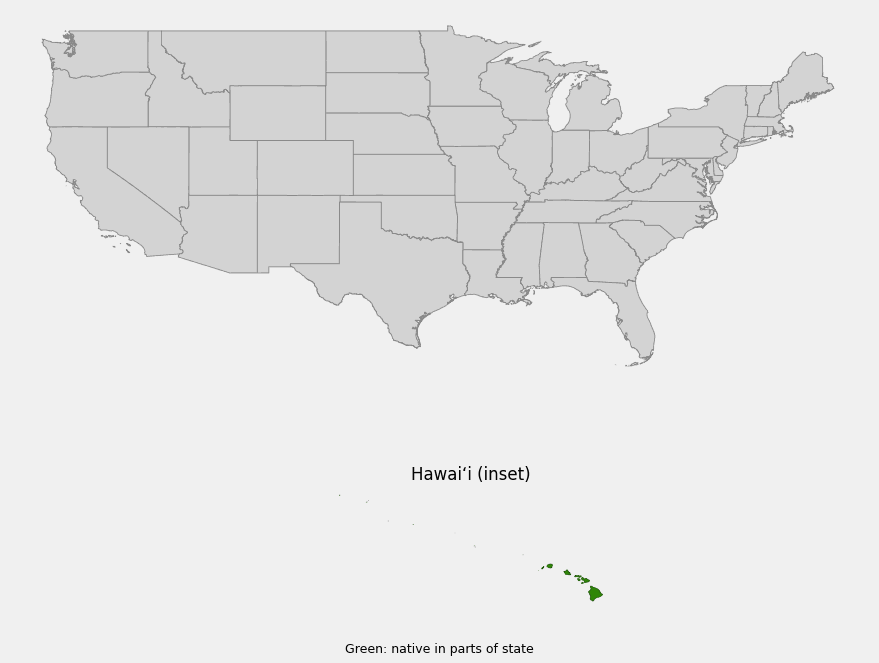
📋 Regional plant lists featuring Clay’s Hibiscus: Hawaii
Growing & Care Guide
Clay’s Hibiscus has become a valued garden and conservation-collection plant precisely because it performs reliably outside its tiny wild range when given reasonable care.
Light
Full sun to part shade both work well. In cultivation it tends to flower most heavily with good sun exposure, though it also tolerates the dappled light of a garden with taller trees overhead.
Soil & Water
Give it well-drained soil; the species is adapted to the rocky, free-draining ground typical of Hawaiian dry forest and does not want to sit in constantly wet conditions. It is reasonably drought tolerant once established, needing only occasional deep watering during extended dry spells, though regular watering during establishment in the first year helps it root in well.
Planting Tips
Source plants only from reputable native plant nurseries or botanical garden propagation programs — never from wild-collected material, given how few wild individuals remain. Plant in a site with good drainage and enough room to grow into its mature tree or large-shrub form. It adapts well to container culture while young, which makes it a practical choice for conservation gardens and home landscapes alike.
Pruning & Maintenance
Light pruning after major flushes of bloom helps maintain a tidy branching structure and can encourage fuller flowering. Remove any dead or damaged wood as needed. The species generally needs little intervention once established in well-drained soil.
Propagation
Clay’s Hibiscus is typically propagated from stem cuttings by nurseries and conservation programs, which preserves the genetics of known individuals and avoids further pressure on the tiny wild population. Seed propagation is also used in formal conservation collections.
Landscape Uses
Clay’s Hibiscus brings color and conservation value to Hawaiian landscapes:
- Specimen shrub or small tree for a focal point near an entry or patio
- Native Hawaiian gardens paired with other dry-forest endemics
- Hedgerow or screen planting where its branching habit fills in well
- Conservation and education gardens highlighting Hawai’i’s endangered flora
Wildlife & Ecological Value
As a surviving member of Hawai’i’s dry-forest flora, Clay’s Hibiscus plays a role in a highly diminished ecosystem type, even as its own population remains perilously small.
For Pollinators
The large, showy red flowers attract native and introduced nectar-feeding insects and are visited by honeybees in cultivation. In its native dry-forest habitat, red tubular and funnel-shaped flowers like this are also consistent with pollination by native Hawaiian birds historically present in these forests, though the most important present-day pollinators in most garden settings are insects.
For Birds
Nectar-feeding birds, where present, make use of the flowers, and the dense branching offers perching and nesting structure for small birds in garden and conservation settings.
Ecosystem Role
Clay’s Hibiscus is one of the relatively few woody species still persisting in Kaua’i’s remnant dry forest, an ecosystem type that has lost the overwhelming majority of its original extent across the Hawaiian Islands to development, agriculture, and invasive species. Conservation plantings of this species, both in the wild and in managed collections, directly support the survival of Hawaiian dry-forest biodiversity.
Cultural & Historical Uses
Hibiscus flowers, including the closely related and visually similar Hibiscus kokio, have long held cultural significance in Hawai’i, where red-flowered native hibiscus species were traditionally used in lei-making and valued for their beauty in gardens around homes. Clay’s Hibiscus itself was not formally described and named until the 20th century, when botanists Otto and Isa Degener honored horticulturist Horace F. Clay with the species name. Its relative rarity in the wild means it has had less documented traditional use specific to this species compared to more widespread native hibiscus, but it belongs to the same lineage of native Hawaiian hibiscus that gave rise to many of the islands’ best-loved ornamental flowers.
Today, Clay’s Hibiscus is better known as a conservation priority than a historical resource. It is maintained in botanical collections such as the University of Hawai’i at Leeward Community College’s native garden and international botanical gardens, including the Conservatoire botanique national de Brest in France, as part of broader efforts to preserve the species’ genetic diversity outside its vulnerable wild population.
Frequently Asked Questions
Is Clay’s Hibiscus endangered?
Yes. It is federally listed as endangered in the United States and assessed as Critically Endangered on the IUCN Red List. Historically only four wild individuals were known, all in Kaua’i’s Nounou Mountains, though a second wild population was found in 2017.
Can I collect seeds or cuttings from wild Clay’s Hibiscus plants?
No. Given how few wild individuals remain, collecting from wild plants is both harmful to the species’ survival and, for federally listed plants on many lands, legally restricted. Source plants only from nurseries or conservation programs propagating the species responsibly.
Is Clay’s Hibiscus the same plant as koki’o ‘ula?
The Hawaiian name koki’o ‘ula is used for both Clay’s Hibiscus (Hibiscus clayi) and a different, more widespread native species, Hibiscus kokio. They are closely related and similar in appearance but are distinct species — use the scientific name to be sure which one you mean.
Where does Clay’s Hibiscus grow in the wild?
Only on the island of Kaua’i, in dry forest habitat in and around the Nounou Mountains and, as of a 2017 discovery, the Moloa’a Forest Reserve. It does not occur naturally on any other Hawaiian island.
How much care does Clay’s Hibiscus need in the garden?
Relatively little once established. It wants well-drained soil and full sun to part shade, tolerates moderate drought, and needs only occasional light pruning to maintain its shape.

Looking for a nursery that carries Clay’s Hibiscus?
Browse our native plant nursery directory: Hawaii