
Entireleaf Daisy (Hulteniella integrifolia)
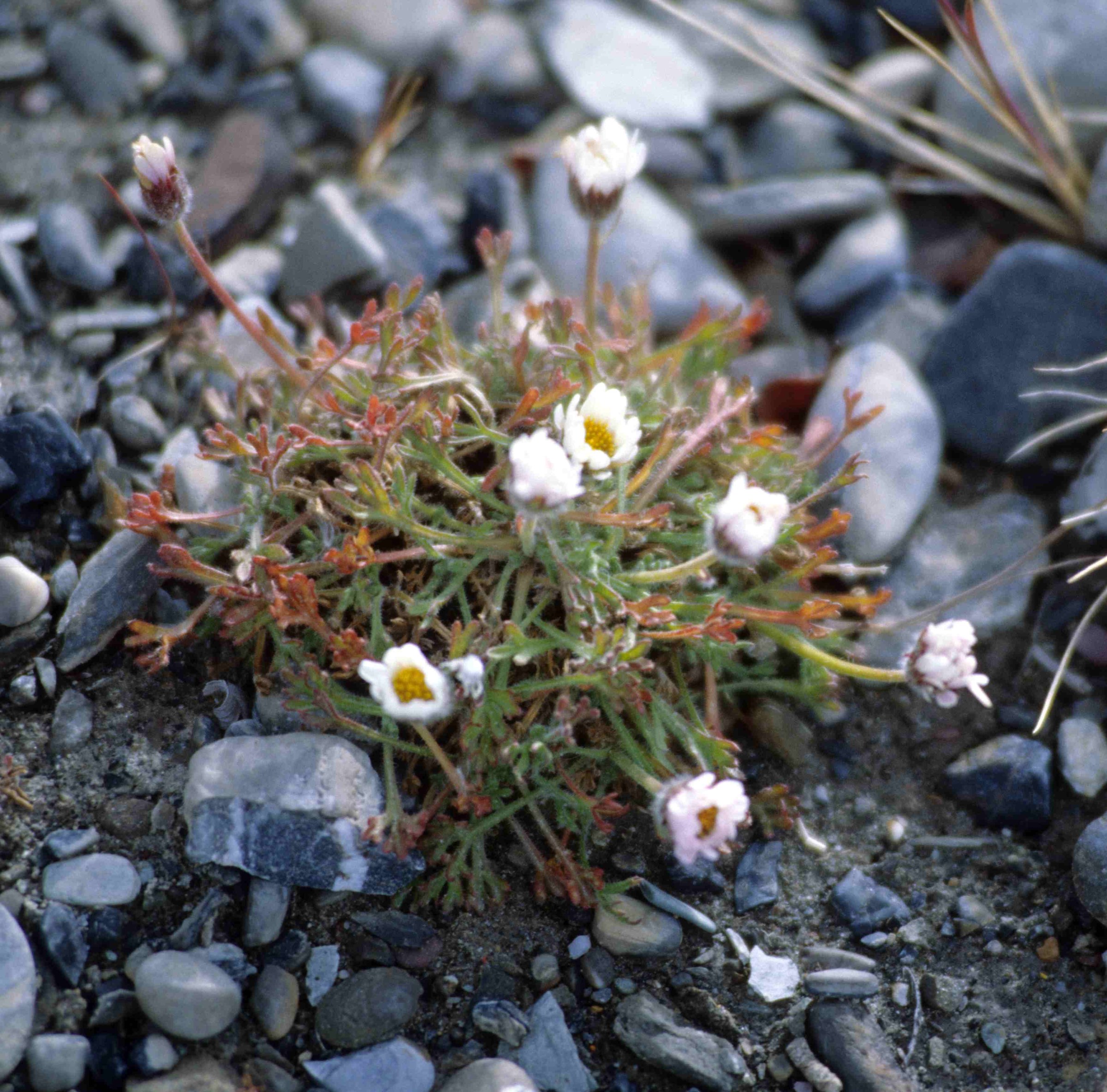
Hulteniella integrifolia, known by its USDA-accepted common name Entireleaf Daisy (also called Arctic Daisy or Entire-leaved Daisy), is a diminutive, cushion-forming perennial of the aster family (Asteraceae) that makes its home at the very edge of plant life, on gravelly tundra and frost-heaved ground across the high Arctic. In Alaska, it is one of the smallest and toughest of the native “daisies,” rarely standing taller than a few inches, yet producing cheerful white, yellow-centered flowers in a landscape where almost nothing else grows.
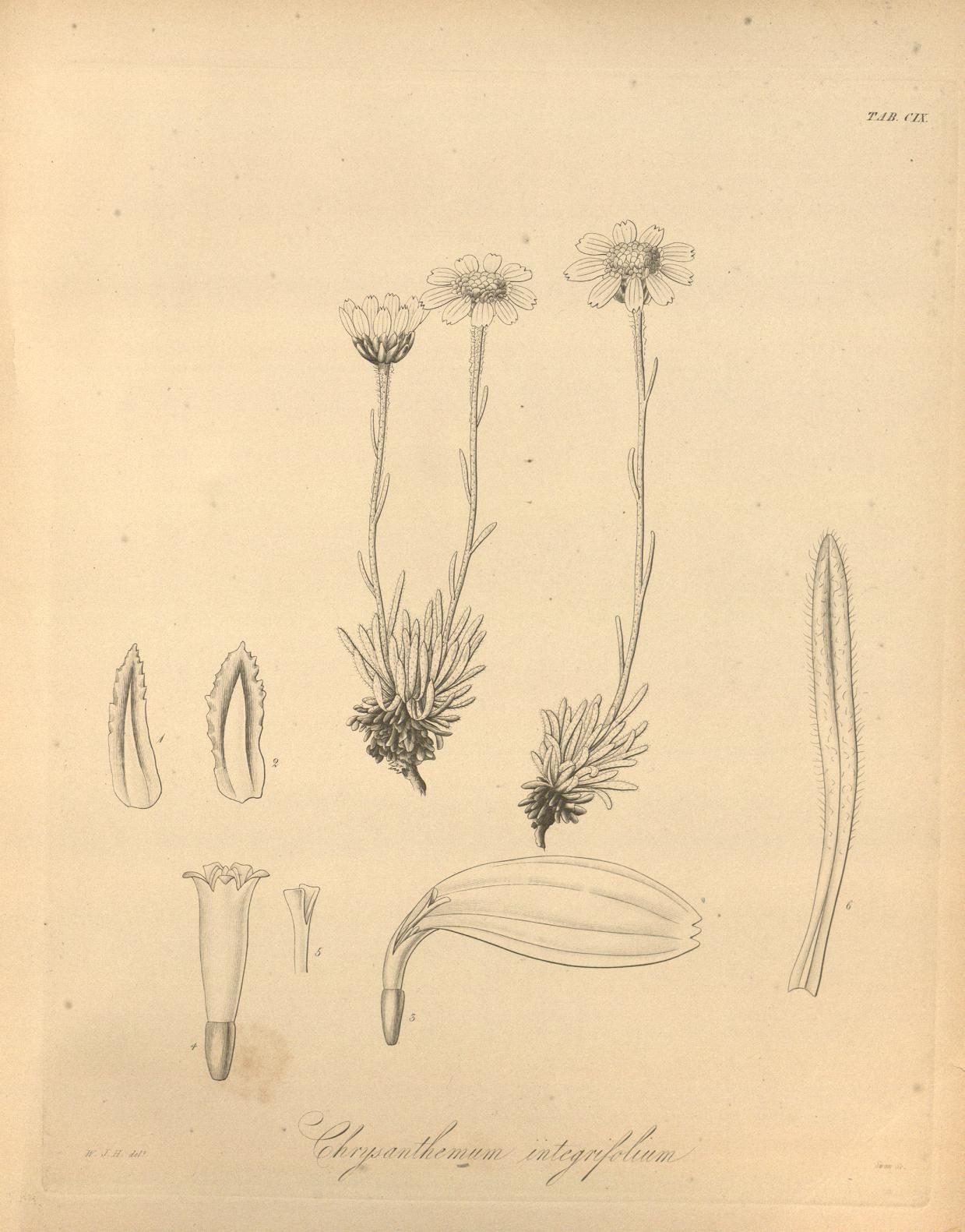
The species name integrifolia means “entire-leaved,” a reference to the narrow, undivided, thread-like leaves that set it apart from several related Arctic daisies whose leaves are lobed or toothed. Those slender leaves are gathered into tight, low tufts arising from a slowly creeping, branching rhizome, so a single plant can form a dense little cushion a few inches across, hugging the ground so closely that wind and cold pass over rather than through it.
Entireleaf daisy is a true circumpolar specialist, found in Alaska, far northern Canada, and the Russian Far East, almost always on exposed, well-drained gravel, rock, or sandy soils with little organic matter — the kind of raw, mineral ground left behind by retreating ice, frost action, or wave-washed shorelines. It is not a plant for conventional gardens, but for alpine troughs, rock gardens, and northern native plantings that try to recreate true tundra conditions, it offers an authentic, tiny-scale slice of the Arctic.
Identification
Entireleaf daisy is a small, tufted to cushion-forming perennial, typically only 2 to 6 inches tall including the flowering stems, spreading slowly outward by short, branching rhizomes only 1 to 3 millimeters thick. Because of this slow spread, mature cushions remain compact and tight rather than sprawling, an adaptation well suited to the short growing season and harsh exposure of Arctic tundra.
Leaves
The leaves are narrow and linear to needle-like, usually less than an inch long and under a tenth of an inch wide, with smooth, untoothed (“entire”) margins — the feature that gives the species its name and distinguishes it at a glance from several similar Arctic daisies with lobed or toothed foliage. Leaves are clustered densely at the base of the plant, forming the low, tight tuft or cushion that is the plant’s most recognizable growth form even when it is not in flower.
Flowers
Each plant sends up one to several short, leafless to sparsely bracted flowering stems, each topped by a single daisy-like flower head about half an inch to just over an inch across. The ray flowers (the “petals”) are white, while the tightly packed disc flowers at the center are yellowish-green, giving the classic white-and-yellow daisy look in miniature. Flowering occurs in summer, compressed into the brief Arctic growing season, usually from late June into August depending on latitude and snowmelt timing.
Fruit
After flowering, the plant produces small, brown, ribbed achenes (dry one-seeded fruits) typical of the aster family, which are released to be scattered short distances by wind across the open gravel and tundra soils the species favors.
Quick Facts
| Scientific Name | Hulteniella integrifolia |
| Family | Asteraceae (Aster / Daisy) |
| Plant Type | Perennial forb, tufted / cushion-forming |
| Mature Height | 2–6 in |
| Mature Spread | A few inches; spreads very slowly by short rhizomes |
| Growth Rate | Very slow |
| Sun Exposure | Full Sun |
| Water Needs | Low to moderate; good drainage essential |
| Soil Type | Gravel, sand, rock crevices, or thin mineral soil; low organic matter |
| Soil pH | Tolerates both calcareous and non-calcareous substrates |
| Bloom Time | Late June – August |
| Flower Color | White rays, yellow-green disc |
| Fall Color | None notable; foliage persists low and green |
| Fruit | Tiny brown ribbed achenes |
| Deer Resistant | Yes |
| USDA Hardiness Zones | 1–3 |
Native Range
In the United States, entireleaf daisy is native only to Alaska, where it occurs across the Arctic and high-alpine portions of the state. It is part of a genuinely circumpolar flora, with the rest of its range running through far northern Canada — British Columbia’s alpine zones, the Northwest Territories, Nunavut, Yukon, and Quebec — and across the Bering Strait into the Russian Far East, reflecting the shared tundra flora that once connected these regions via the Bering land bridge.
Within Alaska, entireleaf daisy favors open, well-drained, mineral-rich ground: alpine zones above treeline, exposed arctic tundra, frost-heaved gravel patches, river terraces, and occasionally rocky sea beaches exposed to salt spray, from near sea level up to elevations above 1,600 feet. It grows on rock, gravel, sand, silt, clay, and glacial till, and tolerates both calcium-rich (calcareous) and acidic substrates, so long as the site stays open and free of taller, shading vegetation.
Because it depends on specialized, cold, open habitats rather than ordinary soil, entireleaf daisy is essentially unknown outside its native Arctic and alpine range and is not considered weedy or aggressive anywhere. Its populations are generally considered secure within Alaska’s vast tundra landscape, though, like many alpine specialists, it is sensitive to any disturbance that compacts soil or introduces competing vegetation into its characteristically bare, open habitat.
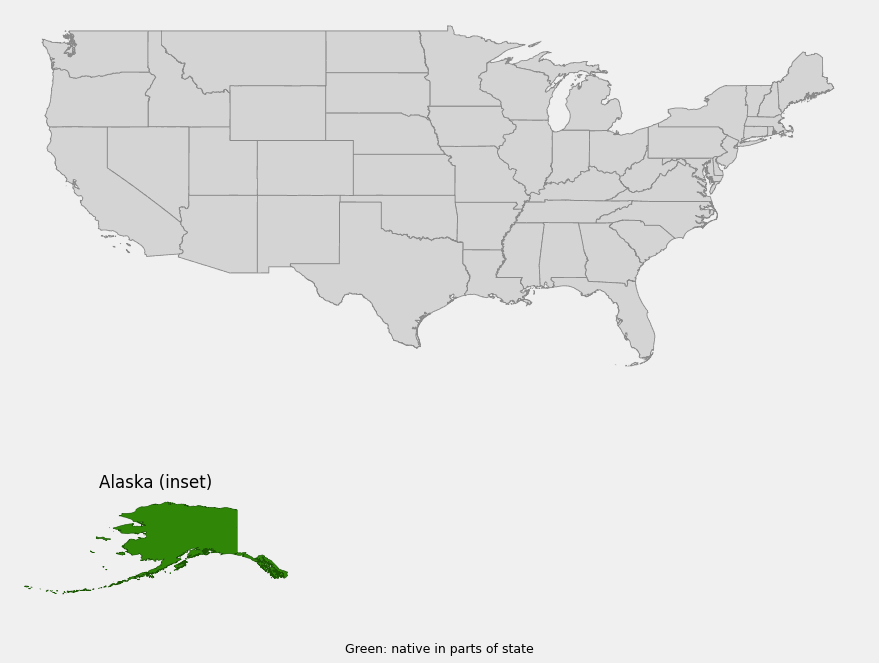
📋 Regional plant lists featuring Entireleaf Daisy: Alaska
Growing & Care Guide
Entireleaf daisy is a plant for specialists: alpine and rock-garden enthusiasts, or Alaska gardeners trying to recreate authentic tundra conditions. It is not suited to typical lowland garden beds, but in the right setting — gritty, open, and cold — it is a charming, long-lived miniature.
Light
Full sun is required. In its native tundra, entireleaf daisy grows completely unshaded, and any significant shading from nearby taller plants will weaken or eliminate it over time. Choose the most open, exposed part of a rock garden or trough for best results.
Soil & Water
Sharp drainage is essential — this is a plant that wants gravel, grit, or sand with very little organic matter, closely mimicking the raw mineral soils of frost-heaved tundra. A classic alpine trough mix of coarse grit, sand, and a small amount of loam suits it well. Water moderately during the growing season but never let the roots sit in saturated soil, which is a common cause of failure in cultivation. It tolerates both calcareous and acidic grit, so soil pH is rarely the limiting factor.
Planting Tips
Plant in spring into a raised bed, trough, or rock garden crevice with excellent drainage, setting the crown slightly proud of the soil surface so water sheds away from it rather than pooling at the base. A top-dressing of fine gravel around the crown helps prevent rot and mimics the loose mineral surface of natural tundra. Because it spreads so slowly, give it a dedicated spot where larger, faster-growing neighbors will not crowd it out.
Pruning & Maintenance
Essentially no pruning is required; simply remove spent flowering stems after bloom if a tidier appearance is wanted. Avoid fertilizing, since this species is adapted to extremely low-nutrient soils and excess fertility can cause weak, rot-prone growth. In cultivation outside truly cold climates, good winter drainage matters more than cold protection, since wet roots in winter are a greater risk than low temperatures.
Propagation
Entireleaf daisy is propagated from seed, which benefits from a cold, moist stratification period over winter to mimic natural overwintering under snow before germinating in spring. Established cushions can occasionally be divided in spring, carefully separating rooted sections of rhizome, though division is slow to recover given the plant’s naturally unhurried growth habit.
Landscape Uses
- Alpine troughs and rock gardens, where its small scale and tight habit fit perfectly
- Authentic Alaska native plantings that recreate tundra and alpine plant communities
- Crevice gardens with sharply drained gravel or scree
- Collector and specialty alpine plant collections for gardeners focused on true Arctic and alpine flora
- Educational or interpretive plantings illustrating circumpolar tundra vegetation
Wildlife & Ecological Value
In the sparse, short-season world of Arctic tundra, even a tiny plant like entireleaf daisy plays a meaningful role, offering food and structure in a landscape with relatively few flowering plants to go around.
For Pollinators
The small white-and-yellow flower heads attract the limited community of Arctic pollinators active during the brief summer season, including native bumblebees, solitary bees, and various flies, which rely on tundra wildflowers like this one for nectar and pollen during the short window when temperatures allow insect activity.
For Birds
While not a major food source on its own, entireleaf daisy contributes to the mosaic of low tundra vegetation that supports ground-nesting shorebirds and songbirds, which use open gravelly patches interspersed with cushion plants for nesting camouflage and foraging for the insects those same flowers attract.
For Mammals
The foliage is occasionally grazed in passing by caribou and other tundra herbivores moving across open ground, though it is a minor component of their diet compared to the sedges, grasses, and willows that dominate Arctic forage. Its greatest value to larger mammals is indirect, as part of the intact tundra plant community that sustains the broader food web.
Ecosystem Role
As a cushion-forming pioneer of raw, disturbed, or frost-heaved ground, entireleaf daisy helps stabilize small patches of otherwise bare mineral soil and adds a trickle of organic matter to soils that are otherwise extremely thin. Its presence is part of what allows Arctic plant communities to persist on geologically young, frequently disturbed terrain shaped by frost action, glaciers, and permafrost processes.
Cultural & Historical Uses
Entireleaf daisy has no significant recorded history as a food, medicine, or material plant. Its tiny size, slow growth, and remote, harsh habitat meant it offered little practical value compared to the berries, roots, and larger plants that Arctic peoples traditionally relied on for subsistence, and no substantial ethnobotanical record for the species has survived in the available literature.
Its historical significance is instead scientific: as a circumpolar species connecting the floras of Alaska, Arctic Canada, and the Russian Far East, entireleaf daisy has long interested botanists studying the biogeography of the Bering land bridge and the plant communities that moved between Asia and North America during past glacial periods. Early Arctic exploration and botanical survey expeditions, including the nineteenth-century voyages that first documented the species scientifically, helped establish the foundations of what is now known about circumpolar tundra flora.
Today entireleaf daisy’s main human association is with alpine plant enthusiasts and botanical collectors, who prize it as an authentic, true-to-habitat representative of Arctic tundra vegetation for specialty rock gardens and troughs, far from its original role in Arctic ecosystems but still appreciated for the same compact, cold-hardy toughness that lets it thrive where little else can.
Frequently Asked Questions
Why is it called “entireleaf” daisy?
The name refers to its narrow leaves having smooth, untoothed (“entire”) margins, which distinguishes it from several related Arctic daisies whose leaves are lobed or toothed. The USDA PLANTS database lists “entireleaf daisy” as its accepted common name.
Can entireleaf daisy be grown outside Alaska?
Only in specialized conditions. It can be grown by experienced alpine gardeners in raised troughs or crevice gardens with very sharp drainage and full sun, but it is not suited to ordinary garden beds or warmer, humid climates, since it depends on the cold, open, low-competition conditions of true tundra.
Is entireleaf daisy the same as other Arctic daisies?
No. Several similar-looking white tundra daisies exist in the Arctic, including species in the related genus Arctanthemum, but entireleaf daisy is distinguished by its narrow, entire (untoothed) leaves and its tight, cushion-forming growth habit.
How long does entireleaf daisy live?
As a long-lived perennial adapted to a short Arctic growing season, individual cushions can persist and slowly expand for many years, since the harsh conditions of its habitat favor plants that invest in longevity over rapid growth or reproduction.
Does entireleaf daisy need winter protection in cultivation?
In its native range it is naturally insulated by snow cover through the long Arctic winter. In cultivation, good drainage matters more than cold protection, since the plant tolerates extreme cold but is vulnerable to rot from wet soil during thaws or mild, damp winters.

Looking for a nursery that carries Entireleaf Daisy?
Browse our native plant nursery directory: Alaska