
Abbeville Red Iris (Iris nelsonii)
Iris nelsonii Randolph, commonly called the Abbeville Red Iris (or Abbeville Swamp Iris), is one of the rarest wildflowers in North America — a strikingly deep red-purple iris found growing wild in only a handful of square miles of swamp near Abbeville, in Vermilion Parish, Louisiana. No photograph of this species currently meets this guide’s sourcing standards, so none is shown here; please treat the description below as the identification reference.
Botanists believe Abbeville Red Iris arose naturally from repeated hybridization among three of its Louisiana iris relatives — Copper Iris (Iris fulva), Zigzag Iris (Iris brevicaulis), and Dixie Iris (Iris hexagona) — in the swamps along the Vermilion River. Over time this hybrid swarm stabilized into a population that breeds true for its own distinctive traits: tall branched stems, broad grass-like leaves, and up to ten large flowers per stem in shades from brick red to deep red-purple, with rare individuals (“Abbeville yellows”) blooming in soft yellow instead.
Discovered in the late 1930s and formally described in 1966, Abbeville Red Iris has become legendary among Louisiana iris breeders for the pure red tones it contributed to garden hybrids — but the wild population itself is exceptionally small and localized. This is not a plant to dig from the wild under any circumstance. Gardeners who want to grow it should seek out nursery-propagated divisions from growers who maintain cultivated stock, never material collected from its native swamps.
Identification
Abbeville Red Iris is a robust, clump-forming perennial that spreads by thick rhizomes into substantial colonies where conditions suit it. It closely resembles its three parent species but tends toward larger stature and a more saturated red-purple flower color than any of them.
Leaves
The leaves are long, narrow, and grass-like, 1/2 to 1 inch wide and often 2.5 to 3 feet long, drooping gracefully at the tips and taking on a slightly glaucous (waxy blue-green) cast as they mature. They are shorter than the flowering stems.
Flowers
Flowering stems reach 2.5 to over 3.5 feet tall, branching two to four times and carrying up to ten flowers that open in succession, typically a week or two later than Copper Iris and Giant Blue Iris in the same swamps. Each flower spans 4 to 5 inches across, with drooping falls and more upright standards in shades ranging from bright red to deep red-purple or, rarely, brown or soft yellow. A bright “signal” patch marks the throat of each fall, and flowers are often borne in pairs at the branch tips.
Fruit & Rhizomes
After flowering, a tapering, pointed seed capsule develops and splits open later in the season to release the seeds. Like other irises, the rhizomes spread horizontally just below the soil surface, forming dense colonies over time. All parts of the plant, especially the rhizome, are toxic if eaten, and the rhizome sap can irritate skin, so handle divisions with gloves.
Quick Facts
| Scientific Name | Iris nelsonii Randolph |
| Family | Iridaceae (Iris) |
| Plant Type | Herbaceous Perennial Wildflower (rhizomatous) |
| Mature Height | 2.5–3.5+ ft in flower |
| Mature Spread | 1–2 ft per clump, colonizing by rhizome |
| Growth Rate | Moderate |
| Sun Exposure | Full Sun to Part Shade |
| Water Needs | High; wet to consistently moist, tolerates shallow standing water |
| Soil Type | Rich, mucky swamp or clay soils |
| Soil pH | 5.5–7.0 (acidic to neutral) |
| Bloom Time | April – May |
| Flower Color | Bright red to deep red-purple; rare yellow forms |
| Fall Color | None notable |
| Fruit | Tapering seed capsule, splits in late summer |
| Deer Resistant | Yes; rhizomes and foliage are toxic |
| USDA Hardiness Zones | 8–9 |
Native Range
Abbeville Red Iris is a true Louisiana endemic: in the wild, it is known only from a very small area of cypress-tupelo swamp and roadside ditches near Abbeville, in Vermilion Parish, in the state’s southwestern coastal plain. This makes it one of the most geographically restricted native irises in the United States — its entire known wild range could fit within a few square miles.
Within that small area, it grows in seasonally flooded swamp forest and adjacent ditches alongside its three parent species, in rich, poorly drained soils that stay wet through most of the growing season. The population’s extremely limited range leaves it vulnerable to any single threat — drainage and land conversion, road or ditch maintenance, and genetic swamping through continued hybridization with its more common relatives have all been identified as ongoing pressures on the wild population.
Because the wild population is so small and localized, this species should never be collected from the wild. Conservation-minded gardeners can support the species by choosing only nursery-propagated plants — many Louisiana iris specialty growers maintain cultivated stock descended from historically rescued material — and by supporting wetland conservation in the Vermilion River basin.
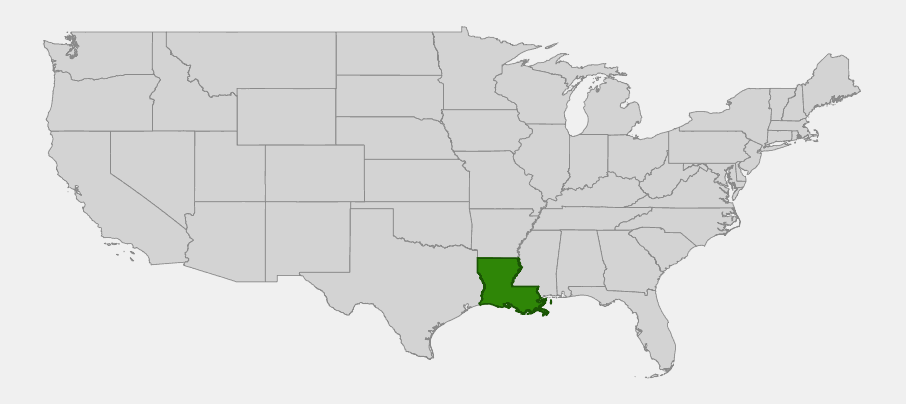
📋 Regional plant lists featuring Abbeville Red Iris: Arkansas, Louisiana, Eastern Oklahoma & Eastern Texas
Growing & Care Guide
Grown from nursery-propagated stock, Abbeville Red Iris is no harder to cultivate than any other Louisiana iris — it simply needs the same swampy conditions it enjoys in the wild.
Light
Full sun produces the heaviest flowering, though the plant tolerates part shade, particularly where summers are hottest. In its native swamp habitat it often grows in dappled light beneath an open cypress canopy.
Soil & Water
Plant in rich, mucky, or clay soil that stays consistently wet to saturated through the growing season; the plant tolerates several inches of standing water for extended periods. It is not drought-tolerant and should never be allowed to dry out for more than a day or two at a time.
Planting Tips
Set out nursery divisions in early spring or fall, planting rhizomes shallowly with the top at or just below the soil surface, spaced 12 to 18 inches apart. A pond margin, bog garden, or consistently irrigated low spot all work well. Like other Louisiana irises, it responds well to generous feeding during the growing season.
Pruning & Maintenance
Deadhead spent flower stalks to keep the planting tidy, and remove damaged foliage after frost. Divide crowded clumps every 3 to 4 years in late summer, discarding old, unproductive rhizome sections and replanting the vigorous outer growth. Wear gloves, as the rhizome sap can irritate skin.
Landscape Uses
Because it needs the same wet conditions as its wild habitat, Abbeville Red Iris fits best in:
- Pond and water-garden margins, in shallow water or saturated soil
- Bog gardens and consistently wet rain garden basins
- Collector or specialty Louisiana iris plantings, where its rare red color is a highlight
- Wetland conservation plantings using only documented nursery-propagated stock
Wildlife & Ecological Value
Like its parent species, Abbeville Red Iris plays a modest but real role in the swamp communities it grows in.
For Pollinators
Large bees capable of forcing their way past the flower’s landing-pad falls — bumblebees in particular — are thought to be the main pollinators, as in the other Louisiana iris species. Hybridization among the parent species in the wild is driven by shared pollinators moving between neighboring colonies.
For Birds
The dense leaf fans offer cover for secretive swamp-dwelling birds, and the seed capsules may be taken by seed-eating birds once they split open.
For Mammals
The toxic rhizomes and foliage make this iris unpalatable to deer and other browsing mammals, a trait it shares with its iris relatives.
Ecosystem Role
Within its tiny native range, Abbeville Red Iris is part of the understory plant community of cypress-tupelo swamp, helping anchor soil at the swamp margin and contributing to the genetic diversity of the broader Louisiana iris species complex through its unusual stabilized-hybrid origin.
Cultural & Historical Uses
Abbeville Red Iris was discovered in the late 1930s by W. B. Macmillan near Abbeville, Louisiana, and first drew wide attention after a 1958 article on its importance to iris breeding appeared in the Bulletin of the American Iris Society. It was formally described as a new species by Lowell Randolph in 1966, working with horticulturist Ira S. “Ike” Nelson of the University of Louisiana at Lafayette, for whom it is named.
Since its discovery, Abbeville Red Iris has been prized by Louisiana iris hybridizers for the pure, saturated red tones it can pass on to garden hybrids — a color notably harder to achieve through the other three parent species alone. It remains a touchstone species in Louisiana iris breeding circles and a point of regional pride in Vermilion Parish.
There is no documented history of medicinal or culinary use specific to this species; as with other irises, the plant should be treated strictly as an ornamental, never as a food or home remedy.
Frequently Asked Questions
Is it legal to dig Abbeville Red Iris from the wild?
Because the wild population is confined to a very small area and is considered critically rare, wild plants should never be dug or collected under any circumstances. Obtain plants only from nurseries that propagate from documented cultivated stock.
How is Abbeville Red Iris different from other Louisiana irises?
It arose as a stabilized natural hybrid of Copper Iris, Zigzag Iris, and Dixie Iris, combining traits of all three. It tends to flower slightly later, stand somewhat taller, and show a more saturated red to red-purple color than any single parent species.
Can I grow it outside Louisiana?
Yes, nursery-propagated plants can be grown anywhere within USDA zones 8–9 that offers consistently wet, rich soil — a pond margin or bog garden works well even well outside its native range, as a garden ornamental rather than a wild planting.
Are the rhizomes safe to handle?
Wear gloves when dividing or planting. The rhizomes and foliage are toxic if eaten and the sap can irritate skin, which also makes the plant unappealing to deer.
Why isn’t there a photo on this page?
This guide only uses photographs with a clearly documented, appropriately licensed source and a confirmed identification. No image meeting those standards was available for this rare, narrowly distributed species at the time this page was written; the description above is intended to serve as the identification reference instead.

Looking for a nursery that carries Abbeville Red Iris?
Browse our native plant nursery directory: Louisiana