
Silver Lupine (Lupinus albifrons)
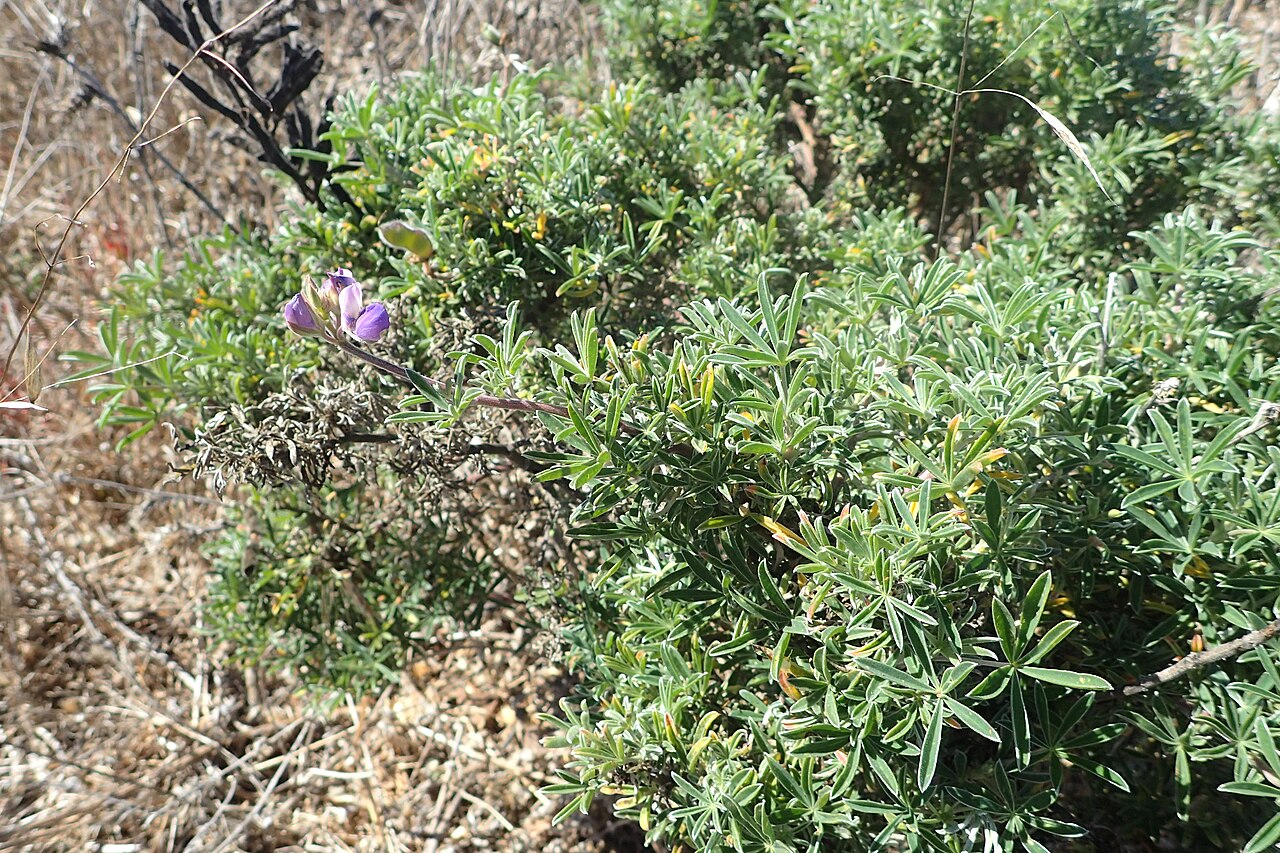
Lupinus albifrons, commonly called Silver Lupine (also White-Leaf Bush Lupine or Evergreen Lupine), is an evergreen perennial shrub native to the coastal hills, dry meadows, and open woodlands of California and southwestern Oregon. It is instantly recognizable by its silvery, silky-haired foliage, which catches the light and gives whole hillsides a soft gray-green sheen even before the spikes of violet-blue flowers appear each spring.
Growing 2 to 5 feet tall and wide, silver lupine is a fast-growing, drought-tolerant shrub well suited to chaparral, coastal sage scrub, and dry foothill gardens that need little supplemental water once established. Like all lupines, it fixes nitrogen in the soil through its root nodules, enriching the ground for neighboring plants, and its flowers are an important nectar source for native bees and butterflies, including the federally endangered Mission Blue Butterfly, whose caterpillars feed exclusively on silver lupine and a few related species.
All parts of silver lupine are toxic if eaten — like many lupine species, it contains quinolizidine alkaloids (including anagyrine) that are poisonous to livestock, causing birth defects and other serious effects in cattle, and are also unsafe for people and pets. Keep it out of pastures and away from grazing animals, and do not eat any part of this plant.
Identification
Silver lupine is a rounded, woody-based perennial shrub or subshrub, typically 2 to 5 feet tall and equally wide, with a dense, mounding form composed of many slender branches.
Stems
Stems are woody at the base and herbaceous toward the tips, covered in fine silvery hairs like the rest of the plant. Older plants develop a semi-woody framework that persists through the dry season, while new growth flushes each spring.
Leaves
The palmately compound leaves are the plant’s signature feature: 5 to 9 narrow leaflets radiate from a central point, each densely covered in silky silver hairs that give the whole plant a soft, shimmering, gray-green to silvery-white color year-round. This silvery coat helps the plant conserve moisture through California’s dry summers.
Flowers
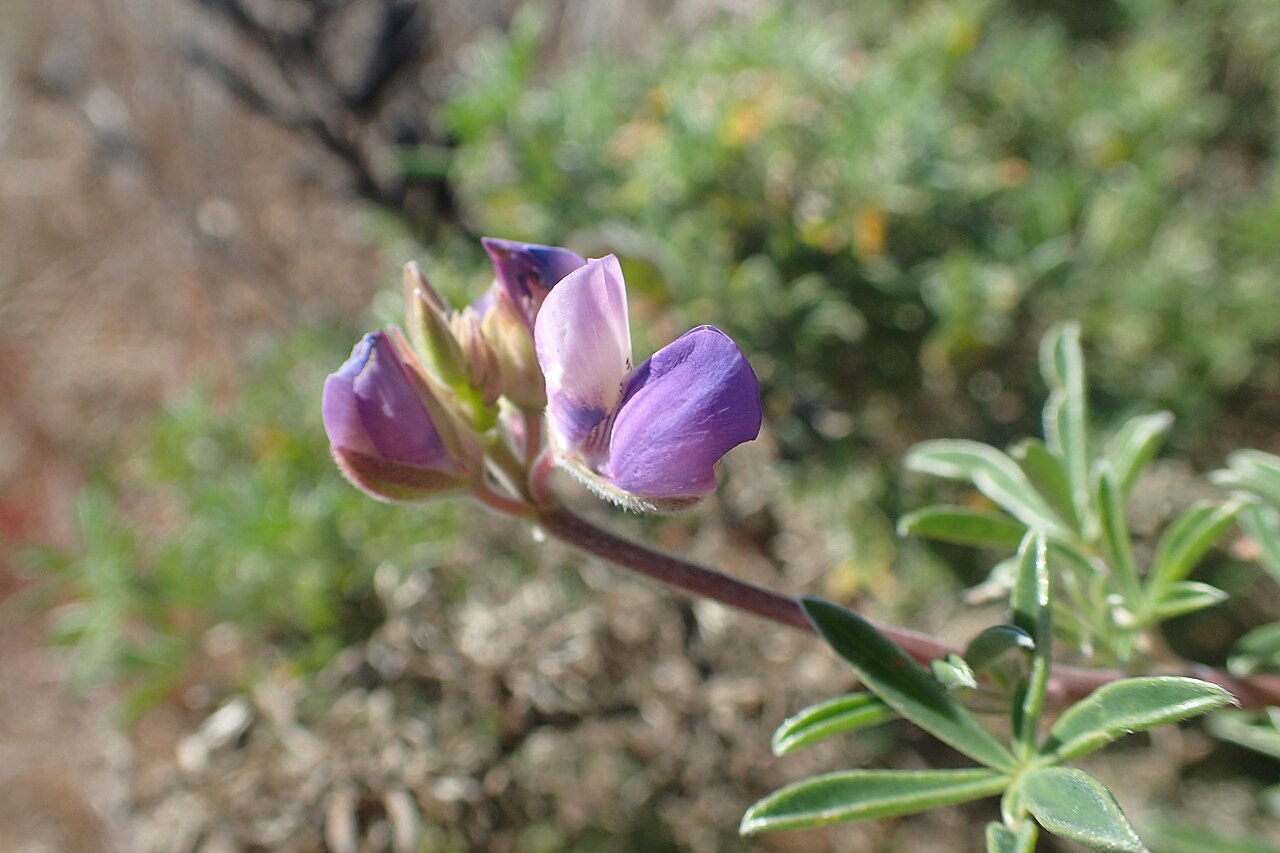
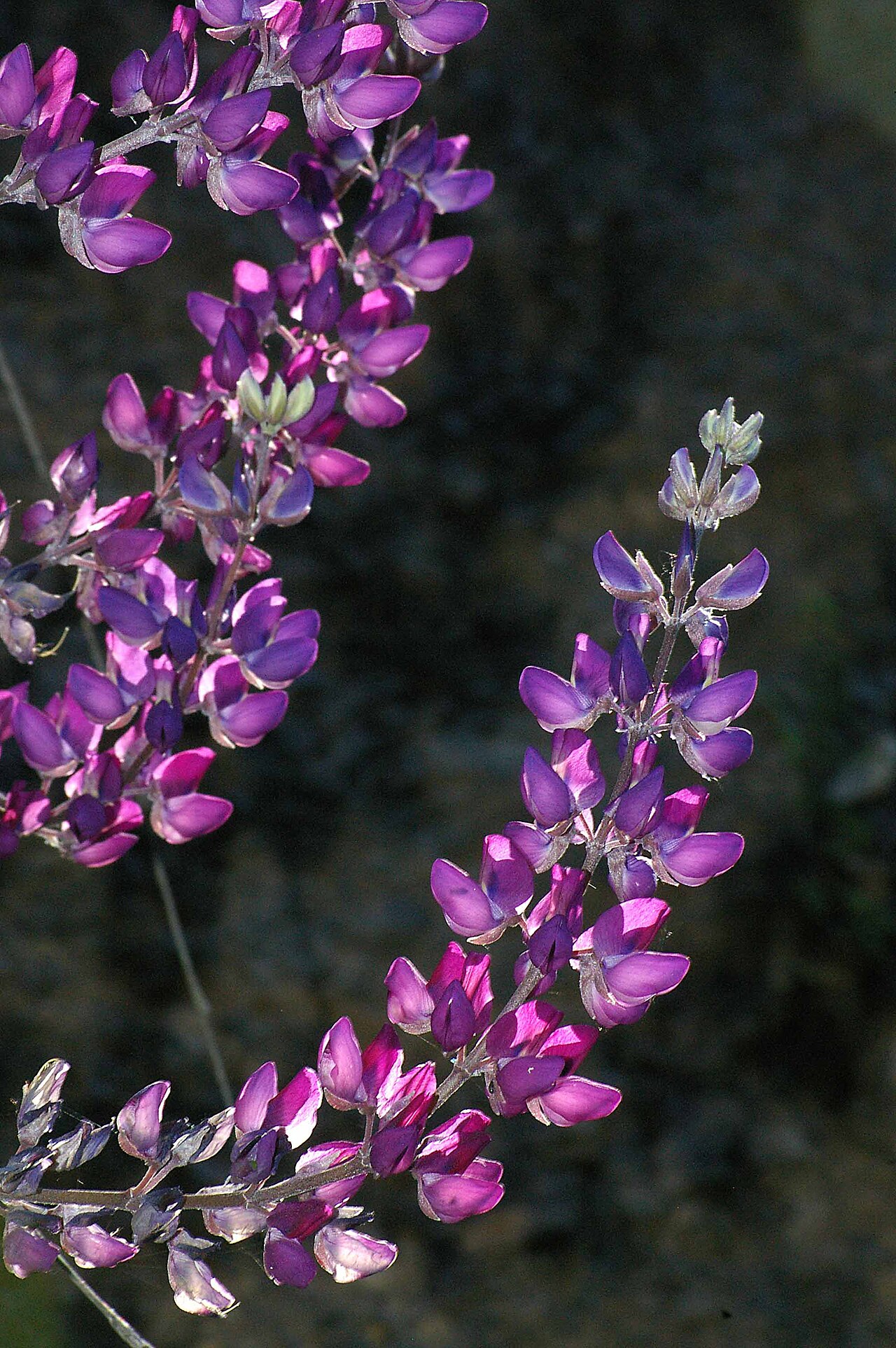
Dense, upright flower spikes 3 to 12 inches long appear from March through June, each packed with pea-like flowers in shades of blue-violet to lavender, sometimes with a white or yellow spot on the banner petal. That spot changes color from pale to magenta after a flower is pollinated, signaling to bees which blooms still offer nectar.
Fruit & Seeds
Flowers are followed by small, hairy seed pods that split open explosively when dry, scattering seeds a short distance from the parent plant. The seeds and all other parts of the plant are toxic and must never be eaten — they contain alkaloids that are dangerous to livestock, pets, and people.
Quick Facts
| Scientific Name | Lupinus albifrons |
| Family | Fabaceae (Legume) |
| Plant Type | Evergreen Perennial Shrub |
| Mature Height | 2–5 ft |
| Mature Spread | 2–5 ft |
| Growth Rate | Fast |
| Sun Exposure | Full Sun |
| Water Needs | Low to Average |
| Soil Type | Well-drained; sandy, rocky, or loamy |
| Soil pH | 5.5–7.0 (acidic to neutral) |
| Bloom Time | March – June |
| Flower Color | Blue-violet to lavender |
| Fall Color | Evergreen, silver-gray year-round |
| Fruit | Hairy seed pods; toxic, not edible |
| Deer Resistant | Yes (toxic alkaloids deter browsing) |
| USDA Hardiness Zones | 8–10 |
Native Range
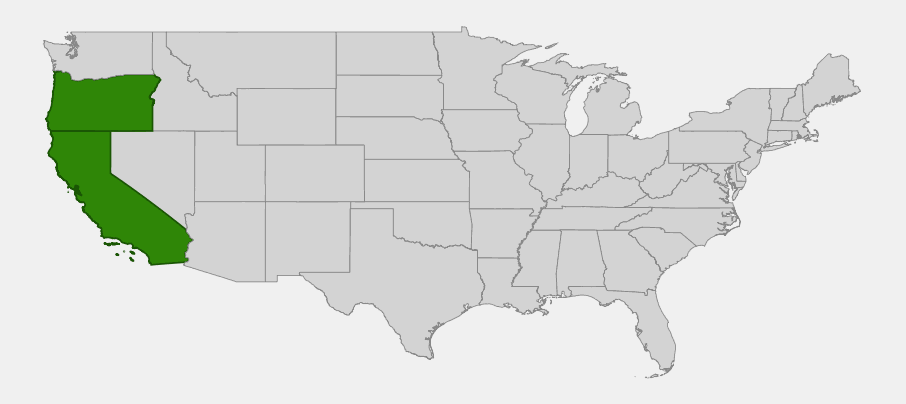
Silver lupine is native to California, where it grows throughout the Coast Ranges, the Sierra Nevada foothills, and the Central Valley margins, and it extends a short distance north into southwestern Oregon along the coast. It is absent as a native plant outside this California-Oregon range, despite being a popular drought-tolerant shrub in Western gardening circles.
Across its range, silver lupine grows in a wide variety of plant communities, including coastal sage scrub, chaparral, northern coastal scrub, foothill woodland, and the lower montane pine forests of the Sierra Nevada. It favors open, sunny sites with sandy to rocky, well-drained soil — dry meadows, road cuts, burned areas, and open hillsides below about 5,000 feet elevation.
The species shows considerable genetic and morphological diversity across this range, with six recognized varieties adapted to different parts of California and Oregon. It is an important early-colonizing plant after wildfire, often among the first shrubs to resprout or germinate from the seed bank on burned hillsides.
📋 Regional plant lists featuring Silver Lupine: Western Oregon & Western Washington
Growing & Care Guide
Silver lupine is a rewarding, low-maintenance shrub for gardeners in its native range who want fast, silvery texture and a strong spring flower display with minimal water.
Light
Give silver lupine full sun. It flowers best and keeps its tightest, most compact form in open, sunny sites; in shade it grows leggy and blooms sparsely.
Soil & Water
This shrub needs sharply drained soil — sandy, rocky, or lean garden loam all suit it, but soggy or heavy clay soil quickly kills it, especially in summer. Water deeply but infrequently to establish young plants, then taper off; mature silver lupine needs little to no supplemental water in a typical California or Oregon coastal climate. Avoid summer irrigation near established plants.
Planting Tips
Plant in fall or early spring from container stock, spacing plants 3 to 5 feet apart to allow for their mature spread. Silver lupine establishes quickly and often blooms within its first or second year. Avoid over-fertilizing, since excess nitrogen or phosphorus can shorten its naturally modest lifespan.
Pruning & Maintenance
Prune lightly in late winter to remove old, woody growth and encourage fresh, compact branching; silver lupine is relatively short-lived as shrubs go and benefits from rejuvenation pruning to extend its vigor. Expect individual plants to live roughly 5 to 10 years, with self-sown seedlings replacing older plants over time.
Propagation
Fresh seed germinates readily without pretreatment; older, stored seed benefits from scarification (nicking the hard seed coat) or a hot-water soak before sowing, as is typical for many legumes. Silver lupine often self-seeds generously once established in a garden bed.
Landscape Uses
Silver lupine suits many low-water garden styles:
- Coastal sage and chaparral gardens as a signature silver-foliage shrub
- Dry slopes and erosion-prone banks, where its roots help stabilize soil
- Pollinator and native bee gardens, including habitat for the endangered Mission Blue Butterfly where it occurs
- Fire-recovery and restoration plantings on burned hillsides within its native range
- Mixed shrub borders for silvery textural contrast against greener foliage
Wildlife & Ecological Value
Silver lupine is a keystone food and habitat plant across its California and Oregon range, supporting specialized insects as well as general pollinators.
For Pollinators
Bumblebees (genus Bombus) are the primary pollinators, and the plant is the required larval host for the federally endangered Mission Blue Butterfly, along with two related lupine species. Caterpillars that feed on silver lupine become mildly toxic themselves, which helps deter predators — an example of the plant’s defensive alkaloids working their way up the food chain.
For Birds
Silver lupine thickets provide important nesting cover for the San Miguel Island Song Sparrow and other shrubland birds, which build nests within its dense, silvery branches.
For Mammals
Because of its toxic alkaloids, silver lupine is naturally deer-resistant and is avoided by most browsing mammals, making it a reliable choice in areas with heavy deer pressure. It should never be planted where livestock can graze it, since cattle — especially young or lactating animals under feed stress — can suffer serious harm, including birth defects, from eating it.
Ecosystem Role
As a nitrogen-fixing legume, silver lupine improves soil fertility for neighboring plants and is often among the first species to recolonize burned or disturbed hillsides in California chaparral and coastal scrub, playing an important early-succession role after wildfire.
Cultural & Historical Uses
Silver lupine has long been admired by California naturalists and wildflower enthusiasts for its striking silver foliage and spring bloom, and it remains a staple of native-plant horticulture throughout its range, popularized through botanical gardens like the University of California Botanical Garden at Berkeley.
Unlike some other lupine species historically used for food after careful processing to remove toxic alkaloids, silver lupine has no history of use as a food plant by Indigenous peoples or settlers; its high alkaloid content and bitter taste made it unsuitable and potentially dangerous for that purpose.
Today its primary cultural significance is ecological and conservation-related: silver lupine’s role as the sole or primary host plant for the endangered Mission Blue Butterfly has made it a focal species in Bay Area habitat restoration projects, and native plant advocates continue to promote it as a water-wise, wildlife-supporting garden shrub.
Frequently Asked Questions
Is silver lupine poisonous?
Yes. All parts of silver lupine contain toxic alkaloids, including anagyrine, that are dangerous to livestock — causing birth defects and other serious harm, especially in cattle — and are not safe for people or pets. Never eat any part of this plant, and keep it away from grazing animals.
Is silver lupine the same as the lupines sold as food?
No. Some lupine species and cultivars have been bred or processed specifically to remove toxic alkaloids for food use, but silver lupine has not and should never be treated as an edible plant.
Does silver lupine grow outside California and Oregon?
No, it is native only to California and a narrow strip of southwestern Oregon. It is sometimes grown as an ornamental elsewhere, but it is not native beyond this range and is not a reliable choice outside Mediterranean or dry-summer climates.
Why are its leaves silver?
The silvery appearance comes from a dense coat of fine hairs covering the leaflets, which reflects sunlight and reduces water loss — an adaptation to the hot, dry summers typical of its native chaparral and coastal scrub habitat.
How long does silver lupine live?
It is relatively short-lived for a shrub, typically 5 to 10 years, but it self-seeds readily where happy, so a planting often sustains itself indefinitely through new seedlings even as older plants decline.

Looking for a nursery that carries Silver Lupine?
Browse our native plant nursery directory: California · Oregon