
Chaparral Mallow (Malacothamnus fasciculatus)
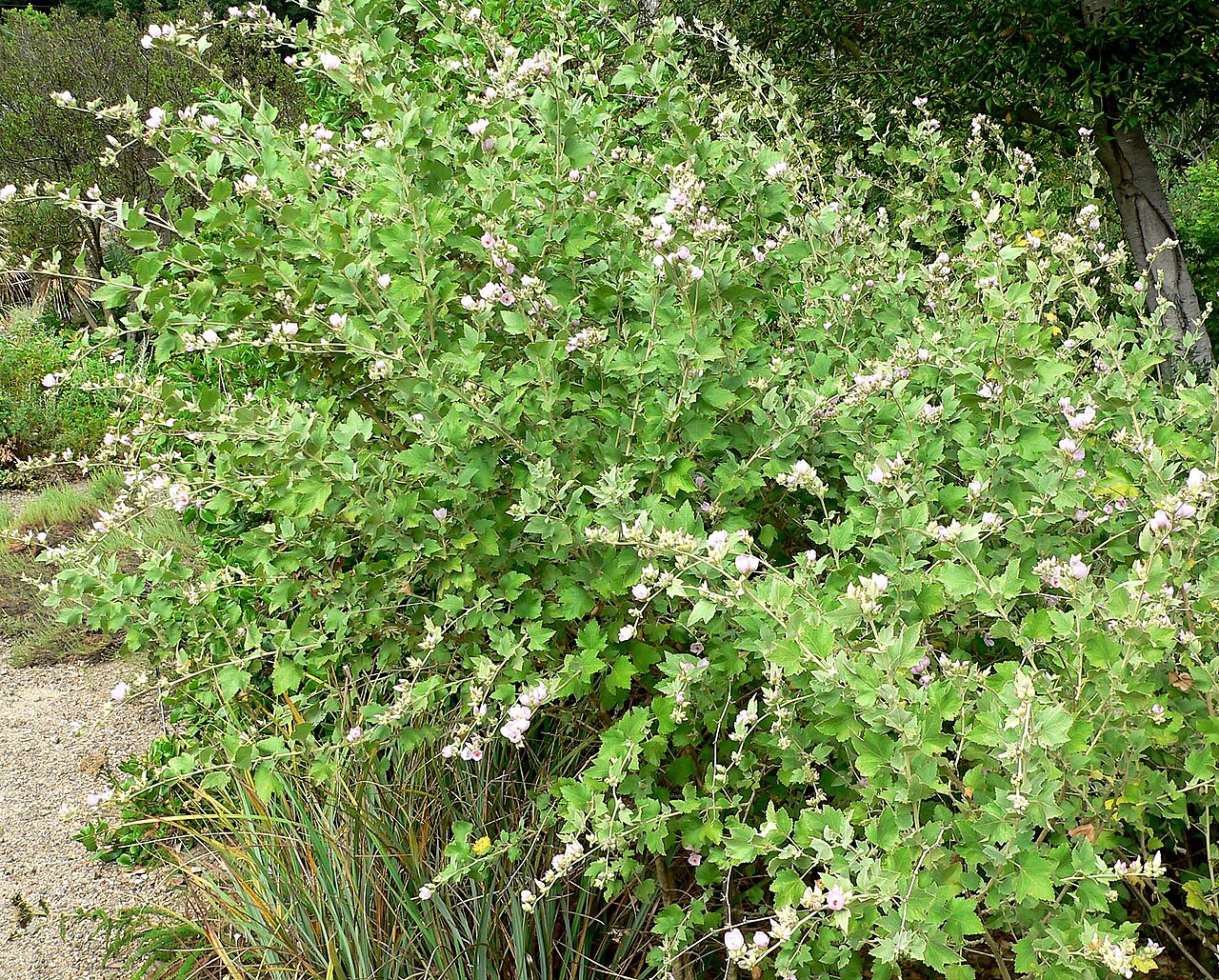
Malacothamnus fasciculatus, commonly called Chaparral Mallow or bush mallow, is a fast-growing evergreen shrub found only in California and immediately across the border in northern Baja California. A member of the Malvaceae, the mallow family, it is instantly recognizable for its soft, gray-green, maple-shaped leaves covered in fine star-shaped hairs, and for the long wands of pale pink, cup-shaped flowers that open in succession from spring into summer. Few native California shrubs bloom as generously or for as long.
Chaparral mallow is a true pioneer of disturbed and burned ground. It thrives in the Coast and Transverse ranges of southern and central California, where it colonizes dry slopes, washes, and roadcuts through creeping underground stems, often forming dense, many-stemmed thickets several feet across. Because it resprouts vigorously after fire and also germinates readily from fire-cued seed, it is one of the first shrubs to reclaim burned chaparral, stabilizing soil while slower-growing natives reestablish around it.
For gardeners in its native range, chaparral mallow is an easy, undemanding shrub for a hot, dry, sunny spot. It asks for almost nothing once established, tolerates poor rocky soil, and rewards that neglect with months of flowers that native bees, butterflies, and hummingbirds visit constantly. It is an excellent choice for erosion control on slopes, for filling out the back of a chaparral or coastal-sage-scrub garden, or for a fast, informal screen where a looser, less manicured look is welcome.
Identification
Chaparral mallow grows as a multi-branched, rounded-to-sprawling shrub, typically 5 to 10 feet tall and 6 to 10 feet wide, though vigorous colonies in good conditions can send up canes to 16 feet. Plants spread by underground rhizomes as well as by seed, so a single founder plant often becomes a loose grove rather than a single, tidy bush.
Stems & Leaves
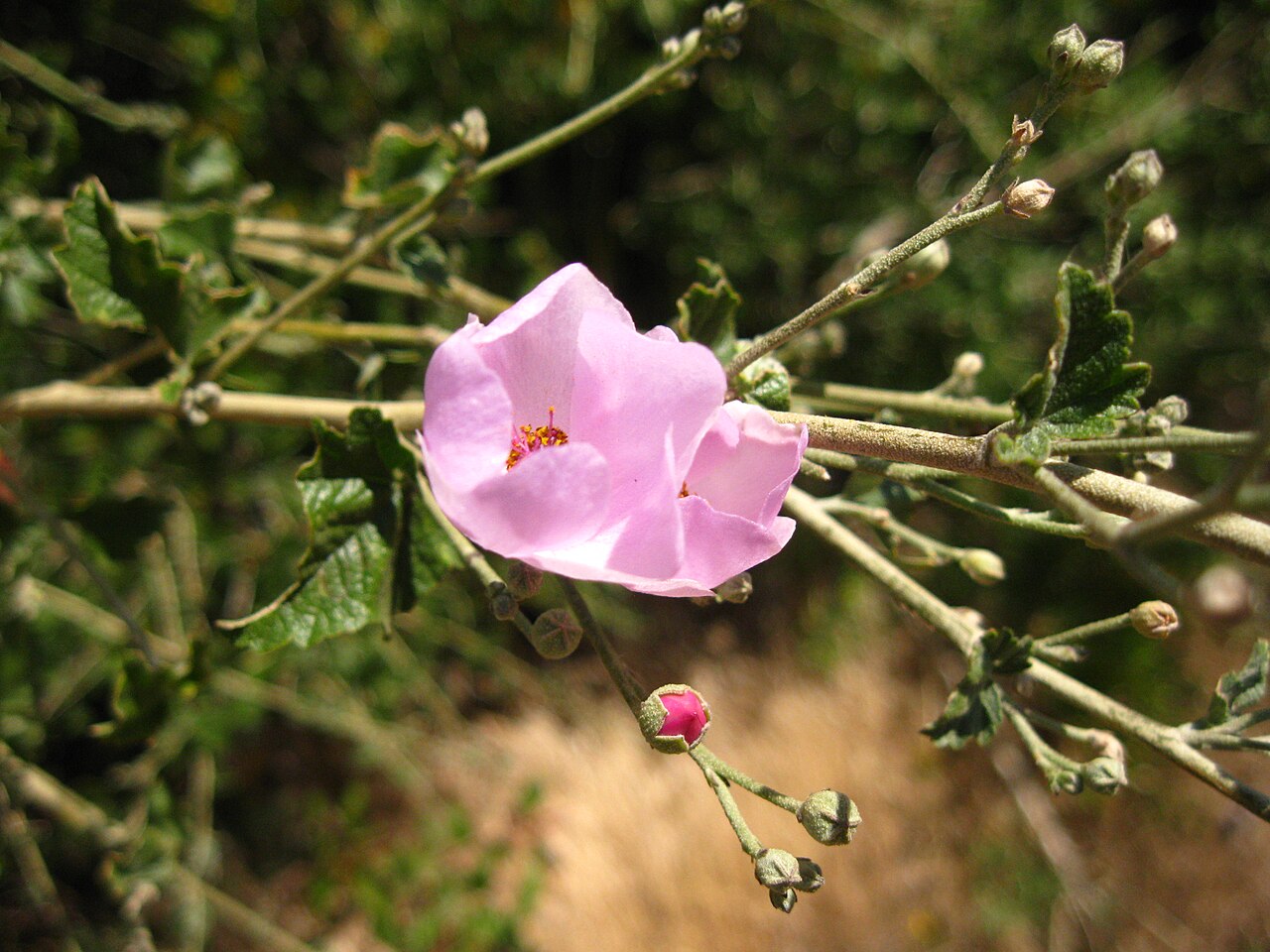
Young stems are slender, flexible, and densely covered in soft, grayish, star-shaped (stellate) hairs, giving the whole plant a felted, silvery-green cast that is easy to pick out from a distance. The leaves are alternate, 1 to 3 inches across, shallowly to moderately lobed in a shape that recalls a small maple leaf, and softly hairy on both surfaces. This gray-green, velvety foliage persists year-round, since the shrub is evergreen to semi-evergreen depending on rainfall and site.
Flowers
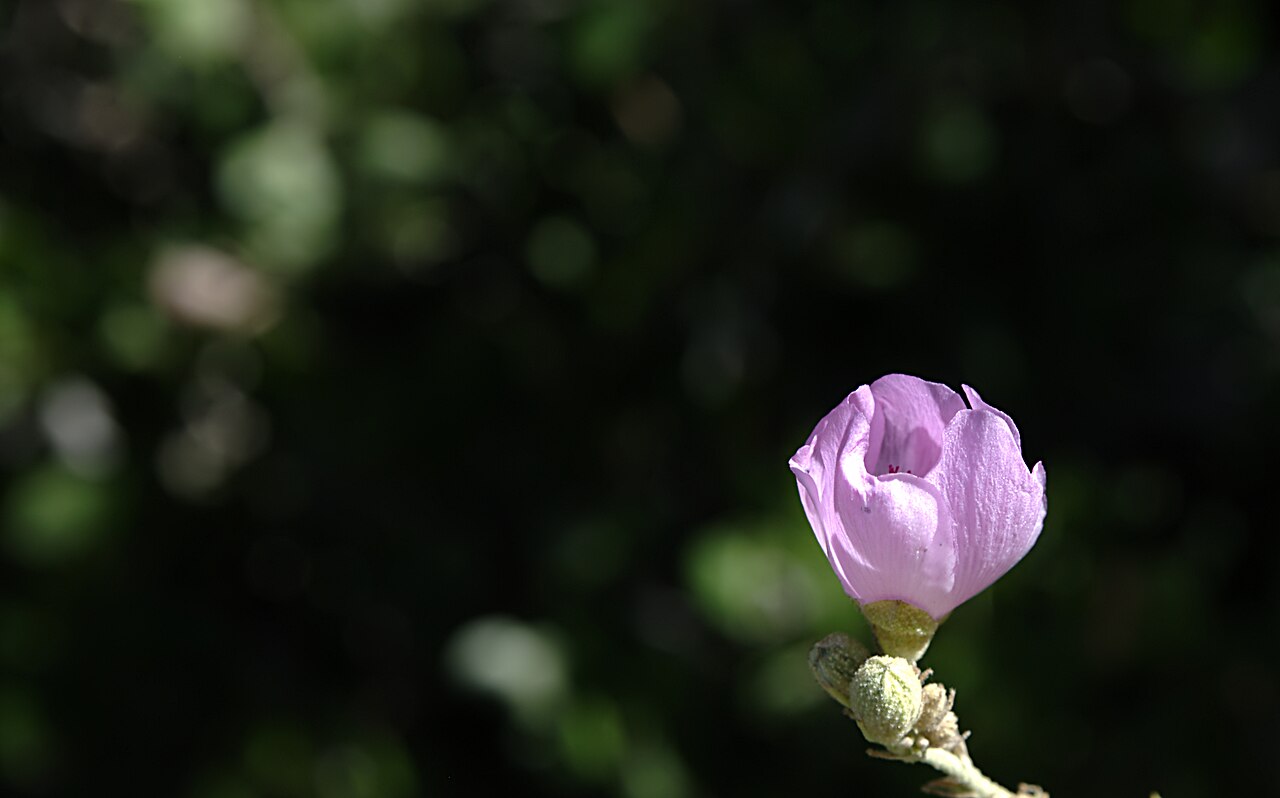
Flowers are produced in long, loose, spike-like clusters along the upper stems, opening a few at a time over many weeks from spring into summer. Each flower is cup- to saucer-shaped, about ¾ to 1¼ inches across, with five broad, pale pink to lavender-pink petals surrounding a central column of fused stamens typical of the mallow family. A well-grown plant in full bloom can carry hundreds to thousands of flowers at once, drawing a steady traffic of pollinators.
Fruit
After flowering, each bloom develops into a small, dry, disc-shaped fruit (a schizocarp) that splits at maturity into several single-seeded segments, the typical fruit structure of the mallow family. The fruits are inconspicuous and not ornamentally significant, drying to brown and persisting briefly before shattering.
Quick Facts
| Scientific Name | Malacothamnus fasciculatus |
| Family | Malvaceae (Mallow) |
| Plant Type | Evergreen to semi-evergreen shrub |
| Mature Height | 5–10 ft (occasionally to 16 ft) |
| Mature Spread | 6–10 ft, often colonial |
| Growth Rate | Fast |
| Sun Exposure | Full Sun |
| Water Needs | Low to moderate; drought tolerant once established |
| Soil Type | Well-drained; tolerates dry, rocky, or sandy soils |
| Soil pH | Neutral to slightly alkaline (6.5–8.0) |
| Bloom Time | April – August |
| Flower Color | Pale pink to lavender-pink |
| Fall Color | None; foliage stays gray-green year-round |
| Fruit | Small dry disc-shaped capsules, inconspicuous |
| Deer Resistant | Yes, generally |
| USDA Hardiness Zones | 8–10 |
Native Range
Chaparral mallow is native to California, where it is concentrated in the Coast Ranges and Transverse Ranges from roughly Point Conception south through the Los Angeles Basin, Orange County, and San Diego County, with outlying populations in the interior foothills and on the Channel Islands. It is also found just south of the border in northern Baja California and Sonora, Mexico. Records of the species in southwestern Arizona are disputed; botanists are not certain whether those plants are naturally occurring or escaped from cultivation, so this page treats California as its confirmed native range.
Within California, chaparral mallow grows at low elevations, generally below 2,000 feet and rarely above 3,500 feet, on dry slopes and in washes within chaparral and coastal sage scrub plant communities. It is especially common on disturbed or recently burned ground, where its rhizomes and fire-stimulated seed give it a head start over slower-growing shrubs.
Because it depends on periodic disturbance, chaparral mallow is not a long-lived dominant of mature, undisturbed chaparral; instead it cycles through local populations that flourish for a decade or two after fire or grading before being shaded out as the surrounding shrubs mature, then reappear nearby after the next disturbance. This boom-and-bust pattern is part of what makes it so valuable for post-fire slope stabilization.
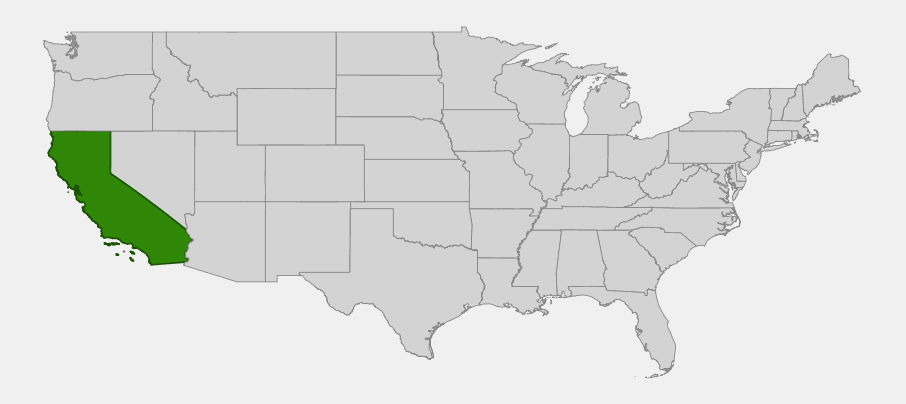
📋 Chaparral mallow is not yet native to any of our current PlantNative regional lists, which do not yet include a dedicated California list; check back as our regional coverage expands.
Growing & Care Guide
Chaparral mallow is about as forgiving as native shrubs get, provided it has the two things its wild habitat offers in abundance: sun and good drainage. It is a poor choice for a formal, tidy border but an excellent one for a naturalistic, fast-filling planting.
Light
Give chaparral mallow full sun. It flowers most heavily and holds its compact, bushy form best with at least six to eight hours of direct sun a day; in part shade it stretches, blooms less, and tends to flop.
Soil & Water
Any well-drained soil suits it, including the thin, rocky, or sandy soils typical of chaparral slopes. Established plants need little to no supplemental water in a normal California rainfall year and are a good fit for a low-water or no-irrigation garden. Young plants benefit from an occasional deep soak through their first one to two summers; after that, cut back watering sharply; soggy or poorly drained soil is the main thing that shortens this shrub’s life.
Planting Tips
Plant from containers in fall or early winter so roots can establish before the dry season. Because it spreads by rhizomes, give it room, 6 to 10 feet, or plan to be a decisive pruner, and avoid placing it directly against foundations, paths, or more delicate neighboring shrubs it might crowd out over time.
Pruning & Maintenance
Chaparral mallow responds well to being cut back hard, even to a few inches above ground, every few years; this keeps the typically loose, leggy growth dense and floriferous and mimics the resprouting the plant would do naturally after fire. Removing spent flowering canes after bloom also tidies the shrub. Without occasional hard pruning, older plants can become sparse and woody at the base.
Propagation
Chaparral mallow is easy to propagate from semi-hardwood cuttings taken in late summer, and established colonies can also be divided by digging rooted rhizome suckers. Seed requires the smoke or heat cues typical of fire-following chaparral species to germinate reliably, which makes cuttings and divisions the more practical route for home gardeners.
Landscape Uses
Its speed and toughness make chaparral mallow especially useful for:
- Erosion control on dry slopes and cut banks, especially after fire
- Fast, informal screening along property edges
- Pollinator gardens, where its long bloom season keeps bees and butterflies fed
- Chaparral and coastal-sage-scrub habitat restoration
- Low-water gardens that need quick, drought-tolerant coverage
- Wildlife hedgerows mixed with other low-water natives
Wildlife & Ecological Value
As one of the longest and most reliably blooming native shrubs in its range, chaparral mallow punches well above its weight as a wildlife plant, especially in the months between the big spring wildflower bloom and the fall rains.
For Pollinators
Chaparral mallow is a magnet for native bees, which work its pale pink flowers from spring through summer; honeybees visit as well. The flowers also draw butterflies, including the West Coast Lady and Northern White-Skipper, both of which use the foliage as a larval host plant, meaning the shrub supports these species through their full life cycle rather than as adults alone.
For Birds
Hummingbirds regularly visit chaparral mallow for nectar, and the dense, twiggy growth of an established colony offers small songbirds cover and nesting sites within the shrub layer of the chaparral.
For Mammals
Rabbits and other small mammals use dense chaparral mallow thickets for cover, and browsing animals including deer tend to leave the hairy, fibrous foliage alone, which is part of why the species is considered generally deer resistant.
Ecosystem Role
Chaparral mallow’s defining ecological role is as a post-fire and post-disturbance pioneer. Its rhizomes resprout quickly after fire or grading, and its seed bank responds to the heat and smoke of a burn, so it is often among the first shrubs to green up a blackened slope. That rapid cover reduces erosion and provides early nectar and shelter while slower-growing chaparral shrubs reestablish around it.
Cultural & Historical Uses
Chaparral mallow has no significant documented history as a food, fiber, or medicinal plant among California’s Indigenous peoples, unlike some of its showier or more useful chaparral neighbors. Its role has always been primarily ecological: a quick-growing colonizer that knits burned and disturbed slopes back together.
In more recent decades, restoration ecologists and native-plant horticulturists have put that same trait to deliberate use, including chaparral mallow in seed mixes and container plantings for slope stabilization after wildfires and construction disturbance throughout coastal and inland Southern California.
In home gardens, chaparral mallow has become a favorite of native-plant enthusiasts precisely because it offers so much flower for so little care, a modern appreciation for a plant whose wild role has always been to make the best of disturbed ground.
Frequently Asked Questions
Is chaparral mallow the same as bush mallow?
“Bush mallow” is a common name used loosely for several related species in the genus Malacothamnus. Malacothamnus fasciculatus specifically is most often called chaparral mallow or Mendocino bush mallow, though the latter name is somewhat misleading since the species does not grow as far north as Mendocino County.
Will chaparral mallow take over my garden?
It spreads readily by underground rhizomes and can form a sizable colony over a few years, so give it room from the start or plan on dividing and removing suckers periodically. It is well suited to an informal area where spreading is welcome, less so to a small, tightly planted bed.
Does chaparral mallow need regular water?
No. Once established, usually after its first one to two summers, it is drought tolerant and does best with little to no supplemental irrigation in a normal California rainfall year. Too much water, especially in heavy soil, is more likely to harm it than too little.
Is chaparral mallow deer resistant?
It is generally reported as deer resistant, likely because of its hairy, fibrous foliage, though deer pressure and preferences vary by location, so young plants can still benefit from protection until established.
Why does my chaparral mallow look leggy and sparse?
Older plants that are never pruned tend to become woody and open at the base. Cutting the shrub back hard every few years, mimicking the resprouting it would do after a wildfire, keeps the growth dense, compact, and more floriferous.

Looking for a nursery that carries Chaparral Mallow?
Browse our native plant nursery directory: California