Sweet Crabapple (Malus coronaria)
Malus coronaria, commonly known as Sweet Crabapple, American crabapple, or garland crab, is a small deciduous tree native to the woodland edges, old fields, and fencerows of the eastern and midwestern United States. A member of the rose family, it is best known for its fragrant, soft pink spring blossoms, which perfume the air for a week or two each year and have made it a favorite small ornamental tree far beyond its native range. Long before it was a garden favorite, though, it was simply one of the common small trees of the Ohio Valley and Great Lakes countryside.
Sweet crabapple typically grows as a broad, rounded, often thicket-forming tree 15 to 30 feet tall, with stout, sometimes thorny branches and a trunk that is frequently crooked or leaning rather than straight. It favors sunny edges, old pastures, and open woodlands over deep forest shade, and it spreads readily by root sprouts, so a single tree in a hedgerow can, over time, become a small grove of genetically identical stems.
For native-plant gardeners across its range, sweet crabapple offers a lot in a modest package: a spectacular, fragrant spring bloom, small hard fruit that feeds wildlife through fall and winter, and a tough, adaptable constitution that asks for little beyond sun and room to spread. It is an excellent choice for a wildlife hedgerow, a naturalized orchard edge, or any sunny spot where a small, characterful native tree is wanted.
Identification
Sweet crabapple is a small, often multi-trunked or thicket-forming tree, usually 15 to 30 feet tall with a broad, rounded crown as wide as or wider than it is tall. Branches are stout and frequently zigzag, and older trees often develop short, stiff spur-shoots that can be sharply pointed, functioning as thorns.
Bark & Stems
Young twigs are reddish-brown and may be lightly hairy, maturing to gray-brown bark that becomes scaly and furrowed with age. The short, stiff lateral spur-shoots that carry flowers and leaves each year are a useful identification clue, especially on older wood, and can be sharp enough to scratch on specimens with well-developed thorns.
Leaves
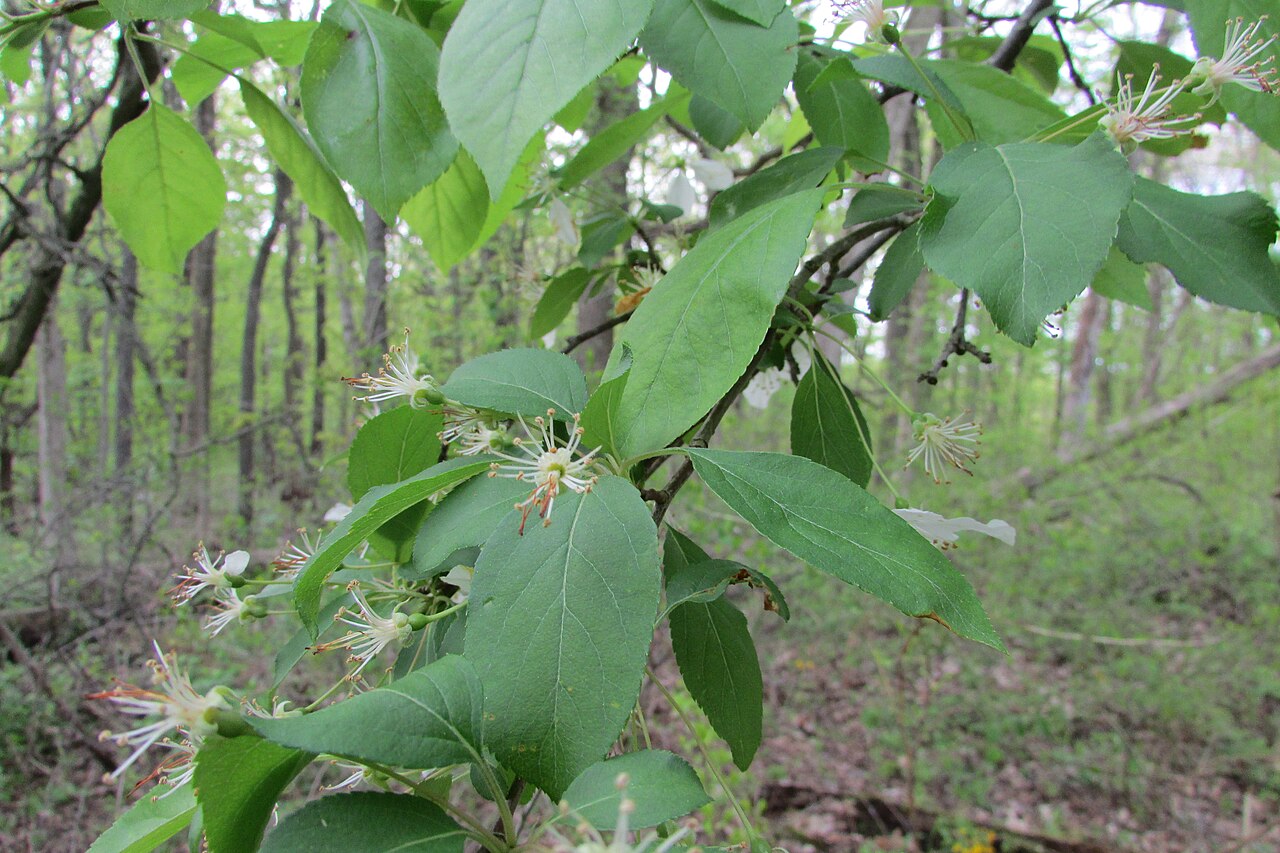
Leaves are simple, alternate, and 2 to 4 inches long, oval to triangular-oval with a rounded or slightly wedge-shaped base and a sharply toothed margin; leaves on vigorous young sprouts are often shallowly lobed, while leaves on older spur-shoots are usually unlobed. The upper surface is glossy dark green, and in good autumns the foliage can turn a modest yellow before dropping; fall color is not a strong feature of this species and is easily overshadowed by the spring bloom.
Flowers
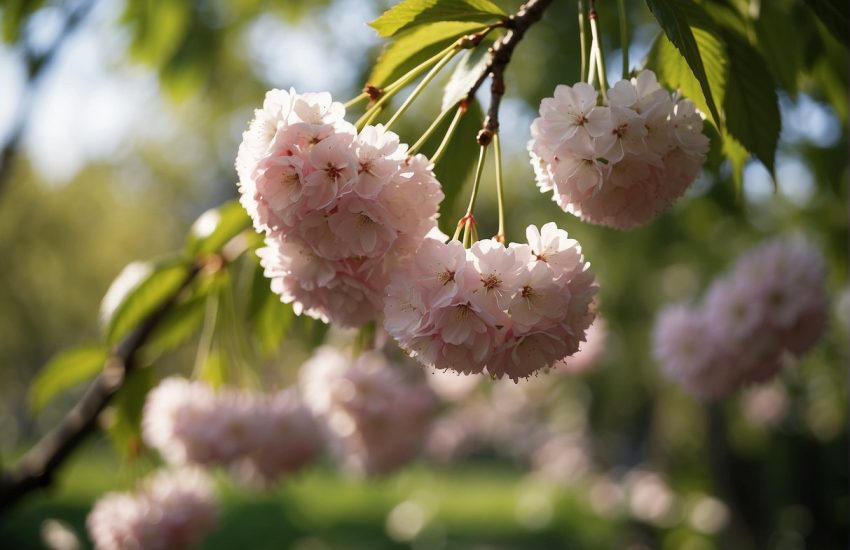
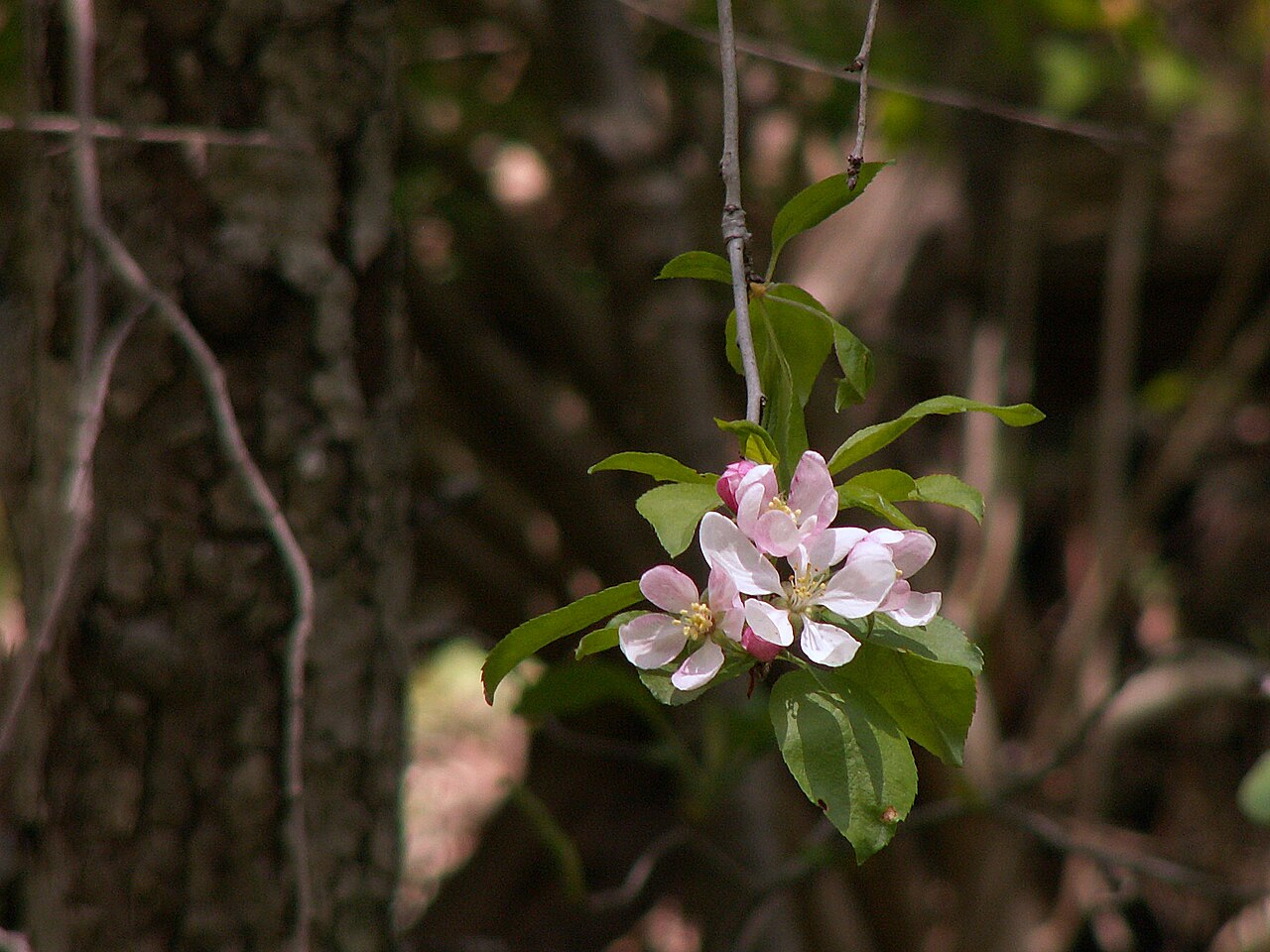
Flowers open in mid to late spring in small clusters of four to six at the tips of the spur-shoots, appearing alongside or just after the first leaves. Each blossom is about 1.5 inches across with five rounded petals that open white to soft pink from deeper pink buds, and they carry a strong, sweet fragrance that gives the species its common name. The bloom is brief, typically lasting one to two weeks depending on spring weather.
Fruit & Seeds
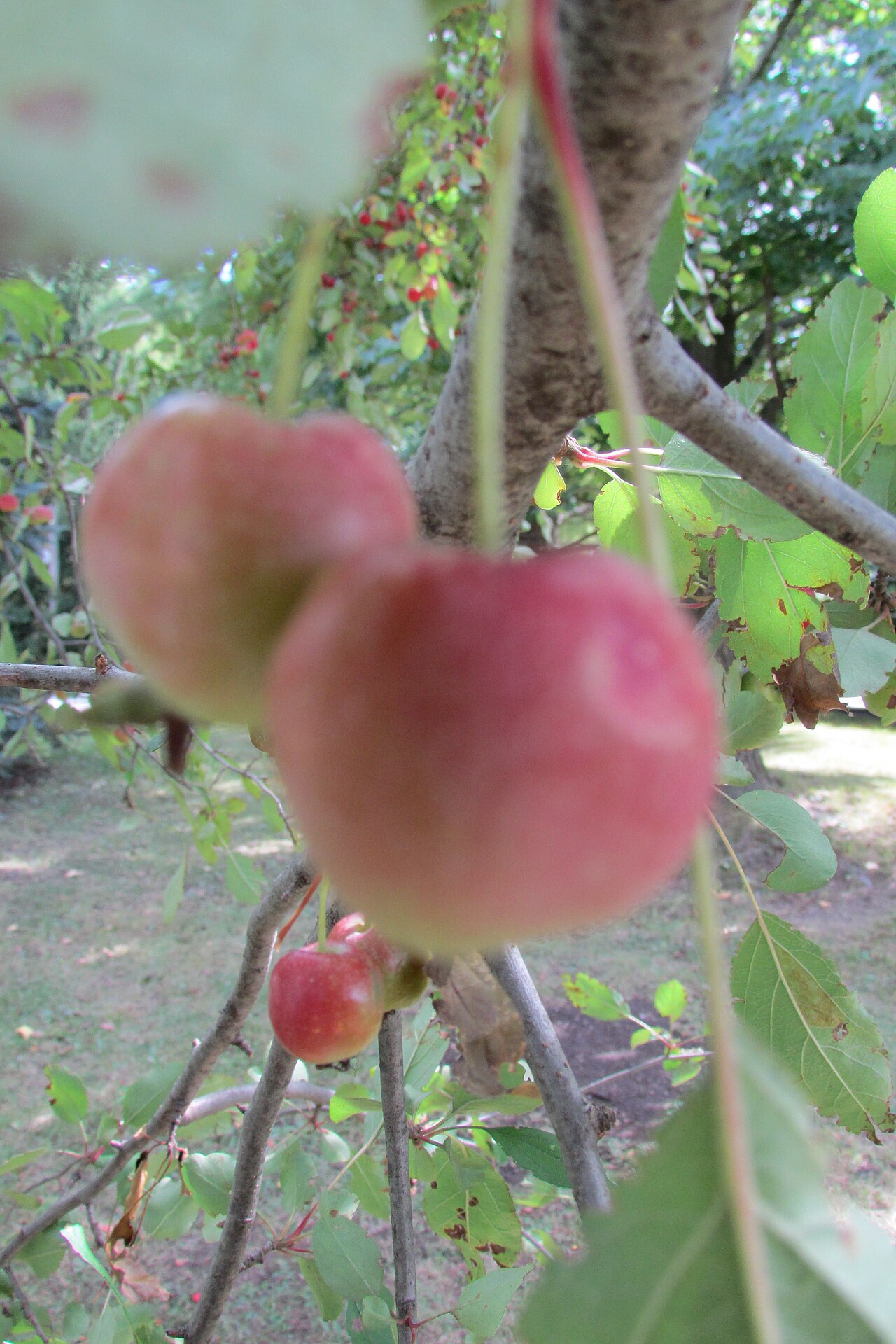
The fruit is a small, hard, yellow-green apple about 1 to 1.5 inches across, often blushed or streaked with red, ripening in late summer and persisting on the tree well into fall. It is extremely sour and astringent raw, softening somewhat after frost, and has traditionally been cooked down with sugar for jelly rather than eaten fresh. As in other Malus species, the seeds contain cyanogenic compounds and should not be eaten; this is a minor concern in practice since the small, hard seeds are rarely consumed, but do not grind or chew crabapple seeds or include them in homemade preserves.
Quick Facts
| Scientific Name | Malus coronaria |
| Family | Rosaceae (Rose) |
| Plant Type | Deciduous small tree / large shrub |
| Mature Height | 15–30 ft |
| Mature Spread | 15–30 ft, often thicket-forming |
| Growth Rate | Moderate |
| Sun Exposure | Full Sun to Part Shade |
| Water Needs | Average; adaptable once established |
| Soil Type | Adaptable; moist loam to drier upland soils |
| Soil pH | 5.5–7.5 (acidic to neutral) |
| Bloom Time | April – May |
| Flower Color | White to soft pink, from deep pink buds |
| Fall Color | Modest yellow |
| Fruit | Small, hard, sour yellow-green apples blushed red |
| Deer Resistant | No (deer browse foliage and twigs) |
| USDA Hardiness Zones | 4–8 |
Native Range
Sweet crabapple is native to the eastern and midwestern United States and adjacent southern Ontario, with a range centered on the Great Lakes region and the Ohio Valley. It occurs from Michigan, Wisconsin, Illinois, and Missouri east through Indiana, Ohio, Pennsylvania, and New York, and south through the Appalachians and Interior Low Plateau to Kentucky, Tennessee, Virginia, West Virginia, North Carolina, South Carolina, Georgia, and Alabama, with outlying populations west into Kansas. It is not native to Arkansas or Louisiana. It is sometimes planted as an ornamental well outside this native range, so a crabapple seen growing wild in New England or the Pacific states is very unlikely to be this species.
Within its range, sweet crabapple favors open, sunny habitats over closed forest: old fields, fencerows, thickets, woodland edges, and open upland woods, occasionally extending into bottomland edges near streams. It is shade-intolerant as a seedling and does not persist in the understory of a closed-canopy forest, which is why it is so often found along the margins where farmland meets woods.
Sweet crabapple was far more common across the Midwest before extensive land clearing and, later, farmland abandonment altered the mix of edge habitats it depends on; it remains locally common today wherever open, sunny edge habitat persists, but has declined in areas where old fields have either been developed or allowed to grow up into closed forest.
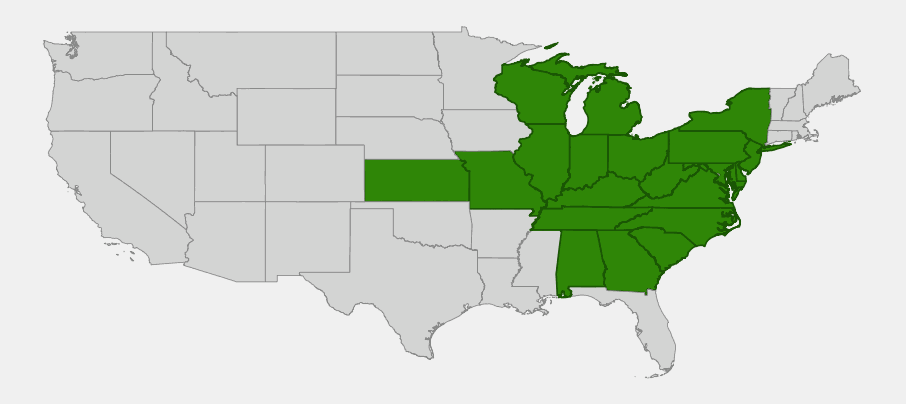
📋 Regional plant lists featuring Sweet Crabapple: Georgia, Alabama & Mississippi · Delaware, Southern New Jersey & Long Island · Maryland, Virginia & West Virginia · North Carolina & South Carolina · Kentucky & Tennessee · Ohio & Indiana · Illinois, Iowa & Missouri · Michigan, Wisconsin & Eastern Minnesota · Nebraska, Kansas & Eastern Colorado · New York, Pennsylvania & Northern New Jersey
Growing & Care Guide
Sweet crabapple is an undemanding small tree once you give it the one thing it really wants: sun. It is not a plant for a shaded foundation bed, but in an open spot it needs very little coddling.
Light
Full sun produces the heaviest bloom and the sturdiest, most floriferous growth. Sweet crabapple tolerates part shade and will survive at a woodland edge, but flowering drops off noticeably as shade increases, and seedlings will not establish under a closed canopy.
Soil & Water
This species is adaptable to a wide range of soils, from moist loam to drier upland ground, and tolerates clay as long as drainage is reasonable. It prefers slightly acidic to neutral soil but is not particular. Water regularly through the first year or two after planting; established trees handle normal seasonal dry spells well and do not need supplemental irrigation in most of their native range.
Planting Tips
Plant in fall or early spring in a sunny spot with room for the tree’s broad, often thicket-forming habit, 15 to 30 feet of eventual spread. Because sweet crabapple suckers from the roots, avoid planting it directly in a mowed lawn unless you are prepared to manage the sprouts, or embrace the thicket and let it form a wildlife hedgerow.
Pruning & Maintenance
Little pruning is required beyond removing dead, crossing, or damaged branches in late winter. Root suckers can be cut back or removed if a single-trunked tree form is preferred, or left to develop a naturalized thicket. Like other crabapples, this species can be susceptible to cedar-apple rust where eastern redcedar grows nearby; the disease is usually cosmetic on established wild trees and rarely needs treatment.
Propagation
Sweet crabapple is most easily propagated from root suckers dug with a portion of root attached, or from seed, which requires several months of cold, moist stratification to break dormancy. Named ornamental selections are typically grafted, but species plants for naturalistic plantings grow readily from seed or suckers.
Landscape Uses
Sweet crabapple earns its keep in several garden roles:
- Wildlife hedgerows along property lines or field edges
- Naturalized orchard or meadow edges, where its thicket habit is an asset
- Specimen flowering tree for a sunny yard, prized for fragrance
- Pollinator gardens, for its heavy spring bloom
- Restoration plantings on reclaimed farmland and disturbed edges
Wildlife & Ecological Value
Sweet crabapple pulls real wildlife weight for a small tree, offering nectar-rich spring flowers and a long season of persistent fruit.
For Pollinators
The fragrant spring blossoms are heavily visited by native bees and honeybees, which are the tree’s primary pollinators; the flowers also attract a variety of other beneficial insects during the short but intense bloom window.
For Birds
The small, hard fruits persist on the tree well into fall and winter, softening after repeated freezes and thaws, which makes them available to birds such as cedar waxwings, American robins, and various thrushes especially late in the season when other food is scarce. The dense, often thorny branching also provides good nesting cover.
For Mammals
White-tailed deer browse the foliage and twigs, which is part of why the species is not considered deer resistant, and a range of small mammals, including raccoons and foxes, eat the fallen fruit. Rabbits and other small mammals use thicket-forming stands for cover.
Ecosystem Role
As an early-successional edge species, sweet crabapple plays a transitional role between open field and forest, offering structure, flowers, and fruit during the decades when an old field is reverting to woodland. Its root-sprouting habit lets a single tree anchor a persistent patch of this edge habitat even as surrounding conditions change.
Cultural & Historical Uses
Indigenous peoples across the sweet crabapple’s range, including Haudenosaunee and other Eastern Woodlands nations, gathered the fruit and used it as a food source, typically cooking it down since the raw fruit is too sour and astringent to eat out of hand. Early European settlers in the Ohio Valley and Great Lakes region continued this practice, prizing sweet crabapple for jelly, preserves, and cider long before cultivated apple orchards were widely established on the frontier.
The common name “garland crab” refers to the old custom of using its fragrant flowering branches in May garlands and spring decorations, a use reflected in the Latin species name coronaria, meaning “used for garlands” or “of wreaths.”
Today sweet crabapple is valued less for its fruit, which remains too sour for most modern tastes without heavy sweetening, and more for its fragrant bloom and wildlife value, both in naturalistic home gardens and in habitat restoration projects on reclaimed farmland across its native range.
Frequently Asked Questions
Can you eat sweet crabapple fruit?
The fruit is edible once cooked, traditionally made into jelly or preserves, but it is extremely sour and astringent raw and generally not palatable fresh. As with other Malus species, the seeds contain cyanogenic compounds and should not be eaten or ground into preserves; this is easy to avoid since the seeds are small, hard, and not normally consumed.
How is sweet crabapple different from ornamental crabapples sold at nurseries?
Ornamental crabapples sold at nurseries are usually cultivars or hybrids bred for flower color, disease resistance, or fruit display, often derived from Asian Malus species. Malus coronaria is the wild, straight species native to the eastern and midwestern United States, with simpler white-to-pink blossoms and small, very sour fruit.
Does sweet crabapple spread aggressively?
It spreads by root suckers and can form a thicket over time, which is a feature in a naturalized hedgerow but worth planning for in a smaller, more manicured landscape. It is not considered invasive; the spread stays local around the parent tree.
Why didn’t my sweet crabapple bloom well this year?
Insufficient sun is the most common cause; this species needs plenty of direct light to flower heavily. A late hard frost during bud break can also reduce bloom in a given year without harming the tree long-term.
Is sweet crabapple susceptible to the diseases that affect orchard apples?
It can get cedar-apple rust, especially where eastern redcedar grows nearby, and occasionally fire blight or apple scab, but wild trees generally tolerate these diseases with cosmetic leaf and fruit spotting rather than serious decline, and rarely need spraying or treatment.

Looking for a nursery that carries Sweet Crabapple?
Browse our native plant nursery directory: Alabama · Delaware & Georgia · Illinois, Indiana & Kansas · Kentucky, Maryland, Michigan & Missouri · New Jersey, New York, North Carolina & Ohio · Pennsylvania, South Carolina, Tennessee & Virginia · West Virginia & Wisconsin