
Coastal Manroot (Marah oreganus)
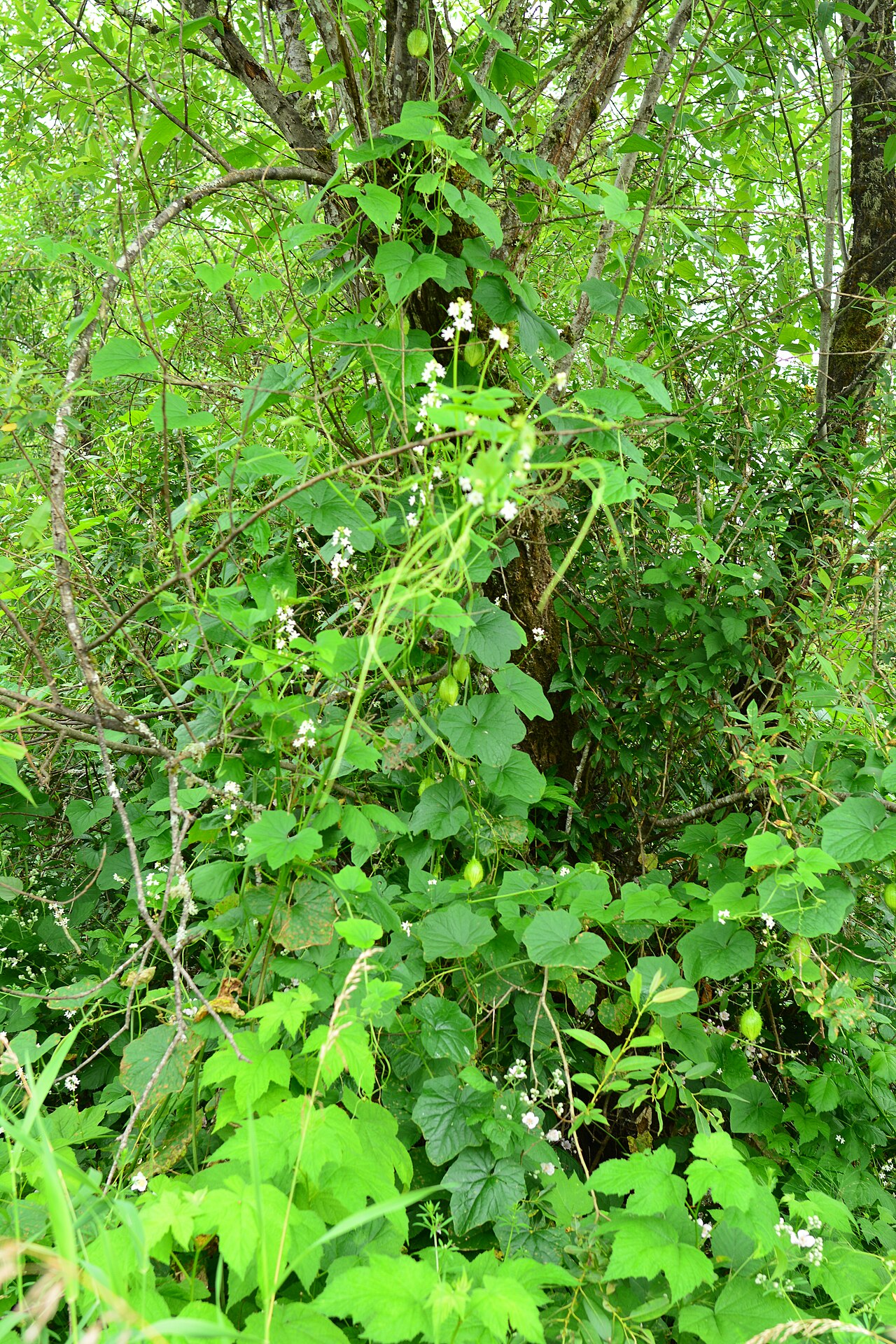
Marah oreganus, commonly known as Coastal Manroot, Oregon Manroot, or Bigroot, is a fast-growing native perennial vine of the Pacific Coast. It belongs to the Cucurbitaceae (gourd) family, the same family as cucumbers, squash, and melons, and its tendrilled stems and lobed leaves make that kinship obvious at a glance. The name “manroot” refers to its enormous, deeply buried tuberous root, which can weigh many pounds and persist underground for decades, sending up a fresh tangle of vines every spring.
Coastal Manroot is one of the very first native plants to leaf out each year, often appearing while other vegetation is still dormant. It scrambles rapidly over shrubs, fences, and low tree branches using coiling tendrils, producing small white star-shaped flowers in late winter and early spring, followed by distinctive round, spine-covered fruits. By midsummer the whole plant typically yellows and dies back to the ground, leaving only the hidden root to carry it through to the next growing season.
While it is sometimes confused with true wild cucumber (Echinocystis lobata) of the eastern and northern states, Coastal Manroot is a distinct West Coast species with its own look, timing, and ecological role. It is valued in native gardens for quick seasonal screening and for the early-season nectar it offers pollinators, but gardeners should know up front that its fruit and seeds are toxic and should never be eaten.
Identification
Coastal Manroot is a herbaceous perennial vine that dies back completely each summer, regrowing from its massive underground root (called a caudex) the following winter or early spring. A single plant can send out many stems, 10 to 20 feet long in a season, climbing by means of branched, coiling tendrils that emerge opposite the leaves.
Stems & Roots
The stems are light green, angled, and somewhat brittle, trailing along the ground or climbing into surrounding vegetation with the help of long, wiry tendrils. Below ground, the plant’s defining feature is its gigantic tuberous root — sometimes called a “manroot” for its size and vaguely humanlike lumpy shape. Roots of older plants can exceed 50 pounds and reach several feet into the soil, acting as a long-lived storage organ that re-sprouts year after year even if the top growth is grazed, mowed, or killed by frost.
Leaves
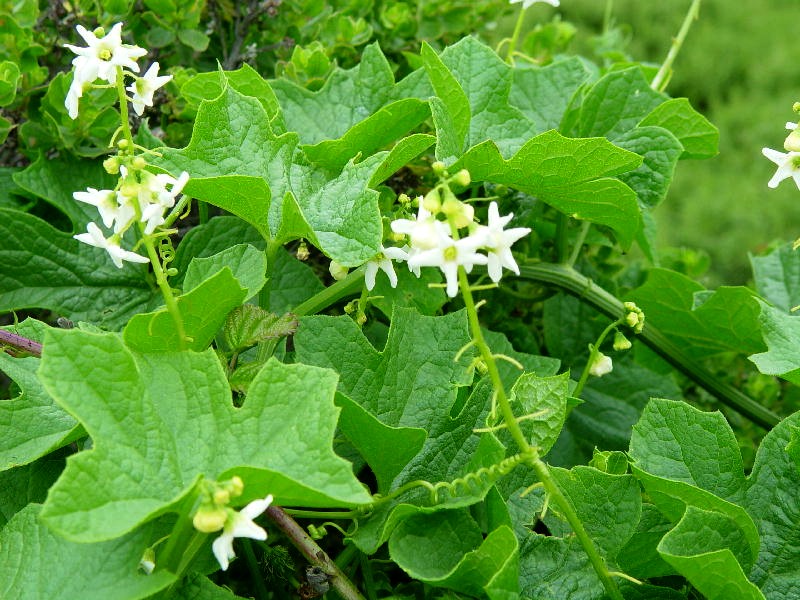
The leaves are alternate, palmately lobed with five to seven shallow to moderately deep lobes, and range from 2 to 6 inches across. They are rough and slightly hairy to the touch on both surfaces, medium green, and borne on long petioles. The overall shape recalls a maple or grape leaf, which combined with the tendrils gives the whole plant a vigorous, vine-like appearance even before flowering begins.
Flowers
Flowers appear from February through April, among the earliest blooms of the year on the West Coast. They are small, white to cream-colored, star-shaped with five pointed petals, and borne in loose clusters at the leaf axils. Male and female flowers are separate but occur on the same plant (the species is monoecious): male flowers are more numerous and borne in elongated clusters, while female flowers are solitary or nearly so and sit atop a small, spiny, swollen ovary that is visibly the beginning of the fruit.
Fruit & Seeds
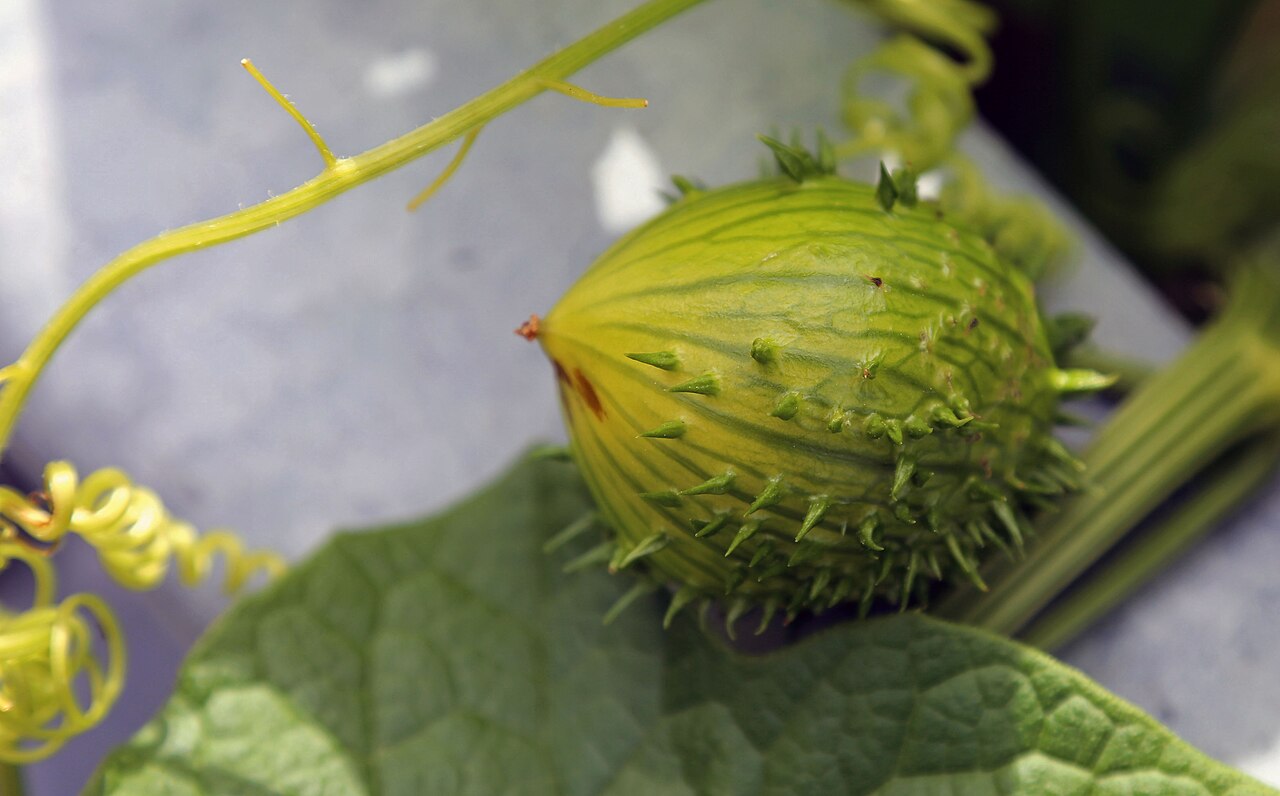
Caution: the fruit and seeds of Coastal Manroot are toxic and must not be eaten. The fruit is a round to oval capsule, roughly 1.5 to 2.5 inches long, covered in soft but noticeable spines, ripening from green to tan and eventually drying and splitting open to release its seeds. Each capsule holds a small number of large, hard, dark brown seeds. All parts of the fruit — flesh, pulp, and seeds — contain bitter, irritating compounds called cucurbitacins that can cause nausea, vomiting, and digestive upset if ingested, and the sap can irritate skin and eyes on contact. Keep an eye on children and pets in the garden while the capsules are present, and handle the dried, spiny pods with care when clearing dead vines.
Quick Facts
| Scientific Name | Marah oreganus |
| Family | Cucurbitaceae (Gourd) |
| Plant Type | Herbaceous Perennial Vine |
| Mature Height | Trailing/climbing, 10–20 ft of annual vine growth |
| Mature Spread | 10–20 ft per season |
| Growth Rate | Fast (seasonal die-back to a perennial root) |
| Sun Exposure | Full Sun to Part Shade |
| Water Needs | Low to Moderate |
| Soil Type | Well-drained; tolerates clay, loam, and rocky soils |
| Soil pH | 6.0–7.5 (neutral to slightly acidic) |
| Bloom Time | February – April |
| Flower Color | White to cream |
| Fall Color | Vine yellows and dies back by midsummer |
| Fruit | Spiny green-to-tan capsule; fruit and seeds toxic if eaten |
| Deer Resistant | Yes (bitter foliage generally avoided) |
| USDA Hardiness Zones | 7–10 |
Native Range
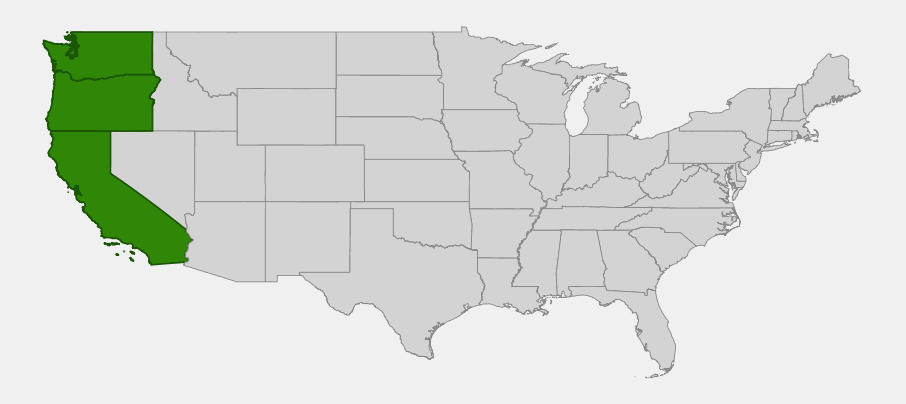
Coastal Manroot is native to the Pacific Coast of North America, found from southwestern British Columbia south through western Washington and western Oregon into California, where its range extends through the Coast Ranges and into the Sierra Nevada foothills and the Central Valley margins. It is fundamentally a lowland and foothill species of the maritime and Mediterranean-climate West Coast, rarely found far from the moderating influence of the Pacific Ocean.
Within this range, Coastal Manroot favors open, disturbed, or edge habitats rather than deep forest interiors: it is common along roadsides, in coastal scrub, oak woodland margins, chaparral, riparian thickets, and hedgerows, wherever it can find something — a shrub, fence, or low tree — to climb toward the light. It is conspicuously absent from the colder, drier interior regions east of the Cascades and Sierra Nevada, where winter cold and summer drought exceed what its shallow seasonal growth cycle can tolerate.
Because the species dies back completely each summer, it is easy to overlook outside its brief late-winter-to-spring growing season, and it is often mistaken at a glance for true wild cucumber (Echinocystis lobata), a related but distinct vine native to the eastern two-thirds of the continent, including parts of the northern and eastern United States and Canada. The two are not difficult to tell apart once in flower or fruit, but gardeners sourcing plants or seed should double-check which species a nursery is actually offering.
📋 Regional plant lists featuring Coastal Manroot: Western Oregon & Western Washington
Growing & Care Guide
Coastal Manroot is an easygoing, low-input vine once its unusual seasonal rhythm is understood: vigorous winter-to-spring growth, a quick flowering and fruiting display, and a full summer dormancy where the top growth disappears entirely. Gardeners who plant for this cycle rather than fight it get the most out of the species.
Light
Full sun to light part shade suits Coastal Manroot best. More sun generally means faster, denser growth and a fuller flower and fruit display; in shadier spots the vine still performs but stretches further to reach available light.
Soil & Water
This species is adapted to the winter-wet, summer-dry rhythm of the Mediterranean-climate West Coast. It prefers well-drained soil and tolerates clay, loam, and rocky ground equally well once established. Water needs are low to moderate: the plant does most of its growing during the rainy season and needs little to no supplemental water through its summer dormancy, when the top growth has died back anyway. Avoid heavy summer irrigation directly over the root crown, which can encourage rot in the dormant caudex.
Planting Tips
Coastal Manroot is most often grown from seed sown in fall, which mimics its natural germination cue after the first rains. Seeds have a hard coat and benefit from nicking or a period of cold-moist stratification. Give the root plenty of room — a mature caudex can become quite large — and plant it where the seasonal vine growth has something to climb, such as a fence, trellis, or sturdy shrub, and where the summer die-back won’t look out of place in the design.
Pruning & Maintenance
No pruning is needed during the growing season beyond guiding stems onto a support if desired. Once the vine yellows and dies back in summer, the dead top growth can be cut away and composted or left as mulch; wear gloves when handling the dried, spiny seed capsules. The root itself should be left undisturbed — it is the plant’s only means of regrowing each year.
Landscape Uses
Coastal Manroot is best suited to naturalistic and wildlife gardens rather than formal beds:
- Seasonal screening over fences, arbors, or unsightly structures from late winter through early summer
- Pollinator gardens — an early nectar source while little else is blooming
- Hedgerow and habitat plantings in coastal and foothill gardens
- Erosion control on banks and slopes within its native range, thanks to its deep perennial root
- Naturalized woodland-edge or chaparral-style gardens that embrace a summer-dormant look
Wildlife & Ecological Value
Despite its toxicity to people, Coastal Manroot plays a useful role for wildlife, especially as one of the earliest native plants to flower each year.
For Pollinators
The late-winter and early-spring flowers provide an early nectar and pollen source at a time when few other natives are blooming, benefiting native bees emerging from overwintering sites as well as early-season flies and small beetles.
For Birds
Dense tangles of vine provide cover and foraging structure for small songbirds during the growing season, and the twining stems offer nesting material and perching sites within shrub and hedgerow habitat.
For Mammals
The large tuberous root is reported to be eaten by some rodents and other burrowing mammals despite its bitterness, and the dense seasonal vine growth offers ground-level cover for small mammals moving through open or edge habitat.
Ecosystem Role
As one of the first plants to leaf out and flower each year along the West Coast, Coastal Manroot helps bridge the seasonal gap for early pollinators. Its long-lived underground root also allows it to persist through disturbance — fire, mowing, or grazing — re-sprouting reliably from a resource reserve that few annual or shallow-rooted plants can match.
Cultural & Historical Uses
Indigenous peoples of the Pacific Coast, including groups throughout California and the Pacific Northwest, were well aware of Coastal Manroot’s large tuberous root and its bitter, cucurbitacin-rich chemistry. Historical accounts describe the crushed root being used as a fish stupefacient — added to still pools of water, where its compounds temporarily stunned fish and made them easier to catch by hand — a practice recorded among several California tribes.
The plant’s bitterness and toxicity meant it was approached with respect rather than eaten; historical ethnobotanical sources describe external and ceremonial uses of root material in some communities, but these are documented as historical practices rather than guidance for modern use, and the plant should not be considered a food or home remedy today.
In modern times, Coastal Manroot’s main cultural role is as a familiar, fast-growing harbinger of spring along West Coast trails and roadsides, where hikers and naturalists come to recognize its star-shaped flowers and spiny fruit as one of the first signs that the growing season has begun.
Frequently Asked Questions
Is Coastal Manroot the same plant as wild cucumber?
Not exactly. “Wild cucumber” is a common name used loosely for several related vines. Coastal Manroot (Marah oreganus) is a distinct West Coast species, while the plant more specifically called “Wild Cucumber” on this site, Echinocystis lobata, is native to the eastern and northern parts of the continent. They are relatives in the same family but are different species with different native ranges.
Can you eat Coastal Manroot fruit or seeds?
No. The fruit, pulp, and seeds are toxic, containing bitter cucurbitacin compounds that cause nausea and digestive upset if ingested. Keep children and pets away from the ripening capsules and handle dead vines with gloves.
Why does Coastal Manroot disappear in summer?
It is adapted to the Mediterranean climate of the West Coast, growing rapidly during the cool, wet winter and spring, then dying back to its large underground root as the dry season sets in. The root survives underground and sends up new vines the following winter.
Will Coastal Manroot take over my garden?
Its vines grow quickly and can cover a fence or shrub in a single season, but because it dies back completely each summer it is not a persistent, year-round problem the way some aggressive vines are. Its spread is mostly limited by where its large root is established.
Is Coastal Manroot deer resistant?
Generally yes — the bitter, cucurbitacin-containing foliage is not a preferred browse for deer, which makes it a reasonably reliable choice in gardens with deer pressure.

Looking for a nursery that carries Coastal Manroot?
Browse our native plant nursery directory: California · Oregon · Washington