
Sticky Monkeyflower (Diplacus aurantiacus)
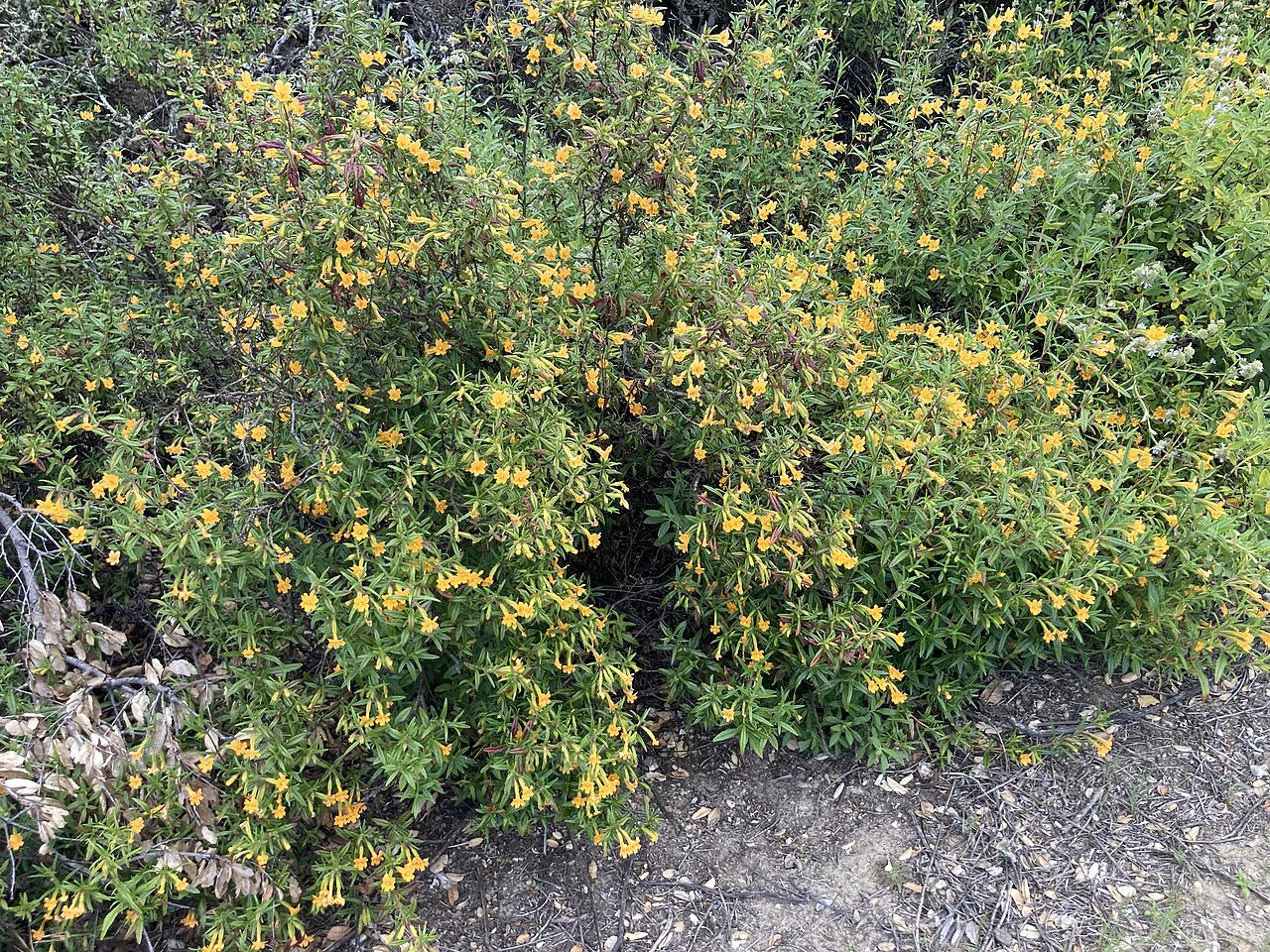
Diplacus aurantiacus — long known as Mimulus aurantiacus before recent taxonomic revision moved most West Coast monkeyflowers into the genus Diplacus — is the Sticky Monkeyflower, a small, resinous evergreen shrub found throughout the chaparral, coastal scrub, and open woodlands of California and southern Oregon. It is also widely sold and known in nurseries as Bush Monkeyflower, a name that highlights its woody, shrubby habit compared to the herbaceous monkeyflowers in genera like Erythranthe and Mimulus.
The “sticky” in its common name comes from the fine glandular hairs covering its leaves and stems, which exude a faintly resinous, slightly tacky coating — a drought adaptation that reduces water loss and deters browsing. From spring into summer (and sometimes year-round near the coast), the shrub produces a long, generous succession of tubular, trumpet-shaped flowers in shades ranging from pale cream and apricot to deep orange and brick red, depending on the population and cultivar.
Sticky Monkeyflower is one of the most reliable, low-water shrubs available to California and southern Oregon gardeners. It tolerates poor, rocky soil, needs little to no summer irrigation once established, and rewards that neglect with months of flowers that hummingbirds visit eagerly. It is a foundational plant for dry native gardens, slope plantings, and habitat restoration work throughout its range.
Identification
Sticky Monkeyflower is a woody, mounding to sprawling evergreen shrub or subshrub, typically 2 to 4 feet tall and similarly wide, though it can reach larger size in favorable sites.
Stems
Young stems are green, square-ish, and covered in sticky glandular hairs; older stems develop thin, shreddy, grayish-brown bark. Growth is often loose and somewhat leggy, especially in shadier sites, giving the shrub an informal, billowy form.
Leaves
Leaves are opposite, narrow and lance-shaped to elliptic, 1 to 3 inches long, with margins that are entire to shallowly toothed and often rolled under along the edges. The leaf surface has a glossy, slightly tacky feel from resinous hairs, and foliage is dark green on top with a paler underside. In the driest sites or during drought stress, the shrub may drop some leaves to conserve moisture, a normal response rather than a sign of poor health.
Flowers
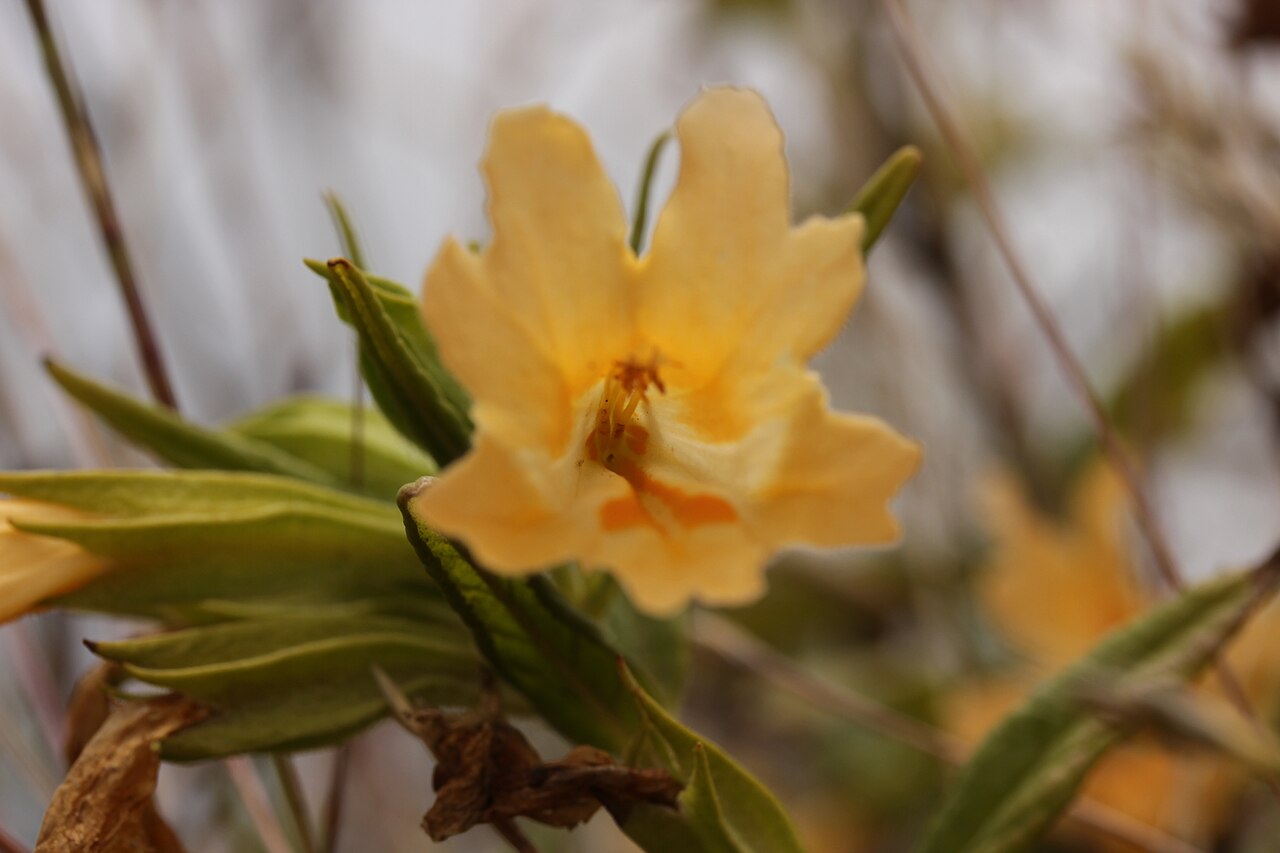
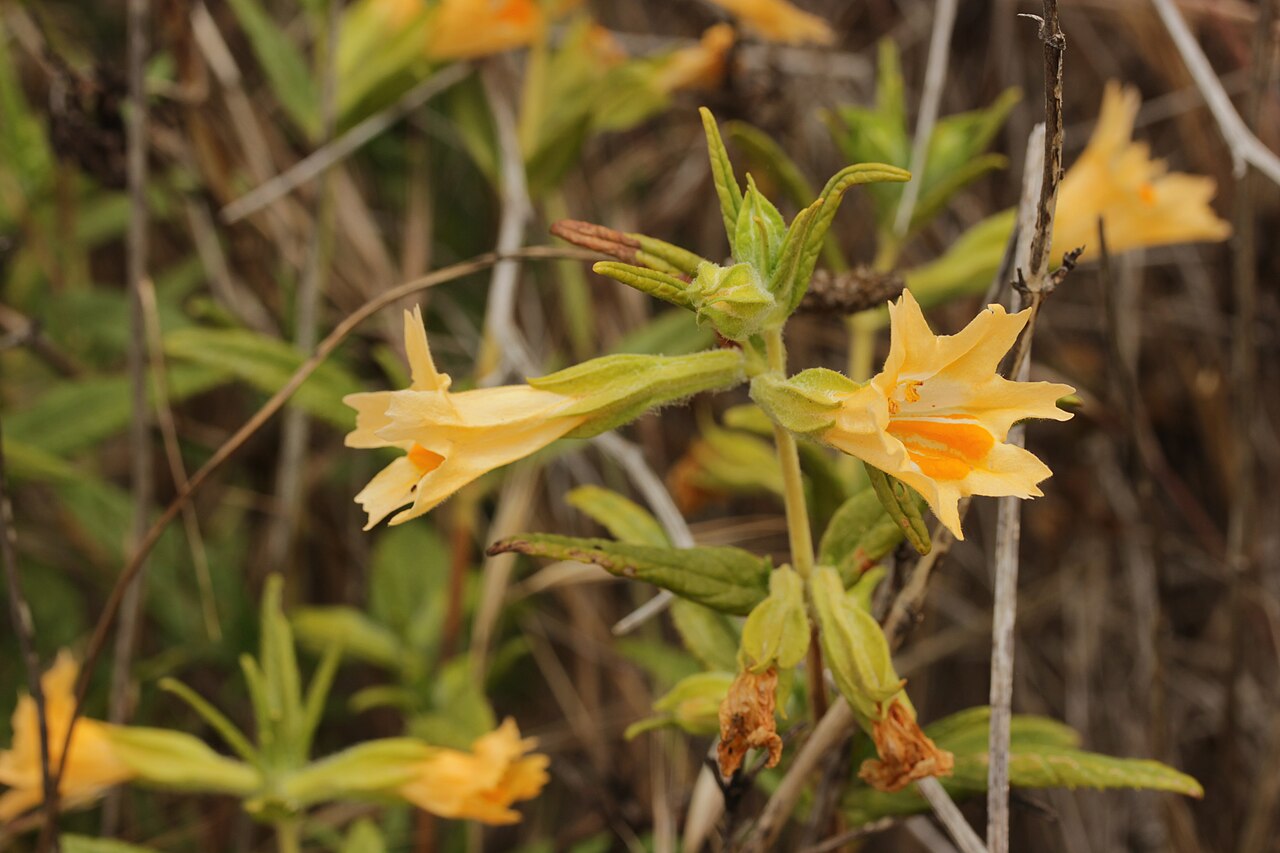
Flowers are borne singly or in pairs from the leaf axils on short stalks, each 1 to 2 inches long. The corolla is tubular at the base, flaring into five broad, slightly ruffled lobes in a bilaterally symmetrical, snapdragon-like face. Color varies widely across the species’ range from pale yellow and cream through apricot, salmon, and orange to dark red, with a deeper orange or maroon throat in many forms. Bloom is heaviest from March through July but can continue sporadically through the year in mild coastal climates.
Fruit & Seeds
After flowering, each bloom is followed by a narrow, two-chambered capsule that dries and splits to release numerous tiny seeds. Seed capsules persist on the shrub after the petals drop, giving plants a slightly untidy look toward the end of the bloom period — a cue that light grooming, not alarm, is in order.
Quick Facts
| Scientific Name | Diplacus aurantiacus (syn. Mimulus aurantiacus) |
| Family | Phrymaceae (Figwort/Lopseed) |
| Plant Type | Evergreen Shrub / Subshrub |
| Mature Height | 2–4 ft |
| Mature Spread | 2–4 ft |
| Growth Rate | Fast |
| Sun Exposure | Full Sun to Part Shade |
| Water Needs | Low; little to no summer irrigation once established |
| Soil Type | Well-drained; tolerates rocky, poor or clay soils |
| Soil pH | 6.0–7.5 (slightly acidic to neutral) |
| Bloom Time | March – July, sporadically year-round near the coast |
| Flower Color | Cream, apricot, orange, or red |
| Fall Color | None; evergreen |
| Fruit | Small dry seed capsule |
| Deer Resistant | Good (sticky foliage is rarely browsed) |
| USDA Hardiness Zones | 8–10 |
Native Range
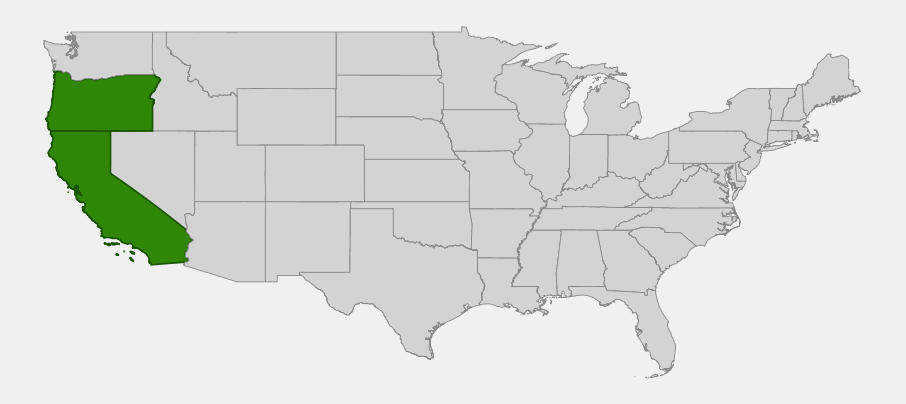
Sticky Monkeyflower is native along the Pacific Coast from southwestern Oregon south through nearly all of California, from the coastal fog belt inland through the chaparral and foothill woodlands to the edge of the deserts. Within this range it is one of the most widespread and variable shrubs in the chaparral and coastal scrub plant communities, with distinct regional forms that have at times been treated as separate subspecies.
It grows on dry, rocky slopes, in chaparral, coastal sage scrub, and the understory and edges of oak woodlands and mixed evergreen forest, generally below about 5,000 feet elevation. It is a classic component of the fire-adapted shrublands of California, often among the first shrubs to resprout or germinate from seed after a chaparral fire.
Sticky Monkeyflower is not native east of the Sierra Nevada–Cascade crest or outside the Pacific Coast states; gardeners in the Great Basin, Rocky Mountain states, or anywhere outside California and southwestern Oregon should treat it strictly as a warm, dry-climate garden plant rather than a regional native.
📋 Regional plant lists featuring Sticky Monkeyflower: Western Oregon & Western Washington
Growing & Care Guide
Few native shrubs reward so little effort with so much bloom. Sticky Monkeyflower is tough, fast-growing, and forgiving — the main mistake gardeners make is giving it too much water.
Light
Full sun produces the densest, most compact growth and the heaviest bloom, especially near the coast where fog moderates summer heat. In hot inland gardens, light afternoon shade helps keep foliage from scorching and extends the bloom period. The shrub also tolerates part shade under open oak canopies, though it will be looser and bloom somewhat less.
Soil & Water
Sticky Monkeyflower thrives in lean, well-drained soil, including rocky or clay sites that would challenge many garden shrubs, and it actively dislikes rich, regularly irrigated beds. Once established (after the first one to two summers), it needs little to no supplemental water in most California climates; occasional deep watering during extended drought will keep it looking its best, but overwatering, especially in summer, is the most common cause of root rot and early decline.
Planting Tips
Plant from container stock in fall so roots can establish during the cool, wet season before the first dry summer. Space plants 3 to 4 feet apart for a filled-in hedge or massed planting, or further apart for individual specimens. Good drainage is essential — avoid low spots where water collects.
Pruning & Maintenance
Light shearing or tip-pinching after the main bloom flush encourages denser growth and a tidier form, and removing spent flower stalks can prolong flowering. Many gardeners cut plants back by about a third in late summer or early fall to refresh leggy growth; avoid hard pruning into bare wood, which the shrub may not recover from. Plants are often relatively short-lived (5–10 years) and benefit from occasional replacement or renewal pruning.
Propagation
Propagate easily from softwood cuttings taken in spring or fall, which root readily in a well-drained mix. Seed can also be sown in fall, though cuttings are the more reliable way to preserve a particular flower color.
Landscape Uses
- Dry slope and erosion-control plantings on hillsides
- Low-water foundation or border shrub in California gardens
- Hummingbird gardens — long bloom season draws regular visits
- Chaparral and coastal scrub restoration projects
- Mixed native shrub borders with other chaparral species
- Fire-wise landscaping when kept well-groomed and irrigated minimally during fire season
Wildlife & Ecological Value
Sticky Monkeyflower is a workhorse for pollinators and a familiar sight to anyone who spends time in California’s wildlands, where its long bloom season bridges the gap between the big spring wildflower show and the dry summer months.
For Pollinators
The tubular flowers are visited heavily by bumblebees, carpenter bees, and other native bees, which enter the corolla for nectar and pollen. The flower’s touch-sensitive stigma — which closes briefly after being touched by a pollinator — is a well-known teaching example of plant movement and helps reduce self-pollination.
For Birds
Hummingbirds, including Anna’s and Allen’s hummingbirds, are frequent visitors to the nectar-rich flowers, and the shrub’s long bloom season makes it a reliable food source across much of the year in milder coastal gardens. Small songbirds also use the dense branching structure for cover and nesting.
For Mammals
The sticky, resinous foliage is unpalatable to deer and most browsing mammals, making this one of the more reliably deer-resistant native shrubs for California gardens.
Ecosystem Role
As a fire-following shrub, Sticky Monkeyflower helps stabilize burned chaparral slopes and is often among the first woody plants to resprout or germinate after fire, providing early cover and forage while slower-growing shrubs reestablish. Its deep, fibrous roots also help hold soil on the steep slopes where it often grows.
Cultural & Historical Uses
Sticky Monkeyflower has a documented history of use among California Indigenous peoples, who applied preparations of the leaves topically for minor skin irritations and used the plant in various traditional remedies; these uses are part of the historical ethnobotanical record and are not a recommendation for home treatment.
The genus name Mimulus, under which this species was long classified, comes from the Latin for “little actor,” a reference to the flower’s face-like appearance; recent molecular studies led taxonomists to split most West Coast shrubby monkeyflowers into the genus Diplacus, a name with a longer history that predates Mimulus itself. Many nurseries, older field guides, and regional plant lists still use Mimulus aurantiacus, and both names refer to the same plant.
Today the species is primarily valued horticulturally. Its reliability in dry gardens and long bloom season have made it one of the most widely sold native shrubs in California nurseries, and plant breeders have selected numerous color forms and hybrids with related Diplacus species for the nursery trade.
Frequently Asked Questions
Is Sticky Monkeyflower the same plant as Bush Monkeyflower?
Yes. Bush Monkeyflower and Sticky Monkeyflower are both common names for Diplacus aurantiacus (formerly Mimulus aurantiacus). “Bush” emphasizes its woody, shrubby habit, while “sticky” refers to the resinous feel of its leaves.
Why did the scientific name change from Mimulus to Diplacus?
Genetic studies in the early 2010s showed that the shrubby, woody-stemmed West Coast monkeyflowers were not closely related to the herbaceous Mimulus species they had traditionally been grouped with. Botanists moved them into Diplacus, an older genus name, to better reflect their evolutionary relationships. Both Diplacus aurantiacus and Mimulus aurantiacus refer to the same species.
How much water does Sticky Monkeyflower need?
Very little once established. In most California climates, no supplemental summer water is needed after the first one to two years; occasional deep watering during severe drought is beneficial, but regular irrigation, especially in summer, often shortens the plant’s life.
Does Sticky Monkeyflower attract hummingbirds?
Yes, reliably. Its tubular, nectar-rich flowers and long bloom season make it one of the more dependable hummingbird plants for California native gardens.
Why does my Sticky Monkeyflower look leggy or sparse?
This is often a sign of too much shade, too much water, or simply the plant’s natural tendency to sprawl with age. Light shearing after bloom and well-drained, lean soil both help keep plants compact; very old or overwatered plants may need hard renewal pruning or replacement.

Looking for a nursery that carries Sticky Monkeyflower?
Browse our native plant nursery directory: California · Oregon