
Tan Oak (Notholithocarpus densiflorus)
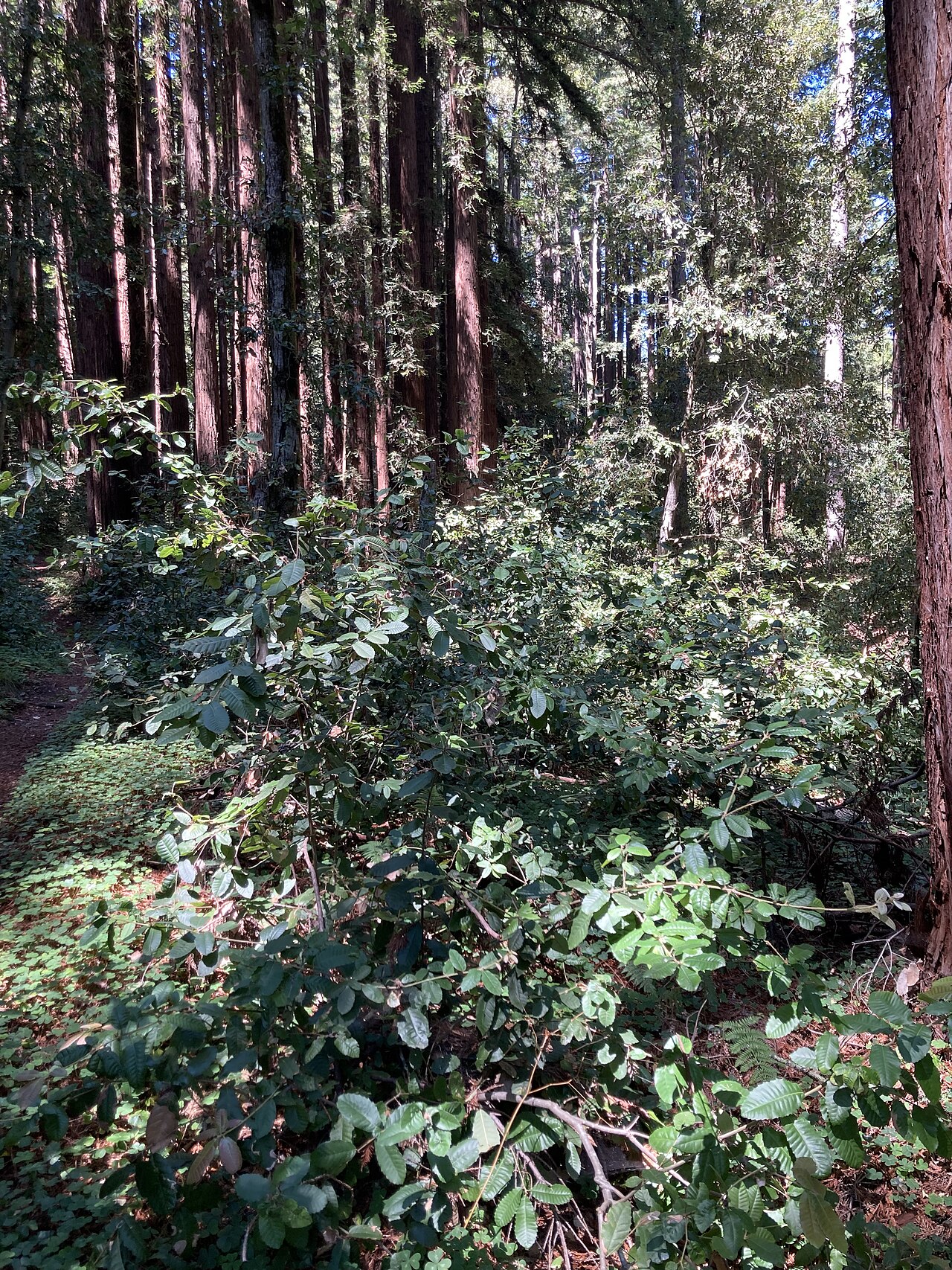
Notholithocarpus densiflorus, commonly known as Tan Oak or Tanoak, is a broadleaf evergreen tree native to the coastal fog belt of California and southwestern Oregon. Despite its common name and oak-like acorns, it is not a true oak (genus Quercus) — it was reclassified into its own genus, Notholithocarpus, in 2008, making it the only member of that genus and the only chestnut-tanoak relative native to western North America. For more than a century it was known as Lithocarpus densiflorus, and that name still turns up in older field guides and nursery lists.
Tan Oak is a foundational tree of the coastal redwood and mixed-evergreen forests it grows in, producing some of the most abundant acorn crops of any California oak relative and supporting deer, bears, squirrels, jays, and woodpeckers through the fall and winter. It was also one of the most important acorn sources for Indigenous peoples of northern California and southwestern Oregon. Since the mid-1990s, however, Tan Oak has been devastated across much of its range by sudden oak death, a lethal disease that any honest discussion of this species has to address directly.
Identification
Tan Oak is variable in form — in open sun it grows as a single-trunked tree 60 to 100 feet tall (occasionally more in old growth), while in shaded understory, on poor soils, or after repeated fire and resprouting, it often persists as a many-stemmed shrub only 10 to 20 feet tall. This flexibility is part of what makes it such a persistent component of California’s coastal forests.
Leaves
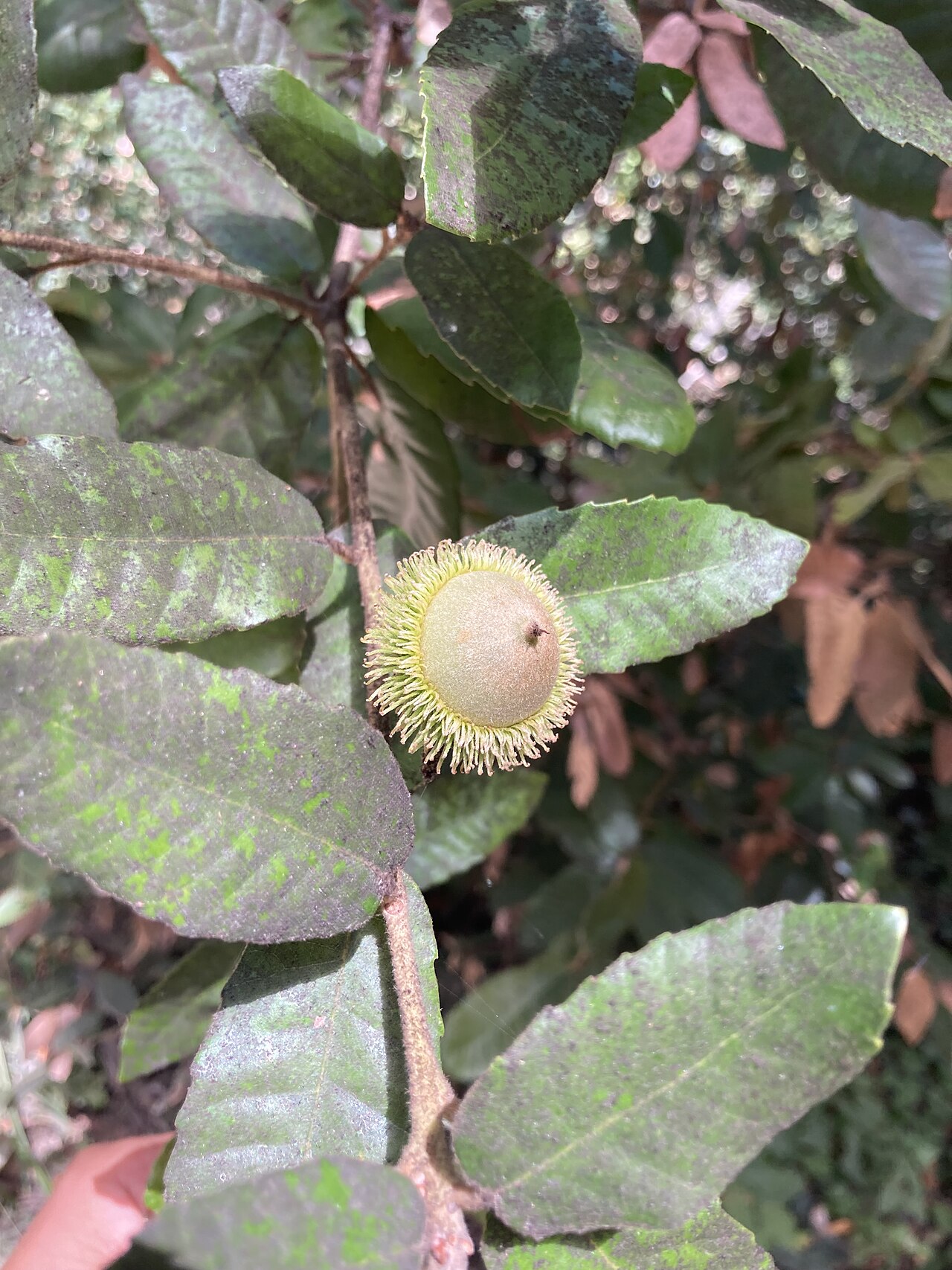
Leaves are evergreen, leathery, and oblong to elliptical, 2 to 5 inches long, with coarsely toothed margins and a dense covering of rusty-brown hairs on the underside when young that often persists along the veins at maturity. The upper surface is a dull, somewhat dusty green. The strong, straight, parallel side veins give the leaf a distinctly ribbed look, and the overall texture is noticeably stiffer and tougher than true oak leaves.
Bark
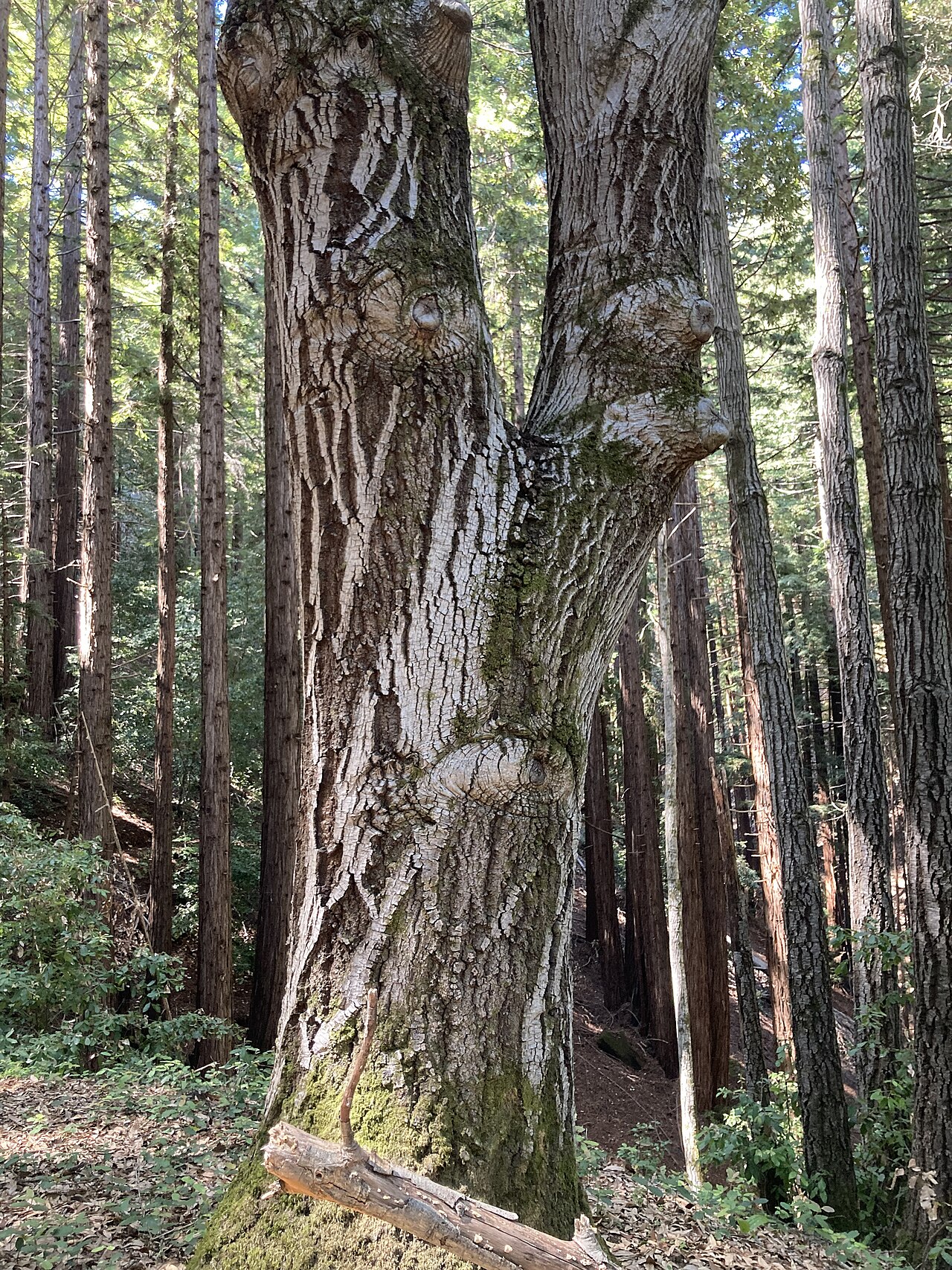
On young trees the bark is smooth and gray-brown; with age it thickens into furrowed, flat-ridged gray-brown bark that can resemble chestnut bark more than oak bark. Older trunks develop a rugged, knobby character, especially where branches have broken off or burl growths have formed.
Flowers & Acorns
Tan Oak blooms in summer, later than true oaks, with upright, fuzzy, cream-colored catkins that carry a notably strong, somewhat unpleasant scent. The acorns are the most distinctive identification feature: unlike the flat, scaly cups of true oaks, Tan Oak’s acorn cap is covered in stiff, spreading, hairy or bristly scales that give it a shaggy, fringed look, closer to a chestnut bur than a typical acorn cup. Acorns take about 18 months to mature and are relatively large, up to an inch long, with a thick, bitter, tannin-rich shell.
Quick Facts
| Scientific Name | Notholithocarpus densiflorus (syn. Lithocarpus densiflorus) |
| Family | Fagaceae (Beech/Oak) |
| Plant Type | Evergreen Tree / Large Shrub |
| Mature Height | 20–100 ft, shrubbier in shade or poor soil |
| Growth Rate | Slow to moderate |
| Sun Exposure | Part Shade to Shade (tolerates more sun near the coast) |
| Water Needs | Moderate; relies partly on coastal fog drip |
| Soil Type | Well-drained forest soils, rocky or loamy |
| Bloom Time | June – August |
| Flower Color | Creamy white (catkins) |
| Fruit | Acorns with shaggy, bristled caps, maturing over 18 months |
| Disease Risk | Highly susceptible to sudden oak death |
| USDA Hardiness Zones | 7–9 |
Native Range
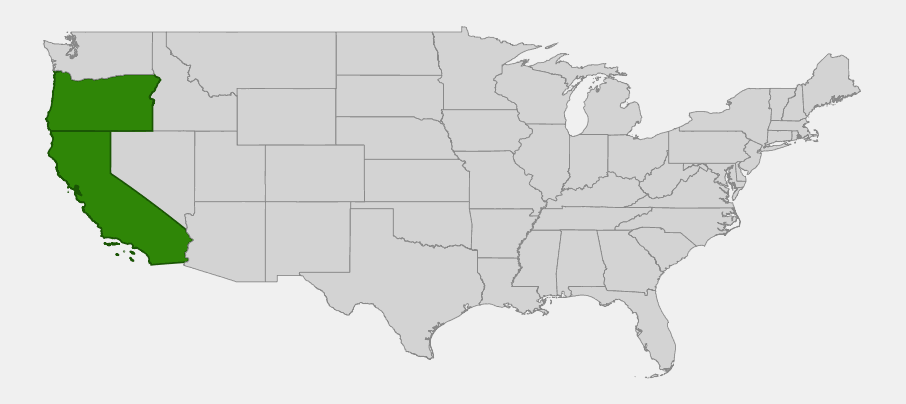
Tan Oak is native to a narrow coastal strip of California and southwestern Oregon, generally within reach of summer fog — from the Oregon Coast Range (Curry, Josephine, and Douglas counties) south through the Klamath Mountains and the California Coast Ranges to the Santa Lucia Mountains and Big Sur area, roughly as far south as Santa Barbara County, with a disjunct population in the central Sierra Nevada foothills. It is not native anywhere else; Tan Oak sold outside this coastal range is a planted ornamental, not a wild native.
It grows from near sea level to around 5,000 feet in the mountains, most commonly as a component of mixed-evergreen and redwood forests, often alongside coast redwood, Douglas-fir, California bay laurel, and madrone. On drier, more open sites it can form nearly pure Tan Oak woodlands or dense shrubby thickets after fire or logging, since it resprouts vigorously from the root crown.
📋 Regional plant lists featuring Tan Oak: Western Oregon & Western Washington
Growing & Care Guide
Tan Oak is best suited to coastal gardens within or near its historic fog-belt range. It is not a tree for hot, dry inland sites, and given the risk of sudden oak death described below, most home gardeners are better off supporting conservation of existing wild stands than planting new ones in high-risk areas — but where appropriate, it is a slow, dignified addition to a shaded native woodland garden.
Light
Tan Oak tolerates shade better than most California oaks and often thrives as an understory tree beneath redwoods and firs. Near the immediate coast, where fog keeps conditions cool and moist, it also does well in more open, sunnier sites. Inland or in drier gardens, part shade is safer.
Soil & Water
It prefers well-drained forest soils — loamy or rocky — and benefits from the extra moisture that coastal summer fog drip provides. Established trees are reasonably drought-tolerant once their roots are deep, but young plants need consistent moisture through their first few dry seasons. Good drainage is important, since the pathogen responsible for sudden oak death spreads more readily in consistently wet, poorly drained soil.
Planting Tips
Plant container-grown Tan Oak in fall so winter rains can help it establish. Give it room; even “shrub form” Tan Oak can spread into a broad multi-stemmed thicket over time. Because of sudden oak death, avoid moving soil, plant material, or unwashed tools between Tan Oak stands and other oak woodlands, and buy only from reputable native plant nurseries, not wild-collected stock.
Pruning & Maintenance
Tan Oak needs little pruning beyond removing dead or damaged wood. It resprouts vigorously from cut stumps and root crowns, which is useful for coppicing but means it can be hard to remove where unwanted. Avoid wounding the bark or major roots, since fresh wounds are an entry point for disease.
Sudden Oak Death
Tan Oak is one of the species hit hardest by sudden oak death, caused by the water mold Phytophthora ramorum, first identified killing California oaks and tanoaks in the mid-1990s. Infected trees develop bleeding cankers on the trunk and can die within weeks to a few years; Tan Oak, unlike many true oaks, is also a strong “sporulating” host, meaning infected leaves and twigs help spread the pathogen to other trees nearby. The disease has killed millions of Tan Oaks along the California and southern Oregon coast and continues to spread. There is no cure once a tree is infected; management focuses on sanitation (cleaning tools, boots, and vehicle tires between infected and uninfected areas), removing infected material, and in some areas, regulated quarantines on moving Tan Oak wood, nursery stock, and firewood. Anyone gardening with or near Tan Oak in an affected county should check current state agriculture department guidance before moving plant material.
Wildlife & Ecological Value
Tan Oak is one of the most productive acorn producers in California’s coastal forests, and its loss to sudden oak death has measurable ripple effects on wildlife that depend on fall mast crops.
For Mammals
Black-tailed deer, black bears, gray squirrels, and woodrats all rely heavily on Tan Oak acorns in fall and winter. Acorn woodpeckers cache Tan Oak acorns by the hundreds in “granary trees,” and the decline of Tan Oak in some areas has forced them to rely more on other, less reliable mast species.
For Birds
Beyond acorn woodpeckers, Steller’s jays and scrub-jays feed on and disperse the acorns, band-tailed pigeons browse the foliage and buds, and the dense evergreen canopy provides cover and nesting habitat year-round.
Ecosystem Role
As a dominant or co-dominant tree in mixed-evergreen forest, Tan Oak contributes heavily to leaf litter and soil structure, and its mycorrhizal partnerships support the broader forest fungal community. Large-scale Tan Oak die-off from sudden oak death has been shown to increase fuel loads from standing dead wood and shift forest composition toward other species, with knock-on effects for fire behavior and the many animals that depended on Tan Oak mast.
Cultural & Historical Uses
Tan Oak acorns were historically one of the most important food sources for Indigenous peoples across northern California and southwestern Oregon, including the Yurok, Karuk, Hupa, Pomo, and other nations, who prized them for their relatively large size and good storage qualities. Like all oak acorns, raw Tan Oak acorns are high in bitter tannins and were not eaten without processing: traditional preparation involved shelling, drying, and grinding the acorns into meal, then leaching the meal repeatedly with water — often in sand basins near a stream — to remove the bitterness before it was cooked into soup, mush, or bread. Acorn gathering and processing were, and in many communities remain, significant seasonal and cultural activities, tied to specific family-held gathering groves that were tended and returned to year after year. This is history, not a foraging recommendation; the bark’s name comes from its historic use in tanning leather, as Tan Oak bark is exceptionally rich in tannins, and 19th-century tanneries in California harvested it commercially before synthetic tannins made the practice obsolete.
Frequently Asked Questions
Is Tan Oak a true oak?
No. Despite the name and its oak-like acorns, Tan Oak belongs to its own genus, Notholithocarpus, separate from true oaks (Quercus). It is more closely related to the tanoaks and chinquapins of Asia than to California’s live oaks and white oaks.
What is killing Tan Oak trees in California?
Sudden oak death, caused by the pathogen Phytophthora ramorum, has killed large numbers of Tan Oaks since the mid-1990s. Tan Oak is especially vulnerable and also spreads the disease efficiently to nearby trees, which is part of why it has been hit so hard.
Can you eat Tan Oak acorns?
Historically, yes — after extensive processing to leach out bitter tannins, Tan Oak acorns were a staple food for Indigenous peoples in the region. Raw acorns are unpalatably bitter and not something to eat without that traditional preparation.
Is Tan Oak native to my state if I live outside California or Oregon?
No. Tan Oak’s natural range is limited to the coastal fog belt of California and southwestern Oregon. Trees grown elsewhere are planted ornamentals, not part of the native range.
Is Tan Oak a good tree for a home garden?
Only in appropriate coastal, fog-influenced sites within or near its native range, and with awareness of sudden oak death risk and sanitation practices. It is a slow-growing, long-term planting better suited to woodland restoration than a typical ornamental yard tree.

Looking for a nursery that carries Tan Oak?
Browse our native plant nursery directory: California · Oregon