
Oconee Azalea (Rhododendron flammeum)
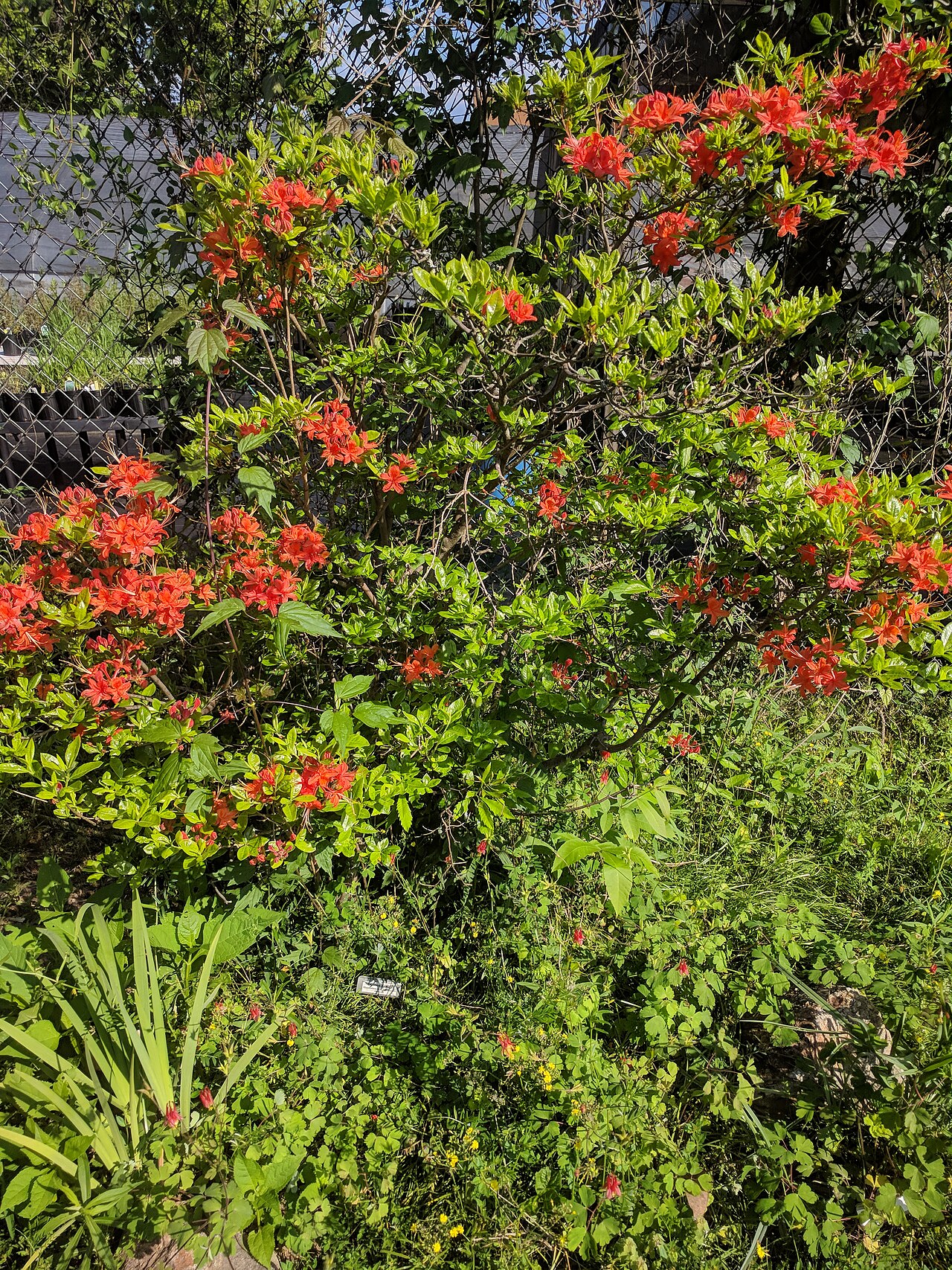
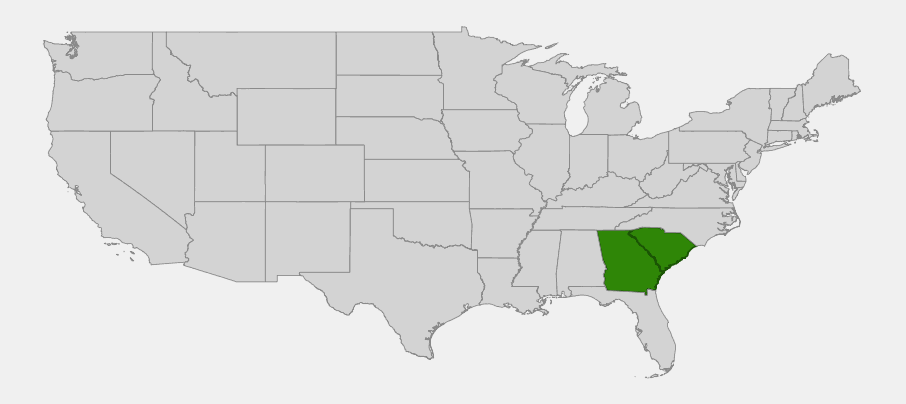
Rhododendron flammeum, commonly called the Oconee azalea or Piedmont azalea, is one of the showiest native deciduous azaleas of the Southeast, found wild only in Georgia and South Carolina. Its name comes from Oconee County, South Carolina, near the heart of its small native range, and its species epithet flammeum — “flame-colored” — describes the vivid orange, red or occasionally yellow flowers that blanket the shrub in early spring before the leaves fully expand.
This member of the Ericaceae (heath family) grows as a multi-stemmed deciduous shrub to about 8 feet tall, favoring dry upland woods, rocky bluffs and open pine-oak slopes across the western Piedmont and lower mountains of its two-state range. Unlike many native azaleas that prefer consistently moist ground, Oconee azalea is notably drought-tolerant once established, thriving on drier, well-drained sites where few other azaleas compete.
Every part of Oconee azalea — flowers, leaves, stems, nectar and pollen — contains grayanotoxins and is toxic if eaten by people, pets or livestock. It is grown strictly as an ornamental landscape shrub, never as a food or medicinal plant, and should be sited away from grazing animals and kept out of reach of small children who might sample the flowers.
Identification
Oconee azalea is a deciduous, multi-stemmed shrub typically reaching 4 to 8 feet tall and nearly as wide, with an upright-spreading, somewhat open branching habit. It is distinguished from other southeastern native azaleas chiefly by its bloom color, bloom timing (among the earliest) and the fact that flowers usually open well before or just as the leaves emerge.
Bark & Stems
Young stems are slender, flexible and finely hairy, aging to smooth gray-brown bark on older wood. The plant typically produces several stems from the base rather than a single trunk, giving mature specimens a rounded, thicket-forming silhouette.
Leaves
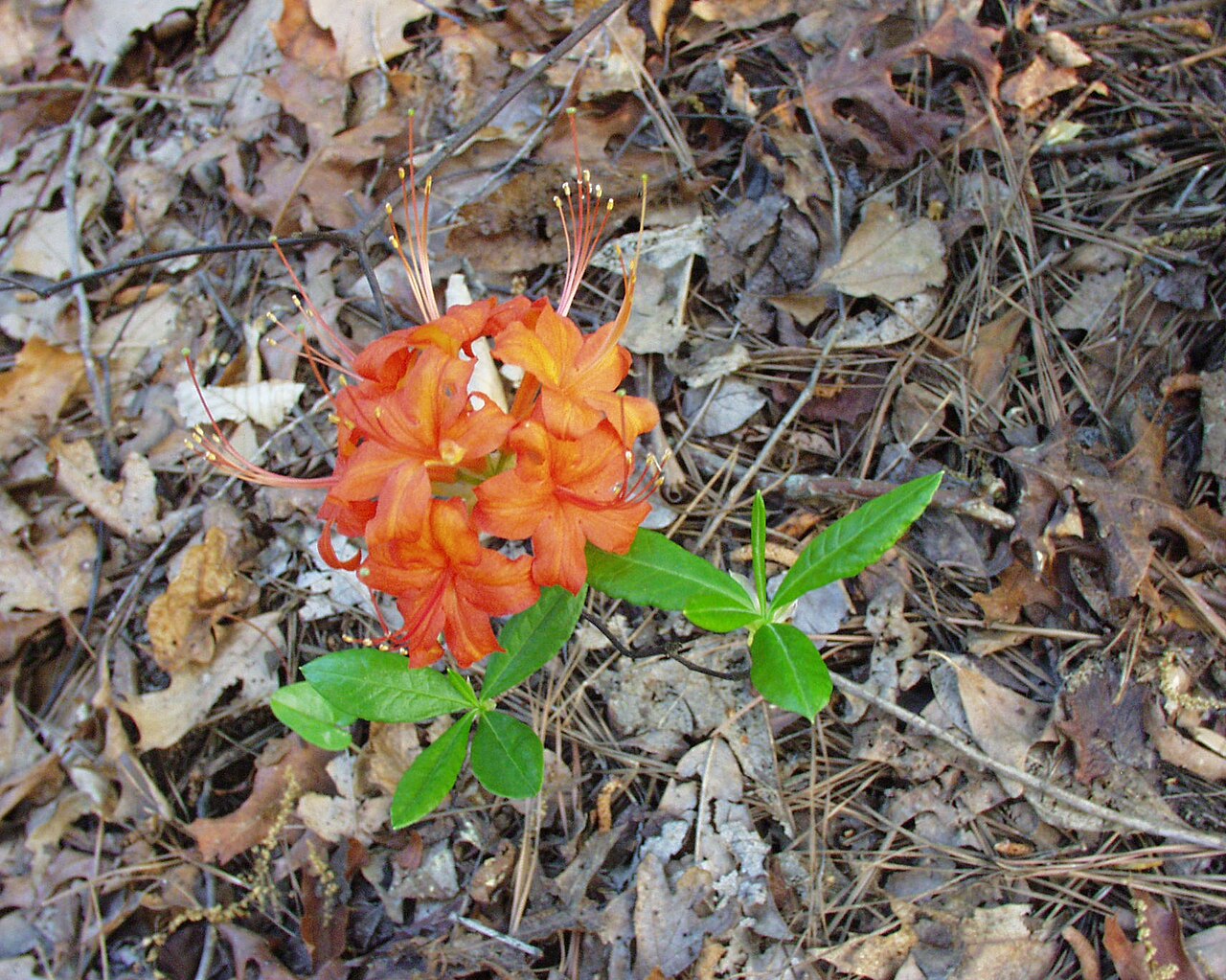
Leaves are thin, elliptic to oval, up to about 3.5 inches long, with smooth (untoothed) margins and a somewhat dull green surface. They emerge in spring, often just after flowering begins, and the deciduous foliage drops in fall without reliable fall color.
Flowers
The funnel-shaped flowers, up to 2 inches long, open in dense clusters of up to a dozen blooms per truss in early to mid-spring, ahead of most other native azaleas. Color ranges from bright orange-red to flame-red, with some populations showing yellow or salmon tones and a darker blotch on the upper lobe. The flowers are unscented or only lightly fragrant, which sets this species apart from the strongly fragrant swamp and Piedmont azaleas that bloom later in the season.
Fruit & Seeds
After flowering, Oconee azalea produces small, dry, woody seed capsules that split open in late summer to release tiny seeds dispersed by wind. The capsules are not fleshy or fruit-like and hold no food value.
Quick Facts
| Scientific Name | Rhododendron flammeum |
| Family | Ericaceae (Heath) |
| Plant Type | Deciduous shrub |
| Mature Height | 4–8 ft |
| Mature Spread | 4–6 ft |
| Growth Rate | Slow to moderate |
| Sun Exposure | Full sun to part shade |
| Water Needs | Low to moderate once established |
| Soil Type | Well-drained, sandy or rocky loam |
| Soil pH | 5.0–6.0 (acidic) |
| Bloom Time | March – April |
| Flower Color | Orange-red to flame-red, occasionally yellow |
| Fall Color | Undistinguished green to yellow-green |
| Fruit | Dry woody seed capsule (not edible) |
| Deer Resistant | Yes; toxic foliage is rarely browsed |
| USDA Hardiness Zones | 6–8 |
Native Range
Oconee azalea has one of the smallest native ranges of any southeastern deciduous azalea, found wild only in the western Piedmont and adjacent lower mountains of Georgia and South Carolina. Within that narrow range it is also locally distributed rather than common everywhere, occurring in scattered populations tied to specific dry, well-drained upland sites.
It grows in dry oak-pine woods, rocky bluffs above streams, and open, well-drained slopes at elevations generally under 1,600 feet. It tolerates considerably drier conditions than swamp azalea or other moisture-loving relatives, and is often found on thin, rocky or sandy soils where competing vegetation is sparser.
Because of its restricted range, Oconee azalea is considered a regional conservation priority in parts of its native territory, and wild populations can be locally vulnerable to development and habitat loss. Gardeners in and near its native range can support the species by choosing nursery-propagated plants rather than wild-collected material.
📋 Regional plant lists featuring Oconee Azalea: North Carolina & South Carolina · Georgia, Alabama & Mississippi
Growing & Care Guide
Oconee azalea rewards gardeners who can give it good drainage and a bit of patience. It is less fussy about constant moisture than many native azaleas, making it a good choice for drier native plantings in its home region.
Light
This azalea flowers most heavily in full sun to light shade. In the wild it is often found on open, exposed slopes, and garden plants in too much shade tend to bloom sparsely and grow leggy as they stretch toward available light.
Soil & Water
Give it acidic, well-drained soil — sandy loam or rocky, gritty soil suits it especially well. It is more drought-tolerant than most native azaleas once established, but young plants benefit from regular watering through their first two growing seasons. Avoid heavy, poorly drained clay, which can lead to root rot.
Planting Tips
Plant in fall or early spring, setting the root ball slightly high and mulching with 2–3 inches of pine straw or shredded bark to conserve moisture and keep roots cool. Space plants 4 to 6 feet apart for a natural thicket, or use as a single specimen near a woodland edge. Choose nursery-propagated stock rather than wild-collected plants to protect native populations.
Pruning & Maintenance
Little pruning is needed. If shaping is desired, prune immediately after flowering, since next year’s flower buds form on the current season’s new growth later in summer. Remove dead or damaged wood anytime. Established plants are largely pest- and disease-free when given good drainage.
Propagation
Propagation is typically by softwood cuttings taken in early summer or by seed sown on the surface of moist, acidic growing medium; seedlings are slow to reach flowering size.
Landscape Uses
Oconee azalea’s early, vivid bloom and drought tolerance make it useful in several settings:
- Woodland garden edges where dappled light reaches the shrub
- Dry native plant borders paired with other drought-tolerant Piedmont natives
- Specimen planting for an early, high-impact spring bloom
- Naturalized thickets on rocky or sandy slopes
- Pollinator gardens as an early-season nectar source
Wildlife & Ecological Value
Despite its toxicity to people and large mammals, Oconee azalea provides important early-season resources for pollinators and cover for small wildlife.
For Pollinators
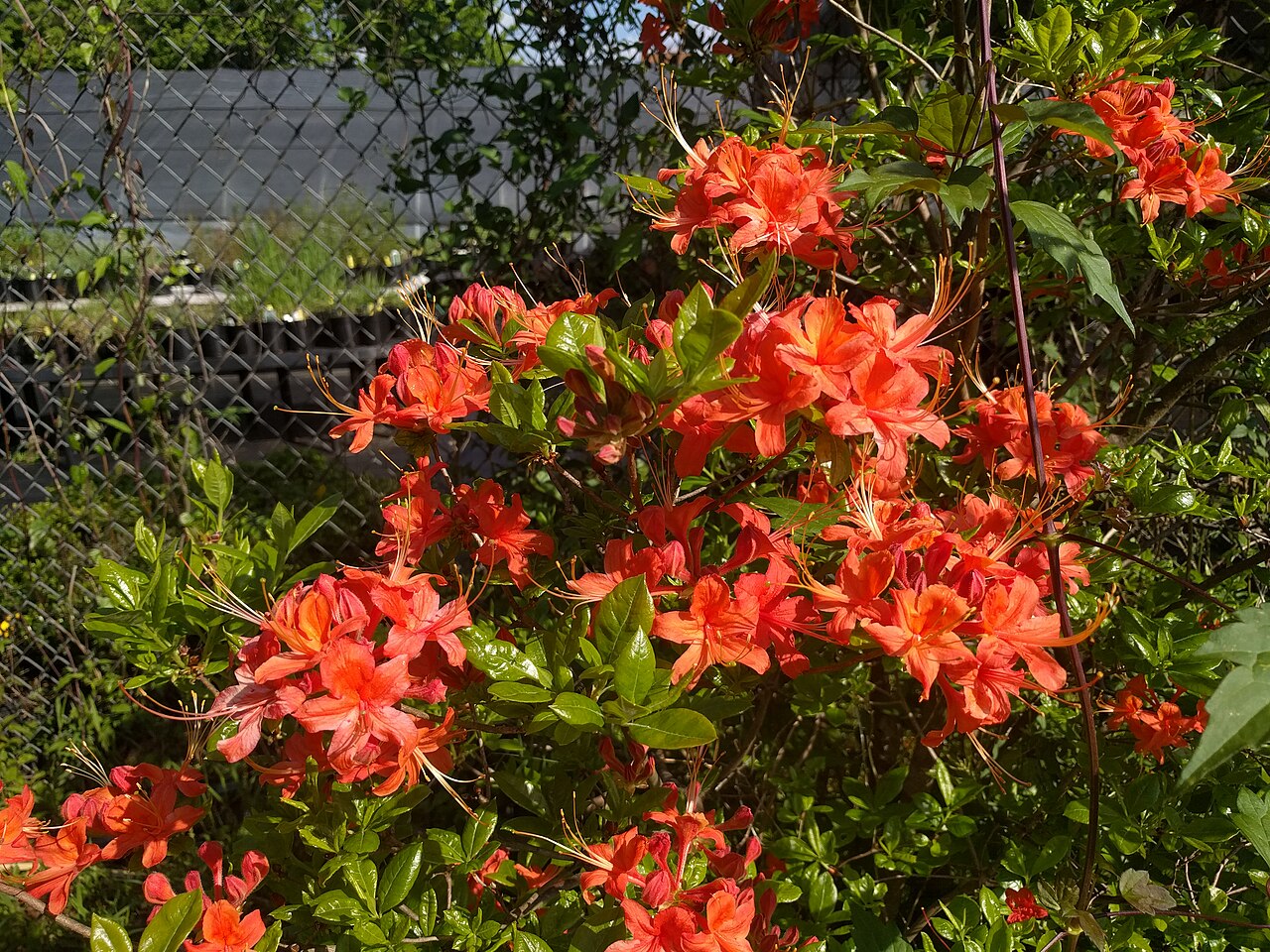
The bright, early-blooming flowers attract native bees, bumblebees, and butterflies emerging in early spring, providing one of the season’s first significant nectar sources in dry Piedmont woodlands. Ruby-throated hummingbirds also visit the tubular flowers as they return north in spring.
For Birds
The dense, twiggy branching of a mature shrub provides nesting cover and shelter for small songbirds, while early insect activity drawn to the flowers supports insectivorous birds feeding newly hatched young.
For Mammals
Because all parts of the plant contain grayanotoxins, Oconee azalea is rarely browsed by deer or other herbivores, making it a reliably deer-resistant shrub in regions where deer pressure is otherwise heavy.
Ecosystem Role
As a shrub-layer species of dry oak-pine woodland, Oconee azalea adds structural diversity and early-season color to Piedmont forest understories, and its persistence on marginal, rocky or sandy sites helps stabilize soil on slopes where few other flowering shrubs compete successfully.
Cultural & Historical Uses
Oconee azalea has no documented history as a food or medicinal plant among Indigenous peoples of the region, consistent with the toxicity shared by all rhododendrons and azaleas in the heath family. Its historical significance is almost entirely horticultural and botanical.
The species was formally described from Piedmont populations in the early 1900s and has long been prized by azalea breeders and collectors for its uniquely early, vivid orange-red to flame-colored flowers, which bloom ahead of most other native deciduous azaleas. It has contributed to hybrid azalea breeding programs seeking early bloom and warm flower color.
Because of its naturally restricted range, Oconee azalea has also drawn attention from botanists and conservationists studying rare and range-limited Piedmont plant communities, and it remains a species of regional conservation interest in parts of Georgia and South Carolina.
Frequently Asked Questions
Is Oconee azalea poisonous?
Yes. Like all rhododendrons and azaleas, every part of the plant — flowers, leaves, stems, pollen and nectar — contains grayanotoxins and is toxic if ingested by people, pets or livestock. Plant it strictly as an ornamental and keep grazing animals away from it.
What is the difference between Oconee azalea and Piedmont azalea?
They are the same plant. Rhododendron flammeum carries both common names — “Oconee azalea,” after Oconee County, South Carolina, and “Piedmont azalea,” referring to the broader Piedmont region of Georgia and South Carolina where it grows wild.
Why does Oconee azalea bloom before the leaves appear?
Like several other southeastern deciduous azaleas, it invests spring energy in flowering first to maximize pollinator visibility and avoid competing for pollinator attention with the many other plants that flower once leaves have fully emerged.
Does Oconee azalea need acidic soil?
Yes. As a member of the heath family, it requires consistently acidic soil (roughly pH 5.0–6.0) to take up nutrients properly. In neutral or alkaline soil it typically develops yellowing leaves and poor vigor.
Is Oconee azalea drought-tolerant?
More so than most native azaleas. It naturally grows on dry, rocky or sandy upland sites and tolerates periodic drought well once established, though young plants still need regular water during their first one to two growing seasons.

Looking for a nursery that carries Oconee Azalea?
Browse our native plant nursery directory: Georgia · South Carolina