
Hummingbird Sage (Salvia spathacea)
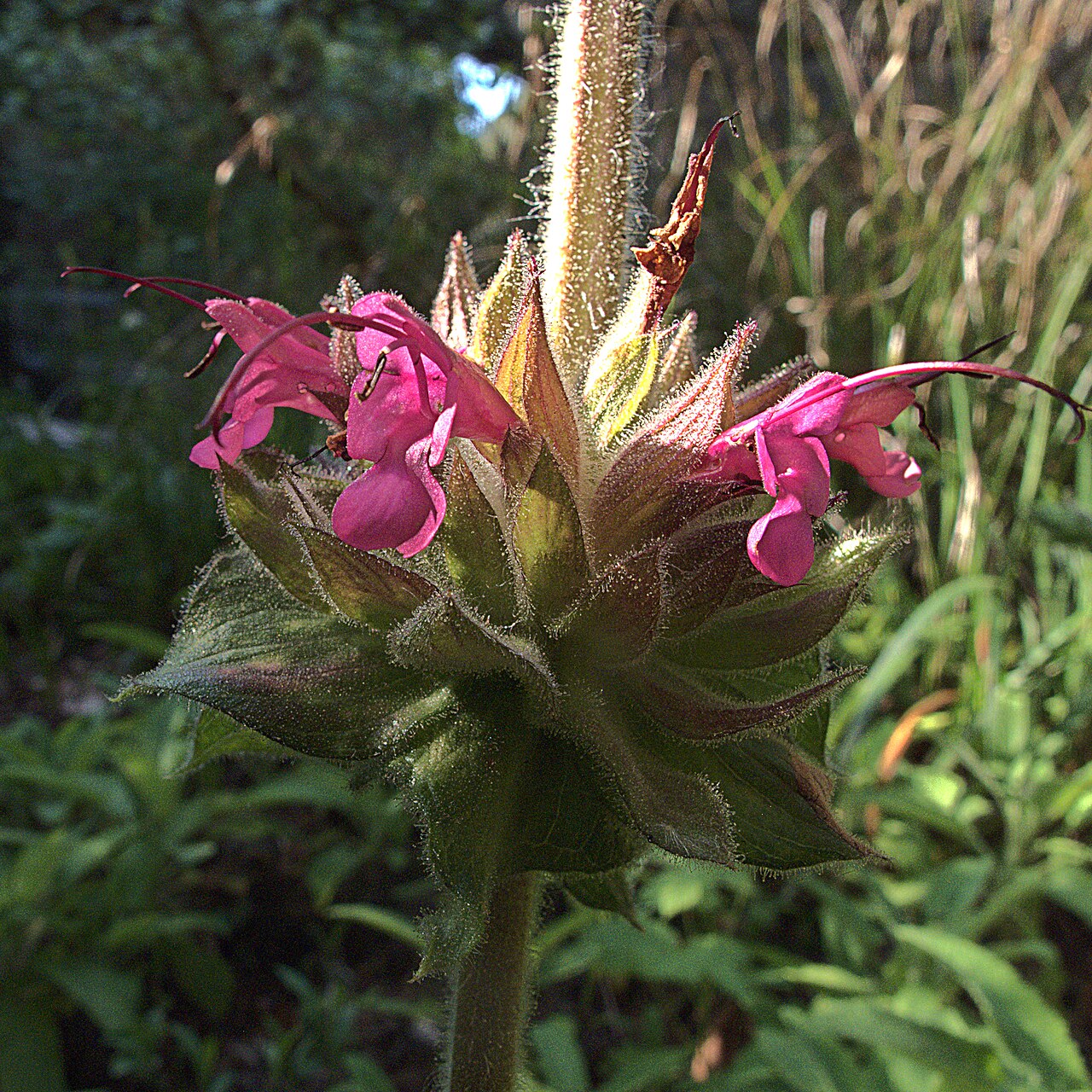
Salvia spathacea, commonly known as Hummingbird Sage or Pitcher Sage, is a fragrant, rhizomatous perennial herb found only in the Coast Ranges of California. A member of the Lamiaceae (mint family), it is one of the most reliably hummingbird-attracting native plants a California gardener can grow, producing tall spikes of magenta-pink, tubular flowers arranged in tiered whorls above large, wrinkled, strongly aromatic leaves.
Hummingbird Sage spreads steadily by underground rhizomes to form a dense, weed-suppressing groundcover in the dappled shade of oak woodlands and coastal sage scrub. Unlike many of its drought-adapted relatives, it tolerates — and often prefers — a fair amount of shade, making it one of the few flowering California natives well suited to planting beneath oaks and other established trees. Its crushed foliage releases a strong, fruity-sweet fragrance that some gardeners compare to grape soda or ripe berries.
Because it is restricted entirely to California, Hummingbird Sage should not be confused with other plants sometimes marketed or described under the common names “pitcher sage” or “hummingbird sage” in other parts of the country — those are usually different, unrelated species. This page covers only the true California endemic, Salvia spathacea.
Identification
Hummingbird Sage is a low, spreading, evergreen perennial herb that rarely exceeds knee height in foliage, though its flower spikes rise well above the leaves. It forms an expanding clump or loose mat as its rhizomes creep outward, eventually covering several feet of ground in favorable conditions.
Growth Habit
The plant spreads by shallow, branching rhizomes just below the soil surface, sending up new leaf rosettes as it colonizes an area. Left undisturbed, a single plant can form a patch 3 to 6 feet across within a few years, though it is not aggressive enough to be considered weedy within its native range. The basal foliage stays low, generally 8 to 20 inches tall, while the flowering stalks rise to 2 or sometimes 3 feet.
Leaves
The leaves are large, oval to heart-shaped, 2 to 6 inches long, with a distinctly wrinkled (rugose), quilted texture and scalloped or toothed margins. They are covered in fine hairs that give the foliage a soft, slightly sticky feel, and release a strong, sweet, fruity fragrance when brushed or crushed — a trait that makes the plant popular in sensory and children’s gardens. Foliage is evergreen in mild coastal climates, though it may die back partially during hot, dry summers inland.
Flowers & Fruit
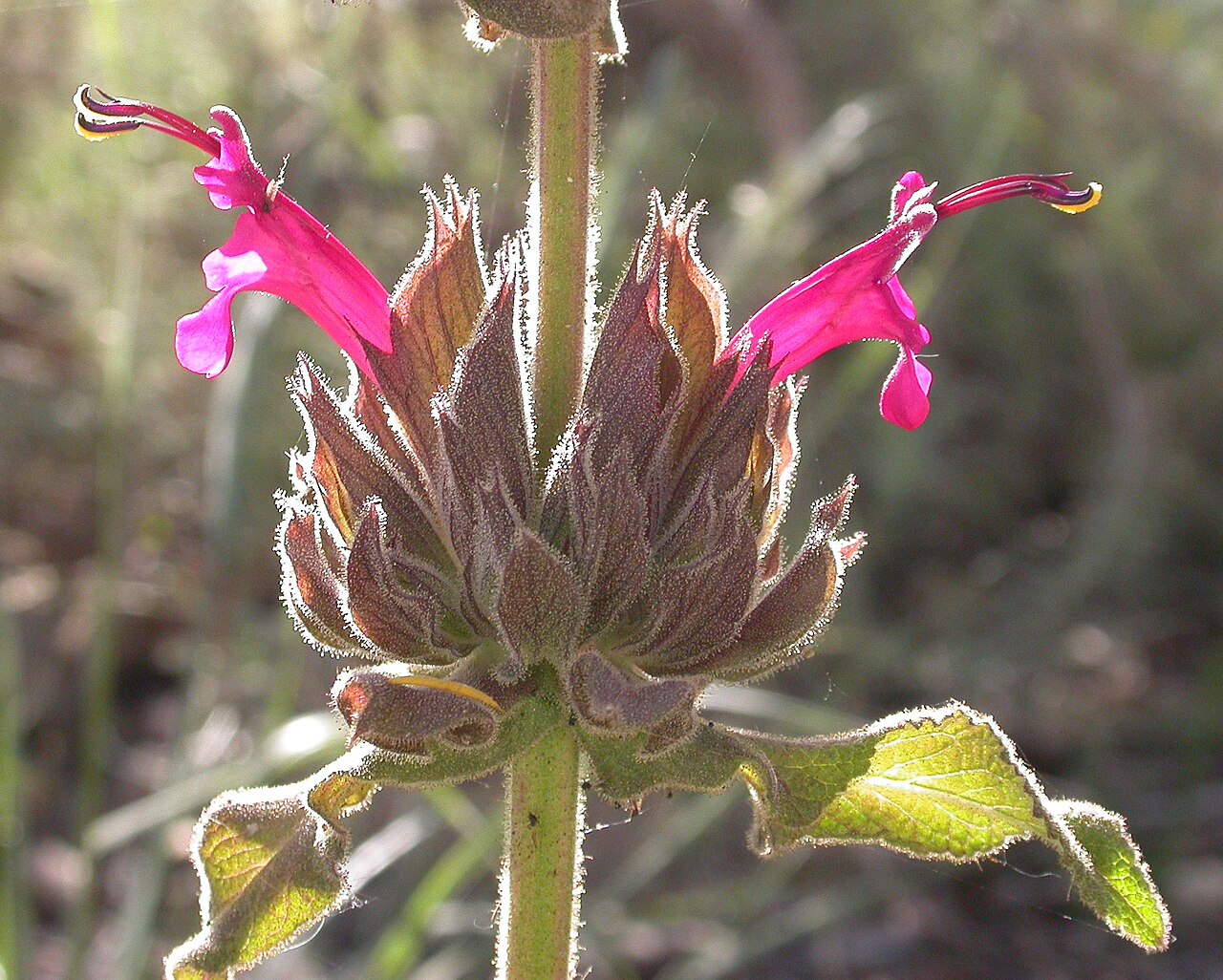
Flower stalks emerge in late winter to spring, each bearing several tiered whorls of tubular, two-lipped flowers in a rich magenta to deep rose-pink, occasionally found in a paler pink form. Each whorl is subtended by showy, often reddish bracts, and a single stalk may carry 10 to 20 individual blooms over its bloom period. After flowering, the plant sets small, hard nutlets typical of the mint family, which are of little ornamental interest but provide minor seed for birds.
Quick Facts
| Scientific Name | Salvia spathacea |
| Family | Lamiaceae (Mint) |
| Plant Type | Rhizomatous Herbaceous Perennial |
| Mature Height | Foliage 8–20 in (20–50 cm); flower stalks to 2–3 ft (60–90 cm) |
| Mature Spread | 3–6 ft (0.9–1.8 m), spreading by rhizomes |
| Growth Rate | Moderate to fast once established |
| Sun Exposure | Part Shade to Full Sun (part shade best inland) |
| Water Needs | Low to Moderate; drought tolerant once established |
| Soil Type | Well-drained; tolerates clay and serpentine soils |
| Soil pH | 5.0–7.0 (acidic to neutral) |
| Bloom Time | March – May |
| Flower Color | Magenta to deep rose-pink |
| Fall Color | Evergreen; no notable fall color |
| Fruit | Small dry nutlets (typical of the mint family) |
| Deer Resistant | Yes (aromatic foliage) |
| USDA Hardiness Zones | 7–10 |
Native Range
Hummingbird Sage is a California endemic, found only along the Coast Ranges from Solano and Yolo counties in the north down through San Diego County in the south. It grows nowhere else in the world. Despite being sold and planted in gardens well outside this range, including occasionally in the southeastern United States, it has no wild populations outside California — any mention of “hummingbird sage” or “pitcher sage” in a non-California context most likely refers to a different, unrelated plant, not this species.
Within its native range, the species favors open or lightly shaded slopes in coastal sage scrub, chaparral, and the understory of oak woodlands, generally within a few miles of marine influence. It grows from near sea level up to about 2,000 feet elevation, in areas receiving roughly 14 to 43 inches of annual rainfall.
Hummingbird Sage is not currently listed as rare or endangered, and it remains locally common across much of its historic range, though coastal development has reduced habitat in parts of Los Angeles, Orange, and San Diego counties. Gardeners restoring coastal sage scrub or oak woodland habitat in these counties are helping offset that loss.
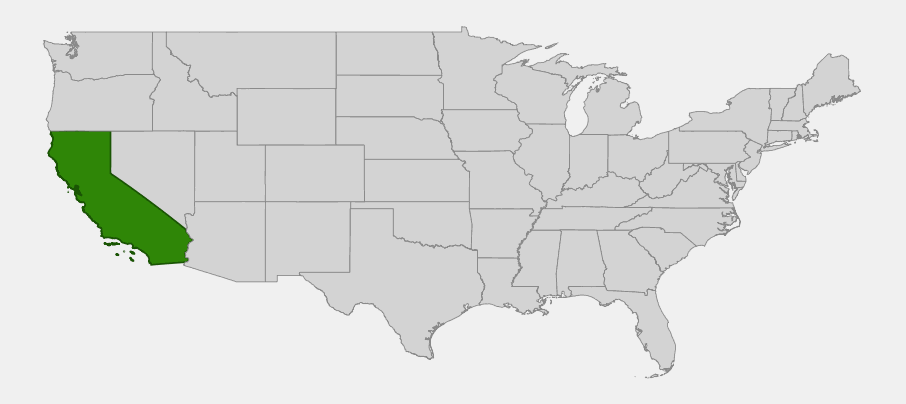
📋 Regional plant lists featuring Hummingbird Sage: Hummingbird Sage is a California Coast Ranges endemic; it is not currently represented on a PlantNative regional list, since our regional lists do not yet include a dedicated California section.
Growing & Care Guide
Hummingbird Sage is one of the easiest and most forgiving California native sages to grow, tolerating more shade and more garden water than most of its relatives. It is an excellent choice for underplanting beneath oaks, where few other flowering natives thrive.
Light
In cooler, coastal gardens, Hummingbird Sage grows well in full sun to full shade. Inland, where summer heat is more intense, part shade to full shade — especially afternoon shade — keeps the foliage from scorching and reduces water needs. Light dappled shade beneath oaks or other high-canopy trees mimics its natural woodland-edge habitat closely.
Soil & Water
This species tolerates a wide range of soils, including heavy clay and serpentine, as long as drainage is reasonable. Established plants are drought tolerant and can survive on rainfall alone in milder coastal gardens, but they look fuller and bloom more reliably with an occasional deep soak during the dry season, particularly in their first one to two years. Avoid constant summer moisture around the crown, which can encourage rot.
Planting Tips
Plant from containers in fall, when the arrival of winter rains will help roots establish before the dry season. Space plants 2 to 3 feet apart if a solid groundcover is the goal, since the rhizomes will fill in gaps over a season or two. A 2-inch layer of mulch or leaf litter helps conserve moisture and suppress competing weeds while plants establish.
Pruning & Maintenance
Cut spent flower stalks back to the basal foliage after bloom to tidy the planting and encourage a second, lighter bloom later in the season. In late summer, a light trim of tired or sun-stressed foliage keeps the clump looking fresh; avoid cutting into bare wood. Established plantings need little other maintenance and can be divided by separating rooted rhizome sections if you want to start new patches elsewhere.
Propagation
Hummingbird Sage is most easily propagated by dividing rooted rhizome sections in fall or by rooting stem cuttings taken in spring. Seed is also viable but slower and less reliable than division, since germination can be uneven. Divisions transplant readily and often flower in their first full season.
Landscape Uses
Hummingbird Sage earns its keep in several garden roles:
- Woodland groundcover beneath oaks and other established trees
- Hummingbird gardens — few native plants draw hummingbirds as reliably
- Shaded slope stabilization, where its spreading rhizomes help hold soil
- Fragrance gardens, thanks to its sweet, fruity-scented foliage
- Low-water borders once established, paired with other coastal sage scrub natives
- Erosion-prone, partly shaded banks where turf struggles
Wildlife & Ecological Value
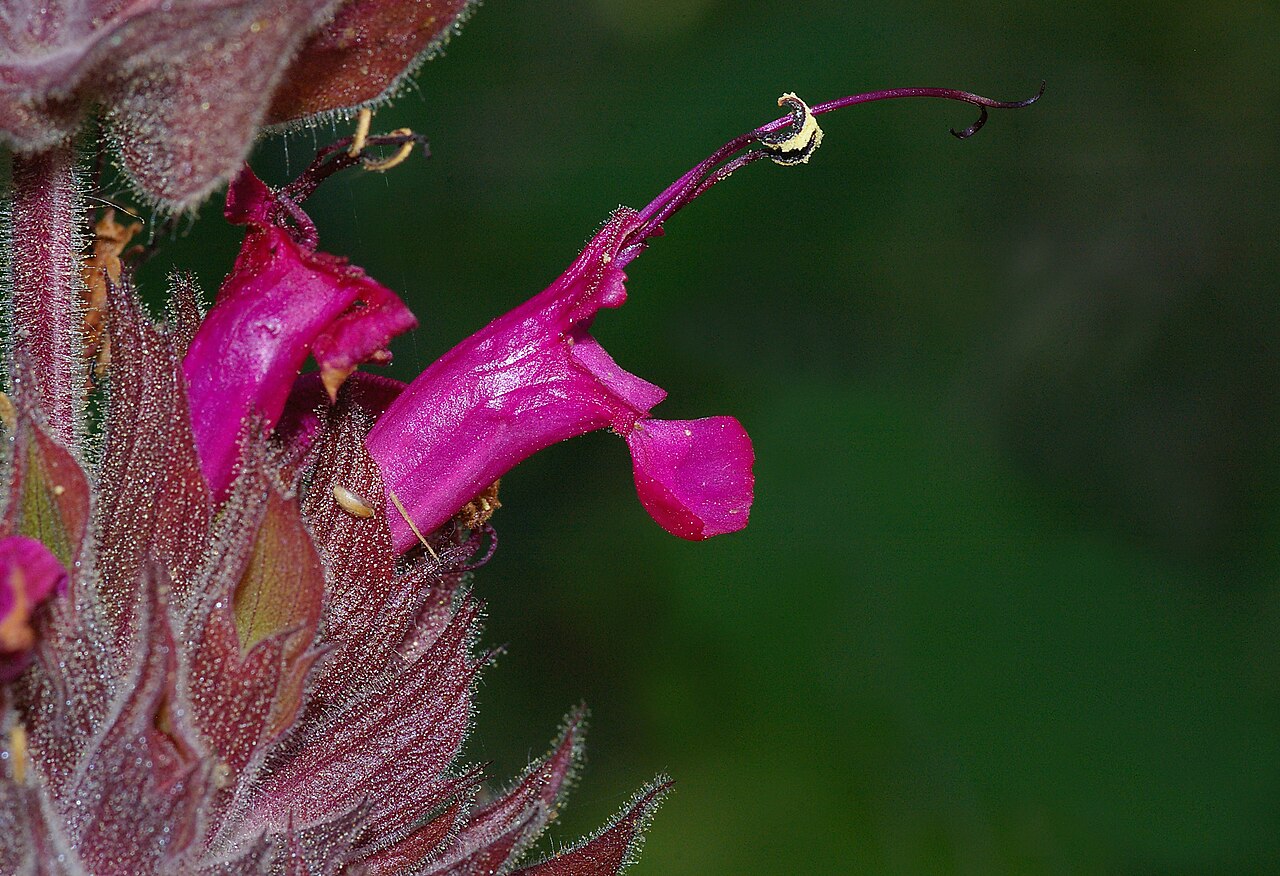
Hummingbird Sage punches well above its size when it comes to attracting garden wildlife, with flowers specifically shaped to suit the hummingbirds for which it is named.
For Pollinators
The long, tubular flowers are a near-perfect match for hummingbird bills and are heavily visited during the spring bloom period. Native bees and other long-tongued insects also work the flowers for nectar, though hummingbirds are by far the most conspicuous visitors.
For Birds
Beyond hummingbirds, the dense foliage provides low cover for ground-foraging birds such as towhees and sparrows, and the small nutlets produced after bloom offer minor supplemental seed.
For Mammals
The aromatic, slightly fuzzy foliage is generally left alone by deer and rabbits, making Hummingbird Sage a reliable choice in gardens where browsing pressure is a problem.
Ecosystem Role
As a spreading, shade-tolerant groundcover, Hummingbird Sage helps stabilize soil on shaded slopes and fills a niche beneath oak canopies where few other flowering natives compete well. Its dense rhizome mat also suppresses many non-native weeds, reducing competition for the trees and shrubs it grows beneath.
Cultural & Historical Uses
Hummingbird Sage has a documented history of use among Indigenous peoples of coastal California, including the Chumash, who called the plant pax. Historical accounts describe the Chumash boiling the leaves and using the resulting liquid as a wash or bath for rheumatism and related complaints, and rubbing fresh leaves on the body as part of broader healing practices. These uses are recorded here as cultural and historical information, not as guidance for self-treatment.
The leaves have also historically been steeped as a fragrant tea by Native Californians and, later, by other California herbalists, valued more for their pleasant, fruity aroma than as a substitute for medical care. Because the species is easy to identify and abundant where it grows, it became one of the more commonly gathered native sages in parts of coastal California.
Today, Hummingbird Sage is grown primarily as an ornamental and habitat plant rather than gathered from the wild, and California native plant societies encourage propagating it from nursery stock or divisions rather than collecting from natural populations.
Frequently Asked Questions
Is Hummingbird Sage the same plant sometimes called “Pitcher Sage” in other states?
Not necessarily. Salvia spathacea is native only to California’s Coast Ranges. If you’ve seen “hummingbird sage” or “pitcher sage” mentioned in a Florida or other non-California context, it is very likely a different, unrelated plant using a similar common name — common names are not a reliable way to confirm species identity.
Will Hummingbird Sage grow in full shade?
Yes, it tolerates quite a bit of shade and often does best with afternoon shade in hot inland gardens. In cooler coastal areas it can handle more sun, but deep shade beneath oaks is one of its best garden niches.
Is Hummingbird Sage invasive or aggressive?
Within its native California range it is not considered invasive. It does spread by rhizomes and can form a sizable patch over a few years, so give it room or plan to divide it periodically if you want to keep it contained.
Do hummingbirds really prefer this plant?
Yes — the tubular flower shape is particularly well suited to hummingbird feeding, and gardeners in its native range frequently report hummingbirds “staking out” a blooming clump as a regular feeding stop.
Can I eat or brew tea from Hummingbird Sage leaves?
The leaves have a documented history of use in teas and washes by Indigenous Californians, but this page does not recommend self-treatment with any wild or garden plant. If you are interested in traditional plant uses, consult a qualified herbalist or ethnobotanical reference rather than relying on general gardening information.

Looking for a nursery that carries Hummingbird Sage?
Browse our native plant nursery directory: California