Mountain Naupaka (Scaevola gaudichaudiana)
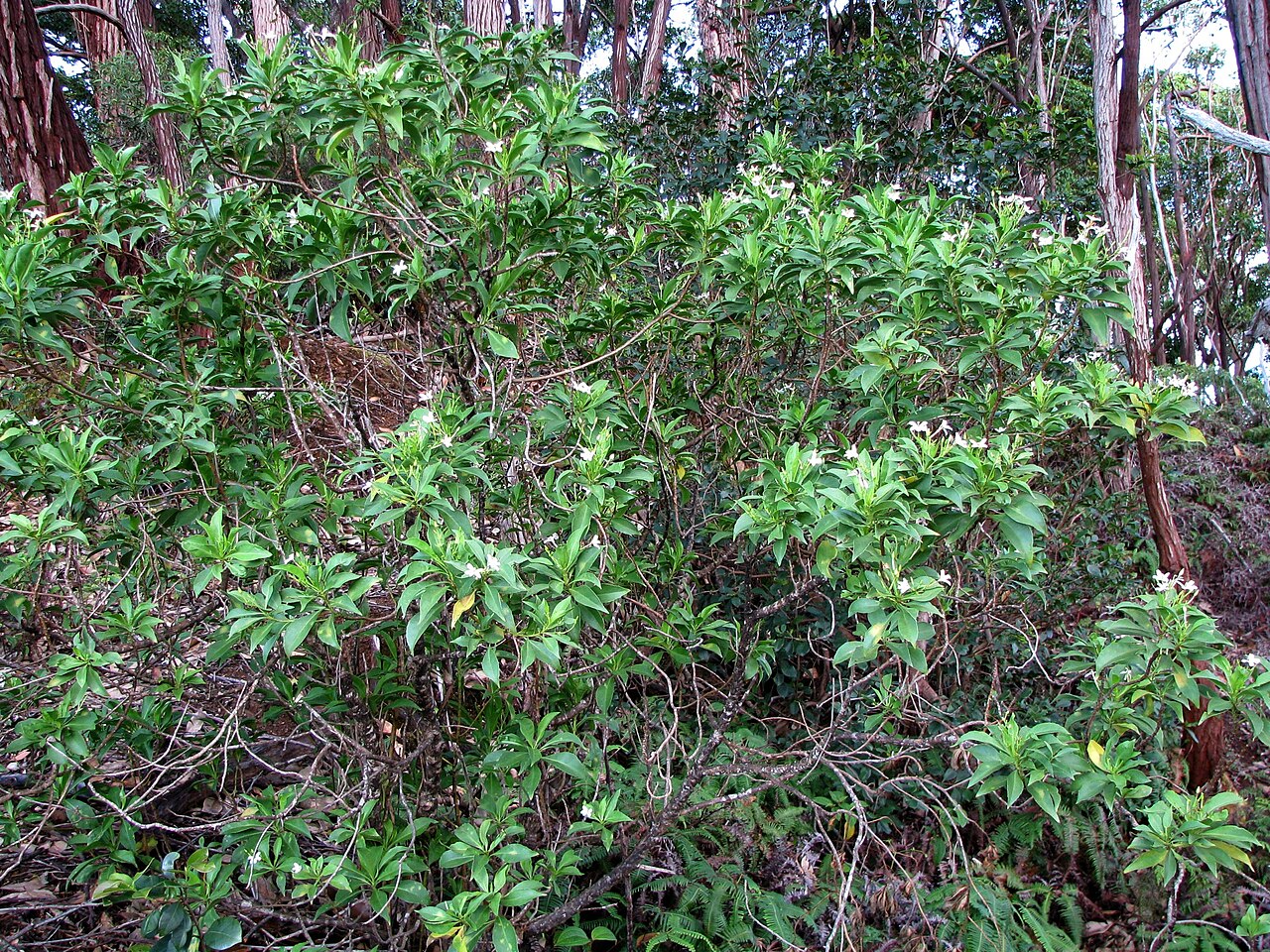
Scaevola gaudichaudiana, known in Hawaiian as naupaka kuahiwi and in English as Mountain Naupaka, is an evergreen shrub to small tree found only in the wet mountain forests of Oʻahu and Kauaʻi. A member of the Goodeniaceae, it belongs to a group of Hawaiian endemic naupaka species famous for producing fragrant, oddly lopsided “half” flowers that appear to be missing one side of each petal.
In the wild, Mountain Naupaka typically grows as a many-stemmed, upright shrub in the shaded understory of wet forest, though old, undisturbed specimens can develop a single trunk and reach well over head height, occasionally approaching small-tree stature. Its glossy, toothed leaves and clusters of sweetly fragrant white flowers make it a distinctive component of Hawaiian montane forest, and it is the namesake half of one of the islands’ best-known plant legends.
Because it is endemic to just two Hawaiian Islands and grows naturally only at elevation in wet forest, Mountain Naupaka is rarely seen outside its native range or dedicated native-plant gardens. It is an excellent, low-maintenance choice for Hawaiʻi gardeners working in shaded, moist conditions who want to support native forest restoration.
Identification
Mountain Naupaka is most easily recognized by the combination of its toothed, glossy leaves, its fragrant white half-flowers, and the purplish-black fruit that follows. It is a variable species, ranging from a modest multi-stemmed shrub to an occasional small, single-trunked tree in old-growth settings.
Growth Habit
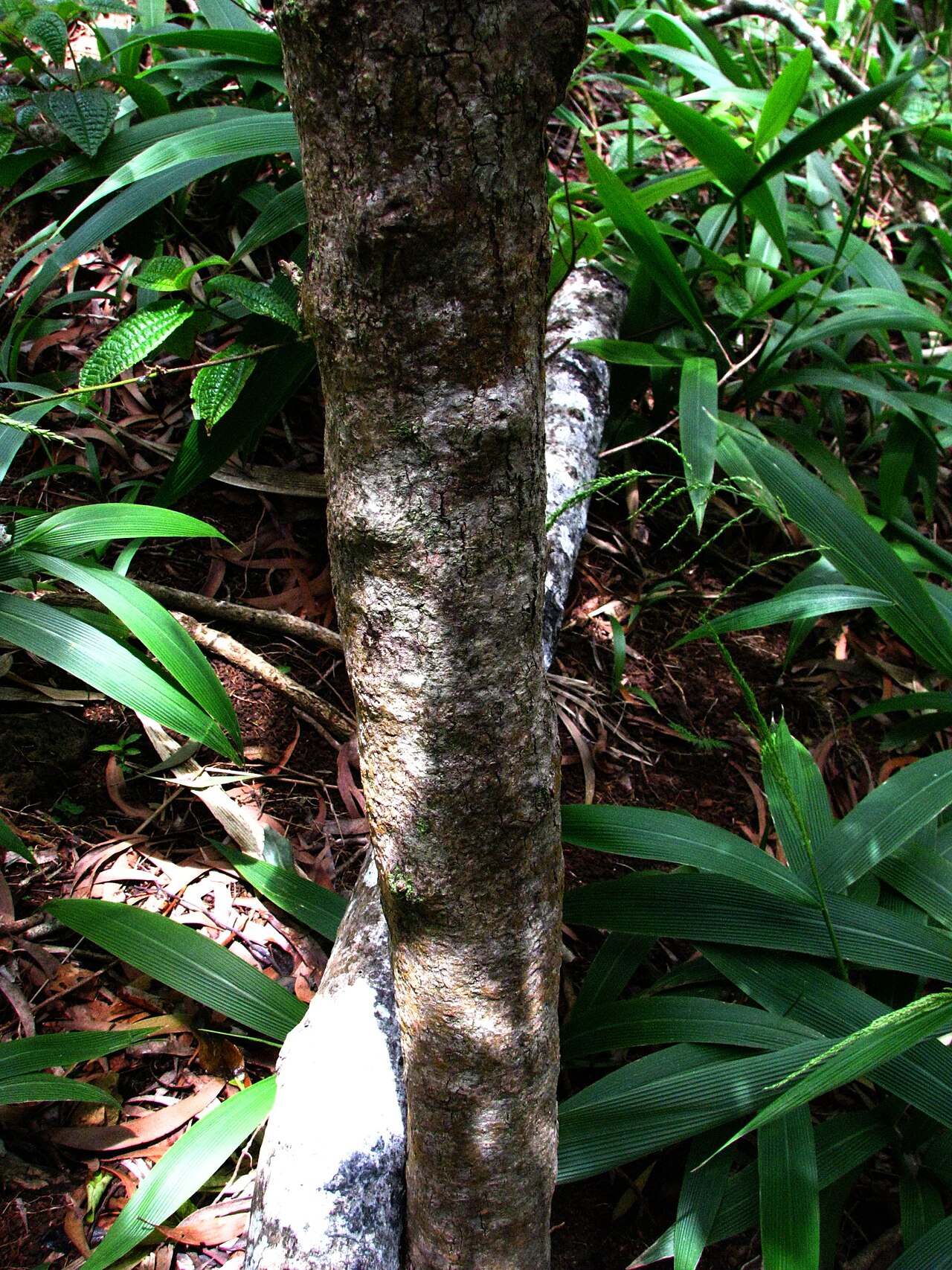
Plants are usually upright, multi-stemmed shrubs 5 to 10 feet tall, though exceptionally old individuals growing undisturbed in deep forest can reach 12 to 15 feet or more, with a single woody trunk 6 to 8 inches in diameter and smooth, grayish-brown bark. Younger stems are green and somewhat soft, hardening to woody bark with age.
Leaves
The leaves are simple, alternate, oblong to elliptic, roughly 2 to 4 inches long and an inch or so wide, with distinctly toothed or scalloped margins and a glossy, deep green upper surface. New growth often clusters toward the branch tips, giving the shrub a somewhat tufted appearance.
Flowers & Fruit
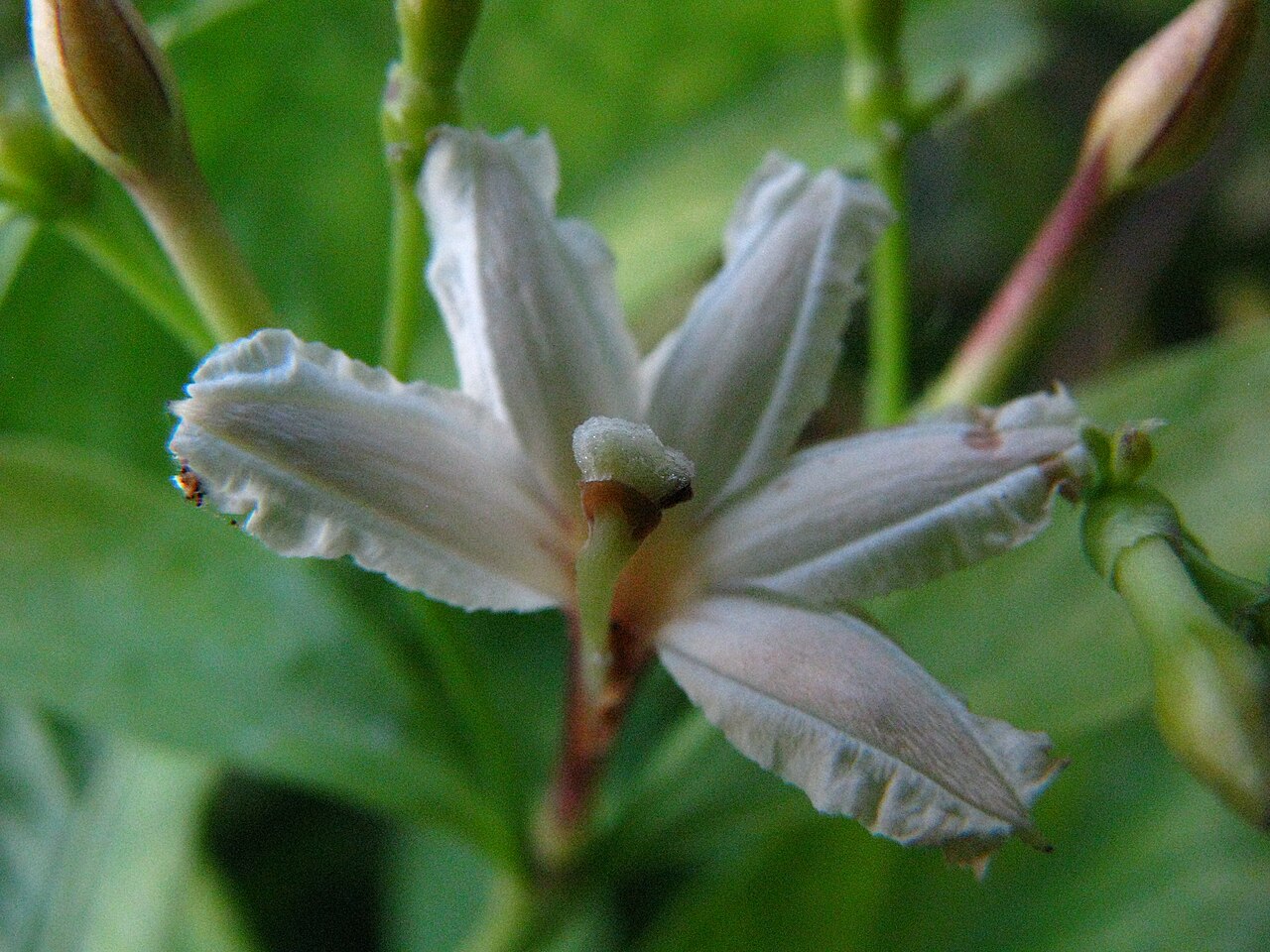
Flowers are white, occasionally with a purple-tinged throat, and strongly fragrant — a trait that makes a blooming plant noticeable well before it’s seen. Like other naupaka species, the flower is distinctly asymmetrical, with its five petals splayed out to one side as if the bloom were torn in half, a feature behind the genus name Scaevola, from the Latin for “left-handed.” Flowering occurs more or less year-round in its wet-forest habitat, without one strong seasonal peak. Flowers are followed by small, fleshy, purplish-black fruits that were historically used by Hawaiians as a source of dye.
Quick Facts
| Scientific Name | Scaevola gaudichaudiana |
| Family | Goodeniaceae |
| Plant Type | Evergreen Shrub, Occasionally Small Tree |
| Mature Height | 5–10 ft typical (1.5–3 m); old specimens to 12–15 ft |
| Mature Spread | 6–10 ft (1.8–3 m) |
| Growth Rate | Moderate |
| Sun Exposure | Part Shade to Full Shade (tolerates more sun in cloudy, wet sites) |
| Water Needs | High; needs consistently moist soil |
| Soil Type | Moist, well-drained volcanic forest soils |
| Soil pH | Acidic; typical of Hawaiian montane forest soils |
| Bloom Time | Year-round, without a strong seasonal peak |
| Flower Color | White, occasionally purple-throated |
| Fall Color | Evergreen; no fall color |
| Fruit | Small purplish-black fleshy drupes |
| Deer Resistant | Not applicable; no deer browse pressure in Hawaiʻi |
| USDA Hardiness Zones | 10–11 |
Native Range
Mountain Naupaka is endemic to the Hawaiian Islands of Oʻahu and Kauaʻi, and grows nowhere else in the world — not even on the other Hawaiian Islands. Within those two islands, it is found in wet forest and adjacent open, cloudy sites at elevations of roughly 558 to 2,625 feet (170–800 m), generally on the windward, rain-fed slopes and ridges.
It typically grows in the understory or along the edges of wet forest, favoring areas with consistent rainfall and cloud cover. It is considered an “Apparently Secure” species rather than one of conservation concern, unlike several of its rarer naupaka relatives found on other islands, some of which are federally listed as endangered.
Gardeners outside Hawaiʻi should not expect this species to thrive outside tropical, consistently moist conditions; it has no history of cultivation success in temperate climates and is grown almost exclusively within the islands.
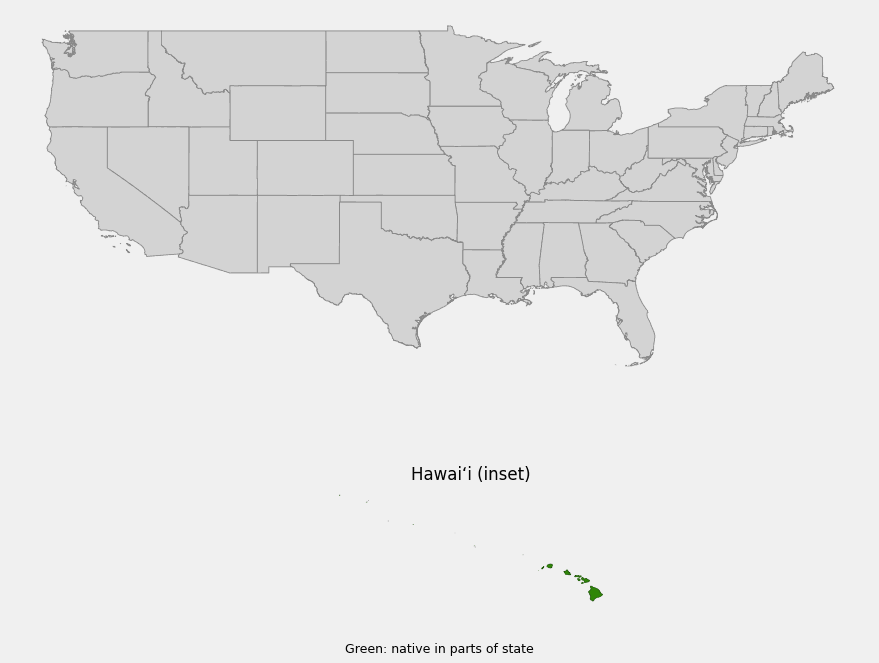
📋 Regional plant lists featuring Mountain Naupaka: Hawaiʻi
Growing & Care Guide
Mountain Naupaka is a straightforward plant for Hawaiʻi gardeners working with consistently moist, shaded conditions, but it is not well suited to dry, sunny, or low-elevation leeward sites.
Light
This species grows best in part shade to full shade, mimicking its natural position in the wet forest understory. In consistently cloudy, high-rainfall areas it can tolerate more direct sun, but in sunnier or drier garden settings it performs best with filtered light or afternoon shade.
Soil & Water
Mountain Naupaka needs consistently moist, well-drained volcanic soil and does not tolerate extended drought. It is best suited to windward, higher-rainfall sites or gardens that can provide supplemental irrigation during dry spells. Good drainage is still important, since standing water around the roots can cause problems.
Planting Tips
Plant in a shaded or partly shaded spot with reliably moist soil, ideally in a windward garden that receives regular rainfall. Mulch around new plantings to help retain moisture, and water regularly until the plant is established. It is best reserved for gardens at higher, cooler, wetter elevations rather than dry coastal sites.
Pruning & Maintenance
Mountain Naupaka needs minimal pruning. Remove dead or damaged stems as needed, and thin crowded multi-stemmed clumps if a more open, tree-like form is desired. The plant generally holds a tidy, upright shape on its own with little intervention.
Propagation
Propagation is typically done from seed collected from ripe fruit, or from semi-hardwood cuttings taken from healthy stems. Seed should be sown promptly, since like many Hawaiian natives it does not store especially well.
Landscape Uses
Mountain Naupaka fits several roles in a Hawaiʻi native garden:
- Forest restoration plantings in wet, windward sites
- Shaded understory shrub beneath taller native trees such as koa
- Fragrance gardens, thanks to its sweetly scented flowers
- Cultural and educational plantings that reference the naupaka legend
- Screening or informal hedging in consistently moist, shaded sites
Wildlife & Ecological Value
As a native wet-forest shrub, Mountain Naupaka contributes food and structure to one of Hawaiʻi’s most threatened habitat types.
For Pollinators
The fragrant white flowers attract native insect pollinators adapted to Hawaiian forest ecosystems, and their strong scent helps draw pollinators in the dim light of the forest understory.
For Birds
The small, fleshy fruits are eaten by native and introduced forest birds, which help disperse seed through the wet forest. Dense multi-stemmed growth also offers cover for small forest birds.
For Mammals
Hawaiʻi has no native land mammals, so Mountain Naupaka’s ecological relationships are centered on birds and insects rather than mammals; introduced mammals such as rats and pigs can damage plantings and are a concern for wet-forest restoration generally.
Ecosystem Role
As part of the native wet-forest understory, Mountain Naupaka helps maintain structural diversity and soil stability on steep, rain-soaked slopes, and its presence is often used by restoration groups as an indicator of healthy native forest understory recovering from invasive plant removal.
Cultural & Historical Uses
Mountain Naupaka, or naupaka kuahiwi, is one half of a well-known Hawaiian legend shared with its coastal relative, naupaka kahakai. In the traditional story, two lovers — often named Naupaka and Kauʻi — are forbidden to marry. In grief, the princess Naupaka tears a flower in two, keeping half for herself in the mountains while giving the other half to her beloved, who returns to the shore. To this day, naupaka flowers found in the mountains and those found along the coast each appear to be only half a flower, a detail Hawaiians have long used to teach the story to visitors and keiki alike.
Beyond the legend, early Hawaiians made practical use of naupaka kuahiwi’s purplish-black fruit as a source of dye, and the fragrant flowers were sometimes gathered for lei-making. These uses are described here as cultural history rather than guidance for current harvesting, since wild populations should be left undisturbed.
Today, Mountain Naupaka is valued primarily as a component of native forest restoration and as an educational plant in botanical gardens, where its connection to the naupaka legend makes it a popular stop on guided native-plant walks.
Frequently Asked Questions
Is Mountain Naupaka the same plant as the beach naupaka I’ve seen on the coast?
No. “Naupaka” is a common name shared by several related Hawaiian Scaevola species. Mountain Naupaka (Scaevola gaudichaudiana) grows only in wet upland forest on Oʻahu and Kauaʻi, while the familiar beach naupaka seen along Hawaiian shorelines is a different species adapted to coastal, salt-tolerant conditions.
Why do naupaka flowers look like they’re missing half their petals?
This is a natural feature of the flower’s structure, not damage — all naupaka species produce these lopsided “half-flowers,” which inspired a well-known Hawaiian legend about two separated lovers.
Can I grow Mountain Naupaka outside Hawaiʻi?
It is not a practical garden plant outside tropical, consistently wet climates, and it is grown almost exclusively within the Hawaiian Islands, where it is valued for native landscaping and forest restoration.
Is Mountain Naupaka endangered?
No — it is currently assessed as apparently secure, unlike some of its rarer Hawaiian relatives, such as the federally endangered dwarf naupaka (Scaevola coriacea).
How much sun does Mountain Naupaka need?
It prefers part to full shade and performs best in consistently moist, cloudy conditions. It can tolerate more sun in especially wet, cool sites, but struggles in hot, dry, or low-elevation leeward locations.

Looking for a nursery that carries Mountain Naupaka?
Browse our native plant nursery directory: Hawaiʻi