Blueblossom (Ceanothus thyrsiflorus)
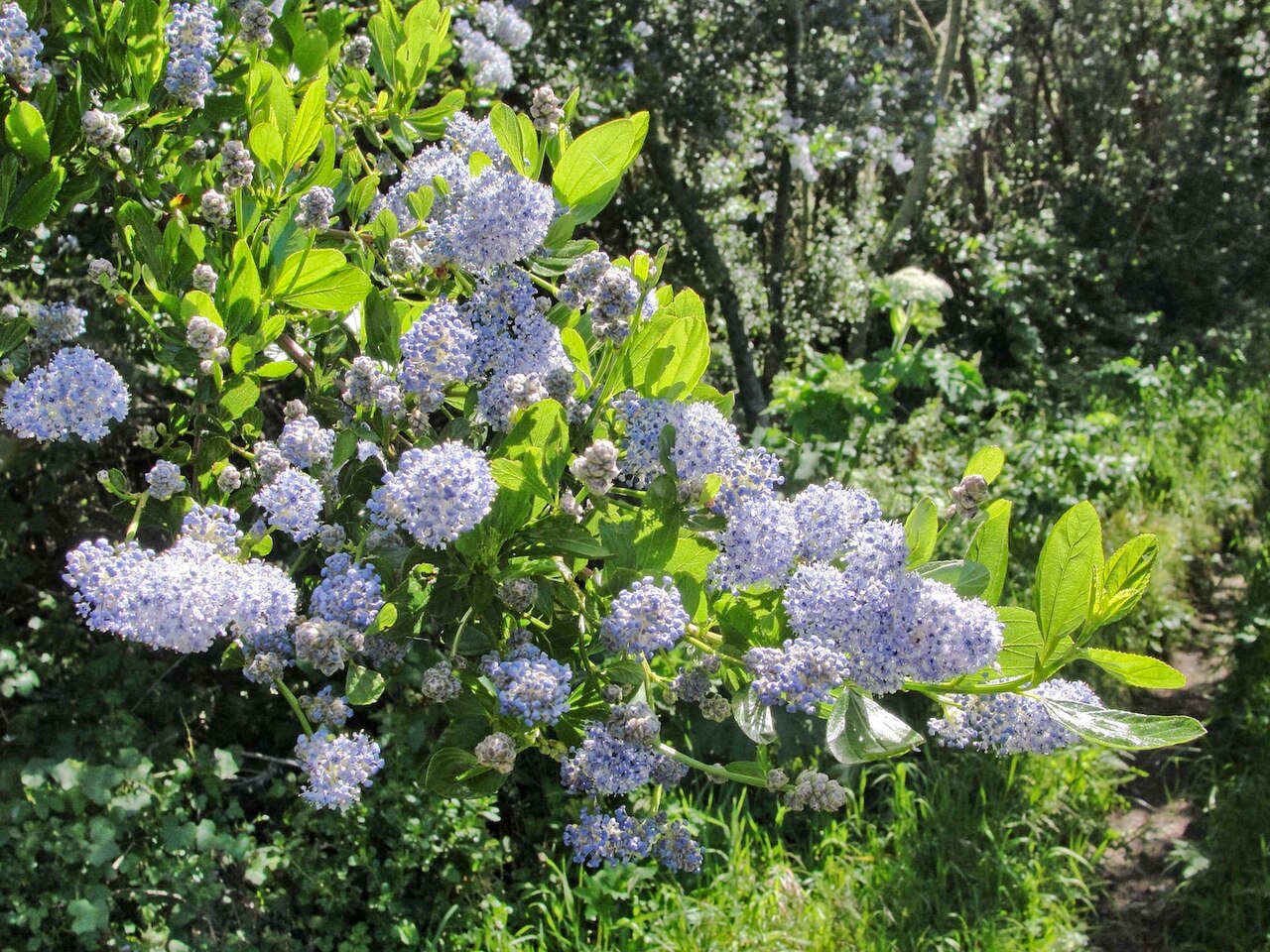
Ceanothus thyrsiflorus, commonly known as blueblossom or blue blossom ceanothus, is one of the showiest and most widely grown native shrubs of the California and southern Oregon coast. A member of the buckthorn family (Rhamnaceae), it produces an overwhelming spring display of dense, rounded clusters of pale to deep blue flowers that can cover the entire shrub, drawing pollinators from considerable distances and stopping hikers in their tracks along coastal trails.
Blueblossom typically grows as a large, evergreen, upright to rounded shrub reaching 6 to 20 feet tall depending on conditions, with glossy, finely toothed leaves and a naturally dense branching habit. It is a defining species of coastal scrub, mixed evergreen forest edges, and chaparral along the fog belt from the California Central Coast north through the redwood region into southwestern Oregon, where it often forms extensive thickets on disturbed or recently burned slopes.
In the garden, blueblossom is one of the fastest and most floriferous native shrubs available, making it a favorite for gardeners who want quick, low-maintenance structure along with an unmatched spring flower show. It is relatively short-lived compared to many shrubs, but its rapid growth, nitrogen-fixing roots, and exceptional pollinator value make it well worth including in coastal and woodland-edge native gardens.
Identification
Blueblossom is a large evergreen shrub, occasionally reaching small tree size, typically 6 to 20 feet tall with an upright, somewhat open to dense rounded form depending on light conditions and local variety. Prostrate, low-growing forms also occur, particularly in exposed coastal sites.
Bark & Stems
Young stems are green to yellow-green and angled or ridged, a feature typical of many ceanothus species, becoming woody and gray-brown with age. The stems are flexible when young and become increasingly rigid as the shrub matures.
Leaves
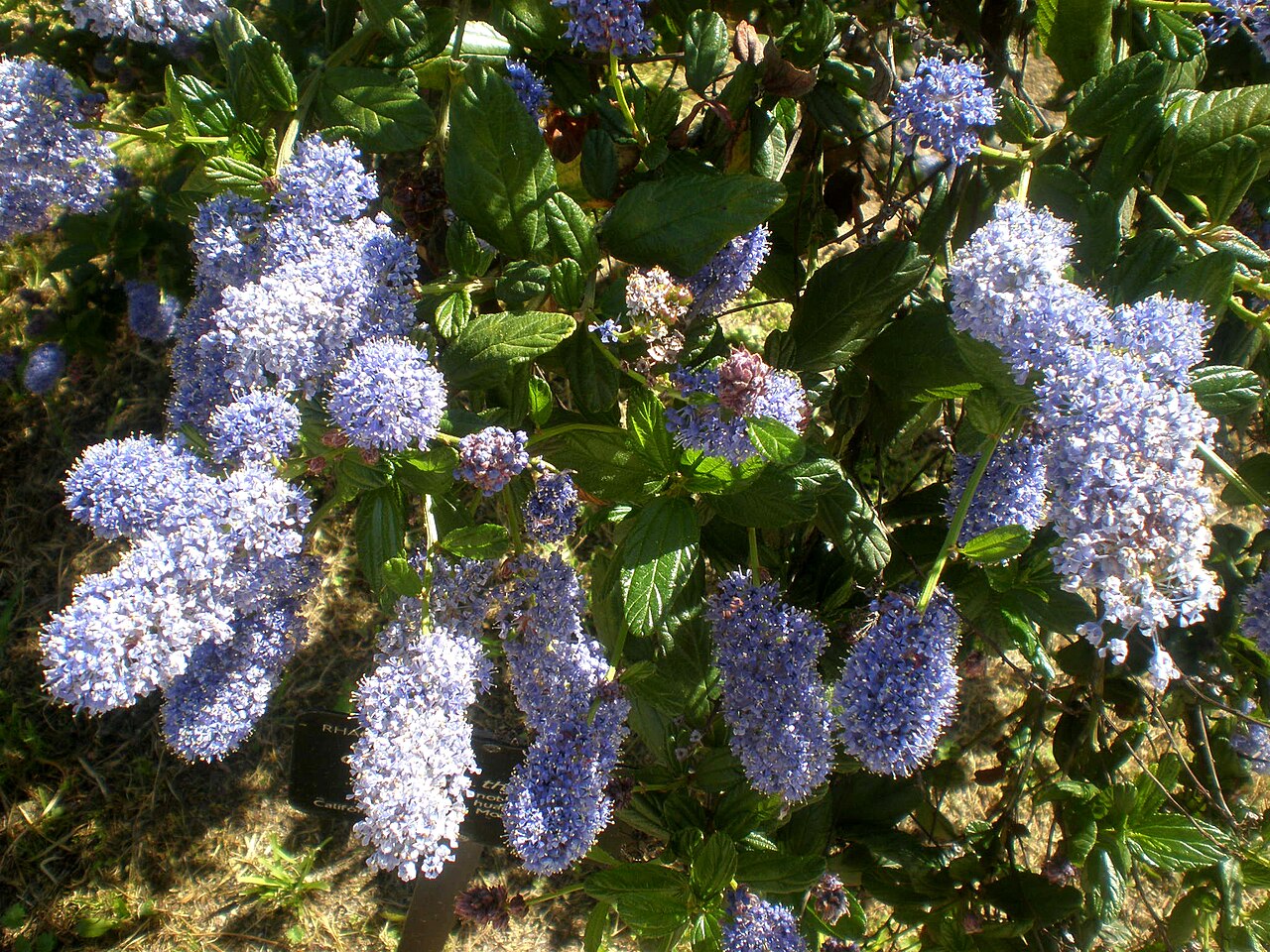
Leaves are evergreen, alternate, oval to elliptic, about 1 to 2 inches long, with three prominent veins arising from the leaf base and finely toothed margins. The upper surface is glossy dark green, while the lower surface is paler and slightly hairy along the veins. The combination of glossy leaves and fine toothing helps distinguish blueblossom from several other California ceanothus species with smoother or grayer foliage.
Flowers
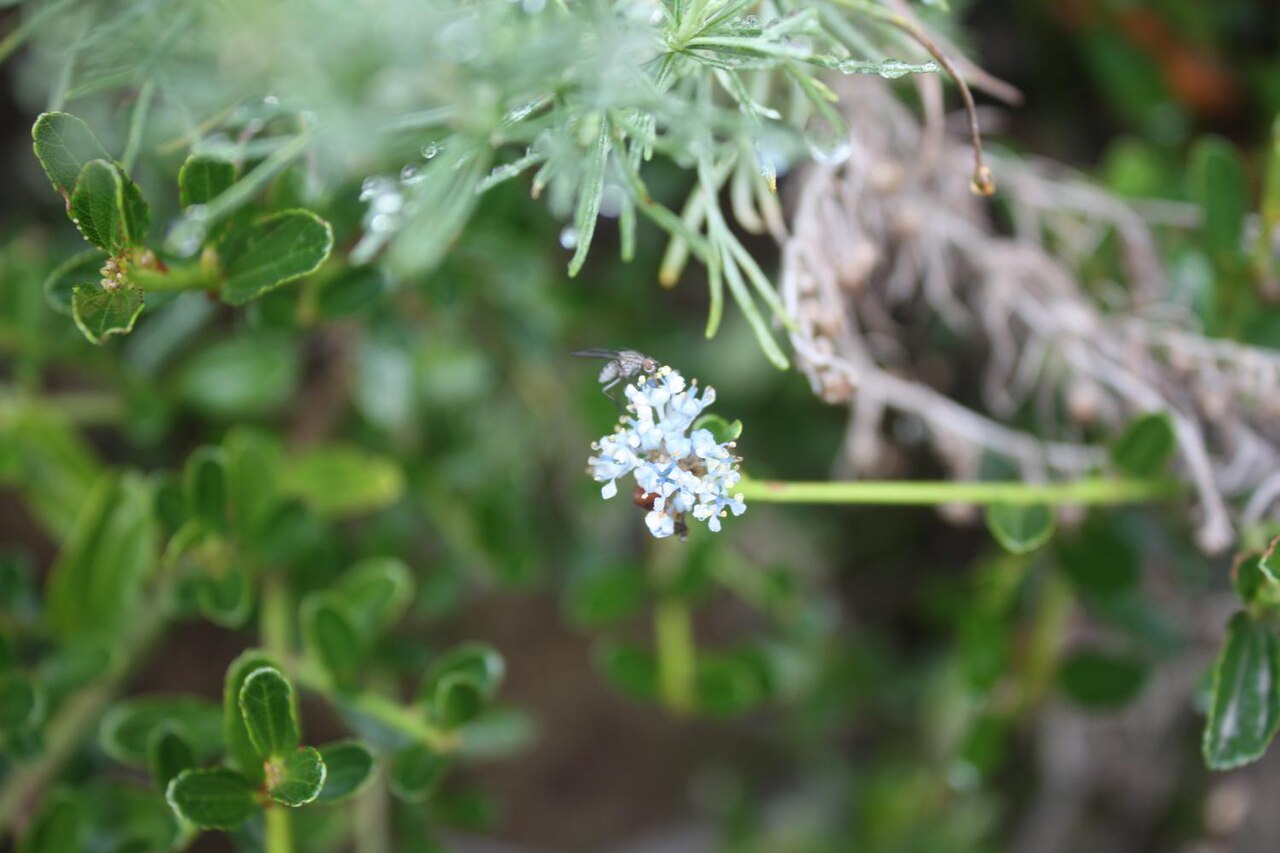
The flowers are tiny individually but are packed into dense, rounded to elongated clusters (thyrses) 1 to 2 inches long at the branch tips, blooming in shades ranging from pale powder blue to deep violet-blue, occasionally nearly white. Bloom is heaviest from March through May, and a well-grown shrub can be almost entirely obscured by flowers at peak bloom, producing a strong, sweet fragrance that carries on the breeze.
Fruit & Seeds
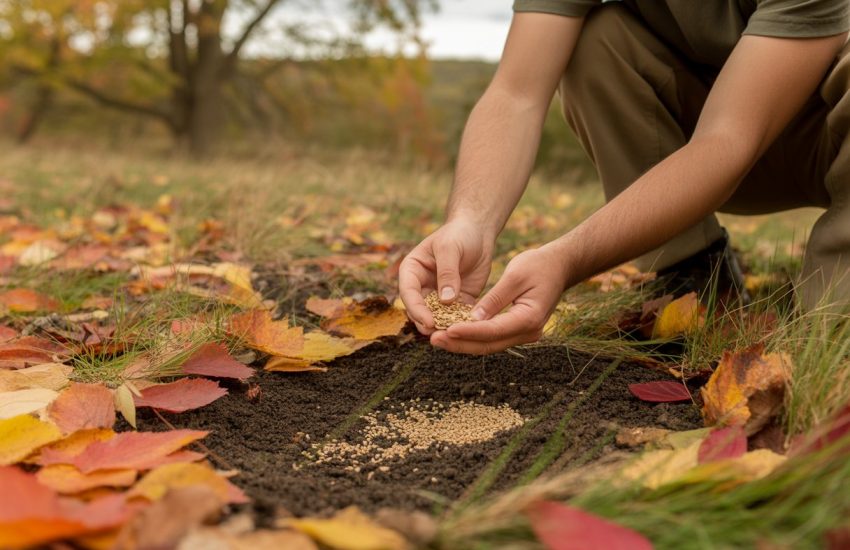
After flowering, blueblossom produces small, three-lobed seed capsules that dry and split explosively to eject seeds a short distance from the parent plant. The seeds have hard coats that require fire-related heat or scarification to germinate readily, a common adaptation among chaparral and coastal scrub shrubs.
Quick Facts
| Scientific Name | Ceanothus thyrsiflorus |
| Family | Rhamnaceae (Buckthorn) |
| Plant Type | Evergreen Shrub |
| Mature Height | 6–20 ft (low, spreading forms also occur) |
| Mature Spread | 8–15 ft |
| Growth Rate | Fast |
| Sun Exposure | Full Sun to Part Shade |
| Water Needs | Low to moderate; drought tolerant once established |
| Soil Type | Well-drained; tolerates poor, sandy or rocky soils |
| Soil pH | 6.0–7.5 (slightly acidic to neutral) |
| Bloom Time | March – May |
| Flower Color | Pale to deep blue-violet, occasionally white |
| Fall Color | None (evergreen) |
| Fruit | Small three-lobed capsules that split explosively |
| Deer Resistant | No (deer browse foliage readily) |
| USDA Hardiness Zones | 8–10 |
Native Range
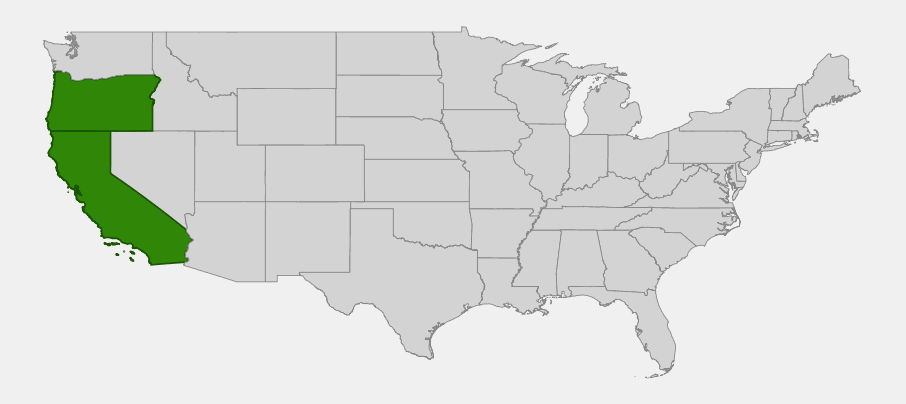
Blueblossom is native to the coastal fog belt of California and southwestern Oregon. In California its range extends from the Central Coast near Santa Barbara County north through the Coast Ranges, the San Francisco Bay Area, and the redwood region to the Oregon border, with scattered inland populations in the northern Sierra Nevada foothills. In Oregon it occurs along the southwestern coast, primarily in Curry County, where it reaches the northern limit of its range. The species also extends into northwestern Baja California, Mexico.
Blueblossom favors sites within reach of coastal fog and moisture, growing in mixed evergreen forest openings, coastal scrub, chaparral, and along forest edges and disturbed slopes, including areas recovering from fire or logging, where it is often one of the first shrubs to colonize in large numbers. It is notably absent from Washington state and the drier interior of the Pacific Northwest, where coastal fog influence does not reach.
Because it germinates readily after fire and grows quickly, blueblossom often appears in dense, short-lived stands following disturbance, then gradually gives way as taller trees and longer-lived shrubs reestablish the forest canopy over subsequent decades.
📋 Regional plant lists featuring Blueblossom: California and Nevada · Western Oregon and Western Washington
Growing & Care Guide
Blueblossom is one of the fastest, most rewarding native shrubs for coastal and Mediterranean-climate gardens, producing a dramatic flower display within just a couple of years from a small container plant. Its main limitation is a relatively short lifespan, typically 10 to 20 years, so it is often planted alongside longer-lived companions that can fill in as it eventually declines.
Light
Full sun produces the densest growth and heaviest bloom, though blueblossom tolerates part shade well, especially in hot inland gardens or at the drier edge of its climate range, where some afternoon shade can reduce stress during summer.
Soil & Water
Good drainage is essential; like most ceanothus species, blueblossom is highly susceptible to root rot in soils that stay wet, especially during summer. It performs best in lean, well-drained soils and needs only light supplemental water once established, relying mainly on winter and spring rainfall. Avoid regular summer irrigation near the root crown, particularly in gardens with clay soil.
Planting Tips
Plant young, small container stock in fall to take advantage of winter rains for establishment; larger ceanothus plants often transplant poorly. Space plants 8 to 12 feet apart to allow for their eventual spread. Because the roots host nitrogen-fixing bacteria, blueblossom can improve soil fertility for neighboring plants, making it a useful pioneer species in new native plantings.
Pruning & Maintenance
Light pruning after flowering helps maintain a dense form and can extend the shrub’s productive lifespan, but avoid cutting back into bare, leafless wood, which ceanothus typically does not resprout from. Because the species is relatively short-lived, many gardeners simply let older plants play out their natural cycle and replace them rather than attempting aggressive renovation pruning.
Landscape Uses
Blueblossom’s rapid growth and spectacular bloom suit a wide range of plantings:
- Spring-flowering hedges and screens along coastal and woodland-edge gardens
- Pollinator gardens, where its bloom draws large numbers of bees
- Slope and erosion control plantings on disturbed or recently cleared ground
- Woodland-edge and forest restoration projects as a fast-establishing pioneer shrub
- Low-water, fire-wise landscaping in coastal California and southwestern Oregon
Wildlife & Ecological Value
Blueblossom is one of the most important early-to-mid spring nectar sources in the California coastal plant community, and its dense branching provides valuable cover for small wildlife.
For Pollinators
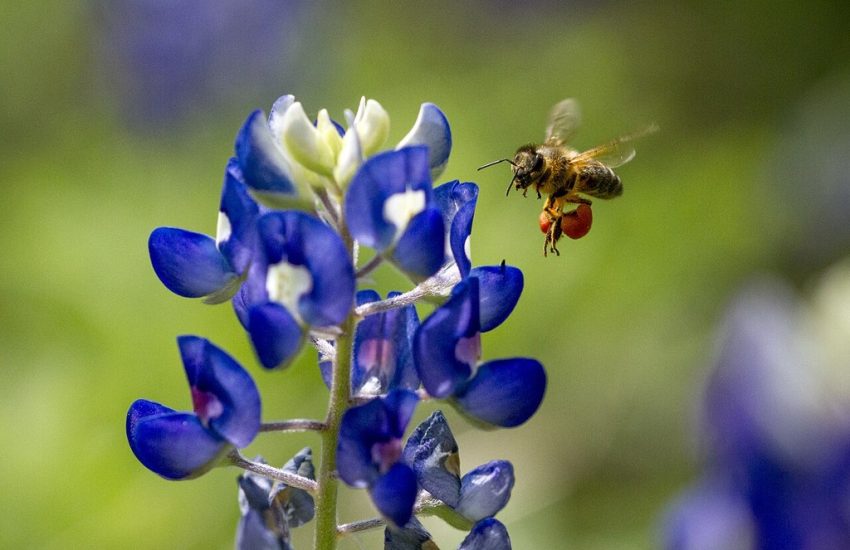
The dense flower clusters attract enormous numbers of native bees, honeybees, butterflies, and other pollinating insects during peak bloom, when a single well-grown shrub can host a near-constant stream of visitors. It is considered one of the best native nectar plants for supporting pollinator populations in coastal gardens.
For Birds
The dense evergreen foliage provides nesting sites and cover for small songbirds, while the insects drawn to the flowers in turn attract insectivorous birds. Some finches and sparrows will take the small seeds after the capsules split.
For Mammals
Deer and other browsing mammals readily eat the foliage, which makes blueblossom valuable browse in wild habitat but means gardeners in deer-heavy areas should expect some browsing damage on young plants. Small mammals use the dense branching for cover.
Ecosystem Role
As a nitrogen-fixing shrub, blueblossom improves soil fertility wherever it grows, and its rapid colonization after fire or disturbance helps stabilize slopes and prepare the ground for longer-lived forest and scrub species that follow. Its heavy nectar production during an otherwise lean early-spring period makes it a keystone resource for pollinators across much of its range.
Cultural & Historical Uses
Blueblossom and other California ceanothus species have a long history of use by Indigenous peoples of the coastal ranges, who used the flexible young stems for basketry and other woven items, and ground or soaked various plant parts for occasional use as a mild soap substitute, taking advantage of the saponins naturally present in ceanothus foliage and flowers. Documentation specific to this species is less detailed than for some related ceanothus species, and uses likely varied by community and locality.
In the broader history of California horticulture, blueblossom became one of the earliest native shrubs embraced by nurseries and landscape designers for its rapid growth and spectacular bloom, and it has been used as a parent species in numerous ceanothus hybrids and cultivars developed over the past century. Its willingness to grow quickly from seed or cuttings made it especially practical for erosion control and revegetation projects following wildfire or construction disturbance throughout coastal California.
Today, blueblossom remains a signature plant of the California coastal landscape, celebrated each spring in wildflower and native plant tours along the coast, where its blue haze of bloom is one of the most anticipated seasonal sights in the Coast Ranges.
Frequently Asked Questions
How long does blueblossom live?
Blueblossom is relatively short-lived for a shrub, typically 10 to 20 years, especially in garden settings with summer water. Planting it alongside longer-lived companions helps maintain garden structure as it eventually declines.
Why did my blueblossom die suddenly?
Sudden decline is most often caused by root rot from poor drainage or summer irrigation near the root crown. Ceanothus species are notoriously sensitive to wet soil, especially once established and adapted to drier conditions.
Is blueblossom native to Washington state?
No. Its native range reaches only the southwestern Oregon coast, primarily Curry County; it does not occur naturally in Washington, where cooler, wetter conditions and the lack of strong coastal fog influence limit its range.
Do deer eat blueblossom?
Yes, deer readily browse the foliage, so young plants in deer-prone areas may need temporary protection until they are established and can tolerate some browsing.
What makes blueblossom good for pollinators?
Its dense, abundant spring flowers bloom heavily over several weeks, providing a concentrated nectar and pollen source at a time when many other plants have not yet begun flowering, making it one of the most valuable native nectar plants in its range.

Looking for a nursery that carries Blueblossom?
Browse our native plant nursery directory: California · Oregon