Laurel Sumac (Malosma laurina)
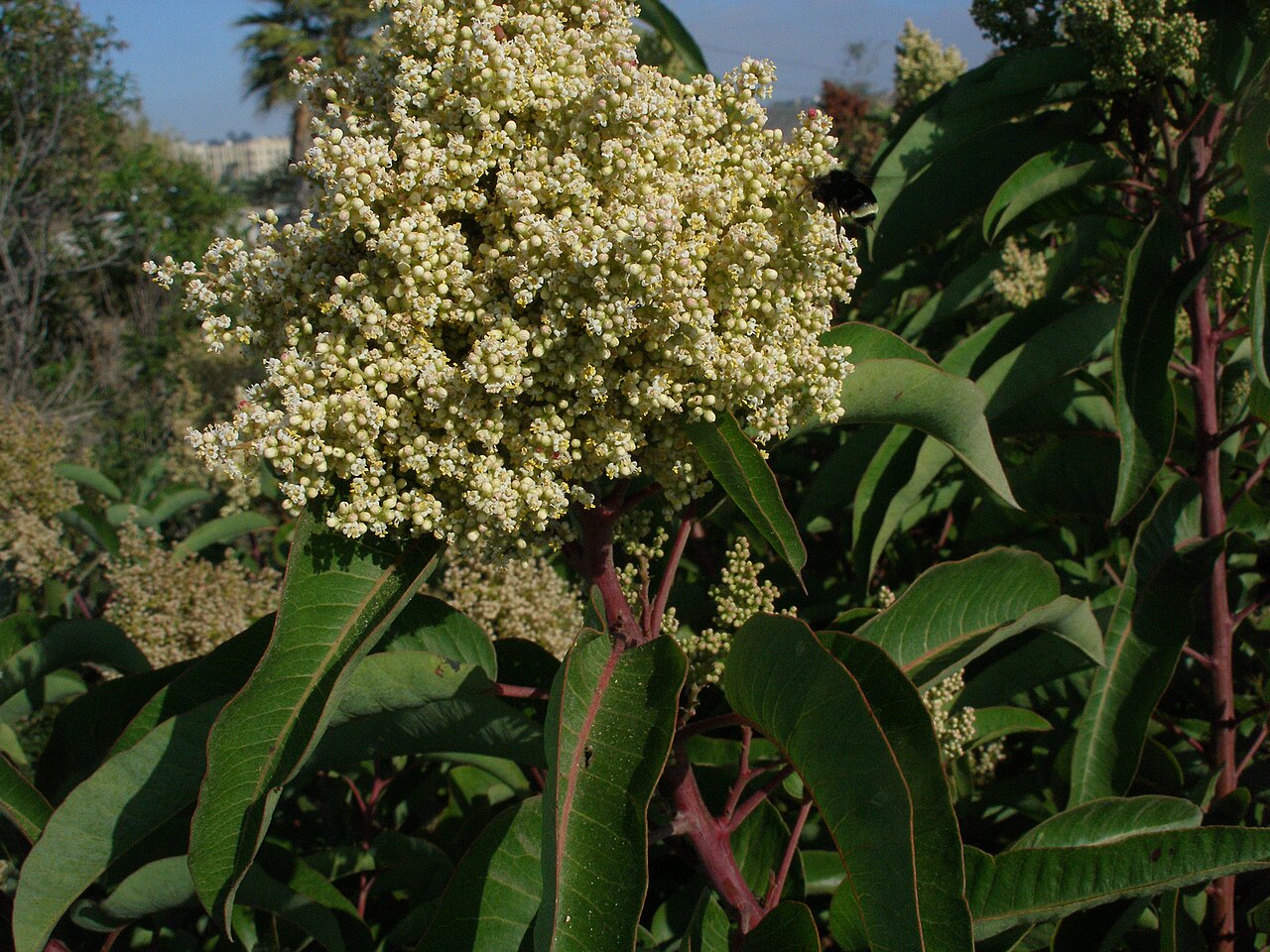
Malosma laurina, commonly called Laurel Sumac, is one of the signature shrubs of Southern California’s coastal sage scrub and chaparral, instantly recognizable by its glossy, leathery leaves that fold gently upward along the midrib, giving them a distinctive taco-like shape. The leaves and new growth are flushed with wine-red color, especially on young stems, and the whole plant gives off a sharp, resinous, apple-like scent when crushed. In late spring, dense, creamy white flower clusters cover the shrub, followed by small reddish fruits that ripen through summer.
Laurel Sumac is the sole species in its genus, Malosma, having been split from the related genus Rhus based on differences in its fruit and other botanical features. It is a fast-growing, large, rounded evergreen shrub or small tree, typically 6 to 20 feet tall, that forms dense thickets across the foothills and canyons of coastal Southern California. Because it is notably frost-sensitive, the presence or absence of Laurel Sumac has long served Southern California botanists as a rough, informal marker of local frost patterns — it thrives where winters stay mild and is reliably knocked back or killed in colder canyon bottoms and inland valleys.
For gardeners in frost-free areas, Laurel Sumac is a tough, fast, low-water shrub that provides excellent wildlife habitat and fills large spaces quickly. Its size and vigorous growth make it best suited to bigger properties, slopes, and naturalistic plantings rather than small, tidy garden beds.
Identification
Laurel Sumac is a large, rounded, multi-stemmed evergreen shrub or small tree, usually 6 to 20 feet tall and often equally wide, with dense, leafy growth from the ground up.
Stems
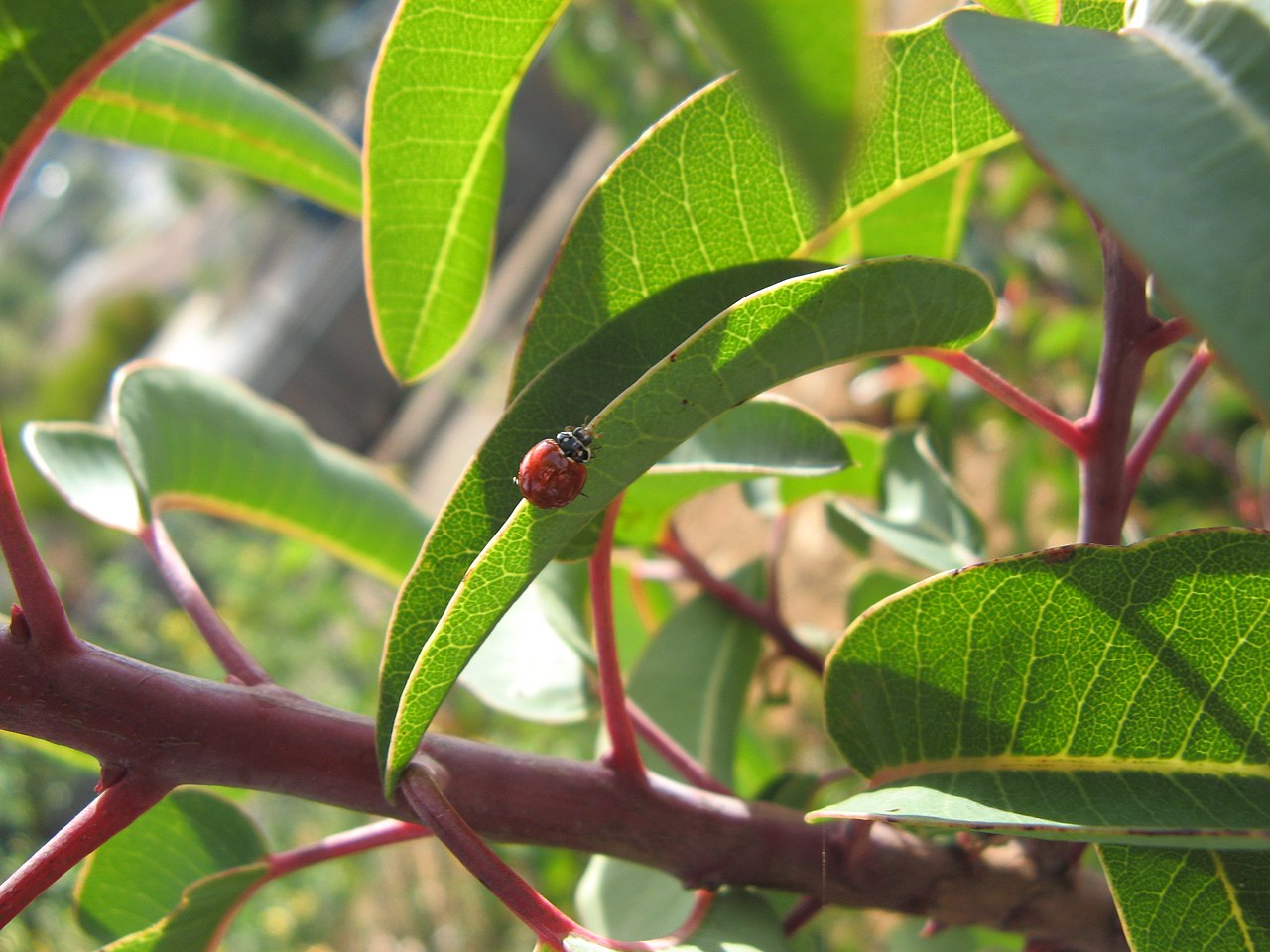
Young stems are distinctly reddish to maroon, smooth, and often glossy, aging to gray-brown bark on older wood. The reddish coloration on new growth is one of the plant’s most useful identification features, especially combined with the leaf shape.
Leaves
The leaves are simple, alternate, lance-shaped to oval, 2 to 4 inches long, leathery, and glossy dark green above with paler undersides. Their most distinctive trait is a gentle upward fold or curl along the midrib, giving each leaf a taco- or boat-like shape — a feature long used by naturalists to identify the plant at a glance, even from a moving car. Leaf margins are smooth (not toothed), and when crushed, the foliage releases a strong, resinous scent often compared to tart apples or bitter almonds.
Flowers & Fruit
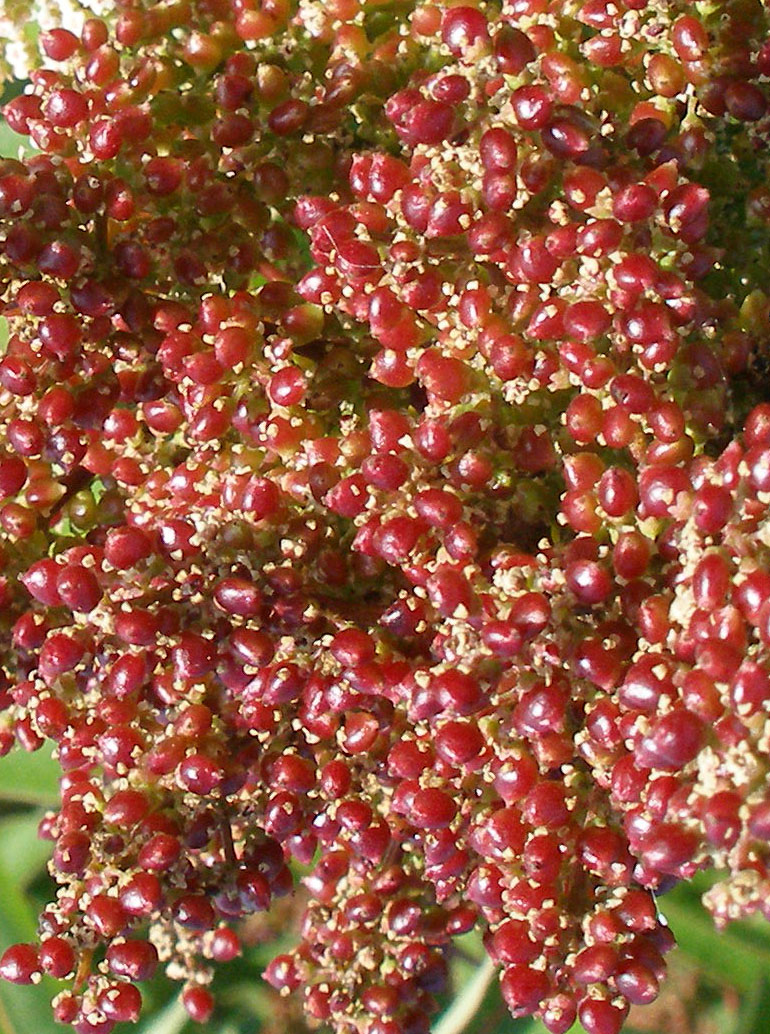
Flowers appear in large, dense, branched clusters (panicles) at the branch tips from late spring into summer, each individual flower tiny and creamy white to pale yellow, the overall cluster often 4 to 8 inches across. The flowers are a major nectar source during their bloom period. The fruit is a small, round, flattened drupe, about ⅛ inch across, reddish and slightly fuzzy when ripe, borne in dense clusters that persist on the shrub well into fall.
Quick Facts
| Scientific Name | Malosma laurina (syn. Rhus laurina) |
| Family | Anacardiaceae (Sumac/Cashew) |
| Plant Type | Evergreen shrub / small tree |
| Mature Height | 6–20 ft |
| Mature Spread | 8–20 ft |
| Growth Rate | Fast |
| Sun Exposure | Full Sun to Part Shade |
| Water Needs | Very low once established |
| Soil Type | Well-drained; sandy, loamy or rocky |
| Soil pH | 6.0–7.5 |
| Bloom Time | May – July |
| Flower Color | Creamy white to pale yellow |
| Fall Color | None (evergreen) |
| Fruit | Small reddish drupes, summer–fall |
| Deer Resistant | Yes |
| USDA Hardiness Zones | 9–11 (frost-sensitive) |
Native Range
Laurel Sumac is native to coastal Southern California, ranging from around Fresno and San Luis Obispo Counties south through the Transverse and Peninsular Ranges to San Diego County, including the Channel Islands of Santa Catalina and San Clemente, and continuing south along the Pacific coast of Baja California, Mexico.
It is especially common and conspicuous across Los Angeles, Orange, Riverside, and San Diego Counties, where it forms dense stands in coastal sage scrub and chaparral on hillsides, canyon slopes, and foothills, typically below about 3,000 feet. Because it is sensitive to hard freezes, its presence or absence closely tracks local frost patterns, and it is notably scarce or absent from colder inland valleys and canyon bottoms even within its general range, while thriving on the warmer, frost-protected slopes above them.
Within its range, Laurel Sumac is abundant and not a species of conservation concern, though like much of Southern California’s coastal sage scrub, its habitat faces ongoing pressure from development and habitat fragmentation.
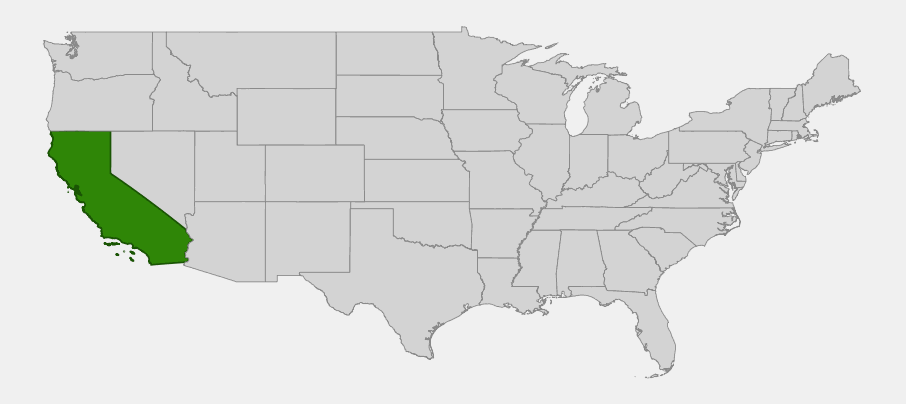
📋 Regional plant lists featuring Laurel Sumac: California and Nevada
Growing & Care Guide
Laurel Sumac is a fast, tough, low-maintenance shrub for frost-free Southern California gardens, filling large spaces quickly with dense, glossy, year-round foliage and reliable pollinator-friendly bloom.
Light
Full sun produces the densest, most compact growth and the heaviest bloom, matching the open coastal sage scrub and chaparral slopes where it naturally grows. It also tolerates light shade, especially in hot inland gardens, but becomes looser and more open with less direct sun.
Soil & Water
Well-drained soils of almost any texture suit Laurel Sumac, which is highly adapted to lean, rocky, or sandy conditions. Established plants need little to no supplemental water in coastal and many inland Southern California gardens and can decline with regular summer irrigation, which encourages root rot and weak growth. Water young plants modestly through their first one to two summers to aid establishment, then reduce or stop.
Planting Tips
Plant from containers in fall for best establishment during the cooler, wetter months. Because of its fast growth and eventual large size, give Laurel Sumac plenty of room — at least 10 to 15 feet from structures and other large shrubs. In colder inland valleys or areas prone to hard frost, choose warmer microclimates such as upper slopes, since low-lying frost pockets can kill or severely damage the plant.
Pruning & Maintenance
Laurel Sumac generally needs only occasional shaping to control its size, since it grows quickly and can become quite large if left unchecked. It resprouts vigorously after fire or hard pruning from a substantial underground burl, so periodic cutting back is well tolerated if a smaller form is desired. Remove frost-damaged growth in spring once new growth clarifies which branches survived.
Landscape Uses
- Large-scale screening or informal hedging, given its fast growth and dense form
- Slope stabilization and erosion control on dry hillsides
- Wildlife and pollinator gardens, for both the flowers and the fruit
- Fire-wise, low-water landscaping once established
- Habitat restoration plantings in coastal sage scrub and chaparral projects
- Naturalistic and wildland-edge gardens on larger properties
Wildlife & Ecological Value
Laurel Sumac is one of the most valuable wildlife shrubs in Southern California’s coastal sage scrub and chaparral, providing food and cover across multiple seasons.
For Pollinators
The large, dense flower clusters attract abundant native bees, honeybees, bumblebees, and other beneficial insects during the late spring to summer bloom period, making Laurel Sumac an important nectar source in the coastal sage scrub plant community.
For Birds
The small reddish fruits are eaten by a wide range of birds, including mockingbirds, towhees, thrashers, and many migratory species, which also help disperse the seeds. The dense, evergreen growth provides excellent year-round nesting and cover habitat, particularly valuable in open scrub habitat with limited taller vegetation.
For Mammals
Coyotes, foxes, and other small to medium mammals eat the fruit and shelter within the dense branching structure. The thickets Laurel Sumac forms provide important cover for a range of chaparral and coastal sage scrub wildlife.
Ecosystem Role
As a fast-growing, fire-adapted shrub capable of resprouting vigorously from its root burl, Laurel Sumac plays an important role in post-fire recovery of coastal sage scrub and chaparral communities, stabilizing soil and providing structure while slower-growing associates reestablish. Its sensitivity to hard frost also makes it a useful bioindicator that Southern California naturalists have long used to map local microclimates.
Cultural & Historical Uses
Indigenous peoples of coastal Southern California, including the Chumash, Tongva, and Luiseño, were familiar with Laurel Sumac within the broader landscape of useful chaparral and coastal sage scrub plants, though it was generally less significant than close relatives such as lemonadeberry and sugar bush for food and craft purposes. Its dense, resinous wood and thicket-forming growth made it more notable as habitat and landscape structure than as a primary resource plant.
The common name “Laurel Sumac” reflects both its sumac-family relationship and the laurel-like shine and shape of its leaves, which early botanists and settlers found visually distinctive among the region’s chaparral shrubs. The species’ striking reddish new growth and resinous, apple-like scent have made it a frequently noted feature of Southern California’s hillsides in popular nature writing for well over a century.
Today, Laurel Sumac’s main significance is ecological and horticultural — a defining, fast-growing shrub of the coastal sage scrub that both supports wildlife in the wild and serves gardeners seeking a tough, low-water, fast-filling native shrub for frost-free sites.
Frequently Asked Questions
Why do laurel sumac leaves fold upward?
The gentle upward curl along the midrib, giving leaves a taco-like shape, is a natural growth trait of the species rather than a stress response, and it is one of the easiest ways to identify the plant from a distance. Some sources suggest it may help shed excess heat and light, though it is present even on well-watered, unstressed plants.
Is laurel sumac frost tolerant?
No — it is notably frost-sensitive compared to many other Southern California natives, and hard freezes can kill or severely damage it. Its presence is often used informally to identify warmer, frost-free microclimates in the region.
How fast does laurel sumac grow?
Quickly. Under good conditions it can add a foot or more of growth per year and reach its mature size of 6 to 20 feet within several years, making it one of the faster-growing large native shrubs in Southern California.
Does laurel sumac resprout after fire?
Yes. It typically resprouts vigorously from a substantial underground burl after fire, which is also why it tolerates occasional hard pruning well if a gardener wants to control its size.
Is laurel sumac related to poison oak?
It belongs to the same plant family (Anacardiaceae) as poison oak, but Laurel Sumac does not cause the skin irritation poison oak does. Handling the leaves and crushing them to smell their resinous scent is a common, safe way to identify the plant in the field.

Looking for a nursery that carries Laurel Sumac?
Browse our native plant nursery directory: California