Texas Paloverde (Parkinsonia texana)
Parkinsonia texana (formerly classified as Cercidium texanum), commonly known as Texas Paloverde, is a thorny, drought-tolerant small tree or large shrub native to the brush country of South Texas. Its Spanish-derived name “palo verde” means “green stick” or “green tree,” a direct reference to its most striking feature: smooth, yellow-green bark that carries out photosynthesis even after the plant drops its leaves during drought. This adaptation lets Texas Paloverde keep producing food through the long dry spells typical of the Rio Grande Plains, where it has grown for thousands of years alongside mesquite, blackbrush acacia, and prickly pear.
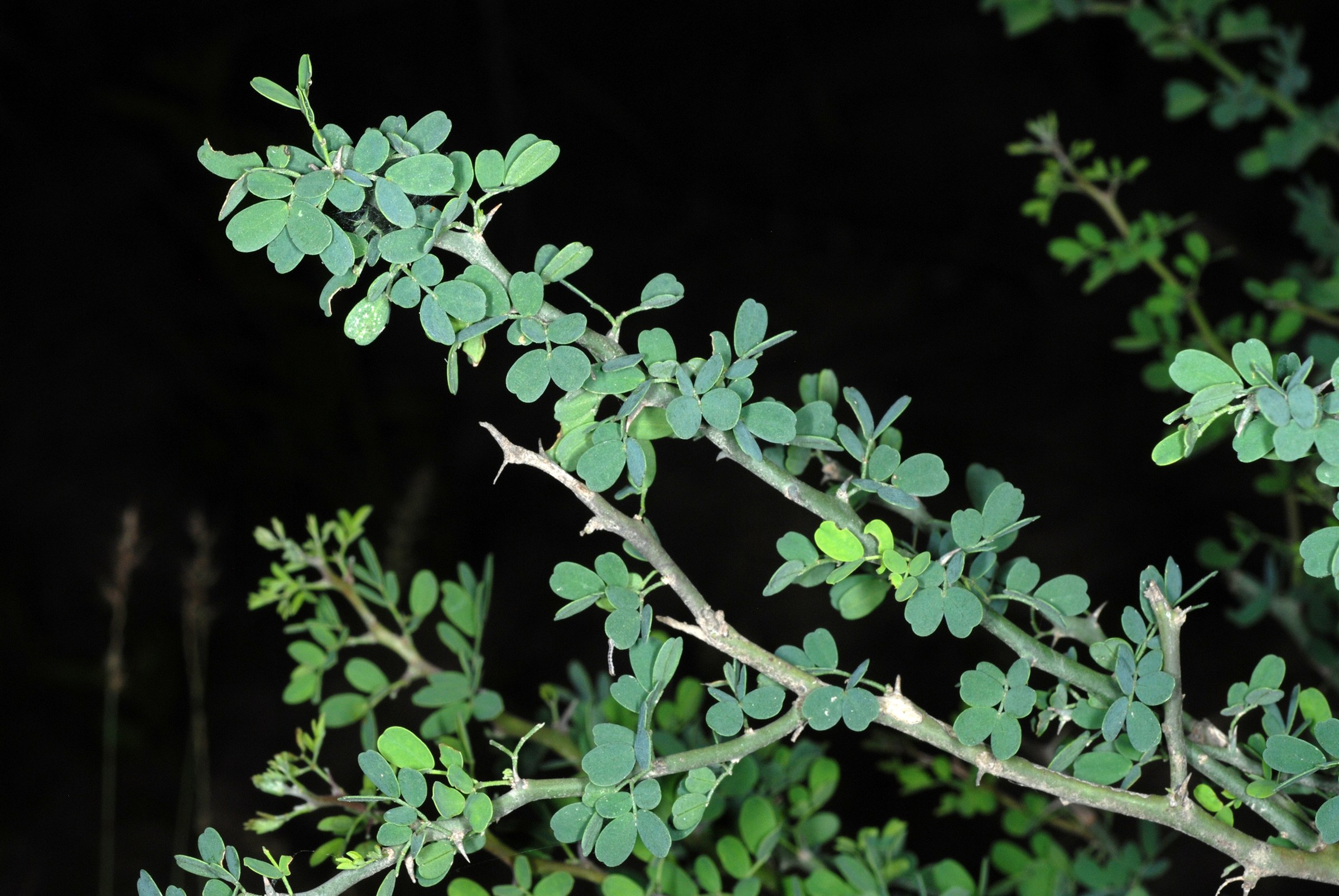
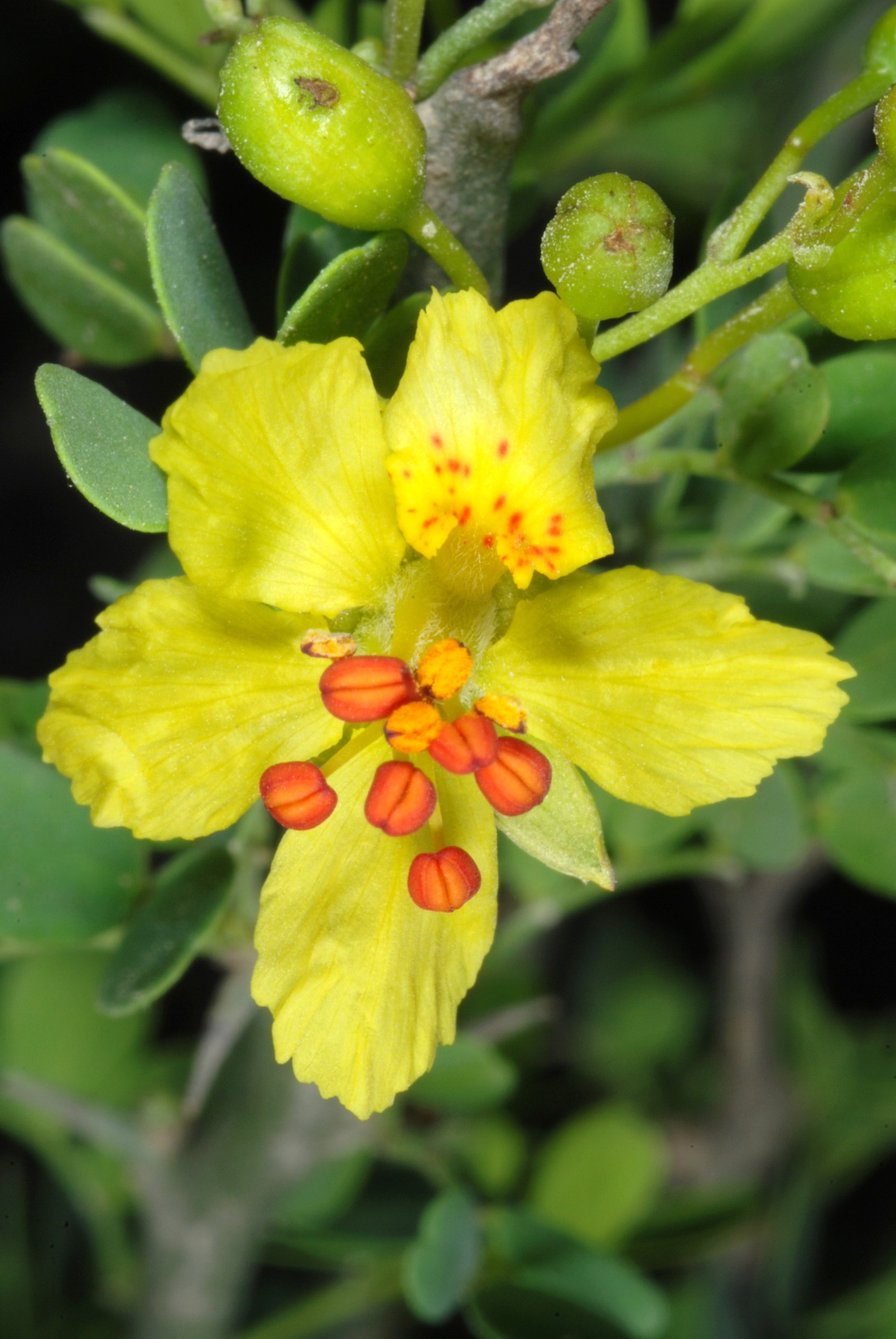
Growing 4 to 10 feet tall (occasionally taller with age), Texas Paloverde forms a dense, intricately branched thicket of slender, zig-zagging green twigs armed with stiff, needle-like thorns at each node. The tiny, twice-compound leaves are easy to miss and drop quickly in dry weather, leaving the green stems to carry on the work of photosynthesis. In spring and early summer the shrub is transformed by a flush of small, bright yellow flowers, each petal streaked and spotted with red-orange at the throat, that draw in native bees and other pollinators from the surrounding thornscrub.
Texas Paloverde is a classic member of the South Texas thornscrub community, a tough, resilient plant that tolerates heat, drought, caliche soils, and repeated browsing from deer and livestock. It is an excellent choice for xeriscaping and wildlife gardens in South and West Texas, offering structure, thorny cover for nesting birds, and a reliable nectar source in a landscape where water-wise natives are increasingly valued.
Identification
Texas Paloverde is most easily recognized by the combination of smooth green bark, wickedly zig-zag branching, and short, rigid thorns at every branch junction. It typically grows as a multi-trunked shrub or small, rounded tree 4 to 10 feet tall and often as wide, though old specimens in protected sites can reach greater height. The overall silhouette is airy and open, since the fine-textured leaves are present for only part of the year.
Bark & Stems
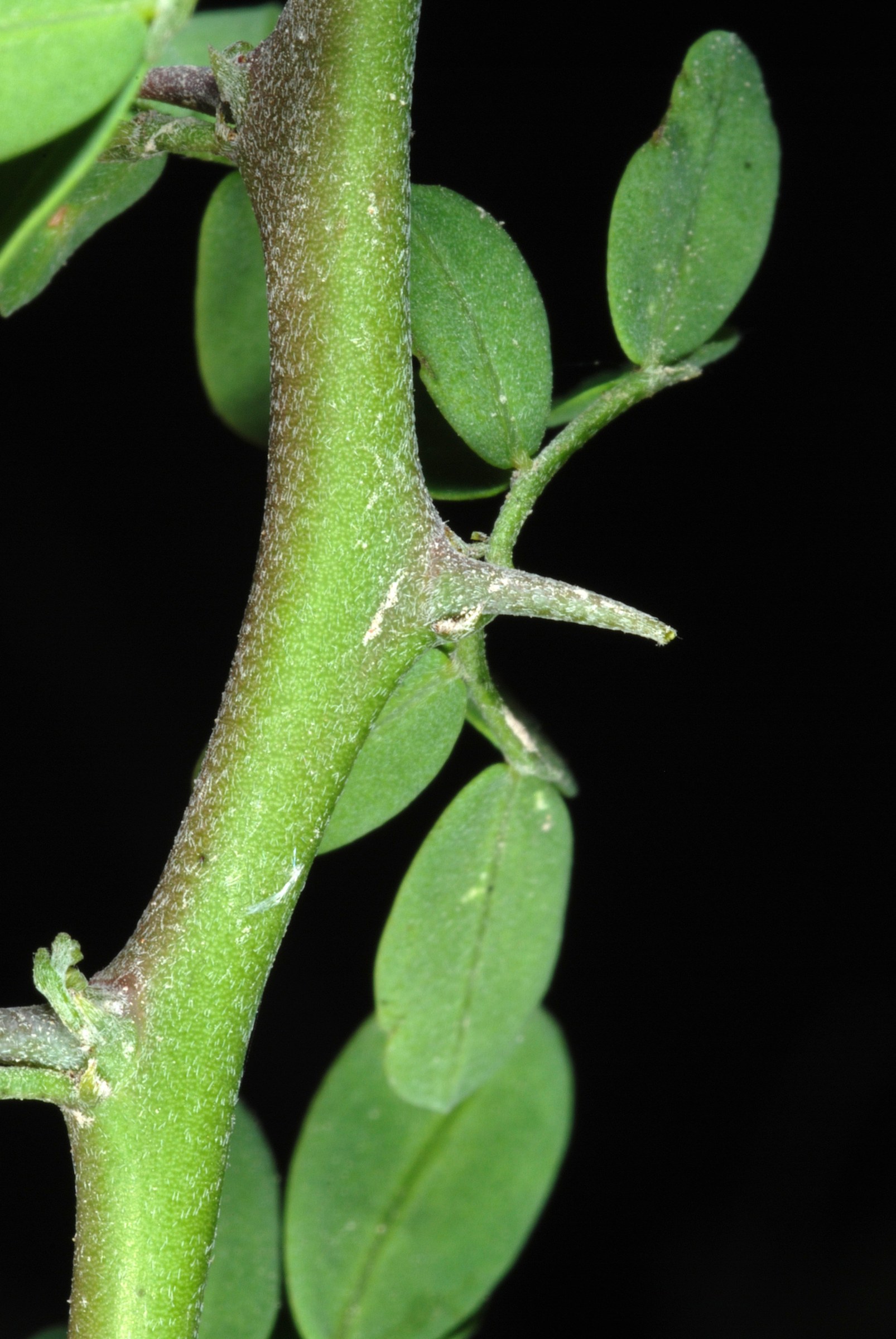
Young stems and twigs are smooth and bright yellow-green, a color that persists on branches for several years before they eventually turn gray-brown with age. This chlorophyll-rich bark is the plant’s signature feature, allowing it to photosynthesize through its stems whenever leaves are absent. Branches grow in a distinctive zig-zag pattern, angling sharply at each node, and each node bears a short, stout, needle-like thorn up to about half an inch long.
Leaves
The leaves are small, alternate, and twice-pinnately compound (bipinnately compound), typically divided into just two to three pairs of oblong leaflets, each leaflet roughly ¼ to ½ inch long with a blunt or slightly notched tip. This sparse, fine foliage casts very little shade. Texas Paloverde is drought-deciduous, dropping its leaves quickly in response to dry conditions and releafing just as readily after rain, which is why the green stems do so much of the plant’s photosynthetic work.
Flowers & Fruit
Flowers appear in small clusters (racemes) from the leaf axils, each about ½ to ¾ inch across with five rounded, bright yellow petals. The uppermost petal is marked with red to orange spots or streaks at the base, a nectar guide for visiting insects, and the flower center is accented by a ring of showy red-orange anthers. Bloom is heaviest from March into July, often repeating with rain events through summer and fall. The fruit is a flattened, slightly constricted legume pod, dark brown at maturity, usually 1 to 3 inches long and containing one to a few hard seeds.
Quick Facts
| Scientific Name | Parkinsonia texana (syn. Cercidium texanum) |
| Family | Fabaceae (Legume/Pea Family) |
| Plant Type | Deciduous Shrub / Small Tree |
| Mature Height | 4–10 ft |
| Mature Spread | 4–10 ft |
| Growth Rate | Slow to Moderate |
| Sun Exposure | Full Sun |
| Water Needs | Low |
| Soil Type | Well-drained; sandy loam, clay, caliche or gravelly soils |
| Soil pH | 6.5–8.5 (neutral to alkaline) |
| Bloom Time | March – July, with rain-triggered repeat bloom |
| Flower Color | Yellow with red-orange throat markings |
| Fall Color | None notable (drought-deciduous, not frost-deciduous) |
| Fruit | Flat brown legume pods, 1–3 in. |
| Deer Resistant | Yes (thorny, low-palatability browse) |
| USDA Hardiness Zones | 8–10 |
Native Range
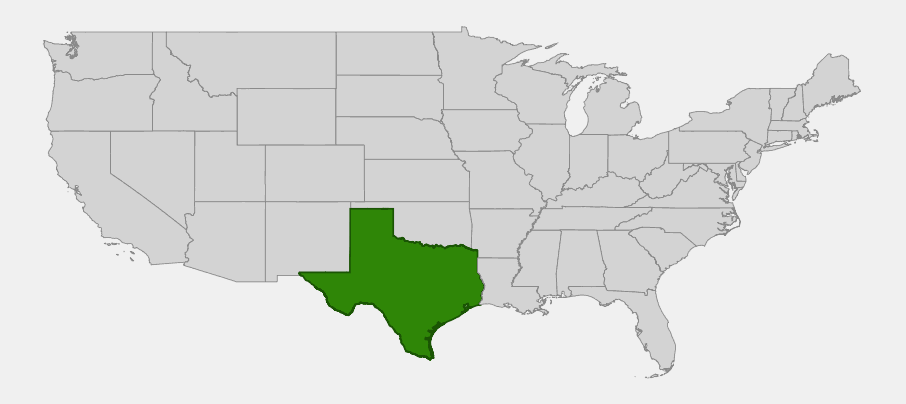
Texas Paloverde is native to the Rio Grande Plains of South Texas, a thornscrub region stretching from the Coastal Bend southwest toward the Rio Grande, and continuing south into the adjacent Mexican states of Tamaulipas, Nuevo León, and Coahuila. Within Texas it is concentrated in the brush country counties of the lower Rio Grande Valley and South Texas Plains, where it is a characteristic shrub of the native thornscrub alongside mesquite, blackbrush acacia, and various cacti.
The species occupies dry, rocky plains, caliche outcrops, and sandy or gravelly roadsides, usually on well-drained soils in open scrub or semi-desert vegetation. It tends to grow as scattered individuals or small thickets rather than dominating the landscape, filling gaps in the thornscrub canopy where its drought tolerance and thorny defenses give it an edge over less resilient species.
Because it requires hot summers and mild, essentially frost-free winters, Texas Paloverde does not range naturally beyond South and far West Texas; gardeners farther north or in more humid climates will find it difficult to establish outdoors. Within its native range, however, it is a reliable, low-maintenance addition to naturalistic plantings that mimic the surrounding thornscrub.
📋 Regional plant lists featuring Texas Paloverde: South and West Texas
Growing & Care Guide
Texas Paloverde is built for tough, hot, dry conditions and asks little of the gardener once established. It is an ideal structural shrub for xeriscapes, thornscrub restorations, and wildlife hedgerows across South and West Texas.
Light
Plant Texas Paloverde in full sun. It is adapted to the intense light and heat of open thornscrub and will become leggy and bloom poorly in shade.
Soil & Water
This shrub thrives in well-drained soils, including sandy loam, clay, caliche, and gravelly ground, and tolerates the alkaline, calcium-rich soils common across South Texas. Water needs are low; established plants survive on rainfall alone in most years and need only occasional deep watering during extended drought. Soggy or poorly drained soil is the main threat to its health.
Planting Tips
Set out container-grown plants in fall or early spring so roots can establish before summer heat arrives. Because of its thorns, site it away from walkways and play areas, and give it room to spread into its natural multi-trunked form. It combines well with mesquite, prickly pear, and other thornscrub natives in a naturalistic planting.
Pruning & Maintenance
Little pruning is required. Remove dead or damaged wood after hard freezes, since young growth can be tender in unusually cold winters, though established plants typically resprout from the base. Avoid heavy shearing, which spoils the plant’s naturally airy, zig-zag form.
Landscape Uses
Texas Paloverde fills several useful roles in a South Texas native landscape:
- Xeriscaping and low-water gardens
- Thorny wildlife hedgerow or living fence
- Thornscrub restoration plantings
- Pollinator gardens — spring and summer flowers draw native bees
- Caliche and rocky-soil sites where few other shrubs thrive
Wildlife & Ecological Value
As a thorny, nectar-rich shrub scattered through the Rio Grande Plains thornscrub, Texas Paloverde supports a range of wildlife adapted to this dry brush country.
For Pollinators
The red-spotted yellow flowers attract native bees and other insects throughout the long spring-to-summer bloom period, offering a dependable nectar source in a landscape where flowering shrubs can be scarce between rain events.
For Birds
The dense, thorny branching provides secure nesting sites and cover for small thornscrub birds, which rely on spiny shrubs like Texas Paloverde to shield nests from predators. Seed-eating birds also take advantage of the legume pods.
For Mammals
White-tailed deer and other browsers occasionally take young growth, but the stiff thorns limit heavy browsing, making Texas Paloverde more deer-resistant than many South Texas natives. Small mammals use the thorny thickets for shelter from predators and the summer sun.
Ecosystem Role
Texas Paloverde is a structural component of South Texas thornscrub, contributing to the dense, interlocking canopy of thorny shrubs that defines this ecosystem. Its green, photosynthetic bark lets it keep contributing to primary production even through leafless drought periods, helping stabilize soil and provide year-round structure in a landscape shaped by boom-and-bust rainfall.
Cultural & Historical Uses
Texas Paloverde has long been a recognized, if minor, component of South Texas brush country, valued historically more for its role in the thornscrub ecosystem than for direct human use. Ranchers and early settlers in the brush country knew it as one of many thorny shrubs, alongside mesquite and acacia, that made clearing land for grazing and agriculture a slow, thorn-scarred undertaking.
The Spanish-derived common name “paloverde,” shared with related species of the arid Southwest and Mexico, reflects the long familiarity of Spanish-speaking ranching communities with these green-barked desert shrubs. In South Texas, the species has traditionally served as a hardy, low-value browse plant and a source of dense, thorny cover used informally as living fencing around pastures and homesteads.
Today, Texas Paloverde’s historical role as rangeland brush has given way to growing recognition as a garden-worthy native for water-wise landscaping. As interest in Texas thornscrub restoration and native xeriscaping has grown, nurseries in South Texas increasingly offer it as an ornamental choice for gardeners wanting authentic regional character and reliable drought tolerance.
Frequently Asked Questions
Is Texas Paloverde the same as the Palo Verde trees grown in Arizona?
No. Arizona’s familiar paloverdes, such as Blue Paloverde and Foothills Paloverde, are different species in the same general group of green-barked desert legumes. Texas Paloverde (Parkinsonia texana) is native specifically to South Texas and adjacent Mexico and is smaller and more shrubby than its Sonoran Desert relatives.
Does Texas Paloverde need full sun?
Yes. It is adapted to the open, intensely sunny thornscrub of South Texas and performs poorly in shaded sites, with fewer flowers and a sparse, leggy habit.
Why does Texas Paloverde have green bark?
The green color comes from chlorophyll in the outer bark tissue, which allows the plant to photosynthesize through its stems. This is especially valuable during drought, when the plant has dropped its leaves but its green stems can still produce food.
Is Texas Paloverde deer resistant?
Largely, yes. Its dense network of stiff, needle-like thorns discourages browsing by white-tailed deer, making it a practical choice for gardens in areas with heavy deer pressure.
How cold-hardy is Texas Paloverde?
It is reliably hardy in USDA zones 8–10 and tolerates the mild winters typical of South Texas. Hard, prolonged freezes can damage young growth, though established plants generally resprout from the base.

Looking for a nursery that carries Texas Paloverde?
Browse our native plant nursery directory: Texas