Our Lord’s Candle (Hesperoyucca whipplei)
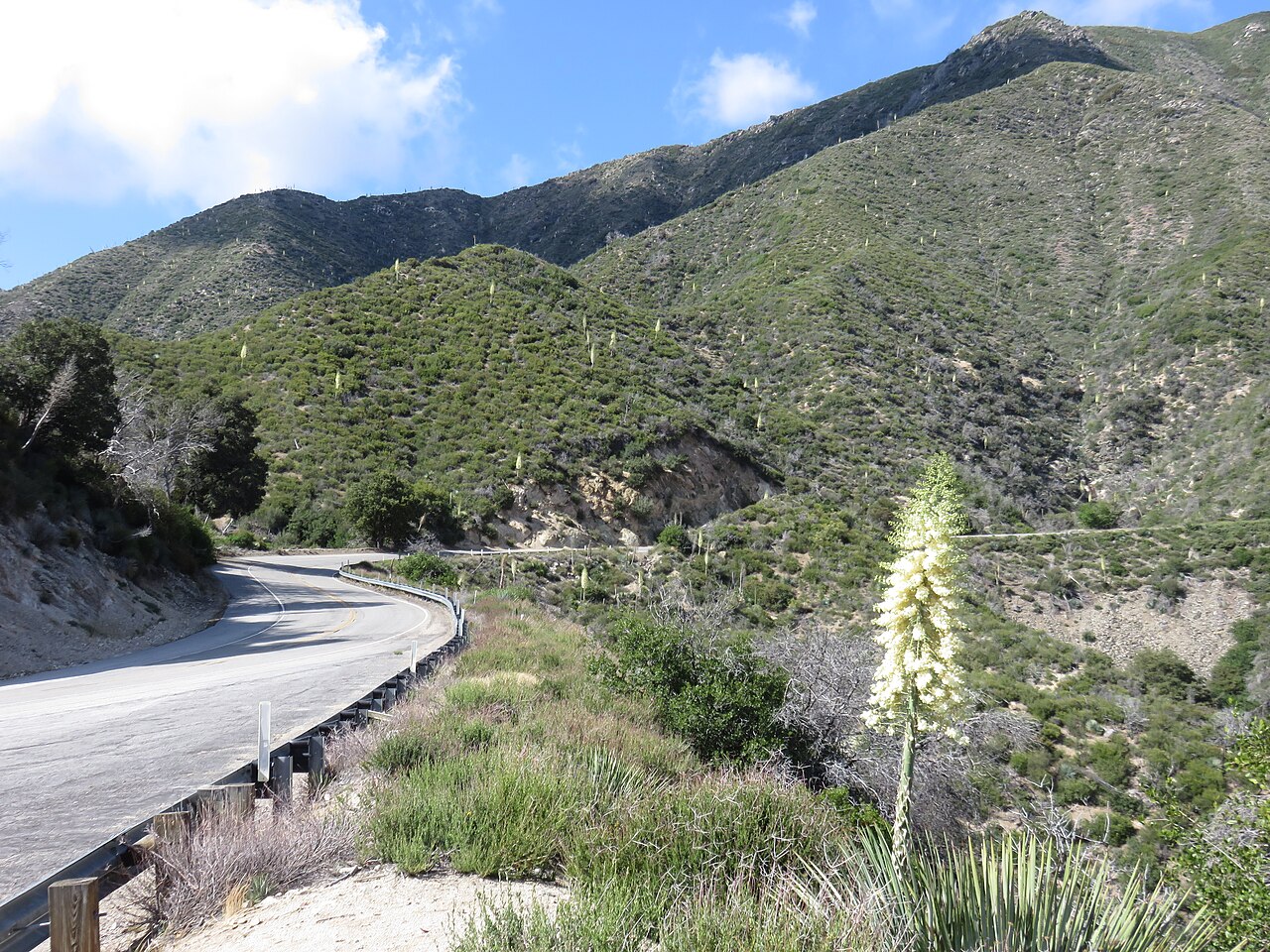
Hesperoyucca whipplei, commonly called Our Lord’s Candle or chaparral yucca, is one of the most dramatic native plants of Southern California’s hillsides. For most of its life it is a low, silvery-blue rosette of rigid, needle-tipped leaves, easy to overlook among the sagebrush and ceanothus. Then, usually after six to twenty years, it sends up a single enormous flower spike — often 6 to 12 feet tall, occasionally more — densely packed with hundreds of creamy white, waxy bells. Seen from a distance on a spring hillside, a slope studded with these spikes looks like a field of giant candles, which is exactly the image early Spanish-speaking settlers had in mind when they named it.
Our Lord’s Candle belongs to the agave family (Asparagaceae, subfamily Agavoideae) and was long classified within Yucca, but genetic and structural differences — a solitary style instead of three, and a fruit that dries and splits rather than staying fleshy — place it in its own genus, Hesperoyucca, shared with only one other species. It grows as a solitary rosette rather than a branching, trunked plant like many of its yucca relatives, and most individuals flower only once in their lifetime, a strategy botanists call monocarpy.
In the garden, Our Lord’s Candle is prized by native-plant gardeners for exactly the qualities that let it thrive on dry, rocky slopes in the wild: extreme drought tolerance, almost no maintenance once established, and a bold sculptural form that anchors a dry garden year-round. The decade-plus wait for the flower spike is part of its appeal — when it finally comes, it is unmistakable, and it draws moths, bees, and curious neighbors from blocks away.
Identification
Our Lord’s Candle begins life as a tight rosette of leaves at ground level, usually growing as a single rosette rather than a clustering clump, though some plants (sometimes separated as ssp. parishii) do offset and form small colonies. The rosette itself is unmistakable once you know it, and the towering flower spike, when present, is visible from a considerable distance.
Leaves
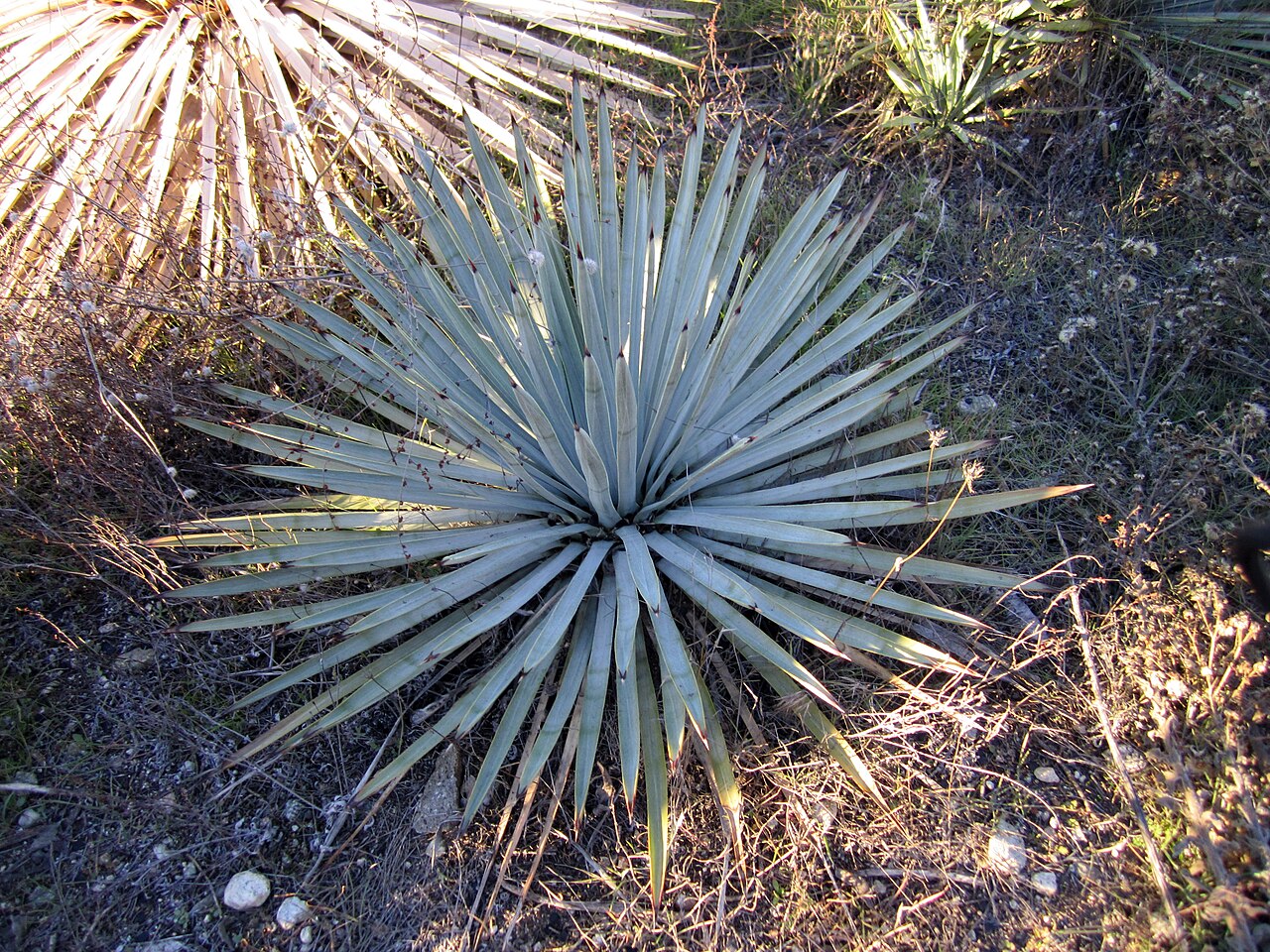
The leaves are rigid, narrow, and sword-like, 1 to 3 feet long and less than an inch wide, tapering to a sharp, spine-tipped point capable of puncturing skin or clothing. Their color ranges from blue-green to a pale, almost silvery gray-green, and the margins may carry fine, pale threads or be nearly smooth, depending on the population. The leaves radiate outward and slightly upward from a central growing point, forming the dense, spherical rosette that sits at or just above ground level.
Flower Stalk
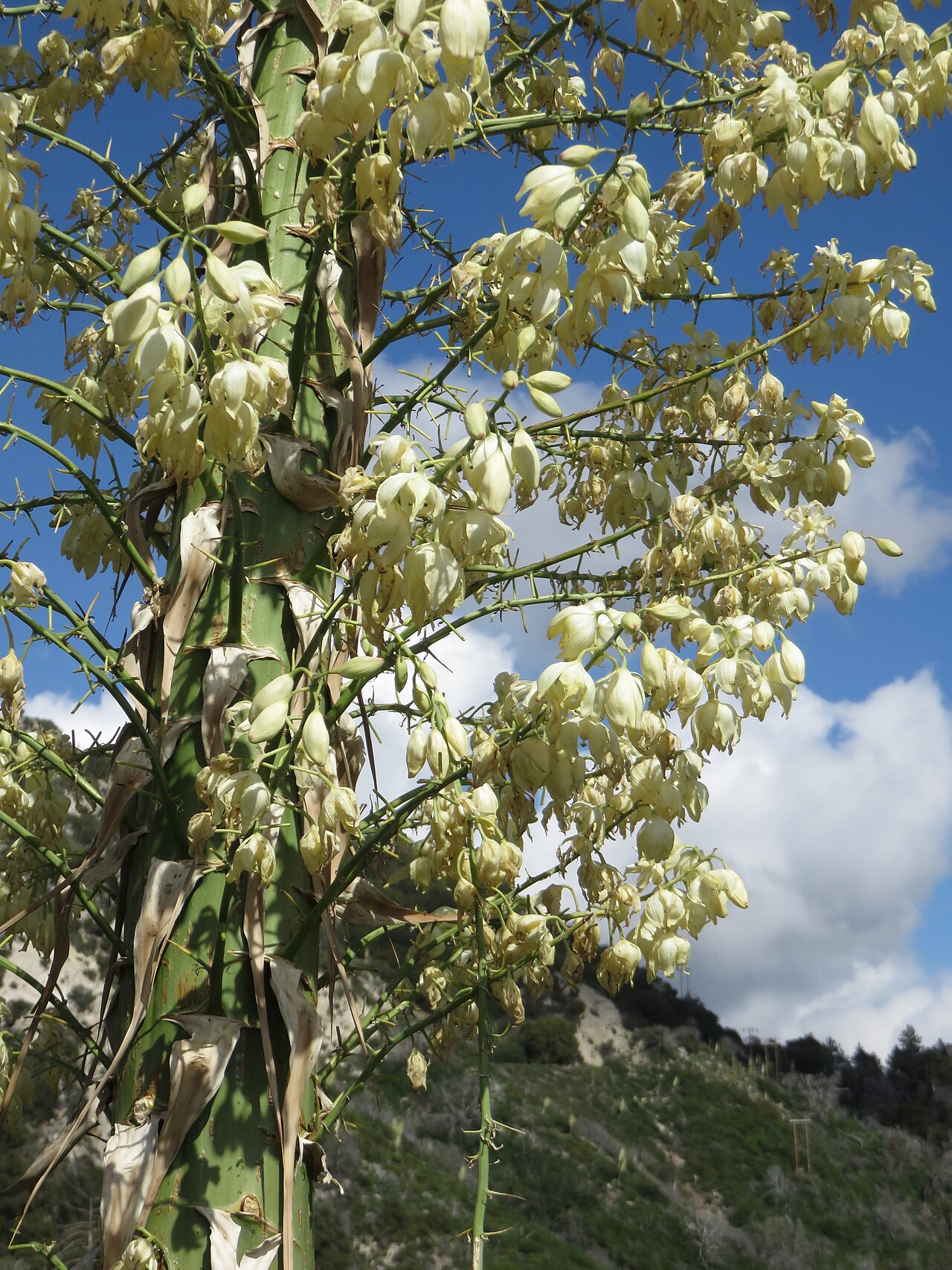
When a rosette is mature enough to bloom, it sends up a single thick flowering stalk from the center, typically reaching 6 to 12 feet, with exceptional stalks recorded over 14 feet. The lower portion of the stalk is bare; the upper two-thirds to three-quarters is densely crowded with hundreds of pendant, bell-shaped flowers on short branches, giving the whole structure its candle-like outline. The spike can add several inches of height per day while actively growing, among the fastest growth rates of any native plant in the region.
Flowers & Fruit
Individual flowers are waxy, cream to white, sometimes tinged with purple at the base, about 1 to 2 inches long, and strongly fragrant at night. They are pollinated almost exclusively by the California yucca moth (Tegeticula maculata), which deliberately packs pollen onto the stigma while laying eggs in the ovary — a textbook example of obligate mutualism, since the moth’s larvae feed only on some of the developing seeds while enough remain to produce the next generation of plants. After pollination, the flowers develop into dry, three-chambered capsules that split open to release flat, black seeds. The entire rosette that produced the stalk dies after flowering and fruiting, having spent its accumulated reserves on one massive reproductive effort; offsets or nearby seedlings carry the population forward.
Quick Facts
| Scientific Name | Hesperoyucca whipplei (syn. Yucca whipplei) |
| Family | Asparagaceae (Agave subfamily) |
| Plant Type | Evergreen rosette succulent |
| Mature Height | Rosette 2–4 ft; flower spike 6–12 ft |
| Mature Spread | 2–4 ft |
| Growth Rate | Slow rosette growth; flower spike very fast |
| Sun Exposure | Full Sun |
| Water Needs | Very low once established |
| Soil Type | Rocky, sandy or gravelly, fast-draining |
| Soil pH | 6.0–8.0 (adaptable) |
| Bloom Time | April – June |
| Flower Color | Cream to white, sometimes purple-tinged |
| Fall Color | None (evergreen) |
| Fruit | Dry, three-chambered capsule |
| Deer Resistant | Yes |
| USDA Hardiness Zones | 8–11 |
Native Range
Our Lord’s Candle is native to Southern California, where it is a defining plant of the dry chaparral and coastal sage scrub belt that runs from the Coast Ranges south of Monterey County down through the Transverse and Peninsular Ranges to the U.S.–Mexico border, including the Channel Islands. It continues south into similar habitat in northern Baja California, Mexico, though that part of the range falls outside the United States.
It is most common on dry, rocky or gravelly slopes, ridgelines, and canyon walls in chaparral and coastal sage scrub, usually below about 5,000 feet, though scattered populations reach higher in the mountains that ring the Los Angeles and San Diego basins. It thrives on exactly the kind of thin, well-drained, sun-baked soils that discourage most other plants, often forming conspicuous colonies on slopes that burned in the past few decades, since fire can trigger synchronized blooming across a population.
Scattered, isolated colonies occur well outside this core range, including a documented population in the White Mountains on the California–Nevada border at over 5,000 feet elevation — likely a relict of a formerly wider distribution rather than a sign the species is common in the Great Basin. Within its core Southern California range, however, Our Lord’s Candle is abundant and easy to find on almost any dry, south-facing chaparral slope.
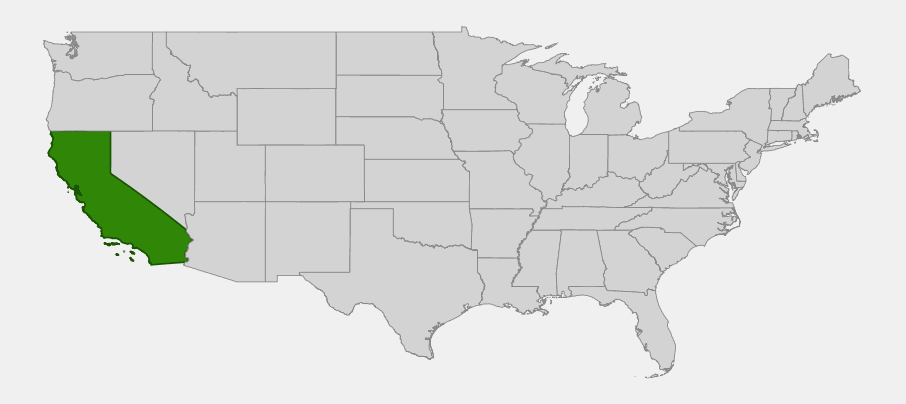
📋 Regional plant lists featuring Our Lord’s Candle: California and Nevada
Growing & Care Guide
Our Lord’s Candle is about as low-maintenance as native plants get, provided it has the one thing it truly needs: excellent drainage. Treat it like the chaparral native it is, and it will reward you with years of trouble-free structure and, eventually, an unforgettable bloom.
Light
Give it full sun. In the wild it grows on open, south- and west-facing slopes with little shade, and plants grown in part shade become etiolated, floppy, and reluctant to flower. The more sun, the tighter and more attractive the rosette.
Soil & Water
Fast drainage is non-negotiable. Rocky, sandy, or decomposed-granite soils suit it best; heavy clay that holds winter moisture around the crown is the most common cause of failure, leading to crown rot. Once established, Our Lord’s Candle needs no supplemental water in most of coastal and inland Southern California and actually performs worse with regular irrigation, which can trigger rot and encourage weak, lush growth. Water young plants sparingly through their first one to two summers, then stop.
Planting Tips
Plant from containers in fall, when cooling temperatures and winter rains support root establishment without the stress of summer heat. Choose a site away from paths, patios, and anywhere people or pets brush past regularly — the leaf tips are genuinely sharp. Allow at least 3 to 4 feet of clearance in every direction. Raised beds, berms, or naturally sloped sites improve drainage further in gardens with heavier soil.
Pruning & Maintenance
Essentially none is needed. Remove the spent flower stalk after seed drop if you prefer a tidier look, though leaving it standing provides seed for birds and a dramatic winter silhouette. Because each rosette flowers only once and then dies, expect individual plants to eventually disappear from the planting; offsets or self-sown seedlings typically replace them over time.
Landscape Uses
- Dry, rocky slopes and hillsides where little else will thrive without irrigation
- Xeriscape and water-wise gardens as a bold architectural accent
- Fire-wise defensible-space plantings, since established plants need no summer water
- Wildlife and pollinator gardens that include the yucca moth’s host plant
- Barrier or security plantings along property edges, thanks to the sharp leaf tips
- Mediterranean and desert-style gardens paired with other chaparral natives
Wildlife & Ecological Value
Our Lord’s Candle is a keystone plant for one particular insect, and a useful resource for a much wider range of wildlife during its brief but spectacular bloom.
For Pollinators
The California yucca moth (Tegeticula maculata) is this plant’s sole effective pollinator and depends on it entirely: females actively collect pollen and pack it onto the flower’s stigma, then lay eggs in the ovary so their larvae can feed on a portion of the developing seeds. Neither species can complete its life cycle without the other, making this one of the most tightly bound plant-pollinator relationships in California’s flora. Bees and other insects also visit the flowers opportunistically, though without pollinating them effectively.
For Birds
Hummingbirds and other nectar feeders visit the flower spikes, and seed-eating birds forage the dry capsules after they split open in summer and fall. The dense rosettes also offer cover for ground-foraging birds navigating open chaparral.
For Mammals
Woodrats and other small mammals use the spiny rosettes for protective cover, nesting close to but not inside the leaf tips. Historically, parts of the plant were a food source for a range of chaparral wildlife, including the young flower stalks before they toughened.
Ecosystem Role
As a long-lived, slow-growing evergreen anchor of chaparral and coastal sage scrub, Our Lord’s Candle holds soil on steep slopes and persists through the fire cycles that periodically sweep this ecosystem; many populations flower heavily in the first spring or two after a fire, when competition is temporarily reduced and resources are more available.
Cultural & Historical Uses
Indigenous peoples of Southern California, including the Chumash, Tongva, Luiseño, and Cahuilla, made extensive use of Hesperoyucca whipplei. The tough fibers stripped from mature leaves were twisted into cordage, nets, sandals, and baskets, while the young, unopened flower stalks were roasted or baked as food, a traditional practice reflected in the common name “Spanish bayonet” sometimes applied to related yuccas in the region. The ripe fruit and seeds were also eaten, and the fibrous leaves provided material for brushes and other tools.
The common name “Our Lord’s Candle” comes from Spanish-speaking settlers and missionaries, who likened the tall white flower spikes rising from the hillsides to rows of lit candles — an image still apt on any spring drive through the mountains above Los Angeles or San Diego. Early botanical collections of the species were made in the 1850s during U.S. railroad survey expeditions through Southern California, which is also the origin of the species name whipplei, honoring the expedition’s leader.
Today the plant’s main human use is horticultural rather than practical. It is a staple of California native-plant and xeriscape gardens, valued for its sculptural form, extreme drought tolerance, and the rare spectacle of its once-in-a-lifetime bloom.
Frequently Asked Questions
How long does it take Our Lord’s Candle to bloom?
Most plants take roughly six to twenty years to mature enough to send up a flower spike, with the exact timing depending on growing conditions. The rosette lives as a low, spiny clump the whole time, giving no obvious sign a bloom is coming until the stalk emerges.
Does the plant die after it blooms?
The individual rosette that flowers does die after seed is set, having used its stored reserves on one massive reproductive effort. If the plant has produced offsets, those continue growing; otherwise the population relies on seedlings to replace it.
Is Our Lord’s Candle the same as Joshua tree?
No. Joshua tree (Yucca brevifolia) is a true Yucca that grows a branching trunk and lives in the Mojave Desert, while Our Lord’s Candle is a trunkless rosette in the related genus Hesperoyucca, native to chaparral and coastal sage scrub rather than desert.
Can I grow Our Lord’s Candle outside California?
Yes, in any climate with full sun, sharp drainage, and mild, dry winters — it is popular in Mediterranean-climate and xeriscape gardens well beyond its native range, including parts of the Southwest and even in protected microclimates in Europe and New Zealand. Reliable winter wet or hard, prolonged freezes outside zones 8–11 are the main limiting factors.
Are the leaf tips dangerous?
Yes — the stiff, spine-tipped leaves can puncture skin and clothing, so Our Lord’s Candle should be planted well away from paths, seating areas, and anywhere people or pets pass closely. Many gardeners use it deliberately as a barrier planting for exactly this reason.

Looking for a nursery that carries Our Lord’s Candle?
Browse our native plant nursery directory: California