St. Catherine’s Lace (Eriogonum giganteum)
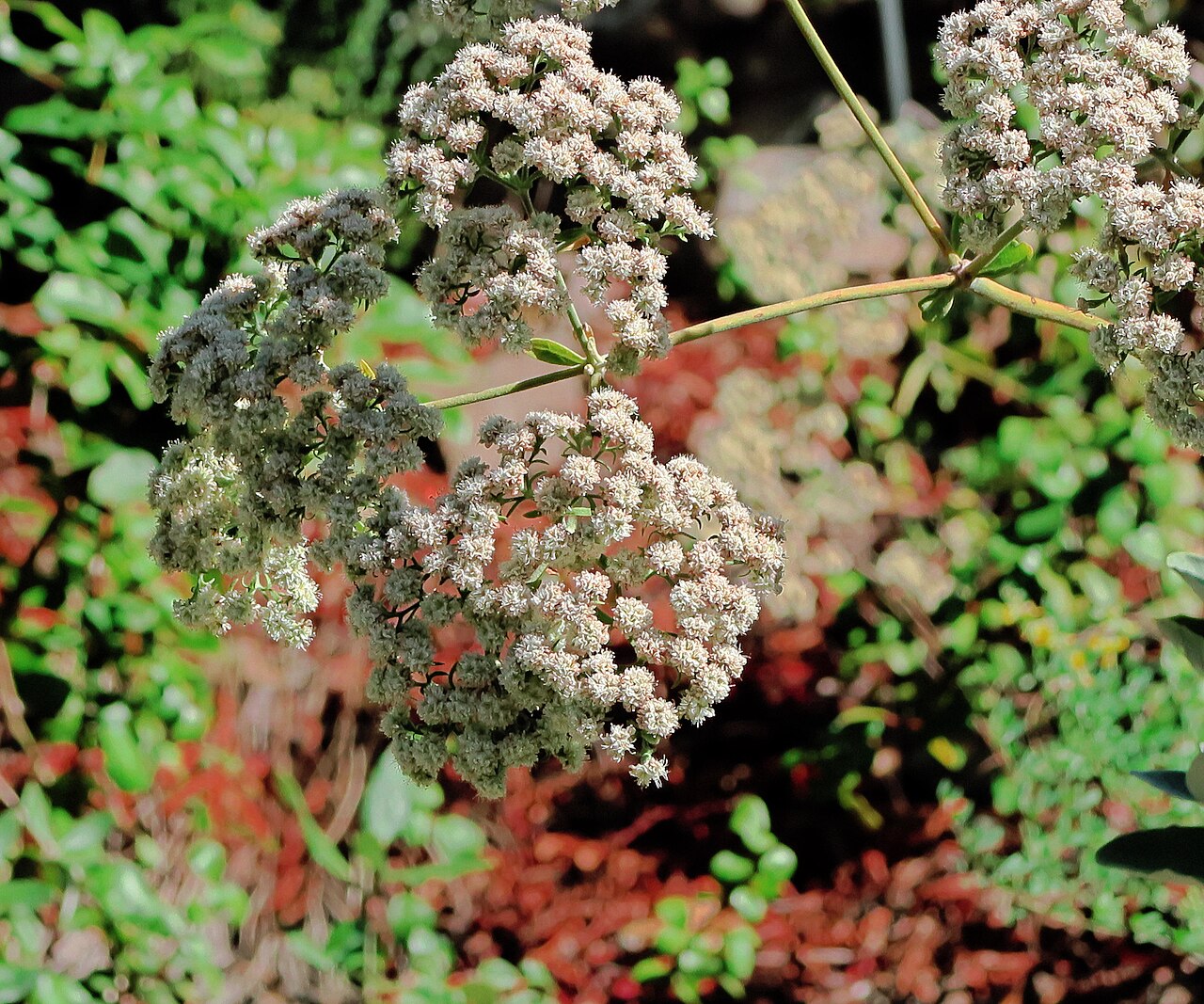
Eriogonum giganteum, commonly known as St. Catherine’s Lace or giant buckwheat, is one of California’s most striking island endemics — a large, rounded, silvery-leaved shrub found growing wild only on Santa Catalina Island off the Southern California coast. In summer it produces enormous, frothy, cream-to-pink flower clusters that can span a foot or more across, among the largest flower heads of any native buckwheat and a magnet for bees and butterflies on the island’s dry slopes.
A member of the buckwheat family (Polygonaceae), St. Catherine’s Lace is the largest-growing of California’s many wild buckwheats, reaching 4 to 8 feet tall and nearly as wide, with felted, gray-green leaves that give the whole plant a soft, silvery cast year-round. Its narrow native range — Santa Catalina Island alone — has not stopped it from becoming one of the most widely planted California native shrubs on the mainland, where its drought tolerance, bold form, and exceptional pollinator value have made it a favorite of native-plant gardeners far from its island home.
Because it is a true island endemic, St. Catherine’s Lace carries a special responsibility for anyone growing it: it is rare and of conservation concern in the wild, even though it is common and easy to find in cultivation. Planting it in a mainland garden supports the species without disturbing its limited natural habitat.
Identification
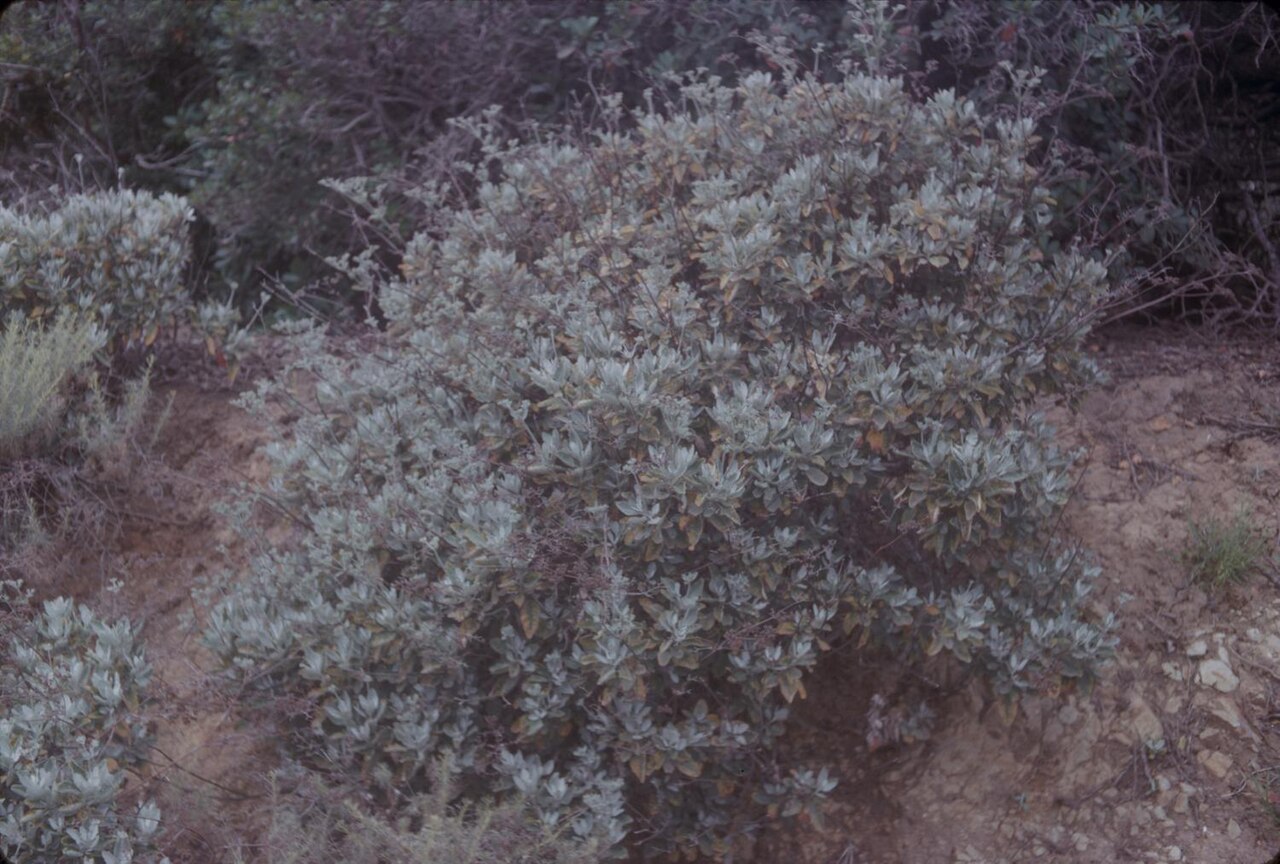
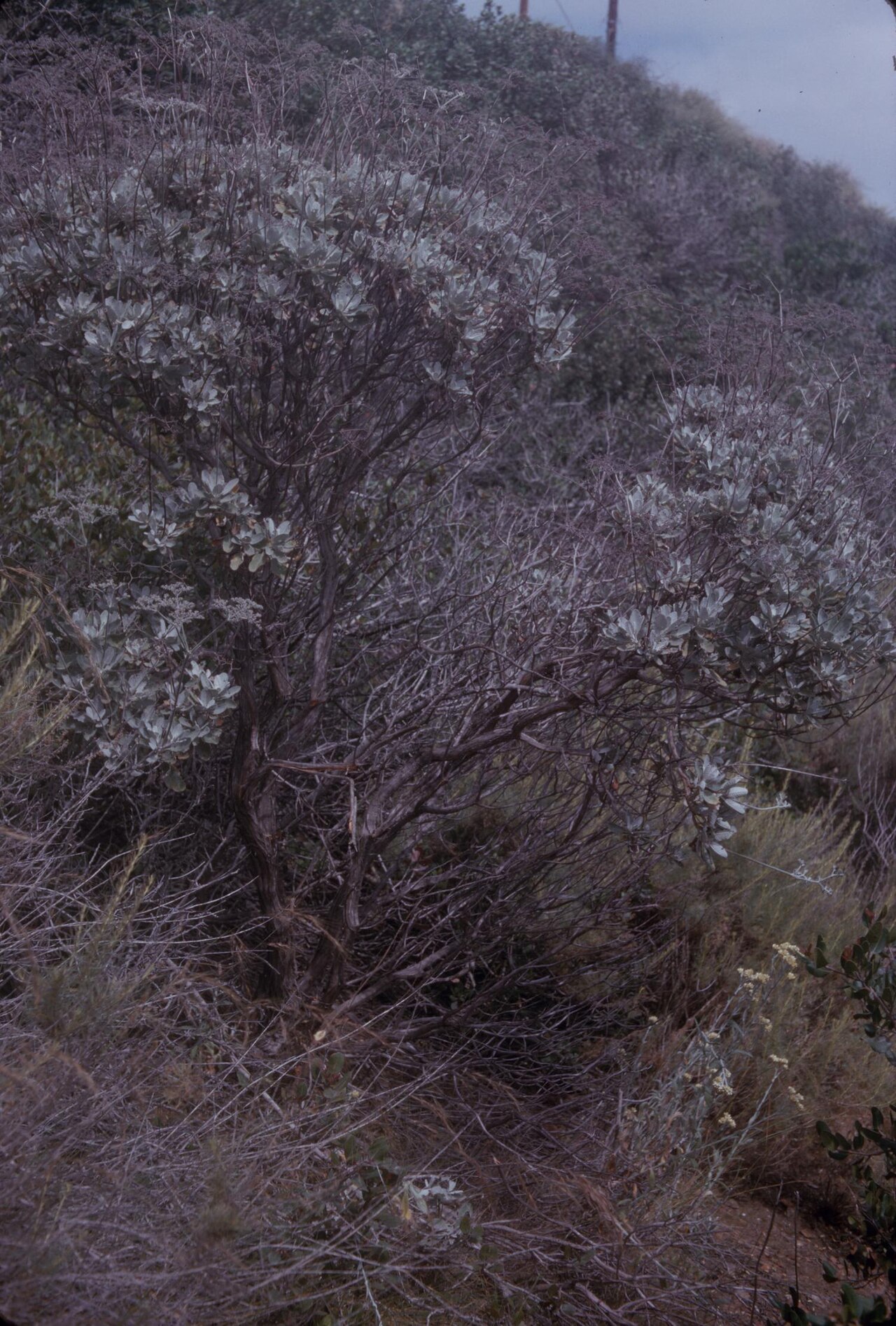
St. Catherine’s Lace is a large, rounded, evergreen to semi-evergreen shrub, typically 4 to 8 feet tall and wide, with a dense, mounding habit built from many branching stems radiating from the base.
Stems & Form
The shrub develops a woody, well-branched framework with gray-brown bark on older wood. Its overall silhouette is broad and rounded, often wider than tall in open sites, and the pale, felted foliage gives the whole plant a soft gray-green to silvery color visible from a distance, especially against darker chaparral neighbors.
Leaves
The leaves are oval to heart-shaped, 1 to 3 inches long, with wavy margins and a dense covering of fine white hairs (tomentum) on both surfaces, especially the underside, which gives them a felted, woolly texture and gray-green to whitish color. This heavy leaf pubescence is a key identification trait and an adaptation to the dry, wind-exposed island slopes where the species grows.
Flowers & Fruit
From late spring through fall, St. Catherine’s Lace produces huge, flat-topped or domed flower clusters (umbels) atop tall stalks well above the foliage, sometimes a foot or more across — the largest inflorescence of any California native buckwheat. Individual flowers are tiny, cream to pinkish-white, clustered by the hundreds into these showy heads, which age to a rusty red-brown that remains attractive through much of the dry season. The fruit is a small, three-angled achene typical of the buckwheat family, maturing within the dried flower clusters.
Quick Facts
| Scientific Name | Eriogonum giganteum |
| Family | Polygonaceae (Buckwheat) |
| Plant Type | Evergreen to semi-evergreen shrub |
| Mature Height | 4–8 ft |
| Mature Spread | 4–8 ft |
| Growth Rate | Moderate to fast |
| Sun Exposure | Full Sun to Part Shade |
| Water Needs | Very low once established |
| Soil Type | Well-drained; sandy, loamy or clay-loam |
| Soil pH | 6.0–7.5 |
| Bloom Time | June – October |
| Flower Color | Cream to pinkish-white, aging rust-red |
| Fall Color | None (evergreen); dried flower heads persist |
| Fruit | Small three-angled achene |
| Deer Resistant | Yes |
| USDA Hardiness Zones | 8–11 |
Native Range
St. Catherine’s Lace is a true island endemic, native in the wild only to Santa Catalina Island, one of California’s Channel Islands off the coast of Los Angeles and Orange Counties. It is not native anywhere on the California mainland, despite being one of the most widely planted California native shrubs there — every mainland planting is a cultivated introduction, not a wild occurrence.
On Catalina, it grows on dry, rocky slopes and coastal bluffs, often in island chaparral and coastal sage scrub communities, from near sea level up into the island’s interior hills. Its native habitat is shaped by maritime influence — salt spray, wind, and fog — conditions the felted, silvery leaves are well adapted to handle.
Because its entire wild population is confined to a single island, St. Catherine’s Lace is included on the California Native Plant Society’s inventory of rare and endangered plants (as limited in distribution), and some populations face pressure from feral grazing animals and habitat disturbance on the island. Growing it in mainland gardens is a popular and responsible way to appreciate the species without impacting its native island habitat.
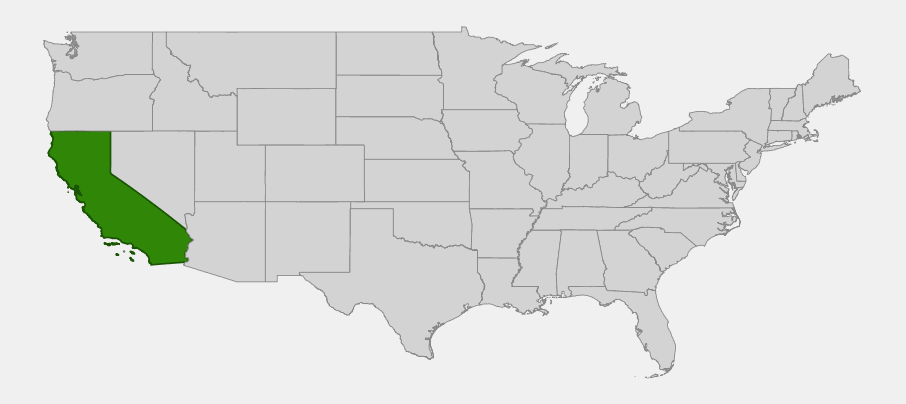
📋 Regional plant lists featuring St. Catherine’s Lace: California and Nevada
Growing & Care Guide
St. Catherine’s Lace is easy and rewarding on the mainland, which is part of why it has become so much more familiar in gardens than in the wild. Give it sun, good drainage, and room to spread, and it asks for very little else.
Light
Full sun produces the most compact, floriferous plants and the best flower display. It also tolerates light afternoon shade, especially in hot inland climates, though growth becomes looser with less bloom in shadier sites.
Soil & Water
Excellent drainage is essential; St. Catherine’s Lace adapts to sandy, loamy, or clay-loam soils as long as water does not stand around the roots. Established plants are extremely drought tolerant and need little to no summer water along the coast, with only occasional deep watering inland during extended dry spells. Overwatering, especially in summer, is the most common cause of root rot and plant decline.
Planting Tips
Plant from containers in fall or early winter to take advantage of cooler temperatures and winter rain for root establishment. Because mature plants reach 6 to 8 feet across, give them plenty of room — at least 6 feet from walkways, structures, and other shrubs — to avoid later crowding or heavy pruning.
Pruning & Maintenance
Light shaping after bloom helps maintain a tidy, rounded form, and spent flower heads can be left in place for winter interest and seed for birds, or cut back if a cleaner look is preferred. Avoid hard pruning into bare wood, which the shrub does not reliably resprout from; instead, trim lightly and regularly from a young age to establish good structure.
Landscape Uses
- Pollinator gardens, where the huge flower heads draw bees and butterflies for months
- Dry slopes and water-wise landscaping as a bold, silvery accent shrub
- Coastal gardens, where it tolerates salt spray and wind
- Screening or informal hedging, given its large rounded form
- Cut and dried flower arrangements, since the rust-colored seed heads hold up well dried
- Mediterranean and California native gardens paired with other chaparral and coastal sage species
Wildlife & Ecological Value
Few California native shrubs rival St. Catherine’s Lace for sheer pollinator traffic during its long summer bloom.
For Pollinators
The massive flower clusters are extraordinarily attractive to native bees, honeybees, and butterflies, including several species that depend on buckwheats as larval host plants. Because the bloom period extends from late spring into fall, the shrub provides a reliable nectar source through months when many other natives have finished flowering, making it a cornerstone plant in pollinator gardens across Southern California.
For Birds
Seed-eating birds, including finches and sparrows, forage the dried flower heads for the small achenes they contain through fall and winter. The dense shrub form also offers nesting and cover habitat for small songbirds.
For Mammals
On Catalina Island, native and introduced herbivores browse young foliage, and the shrub’s dense structure provides cover for small island wildlife. In mainland gardens, its resilience to deer browsing makes it a dependable choice near wildland edges.
Ecosystem Role
On its native island, St. Catherine’s Lace is an important component of the dry chaparral plant community, stabilizing slopes and supporting pollinator networks that many other island plants depend on as well. Its prominence in cultivation also makes it an effective ambassador species, introducing gardeners to the broader story of California’s uniquely vulnerable island flora.
Cultural & Historical Uses
St. Catherine’s Lace takes its common name from Santa Catalina Island itself, and its large, lacy, cream-colored flower clusters have long been admired by islanders and visitors alike. The island has a layered human history — home first to the Indigenous Tongva people, later used for ranching, mining, and tourism — though specific traditional uses of this particular buckwheat species are not well documented in the historical record compared to some other island natives.
The shrub’s modern story is largely horticultural. Botanists and native-plant growers recognized its garden potential by the mid-20th century, and it has since become one of the most widely distributed California native shrubs in cultivation, appearing in demonstration gardens, freeway plantings, and home landscapes throughout coastal and inland Southern California — a striking contrast to its single-island wild distribution.
Today, growing St. Catherine’s Lace is also an act of conservation awareness: because the species’ entire wild population exists on one island, cultivated plantings help relieve collecting pressure and introduce gardeners to the broader vulnerability of California’s Channel Islands flora.
Frequently Asked Questions
Is St. Catherine’s Lace native to the California mainland?
No. In the wild it grows only on Santa Catalina Island. It is very widely planted on the mainland as a garden shrub, but every mainland occurrence is cultivated rather than naturally occurring.
Is St. Catherine’s Lace endangered?
It is included on the California Native Plant Society’s inventory of rare plants as limited in distribution, reflecting its single-island native range, though it is not federally listed as threatened or endangered. It remains common and secure in cultivation.
How big does St. Catherine’s Lace get?
Mature plants typically reach 4 to 8 feet tall and equally wide, making it the largest of California’s many wild buckwheat species. Give it plenty of room when planting.
Do bees really love this plant that much?
Yes — the huge summer-to-fall flower clusters are among the most pollinator-attractive blooms of any California native shrub, drawing a wide range of native bees, honeybees, and butterflies for months at a time.
Can St. Catherine’s Lace handle coastal salt and wind?
Yes. Its native island habitat exposes it to salt spray and strong wind, and the felted, hairy leaves are an adaptation to exactly those conditions, making it a reliable choice for coastal Southern California gardens.

Looking for a nursery that carries St. Catherine’s Lace?
Browse our native plant nursery directory: California