Carmel Ceanothus (Ceanothus griseus)
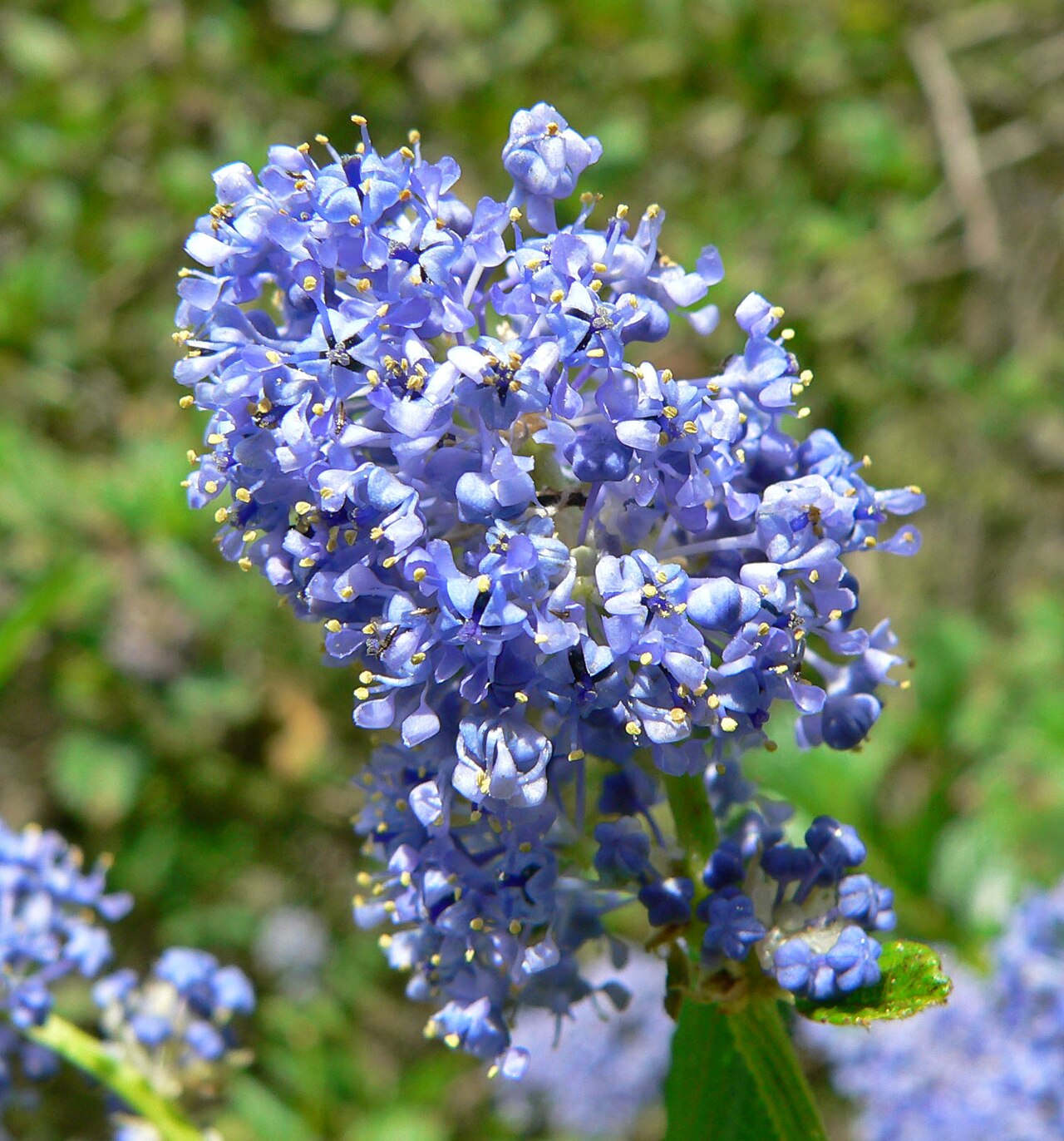
Ceanothus griseus, commonly called Carmel ceanothus, is a rounded, fast-growing evergreen shrub endemic to a narrow stretch of California’s central coast. A member of the buckthorn family (Rhamnaceae), it belongs to the large and diverse Ceanothus genus — California’s signature spring-blooming native shrubs — and is distinguished from its many relatives by glossy, leathery, rounded leaves and dense, powder-blue to violet flower clusters that smother the plant for weeks each spring. Botanists now often treat it as Ceanothus thyrsiflorus var. griseus, a variety of the widespread blueblossom, though the older name C. griseus remains in common nursery and horticultural use and is still accepted by USDA PLANTS.
In the wild, Carmel ceanothus grows only along a short band of coastline from the Monterey Peninsula south into San Luis Obispo County, often rooted directly in weathered granite and sandy marine terraces within reach of coastal fog. There it forms a dense, mounding shrub 6 to 15 feet tall and often wider than tall, holding its shape through salt spray, wind, and the thin, nutrient-poor soils typical of coastal scrub and closed-cone pine forest understories.
Because it tolerates wind, salt air, and poor soil while asking for little water once established, Carmel ceanothus has become one of the most widely planted California native shrubs outside its own home range — valued as an informal hedge, bank cover, or pollinator magnet in gardens throughout coastal and inland California. Gardeners should keep in mind that the sprawling groundcover form sold as “Carmel creeper” (Ceanothus griseus var. horizontalis, including the cultivars ‘Yankee Point’ and ‘Diamond Heights’) is a separate, lower-growing variety from the upright shrub described on this page.
Identification
Carmel ceanothus is an evergreen shrub with a dense, rounded to mounding habit, typically reaching 6 to 15 feet tall and 8 to 12 feet across, though plants on exposed bluffs often stay lower and more compact. Young stems are green to reddish and finely hairy, aging to gray-brown bark on older wood.
Leaves
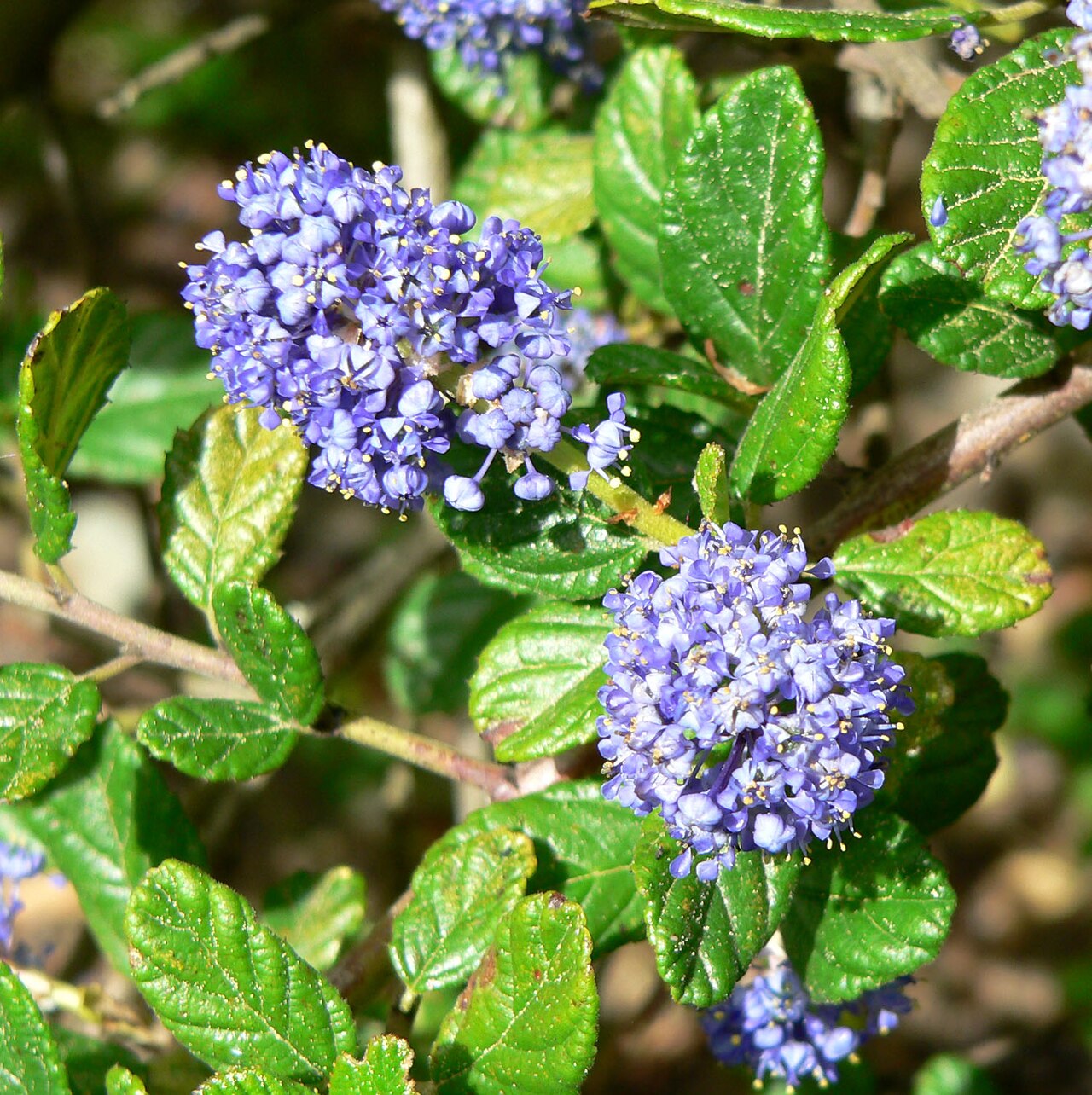
The leaves are evergreen, alternately arranged, broadly oval to rounded, and ½ to 1½ inches long. They are glossy dark green above with a finely toothed margin and three prominent veins running from the leaf base, a hallmark of many Ceanothus species. The underside is paler and lightly hairy, giving the foliage a soft gray-green cast that inspired the species name griseus, Latin for “gray.”
Flowers
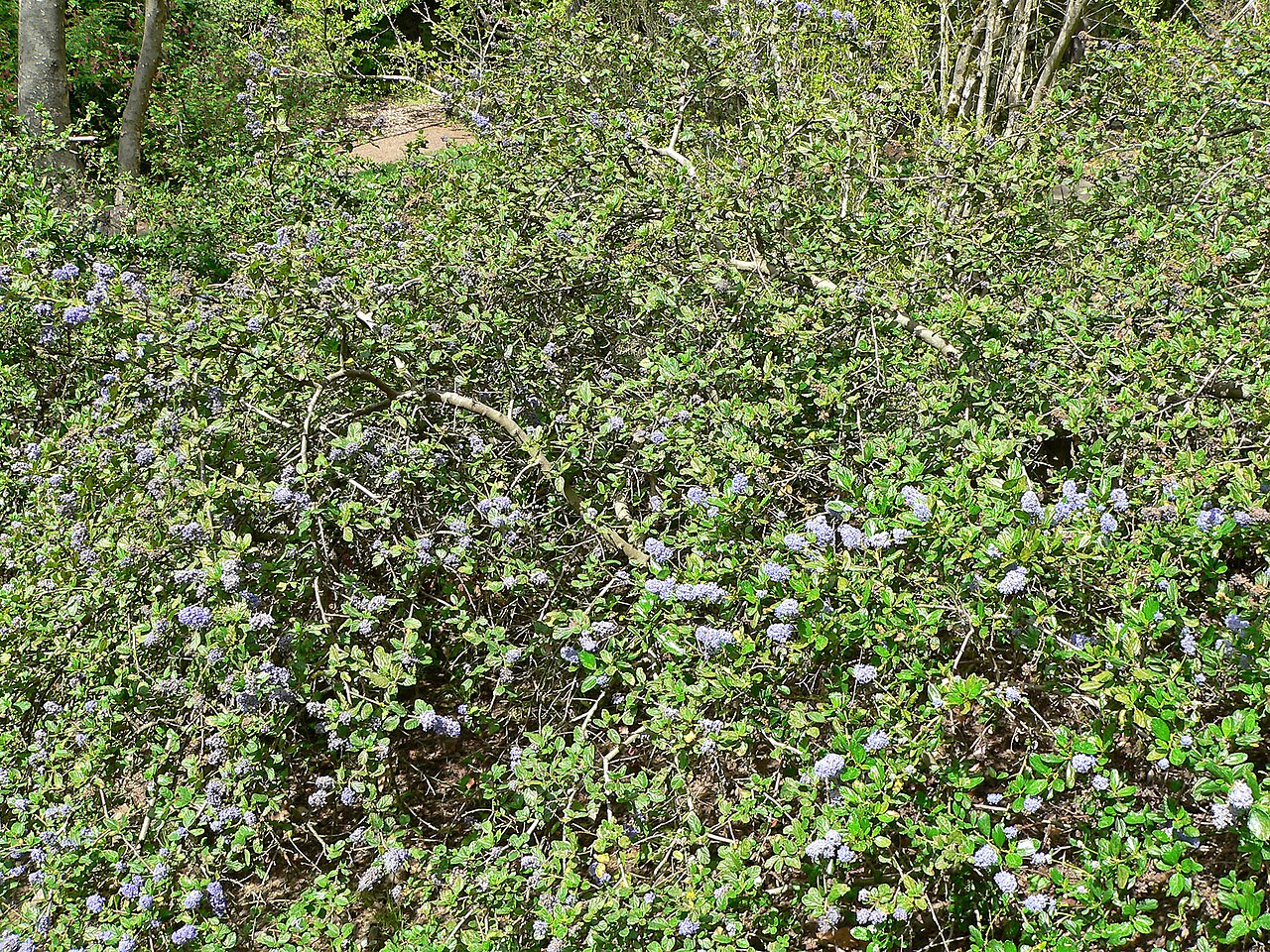
Flowers open from March into May in dense, rounded to oblong clusters (panicles) 1 to 2 inches long, carried at the branch tips and along the upper stems. Individual flowers are tiny, with five narrow petals, but massed together they create a powder-blue to soft violet haze that can cover the entire shrub. The bloom is intensely attractive to native bees, honeybees, and butterflies, and the flowers produce a faint, sweet fragrance on warm days.
Fruit & Seeds
After flowering, Carmel ceanothus sets small three-lobed capsules about ¼ inch across. The capsules ripen from green to brown through summer and split explosively when dry, flinging seeds a short distance from the parent plant — a dispersal strategy shared by most California ceanothus species. The hard seed coat requires heat or scarification to break dormancy, which is why wild populations regenerate strongly after fire.
Quick Facts
| Scientific Name | Ceanothus griseus (syn. Ceanothus thyrsiflorus var. griseus) |
| Family | Rhamnaceae (Buckthorn) |
| Plant Type | Evergreen Shrub |
| Mature Height | 6–15 ft |
| Mature Spread | 8–12 ft |
| Growth Rate | Fast |
| Sun Exposure | Full Sun to Part Shade |
| Water Needs | Low once established |
| Soil Type | Sandy, rocky or well-drained loam |
| Soil pH | 5.5–7.0 (acidic to neutral) |
| Bloom Time | March – May |
| Flower Color | Powder blue to violet-blue |
| Fall Color | None (evergreen) |
| Fruit | Small three-lobed capsules |
| Deer Resistant | Somewhat (new growth may be browsed) |
| USDA Hardiness Zones | 8–10 |
Native Range
Carmel ceanothus is a California coastal endemic, native only to a narrow band of the central coast from the Monterey Peninsula south through the Big Sur coast into northern San Luis Obispo County. Within this limited range it is locally common, often forming dense stands on granitic outcrops, sandy marine terraces, and the margins of closed-cone pine and coast live oak woodlands.
The species favors sites with regular coastal fog and moderate temperatures year-round, rarely experiencing hard freezes or extreme summer heat in its native habitat. It grows from near sea level up to about 1,500 feet in elevation, typically within a few miles of the coastline where maritime influence keeps humidity high and temperature swings small.
Outside this native range, Carmel ceanothus is widely cultivated throughout coastal and inland California and in similar Mediterranean climates worldwide, but it should not be considered native or naturalized beyond its central coast origin; gardeners in other parts of California are planting a non-local native when they use it, which is a reasonable landscaping choice but not equivalent to restoring locally native vegetation.
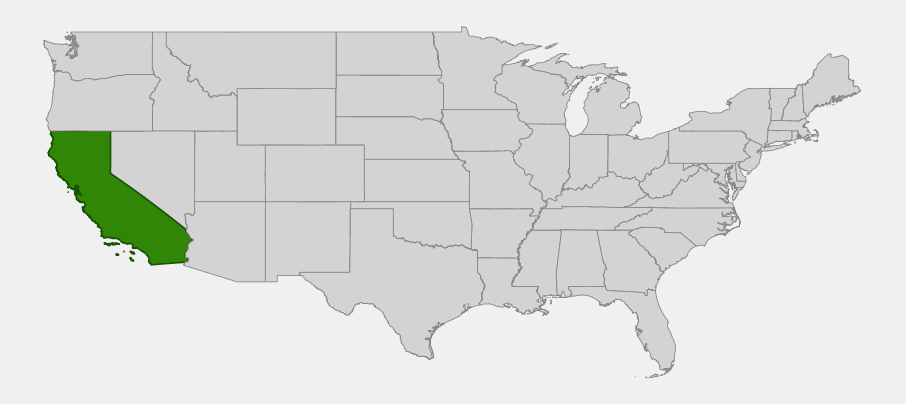
📋 Regional plant lists featuring Carmel ceanothus: California and Nevada
Growing & Care Guide
Carmel ceanothus is prized by California gardeners for how little it asks once established: fast growth, a long spring flower show, and genuine drought tolerance. Most failures trace back to overwatering or heavy clay soil rather than neglect.
Light
Plant in full sun for the densest form and heaviest bloom. In hot inland gardens, light afternoon shade helps the foliage stay fresh through summer, though coastal gardens can give it sun all day without issue.
Soil & Water
Good drainage matters more than soil type — Carmel ceanothus thrives in sandy, rocky, or decomposed-granite soils and struggles in heavy clay that stays wet. Water regularly the first one to two summers to establish a deep root system, then taper off sharply; established plants need little or no supplemental water and are notably sensitive to summer irrigation, which can trigger root rot. Avoid high-phosphorus fertilizers, which many California natives, including ceanothus, tolerate poorly.
Planting Tips
Set out container plants in fall or early winter so winter rains can establish the root system before the dry season. Space plants 8 to 10 feet apart to allow for their mature spread. Avoid planting in low spots where water collects, and keep irrigation away from the trunk once the plant is established.
Pruning & Maintenance
Light shaping after bloom keeps the shrub dense and prevents the woody, open centers that develop with age. Avoid cutting into bare wood, since ceanothus resprouts poorly from old growth; prune only live, leafy stems. Established plants are otherwise low-maintenance and rarely need fertilizing.
Landscape Uses
Carmel ceanothus earns a place in many garden styles:
- Informal hedge or screen along property lines or driveways
- Bank and slope cover where its roots help stabilize loose soil
- Pollinator gardens — few spring shrubs draw more bees
- Coastal and low-water landscapes tolerant of salt air and wind
- Mixed native shrub borders with manzanita, coyote brush, and sages
- Wildlife hedgerows providing cover and nectar
Wildlife & Ecological Value
Carmel ceanothus is one of the central coast’s most valuable early-season nectar shrubs, supporting a wide range of pollinators and wildlife through its dense spring bloom and year-round evergreen cover.
For Pollinators
The massed spring flowers are a major draw for native bees, honeybees, and butterflies, including several species whose larvae feed on ceanothus foliage, such as the California hairstreak and spring azure. The nectar flow is heavy enough that beekeepers along the central coast consider ceanothus bloom an important early build-up source for hives.
For Birds
The dense, evergreen branching provides year-round cover and nesting sites for towhees, wrens, and sparrows, while the capsules that follow flowering offer a modest seed source for seed-eating songbirds before they split open and disperse.
For Mammals
Deer and other browsers occasionally take new growth, and small mammals use the dense shrub interior for shelter. The thicket-forming habit also helps anchor soil on the steep, erosion-prone slopes typical of its native coastal range.
Ecosystem Role
Like other ceanothus species, Carmel ceanothus hosts nitrogen-fixing bacteria in root nodules, allowing it to colonize and enrich the thin, nutrient-poor soils typical of coastal outcrops and recently disturbed ground. This makes it an early and important pioneer species after fire or landslide disturbance along the central coast, improving soil fertility for the plant community that follows.
Cultural & Historical Uses
California’s many ceanothus species, Carmel ceanothus included, were used by Indigenous peoples of the central coast for practical purposes rather than medicine: the flexible young branches served as material for basketry framework and small tools, and the flowers — which contain natural saponins — could be crushed with water into a mild, foamy soap-like lather for washing.
Carmel ceanothus has no significant history as a food or medicinal plant, and this page does not describe or recommend any medicinal use. Its modern cultural importance lies almost entirely in horticulture: since the early twentieth century it has been one of the most widely grown California native shrubs, prized by nurseries and home gardeners for its reliable spring color and low water needs.
The species also plays a role in regional land stewardship. Because it is confined to a narrow stretch of coastline increasingly pressured by development, local land trusts and botanic gardens on the Monterey Peninsula treat wild stands of Carmel ceanothus as a conservation priority distinct from the many cultivated plants grown from it elsewhere.
Frequently Asked Questions
Is Carmel ceanothus the same plant as Carmel creeper?
No. Carmel ceanothus (Ceanothus griseus var. griseus) is the upright, mounding shrub described on this page. Carmel creeper (Ceanothus griseus var. horizontalis), sold under cultivar names like ‘Yankee Point’ and ‘Diamond Heights,’ is a separate, low, spreading groundcover variety of the same species.
Is Carmel ceanothus native to Nevada or anywhere outside California?
No. It is a California endemic restricted to a narrow stretch of the central coast between the Monterey Peninsula and northern San Luis Obispo County. It is widely planted elsewhere in California and in similar climates, but it is not native outside this coastal range.
How much water does Carmel ceanothus need once established?
Very little. After the first one to two years of regular watering to establish roots, mature plants typically need no supplemental irrigation in coastal gardens and only occasional deep watering inland. Overwatering established plants, especially in summer, is the most common cause of decline.
How fast does Carmel ceanothus grow, and how long does it live?
It is a fast grower, often reaching full size within three to five years. Like most ceanothus species, however, it is relatively short-lived for a shrub, typically thriving for 15 to 25 years before becoming woody and declining, especially if overwatered or over-pruned into old wood.
Can Carmel ceanothus be used as a hedge?
Yes, its dense, rounded growth habit makes it a popular informal hedge or screening shrub. Light post-bloom shaping keeps it tidy, but it should not be sheared hard into bare wood, since ceanothus resprouts poorly from old growth without leaves.

Looking for a nursery that carries Carmel ceanothus?
Browse our native plant nursery directory: California