Superb Mariposa Lily (Calochortus superbus)
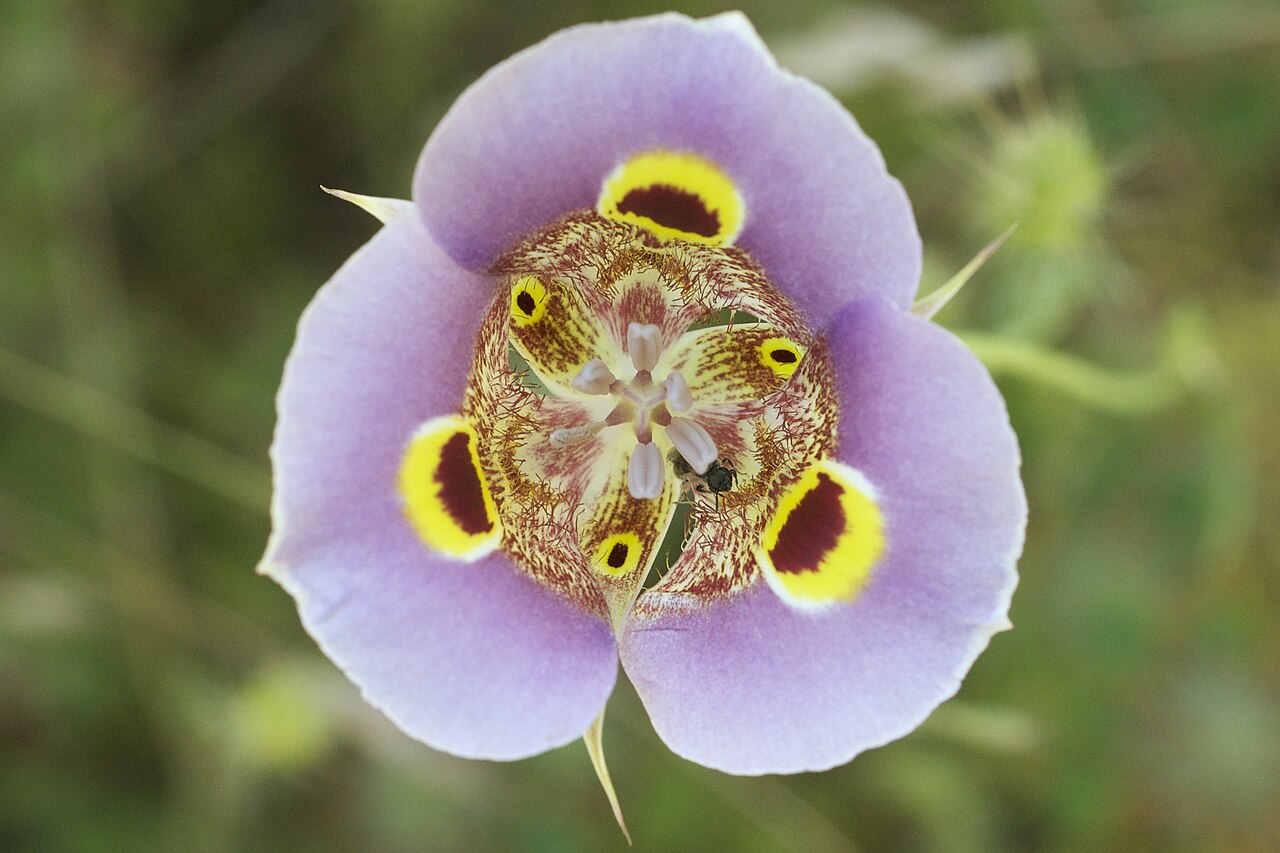
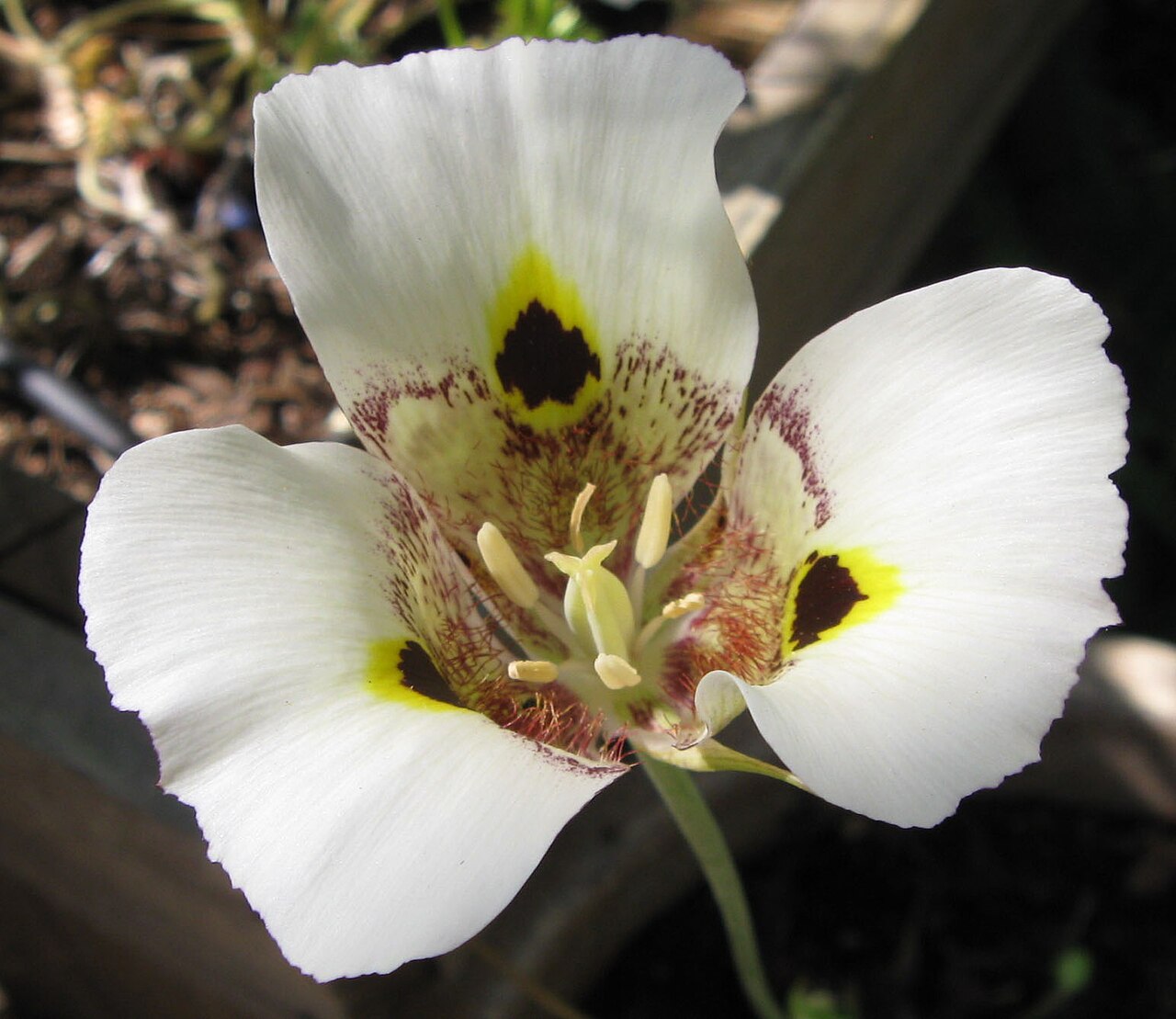
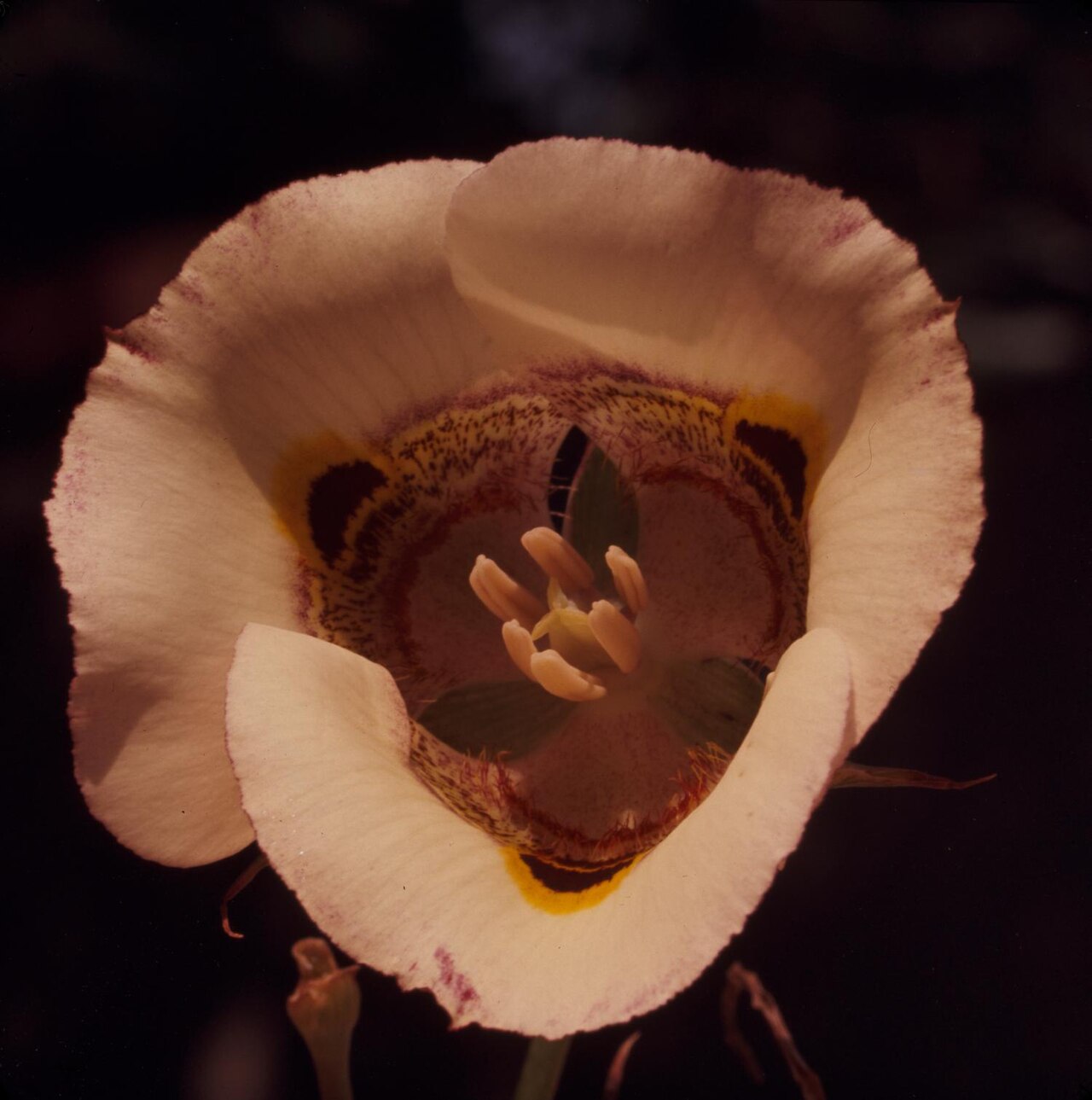
Calochortus superbus, the superb mariposa lily, is one of California’s showiest spring wildflowers and a true California endemic, found nowhere else in the wild. Like its relatives in the genus Calochortus — a name built from the Greek for “beautiful grass” — it spends most of the year as an unassuming, grass-like plant, then erupts in late spring with broad, cup-shaped flowers so intricately marked they look almost hand-painted. Each bloom carries a dark maroon eyespot rimmed in yellow at the base of each petal, set against petals that range from cream and pale yellow to soft lilac depending on the population.
Superb mariposa lily grows from a small, deep-set bulb that lets it survive California’s long, dry summers underground, re-emerging each year from grassy foothills, oak woodlands, and open pine forest. It is widespread across the state’s Coast Ranges and Sierra Nevada foothills, making it one of the more commonly encountered mariposa lilies for California gardeners and hikers alike, though like all mariposa lilies it can be slow and particular to establish from nursery stock.
Identification
Mariposa lilies as a group can be tricky to tell apart, but superb mariposa lily has a fairly recognizable combination of broad, rounded petals and a single dark gland at the base of each one, without the dense fringe of long hairs seen in some related species.
Foliage
The plant begins as a single, narrow, grass-like basal leaf up to 16 inches long that emerges in late winter or early spring. This leaf is often withering by the time the plant flowers. Stem leaves, where present, are few, narrow, and much reduced.
Flowers
Flowering stems reach 8 to 24 inches tall, usually branched, and carry one to several upright, bowl- to cup-shaped flowers 1.5 to 2.5 inches across. Each flower has three broad, rounded petals in shades from cream or pale yellow to lilac or light purple, each petal bearing a single large, deep maroon to purplish-black gland surrounded by a bright yellow halo near its base, with fine hairs just above the gland. Three narrower, pointed sepals alternate with the petals. Flowering runs from roughly April through June, varying with elevation and rainfall, with plants at higher elevations and further north blooming later.
Fruit
After pollination, flowers form slender, three-angled seed capsules that stand upright on the stalk and split open when ripe to release numerous small, flattened seeds. The above-ground parts of the plant dry completely by mid-summer as the bulb goes dormant for the rest of the dry season.
Quick Facts
| Scientific Name | Calochortus superbus |
| Family | Liliaceae |
| Plant Type | Perennial bulb (geophyte) |
| Mature Height (in bloom) | 8–24 in |
| Growth Rate | Slow |
| Sun Exposure | Full sun to light part shade |
| Water Needs | Very low once established; summer-dry |
| Soil Type | Well-drained loam, clay, or gravelly soil |
| Drought Tolerance | Excellent |
| Bloom Time | April – June |
| Flower Color | Cream to pale yellow or lilac, with maroon eyespots |
| Deer Resistant | Mostly, though bulbs may be dug by rodents |
| USDA Hardiness Zones | 7–10 |
Native Range
Superb mariposa lily is endemic to California, meaning it occurs naturally nowhere else. It is widespread across the state, most common in the Sierra Nevada foothills and Coast Ranges, extending from the far northern Coast and Cascade foothills south through the Central Coast and into Southern California. It is not native to Nevada, Oregon, or any other state, despite the related nickname “Calochortus” being associated broadly with the West.
It grows from near sea level to around 5,500 feet, typically in open grassland, oak woodland, chaparral, and yellow-pine forest openings, often on clay or sandy-loam soils that bake hard and dry by midsummer — the same soils that make the plant easy to overlook outside of its brief bloom window.
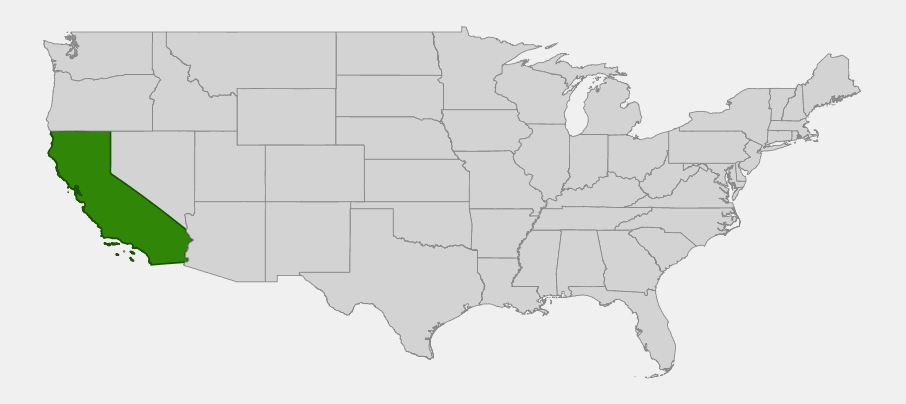
📋 Regional plant lists featuring superb mariposa lily: California & Nevada
Growing & Care Guide
Superb mariposa lily is a rewarding but patient plant for the dry-summer garden — spectacular in bloom, but it wants to be left alone the rest of the year.
Light
Plant in full sun to very light part shade, mimicking the open grassland and woodland-edge conditions where it grows naturally. Too much shade reduces flowering.
Soil & Water
Excellent drainage is essential. Superb mariposa lily tolerates clay, loam, or gravelly soils as long as water does not stand around the bulb, and it strongly prefers a dry summer dormancy — overwatering during the dormant months is the most common cause of bulb rot in cultivation. Water modestly through the winter and spring growing season, then withhold water entirely once the foliage begins to yellow.
Planting Tips
Plant bulbs in fall, about 3 to 4 inches deep, in a spot with sharp drainage, such as a raised bed, slope, or rock garden. Mariposa lilies resent being disturbed once established, so choose a permanent location and mark it clearly, since the plant disappears completely during its long summer dormancy. Growing bulbs among low native bunchgrasses can help protect the dormant bulb from accidental disturbance.
Maintenance
Let the foliage die back naturally after flowering rather than cutting it, since the bulb is still storing energy from the fading leaf. Gophers and ground squirrels relish mariposa lily bulbs, so wire baskets are worth considering in gardens with heavy rodent pressure.
Landscape Uses
- Dry rock gardens and raised beds with sharp drainage
- Meadow and grassland restoration plantings
- Oak woodland understories alongside native bunchgrasses
- Pollinator gardens for native bees
- Naturalized slopes where summer irrigation can be withheld
Wildlife & Ecological Value
For Pollinators
The large, open, bowl-shaped flowers are well suited to native bees, which use the colorful eyespots and contrasting hair tufts near the base of the petals as visual nectar guides. Bumblebees and other native bees are the primary pollinators, pushing into the flower to reach pollen and nectar near the dark glands.
For Wildlife
The starchy bulbs are a food source for ground squirrels, gophers, and other burrowing rodents, which can limit the species’ persistence in heavily disturbed grassland. Deer generally leave the flowers and foliage alone, making it a reasonably deer-tolerant choice compared to many other spring wildflowers.
Cultural & Historical Uses
Mariposa lily bulbs, including those of Calochortus superbus and related species, were historically dug and eaten by California Indigenous peoples, typically roasted or boiled, as one of many wild root and bulb foods gathered through the spring and summer. This is documented as a historical food use among California’s Indigenous communities rather than a modern foraging recommendation — wild mariposa lily populations are slow-growing and easily depleted by bulb harvesting, and many are increasingly uncommon due to habitat loss, so present-day collection from wild stands is discouraged.
The common name “mariposa lily” comes from the Spanish word mariposa, meaning butterfly, a reference early Spanish-speaking Californians made to the delicate, often brightly marked petals that seem to flutter in the wind atop their thin stems.
Frequently Asked Questions
Is superb mariposa lily the same as other California mariposa lilies?
No. Calochortus is a large genus with dozens of California species, many of which look superficially similar. Superb mariposa lily is distinguished by its broad petals, each with a single large maroon gland ringed in yellow, and by its wide elevation and habitat range across much of the state.
Why is my mariposa lily bulb not coming back?
The most common causes are summer watering, which rots the dormant bulb, and rodent predation. Make sure the planting site is dry and undisturbed through summer, and consider a wire basket if gophers or ground squirrels are active in your garden.
Can I eat mariposa lily bulbs?
Historically, Indigenous Californians gathered and cooked mariposa lily bulbs as a food source. Because wild populations are slow to recover from bulb harvesting, digging wild bulbs today is not recommended; enjoy the plant in the garden or in the wild rather than as foraged food.
How long do the flowers last?
Individual flowers typically last several days to about a week, and a well-established clump can produce a succession of blooms over a few weeks in spring, though the overall bloom season for the species runs from April into June depending on elevation.
Is superb mariposa lily endangered?
It is not listed as rare or endangered and remains fairly widespread across California, unlike some of its more narrowly distributed Calochortus relatives. Even so, it is sensitive to habitat conversion and overgrazing, so protecting existing wild populations and grassland habitat benefits the species.

Looking for a nursery that carries superb mariposa lily?
Browse our native plant nursery directory: California