Wavyleaf Soap Plant (Chlorogalum pomeridianum)
Chlorogalum pomeridianum, commonly called wavyleaf soap plant or simply soaproot, is a bulb-forming perennial found throughout California’s grasslands, oak woodlands, and chaparral. Its species name, pomeridianum, is Latin for “of the afternoon” — a nod to its unusual habit of opening its star-shaped white flowers in the late afternoon and evening rather than at midday like most wildflowers. Few California natives have a longer or more intimate history with the people who have lived alongside them: the plant’s large fibrous bulb was once a multi-purpose tool, food source, soap, and fish stupefacient for Indigenous Californians, and it remains an easy, low-water addition to a native dry garden today.
Above ground, wavyleaf soap plant is easy to overlook for most of the year. A rosette of long, blue-green, ribbon-like leaves with distinctively wavy margins appears with the winter rains, then withers and dries by the time the plant flowers in late spring and summer. What takes over is a tall, wiry, branching flower stalk — sometimes reaching 8 feet — bearing dozens of delicate white flowers that unfurl for only a single evening apiece. Beneath it all sits a large bulb wrapped in coarse brown fibers, patiently storing water and energy through the dry California summer.
Identification
Wavyleaf soap plant is a true geophyte: a perennial that survives the dry season entirely underground as a dormant bulb, sending up foliage and flowers only when conditions allow. Its growth cycle is distinctive and makes it a satisfying plant to learn to recognize through the seasons.
Bulb
The bulb is large — often 3 to 6 inches long — ovoid, and wrapped in a thick coat of coarse brown fibers that look almost like matted hair. These fibers persist for years and were historically stripped and bundled to make scrub brushes. The bulb itself contains saponins, soap-like compounds that foam when the bulb is crushed in water.
Leaves
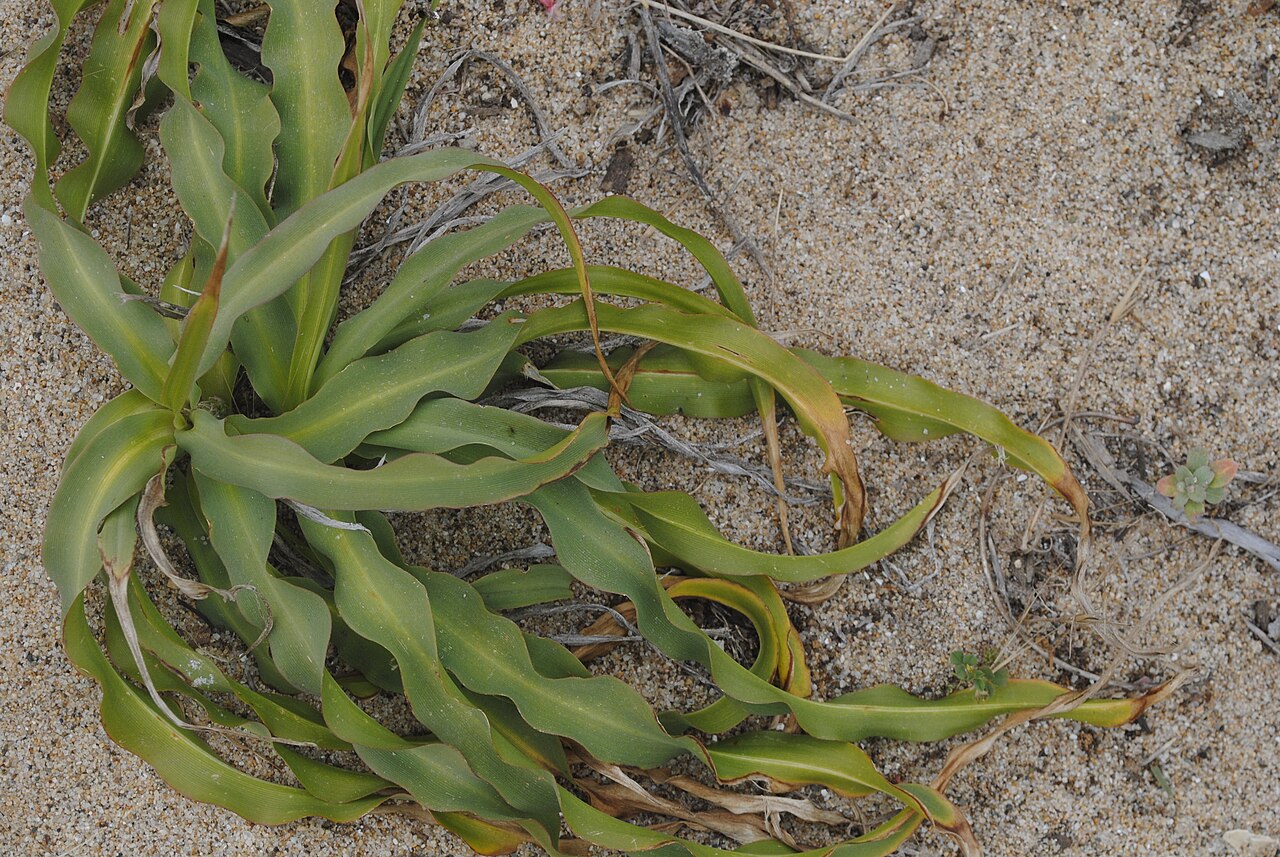
Basal leaves emerge in fall or winter with the first rains: long (8 to 20 inches), narrow, strap-like, and blue-green to gray-green, with conspicuously wavy or crinkled margins that give the plant both its common name and part of its charm. The leaves lie low, often sprawling across the ground in a loose rosette, and they typically yellow and wither away by the time flowering begins — so a blooming plant may show few or no green leaves at all.
Flowers
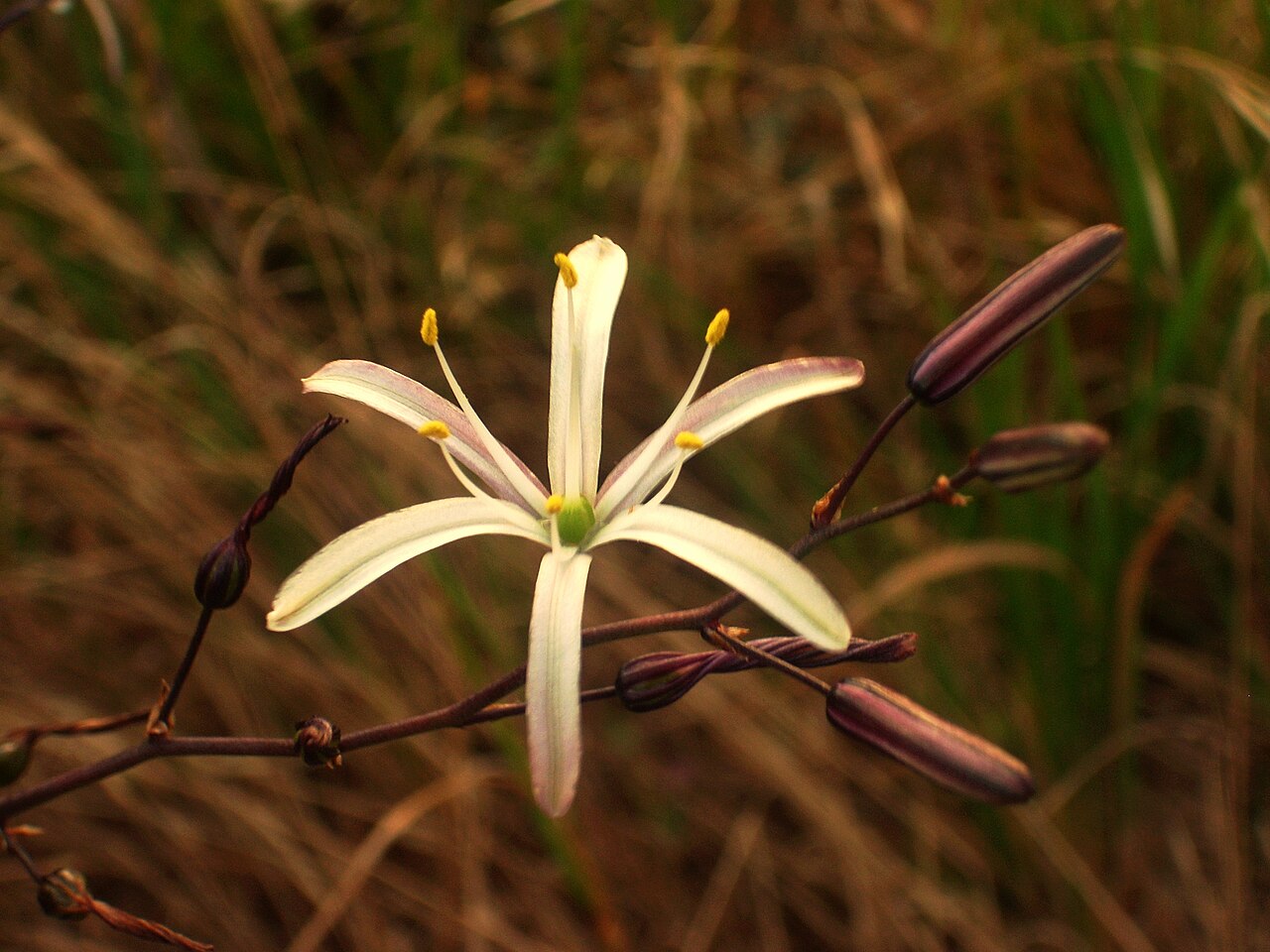
From the center of the dried rosette rises a slender, much-branched flowering stalk, usually 2 to 6 feet tall but capable of reaching 8 feet in good years. Each flower is about 1 inch across with six narrow, spreading to recurved white tepals, each marked with a fine purple to greenish midvein, surrounding six yellow-anthered stamens. True to the species name, the flowers open in late afternoon and stay open into the evening and night, closing the following day — an adaptation thought to favor crepuscular and nocturnal pollinators such as moths and native bees active at dusk. Bloom season runs from roughly May through August, varying with elevation and rainfall.
Fruit
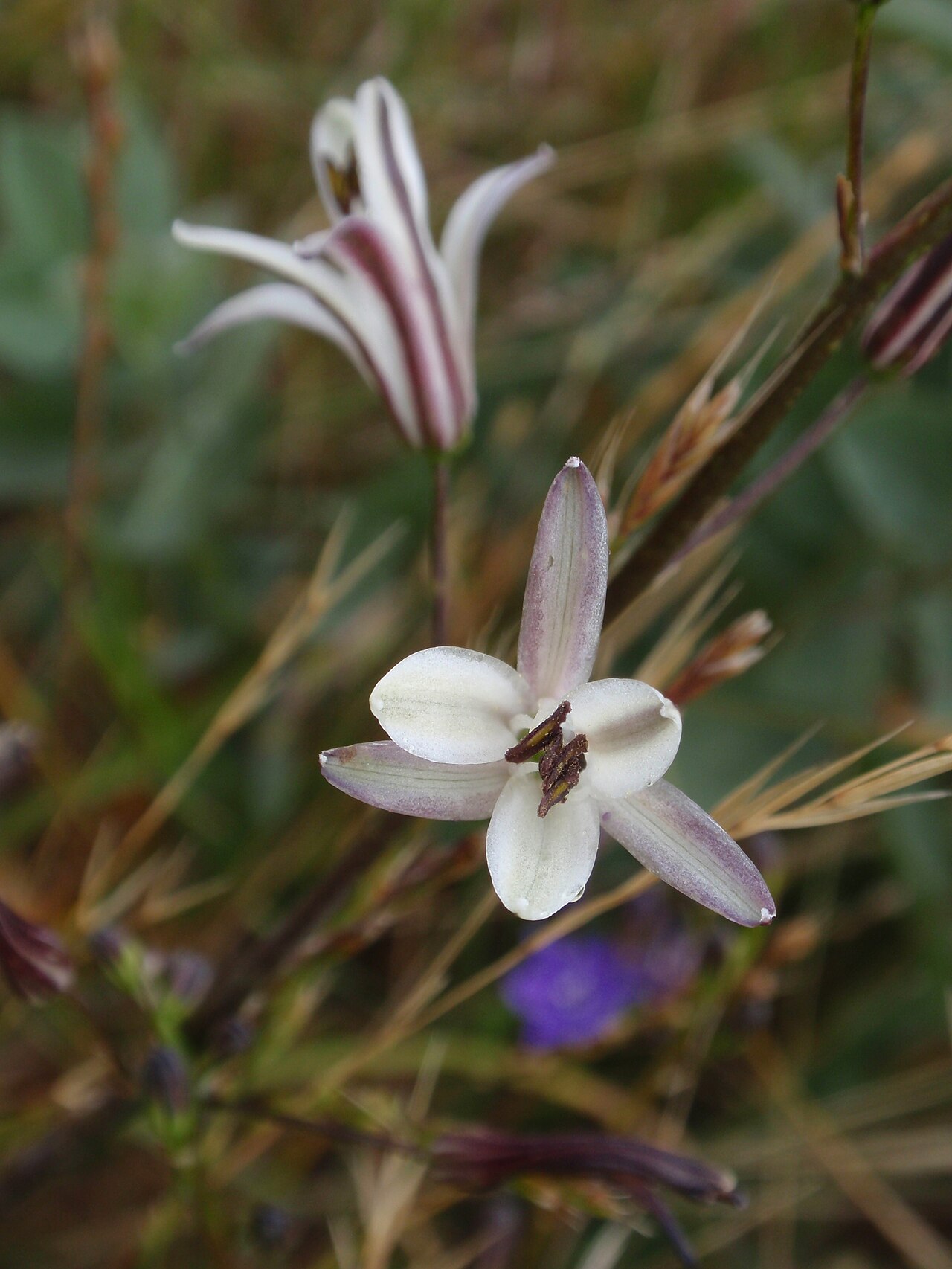
After flowering, each pollinated flower forms a small, three-chambered capsule that dries and splits to release black seeds. Capsules mature through late summer as the rest of the plant dries down completely, leaving only the dark, wiry skeleton of the old flower stalk standing through fall.
Quick Facts
| Scientific Name | Chlorogalum pomeridianum |
| Family | Asparagaceae (formerly Agavaceae) |
| Plant Type | Perennial bulb (geophyte) |
| Mature Height (in bloom) | 2–6 ft, occasionally to 8 ft |
| Leaf Habit | Basal rosette, winter-spring only; withers before bloom |
| Growth Rate | Slow (bulb offsets gradually) |
| Sun Exposure | Full sun to part shade |
| Water Needs | Very low once established; summer-dry |
| Soil Type | Clay, loam, or rocky soils; tolerates serpentine |
| Drought Tolerance | Excellent |
| Bloom Time | May – August, flowers open afternoon/evening |
| Flower Color | White with purple midveins |
| Deer Resistant | Yes |
| USDA Hardiness Zones | 7–10 |
Native Range
Wavyleaf soap plant is native to most of California, from the coastal ranges and Central Valley margins up through the Sierra Nevada foothills, and south to the San Diego area, absent mainly from the state’s deserts and the highest mountains. Its range extends just across the state line into the Klamath Mountains of southwestern Oregon. It is not native to Nevada, despite sometimes being offered by nurseries serving that state.
It grows from near sea level to around 5,000 feet in open grassland, oak woodland, and chaparral, often on clay or rocky soils, including serpentine outcrops that exclude many other plants. The bulb’s dry-season dormancy is a close match to California’s Mediterranean climate of wet winters and bone-dry summers.
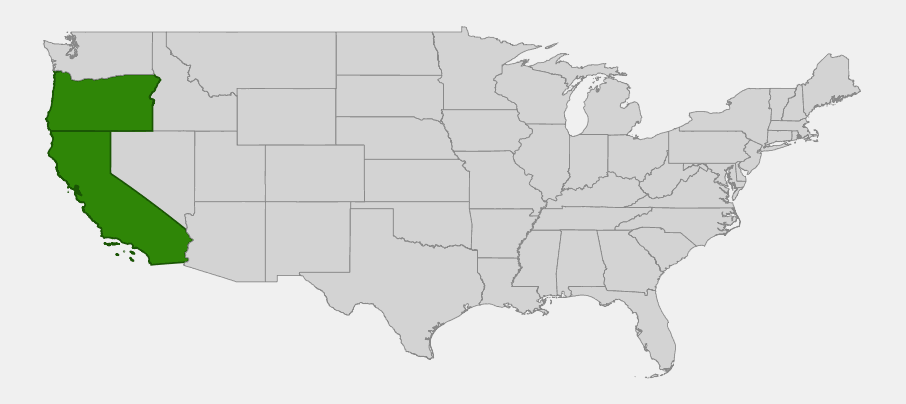
📋 Regional plant lists featuring wavyleaf soap plant: California & Nevada · Western Oregon & Western Washington
Growing & Care Guide
Wavyleaf soap plant rewards gardeners who can give it what California’s dry-summer climate already provides: wet winters, dry summers, and a spot where the bulb can sit undisturbed year after year.
Light
Give it full sun to light part shade. In hotter interior gardens, a bit of afternoon shade from a nearby shrub or tree can keep the soil a little cooler, but the species is well adapted to open, sun-baked grassland and does not need protection in most coastal and foothill gardens.
Soil & Water
Good drainage matters more than soil texture — wavyleaf soap plant grows happily in clay, loam, or rocky soil, including serpentine, as long as water doesn’t pool around the bulb in winter. Water during the establishment year to help the bulb settle in, then taper off; mature plants need no summer irrigation at all and, like many California bulbs, can rot if watered through their dormant season. This makes it an excellent companion for other summer-dry natives in a no-water garden bed.
Planting Tips
Plant bulbs or container stock in fall, just as the rainy season begins, so roots can establish over winter. Set bulbs with the fibrous coat intact, pointed end up, about 3 to 4 inches deep. Because the foliage disappears for most of the year, mark the planting spot so the dormant bulb isn’t disturbed by digging elsewhere in the bed during summer.
Maintenance
This is about as low-maintenance as a native plant gets. There’s no pruning to speak of; simply allow the leaves to yellow and dry naturally after flowering rather than cutting them back, since the bulb is still drawing down nutrients from the fading foliage. Established clumps can be left alone for many years and will slowly offset into small colonies.
Landscape Uses
- No-water and dry gardens paired with native bunchgrasses and summer-dormant bulbs
- Oak woodland understories, where it is a natural companion to native oaks
- Restoration plantings in grassland and chaparral habitat
- Pollinator gardens for evening-active moths and bees
- Rock gardens and slopes with excellent drainage
Wildlife & Ecological Value
Wavyleaf soap plant plays a quiet but steady role in California’s grassland and woodland ecosystems, especially for creatures active at dusk.
For Pollinators
Because its flowers open only in late afternoon and evening, wavyleaf soap plant is an important nectar source for crepuscular and nocturnal pollinators, including noctuid moths and native bees that forage in the cooler hours of the day, when competition from day-blooming flowers is lower. Its long summer bloom period also helps bridge the gap after most spring wildflowers have finished.
For Wildlife
The persistent, fibrous bulb coat and dry seed-stalk skeletons provide small-scale structure in otherwise open grassland. Small mammals and insects use the base of the dried flower stalks and leaf litter for cover, and the seed capsules provide a minor food source for seed-eating birds and rodents after they dry and split in late summer.
Cultural & Historical Uses
Few California native plants were used in as many different ways by Indigenous Californians as wavyleaf soap plant. The coarse fibers covering the bulb were stripped, bundled, and tied to make scrub brushes used for cleaning and for brushing acorn meal and other foods, a craft still practiced by some California Indian basket weavers and artisans today. The sticky sap exposed when a bulb is cut was used as a strong glue, including for fletching arrows and sealing joints on tools and baskets.
The bulb itself contains saponins — soap-like compounds that foam when crushed and mixed with water — and crushed bulbs were used as a traditional soap and hair wash, which is the source of both the common name and the genus name Chlorogalum (from Greek words roughly meaning “green milk,” referring to the sap). Those same saponins are toxic to fish, and crushed bulbs were historically used by some tribes as a fish stupefacient in still pools, stunning fish so they could be collected by hand without poisoning the flesh for eating.
Raw bulbs are not edible and can irritate skin and mucous membranes due to their saponin content; however, the bulb was traditionally roasted for long periods in earth ovens, a process that breaks down the saponins and converts the starchy interior into a food source historically eaten by Indigenous Californians. This is a matter of documented history, not a foraging recommendation — do not eat any part of this plant raw.
Frequently Asked Questions
Why do the flowers close during the day?
Wavyleaf soap plant flowers open in late afternoon and evening and close again the next day, a rhythm reflected in the species name pomeridianum (“of the afternoon”). This timing is thought to favor pollinators that are active at dusk and into the night, such as certain moths and bees, when fewer other flowers are competing for their attention.
Is wavyleaf soap plant native to Nevada?
No. Despite being commonly listed for California and Nevada gardens together, its confirmed native range is California and a small area of adjacent southwestern Oregon; it is not documented as native in Nevada.
Can I use the bulb to make soap?
Historically, Indigenous Californians crushed the bulb to make a foaming wash, which is the origin of the common name. The saponins involved can irritate skin and are toxic to fish and aquatic life, so if you want to try this, do so only with bulbs you have grown or ethically and legally sourced, and keep the runoff out of ponds, streams, or storm drains.
Why doesn’t my soap plant have leaves when it blooms?
This is normal. The strap-like basal leaves emerge with winter rains and typically wither and dry up by the time the tall flowering stalk appears in late spring or summer — the plant is simply following its natural dry-season dormancy cycle.
How long does it take a soap plant bulb to flower?
Soap plant bulbs grown from seed can take several years to reach flowering size, since the plant invests early growth into building up the bulb. Established bulbs or divisions will generally flower the following season after planting.

Looking for a nursery that carries wavyleaf soap plant?
Browse our native plant nursery directory: California · Oregon