Yellow Mariposa Lily (Calochortus luteus)
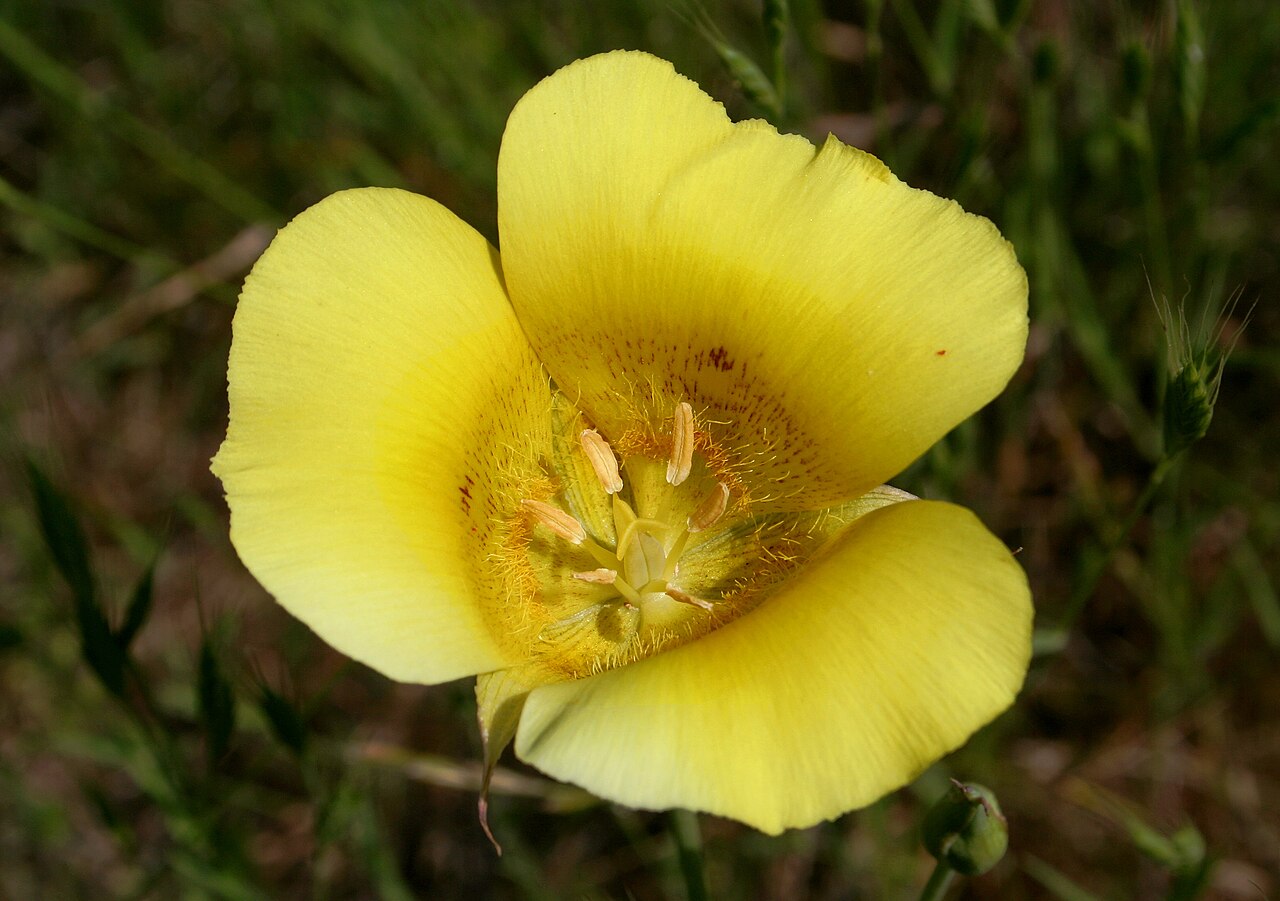
Calochortus luteus, the yellow mariposa lily, lights up California grasslands each spring with clear, egg-yolk-yellow, cup-shaped flowers marked with a smudge of reddish-brown speckling at the base of each petal. Another California endemic in the large and varied Calochortus genus, it is one of the more reliably bright-colored mariposa lilies, lacking the extreme color variation of relatives like butterfly mariposa lily, and it hybridizes naturally where its range overlaps with superb mariposa lily, sometimes producing flowers with blended traits.
Like other mariposa lilies, yellow mariposa lily spends most of the year as a dormant bulb underground, sending up a single grass-like leaf in late winter and a wiry flowering stem in spring. It favors heavier soils than many of its relatives, often found in clay-rich grassland and coastal prairie as well as the drier woodland and forest-floor settings typical of the genus.
Identification
Yellow mariposa lily is one of the easier California mariposa lilies to identify by color alone — true, saturated yellow is less common among its relatives — though always confirm with the reddish-brown blotch pattern and habitat, since a few other species can also show yellow forms.
Foliage
A single narrow, linear basal leaf, up to about 16 inches long, appears in late winter and is often withered by flowering time. Stem leaves are few and reduced.
Flowers
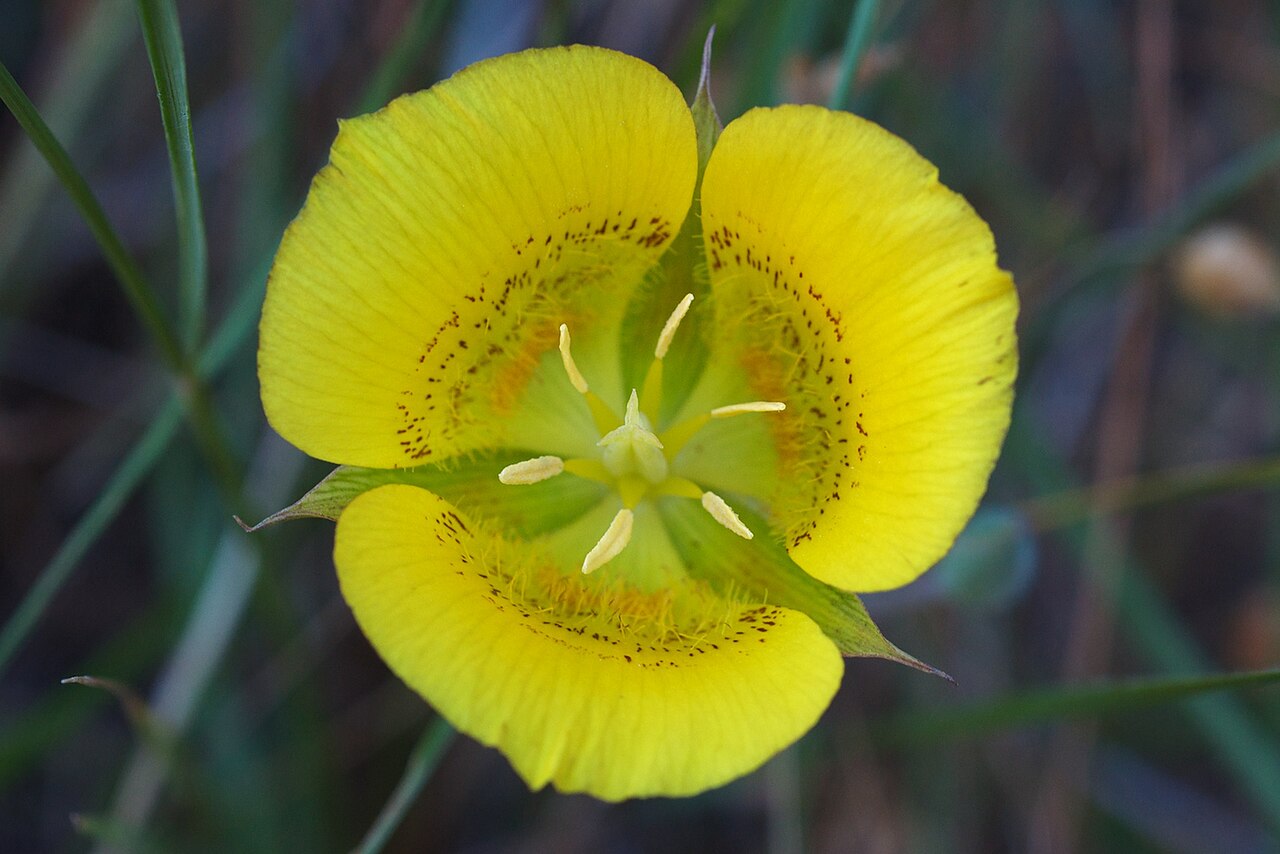
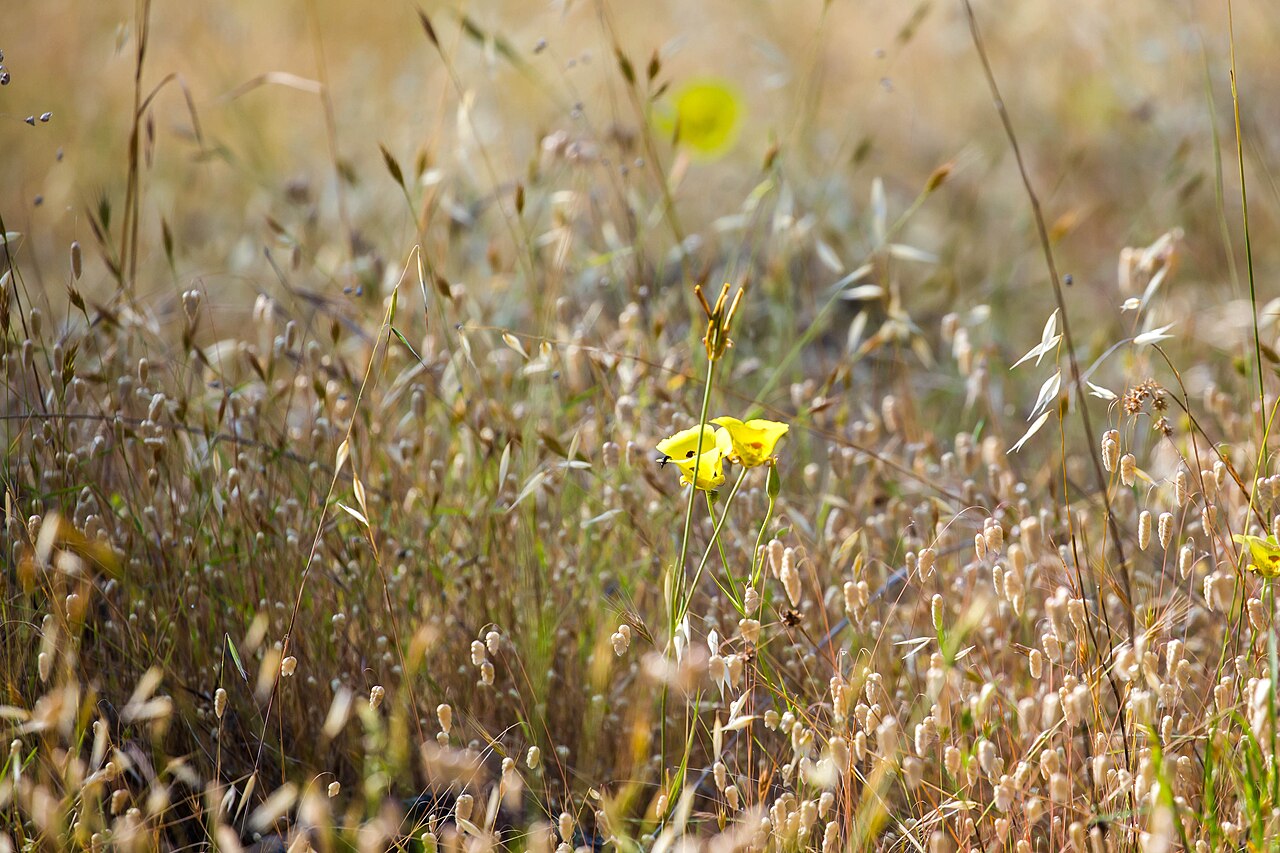
Flowering stems reach 6 to 20 inches tall, typically branched, bearing one to several erect, bowl-shaped flowers about 1.5 to 2 inches across. The three broad petals are a clear, bright yellow, each with a patch of fine reddish-brown speckling or short pencil-striping near the base, grading into a zone of fine hairs around the central glands. Three narrow, pointed sepals, sometimes tinged with brown or purple, alternate with the petals. Bloom season runs roughly April through June.
Fruit
Pollinated flowers develop into upright, narrow, three-angled seed capsules that dry and split open in summer, releasing numerous small, flattened seeds as the rest of the plant dies back for its dry-season dormancy.
Quick Facts
| Scientific Name | Calochortus luteus |
| Family | Liliaceae |
| Plant Type | Perennial bulb (geophyte) |
| Mature Height (in bloom) | 6–20 in |
| Growth Rate | Slow |
| Sun Exposure | Full sun to light part shade |
| Water Needs | Very low once established; summer-dry |
| Soil Type | Heavy clay to loam, well-drained |
| Drought Tolerance | Excellent |
| Bloom Time | April – June |
| Flower Color | Bright yellow with reddish-brown speckled blotch |
| Deer Resistant | Mostly, though bulbs may be dug by rodents |
| USDA Hardiness Zones | 8–10 |
Native Range
Yellow mariposa lily is endemic to California. Its range centers on the Coast Ranges from the northern San Francisco Bay Area south through the Central Coast, the Sierra Nevada foothills, and much of the Central Valley margins, with scattered populations reaching the Channel Islands. It is not native to Nevada, Oregon, or any other state.
It typically grows below about 2,300 feet in heavy clay or loam soils in grassland, coastal prairie, and open woodland — somewhat heavier, moisture-retentive soils than many of its sandy-soil-loving relatives, though it still requires a dry summer to persist.
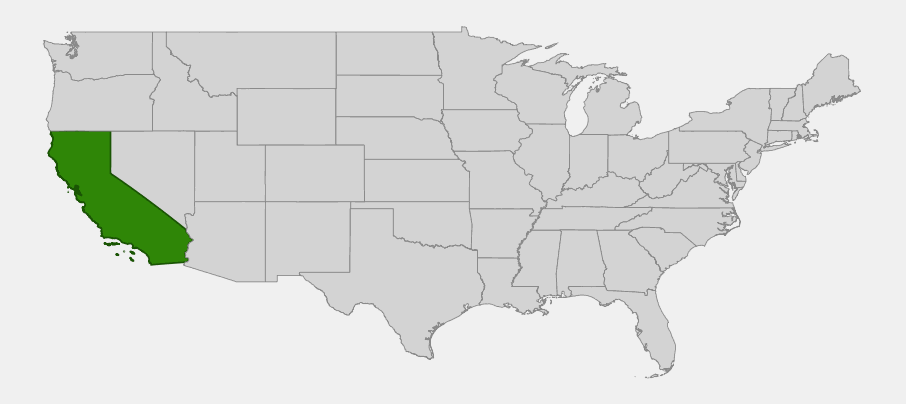
📋 Regional plant lists featuring yellow mariposa lily: California & Nevada
Growing & Care Guide
Yellow mariposa lily tolerates heavier garden soils better than many other mariposa lilies, making it a good starting species for gardeners new to growing California bulbs.
Light
Full sun to light part shade, matching its native open grassland and prairie habitat.
Soil & Water
Clay or loam soils are fine as long as drainage is adequate and water doesn’t pool during the growing season. Water modestly through the winter and spring, then stop watering entirely as foliage yellows in early summer, giving the bulb a fully dry rest until the following fall. As with all mariposa lilies, summer irrigation is the most common cause of bulb loss in cultivation.
Planting Tips
Plant bulbs in fall, about 3 to 4 inches deep. Because it tolerates heavier soils, yellow mariposa lily is a reasonable choice for clay-soil gardens where other mariposa lily species might struggle. Mark the planting site, since the plant disappears entirely during summer dormancy, and avoid disturbing the bed once bulbs are in place.
Maintenance
Let foliage die back naturally rather than cutting it. Protect dormant bulbs from gophers and ground squirrels with a wire basket where rodent pressure is significant.
Landscape Uses
- Clay-soil meadow gardens where many other bulbs struggle
- Coastal prairie and grassland restoration plantings
- Oak woodland edges with seasonal bunchgrasses
- Pollinator gardens for native bees
- No-summer-water beds paired with other California bulbs
Wildlife & Ecological Value
For Pollinators
The bright yellow color and reddish speckled nectar guides attract native bees, which are the main pollinators of yellow mariposa lily. The hairs surrounding the floral glands help trap pollen and direct visiting insects toward the flower’s reproductive structures.
For Wildlife
Like other mariposa lilies, the starchy bulbs are targeted by gophers and ground squirrels, a natural pressure that can limit colony size in open grassland. The abundant spring bloom contributes to the broader grassland wildflower displays that support pollinator activity in the weeks before the dry summer sets in.
Cultural & Historical Uses
As with other mariposa lilies, the bulbs of yellow mariposa lily were historically dug and eaten by California’s Indigenous peoples, typically roasted or boiled, as one of many seasonal wild bulb foods. This reflects documented historical use rather than a present-day foraging recommendation; because mariposa lily colonies are slow to recover from bulb harvesting, digging wild bulbs today is discouraged, especially given ongoing habitat loss to grassland conversion across much of the species’ range.
Frequently Asked Questions
Does yellow mariposa lily hybridize with other Calochortus species?
Yes. Where its range overlaps with superb mariposa lily (Calochortus superbus), the two species are known to hybridize, occasionally producing flowers with intermediate coloring or blotch patterns. Most individuals, however, show the clear yellow color typical of this species.
Can yellow mariposa lily grow in clay soil?
Yes — it tolerates heavier clay and loam soils better than many related mariposa lilies, which is part of why it is found in coastal prairie and clay grassland habitats across California. Drainage still matters, but it is more forgiving than sandy-soil species like butterfly mariposa lily.
Why didn’t my mariposa lily bloom this year?
Mariposa lily bulbs need a full, undisturbed dry summer dormancy to build up energy for the next bloom. Overwatering in summer, heavy shade, or digging too close to the dormant bulb are the most common reasons a bulb skips a flowering season.
Is yellow mariposa lily rare or protected?
It is not officially listed as rare or endangered and remains fairly widespread across its California range, though like many grassland-dependent wildflowers it has lost habitat to agricultural and urban conversion, making remaining wild populations and grassland preserves important for its long-term persistence.
What is the difference between yellow mariposa lily and other yellow Calochortus?
A handful of other California mariposa lily species occasionally show yellow forms, but yellow mariposa lily is reliably and consistently yellow across its populations, paired with its characteristic reddish-brown speckled blotch and preference for clay-rich grassland and coastal prairie habitat.
When is the best time to see yellow mariposa lily in bloom?
Peak bloom generally falls in April and May across most of its Coast Range and foothill range, though flowering can stretch into June at higher elevations or in cooler coastal microclimates. Visiting grassland preserves on a sunny afternoon, when the cup-shaped flowers are fully open, gives the best chance of a good show.

Looking for a nursery that carries yellow mariposa lily?
Browse our native plant nursery directory: California