Hoaryleaf Ceanothus (Ceanothus crassifolius)
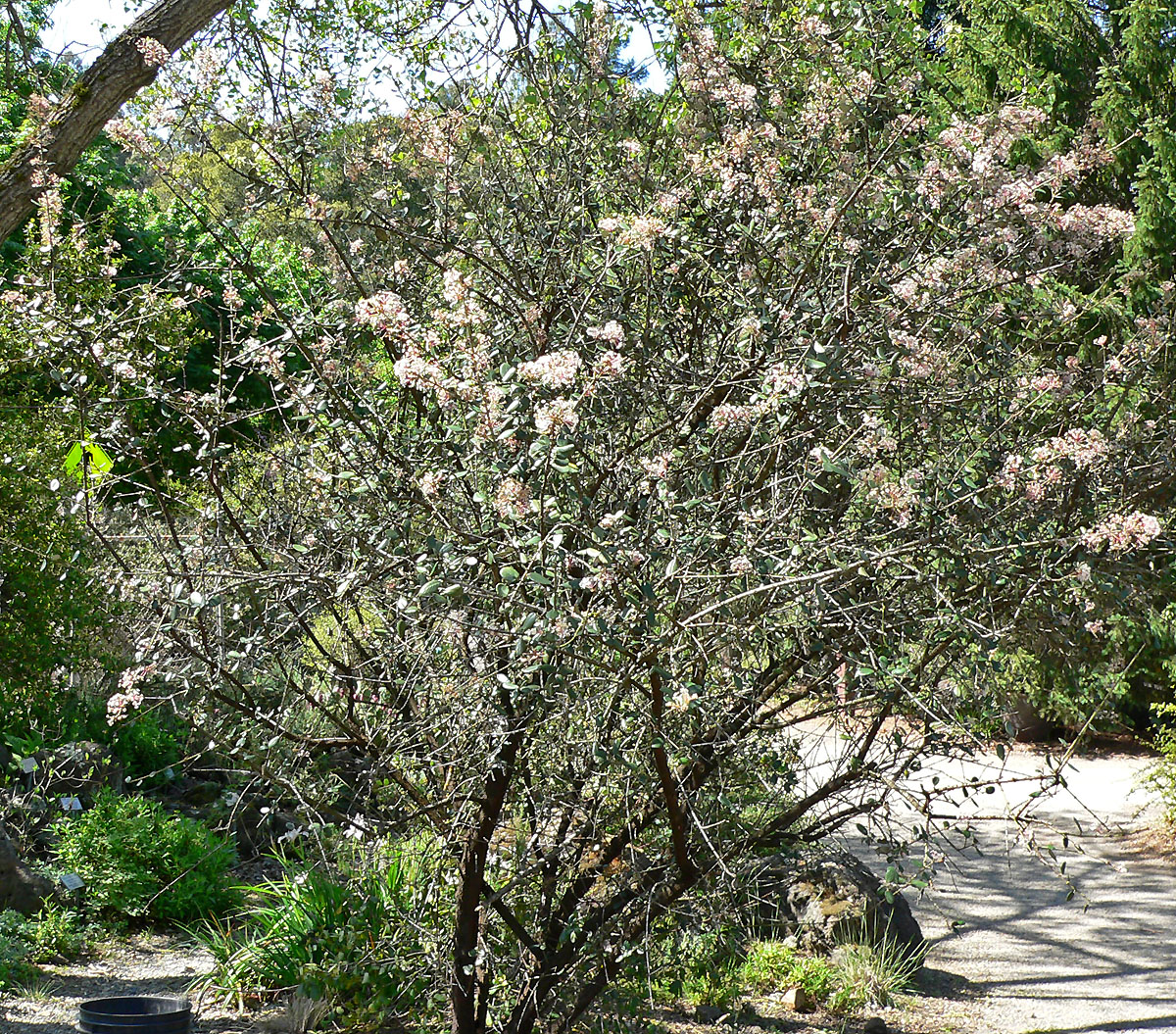
Ceanothus crassifolius, known as hoaryleaf ceanothus, is a large, tough evergreen shrub of Southern California’s chaparral. A member of the Rhamnaceae (buckthorn family) and the spiny-leaved Cerastes subgenus of ceanothus, it takes its common name from the fine, pale hairs coating the undersides of its small, leathery leaves, giving them a frosted or “hoary” appearance that contrasts with the dark green upper surface.
Hoaryleaf ceanothus is an erect, spreading shrub that can reach 6 to 12 feet, with long, somewhat open branching topped in late winter and early spring by dense clusters of small white to pale pink flowers that can cover the entire plant. It is one of the signature chaparral shrubs of the Southern California mountains and foothills, thriving on the thin, rocky, nutrient-poor soils where few other plants compete successfully.
Though rated globally secure by the IUCN, hoaryleaf ceanothus carries a NatureServe “Vulnerable” conservation ranking, reflecting the ongoing loss and fragmentation of Southern California chaparral habitat to development. For native gardeners in the region, planting it is both a practical low-water landscaping choice and a small contribution to conserving a characteristic — and increasingly pressured — plant community.
Identification
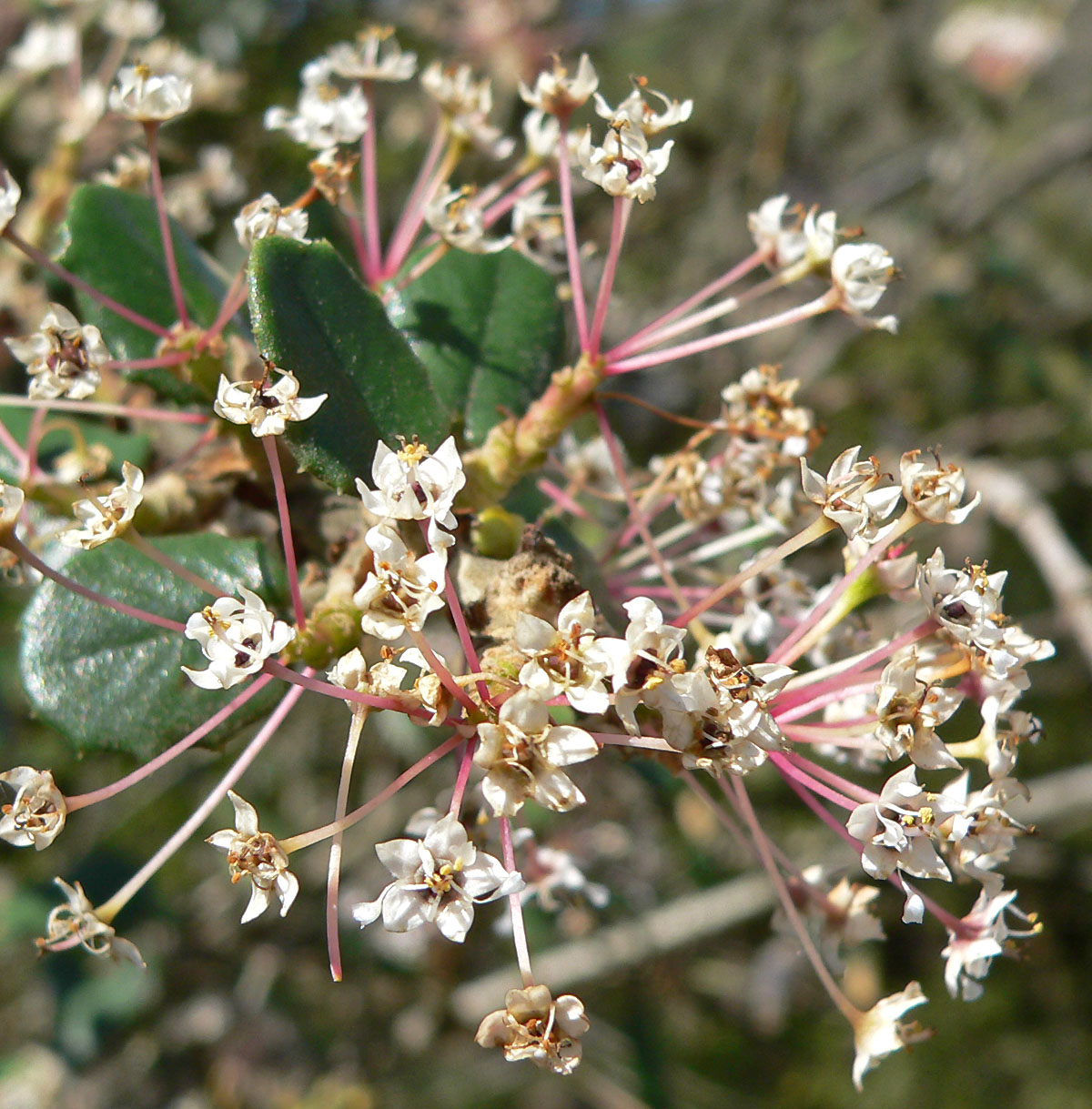
Hoaryleaf ceanothus is identified by its large, rangy shrub form, small leathery evergreen leaves with widely spaced teeth along the margins, and pale, hairy (hoary) leaf undersides. Dense white to pink-tinged flower clusters in late winter and early spring are a reliable seasonal field mark.
Bark & Stems
Branches are long and relatively open compared to some denser chaparral ceanothus species, with younger twigs covered in fine white to light brown hairs that give new growth a fuzzy, grayish cast. Older wood is gray-brown and woody.
Leaves
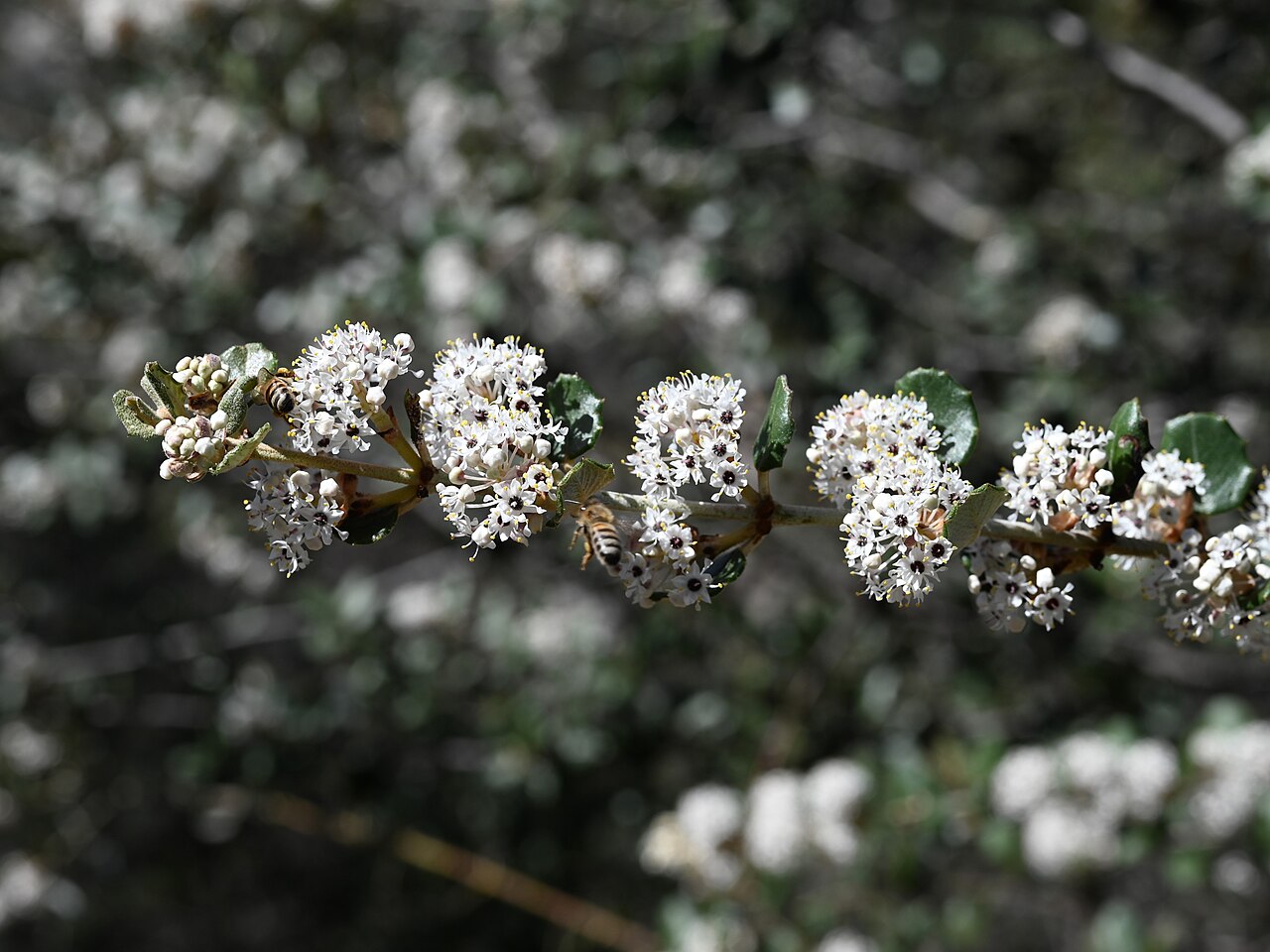
Leaves are small, evergreen, and leathery, typically ¼ to ½ inch long, with distinctly crinkled (rugose) upper surfaces and widely spaced teeth along the edges. The undersides are noticeably paler than the dark green tops and coated with fine hairs — the “hoary” texture that gives the species its common name and helps reduce water loss in its hot, dry habitat.
Flowers
Flowers are small, white to pale pink, and packed into dense, rounded clusters at the branch tips, sometimes covering the shrub heavily enough to appear snow-dusted from a distance. Bloom time runs from roughly February through April, among the earlier chaparral shrubs to flower each year.
Fruit & Seeds
The fruit is a small, three-lobed capsule that dries and splits open at maturity, ejecting its hard seeds a short distance from the parent plant. As in many chaparral shrubs, the seed coat requires heat or chemical cues from fire to break dormancy, allowing seed to accumulate in the soil for years between burns.
Quick Facts
| Scientific Name | Ceanothus crassifolius |
| Family | Rhamnaceae (Buckthorn) |
| Plant Type | Evergreen Shrub |
| Mature Height | 6–12 ft (1.8–3.6 m) |
| Mature Spread | 6–12 ft (1.8–3.6 m) |
| Growth Rate | Moderate |
| Sun Exposure | Full Sun |
| Water Needs | Low |
| Soil Type | Rocky, gravelly, or sandy; well-drained |
| Soil pH | 6.0–7.5 |
| Bloom Time | February – April |
| Flower Color | White to pale pink |
| Fall Color | None (evergreen) |
| Fruit | Small three-lobed seed capsules |
| Deer Resistant | Yes |
| USDA Hardiness Zones | 8–10 |
Native Range
Hoaryleaf ceanothus is native to California, with confirmed county-level populations concentrated in the chaparral-covered mountains and foothills of Southern California, from the South Coast Ranges through the Transverse and Peninsular Ranges. It is a signature shrub of the chaparral belt ringing the Los Angeles basin and extending into San Diego County.
It typically grows between about 500 and 5,000 feet in elevation, on dry, sun-baked, rocky or gravelly slopes, often alongside chamise and scrub oak in dense, nearly monotypic chaparral stands. Because it tolerates some of the thinnest, poorest soils in its range, it is frequently among the dominant shrubs on exposed, south-facing chaparral slopes.
Like other chaparral ceanothus, hoaryleaf ceanothus depends on periodic wildfire for long-term population health. Seeds accumulate in the soil seed bank between fires, their hard coats cracked open by heat and smoke-related chemical cues, allowing the species to regenerate densely after a burn even where mature plants are killed outright.
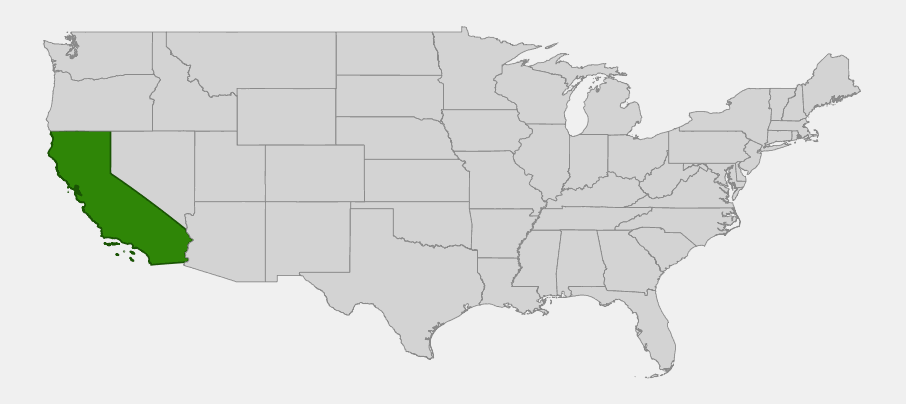
📋 Regional plant lists featuring hoaryleaf ceanothus: California & Nevada
Growing & Care Guide
Hoaryleaf ceanothus is an excellent choice for large, dry Southern California gardens where a tough, substantial evergreen screen or specimen shrub is needed with minimal water input.
Light
Full sun is required. As a dominant chaparral shrub of open, exposed slopes, it performs poorly in shade, becoming sparse and weak.
Soil & Water
Excellent drainage is essential. Hoaryleaf ceanothus thrives in lean, rocky, or gravelly soils and is highly drought-tolerant once established — like most California ceanothus species, it is intolerant of summer irrigation, which commonly leads to root and crown rot. Water during the first one to two years to establish roots, then reduce irrigation sharply; mature plants should need little beyond natural winter rainfall.
Planting Tips
Plant container stock in fall or early winter to allow root establishment during the rainy season. Skip rich soil amendments in the planting hole, which can hold excess moisture; backfill with native soil instead. Give plants plenty of room, since mature shrubs can reach 10 feet or more in both height and spread, and keep irrigation away from the root crown.
Pruning & Maintenance
Prune lightly and only as needed to remove dead wood or control size, since ceanothus species generally respond poorly to hard cuts into old growth. Once established on a suitably lean, well-drained site, hoaryleaf ceanothus requires very little ongoing maintenance.
Landscape Uses
Its large size and toughness suit several roles in a Southern California native garden:
- Large evergreen screen or informal hedge
- Chaparral restoration plantings
- Dry slope and bank stabilization
- Pollinator gardens, for its heavy late-winter bloom
- Low-water, Mediterranean-climate landscaping
Fire Ecology
Hoaryleaf ceanothus is well adapted to Southern California’s fire-prone chaparral, regenerating primarily from a long-lived, fire-stimulated seed bank in the soil rather than resprouting from the base. This obligate-seeding strategy means dense new stands typically appear in the first few years after a burn, as accumulated seed germinates en masse on the newly open ground.
Wildlife & Ecological Value
As a dominant Southern California chaparral shrub, hoaryleaf ceanothus supports a range of wildlife through its flowers, cover, and ecological role.
For Birds
Dense branching provides nesting cover and protection for chaparral birds such as wrentits and California towhees, while the heavy late-winter and spring bloom draws insects that many songbirds depend on during the breeding season.
For Mammals
Mule deer and other browsers feed on young foliage in some areas, though mature, leathery growth is generally less palatable, making this an effectively deer-resistant landscape shrub overall. Small mammals use dense stands for cover.
For Pollinators
The abundant, fragrant late-winter flowers are an important early-season nectar and pollen source for native bees and other insects, at a time when relatively few other chaparral shrubs are in full bloom.
Ecosystem Role
As a nitrogen-fixing shrub typical of many ceanothus species, hoaryleaf ceanothus likely contributes to soil fertility in the nutrient-poor chaparral soils it inhabits, while its post-fire regeneration strategy helps stabilize slopes and anchor plant communities recovering from wildfire across Southern California’s fragmented chaparral landscape.
Cultural & Historical Uses
As with other chaparral ceanothus, the flexible branches and seeds of hoaryleaf ceanothus have a history of use among Southern California Indigenous peoples for small tools and implements. This is historical context rather than a how-to guide; always confirm identification with an expert before working with any wild-collected plant material.
Frequently Asked Questions
Why are the leaves called “hoary”?
“Hoary” refers to the fine, pale hairs coating the undersides of the leaves, which give them a frosted, grayish-white appearance compared to the darker green upper surface — the trait behind both the common and botanical understanding of this species.
Is hoaryleaf ceanothus endangered?
It is not listed as federally or state endangered and is ranked globally secure by the IUCN, but it carries a NatureServe “Vulnerable” ranking reflecting ongoing habitat loss as Southern California chaparral is converted to development. Planting it in appropriate gardens supports this increasingly pressured plant community.
How big does hoaryleaf ceanothus get?
It is one of the larger chaparral ceanothus species, typically reaching 6 to 12 feet tall and wide, with some sources noting specimens exceeding that in favorable sites — plan for a substantial shrub, not a small accent plant.
Why is my ceanothus dying after a few years in the garden?
Overwatering, especially summer irrigation or heavy, slow-draining soil, is the most common cause of ceanothus decline. Make sure drainage is excellent and cut back water sharply once plants are established.
Is hoaryleaf ceanothus deer resistant?
Generally yes, particularly once leaves mature and toughen, though young plants may see some browsing in areas with heavy deer pressure.

Looking for a nursery that carries hoaryleaf ceanothus?
Browse our native plant nursery directory: California