Eastwood Manzanita (Arctostaphylos glandulosa)
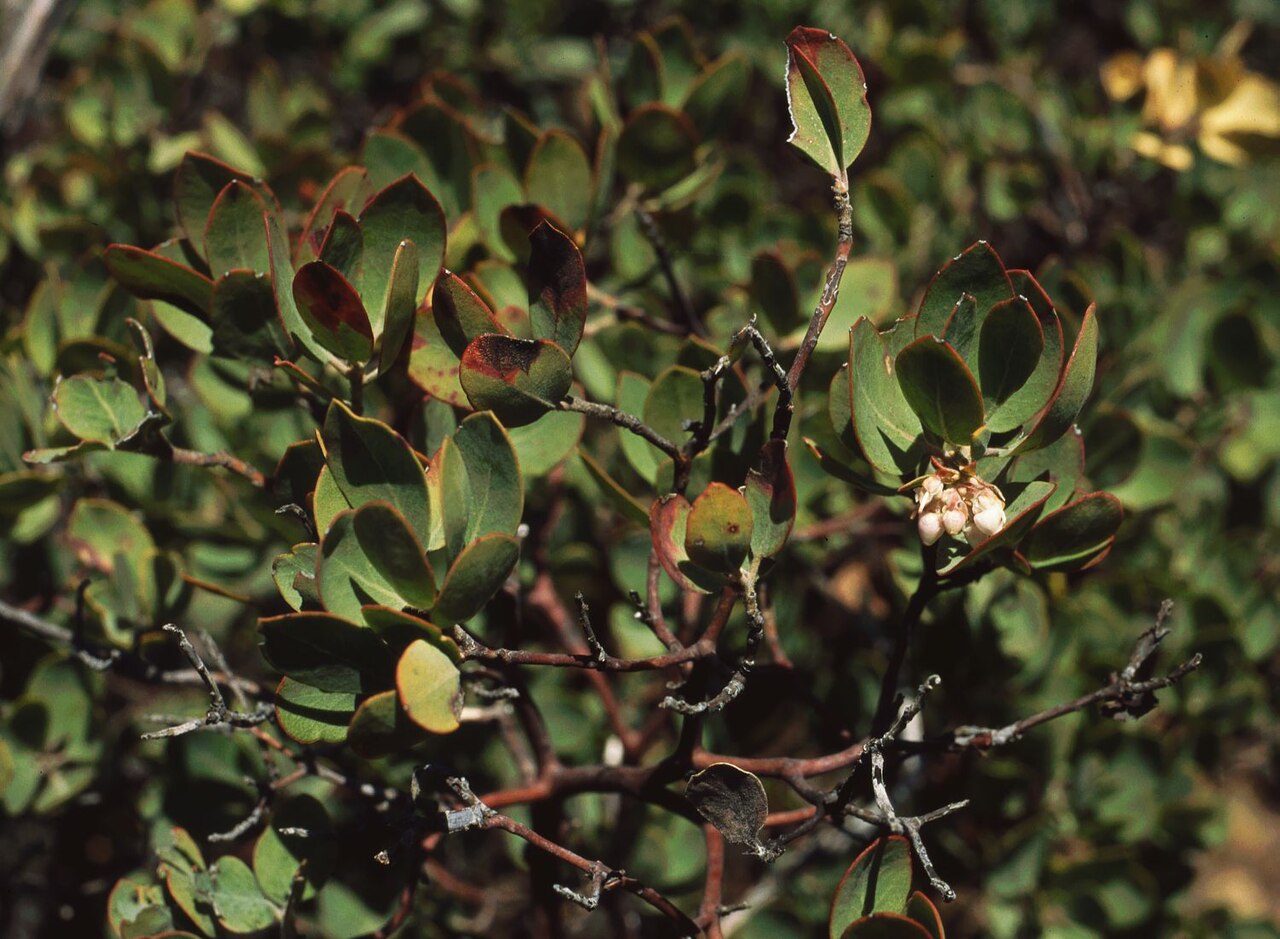
Arctostaphylos glandulosa, commonly known as Eastwood manzanita or Eastwood’s manzanita, is one of the most widespread manzanitas of California’s chaparral and foothill woodlands. It belongs to the Ericaceae (heath family), the same family as blueberries and rhododendrons, and shares the genus’s signature traits: smooth mahogany-red bark, stiff evergreen leaves, and clusters of small, urn-shaped flowers that open in the depths of winter when little else is blooming. The species name “glandulosa” refers to the sticky, gland-tipped hairs found on its new growth, flower stalks, and fruit — a feature that separates it from many of its smoother-leaved relatives.
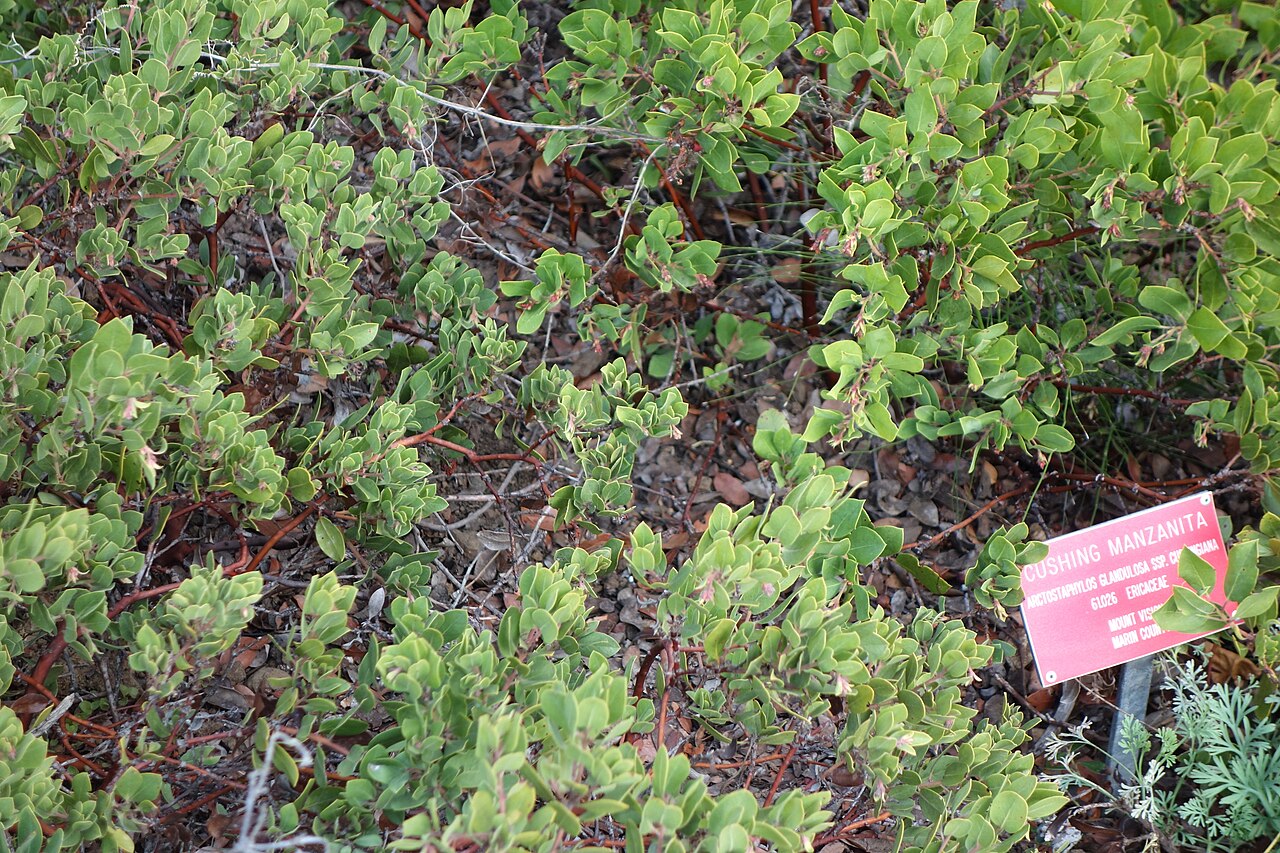
Eastwood manzanita is an erect, many-branched shrub that typically reaches 3 to 8 feet tall, though old specimens on favorable sites can approach 10 feet. It is a true chaparral specialist, forming dense, often impenetrable stands on dry, rocky or sandy slopes from the coast to the inland foothill belt of California. Like many manzanitas, it is a strikingly variable species — botanists currently recognize several regional subspecies, including the federally endangered Del Mar manzanita (A. glandulosa ssp. crassifolia), restricted to a handful of coastal sites in San Diego County, and Adams’ manzanita (ssp. adamsii), found only in the Peninsular Ranges.
For native gardeners in California, Eastwood manzanita offers drought tolerance, year-round structure, and an outsized wildlife payoff for the amount of water it asks for. Its small, mealy, apple-like fruits (manzanita is Spanish for “little apple”) feed birds and mammals through summer and fall, and its winter flowers are an important early nectar source for hummingbirds and native bees at a time when few other natives are in bloom.
Identification
Eastwood manzanita is best identified by the combination of smooth reddish bark, leathery evergreen leaves held edge-on to the sun, and small white-to-pink flower urns that appear in the cooler months. Close inspection of new twigs, leaf petioles, and fruit will usually reveal the short, sticky, gland-tipped hairs that give the species its name — a useful field mark for separating it from the many smooth-leaved manzanitas it often grows alongside.
Bark & Stems
Mature stems and trunks are smooth, hard, and polished, ranging from deep red-brown to nearly purple, and they often peel in thin curls as the plant ages — a trait shared across the manzanita genus. Younger twigs are typically bristly-hairy and glandular-sticky to the touch. Many populations of this species resprout from a woody basal burl (a swollen, bud-rich crown at the base of the stem) after fire, though some chaparral populations are non-sprouting “obligate seeders” that rely entirely on fire-stimulated seed germination to regenerate — the strategy varies by subspecies and population.
Leaves
Leaves are evergreen, alternate, and leathery, roughly 1 to 2 inches long, oval to elliptic, with a short point at the tip. They are typically held nearly vertically, an adaptation that reduces direct sun exposure during the hottest part of the day and helps the plant conserve water. Leaf color ranges from dull gray-green to bright green depending on subspecies and site conditions, and the surfaces are often finely hairy or glandular, especially on new growth.
Flowers
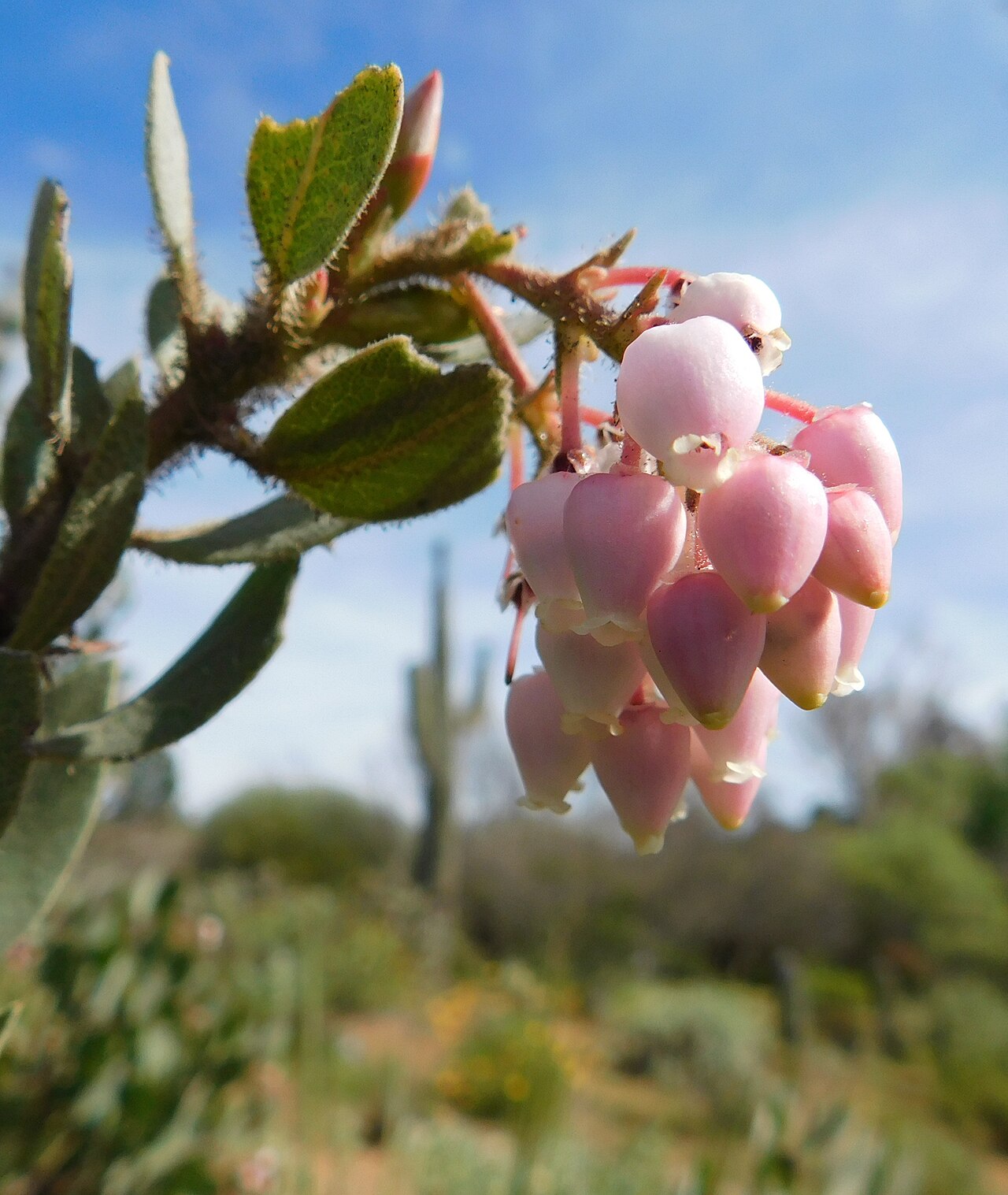
Flowers are small, urn-shaped (urceolate), and borne in short, drooping clusters at the branch tips. Color ranges from pure white to pale pink. Bloom time runs from roughly December through April depending on elevation and latitude, making Eastwood manzanita one of the earliest chaparral shrubs to flower each year — a critical nectar source for Anna’s hummingbirds and native bees during the lean winter months.
Fruit & Seeds
The fruit is a small, hard, berry-like drupe about ¼ to ⅓ inch across, ripening from green to reddish-brown. The flesh is dry and mealy rather than juicy, surrounding several hard, bony seeds (technically fused nutlets). Fruits ripen through summer and persist into fall, providing a long window of food for wildlife even as the mealy texture makes them a marginal choice for people.
Quick Facts
| Scientific Name | Arctostaphylos glandulosa |
| Family | Ericaceae (Heath) |
| Plant Type | Evergreen Shrub |
| Mature Height | 3–8 ft (0.9–2.4 m) |
| Mature Spread | 4–8 ft (1.2–2.4 m) |
| Growth Rate | Slow |
| Sun Exposure | Full Sun |
| Water Needs | Low |
| Soil Type | Rocky, sandy, or decomposed granite; well-drained |
| Soil pH | 5.5–7.0 (slightly acidic to neutral) |
| Bloom Time | December – April |
| Flower Color | White to pale pink |
| Fall Color | None (evergreen) |
| Fruit | Small reddish-brown mealy drupes (“little apples”) |
| Deer Resistant | Yes |
| USDA Hardiness Zones | 8–10 |
Native Range
Eastwood manzanita is native to California, where its county-level records are concentrated in the Coast Ranges, Transverse and Peninsular Ranges, and the foothills bordering the Central Valley, from the San Francisco Bay Area south to San Diego County near the Mexican border. It also occurs disjunctly in parts of northern California. Some references describe the species’ broader appearance extending into southwestern Oregon and northern Baja California, but confirmed county-level native populations documented for this page are limited to California.
It grows from near sea level to roughly 5,000 feet in elevation, favoring dry, sun-exposed slopes and ridgelines with rocky, well-drained, often nutrient-poor soils — classic chaparral terrain. It is a dominant or co-dominant shrub across huge stretches of California chaparral, frequently forming nearly pure stands on south-facing slopes.
Eastwood manzanita is a fire-adapted chaparral species. Depending on subspecies and population, plants either resprout from a persistent basal burl after fire or are killed outright and regenerate entirely from a long-lived soil seed bank that is stimulated to germinate by heat and chemicals in smoke. This dual strategy helps the species persist through California’s natural wildfire cycles, though increasingly frequent fire intervals in some areas can stress even well-adapted chaparral shrubs.
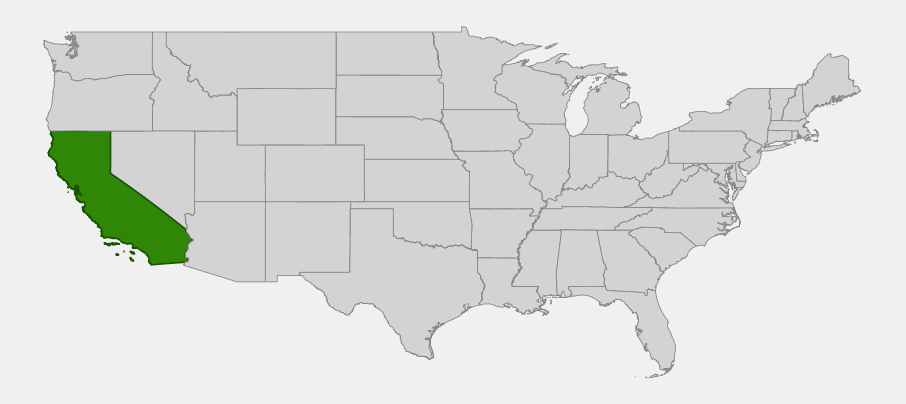
📋 Regional plant lists featuring Eastwood manzanita: California & Nevada
Growing & Care Guide
Eastwood manzanita rewards patience: it grows slowly, but once established it is one of the toughest, lowest-maintenance evergreen shrubs available to California gardeners. Give it the lean, fast-draining conditions it evolved with and it will ask for almost nothing in return.
Light
Full sun is essential. This is a chaparral shrub adapted to open, south-facing slopes, and it will become leggy, sparse, and prone to fungal problems in shade. Choose the sunniest, most exposed spot in the garden.
Soil & Water
Excellent drainage is the single most important requirement. Eastwood manzanita is adapted to rocky, sandy, or decomposed-granite soils with low fertility, and it is notoriously intolerant of summer water once established — overwatering and heavy clay soils are the most common causes of death in cultivation, usually from root and crown rot. Water regularly during the first one to two years to establish a deep root system, then taper off sharply; mature plants should need little to no supplemental water beyond winter rainfall in most of California.
Planting Tips
Plant in fall or early winter so roots can establish during the rainy season before the first dry summer. Avoid amending the planting hole with rich organic matter, which can hold excess moisture against the roots; a straight backfill of native soil is usually best. Keep irrigation lines and sprinklers away from the root crown, and mulch lightly with gravel or coarse bark rather than moisture-retentive wood chips piled against the stem.
Pruning & Maintenance
Prune minimally and only to remove dead wood, since manzanitas generally do not resprout well from old wood that is cut back hard. Light shaping immediately after bloom is tolerated. Established plants are extremely low-maintenance and essentially pest-free when grown in appropriate lean, dry conditions.
Landscape Uses
Eastwood manzanita fits a range of dry-garden roles:
- Chaparral and foothill restoration plantings
- Slope stabilization on dry, rocky hillsides
- Wildlife and pollinator gardens, especially for winter-blooming nectar
- Fire-wise landscaping when sited with proper defensible-space spacing and maintained free of dead wood buildup
- Evergreen structure in a low-water, Mediterranean-climate garden
Fire Ecology
As a chaparral-adapted species, Eastwood manzanita is well suited to California’s natural fire regime, though like all woody chaparral shrubs it is flammable and should be sited and maintained with fire safety in mind near structures. Many populations resprout vigorously from a basal burl after fire; others regenerate from a long-lived, fire-stimulated seed bank in the soil, repopulating burned chaparral within a few years.
Wildlife & Ecological Value
Eastwood manzanita is a cornerstone species of California chaparral, supporting wildlife through every season of the year.
For Birds
The winter and early-spring flowers are an important nectar source for Anna’s hummingbirds, which time part of their breeding cycle to manzanita bloom. The mealy fall and summer fruits are eaten by California thrashers, California towhees, scrub-jays, and many other chaparral birds, which in turn disperse the seeds.
For Mammals
Coyotes, gray foxes, and black bears feed on the fruit where ranges overlap, and dense manzanita thickets provide cover and denning habitat for smaller mammals. Deer generally avoid browsing the tough, leathery foliage, making this an effectively deer-resistant landscape shrub.
For Pollinators
Because it flowers in winter, when few other California natives are blooming, Eastwood manzanita is a critical early-season resource for native bees, including bumblebees that are active on warm winter days. The urn-shaped flowers are specialized for buzz pollination by bees that can vibrate pollen loose from the tubular corolla.
Ecosystem Role
As a dominant chaparral shrub, Eastwood manzanita provides structural habitat and erosion control on steep, fire-prone slopes, and its persistence strategy — whether burl resprouting or seed-bank regeneration — is central to how California chaparral recovers after wildfire.
Cultural & Historical Uses
Manzanita berries, including those of this species, were historically gathered by California Indigenous peoples and prepared as a sweet-tart cider-like beverage or dried and ground for later use; the ripe fruit was also eaten fresh in small quantities, though its mealy, seedy texture makes it a minor food rather than a staple. The hard, polished red wood has occasionally been used for small carved items and tool handles. These are historical uses, not a recommendation to forage; identification should be confirmed by an expert, and some protected subspecies of this species should never be collected from the wild.
Frequently Asked Questions
Is Eastwood manzanita the same as other California manzanitas?
No. California has dozens of manzanita species and subspecies, many of them narrowly distributed and difficult to tell apart without close examination of hairs, glands, and bark texture. Arctostaphylos glandulosa is one of the more widespread species, but always confirm identification before planting a specific subspecies, since several — including the Del Mar manzanita (ssp. crassifolia) — are rare, legally protected, and should never be collected from the wild.
Can you eat the berries?
Yes, in small quantities — the fruit is not toxic — but it is dry, mealy, and seedy rather than sweet or juicy. Historically it was more often processed into a beverage than eaten raw. It is not grown as a food crop.
Why won’t my manzanita survive in my garden?
The most common cause of failure is too much water, especially from summer irrigation or heavy, poorly drained soil. Eastwood manzanita needs excellent drainage and should receive little to no water once established.
Is Eastwood manzanita deer resistant?
Generally yes. Its tough, leathery leaves are not a preferred browse for deer, which makes it a reliable choice in areas with heavy deer pressure.
How fast does it grow?
Slowly. Expect modest growth in the first few years, especially if the plant is kept appropriately dry, but mature specimens are long-lived and require little maintenance once established.

Looking for a nursery that carries Eastwood manzanita?
Browse our native plant nursery directory: California