Whiteleaf Manzanita (Arctostaphylos viscida)
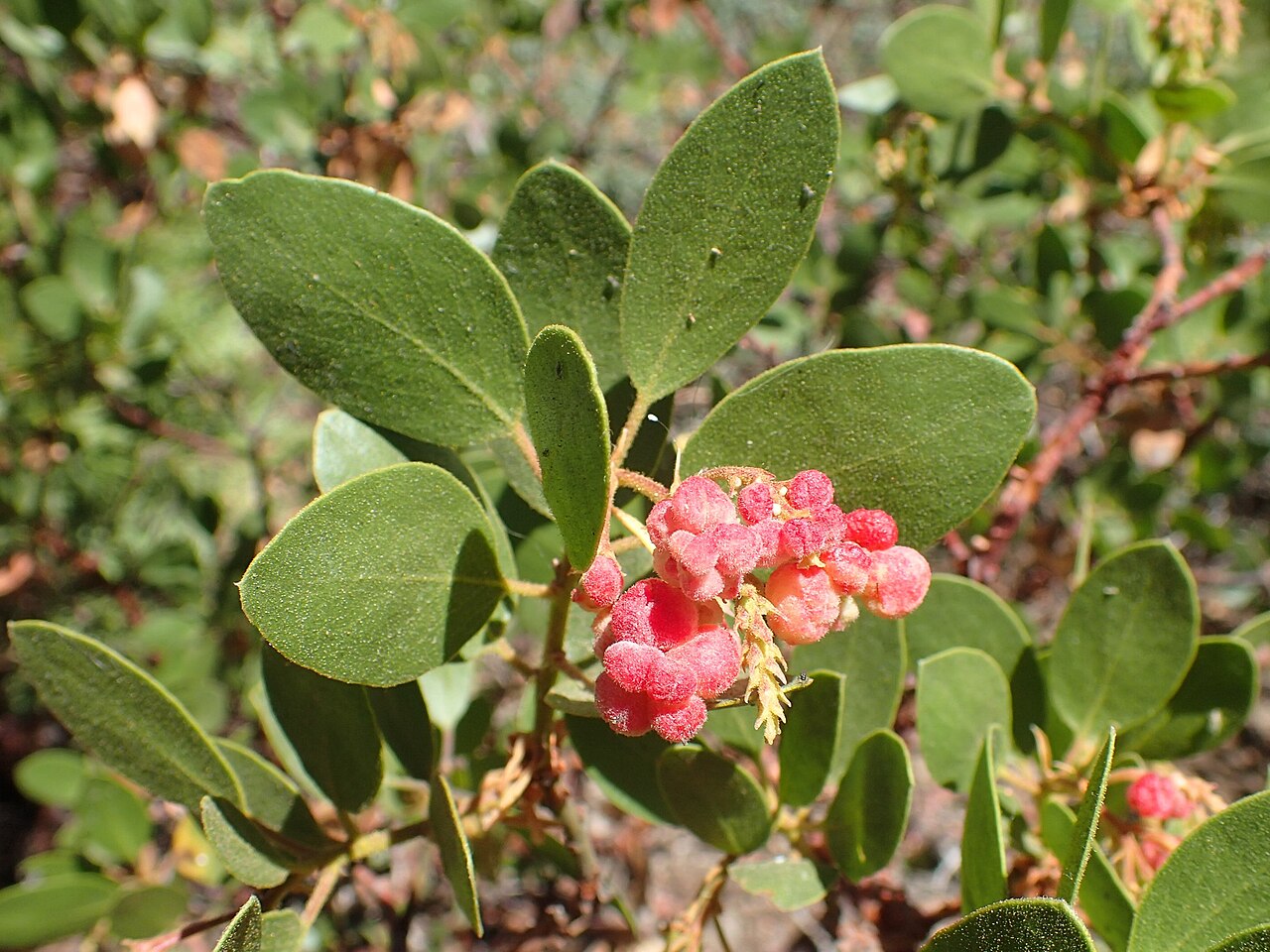
Arctostaphylos viscida, known as whiteleaf manzanita or sticky manzanita, is one of the showiest manzanitas of California’s interior foothills. A member of the Ericaceae (heath family), it is instantly recognizable among its chaparral neighbors by its pale, chalky gray-green leaves — a striking contrast to the glossy dark-green foliage typical of most manzanitas — and by the sticky, gland-covered hairs that coat its new twigs, flower stalks, and developing fruit, giving rise to the species name “viscida,” meaning sticky.
Unlike the low, sprawling habit of many chaparral manzanitas, whiteleaf manzanita often grows as a large, distinctly treelike shrub, with smooth, deep red-purple bark on older wood that peels in thin curls and is widely considered one of the most ornamental features in the genus. Mature plants can reach 6 to 20 feet, forming a small multi-trunked tree with an open, sculptural branching pattern.
In California’s foothill woodlands, whiteleaf manzanita is notable as a reliable indicator of serpentine soils, though it is not restricted to them and also thrives on ordinary rocky, granitic, and volcanic substrates. For native gardeners, it offers a dramatic, low-water accent plant with year-round structure, striking bark, and late-winter flowers that help carry pollinators through the lean months.
Identification
Whiteleaf manzanita is identified by the combination of pale gray-green or whitish-green leaves, smooth deep-red to purplish bark, and a treelike, multi-trunked growth habit uncommon among lower-growing chaparral manzanitas. The sticky, glandular coating on young growth and fruit is a reliable field mark when present, though it varies between the two recognized subspecies.
Bark & Stems
Older stems and trunks are smooth, hard, and polished, in shades of deep red-purple to mahogany, peeling in thin papery curls to reveal fresh bark beneath — one of the most ornamental traits of any California native shrub. Young twigs are often densely glandular-hairy and sticky to the touch, especially in the nominate subspecies (ssp. viscida); the Mariposa manzanita subspecies (ssp. mariposa) tends to be less sticky and somewhat hairier overall.
Leaves
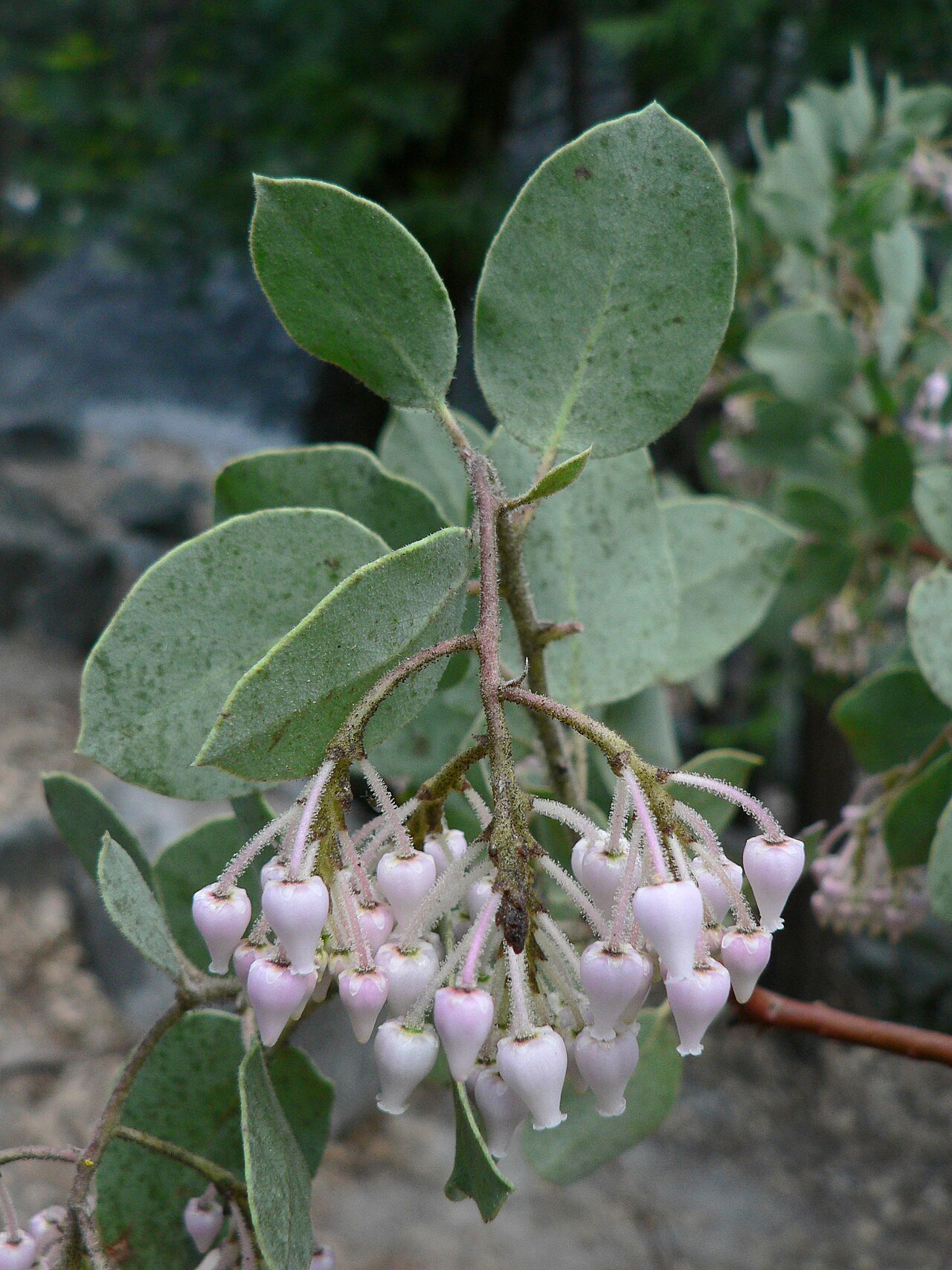
Leaves are evergreen, leathery, and oval to nearly round, roughly 1 to 2 inches long, held at an angle that reduces direct midday sun exposure. Their defining trait is color: a pale, dusty gray-green to nearly whitish cast that sets the species apart from the darker, glossier foliage of most other manzanitas — the source of the common name “whiteleaf.”
Flowers
Flowers are small, urn-shaped, and white to pale pink, clustered in drooping panicles at the branch tips. Bloom time runs from roughly January through March, among the earliest-flowering shrubs in the California foothills, providing crucial nectar for hummingbirds and native bees before most other plants have broken winter dormancy.
Fruit & Seeds
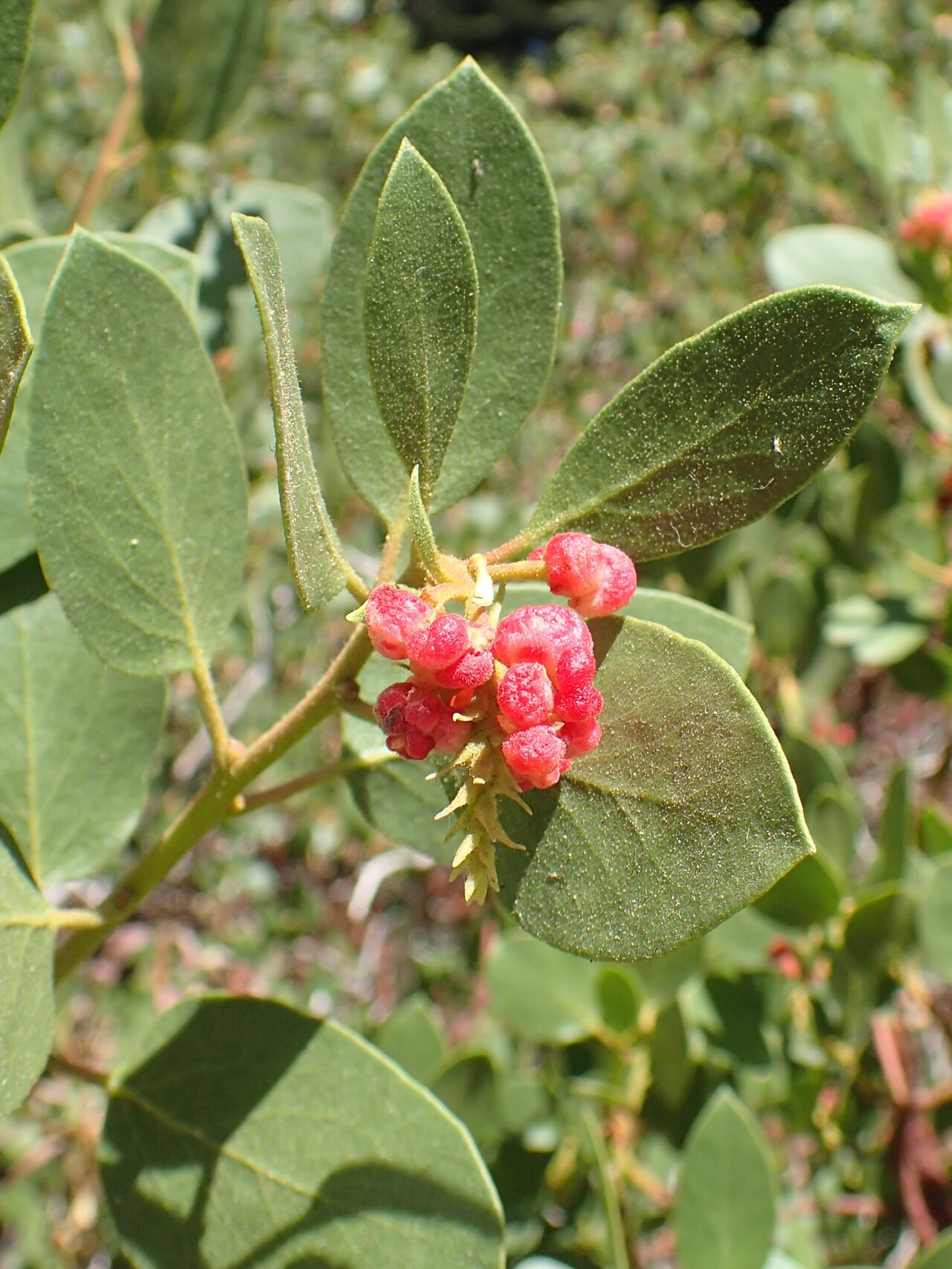
The fruit is a small, round, berry-like drupe about ¼ inch across, ripening from green through bright pink-red to brown, and is often noticeably sticky-glandular when young. Like other manzanitas, the “little apples” have a dry, mealy texture around several hard, bony nutlets, and they persist on the plant well into summer.
Quick Facts
| Scientific Name | Arctostaphylos viscida |
| Family | Ericaceae (Heath) |
| Plant Type | Evergreen Shrub / Small Tree |
| Mature Height | 6–20 ft (1.8–6 m) |
| Mature Spread | 6–15 ft (1.8–4.5 m) |
| Growth Rate | Slow to Moderate |
| Sun Exposure | Full Sun |
| Water Needs | Low |
| Soil Type | Rocky, granitic, volcanic, or serpentine; well-drained |
| Soil pH | 5.5–7.5 |
| Bloom Time | January – March |
| Flower Color | White to pale pink |
| Fall Color | None (evergreen) |
| Fruit | Small sticky, mealy pink-to-brown drupes |
| Deer Resistant | Yes |
| USDA Hardiness Zones | 7–10 |
Native Range
Whiteleaf manzanita is native to California, with confirmed county-level populations concentrated in the northern Sierra Nevada foothills, the Klamath-Siskiyou region, and the inner North Coast Ranges, generally at middle elevations below the true mountain manzanitas. Some sources describe the species as extending into adjacent southwestern Oregon, and herbarium photographs exist from the Rogue River-Siskiyou National Forest just across the state line, but confirmed county-level native populations documented for this page are limited to California.
It typically grows between about 500 and 5,000 feet in elevation, in chaparral and the drier edges of mixed conifer and foothill pine-oak woodland. It is especially characteristic of the serpentine-influenced soils of the northern Coast Ranges and Klamath region, where it serves as a recognizable indicator plant, though it also grows readily on ordinary granitic and volcanic substrates.
Like other chaparral and foothill manzanitas, whiteleaf manzanita is adapted to a landscape shaped by periodic wildfire. It persists through fire cycles via a combination of resprouting (in some populations) and prolific, fire-stimulated seed germination, allowing it to recolonize burned slopes quickly.
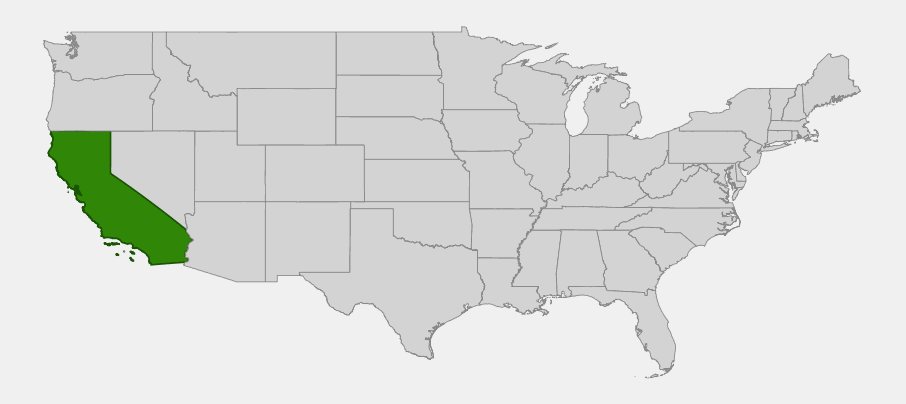
📋 Regional plant lists featuring whiteleaf manzanita: California & Nevada
Growing & Care Guide
Whiteleaf manzanita is a striking, drought-tough choice for gardeners who can offer it the sharp drainage and minimal summer water it needs. Its treelike form and colorful bark make it one of the best manzanitas for a specimen or accent planting.
Light
Full sun is required for healthy, compact growth and good flowering. In shade, plants become thin, leggy, and more susceptible to fungal disease.
Soil & Water
Excellent drainage is essential — whiteleaf manzanita is naturally found on rocky, mineral-poor soils, including serpentine, and performs best in lean, fast-draining ground. It is highly drought-resistant once established and is intolerant of summer irrigation, which promotes root and crown rot. Water during the first one to two years to establish roots, then reduce irrigation sharply; mature plants should rely on winter rainfall alone in most California gardens.
Planting Tips
Plant from container stock in fall or early winter to take advantage of the rainy season for root establishment. Skip rich soil amendments, which hold moisture against the roots; backfill with native soil instead. Keep the root crown dry and away from sprinkler heads, and mulch with gravel or coarse bark rather than moisture-holding wood chips piled against the stems.
Pruning & Maintenance
Prune sparingly — remove only dead or damaged wood, since manzanitas generally fail to resprout from hard cuts into old wood. Light shaping after bloom is fine if a more compact form is desired. Once established in appropriate lean, dry conditions, plants are essentially maintenance-free and pest-resistant.
Landscape Uses
Whiteleaf manzanita’s dramatic form and bark suit several garden roles:
- Specimen or accent planting where the sculptural bark and form can be appreciated
- Foothill and chaparral restoration plantings
- Dry slope stabilization
- Pollinator gardens, for its early-season nectar
- Low-water, Mediterranean-climate landscaping
Fire Ecology
Whiteleaf manzanita is adapted to the periodic wildfires typical of California foothill chaparral and woodland. Many populations regenerate primarily from a long-lived, fire-stimulated soil seed bank after a burn, quickly repopulating open, disturbed ground, while some individuals also resprout from the base. As a woody, resinous shrub it is flammable and should be sited with defensible-space guidelines in mind near structures.
Wildlife & Ecological Value
Whiteleaf manzanita supports a range of wildlife across California’s foothill chaparral and woodland communities.
For Birds
Early-blooming flowers provide nectar for Anna’s hummingbirds during the lean late-winter months, while the mealy summer fruit is eaten by California thrashers, towhees, and other chaparral and woodland birds, which disperse the seeds.
For Mammals
Black bears, gray foxes, and other mammals feed on the fruit, and dense stands offer cover for small mammals. The tough, leathery leaves are not a preferred browse for deer.
For Pollinators
Blooming as early as January, whiteleaf manzanita is an important nectar source for native bees — including early-flying bumblebees — at a time when little else is in flower in the California foothills.
Ecosystem Role
As a foothill and chaparral shrub often associated with serpentine and other mineral-poor soils, whiteleaf manzanita contributes to specialized plant communities adapted to these challenging substrates, and its fire-adapted regeneration strategy helps stabilize slopes and supports ecosystem recovery after wildfire.
Cultural & Historical Uses
As with other manzanitas, the mealy fruit of whiteleaf manzanita was historically gathered by California Indigenous peoples and used to prepare a tart, cider-like beverage, or dried and stored for later use. The hard, richly colored wood has occasionally been used for small craft items. These are historical uses, not a foraging recommendation; always confirm identification with an expert before gathering any wild plant.
Frequently Asked Questions
Why are the leaves so pale compared to other manzanitas?
The whitish, chalky-green leaf color is the defining trait of this species and the source of its common name. It likely helps reflect excess sunlight and reduce water loss on the hot, exposed foothill sites where the plant grows.
Is whiteleaf manzanita the same as “whiteleaf manzanita” Arctostaphylos manzanita?
No — confusingly, the common name “whiteleaf manzanita” is sometimes also applied to the related species Arctostaphylos manzanita. Always confirm the scientific name when sourcing plants, since the two species differ in range and mature size.
Can you eat the berries?
Yes, in small amounts — they are not toxic — but the texture is dry, mealy, and sticky rather than sweet, and historically the fruit was more often processed into a drink than eaten raw.
Why is my manzanita dying after a few years?
Overwatering, especially summer irrigation or planting in heavy clay soil, is the most common cause of manzanita decline. Make sure drainage is excellent and reduce water sharply once the plant is established.
How tall does whiteleaf manzanita get?
It is one of the larger manzanitas, capable of reaching 15–20 feet with a treelike, multi-trunked form on good sites, though many garden specimens stay smaller, in the 6–10 foot range.

Looking for a nursery that carries whiteleaf manzanita?
Browse our native plant nursery directory: California