Bluff Lettuce (Dudleya farinosa)
Dudleya farinosa, commonly called bluff lettuce or powdery liveforever, is the signature Dudleya of the California and southern Oregon coastline — a tough, salt-tolerant succulent that roots directly into the cracks and ledges of sea cliffs, headlands, and rocky bluffs within reach of ocean spray. Of all the state’s many rock-dwelling Dudleya species, it is the one most associated with dramatic coastal scenery, often photographed clinging to vertical rock faces just above crashing surf.
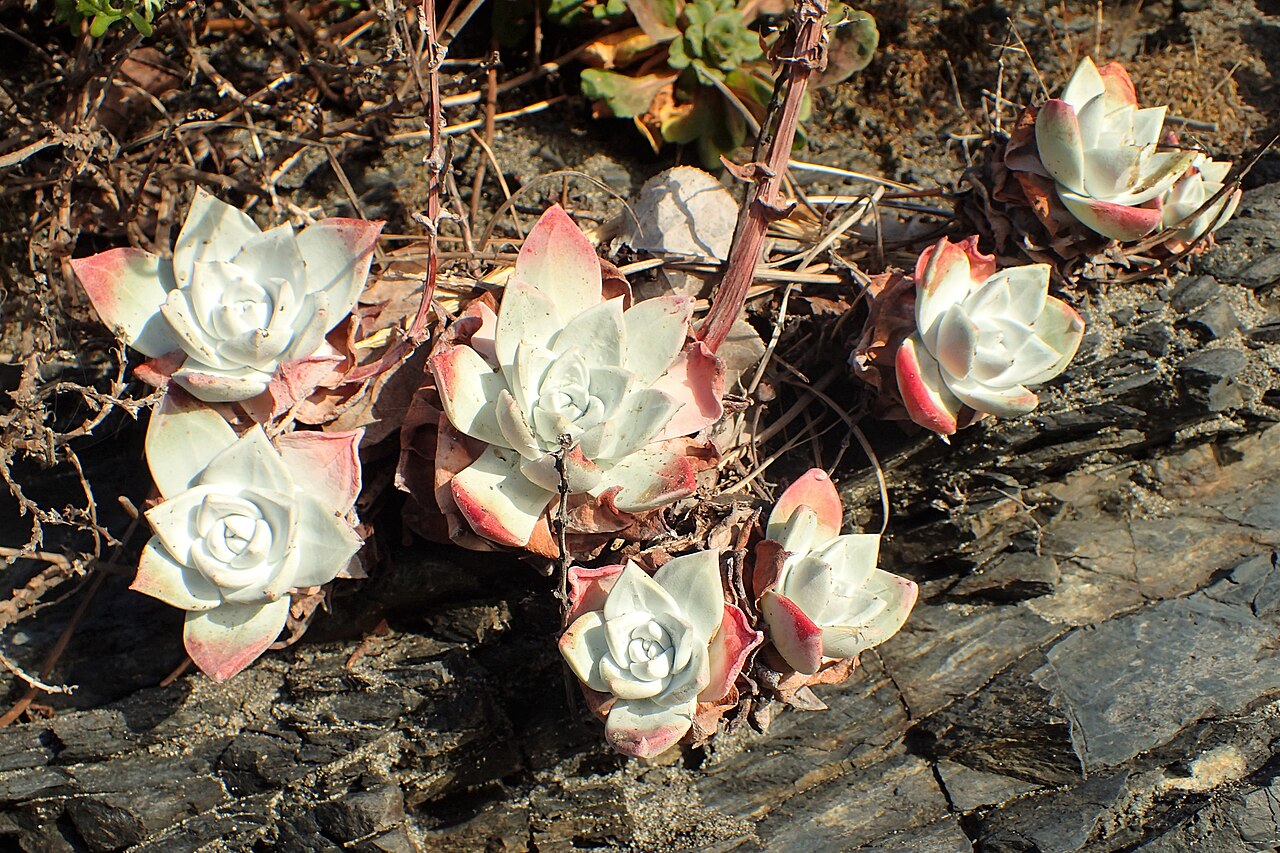
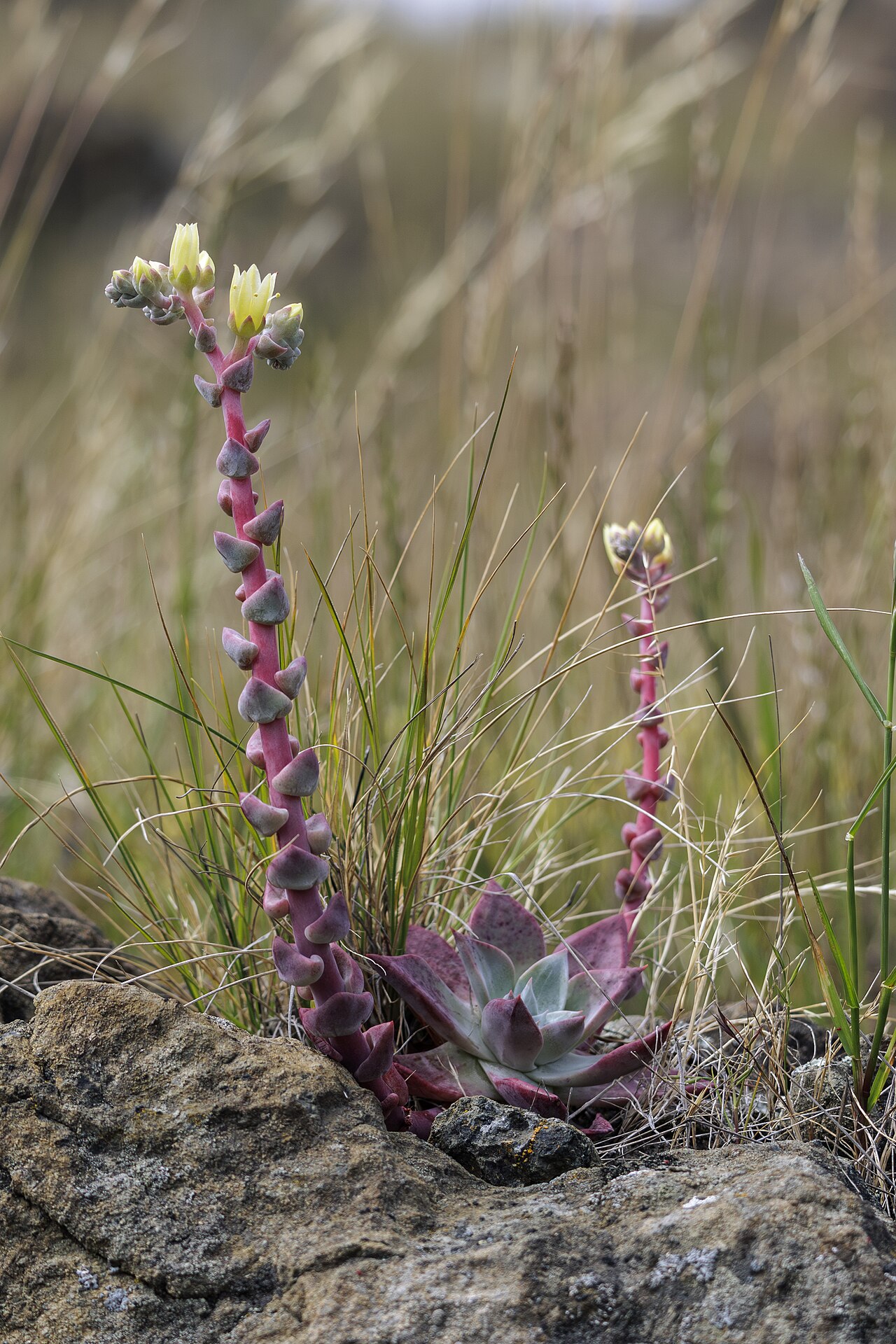
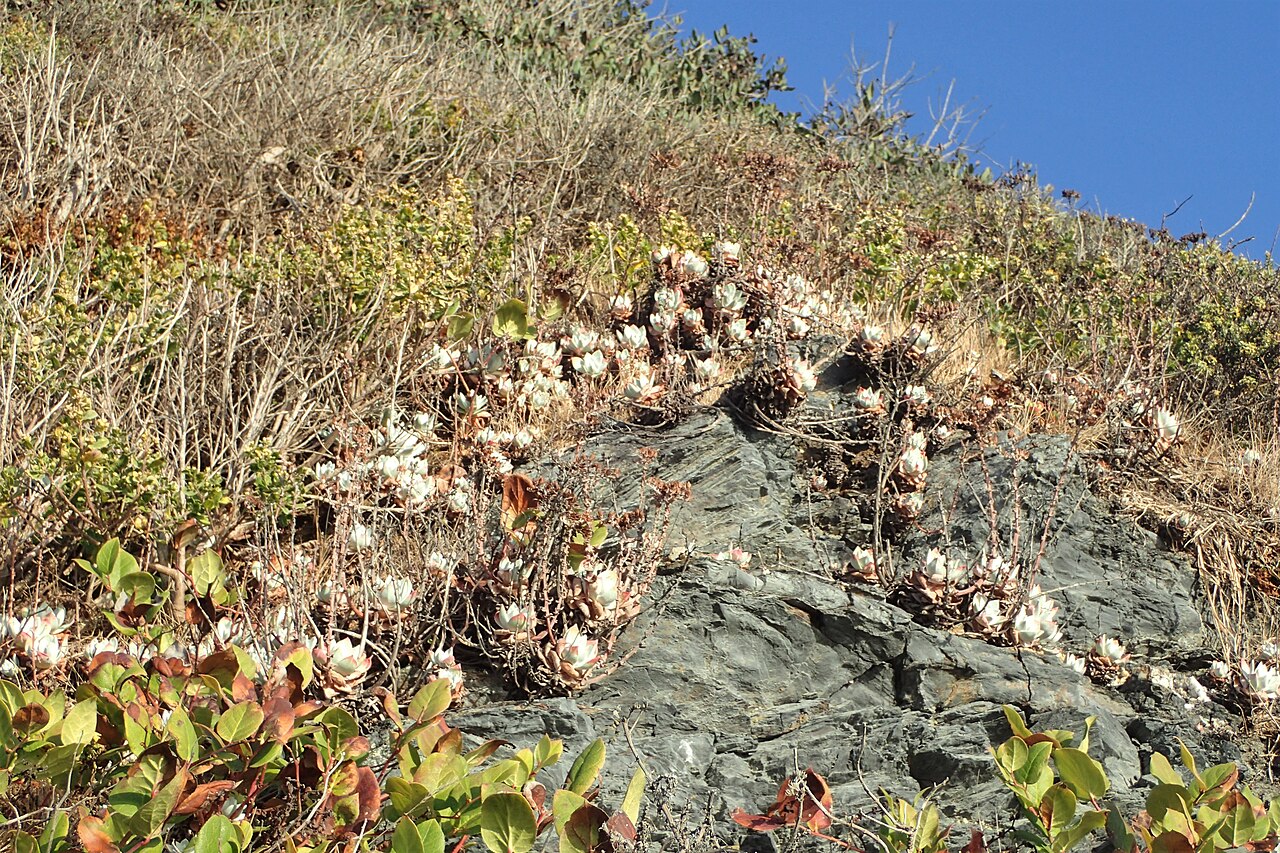
The rosette is pale blue-green to nearly white, lightly to heavily dusted with farina, and the leaf tips frequently flush a distinctive pink or rose color, especially under the stress of summer drought, salt exposure, and intense coastal sun. In late spring and summer, slender, often reddish flowering stalks rise from the rosette, lined with small pale yellow to cream star-shaped flowers that stand out sharply against the surrounding gray rock and blue ocean.
Bluff lettuce tolerates conditions that would kill most garden plants outright — salt spray, thin soil, intense wind, and long summer drought — making it an outstanding choice for coastal gardens from the Central Coast north through the Pacific Northwest. Like all Dudleya, wild populations have been targeted by illegal succulent poaching along accessible coastal bluffs, so plant only nursery-propagated stock.
Identification
Bluff lettuce is identified by its pale, often pink-tinged rosette growing directly from bare coastal rock, combined with slender stalks of small cream to pale yellow flowers.
Leaves & Rosette
The rosette is composed of 10 to 30 broad, somewhat flattened, fleshy leaves, pale blue-green to nearly white with a light to moderate coating of farina. Leaf tips and margins commonly take on a distinct pink, rose, or coral tint, particularly in exposed, sun-stressed plants near the immediate coast. Rosettes range from about 2 to 8 inches across and often grow in dense clusters where offsets form at the base, eventually carpeting sections of rock with dozens of individual rosettes.
Flowers
From May through August, slender, often purplish-red flowering stalks rise 4 to 12 inches from the rosette center, frequently zigzagging or arching along their length. Each stalk carries a one-sided row of small, star-shaped flowers, typically pale yellow to cream (occasionally with reddish tinges), that open in succession along the stalk over several weeks.
Fruit & Seeds
Spent flowers develop into small clusters of dry, beaked follicles that split to release fine, dust-like seed, scattered short distances by coastal wind and rain onto nearby rock surfaces. Established rosettes are long-lived, slowly building dense colonies on favorable stretches of cliff and headland through vegetative offsets as much as by seed.
Quick Facts
| Scientific Name | Dudleya farinosa |
| Family | Crassulaceae (Stonecrop) |
| Plant Type | Evergreen Succulent Perennial |
| Mature Height | Rosette 2–5 in; flower stalks 4–12 in |
| Mature Spread | 4–8 in per rosette; clusters wider |
| Growth Rate | Slow |
| Sun Exposure | Full Sun to Part Shade |
| Water Needs | Very low; summer-dry, winter-wet |
| Soil Type | Rock crevices, lean and sharply drained |
| Soil pH | 6.0–7.5 |
| Bloom Time | May – August |
| Flower Color | Pale yellow to cream |
| Fall Color | Evergreen; leaf tips may flush pink year-round |
| Fruit | Small dry beaked follicles |
| Deer Resistant | Yes |
| USDA Hardiness Zones | 9–11 |
Native Range
Bluff lettuce is native to the immediate Pacific coastline from southern Oregon’s coastal counties south through nearly the entire length of California’s coast to around Santa Barbara County, making it the most broadly distributed coastal Dudleya in the Pacific Northwest and northern/central California. It is concentrated almost entirely within sight and spray-reach of the ocean.
Throughout this range, bluff lettuce is a true coastal-bluff specialist, rooting in shallow cracks and ledges of sea cliffs, rocky headlands, and bluffs directly exposed to salt spray and strong onshore winds, typically from near sea level up to a few hundred feet in elevation. It is a conspicuous and ecologically important member of coastal bluff scrub and coastal prairie plant communities, often forming extensive colonies on otherwise bare rock faces that few other plants can colonize.
Because bluff lettuce grows almost exclusively within easy reach of coastal trails and overlooks, it has been especially vulnerable to illegal poaching for the ornamental succulent trade in recent years, with entire cliffside colonies stripped from some California headlands. Always buy nursery-propagated plants and never remove any Dudleya from the wild.
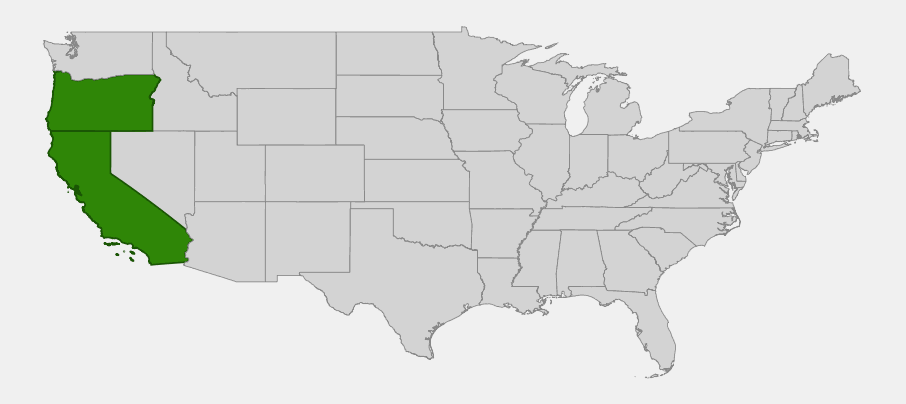
📋 Regional plant lists featuring Bluff Lettuce: California & Nevada · Western Oregon & Western Washington
Growing & Care Guide
Bluff lettuce is remarkably easy to grow in the right setting: a coastal or near-coastal garden with sharp drainage and minimal summer water. It is less forgiving of hot, dry inland heat than milder coastal conditions.
Light
Full sun is ideal in coastal gardens with regular fog and moderate temperatures. Further inland, light afternoon shade helps prevent scorch during hot spells, though the plant’s natural coastal habitat is almost always in full, unobstructed sun.
Soil & Water
Sharp drainage is essential, as with all Dudleya. Bluff lettuce is adapted to thin, rocky soil with minimal organic matter and tolerates salt spray and wind exceptionally well, but it will rot quickly in heavy or constantly moist soil. Water during the cool winter rainy season and withhold water almost entirely through the summer dry season once established.
Planting Tips
Plant nursery-grown rosettes in fall into a rock garden, dry stone wall, or raised bed with gritty, fast-draining soil. Coastal gardens can plant it in open, wind-exposed sites that would stress most other ornamentals. Because wild colonies have suffered heavily from poaching, source only nursery-propagated plants, never wild-collected material.
Pruning & Maintenance
Very low maintenance. Remove spent flower stalks after seed set if desired, and clear away wind-blown debris that can accumulate around dense rosette clusters. Bluff lettuce tolerates salt spray, wind, and neglect far better than overwatering.
Landscape Uses
Bluff lettuce is especially valuable in challenging coastal conditions:
- Coastal bluff and cliff-edge gardens exposed to salt spray and wind
- Rock gardens and dry stone walls near the coast
- Erosion control on steep, rocky coastal slopes
- Container plantings for patios and coastal balconies
- Low-water, salt-tolerant landscape accents in seaside gardens
Wildlife & Ecological Value
Bluff lettuce anchors a distinctive coastal plant community and provides resources that few other species can offer directly on exposed sea cliffs.
For Pollinators
The summer flowers attract native bees, syrphid flies, butterflies, and occasionally hummingbirds, offering nectar on otherwise sparsely vegetated coastal rock at a time when many other coastal wildflowers have finished blooming for the season.
For Birds & Mammals
While bluff lettuce is not a primary food source for larger wildlife, the rocky bluffs and cliffs it colonizes provide important nesting ledges and cover for coastal seabirds, and the dense rosette mats offer minor shelter for small invertebrates along otherwise bare rock faces.
Ecosystem Role
By rooting directly into coastal rock with essentially no soil, bluff lettuce stabilizes loose material on cliff faces and contributes organic matter and plant cover to one of California’s most erosion-prone, wind-exposed habitats, helping maintain the integrity of coastal bluff scrub plant communities over time.
Cultural & Historical Uses
Coastal Indigenous peoples of California and southern Oregon, including groups along the Humboldt, Mendocino, and Marin coasts, would have been familiar with bluff lettuce growing on the cliffs and headlands central to their traditional coastal territories, though it was not documented as a significant food or material plant compared to more abundant coastal and estuarine resources.
Bluff lettuce gained wider recognition in the 20th and 21st centuries as California’s coastal trails and overlooks made it one of the most frequently photographed native succulents, its pink-edged rosettes a familiar sight along the Pacific Coast Highway and coastal preserves. That same visibility and accessibility, unfortunately, has made it a prime target for illegal poaching in recent years, with organized theft of wild Dudleya rosettes from California bluffs prompting stronger state enforcement and penalties specifically aimed at protecting coastal Dudleya populations.
Frequently Asked Questions
Is bluff lettuce safe to eat, like garden lettuce?
No. Despite the common name, bluff lettuce is not a food crop and should not be eaten. The name reflects the loose, leafy rosette shape rather than any culinary use.
Why are the leaf tips pink on some bluff lettuce plants?
Pink or rose coloring at the leaf tips is a common stress response to intense sun, salt exposure, and summer drought in this species, and is a normal, often desirable trait rather than a sign of poor health.
Can bluff lettuce handle salt spray?
Yes — it is one of the most salt-tolerant native succulents in California, adapted to grow directly on sea cliffs within reach of ocean spray, and it is an excellent choice for exposed coastal gardens.
Why shouldn’t I collect bluff lettuce from a coastal bluff?
Wild bluff lettuce populations along accessible California coastal trails have been seriously depleted by illegal poaching for the succulent trade, and removal is both ecologically damaging and often illegal. Always buy nursery-propagated plants.
Will bluff lettuce grow well away from the coast?
It can, but it generally performs best in mild, humid coastal or near-coastal climates. In hot, dry inland gardens it needs afternoon shade and may not thrive as reliably as it does near the ocean.

Looking for a nursery that carries Bluff Lettuce?
Browse our native plant nursery directory: California · Oregon