California Buttercup (Ranunculus californicus)
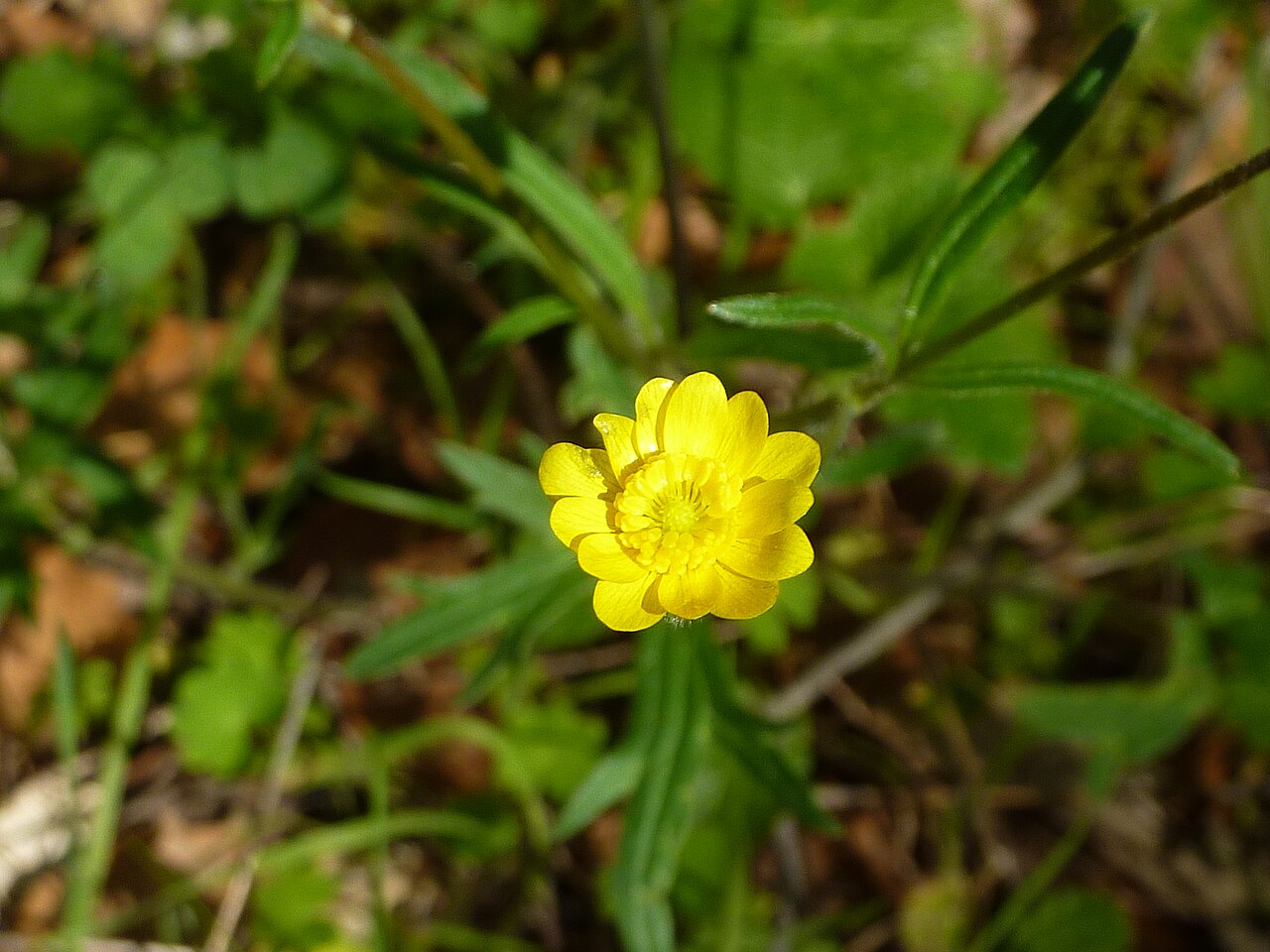
Ranunculus californicus, the California buttercup, is one of the first wildflowers to light up California’s grasslands and oak woodlands each year, opening its glossy, many-petaled yellow blooms from late winter into spring. A member of the Ranunculaceae (buttercup) family, it grows as a clump-forming perennial herb from a cluster of fibrous, slightly thickened roots, dying back to the root crown each summer as the state’s characteristic dry season sets in.
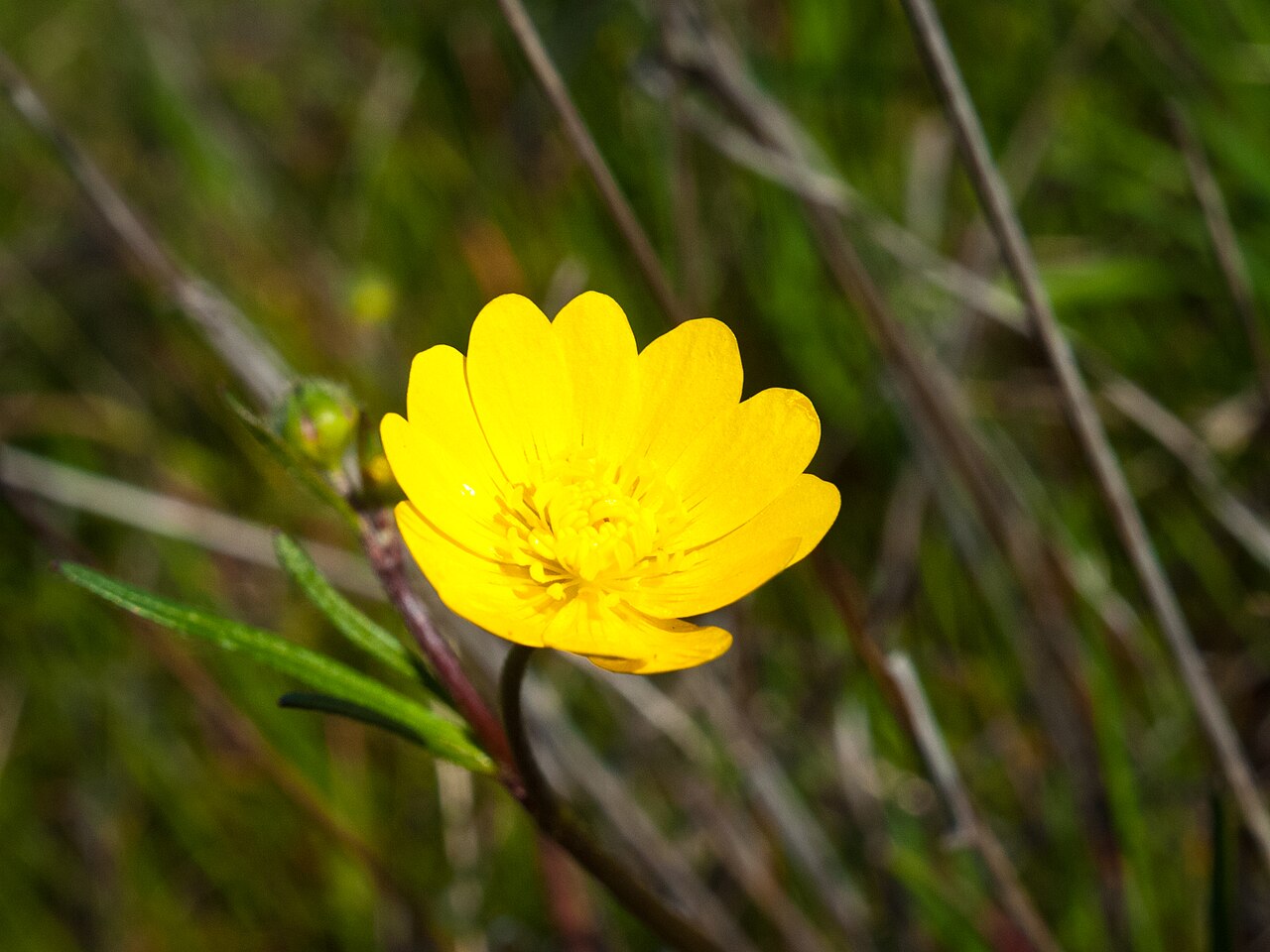
The flowers are the plant’s signature feature: unusually generous for a buttercup, each bloom carries 9 to 17 narrow, glossy petals arranged around a dense center of yellow stamens, giving the flower a fuller, almost double appearance compared to the simple five-petaled buttercups common elsewhere in North America. The deeply lobed, hairy basal leaves form a loose rosette at the base of branching, wiry flower stems that can reach 1 to 2 feet tall in good years.
California buttercup is native and common throughout California’s valleys, foothills, and coastal ranges, where it is a familiar companion of spring annual wildflowers in grassland, oak woodland, and chaparral openings. It asks for almost nothing once established — no summer water, no fertilizer — making it a reliable, low-maintenance addition to a California native meadow or wildflower planting.
Identification
California buttercup is a perennial herb growing from a short, erect rootstock with fibrous roots, sending up one to several branching flowering stems each spring. Plants typically reach 7 to 24 inches tall, occasionally taller in moist, shaded sites, with a basal spread of roughly 6 to 12 inches.
Leaves
Basal leaves are long-stalked and deeply divided into three to five lobed or toothed segments, giving them a ternately dissected, almost parsley-like appearance. Stem leaves are smaller, fewer, and less divided higher up the plant. Both leaves and stems are covered in fine, soft hairs, giving the foliage a slightly grayish-green, matte texture.
Flowers
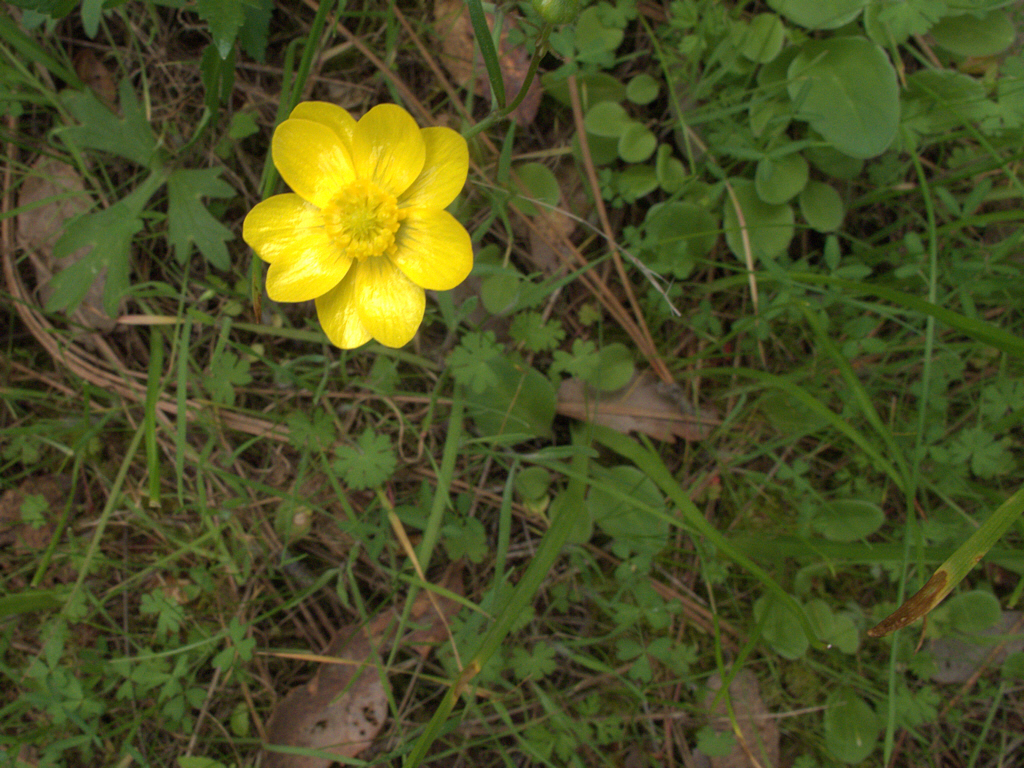
Flowers are borne singly at the tips of branching stems from January into May, depending on elevation and rainfall. Each flower is 1 to 2 inches across with 9 to 17 glossy, deep yellow petals — notably more petals than the 5-petaled buttercups of the eastern United States — surrounding a crowded cluster of yellow stamens and a green, button-like center of pistils.
Fruit & Seeds
After flowering, the pistil cluster develops into a rounded head of small, flattened, beaked achenes (dry one-seeded fruits), a typical buttercup seed head. The plant dies back to its rootstock with the onset of summer drought and resprouts with the first substantial fall or winter rains.
Quick Facts
| Scientific Name | Ranunculus californicus |
| Family | Ranunculaceae (Buttercup) |
| Plant Type | Herbaceous Perennial Wildflower |
| Mature Height | 7–24 in |
| Mature Spread | 6–12 in |
| Growth Rate | Fast (spring), dormant in summer |
| Sun Exposure | Full Sun to Partial Shade |
| Water Needs | Low (none in summer once established) |
| Soil Type | Adaptable; clay, loam or sandy soils |
| Soil pH | 6.0–7.5 (slightly acidic to neutral) |
| Bloom Time | January – May |
| Flower Color | Glossy deep yellow |
| Fall Color | None (summer dormant) |
| Fruit | Small flattened, beaked achenes |
| Deer Resistant | Yes (acrid sap deters browsing) |
| USDA Hardiness Zones | 8–10 |
Native Range
California buttercup is native to California, where it occurs widely from the Coast Ranges and Sierra Nevada foothills through the Central Valley margins to the chaparral and oak-woodland belts of the central and southern coast. It is one of the most common and recognizable spring wildflowers across the state’s lower-elevation grassland and woodland habitats.
It grows from near sea level to roughly 7,000 feet, favoring open grassy slopes, meadow edges, oak savanna, and the grassy understory of chaparral and coastal scrub. It tolerates a wide range of moisture conditions through the rainy season — from seasonally damp swales to drier grassy slopes — but requires no supplemental water once the summer drought sets in and the plant goes dormant.
While some references note scattered populations reported just north of California’s border, county-level herbarium and floristic records support the species as reliably native within California; gardeners outside the state’s Mediterranean climate zone should not expect this plant to naturalize or persist as a true native.
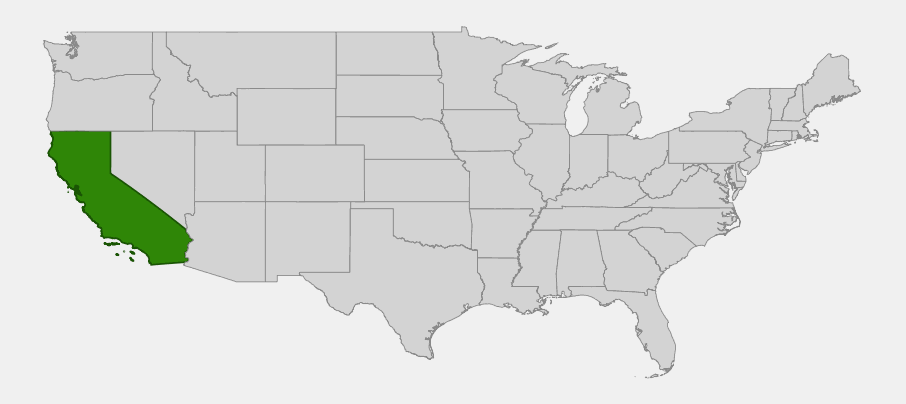
📋 Regional plant lists featuring California buttercup: California and Nevada
Growing & Care Guide
California buttercup is an easy, forgiving wildflower for gardeners working within its native climate — it needs almost no care once established and reliably returns each winter from its own rootstock.
Light
Grow it in full sun for the most compact, floriferous plants, or in partial shade beneath open oaks, where it tends to grow a bit taller and looser. It is adaptable to both conditions found in its native grassland and woodland habitats.
Soil & Water
California buttercup tolerates a wide range of soils, from clay to sandy loam, as long as drainage is reasonable during the rainy season. Water during the winter and spring growing season if rainfall is sparse, but withhold water entirely through summer — the plant is adapted to go fully dormant in the dry season and resents summer irrigation, which can rot the rootstock.
Planting Tips
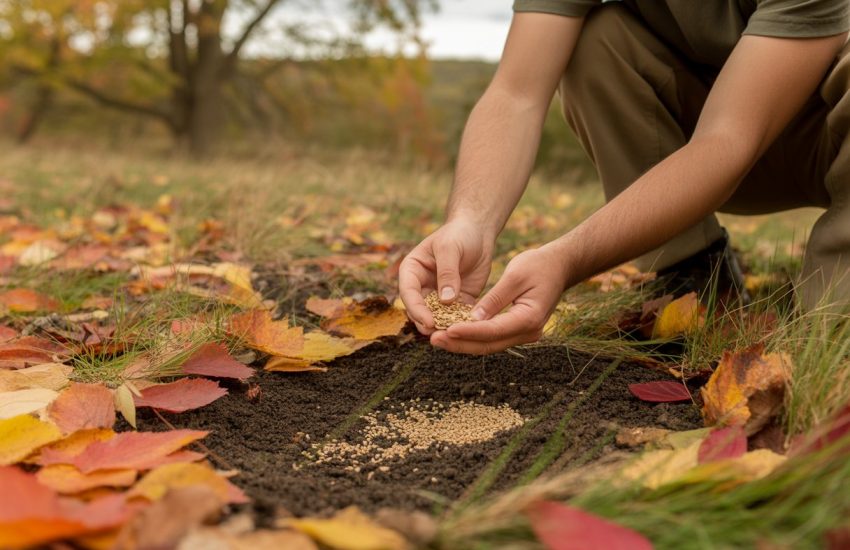
Plant from seed or container stock in fall, timed with the first rains, so roots establish before the spring bloom. Seed benefits from a period of cool, moist stratification to break dormancy. Once established, clumps slowly increase and can be divided in fall if desired.
Pruning & Maintenance
Little maintenance is needed. Allow the foliage to yellow and die back naturally after bloom — this feeds the rootstock for next year’s growth — then simply leave the dormant crown undisturbed through summer. Deadheading is optional and mainly cosmetic.
Landscape Uses
- Native wildflower meadows paired with California poppy and native bunchgrasses
- Oak woodland understory plantings beneath native oaks
- Seasonal color in a dry-summer, no-mow native garden
- Pollinator gardens for early-season native bees
- Restoration plantings in grassland and savanna habitat projects
Wildlife & Ecological Value
As one of California’s earliest and most abundant spring bloomers, California buttercup plays an outsized role in supporting pollinators that emerge before most other wildflowers are in bloom.
For Pollinators
The bright, glossy flowers attract a range of native bees, syrphid flies, and small beetles seeking pollen and nectar in late winter and early spring, when few other nectar sources are available in grassland habitats.
For Birds
While not a major food source for birds, the open grassland and woodland habitats where California buttercup grows support ground-foraging sparrows and other seed- and insect-eating birds that benefit from the insect activity the flowers attract.
For Mammals
Like other buttercups, the foliage and sap contain protoanemonin, an acrid, irritating compound that makes the plant unpalatable and mildly toxic to grazing animals and deer, which is part of why it persists in grazed pastures where more palatable plants are eaten down.
Ecosystem Role
California buttercup is a reliable indicator and component of healthy native grassland and oak-woodland understory, helping maintain plant diversity and providing a nectar bridge between the earliest winter bloomers and the main flush of spring annual wildflowers.
Cultural & Historical Uses
California buttercup does not have a significant recorded history of use as food or medicine among Indigenous peoples of California, and this is consistent with its biology: like most buttercups, the fresh plant contains protoanemonin, an acrid compound that irritates skin and mucous membranes and makes the raw plant unpalatable and unsafe to eat.
The plant’s main historical significance is simply its familiarity — as one of the most visible and reliable early wildflowers across California’s grasslands and oak savannas, it has long served as a seasonal marker of the end of the rainy season and the start of the state’s brief, intense spring wildflower bloom.
In more recent decades, California buttercup has become a staple of native plant horticulture and habitat restoration work, valued for its reliability, low water needs, and contribution to recreating the look and function of pre-settlement California grasslands.
Frequently Asked Questions
Is California buttercup toxic?
Yes, like other buttercups it contains protoanemonin, an acrid compound in the fresh sap that can irritate skin and is toxic if eaten. It should never be treated as an edible plant; grazing animals generally avoid it for this reason.
Does California buttercup need water in summer?
No. The plant is adapted to California’s dry summers and goes fully dormant, dying back to its rootstock. Summer watering can cause the roots to rot; let the plant rest until fall rains return.
Where does California buttercup grow best in a garden?
It does best in full sun to light shade with reasonable winter drainage — a native meadow planting, oak woodland understory, or a dry-summer border alongside other California natives are all good fits.
Is California buttercup native outside of California?
Its confirmed native range is California (and adjacent Baja California, Mexico). County-level records do not support it as a reliably native species elsewhere, so it should not be planted as a native outside this range.
How do you grow California buttercup from seed?
Sow seed in fall with the onset of rains; a period of cool, moist stratification improves germination. Established plantings will self-sow and slowly spread under favorable conditions.

Looking for a nursery that carries California buttercup?
Browse our native plant nursery directory: California