Island Morning Glory (Calystegia macrostegia)
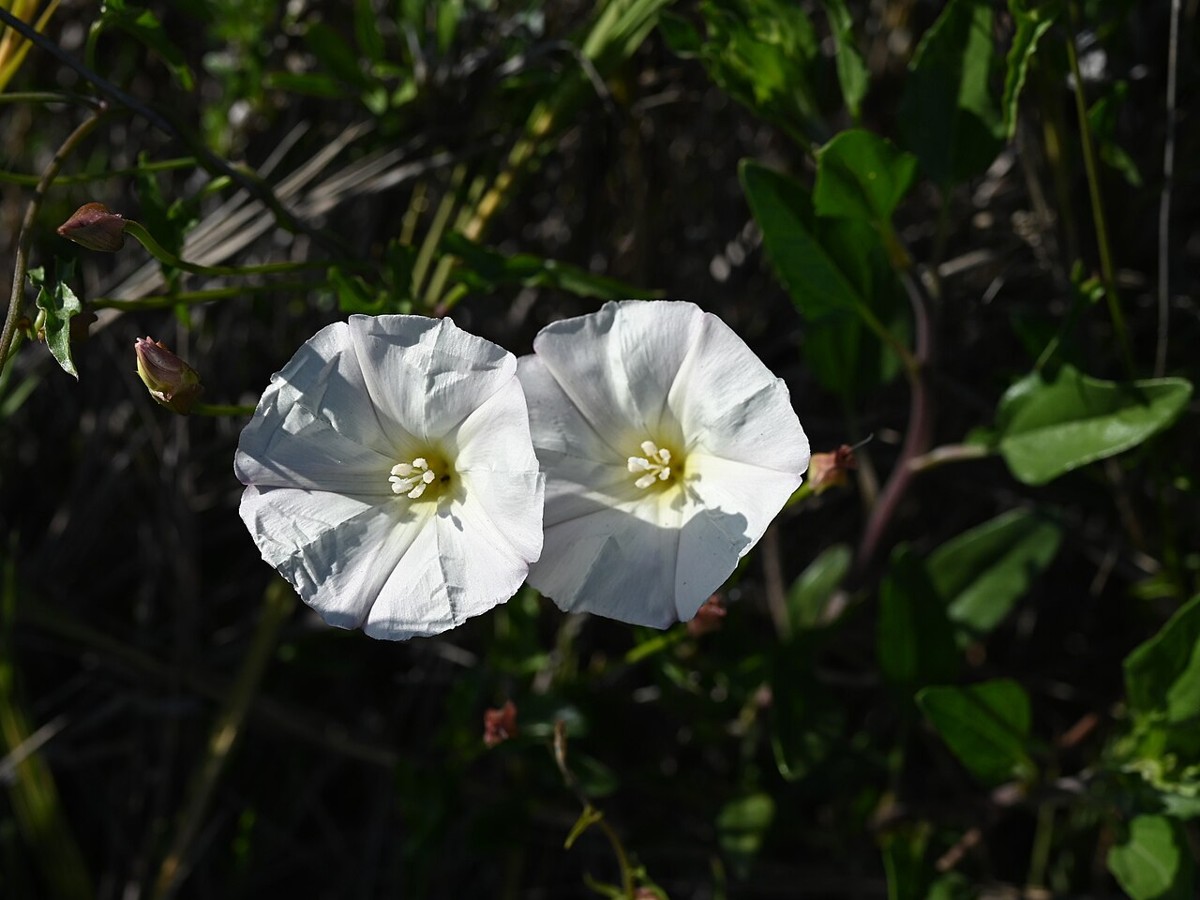
Calystegia macrostegia, commonly called island morning glory or island false bindweed, is a vigorous, woody-based perennial vine native to the coastal scrub and chaparral of central and southern California, including the Channel Islands for which it is best known. Despite “island” in its common name, the species also grows on the mainland coast from Monterey County south into Baja California, scrambling over shrubs, fences and rocky slopes with large, pure white to pale lavender-tinged, funnel-shaped flowers.
Unlike the weedy field bindweed that gives the morning glory family a bad reputation in vegetable gardens, island morning glory is a well-behaved, long-lived native vine that does not spread aggressively by underground rhizomes the way its invasive relative does. It climbs and sprawls over whatever structure or neighboring plant it finds, covering fences, arbors, banks and shrub tops with glossy, arrow-shaped leaves and a long season of large white blooms.
For a California native garden that needs a tough, drought-tolerant vine for a sunny slope, fence or trellis, island morning glory delivers months of flowers with very little care. It is especially valuable in coastal and Channel Islands-influenced gardens, where it recreates a signature element of the native plant community.
Identification
Island morning glory is a twining, woody-based perennial vine, with stems that can trail along the ground as groundcover or climb 10 to 20 feet or more when given support. It can also be kept as a mounding, sprawling shrub-like form where no climbing structure is available.
Stems
Stems are slender, wiry and twining, becoming somewhat woody at the base with age, especially on older plants. New growth is herbaceous and flexible, readily wrapping around fences, shrubs and trellis wire.
Leaves
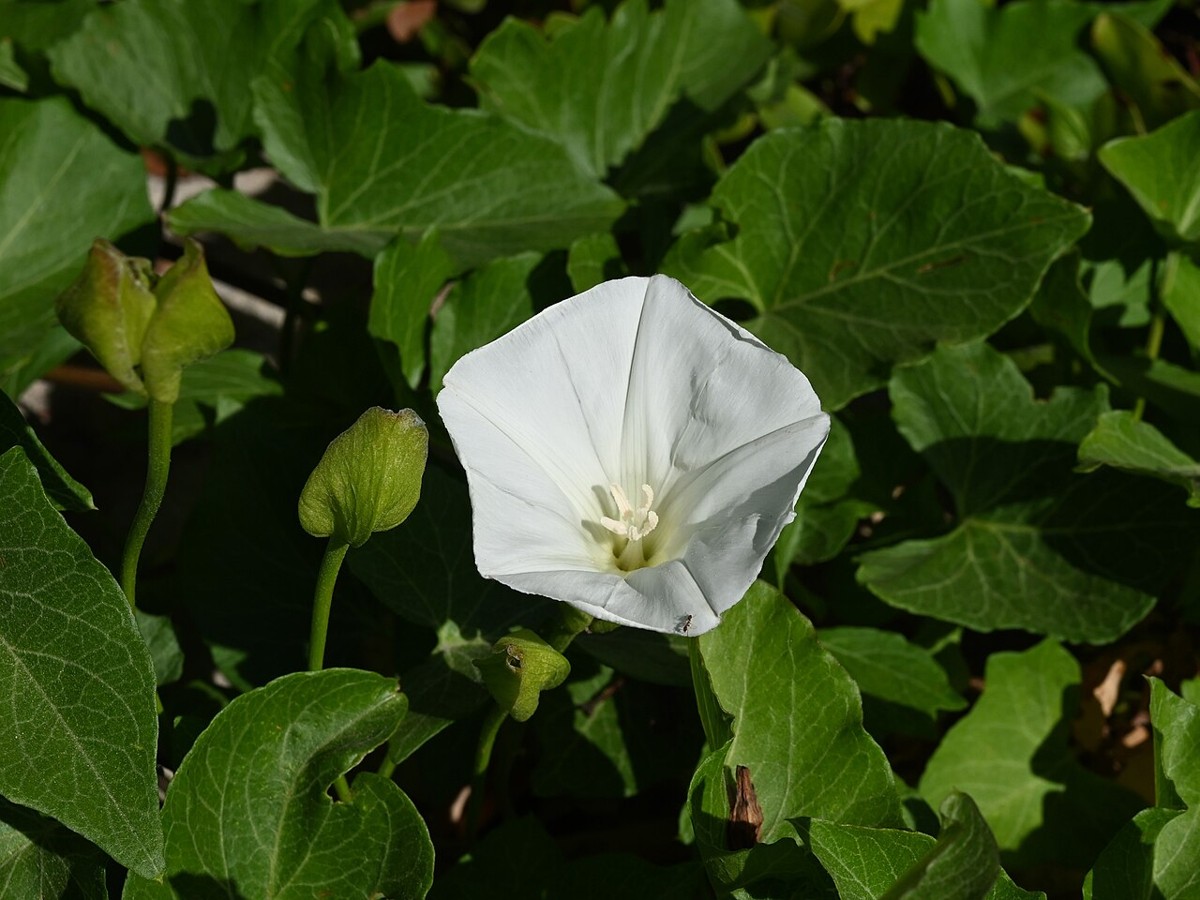
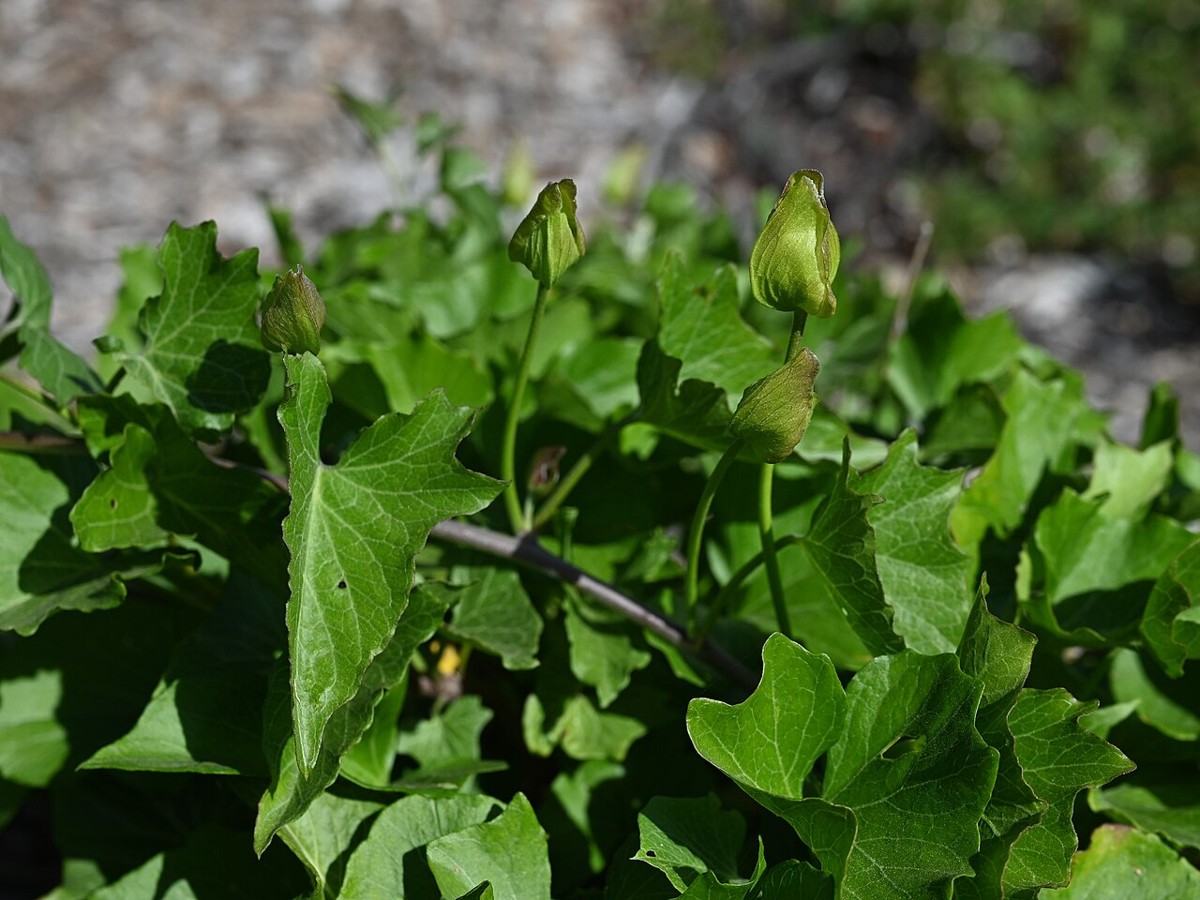
The leaves are simple, alternate, and arrowhead- to heart-shaped (sagittate), 1 to 4 inches long, with a glossy, deep green surface. Leaf shape and size vary somewhat across the species’ several recognized subspecies, which differ slightly between the mainland and various Channel Islands populations.
Flowers
Flowers are large, funnel- or trumpet-shaped, 2 to 3 inches across, white to pale pink with faint darker pink striping visible from outside the petal, and a pale yellow throat. Each individual flower opens for about a day, but the vine produces a steady succession of blooms from spring through fall, and even longer in the mildest coastal gardens. Flowers typically open in morning and close by afternoon, especially in hot weather, in keeping with the “morning glory” name.
Fruit & Seeds
Flowers are followed by small, rounded seed capsules that dry and split to release a few relatively large seeds. Seed set is often modest compared to the vine’s vegetative spread, and plants grow readily from cuttings as well as seed.
Quick Facts
| Scientific Name | Calystegia macrostegia |
| Family | Convolvulaceae (Morning Glory) |
| Plant Type | Woody-based perennial vine |
| Mature Height | Climbs 10–20 ft with support; trails as groundcover without it |
| Mature Spread | 6–15 ft |
| Growth Rate | Fast |
| Sun Exposure | Full Sun to Part Shade |
| Water Needs | Low; drought tolerant once established |
| Soil Type | Adaptable; well-drained sandy, rocky or clay soils |
| Soil pH | 6.0–8.0 |
| Bloom Time | Spring through fall; nearly year-round in mild coastal climates |
| Flower Color | White to pale pink with faint striping |
| Fall Color | None (evergreen in mild climates) |
| Fruit | Small rounded dry capsules |
| Deer Resistant | Mostly |
| USDA Hardiness Zones | 8–11 |
Native Range
Island morning glory is native to California, where it grows from Monterey County south through the Transverse and Peninsular mountain ranges of Southern California and onto most of the Channel Islands, extending slightly beyond the state line into northern Baja California, Mexico. Several recognized subspecies divide the mainland and island populations, with island forms often having somewhat different leaf and flower proportions than those on the coastal mainland.
Typical habitat is coastal sage scrub and chaparral, where the vine climbs over shrubs, scrambles across rocky slopes and canyon walls, and colonizes open or disturbed ground within these plant communities. It is often found alongside toyon, laurel sumac and various sages on the mainland, and with island-endemic shrubs on the Channel Islands.
Island morning glory is not considered rare or threatened and remains a common, visible component of coastal and island scrub vegetation across its range. As with other natives from the Channel Islands, gardeners should buy nursery-propagated plants.
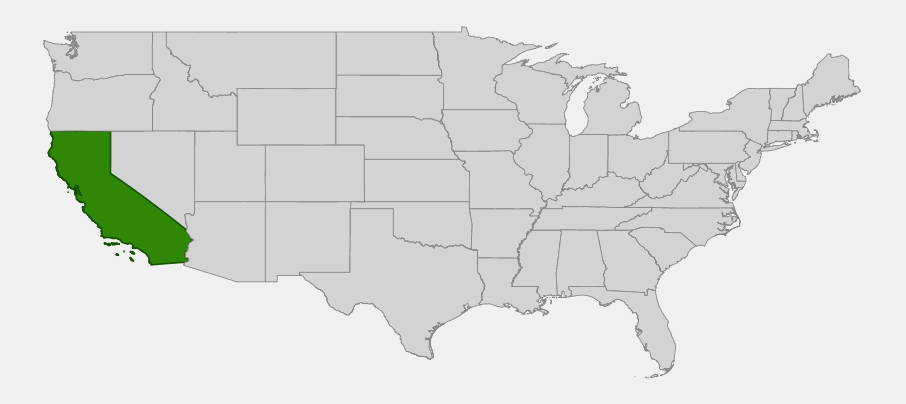
📋 Regional plant lists featuring Island Morning Glory: California & Nevada
Growing & Care Guide
Island morning glory is an easygoing native vine that rewards minimal care with months of white blooms, provided it has sun and decent drainage.
Light
Full sun produces the heaviest flowering and the densest foliage cover. The vine also tolerates part shade, especially in hot inland gardens, though bloom may be somewhat lighter.
Soil & Water
Island morning glory adapts to a wide range of soils, including sandy, rocky and clay ground, as long as drainage is reasonable. It is genuinely drought tolerant once established, needing little to no supplemental water beyond normal winter rainfall in coastal California gardens, though occasional summer water is tolerated and can extend the bloom season.
Planting Tips
Plant from container stock in fall or early spring. Provide a fence, trellis, arbor or large shrub for the vine to climb, or let it trail as a groundcover on a slope or bank. Space plants 6 to 10 feet apart for coverage, since established vines spread generously. Unlike invasive bindweed, island morning glory does not spread by aggressive underground rhizomes, so it is much easier to keep within bounds.
Pruning & Maintenance
Prune as needed to control size and direction of growth, ideally after a bloom flush. Older plants can be cut back hard in late winter to rejuvenate growth and encourage denser new stems. The vine is generally untroubled by pests or disease and needs no fertilizer beyond typical native garden soil.
Propagation
Island morning glory grows from seed, though scarification can improve germination given the seeds’ hard coat. Cuttings taken from semi-hardwood growth root readily and are a faster, more reliable way to propagate a specific plant.
Landscape Uses
- Fence, trellis or arbor cover for fast, flowering vertical greenery
- Slope and bank groundcover for erosion control on sunny sites
- Coastal and Channel Islands-themed gardens
- Low-water landscaping and xeriscape designs
- Wildlife and pollinator gardens
- Screening over chain-link fences or unattractive structures
Wildlife & Ecological Value
Island morning glory’s long bloom season and abundant flowers make it a steady resource for pollinators in coastal gardens and wild habitat alike.
For Pollinators
The large, open flowers attract native bees and occasionally hawk moths, which are drawn to the pale, funnel-shaped blooms that are visually and texturally similar to other moth-pollinated flowers. The extended bloom season provides nectar across more of the year than many native perennials.
For Birds
The dense tangle of vines provides cover and nesting structure for small birds where it climbs over shrubs or fences, adding a useful vertical habitat layer to coastal scrub gardens.
For Mammals
Island morning glory is generally considered a mostly deer-resistant plant, making it a workable choice in gardens with deer pressure, though young growth may occasionally be browsed.
Ecosystem Role
As part of the coastal sage scrub and chaparral plant community, island morning glory helps bind soil on slopes and canyon walls and contributes structural complexity by climbing over and through other shrubs, creating varied habitat niches within the broader scrub community.
Cultural & Historical Uses
Documented traditional use of island morning glory specifically is limited, though morning glory family plants more broadly have held cultural significance in various Indigenous California communities as part of the complex, interconnected coastal scrub and chaparral ecosystems they managed and used. Because the plant has long been a visible, abundant part of the Southern California and Channel Islands landscape, it has become closely associated with the distinctive character of that coastal scrub scenery in botanical and horticultural writing.
In more recent decades, island morning glory has become a staple of California native plant horticulture, valued as a well-behaved alternative to introduced, invasive morning glory relatives for gardeners who want the look of a flowering vine without the risk of it escaping into wildland areas. Its popularity has grown alongside broader interest in restoring and gardening with Channel Islands-associated native plants.
Frequently Asked Questions
Is island morning glory invasive like bindweed?
No. Unlike field bindweed (Convolvulus arvensis), which spreads aggressively through persistent underground rhizomes, island morning glory is a native California species that does not spread that way and is considered a well-behaved garden vine.
Does island morning glory need a trellis?
Not necessarily. It climbs readily given a fence, trellis or shrub to twine around, but it can also be grown without support as a sprawling groundcover on a slope or bank.
How much water does island morning glory need?
Very little once established — it is adapted to California’s dry summers and generally thrives on winter rainfall alone in coastal gardens, though it tolerates occasional supplemental water.
How long do individual flowers last?
Each flower typically opens for about a day, often closing by afternoon in hot weather, but the vine produces a continuous succession of new flowers through much of the growing season.
Is island morning glory native to the mainland or just the islands?
Both. Despite the common name, it grows on the California mainland coast from Monterey County south into Southern California, as well as on most of the Channel Islands, with several subspecies distinguishing the different populations.

Looking for a nursery that carries Island Morning Glory?
Browse our native plant nursery directory: California