Malva Rosa (Lavatera assurgentiflora)
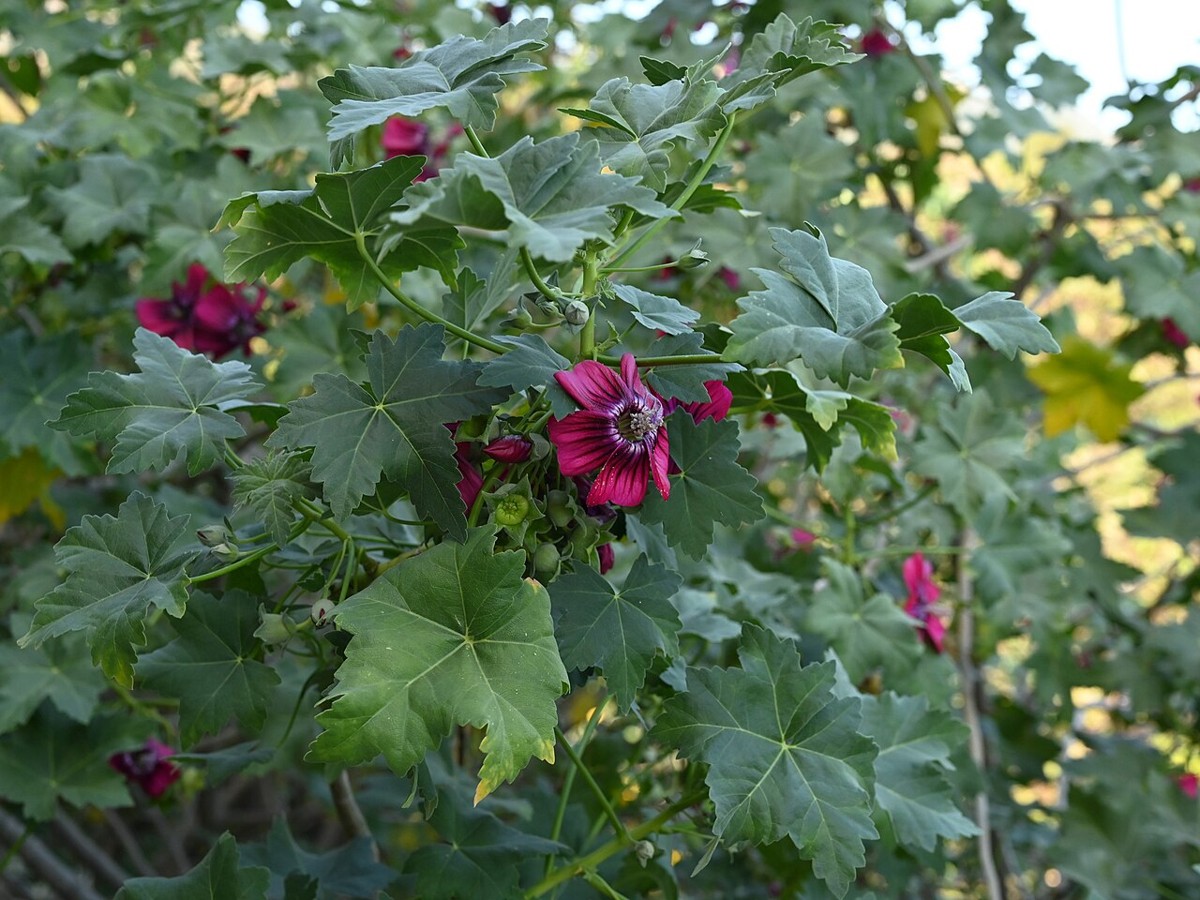
Lavatera assurgentiflora (now also classified as Malva assurgentiflora), commonly called malva rosa, island mallow, or island tree mallow, is a fast-growing, large shrub native to California’s Channel Islands. Known in Spanish as “malva rosa” — pink mallow — it produces an abundance of showy, deep pink to magenta flowers with dramatic dark veining, set against large, maple-like leaves, almost continuously in mild coastal climates.
In the wild, malva rosa grows on just a few of the Channel Islands, including Anacapa, San Miguel, Santa Rosa and Santa Cruz, where it forms substantial shrubs or small trees along bluffs and open slopes exposed to salt spray and wind. It has been widely planted along the Southern and Central California mainland coast for well over a century and has naturalized in some of those areas — but it is important for gardeners to know that this coastal mainland presence is from cultivation and escape, not from a native mainland population; malva rosa’s true native range is the islands alone.
For coastal gardens within or near its native range, malva rosa offers rapid growth, months of bold color, and genuine toughness in wind, salt spray and poor soil. It is a short-lived shrub by nature, typically living five to ten years, so it is best treated as a fast, showy filler rather than a long-term garden anchor — though it reseeds readily and is easy to replace.
Identification
Malva rosa grows as a fast, woody shrub or small multi-trunked tree, typically 6 to 15 feet tall and nearly as wide, occasionally reaching 20 feet in favorable island conditions. Its growth habit is loose and somewhat sprawling unless given room and occasional pruning.
Bark & Stems
Stems are stout, green when young, and become woody and grayish-brown with age. The wood is relatively soft and brittle compared to longer-lived native shrubs, which is part of why individual plants tend to be short-lived, especially where exposed to strong wind.
Leaves
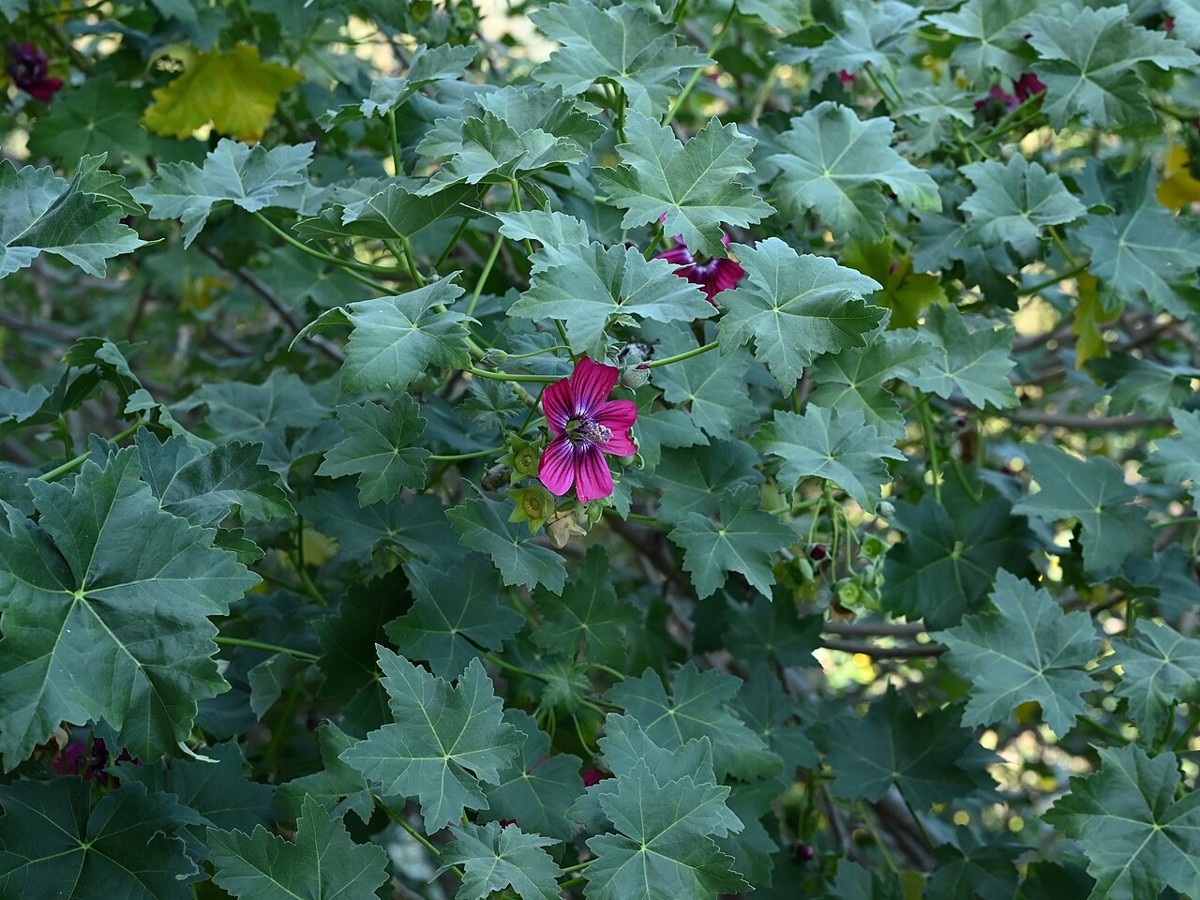
The leaves are large, 3 to 8 inches across, palmately lobed with five to seven pointed, maple-like lobes, and a soft gray-green color with a slightly fuzzy texture. They are evergreen or semi-evergreen in mild coastal climates, giving the shrub a lush, substantial presence year-round.
Flowers
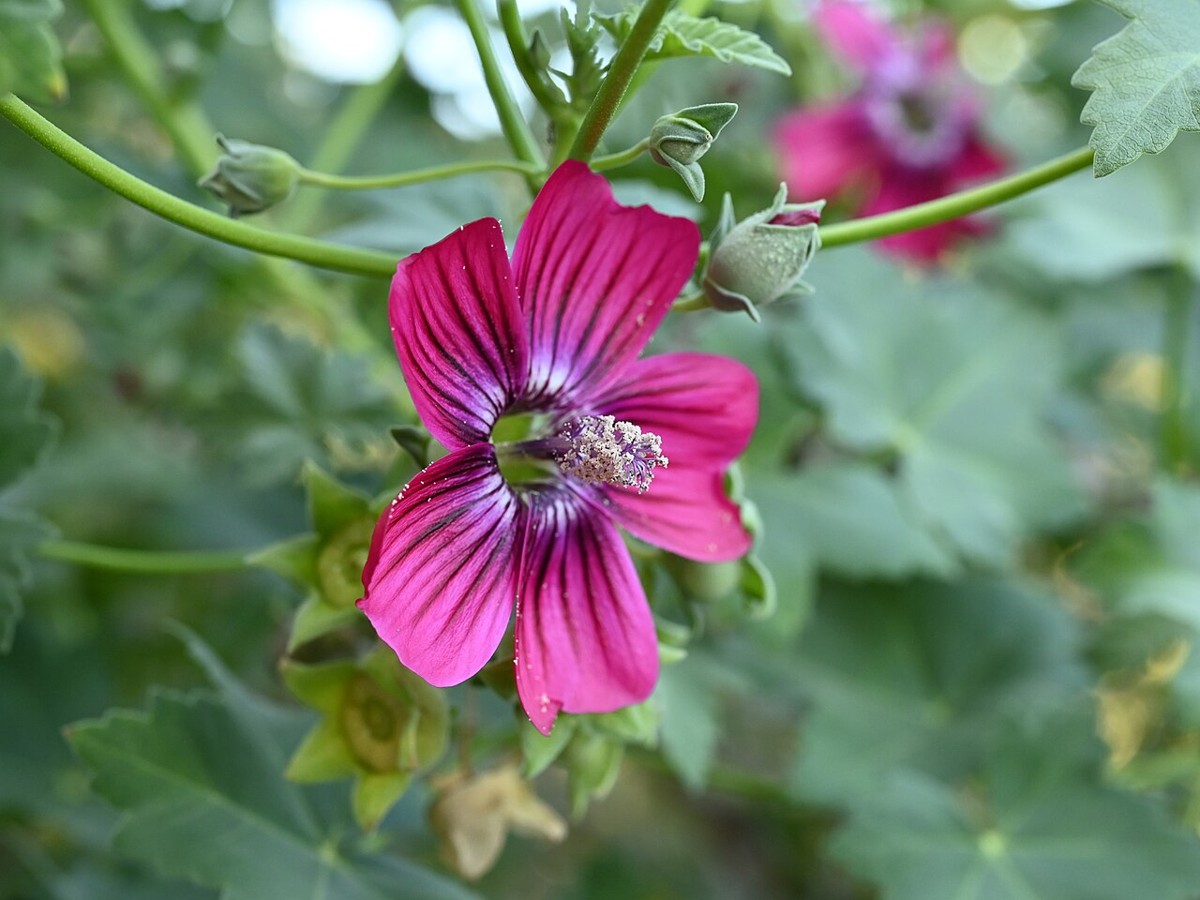
Flowers are the plant’s main attraction: 2 to 3 inches across, with five broad, overlapping petals in deep rose-pink to magenta, each marked with striking dark purple veins radiating from a darker throat. They are borne singly or in small clusters in the leaf axils and open over an extended season, often nearly year-round in the mildest coastal gardens, with the heaviest bloom in spring and summer.
Fruit & Seeds
Like other mallows, malva rosa produces a disc-shaped fruit (a schizocarp) that splits into several wedge-shaped segments, each containing a single seed. The seeds are produced abundantly, and the species reseeds readily in favorable conditions.
Quick Facts
| Scientific Name | Lavatera assurgentiflora (syn. Malva assurgentiflora) |
| Family | Malvaceae (Mallow) |
| Plant Type | Fast-growing, short-lived evergreen shrub |
| Mature Height | 6–15 ft (to 20 ft on the islands) |
| Mature Spread | 6–10 ft |
| Growth Rate | Very fast |
| Sun Exposure | Full Sun |
| Water Needs | Low to moderate; tolerates both drought and occasional garden water |
| Soil Type | Adaptable; well-drained, including poor or sandy soils |
| Soil pH | 6.0–8.0 |
| Bloom Time | Nearly year-round in mild coastal climates; peaks spring–summer |
| Flower Color | Deep rose-pink to magenta with dark purple veins |
| Fall Color | None (evergreen to semi-evergreen) |
| Fruit | Disc-shaped schizocarp splitting into wedge-shaped segments |
| Deer Resistant | Moderate |
| USDA Hardiness Zones | 9–11 |
Native Range
Malva rosa is native to a small number of California’s Channel Islands, including Anacapa, San Miguel, Santa Rosa and Santa Cruz, where it grows on coastal bluffs, rocky slopes and canyon mouths exposed to salt spray, wind and intense sun. It does not have a natural mainland population; where it is seen growing along the mainland coast, it has either been planted or has naturalized from cultivated plants, a distinction worth noting since the species is sometimes mistakenly assumed to be native to coastal mainland California.
On the islands, malva rosa is adapted to thin, rocky or sandy soils and tolerates the harsh, salt-laden winds typical of exposed island habitat, growing alongside other island-endemic shrubs. It is fast to colonize disturbed or open ground, a trait that has also made it a successful, if non-native, coastal landscape plant on the mainland.
Because of its restricted native range, malva rosa is of some conservation interest on the islands themselves, where feral grazing animals historically impacted native vegetation before island restoration programs removed them. Gardeners planting malva rosa, even within its native island range by extension to the nearby mainland coast, should be aware that it can self-sow and spread readily, and should site it where volunteer seedlings can be managed.
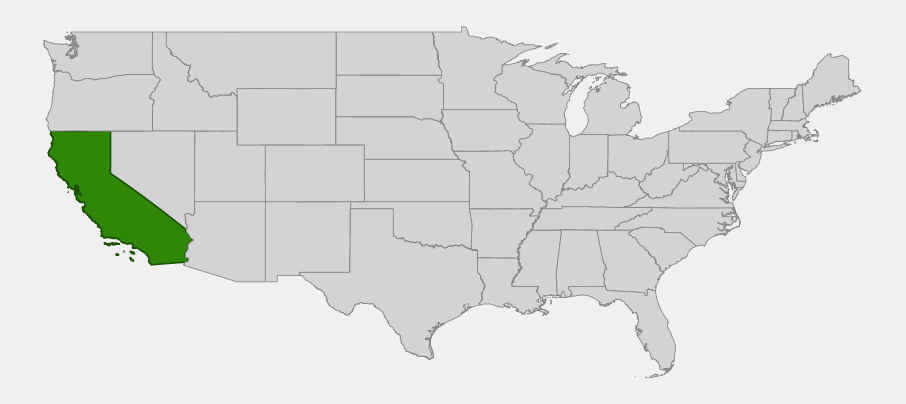
📋 Regional plant lists featuring Malva Rosa: California & Nevada
Growing & Care Guide
Malva rosa is about as easy and fast as California native shrubs get, which makes it a satisfying choice for gardeners who want quick results, as long as its relatively short lifespan is kept in mind.
Light
Full sun produces the densest growth and the most abundant flowering. The shrub tolerates coastal wind and salt spray well, making it a good choice for exposed seaside gardens where many other shrubs struggle.
Soil & Water
Malva rosa is adaptable to a range of soils, including poor, sandy or rocky ground, as long as drainage is reasonable. It tolerates both relatively dry conditions and occasional regular garden watering, making it more flexible about water than many California natives, though it should not be kept constantly waterlogged.
Planting Tips
Plant from container stock in fall or spring. Because of its fast growth and relatively brittle wood, choose a site with some wind protection if strong gusts are a concern, or allow for staking while young. Space plants 6 to 10 feet apart, anticipating their rapid spread. Malva rosa also grows readily from seed sown directly in the garden.
Pruning & Maintenance
Prune after major bloom flushes to control size and encourage denser, bushier growth, since left unpruned the shrub can become leggy and top-heavy. Because individual plants are short-lived — often five to ten years — many gardeners simply let volunteer seedlings replace aging shrubs rather than trying to extend an old plant’s life indefinitely. Watch for self-sown seedlings and remove unwanted ones promptly, since the species can spread readily where conditions suit it.
Propagation
Malva rosa is easily grown from seed sown in spring, often germinating without any special pretreatment. Cuttings also root readily, offering a faster way to propagate a particular plant’s flower color or form.
Landscape Uses
- Coastal and seaside gardens tolerant of wind and salt spray
- Fast screening or filler shrub while slower-growing natives establish
- Pollinator gardens, valued for its long bloom season
- Informal hedges in mild coastal climates
- Bold accent planting for its large leaves and vivid flowers
Wildlife & Ecological Value
Malva rosa’s extended bloom season and bold flowers make it a useful nectar and pollen source in coastal garden settings.
For Pollinators
The large, open flowers are attractive to native bees and honeybees, which forage on both pollen and nectar, and the long bloom season — sometimes nearly year-round in mild climates — gives pollinators a reliable food source across more of the year than many shorter-blooming natives.
For Birds
The dense foliage provides shelter for small songbirds, and hummingbirds will visit the flowers occasionally, though malva rosa is not considered a primary hummingbird plant compared with tubular-flowered natives.
For Mammals
Malva rosa shows moderate resistance to deer browsing, likely due to its somewhat coarse, fibrous leaf texture, though it is not immune to deer damage in areas with heavy browsing pressure.
Ecosystem Role
On its native islands, malva rosa is a fast-colonizing shrub of disturbed and open coastal habitats, helping stabilize bluffs and slopes exposed to wind and salt spray. Island restoration efforts that removed historic feral grazing animals have allowed populations of malva rosa and other native island shrubs to recover on several of the Channel Islands.
Cultural & Historical Uses
The common name “malva rosa” comes directly from Spanish, meaning “pink mallow,” reflecting the plant’s long history of recognition along the California and Baja California coast during the Spanish colonial period. Unlike some other mallow-family plants, malva rosa itself has no well-documented history of significant Indigenous or colonial-era practical use beyond ornamental planting.
Malva rosa has been cultivated along the California coast since at least the 19th century, valued for its fast growth and ability to establish quickly in difficult coastal conditions — qualities that led to its extensive planting well beyond its native island range and its naturalization in some mainland coastal areas. This long cultivation history is part of why the species is sometimes mistaken for a mainland coastal native, when in fact its wild populations are confined to the Channel Islands.
Today, malva rosa continues to be valued by California native plant gardeners for bringing fast, showy color to coastal landscapes, and it remains an accessible entry point for gardeners interested in the distinctive flora of the Channel Islands.
Frequently Asked Questions
Is malva rosa native to the California mainland?
No. Malva rosa is native only to a handful of California’s Channel Islands. Plants seen along the mainland coast are the result of long-standing cultivation and some naturalization, not a natural mainland population.
How long does malva rosa live?
It is a relatively short-lived shrub, typically living five to ten years. Because it grows and reseeds quickly, many gardeners simply let new seedlings replace older, declining plants.
Does malva rosa spread aggressively?
It can self-sow readily where conditions suit it, so keep an eye out for volunteer seedlings and remove unwanted ones, especially near wildland edges outside its native island range.
How much water does malva rosa need?
It is relatively flexible, tolerating both fairly dry conditions once established and occasional regular garden watering, which makes it easier to combine with other garden plants than many strictly drought-adapted natives.
Is malva rosa the same as common garden Lavatera?
No. Malva rosa (Lavatera/Malva assurgentiflora) is a distinct California Channel Islands native, different from the Mediterranean Lavatera and Malva species and cultivars commonly sold for ordinary flower borders.

Looking for a nursery that carries Malva Rosa?
Browse our native plant nursery directory: California