Bush Rue (Cneoridium dumosum)
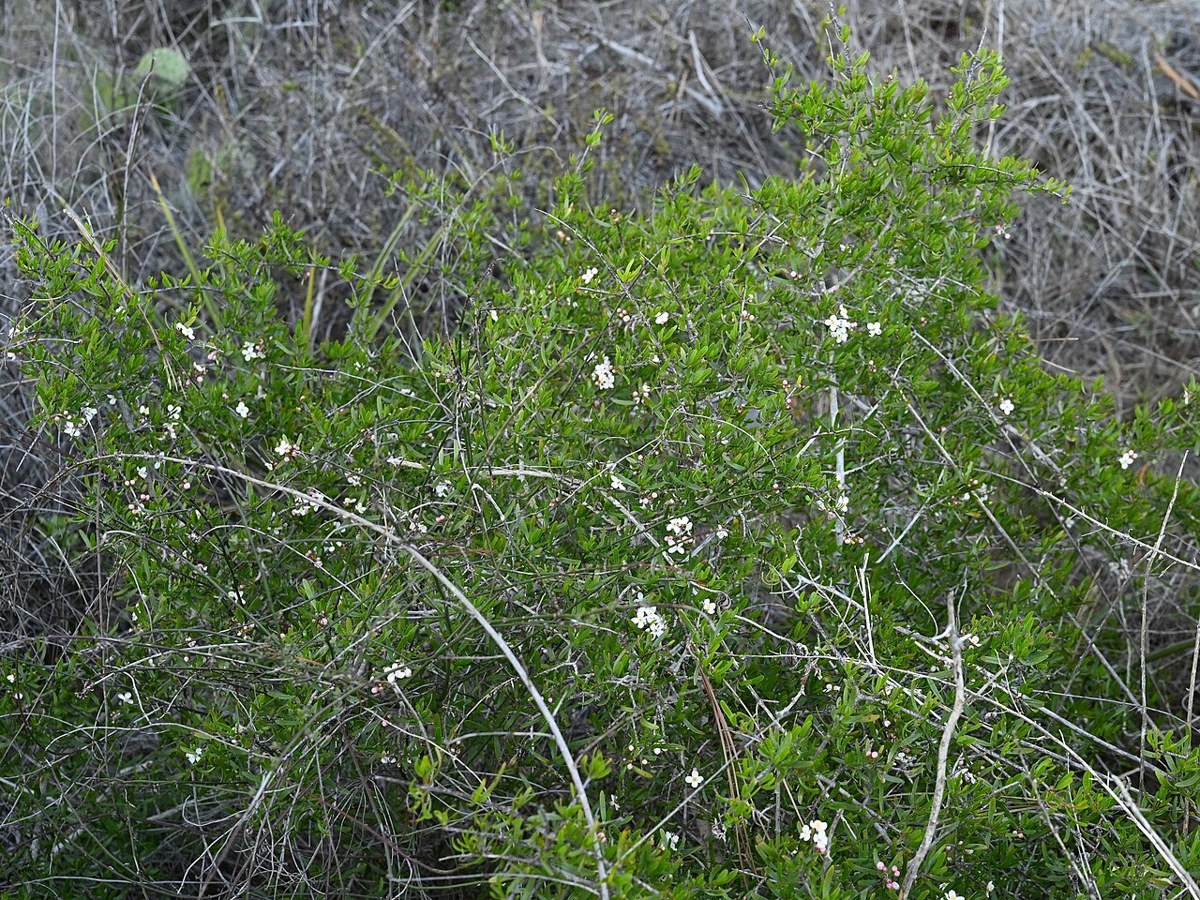
Cneoridium dumosum, commonly called bush rue, is a small, dense evergreen shrub found only along the coastal bluffs and mesas of extreme Southern California and adjacent Baja California. It is the sole species in its genus, a distinction that makes it a botanical curiosity as much as a garden plant, and it belongs to the citrus family (Rutaceae) — a relationship given away by its aromatic, gland-dotted leaves that smell faintly of citrus or rue when crushed.
Bush rue typically forms a compact, rounded mound 2 to 4 feet tall, dense with small, narrow, leathery leaves on wiry stems. In late winter and spring it is studded with small, five-petaled white flowers, followed by small reddish fruit capsules. Its tight, twiggy growth habit and fine-textured foliage give it a neat, tailored look even without pruning, which has made it popular in low-water coastal gardens within its native range.
Because bush rue is naturally confined to a narrow strip of coastal San Diego County and immediately adjacent areas, it is an especially meaningful choice for gardeners in that specific region who want a plant that is genuinely local rather than merely regional. It tolerates salt spray, wind, and poor rocky soil, making it well suited to bluff-top and coastal garden conditions that defeat many other shrubs.
Identification
Bush rue is a small, rounded, densely branched evergreen shrub, usually 2 to 4 feet tall and similar in width, occasionally reaching 6 feet in favorable sites. The overall silhouette is tight and twiggy, giving the plant a naturally neat, mounded form.
Stems
Stems are slender, wiry, and much-branched, gray-brown and smooth on older wood, with newer growth greener and finely textured. The dense branching pattern is a large part of what gives bush rue its tidy, compact appearance in the landscape.
Leaves
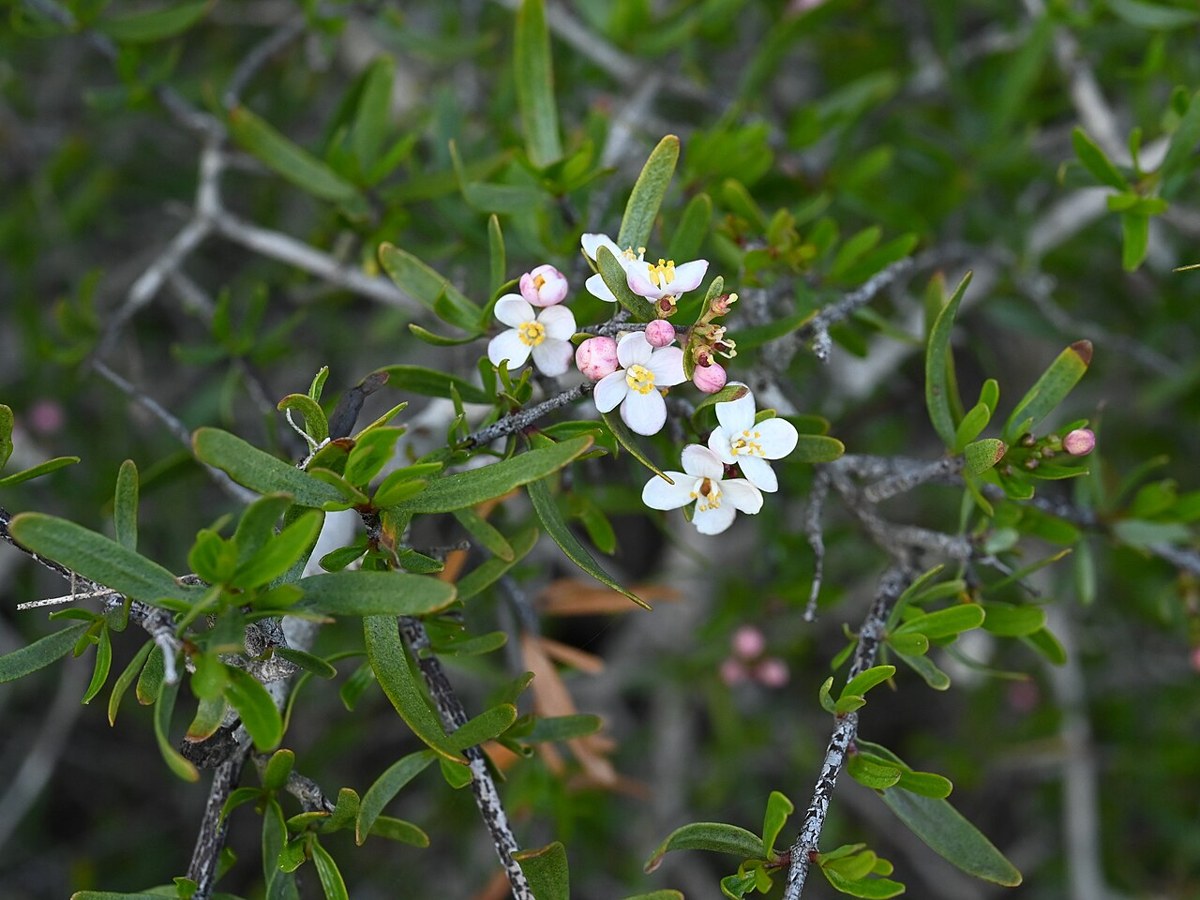
The leaves are small, narrow, and linear to oblong, typically ½ to 1 inch long, with smooth margins that often curl slightly under. They are leathery, dark green, and dotted with tiny translucent oil glands that are visible when a leaf is held up to the light — the same kind of gland found throughout the citrus family. Crushed leaves release a sharp, resinous, citrus-like scent, one of the most reliable ways to confirm an identification.
Flowers & Fruit
Flowers appear from January into April (and sometimes sporadically at other times), small and white with five petals, about ¼ to ⅜ inch across, borne singly or in small clusters at the branch tips or leaf axils. After bloom, the plant sets small, leathery, reddish-brown fruit capsules roughly ¼ inch across, which split open to release a few hard seeds. The fruit, like the foliage, carries the gland-dotted texture typical of the citrus family.
Quick Facts
| Scientific Name | Cneoridium dumosum |
| Family | Rutaceae (Citrus) |
| Plant Type | Evergreen shrub |
| Mature Height | 2–4 ft (occasionally to 6 ft) |
| Mature Spread | 2–4 ft |
| Growth Rate | Slow |
| Sun Exposure | Full Sun to Part Shade |
| Water Needs | Low; drought tolerant once established |
| Soil Type | Rocky, sandy, or clay; must drain well |
| Soil pH | Neutral to slightly alkaline (about 6.5–7.8) |
| Bloom Time | January – April |
| Flower Color | White |
| Fall Color | None (evergreen) |
| Fruit | Small reddish-brown capsules, about ¼ in |
| Deer Resistant | Yes |
| USDA Hardiness Zones | 9–11 |
Native Range
Bush rue has one of the most restricted native ranges of any California shrub. It is found only along the coastal bluffs, mesas, and canyons of San Diego County, from roughly La Jolla and Torrey Pines south to the U.S.-Mexico border, with its range continuing into adjacent northern Baja California, Mexico. County-level botanical records confirm it only in San Diego County; it does not occur naturally anywhere else in California.
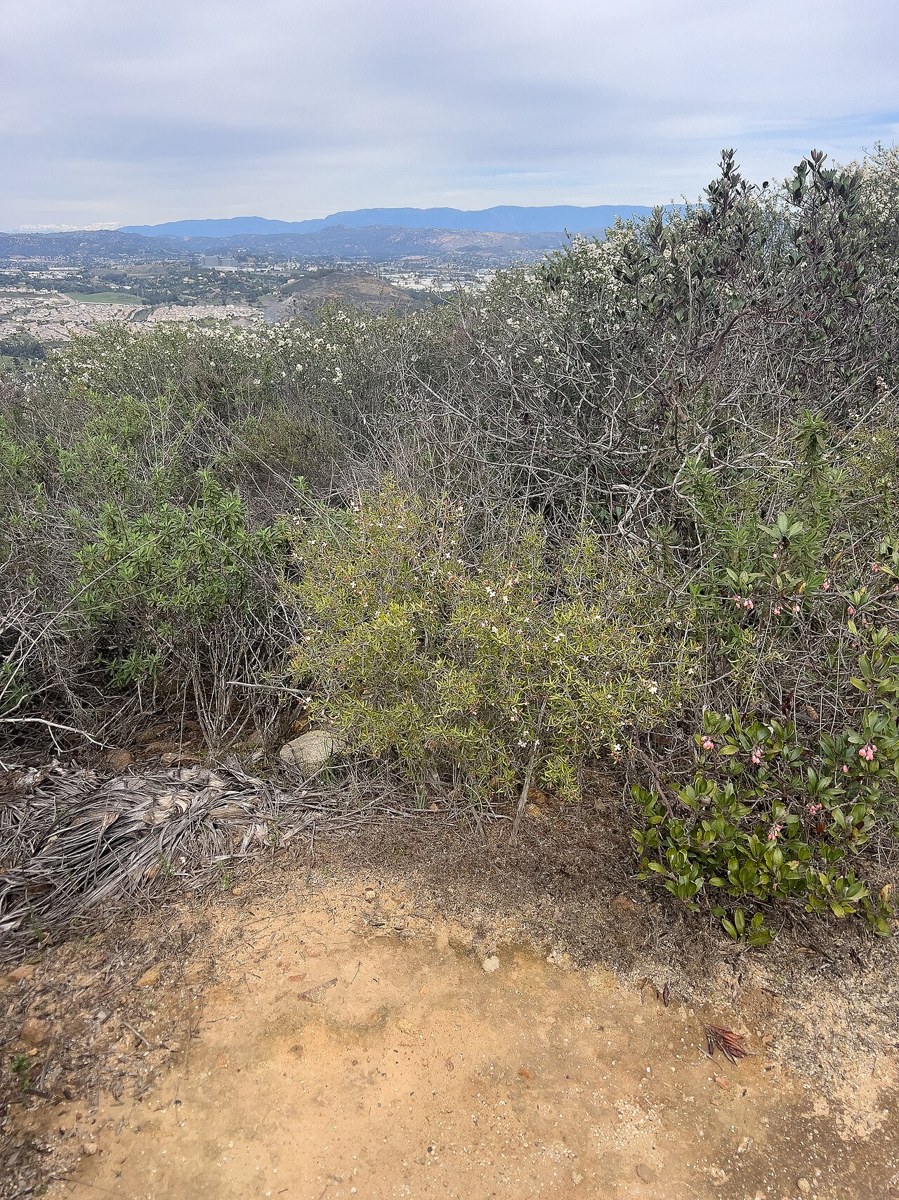
It grows in coastal sage scrub and maritime chaparral on bluffs, mesas, and canyon slopes close to the ocean, typically from near sea level to about 1,500 feet elevation. The coastal fog and moderated temperatures of its narrow range appear to play a role in limiting the species to this small corner of the state.
Bush rue is not federally listed, but because its entire U.S. range lies within one heavily developed coastal county, remaining wild populations are concentrated in protected reserves such as Torrey Pines State Natural Reserve. Gardeners within San Diego County can help support the species by choosing nursery-propagated bush rue rather than disturbing wild plants.
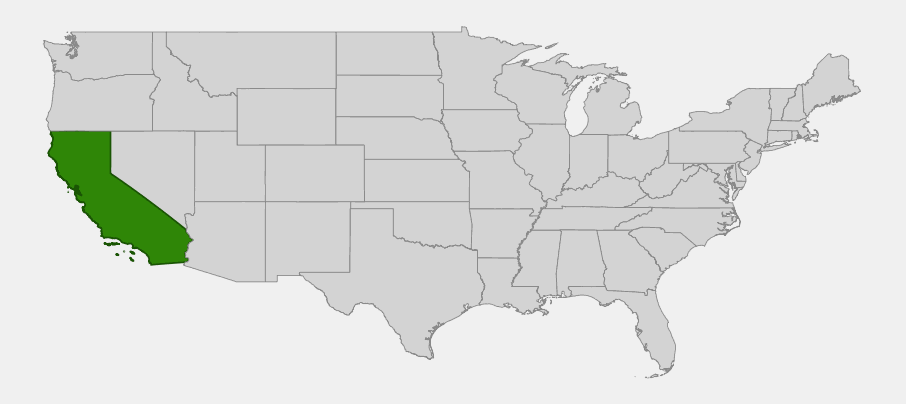
📋 Regional plant lists featuring Bush Rue: California & Nevada
Growing & Care Guide
Bush rue is a satisfying, nearly carefree plant for coastal San Diego County gardens, where it tolerates the salty wind and poor soils that frustrate many other shrubs.
Light
Full sun along the coast produces the tightest, most compact growth and best flowering. It also handles part shade, especially a bit inland where afternoon sun can be intense, though growth will be somewhat looser in shadier spots.
Soil & Water
Bush rue needs sharply drained soil and does poorly in heavy, waterlogged ground. It is naturally adapted to rocky, sandy, or thin clay soils on coastal bluffs. Once established, typically after the first year, it needs very little supplemental water and handles the dry summers of coastal Southern California with ease. It also tolerates salt spray and wind better than most broad-leaved natives, making it a strong choice for exposed bluff-top sites.
Planting Tips
Plant in fall or winter to take advantage of seasonal rainfall for establishment. Choose a well-drained site, especially if planting inland of the immediate coast where soils may hold more moisture. Space plants 2 to 4 feet apart for a natural mounded look, or closer for a low informal hedge. Because bush rue is slow-growing, start with the largest container size practical if a filled-in look is wanted sooner.
Pruning & Maintenance
Very little pruning is needed, since the plant naturally holds a tidy, rounded form. Light shaping after the main bloom period can keep plants neat if a more formal appearance is desired. Bush rue needs no regular fertilizer and has few pest or disease issues in the well-drained, sunny conditions it prefers.
Landscape Uses
- Coastal gardens that need salt- and wind-tolerant shrubs near the ocean
- Low-water, low-maintenance plantings for bluff-top or mesa-top sites
- Informal low hedges or borders, given its naturally tidy, mounded habit
- Coastal sage scrub restoration within San Diego County
- Rock gardens paired with other fine-textured, drought-tolerant natives
- Fragrance gardens, since the foliage releases a citrus-like scent when brushed or crushed
Wildlife & Ecological Value
Within its narrow coastal range, bush rue adds fine-textured structure and a pollen and nectar source to San Diego’s threatened coastal sage scrub plant communities.
For Pollinators
The small white flowers attract native bees and other small pollinating insects, offering a nectar and pollen source during the late winter and spring bloom window. As a member of the citrus family, it may also host some of the same small insects associated with other Rutaceae, though it is not a significant host plant for any well-known butterfly in its range.
For Birds
The dense, twiggy growth provides shelter and small-scale nesting cover for coastal scrub birds such as wrentits and California towhees, which favor the tight branching of low shrubs like bush rue for concealment from predators.
For Mammals
Small mammals use the dense shrub cover for protection, and the plant’s resinous, aromatic foliage makes it unappealing to browsing deer and rabbits, adding to its reliability in gardens with wildlife pressure.
Ecosystem Role
As a shrub found nowhere outside San Diego County’s coastal sage scrub and maritime chaparral, bush rue is part of one of California’s most reduced and fragmented native plant communities. Its presence in a garden or restoration planting helps support the structural diversity of this habitat type, much of which has been lost to coastal development.
Cultural & Historical Uses
Because bush rue’s native range is so small and was documented relatively late by Western botanists, it has a shorter recorded history of human use than many California natives with broader distributions. It is not known to have been a significant food, fiber, or medicinal plant among Indigenous peoples of the San Diego coastal region, likely owing to its limited abundance and small, resinous leaves.
The genus name Cneoridium references its resemblance to the Mediterranean genus Cneorum, reflecting the pattern common among early botanists of describing new California plants by comparison to familiar Old World relatives. As the only species in its genus, bush rue has long attracted scientific interest as an example of a highly localized, relict plant lineage.
Today, bush rue’s primary significance to people is as a conservation and horticultural subject: a reminder of how much specialized native flora survives in the small remaining fragments of San Diego’s coastal sage scrub, and a rewarding, low-water garden shrub for those who live within its native range.
Frequently Asked Questions
Can I grow bush rue outside San Diego County?
You can often grow it successfully in similar mild, dry coastal or Mediterranean climates elsewhere in California, but it is only naturally native to San Diego County and adjacent Baja California. Gardeners elsewhere should treat it as a regionally appropriate plant rather than a true native to their area.
Is bush rue related to citrus trees?
Yes. Bush rue belongs to Rutaceae, the citrus family, which is why its leaves carry the same kind of aromatic oil glands found in orange and lemon leaves and release a similar sharp, citrus-like scent when crushed.
How much water does bush rue need?
Very little once established. Water regularly during the first year, then reduce watering substantially. Mature plants are genuinely drought tolerant and well adapted to the dry summers typical of coastal Southern California.
Does bush rue tolerate salt spray and wind?
Yes, it tolerates both better than most broadleaf native shrubs, which is part of why it thrives on exposed coastal bluffs and mesas within its native range.
Why is bush rue only found in one county?
Its native range is naturally limited to the specific coastal conditions of San Diego County and adjacent northern Baja California, likely shaped by the region’s moderating marine fog and mild temperatures. It is a true local endemic rather than a plant that was once more widespread.

Looking for a nursery that carries Bush Rue?
Browse our native plant nursery directory: California