Ground Iris (Iris macrosiphon)
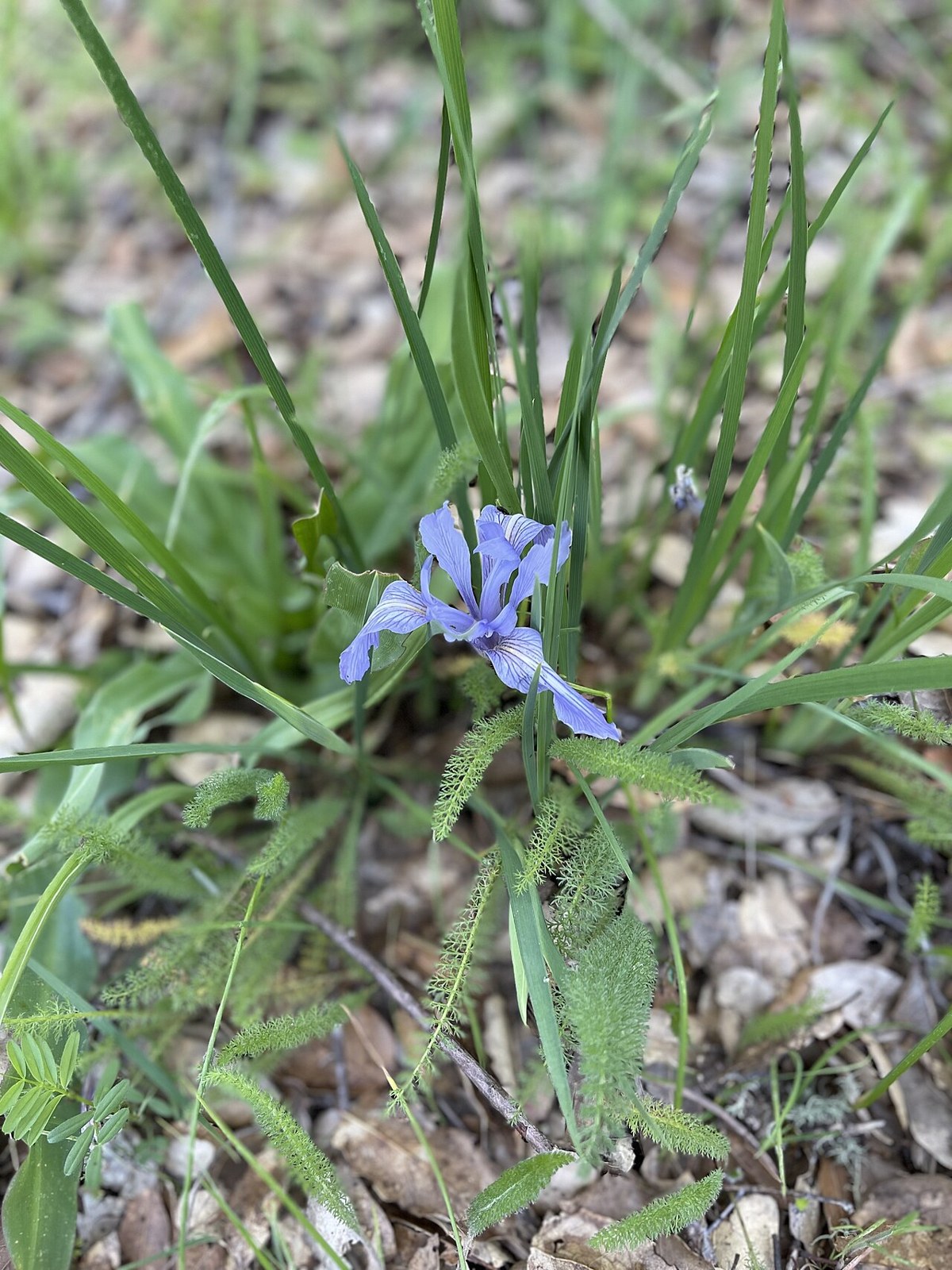
Iris macrosiphon, known as ground iris or bowl-tube iris, is a low-growing perennial wildflower found only in the oak woodlands and grassy slopes of northern and central California. Unlike taller garden irises, it hugs the ground so closely that its flowers often seem to emerge directly from the leaf litter, easy to miss until you’re nearly standing on one.
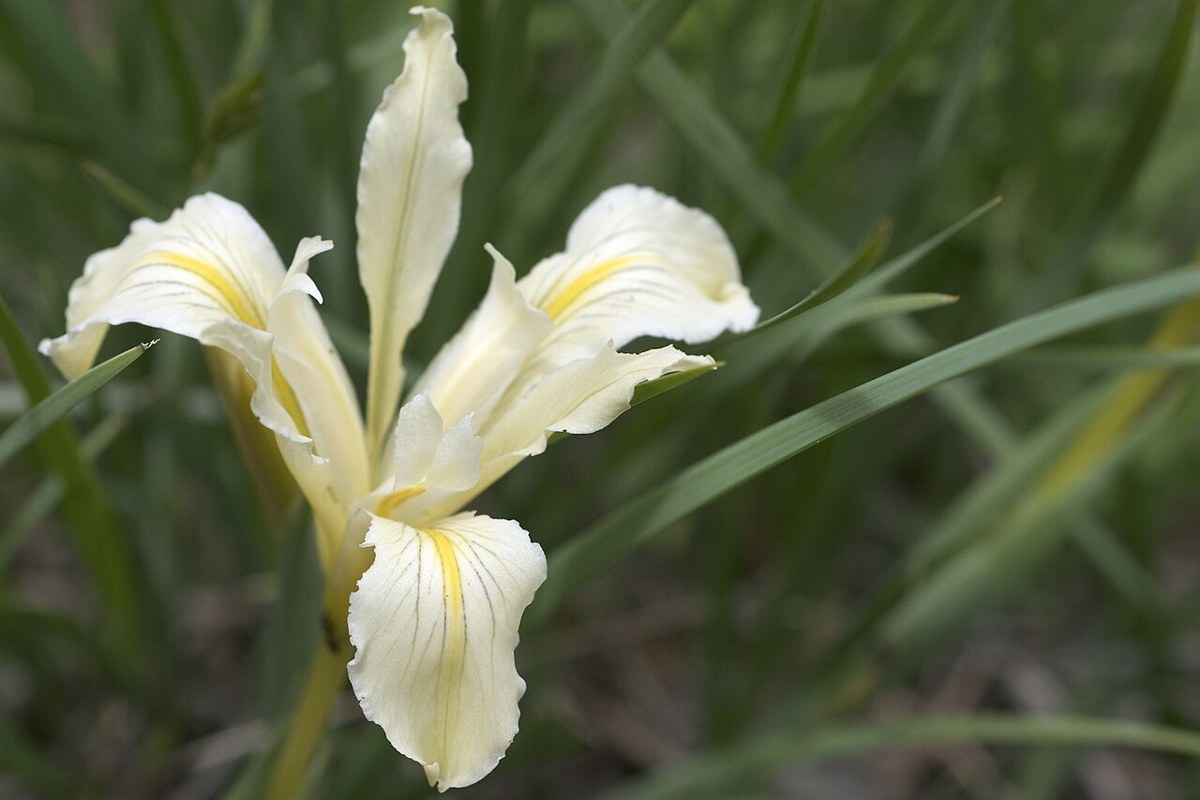
The common name “bowl-tube iris” refers to the unusually long, slender floral tube — the botanical feature behind its scientific name macrosiphon, meaning “large tube” — that holds the flower’s reproductive parts well below the showy petals. Flower color is strikingly variable even within a single hillside, ranging from deep blue-violet to pale cream and white, always finely veined with purple or yellow.
Ground iris is a true California native specialist, blooming in late winter and early spring before summer drought sets in, then disappearing into dormancy as its grass-like leaves dry down. For gardeners working with oak woodland or dry, part-shaded slopes, it offers an authentic, low-profile spring wildflower display that asks for nothing once it is settled into a compatible site.
Identification
Ground iris is a diminutive perennial, rarely more than 4 to 10 inches tall even in bloom, forming small tufts rather than spreading mats.
Leaves
Leaves are narrow, grass-like, and somewhat stiff, typically 6 to 12 inches long but often arching close to the ground, making the plant easy to overlook outside of bloom season. They are deep green, fading to tan as the plant goes summer-dormant.
Flowers
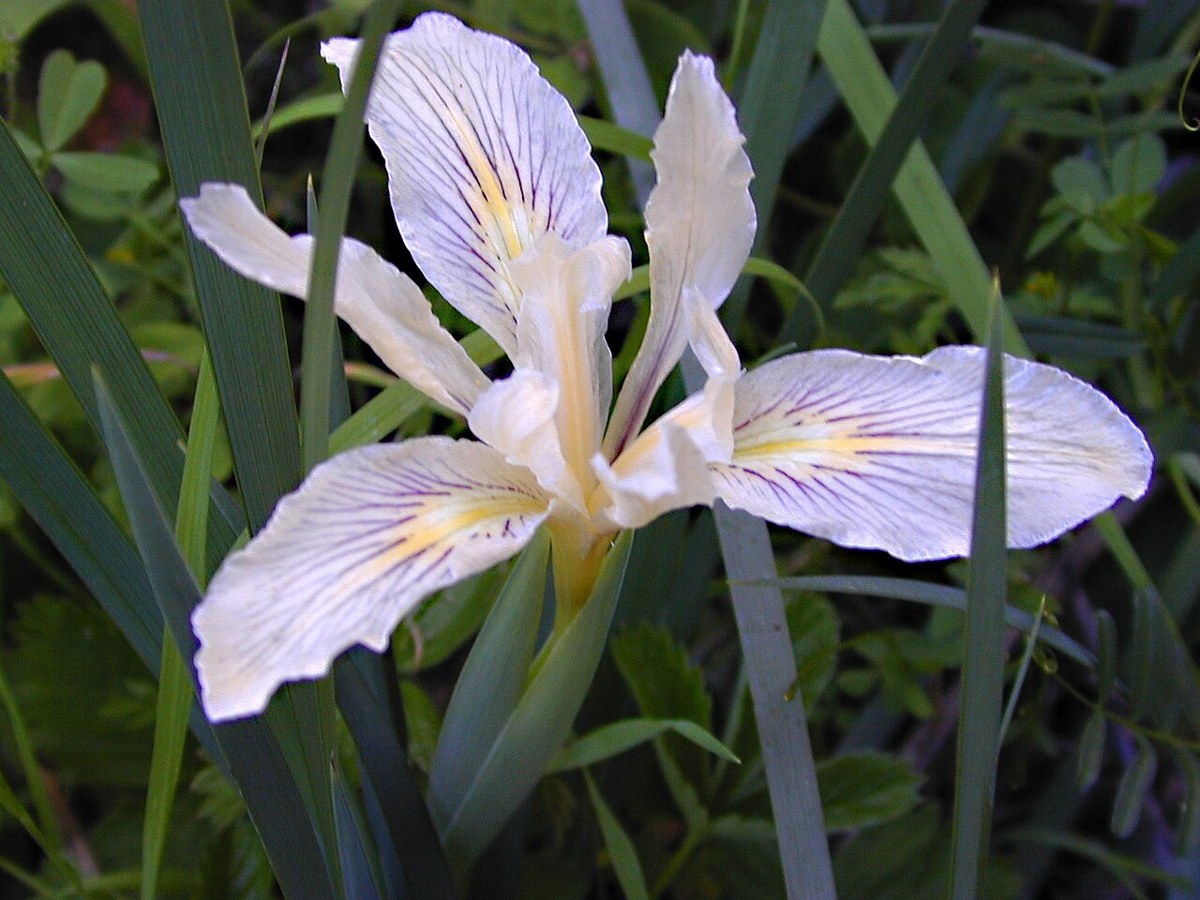
Flowers sit low, often just at or barely above the soil surface, with color ranging from deep blue-violet through lavender to cream and white, always marked with fine purple or yellow veining on the falls. The defining feature is the long, narrow perianth tube — sometimes over 3 inches long — that separates the ovary from the flower parts above, a trait shared by few other California irises. Bloom runs from March into May.
Fruit & Seeds
Because the ovary sits at the base of the unusually long floral tube, the resulting seed capsule develops partly below ground level, maturing through late spring before the plant enters summer dormancy.
Quick Facts
| Scientific Name | Iris macrosiphon |
| Family | Iridaceae (Iris) |
| Plant Type | Herbaceous Perennial (Rhizomatous) |
| Mature Height | 4–10 in |
| Mature Spread | 6–10 in |
| Growth Rate | Slow |
| Sun Exposure | Part Shade to Full Sun |
| Water Needs | Low (winter/spring moisture, dry summer) |
| Soil Type | Well-drained loam or clay-loam; oak woodland soils |
| Soil pH | 6.0–7.5 (slightly acidic to neutral) |
| Bloom Time | March – May |
| Flower Color | Blue-violet, lavender, cream, or white |
| Fall Color | None; foliage dies back in summer dormancy |
| Fruit | Seed capsule at base of long floral tube |
| Deer Resistant | Yes |
| USDA Hardiness Zones | 7–9 |
Native Range
Ground iris is endemic to California, where county-level records confirm it across the North Coast Ranges, San Francisco Bay Area, interior Coast Ranges, and the Sierra Nevada and Cascade foothills of central and northern California. It does not occur naturally outside the state.
Within this range, ground iris favors open oak woodland, grassy slopes, and chaparral margins, typically on well-drained soils that stay moist through the winter rainy season and dry out completely by summer. It often grows alongside annual grasses and wildflowers that share the same rain-fed growing season, blooming before the grasses grow tall enough to hide it.
Like other California native bulbs and rhizomatous perennials adapted to a Mediterranean climate, ground iris depends on this winter-wet, summer-dry rhythm, and it does not persist in gardens that receive regular summer irrigation.
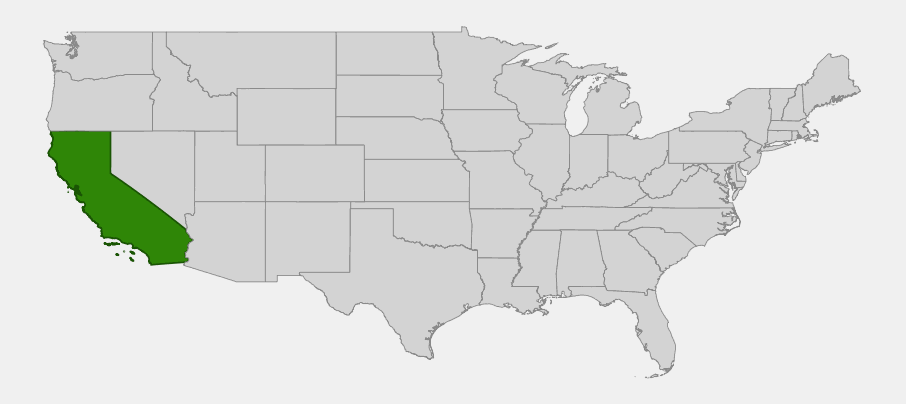
📋 Regional plant lists featuring ground iris: California & Nevada
Growing & Care Guide
Ground iris is easy to please as long as its dry-summer, wet-winter rhythm is respected — the same rule that governs most California native bulbs and rhizomes.
Light
Part shade under open oak canopy suits it best, though it tolerates full sun in cooler coastal gardens. Too much shade from dense canopy or nearby shrubs reduces bloom.
Soil & Water
Plant in well-drained native soil — it is remarkably tolerant of clay-loam as long as drainage is adequate. Water during the winter and spring growing season if rainfall is light, then stop watering completely through summer to allow dormancy; constant summer moisture is the most common cause of failure in cultivation.
Planting Tips
Set out divisions or container stock in fall, spacing plants 6 to 10 inches apart. Because the plants stay so low, place them where they won’t be overtaken by taller companions, and avoid summer-irrigated lawn or border areas.
Pruning & Maintenance
Leave the foliage in place until it has fully dried in early summer, then tidy up dead leaves. The plant otherwise needs no routine maintenance and dislikes frequent disturbance.
Propagation
Divide established clumps in fall as cooler weather and rains return, or sow fresh seed in fall, allowing natural winter chilling to break dormancy before spring germination.
Landscape Uses
- Oak woodland gardens and understory plantings
- Dry, part-shaded slopes
- California native meadow and grassland plantings
- Rock gardens with winter-wet, summer-dry conditions
Wildlife & Ecological Value
For Pollinators
Ground iris flowers are pollinated by native bees strong enough to navigate the long floral tube, a specialized relationship typical of California’s native iris species. The early bloom time provides nectar before many other spring wildflowers have opened.
For Birds
While not a direct food source, the low tufts of grass-like foliage add structure to open woodland understory used by ground-foraging birds.
For Mammals
Deer and other browsing mammals generally avoid iris foliage due to its bitter, mildly irritating compounds, making ground iris a persistent presence even in heavily grazed woodlands.
Ecosystem Role
As a low-growing, long-lived perennial of California’s oak woodlands, ground iris is part of the diverse herbaceous understory that provides early-season color and structure before the grasses and taller wildflowers take over for the rest of spring.
Cultural & Historical Uses
Like most native California irises, ground iris has not been widely documented for food or medicinal use, likely reflecting the mild toxicity of iris rhizomes, which can cause digestive upset if ingested. Other California native irises are better known for their exceptionally strong leaf fibers, historically processed by some tribes into cordage, though this use is not specifically documented for Iris macrosiphon.
The species was first described from specimens collected in California in the 19th century, and its distinctive long floral tube has made it a frequently cited example in botanical discussions of the California native iris group, distinguishing it from its closer-tubed relatives such as Douglas iris.
Frequently Asked Questions
Why is it called “ground iris”?
Because it grows and flowers so close to the soil surface — often just a few inches tall — unlike many garden irises that stand well above the ground.
What does “bowl-tube iris” refer to?
Its other common name describes the unusually long, narrow floral tube that separates the ovary from the showy flower parts, a distinctive feature of this species.
Is ground iris toxic?
Like most irises, the rhizomes contain compounds that can cause stomach upset if eaten, and the sap may irritate sensitive skin. It is not considered an edible plant.
Does ground iris need summer water?
No. It is adapted to a dry summer dormancy after winter and spring rains, and regular summer watering is one of the most common reasons it fails in gardens.
Can ground iris grow outside California?
It is endemic to California and best kept within its native range, where its dry-summer dormancy matches the regional Mediterranean climate.

Looking for a nursery that carries ground iris?
Browse our native plant nursery directory: California