Checkerbloom (Sidalcea malviflora)
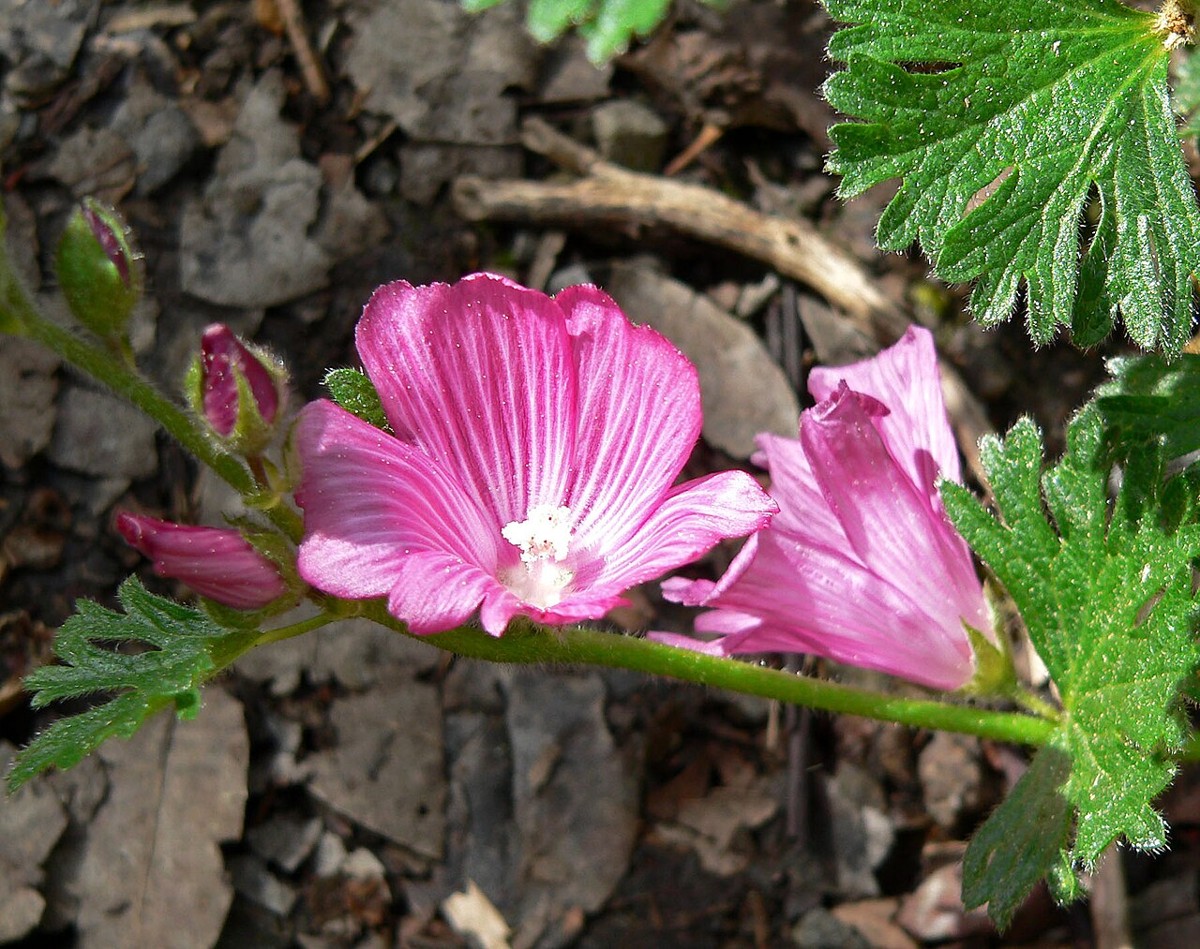
Sidalcea malviflora, commonly called checkerbloom or checker mallow, is a cheerful, sun-loving perennial wildflower native to California, with populations extending into western Oregon and the Washington coast. Its five-petaled pink to rose-purple flowers, each petal delicately veined like the lines in a checkerboard pattern, bloom in loose spikes atop slender stems from spring into early summer, bringing long-lasting color to grasslands, coastal bluffs, and garden borders alike.
Checkerbloom belongs to the mallow family, the same family as hollyhocks and hibiscus, and its flowers share that unmistakable mallow shape: five broad, slightly cupped petals surrounding a central column of fused stamens. Unlike many California wildflowers that bloom briefly and vanish, checkerbloom typically flowers over a long season and often persists as a modest perennial clump rather than disappearing entirely in summer, especially where it gets a little extra moisture.
In the garden, checkerbloom is one of the most reliable and rewarding California native perennials, equally at home in a sunny border, a pollinator garden, or a dry meadow planting. It is relatively easy to grow, tolerant of a range of soils, and provides months of color with minimal care once established.
Identification
Checkerbloom is a variable species, ranging from low, spreading plants to upright clumps 1 to 3 feet tall, depending on the subspecies and growing conditions.
Leaves
Leaves are rounded to kidney-shaped at the base of the plant, with shallow to moderately deep lobes, somewhat like a small maple or geranium leaf. Leaves higher on the flowering stems are more deeply divided into narrower segments. The foliage is light to medium green and often slightly hairy, especially on the stems.
Flowers
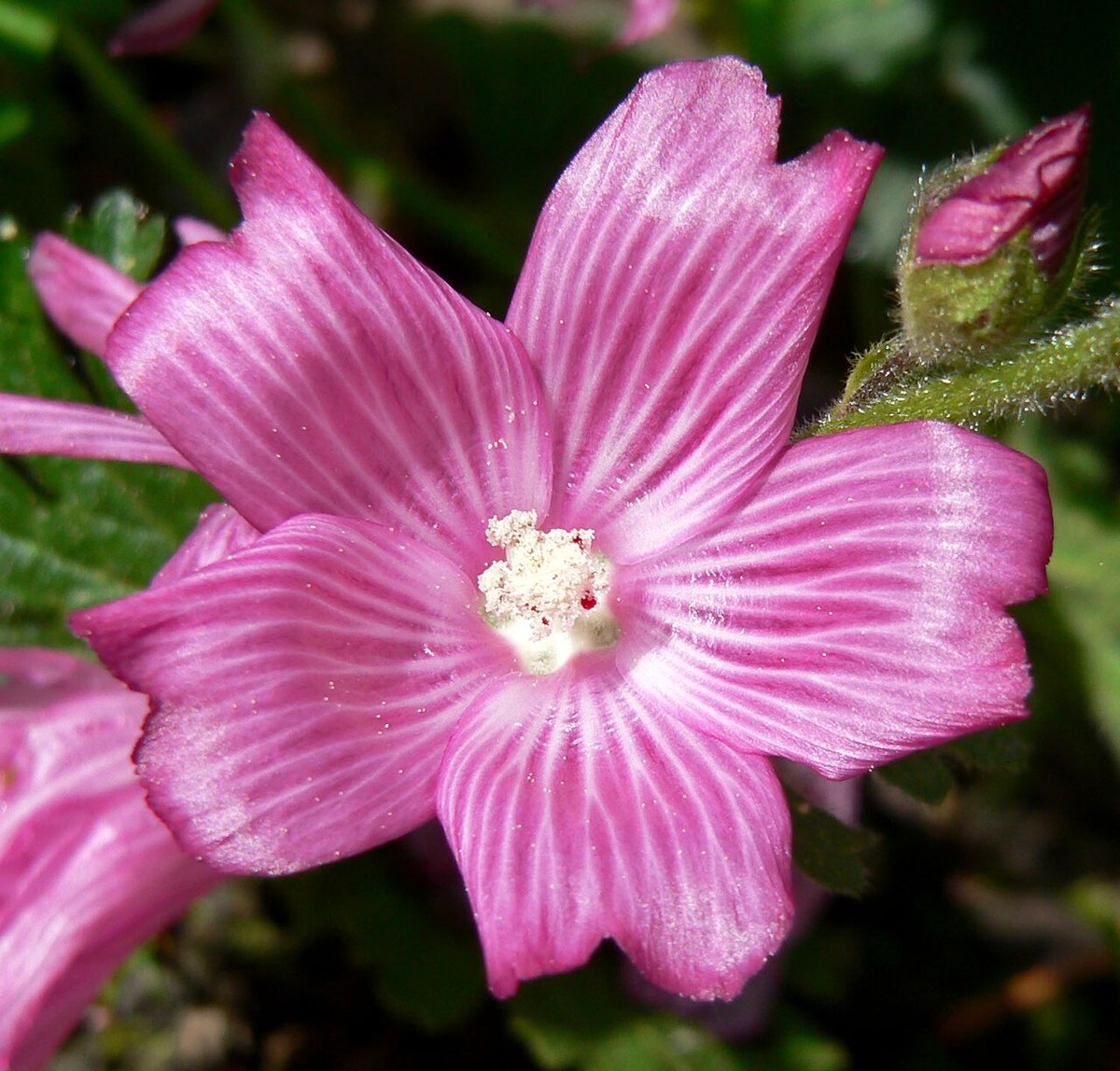
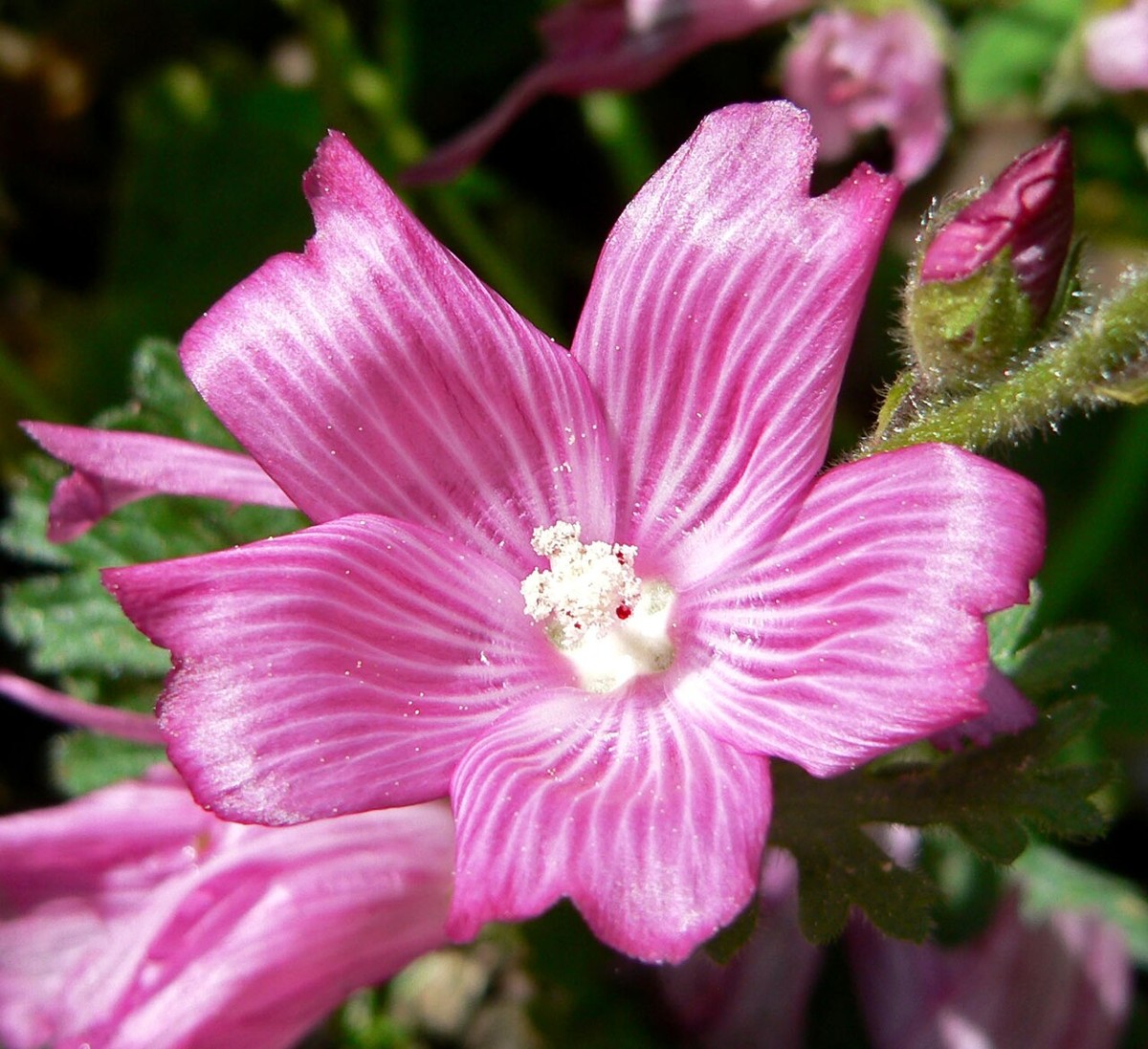
Flowers are arranged in a loose, elongated spike or raceme at the top of each stem, opening a few at a time from the bottom up over a long bloom season. Each flower has five broad, notched petals, usually pink to rose-purple, with darker veins radiating from the base that create the checkered pattern responsible for the common name. A cluster of white to pale stamens forms a small column at the flower’s center.
Fruit & Seed
After flowering, checkerbloom forms a small, disc-shaped cluster of seed-bearing segments (a schizocarp) typical of the mallow family, which splits apart at maturity into individual wedge-shaped seed sections. Seed ripens through summer as the flowering stems dry.
Quick Facts
| Scientific Name | Sidalcea malviflora |
| Family | Malvaceae (Mallow) |
| Plant Type | Perennial wildflower |
| Mature Height | 1–3 ft |
| Mature Spread | 1–2 ft |
| Growth Rate | Moderate to fast |
| Sun Exposure | Full Sun to Part Shade |
| Water Needs | Average; drought tolerant once established |
| Soil Type | Well-drained loam, clay or sandy soil |
| Soil pH | Neutral to slightly acidic |
| Bloom Time | March – July |
| Flower Color | Pink to rose-purple with darker veining |
| Fall Color | None notable |
| Fruit | Small disc-shaped seed cluster, summer |
| Deer Resistant | Somewhat; may be browsed occasionally |
| USDA Hardiness Zones | 7–10 |
Native Range
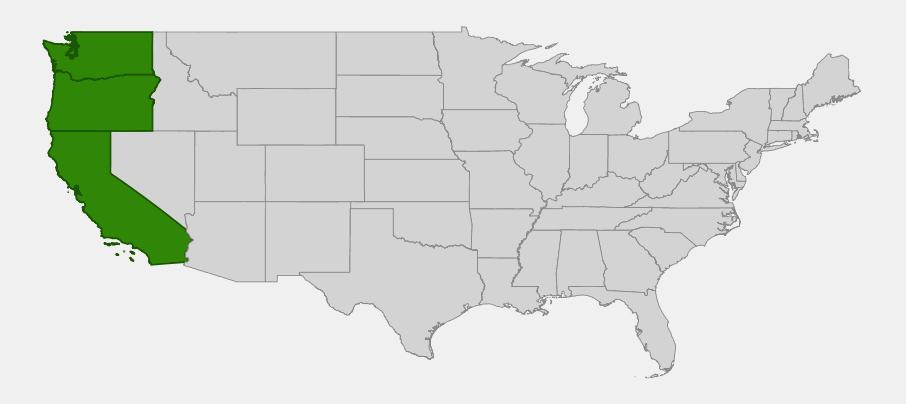
Checkerbloom is native to California, where it is common and widespread from the Coast Ranges and Sierra foothills to Southern California, and it also occurs along the coast of western Oregon and in a limited, rare area of coastal northwestern Washington.
Typical habitat includes open grassland, coastal bluffs and prairies, oak woodland edges, and chaparral openings, generally in full sun to light shade on well-drained soils. Because it is such a widespread and variable species across California, checkerbloom is found from sea level up into the foothills, adapting to a range of local conditions from coastal fog belts to drier inland slopes.
Checkerbloom as a whole species has no broad conservation concern, though it is quite rare at its northern range limit in Washington, where it should be considered a notable, localized native rather than a common garden subject sourced from that state.
📋 Regional plant lists featuring Checkerbloom: California & Nevada · Western Oregon & Western Washington
Growing & Care Guide
Checkerbloom is one of the easier California native wildflowers to grow, tolerating a range of soils and watering regimes once it is established.
Light
Plant in full sun for the best, longest bloom, though checkerbloom also tolerates light or part shade, especially in hotter inland gardens where some afternoon shade can extend flowering and keep foliage fresher through summer.
Soil & Water
Checkerbloom adapts to well-drained clay, loam, or sandy soils and is not particular about soil fertility. Water regularly during the first year to establish a deep root system; after that, established plants are drought tolerant, though occasional summer water extends the bloom period and keeps plants looking fuller.
Planting Tips
Plant container-grown checkerbloom in fall or early spring, spacing plants about 12 to 18 inches apart to allow for their mature spread. It establishes readily from nursery stock and also self-sows modestly in favorable conditions, so expect occasional volunteer seedlings nearby.
Pruning & Maintenance
Deadhead spent flower spikes to encourage continued blooming through the season, or leave some seed heads for birds and self-sowing. Cut plants back by about half after the main flowering flush to tidy the clump and often prompt a second, lighter bloom later in the season.
Propagation
Propagate from seed sown in fall or by dividing established clumps in late fall or early spring. Seed germinates readily with the onset of cooler, moister weather, and division is a quick way to multiply a favorite plant.
Landscape Uses
- Perennial borders and cottage-style native gardens for long-season color
- Pollinator gardens alongside lupines, California poppy and native buckwheats
- Meadow and grassland plantings mixed with native bunchgrasses
- Coastal gardens that need wind- and salt-tolerant perennials
Wildlife & Ecological Value
Checkerbloom’s long bloom season and open, accessible flowers make it a reliable nectar and pollen source for a wide range of pollinators across spring and early summer.
For Pollinators
Native bees, including bumblebees and solitary bees, are frequent visitors, along with butterflies and some hoverflies. The species is also a larval host plant for the West Coast lady and common checkered skipper butterflies, giving it added value beyond its nectar resources.
For Birds
Seed-eating birds forage on checkerbloom’s seed clusters after flowering, and the grassland and meadow habitats it grows in support insects that feed many grassland and woodland-edge bird species.
For Mammals
Checkerbloom is palatable enough that deer and rabbits may browse young growth occasionally, though it is not a primary forage plant and established clumps generally recover well from light grazing.
Ecosystem Role
As a widespread, long-blooming perennial of California grasslands and coastal prairies, checkerbloom helps sustain pollinator activity through a season when many spring ephemerals have already finished, bridging the gap into summer.
Cultural & Historical Uses
Checkerbloom has a modest history of use compared with many showier California wildflowers, valued historically more for its reliable, long-lasting color in the landscape than for food or medicine. Some Indigenous peoples within its range were familiar with Sidalcea species as part of the local grassland and prairie flora, though it was not a major food or material plant.
In more recent decades, checkerbloom has become a mainstay of California native plant horticulture, prized by home gardeners and restoration practitioners alike for its easy care, long bloom period, and value to pollinators and butterflies.
Frequently Asked Questions
Why is it called checkerbloom?
Each petal has fine, darker veins radiating from its base that create a checkered or lined pattern against the pink background, giving rise to the common name checkerbloom, or checker mallow.
How long does checkerbloom bloom?
It has one of the longer bloom seasons among California native wildflowers, often flowering from March into July, and sometimes again lightly in late summer if deadheaded and given occasional water.
Is checkerbloom easy to grow?
Yes, it is considered one of the easier California native perennials, tolerating a range of soils and, once established, significant drought, while still rewarding regular garden care with fuller growth and more flowers.
What butterflies use checkerbloom?
It serves as a larval host plant for the West Coast lady and common checkered skipper butterflies, in addition to attracting many other pollinators for nectar.
Is checkerbloom native to Washington?
Only in a very limited, rare area of coastal northwestern Washington. It is a much more common and widespread native throughout California and along the western Oregon coast.

Looking for a nursery that carries Checkerbloom?
Browse our native plant nursery directory: California · Oregon · Washington