Bicolor Monkeyflower (Diplacus bicolor)
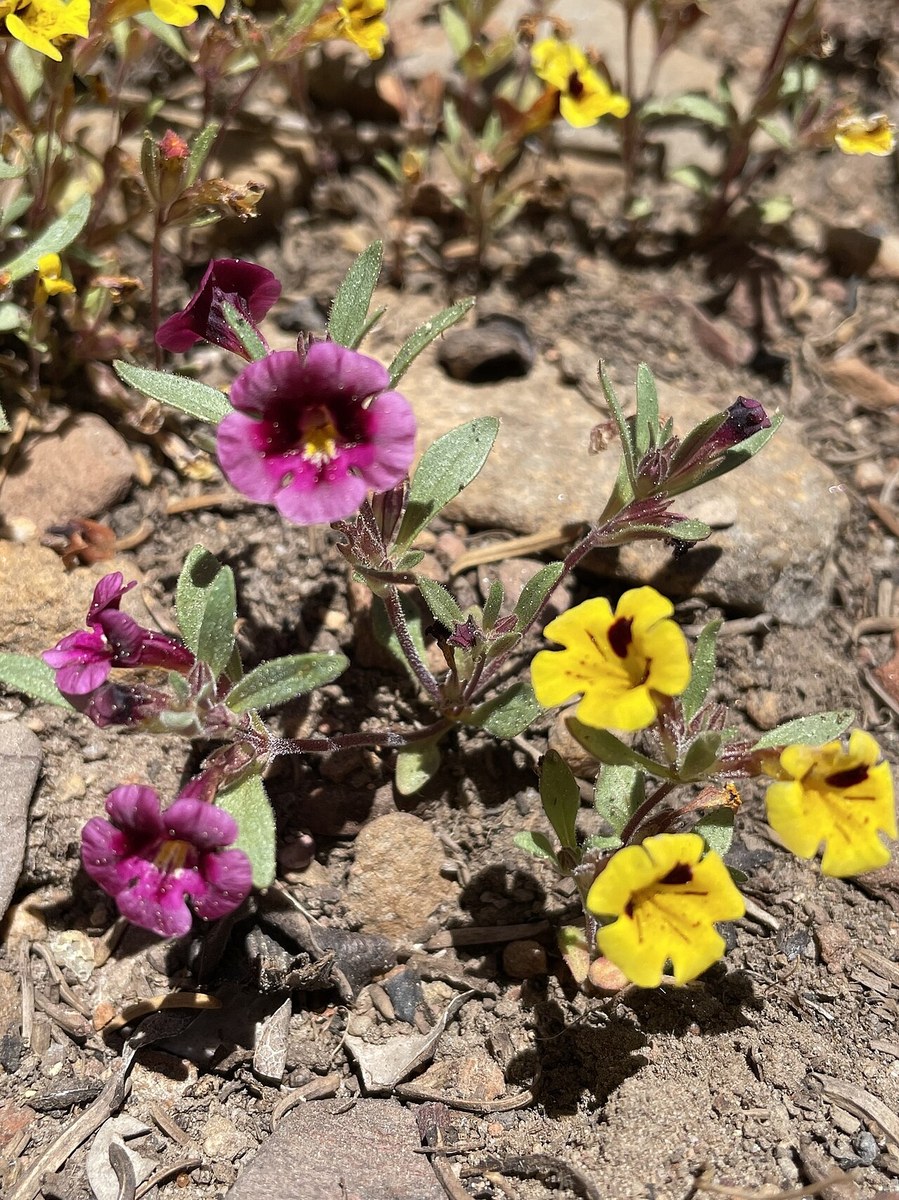
Diplacus bicolor (formerly Mimulus whitneyi), commonly called bicolor monkeyflower or harlequin monkeyflower, is a small California-endemic annual wildflower in the lopseed family (Phrymaceae) known for one of the more unusual tricks in the state’s wildflower repertoire: a single population can produce flowers in two strikingly different colors, bright yellow and deep magenta-purple, often growing side by side on the same patch of ground.
This low, sticky-hairy annual rarely grows more than a few inches tall, hugging the bare, disturbed, and often gravelly or sandy ground of the southern Sierra Nevada foothills where it makes its home. Each small, funnel-shaped flower has a dark maroon throat regardless of whether the petals themselves are yellow or magenta, giving every bloom a bold, two-toned “harlequin” look that is the source of both of its common names.
Bicolor monkeyflower is a plant for specialists and native wildflower enthusiasts rather than a general garden filler — it is short, short-lived, and best appreciated in a dedicated rock garden, gravel bed, or restoration planting that mimics the open, disturbed granite and decomposed-granite soils of its native Sierra foothill habitat.
Identification
Bicolor monkeyflower is a small, low-growing annual herb, typically just 2 to 6 inches tall, with slender, branching, glandular-hairy stems that often sprawl somewhat rather than growing strictly upright.
Leaves
Leaves are small, opposite, oval to lance-shaped, usually under an inch long, with a sticky, glandular-hairy texture typical of many annual monkeyflowers adapted to hot, exposed sites. The foliage is unremarkable compared to the flowers and easily overlooked until the plant blooms.
Flowers
Flowers are small, tubular-funnel shaped, about ⅓ to ½ inch long, with five spreading lobes. The defining feature of the species is its flower color polymorphism: within the same population, and sometimes within inches of each other, individual plants bear either bright yellow or deep magenta-purple flowers, each marked with a dark maroon-red blotch in the throat. Bloom time runs from March through May, varying somewhat with elevation and seasonal rainfall.
Fruit & Seeds
Flowers are followed by small, dry, two-chambered capsules typical of the monkeyflower group, splitting open to release numerous tiny seeds as the short-lived annual completes its life cycle and dries out with the onset of the dry season.
Quick Facts
| Scientific Name | Diplacus bicolor (syn. Mimulus whitneyi) |
| Family | Phrymaceae (Lopseed) |
| Plant Type | Annual Wildflower |
| Mature Height | 2–6 in |
| Mature Spread | 4–8 in |
| Growth Rate | Fast (annual) |
| Sun Exposure | Full Sun to Light Shade |
| Water Needs | Low |
| Soil Type | Bare, well-drained; gravelly, sandy or decomposed granite |
| Soil pH | 5.5–7.0 (slightly acidic to neutral) |
| Bloom Time | March – May |
| Flower Color | Yellow or magenta-purple, both with a maroon throat blotch |
| Fall Color | None (plant is dormant/dead by fall) |
| Fruit | Small two-chambered capsules |
| Deer Resistant | Generally yes (small size limits browsing interest) |
| USDA Hardiness Zones | 7–9 (grown as a cool-season annual) |
Native Range
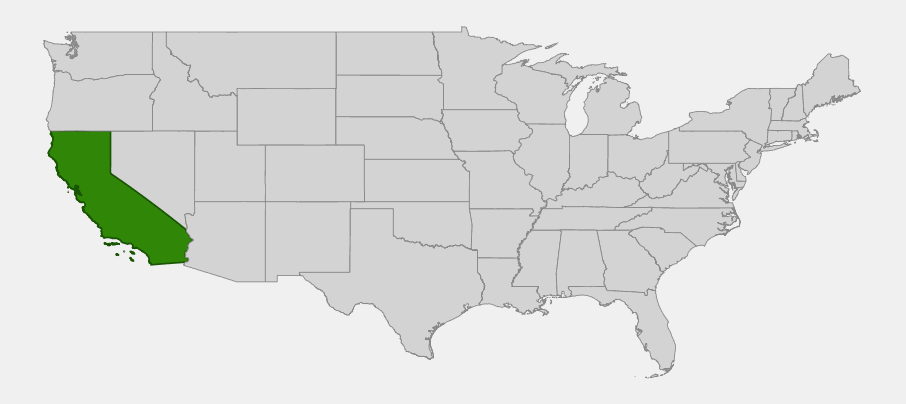
Bicolor monkeyflower is endemic to California, found only in the southern Sierra Nevada, where botanical references place its range roughly from the Kern River drainage and Greenhorn Mountains area north into the central and southern Sierra Nevada foothills. It is not known to occur naturally outside this relatively limited portion of the state.
Within this range, the species favors open, bare, and often disturbed ground — roadcuts, exposed slopes, decomposed granite outcrops, and similar sites with little competing vegetation — at low to moderate foothill and lower montane elevations. This preference for disturbed, sparsely vegetated ground is typical of many small annual monkeyflowers, which rely on open soil for germination and struggle to compete in dense, well-established plant communities.
Because its range is narrow and its habitat specific, bicolor monkeyflower is not a plant most California gardeners will encounter in the wild unless they are specifically exploring the southern Sierra Nevada foothills in spring, and it should be treated as a regional specialty rather than a general-purpose California native.
📋 Regional plant lists featuring bicolor monkeyflower: California & Nevada
Growing & Care Guide
Bicolor monkeyflower is a plant for the dedicated native wildflower gardener who wants to recreate a slice of southern Sierra foothill habitat, rather than a reliable general-purpose bedding annual.
Light
Full sun to light, dappled shade suits this species best, echoing the open, exposed slopes it favors in the wild.
Soil & Water
Good drainage is essential. This species is adapted to bare, lean, gravelly or decomposed-granite soils and performs poorly in rich, organic, or constantly moist garden beds. Keep soil evenly but lightly moist during germination and early spring growth, then allow it to dry out through late spring and summer as the plant completes its natural annual cycle; avoid summer irrigation once flowering has finished.
Planting Tips
Sow seed directly onto bare, disturbed soil in fall, since the species depends on open ground with little competing vegetation to germinate successfully — scattering seed into an established, densely planted bed is unlikely to succeed. A gravel bed, scree garden, or freshly disturbed patch of decomposed granite is an ideal planting site. Because it is tiny and easily overlooked, consider growing it where it can be viewed up close, such as the edge of a path or a rock garden border.
Pruning & Maintenance
No pruning is needed. Let the plant complete its life cycle and drop seed naturally each year, since like most small annual monkeyflowers it depends entirely on self-seeding to persist in a planting from season to season.
Propagation
Propagate from seed only. Collect capsules as they begin to dry and split, then store seed cool and dry for fall sowing onto bare ground.
Landscape Uses
- Rock gardens and gravel beds with excellent drainage
- Sierra foothill habitat gardens and native plant specialty collections
- Restoration seeding on disturbed decomposed-granite slopes within its native range
- Container growing for close appreciation of its small, two-toned flowers
Wildlife & Ecological Value
Though small and narrowly distributed, bicolor monkeyflower contributes to the diversity of early-season bloom in the plant communities where it occurs.
For Pollinators
The small tubular flowers are visited by small native bees and other short-tongued pollinating insects able to access the nectar within. The dark maroon throat markings common to many monkeyflowers are thought to function as nectar guides, directing pollinators toward the flower’s reproductive structures.
For Birds
Seed-eating birds may take the tiny seeds released from mature capsules, though this species is not a significant food source compared to its ecological role for pollinators.
For Mammals
The plant’s small size and limited biomass make it a minor food source at most for browsing mammals, and it is not known to be a preferred browse species.
Ecosystem Role
As a specialist of bare, disturbed ground, bicolor monkeyflower is part of a guild of small annual wildflowers that help stabilize and vegetate exposed soil in the southern Sierra Nevada foothills following disturbance, contributing modestly to early plant community development on these sites before longer-lived shrubs and perennials become established.
Cultural & Historical Uses
Bicolor monkeyflower does not have a documented history of use as a food, medicine, or fiber plant among Indigenous peoples of California, and no historical utilitarian use is recorded for the species. Its primary significance has been botanical and horticultural rather than practical — the striking, locally occurring color polymorphism between yellow- and magenta-flowered individuals has made it a subject of interest to botanists studying flower color variation and pollinator interactions within the monkeyflower group.
The taxonomic history of this species reflects the broader reclassification of many western monkeyflowers in recent decades: long known as Mimulus whitneyi, it has since been placed in the genus Diplacus as botanists revised the boundaries of the traditional genus Mimulus based on genetic and morphological studies. Gardeners and references may still encounter either name.
Today, bicolor monkeyflower is primarily of interest to California native plant enthusiasts, wildflower photographers drawn to its unusual two-color populations, and restoration practitioners working within its limited native range in the southern Sierra Nevada.
Frequently Asked Questions
Why do some bicolor monkeyflower plants have yellow flowers and others have magenta flowers?
This is a naturally occurring color polymorphism within the species — a single population can include both yellow- and magenta-flowered individuals growing side by side, both marked with the same dark maroon throat blotch. The exact ecological advantage of maintaining both color forms in the same population is of ongoing botanical interest.
Is this the same plant as the common “yellow and white monkeyflower” sometimes also called Mimulus bicolor?
No — despite the similar name, that is a different California-endemic species (Erythranthe bicolor, formerly Mimulus bicolor), native to the Klamath/Cascade region and western Sierra Nevada. Bicolor monkeyflower (Diplacus bicolor, formerly Mimulus whitneyi) is native specifically to the southern Sierra Nevada and has a distinct two-color flower pattern rather than a single bicolor bloom.
Can bicolor monkeyflower grow outside the Sierra Nevada foothills?
It can be difficult to establish outside conditions similar to its native habitat — bare, well-drained, often decomposed-granite soil with a distinct wet winter/spring and dry summer pattern. Gardeners outside this zone may find other monkeyflower species better suited to their local conditions.
Does bicolor monkeyflower need fertilizer?
No. It is adapted to lean, bare soils and does not need or benefit from fertilizer; rich soil tends to favor competing vegetation that can crowd out this small, disturbance-dependent annual.
How can I keep bicolor monkeyflower coming back each year?
Allow some seed capsules to mature and shatter naturally each season, and maintain an area of open, lightly disturbed soil for seedlings to establish in, since this species depends entirely on self-seeding onto bare ground rather than persisting as an established perennial clump.

Looking for a nursery that carries bicolor monkeyflower?
Browse our native plant nursery directory: California