Narrowleaf Mule’s Ears (Wyethia angustifolia)
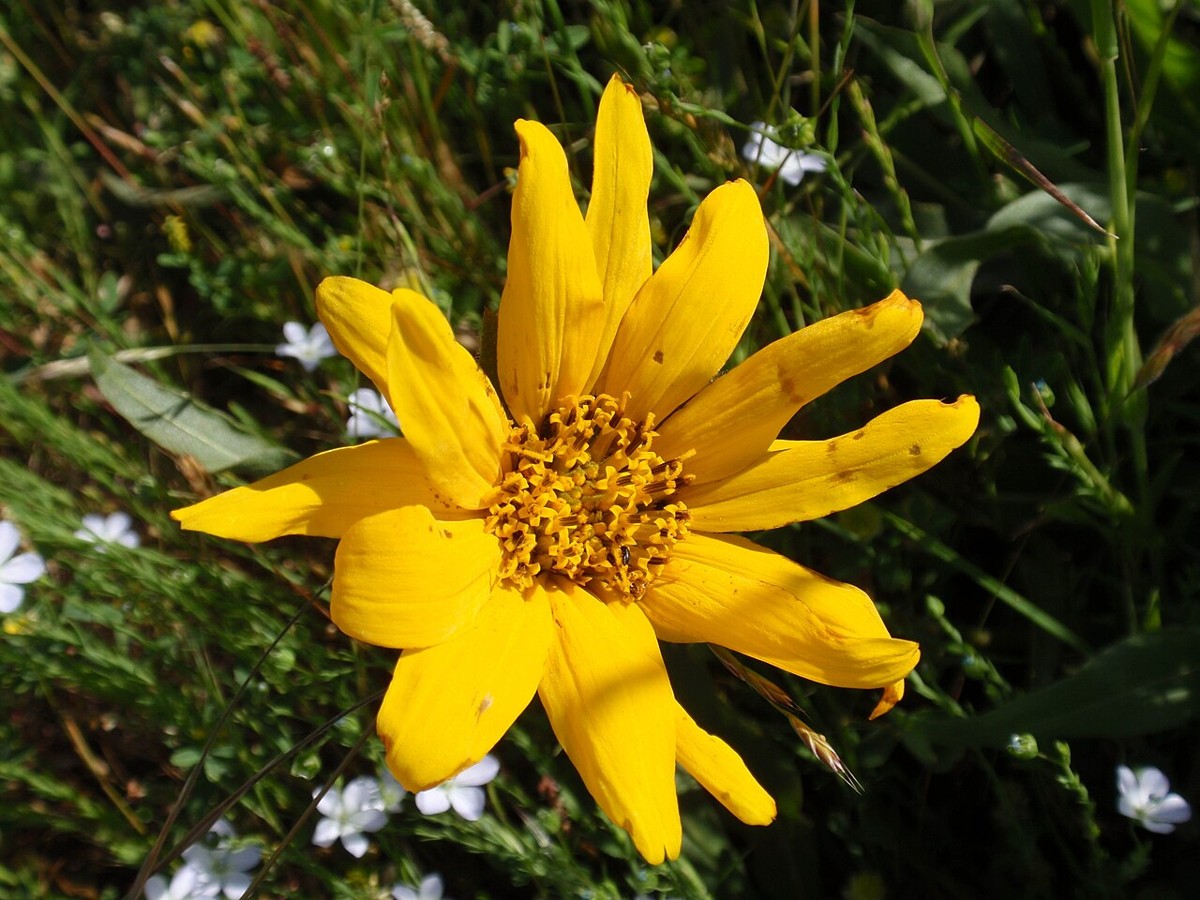
Wyethia angustifolia, commonly known as Narrowleaf mule’s ears, is a cheerful, sunflower-like perennial wildflower of open grasslands, meadows, and oak woodland edges along the West Coast. Unlike its gray-leaved relative Gray mule’s ears, this species has narrower, glossy to slightly hairy green leaves rather than broad, felted gray foliage, though both share the large, bright yellow blooms and clumping growth habit typical of the genus. A member of the Asteraceae (sunflower family), it is a familiar and often abundant wildflower across much of California, Oregon, and western Washington.
Narrowleaf mule’s ears grows as a clump-forming herbaceous perennial from a woody root crown, producing lance-shaped to narrowly elliptic basal leaves and flowering stems that typically reach 1 to 2 feet. In favorable springs, it can carpet entire meadows and grassy hillsides in gold, often blooming alongside camas, lupines, and other prairie and oak-savanna wildflowers. Its tolerance for seasonally dry, often clay-rich soils makes it a dependable presence in grassland communities that dry out completely each summer.
Because it handles both the wet winters and dry summers typical of its range, and asks for little beyond full sun and reasonable drainage, Narrowleaf mule’s ears has become a valued component of meadow and prairie restoration projects throughout the Pacific Coast states, as well as a rewarding, low-maintenance addition to native wildflower gardens.
Identification
Narrowleaf mule’s ears is identified by its lance-shaped to narrowly elliptic green leaves, bright yellow daisy-like flower heads, and clump-forming habit from a persistent perennial root crown.
Leaves
Basal leaves are narrowly lance-shaped to elliptic, 4 to 12 inches long and much narrower than broad, with a green to slightly grayish-green color and a surface that ranges from nearly smooth to lightly hairy — noticeably less densely felted than the broad, gray leaves of Gray mule’s ears. Stem leaves are smaller and fewer, arranged sparsely up the flowering stalks. The narrower leaf shape is the most reliable way to distinguish this species from its broader-leaved relatives in the field.
Flowers
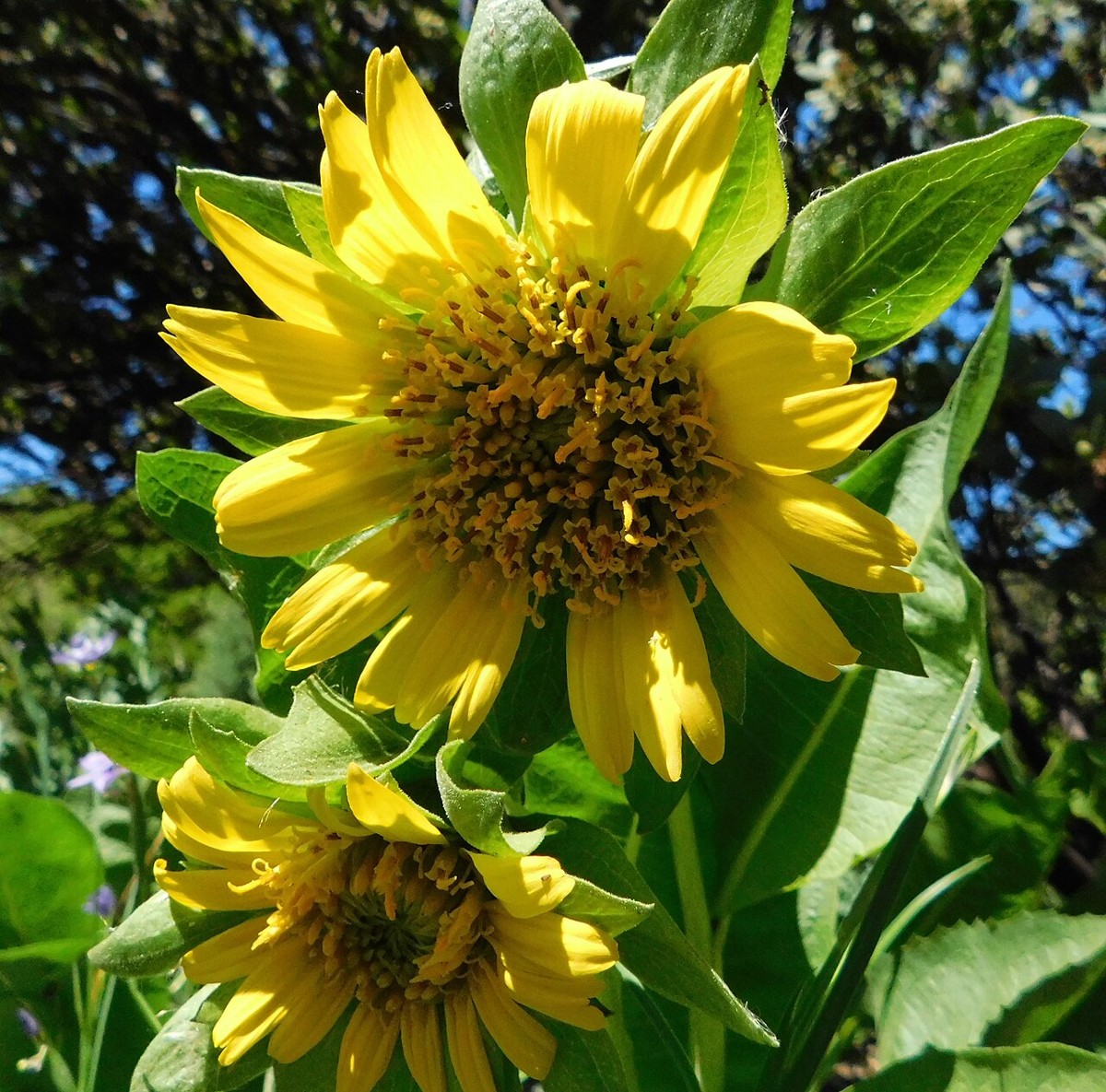
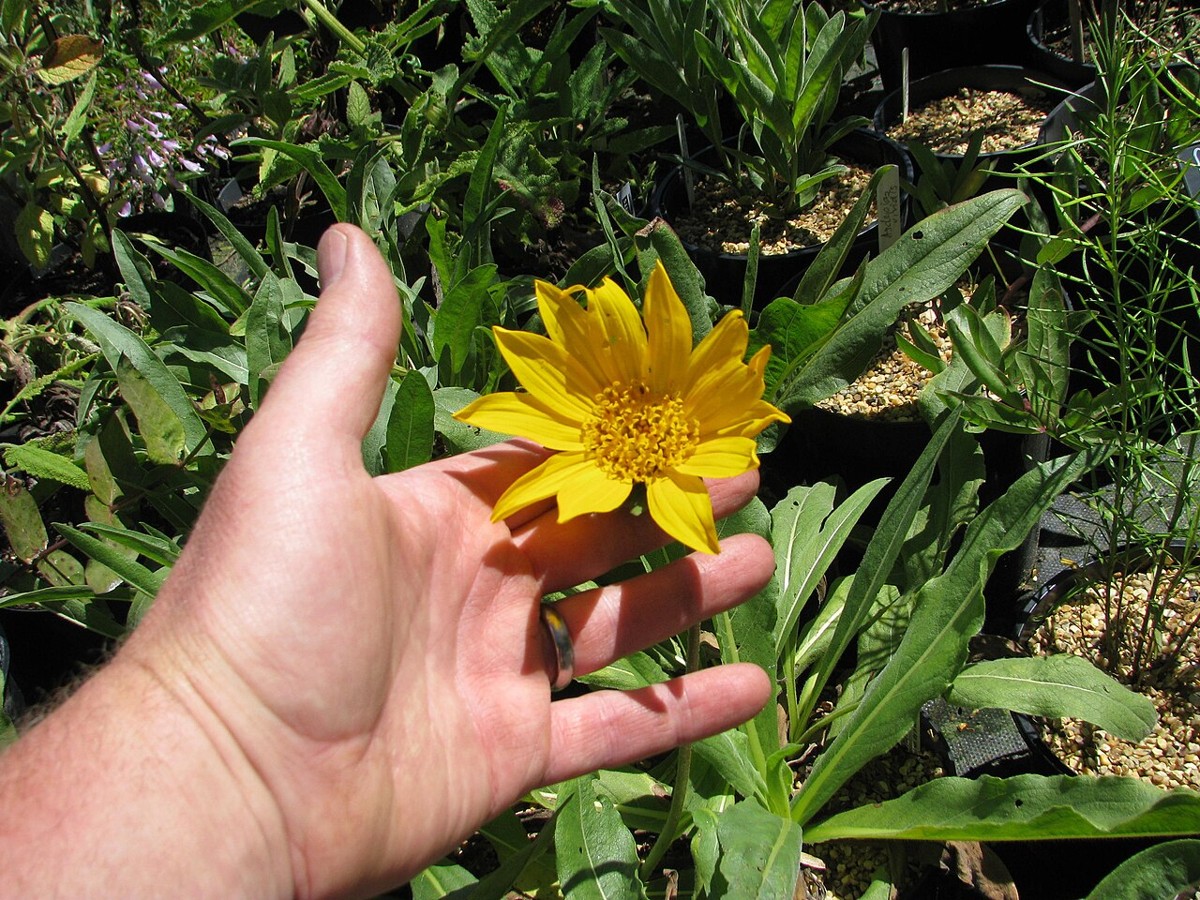
Flowering stems rise 10 to 24 inches, usually bearing a single large flower head per stem, 2 to 4 inches across. The ray flowers are bright golden yellow, typically numbering 8 to 21 per head, surrounding a slightly darker yellow disc of small central florets. Bloom occurs from April through June, often creating striking, widespread displays across open meadows and hillsides.
Growth Form & Roots
Plants grow from a stout, woody root crown that persists for many years, sending up fresh basal leaves and flowering stems each spring. This perennial structure allows the species to survive summer drought, occasional fire, and grazing by resprouting reliably from the crown, year after year.
Fruit & Seeds
Following bloom, each flower head produces dry achenes that mature through late spring and early summer, dispersing as the foliage begins to dry back for the dry season.
Quick Facts
| Scientific Name | Wyethia angustifolia |
| Family | Asteraceae (Sunflower) |
| Plant Type | Herbaceous Perennial Wildflower |
| Mature Height | 1–2 ft in bloom |
| Mature Spread | 1.5–2.5 ft clump |
| Growth Rate | Moderate |
| Sun Exposure | Full Sun to Part Sun |
| Water Needs | Low once established; drought tolerant |
| Soil Type | Well-drained; tolerates clay and seasonally moist soils |
| Soil pH | Neutral to slightly acidic |
| Bloom Time | April – June |
| Flower Color | Bright golden yellow |
| Fall Color | N/A — foliage dries back by mid-to-late summer |
| Fruit | Small dry achenes |
| Deer Resistant | Moderate (new growth browsed occasionally) |
| USDA Hardiness Zones | 7–10 |
Native Range
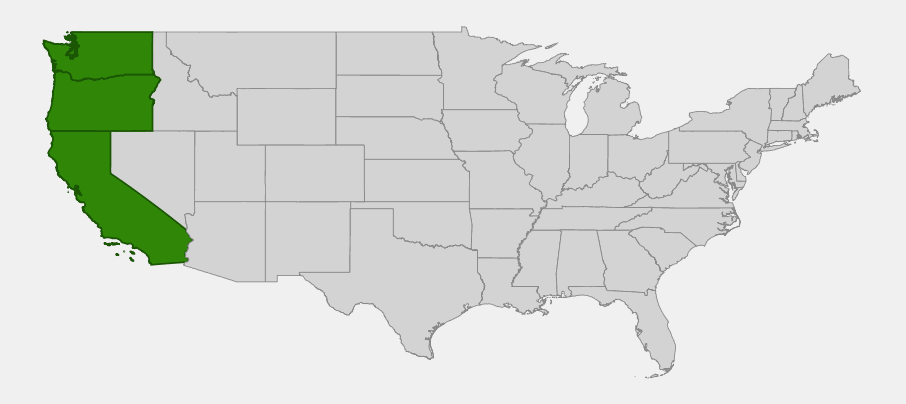
Narrowleaf mule’s ears is native along the Pacific Coast, occurring through California’s Coast Ranges, Central Valley margins, and Sierra Nevada foothills, north through the Willamette Valley and Coast Range of western Oregon, and into the prairies and meadows of western Washington. Like several of its relatives, it is confined to the country west of the Cascade crest in Oregon and Washington, favoring the milder, wetter-winter climate found there.
Across this range the species is a familiar component of open grassland, meadow, and oak woodland-edge habitats, often growing in seasonally moist to dry, clay-rich or loamy soils that are saturated in winter and completely dry by midsummer — conditions it tolerates especially well compared to many other showy perennials. It is one of the characteristic wildflowers of remnant prairies in the Willamette Valley and Puget lowlands, habitats that have been dramatically reduced from their historic extent.
Narrowleaf mule’s ears generally occurs from near sea level up to around 5,000 feet, typically in full sun, and is frequently found growing alongside camas, western buttercup, and other spring-blooming prairie and meadow wildflowers across its range.
📋 Regional plant lists featuring Narrowleaf mule’s ears: California & Nevada · Western Oregon & Western Washington
Growing & Care Guide
Narrowleaf mule’s ears is an undemanding perennial once established, well suited to gardeners who want reliable spring color without heavy summer watering.
Light
Full sun produces the best flowering and the most compact growth; it also tolerates part sun, especially in hotter interior gardens, though bloom may be somewhat reduced.
Soil & Water
This species tolerates a range of soils, including clay and loam that stay moist in winter but dry out thoroughly in summer — conditions that mimic its native meadow habitat. Water young plants regularly during their first spring and summer to help establish the root crown, then reduce watering; established plants are drought tolerant and generally thrive on natural rainfall alone in most of their range, needing little to no supplemental irrigation once settled in.
Planting Tips
Plant from containers in fall or early winter to take advantage of the rainy season for root establishment. Choose a site in full to part sun with reasonable drainage. Space plants 18 to 24 inches apart, as mature clumps will fill in over a few seasons.
Pruning & Maintenance
Very little is needed. Deadhead spent flower stalks after bloom if a tidier look is desired, and let the plant go dormant and dry back naturally in summer — this die-back is normal and not a sign of trouble. Fresh growth returns with fall and winter rain.
Propagation
Propagate from seed sown in fall, which benefits from a period of cool, moist stratification, or by division of the root crown during dormancy. Seed-grown plants typically reach flowering size within two to three years.
Landscape Uses
- Meadow and prairie restoration in Pacific Coast grassland habitats
- Oak savanna plantings alongside Oregon white oak
- Sunny borders and wildflower beds with other spring bloomers
- Low-water landscaping once established
- Pollinator gardens as a spring nectar and pollen source
- Naturalistic plantings paired with camas and native grasses
Wildlife & Ecological Value
Narrowleaf mule’s ears plays a significant role as an early- to mid-spring wildflower resource in the grassland and oak savanna communities where it grows.
For Pollinators
The large, abundant yellow flower heads are an important nectar and pollen source for native bees, including mining bees and bumble bees, as well as butterflies and other pollinating insects, often blooming in large, conspicuous drifts that make it easy for pollinators to find.
For Birds
Seed-eating birds forage on the ripening achenes in late spring and early summer, and the open meadow and grassland habitats the species favors support a range of grassland-associated bird species.
For Mammals
Deer and other browsers occasionally eat the young foliage and flower stalks in spring, though established plants generally tolerate light browsing and resprout from the root crown. Small mammals use mature clumps for cover in open meadow settings.
Ecosystem Role
As a long-lived, clump-forming perennial, Narrowleaf mule’s ears contributes structural diversity and reliable spring bloom to California and Pacific Northwest grassland and oak savanna communities, many of which have been substantially reduced by development and conversion to non-native grassland. Its persistence from a deep root crown helps these plant communities recover and maintain resilience through dry summers and periodic disturbance.
Cultural & Historical Uses
As with other Wyethia species, Narrowleaf mule’s ears does not carry an extensively documented record of specific use by Indigenous peoples comparable to major food plants, but it has long been a recognized and conspicuous part of the prairie and oak savanna landscapes of California and the Pacific Northwest — ecosystems that were actively shaped and maintained by Indigenous burning practices for millennia, favoring the open, sunny habitat this species depends on.
The common name “mule’s ears,” applied across the genus, reflects a long tradition among settlers and botanists of describing the plant’s leaf shape by comparison to the animal’s prominent ears, a naming pattern that appears consistently in historical botanical references to the genus throughout the 19th and 20th centuries.
In recent decades, the species’ primary cultural role has become ecological and horticultural: it is widely used as an indicator and anchor species in Willamette Valley and Puget lowland prairie restoration, and it remains a popular and reliable choice in California and Pacific Northwest native-plant gardening for its dependable spring color and low water needs.
Frequently Asked Questions
How is Narrowleaf mule’s ears different from Gray mule’s ears?
The clearest distinction is leaf shape and texture: Narrowleaf mule’s ears has narrower, mostly green leaves with little to no gray felting, while Gray mule’s ears has much broader leaves densely covered in soft gray hairs. Their native ranges also differ, with Narrowleaf mule’s ears extending into Oregon and Washington, while Gray mule’s ears is confined to California.
Why does my plant disappear in summer?
This is normal seasonal dormancy. The plant dies back to its root crown as the dry season sets in, conserving resources underground, and resprouts reliably with fall and winter rain.
Can Narrowleaf mule’s ears tolerate clay soil?
Yes, it handles clay and other heavier soils reasonably well, particularly where the ground is seasonally wet in winter and dries out in summer, mimicking its natural meadow habitat.
Does it spread aggressively in the garden?
No. It grows as a clump from a persistent root crown rather than spreading by runners, so established plantings stay in place rather than colonizing surrounding beds.
How long does it take to bloom from seed?
Expect two to three years from seed to reach flowering size, as the plant invests early energy into developing its perennial root crown before producing significant top growth and flowers.

Looking for a nursery that carries Narrowleaf mule’s ears?
Browse our native plant nursery directory: California · Oregon · Washington