Toothed Calicoflower (Downingia cuspidata)
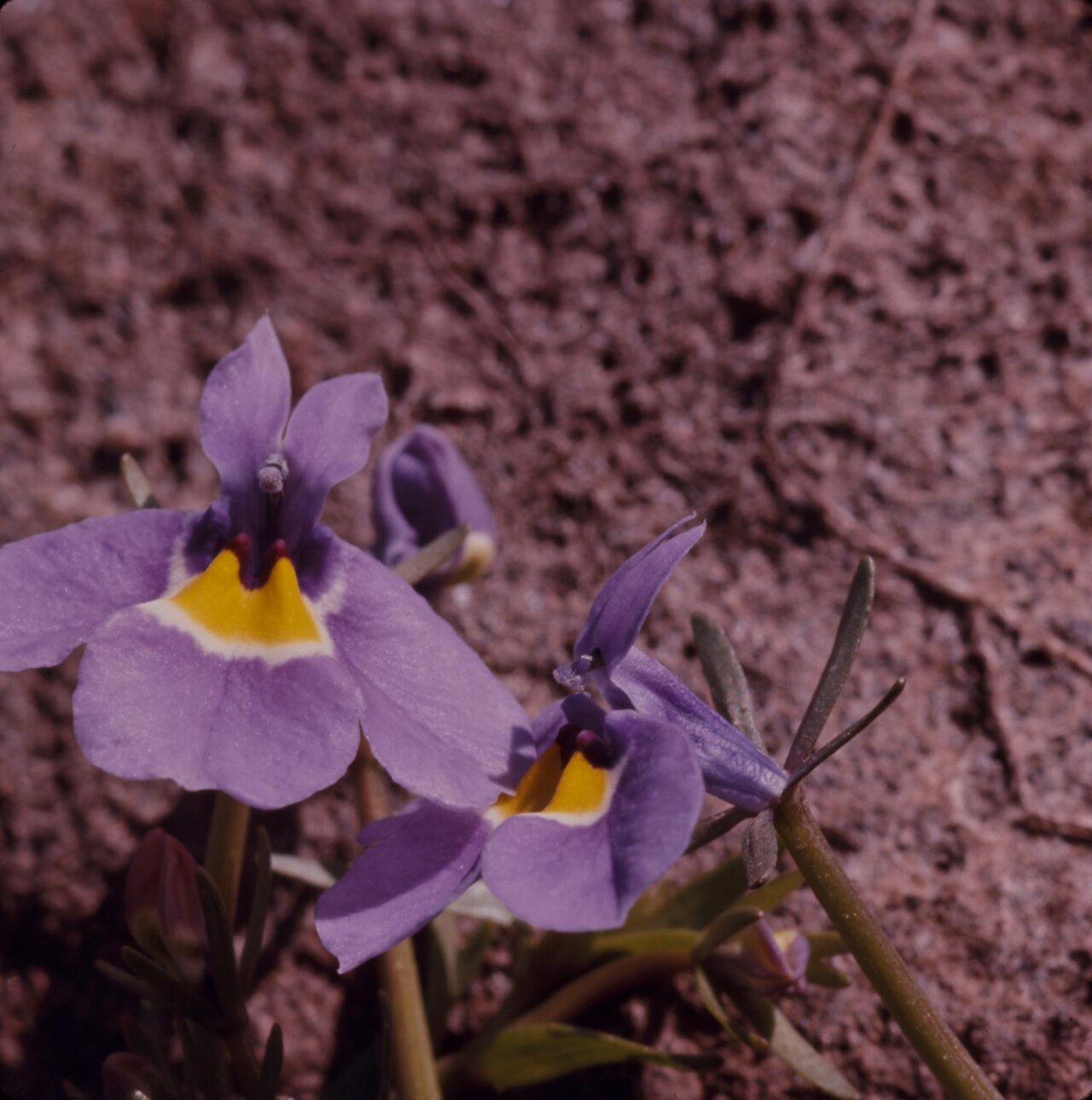
Downingia cuspidata, known as toothed calicoflower, is a small annual wildflower endemic to California, where it is one of the signature bloomers of the state’s vernal pools. Like its relatives in the genus Downingia, it belongs to the bellflower family (Campanulaceae) and spends most of the year as dormant seed buried in a seasonally flooded basin, germinating underwater each winter and flowering in a tight ring as the pool dries down each spring.
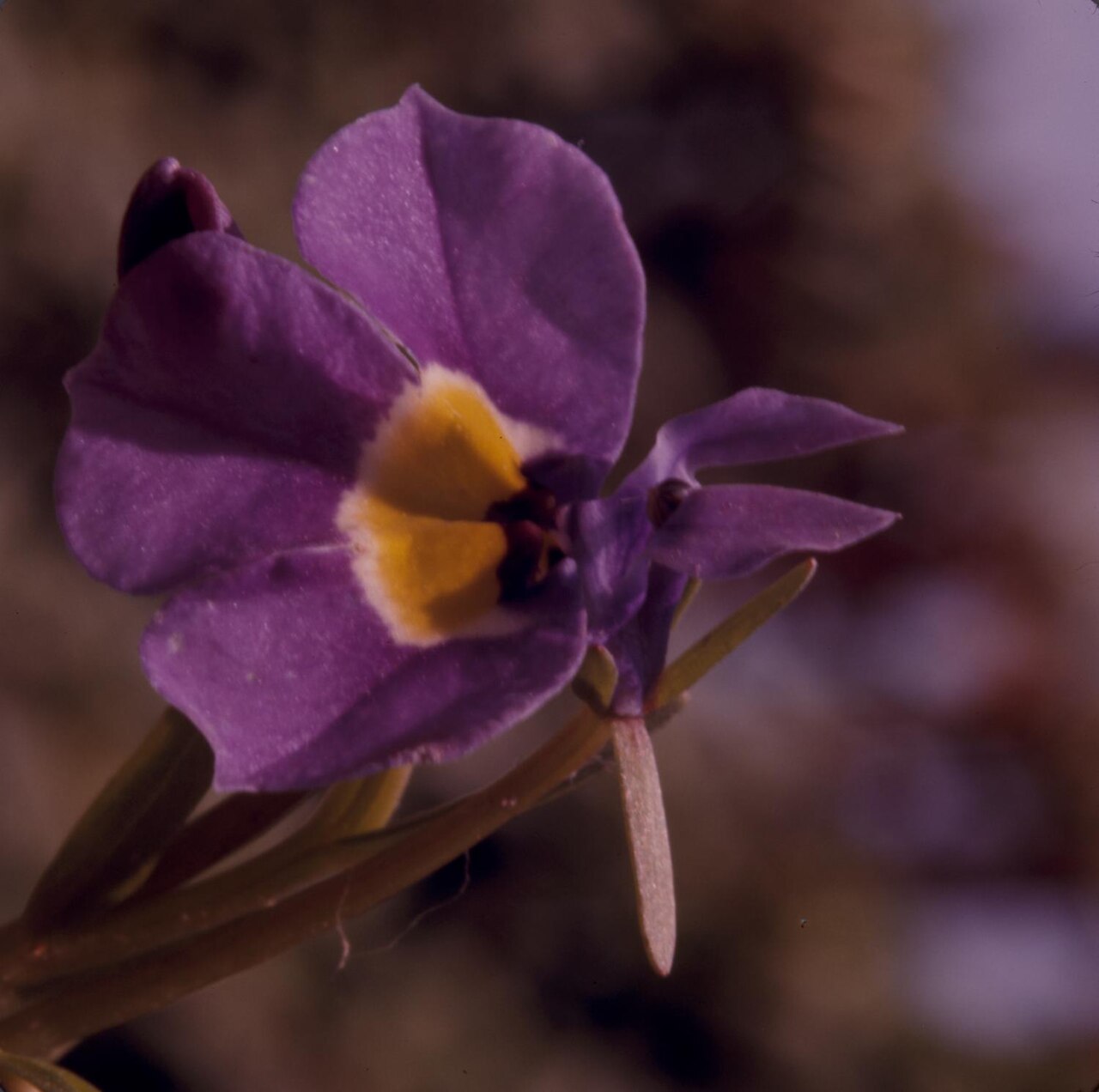
The flowers are small but vivid: violet to purple petals surrounding a bright yellow patch outlined in crisp white, forming a landing pad pattern visible from across a field. The species epithet cuspidata refers to the small pointed tip, or cusp, found on each petal lobe — a subtle feature that distinguishes it from several similar calicoflowers that often grow in the very same pools.
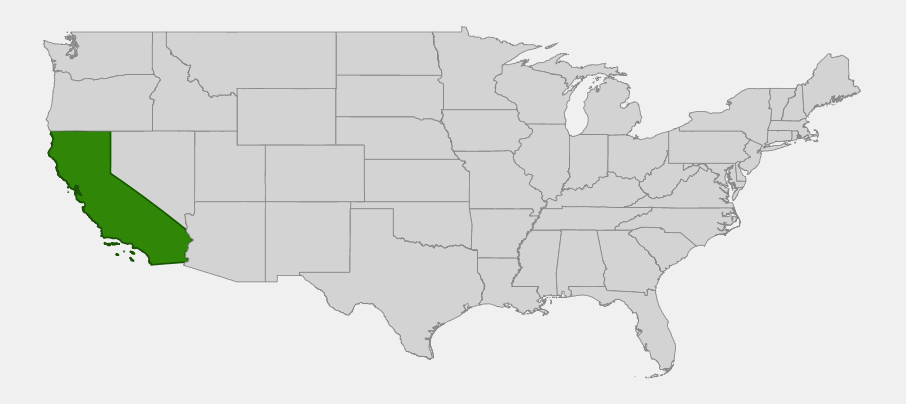
Toothed calicoflower is strictly a California endemic — it is not known to occur naturally in any other state — and like all vernal pool specialists, it is tied to a specific hydrological rhythm rather than ordinary garden conditions. For gardeners restoring or building a seasonal wetland, it is a reliable, colorful addition that self-sows readily once its wet-dry cycle is established.
Identification
Toothed calicoflower grows as a low, branching annual, usually sprawling across the mud rather than standing upright, since it faces no competition for light during its brief bloom window at the edge of a drying pool.
Stems & Leaves
Stems are slender and freely branching from the base, often tinged reddish-purple, forming loose mats a few inches across. Leaves are small, narrow, and alternate along the stem, without stalks. As with most vernal pool annuals, the foliage is modest and functional rather than ornamental — all the visual interest is concentrated in the flowers.
Flowers
Each flower is about a centimeter wide, tubular at the base and strongly bilaterally symmetric. Two narrow, pointed upper lobes rise above a broader three-lobed lower lip. The lower lip ranges from blue-purple to nearly white, marked with one large or two smaller yellow blotches outlined in white at the throat, creating a strong visual target for pollinators. Each lobe tapers to a small pointed tip — the “tooth” referenced in both the common and scientific names — which helps separate this species from the broader-lobed, un-toothed petals of some related Downingia. Bloom occurs from April into June, timed to the drying of the pool.
Fruit & Seeds
The fruit is a narrow, elongated capsule that splits open to release numerous tiny seeds directly into the mud as the pool finishes drying. These seeds persist in the soil seed bank, sometimes for several years, germinating only when winter rains refill the basin deeply enough.
Quick Facts
| Scientific Name | Downingia cuspidata |
| Family | Campanulaceae (Bellflower) |
| Plant Type | Annual Wildflower |
| Mature Height | 2–6 in (5–15 cm) |
| Mature Spread | 4–8 in (10–20 cm) |
| Growth Rate | Fast (completes life cycle in one season) |
| Sun Exposure | Full Sun |
| Water Needs | Seasonally flooded, then dry |
| Soil Type | Heavy clay or hardpan, poorly drained |
| Soil pH | Neutral to slightly alkaline |
| Bloom Time | April – June |
| Flower Color | Violet-purple with yellow and white throat |
| Fruit | Narrow dehiscent capsule |
| Deer Resistant | Yes (low palatability, short season) |
| USDA Hardiness Zones | 8–10 (grown as a self-sowing annual) |
Native Range
Toothed calicoflower is a California endemic, found throughout much of the state wherever vernal pool and seasonal wetland habitat persists — from the Central Valley and its surrounding foothills to scattered coastal and southern California pool complexes. Unlike some of its relatives that extend north into Oregon or Idaho, toothed calicoflower’s confirmed range stays within California’s borders, though some botanists note its range may extend slightly south into similar vernal pool habitat in Baja California, Mexico.
Within the state, it grows in the same kind of seasonally inundated basins favored by the rest of the Downingia genus: shallow depressions underlain by a hardpan, claypan, or volcanic substrate that holds winter rain at the surface. These pools flood in the cool season, support submerged seed germination, and dry out completely by early summer, leaving the cracked mud flats where toothed calicoflower and its neighbors bloom in concentric bands.
As with most California vernal pool plants, toothed calicoflower has lost significant habitat to agricultural conversion and urban development, particularly in the Central Valley, where vernal pool complexes have been reduced to a small fraction of their historical extent. The species itself is not formally listed as rare, but any given population is only as secure as the pool it depends on.
📋 Regional plant lists featuring toothed calicoflower: California & Nevada
Growing & Care Guide
Toothed calicoflower, like other vernal pool annuals, requires an authentic seasonal wetland cycle to thrive. It is not suited to a standard garden bed, but it is a rewarding and relatively easy plant for a rain garden or constructed vernal pool with the right hydrology.
Light
Full sun only. Vernal pools are open, unshaded basins, and the species will not establish or persist under tree canopy or in shaded beds.
Soil & Water
Success depends entirely on a soil that holds standing water through winter and early spring and then dries out completely by early summer. Heavy clay, a natural or artificial hardpan, or a lined basin all work. The seeds germinate as the standing water recedes in spring; they will not establish in free-draining soil, and they will rot or fail to set seed in a basin that stays wet year-round. Avoid summer irrigation, which disrupts the natural dry dormancy the seed bank relies on and invites weed competition.
Planting Tips
Sow seed directly onto bare, moist soil in fall, timed so germination coincides with the season’s first substantial rains. The seed is extremely small — surface-sow and press in lightly rather than burying it. Toothed calicoflower combines naturally with goldfields, popcornflower, and other Downingia species, each occupying a slightly different moisture band as the pool dries, which produces the layered rings of color typical of a healthy vernal pool.
Pruning & Maintenance
None required. The plant completes its annual cycle and dies back naturally as the basin dries for summer. Leave spent plants in place so seed can disperse, and avoid disturbing the soil during the dry season when the seed bank is dormant.
Propagation
By seed only. Harvest capsules as they begin to split and store the seed dry until fall sowing; no special pretreatment is typically needed beyond the natural winter wetting cycle of the basin.
Landscape Uses
- Constructed or restored vernal pools — the species’ core habitat and best use
- Rain gardens and seasonal retention basins with a genuine dry-summer phase
- Vernal pool restoration and mitigation projects across California
- Native plant demonstration gardens focused on seasonal wetland ecology
Wildlife & Ecological Value
Toothed calicoflower contributes to the short but ecologically dense bloom period that defines a healthy vernal pool.
For Pollinators
The sharply contrasting yellow-and-white throat pattern against violet petals functions as a nectar guide for small native bees, which are the primary pollinators of most Downingia species. Because vernal pools bloom in a compressed early-season window, dense stands of toothed calicoflower and its relatives provide an outsized share of the nectar and pollen available to specialist bees at that time of year.
Birds & Other Wildlife
Seed-eating birds and ground-foraging invertebrates make use of vernal pool margins during and after the bloom, and the dense low growth habit of calicoflower and its companion annuals helps hold the saturated soil surface in place during the wettest months.
Ecosystem Role
As a California endemic restricted to a globally rare wetland type, toothed calicoflower is both an indicator species and a structural part of vernal pool plant communities. Botanists and land managers often use the presence and vigor of calicoflower bloom as a quick field signal of intact, unaltered pool hydrology, since the species disappears quickly once a basin’s natural flooding and drying pattern is disrupted.
Cultural & Historical Uses
Toothed calicoflower has no significant documented history of use by Indigenous peoples or early California settlers. Its small size, brief bloom window, and restriction to isolated seasonal wetlands meant it drew little attention outside of botanical collecting circles.
The genus Downingia commemorates 19th-century American horticulturist Andrew Jackson Downing, a connection that is taxonomic rather than practical. California botanists have documented the species extensively since the 1800s, and it remains a frequent subject of study in vernal pool ecology, particularly regarding plant-pollinator interactions and the fine-scale zonation of species across a drying pool basin.
In recent decades, toothed calicoflower’s main cultural significance has shifted toward conservation. As California’s vernal pool habitat has contracted under agricultural and urban pressure, the species has become a familiar presence in restoration plantings, native plant society programs, and public education efforts focused on this increasingly scarce habitat type.
Frequently Asked Questions
Can toothed calicoflower grow in an ordinary garden bed?
No. It needs a true seasonal wetland cycle — flooded in winter, bone-dry by summer — that a standard border cannot replicate. It belongs in a constructed vernal pool, rain garden basin, or similar seasonal wet feature.
What does the species name “cuspidata” refer to?
“Cuspidata” means pointed or tipped with a small, sharp point, referring to the fine tip at the end of each petal lobe. This subtle feature helps distinguish toothed calicoflower from several similar Downingia species that share the same pools.
Is toothed calicoflower found outside California?
It is considered a California endemic, with its confirmed range entirely within the state, though its range may extend slightly south into similar vernal pool habitat in northern Baja California, Mexico.
Will it reseed itself each year?
Yes, as long as the basin maintains its winter-wet, summer-dry cycle. Seed can lie dormant in the soil for multiple years, so even a dry winter that produces no bloom doesn’t necessarily mean the population is lost.
Is toothed calicoflower rare or protected?
It is not formally listed as threatened or endangered, but because it depends entirely on California’s vernal pools — one of the state’s most reduced wetland habitats — local populations are vulnerable wherever pools are filled, graded, or drained.

Looking for a nursery that carries Toothed Calicoflower?
Browse our native plant nursery directory: California